

Calving Season
Wildebeest Calving Season: Witness the Beginning of a New Migration Generation
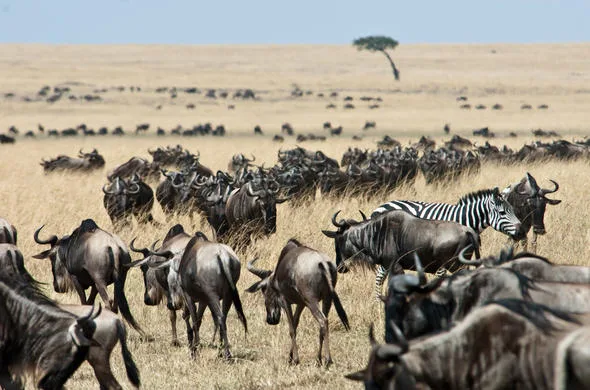
The Great Wildebeest Migration is often associated with dramatic river crossings in Kenya’s Masai Mara. Yet one of the most important chapters in this extraordinary natural cycle takes place hundreds of kilometres to the south, across the short-grass plains of Tanzania’s southern Serengeti and the wider Ndutu area. This is the wildebeest calving season, when enormous numbers of pregnant wildebeest gather on nutrient-rich grasslands and give birth over a relatively concentrated period.
For wildlife enthusiasts, it is a remarkable time to visit East Africa. Newborn calves take their first uncertain steps, mothers remain alert to predators, and lions, cheetahs and hyenas move through landscapes filled with grazing animals. Unlike the migration’s river crossings, which may happen suddenly and unpredictably, calving is a broader seasonal phenomenon. Although the exact timing and location vary, the peak is commonly associated with February. At Safari Trips to Kenya, we help travellers understand how the calving season fits into the wider migration cycle and how to combine this Tanzanian wildlife experience with a safari in Kenya.
What Is the Wildebeest Calving Season?
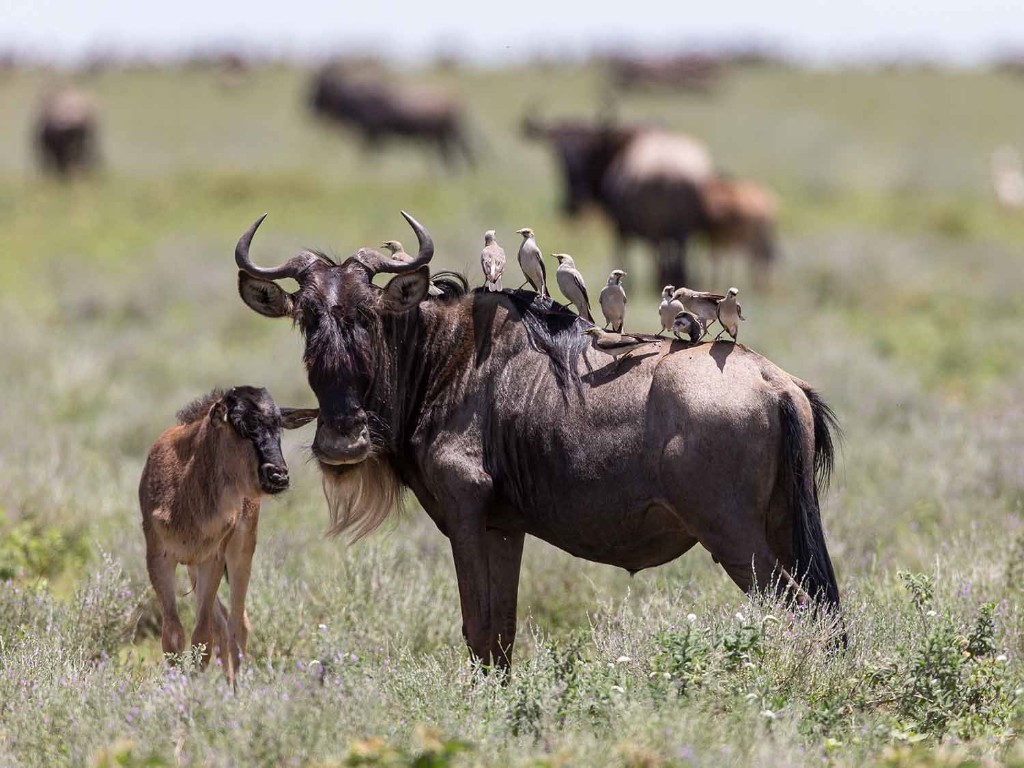
The wildebeest calving season is the period when large numbers of female wildebeest give birth on the southern plains of the Serengeti–Mara ecosystem. The migration is a continuous movement influenced primarily by rainfall, grass growth and water availability. Following seasonal rains, herds commonly gather in the southern Serengeti and Ndutu region, where fresh short grasses provide favourable grazing conditions. Pregnant females give birth during this period, and the new calves join the migrating population.
Calving does not happen on a single day or in one small location. Births occur across a broad landscape, with concentrations varying according to seasonal conditions.
Where Does the Calving Season Take Place?
The principal calving areas are located in northern Tanzania, not in Kenya’s Masai Mara. The most important locations include the southern Serengeti plains, the Ndutu area and surrounding short-grass habitats. This geographical distinction is essential for safari planning. A traveller booking a Masai Mara safari in February should not expect to encounter the main wildebeest calving concentrations there. The Masai Mara supports resident wildlife throughout the year, but the principal migration herds are commonly farther south during the calving period.
Southern Serengeti
The southern Serengeti is characterised by extensive short-grass plains that are particularly important during the wet-season phase of the migration. The landscape provides broad visibility, making it attractive for observing grazing herds, newborn animals and predators.
Ndutu Area
Ndutu is one of the best-known bases for calving-season safaris. It lies within the wider Serengeti ecosystem, around the southern Serengeti and Ngorongoro Conservation Area landscape. Accommodation in the region ranges from permanent lodges to seasonal mobile camps, and the exact wildlife-viewing arrangements depend on where a property is located and the regulations applying to the area.
When Is the Best Time to See Wildebeest Calving?
The principal calving period is commonly associated with late January through February, sometimes extending into March. February is often considered the peak month. However, the migration is driven by natural conditions rather than a fixed calendar. Rainfall can influence when the herds arrive and where they concentrate, and some births may occur outside the principal period. Travellers should therefore treat published migration calendars as planning guides, not guarantees.
Why Do Wildebeest Give Birth at Similar Times?
Wildebeest exhibit a relatively synchronised calving pattern. When large numbers of calves are born within a concentrated period, predators cannot capture every vulnerable newborn. This phenomenon is often discussed in relation to predator satiation, where the abundance of prey temporarily exceeds the capacity of predators to consume it. Synchronous calving also occurs when grazing conditions can support nursing mothers and rapidly growing calves. However, synchronisation does not eliminate predation. Many calves survive, while others fall prey to predators or environmental challenges.
How Many Wildebeest Calves Are Born?
The calving season is frequently described as producing hundreds of thousands of calves across the wider migrating population. Estimates often refer to roughly half a million births during the broader calving period, with some accounts describing thousands of births per day during peak activity. These figures are broad estimates rather than precise daily counts. Actual numbers vary with the size of the breeding population, environmental conditions and the methods used to estimate births. For travellers, the important feature is the extraordinary concentration of newborn animals across the plains.
How Quickly Can a Wildebeest Calf Walk?
Newborn wildebeest calves are remarkably mobile. Healthy calves may attempt to stand within minutes of birth and can often begin moving with their mothers soon afterwards. This rapid development is an important survival adaptation. Unlike animals that can remain concealed in dens or nests, wildebeest live in open grasslands where predators may be present, and the ability to stand and follow the herd reduces the period during which a calf is completely helpless. However, newborn calves remain vulnerable, particularly when separated from their mothers.
Predators During the Calving Season
The concentration of wildebeest and newborn calves attracts predators.
Lions
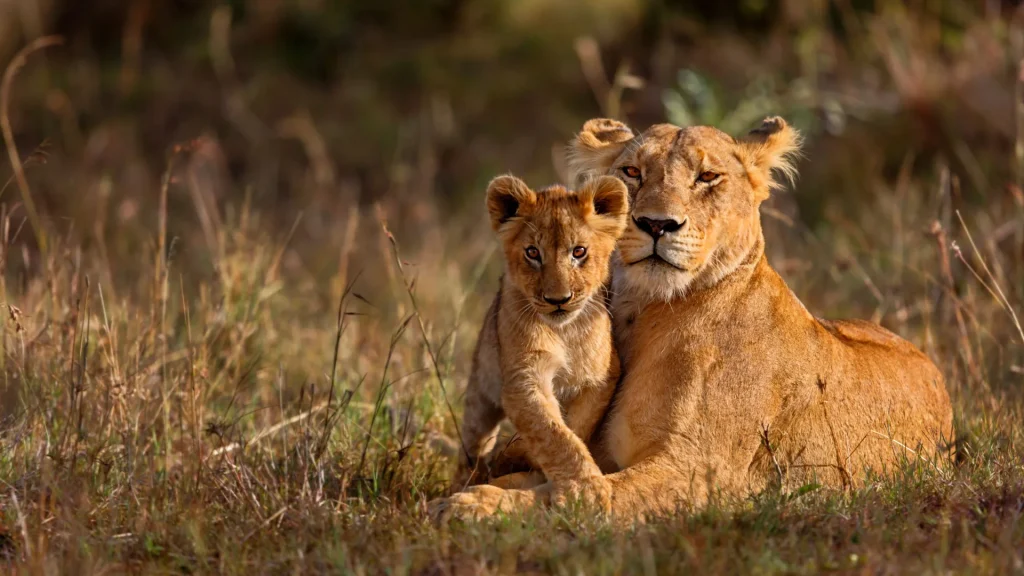
Lions are among the principal predators in the Serengeti ecosystem. They may hunt adult wildebeest or target vulnerable animals, and observing lion behaviour during calving season can provide insight into predator-prey relationships.
Cheetahs
Cheetahs are particularly associated with open grassland habitats. Their speed and hunting strategies make them fascinating subjects for wildlife observation, and they may pursue smaller antelopes or young wildebeest when opportunities arise.
Spotted Hyenas
Spotted hyenas are skilled hunters as well as scavengers. They are important predators within the Serengeti ecosystem and may take advantage of vulnerable calves.
Leopards
Leopards are generally more elusive and often use areas with suitable cover. Sightings depend on habitat and individual animal movements.
Jackals and Other Predators
Smaller predators and scavengers may also be active around calving herds. Their behaviour contributes to the complex food web of the ecosystem.
Is Calving Season Better Than the Mara River Crossings?
Neither experience is inherently better. They offer different perspectives on the migration. The calving season focuses on new life, herd behaviour and predator activity across the southern Serengeti. The Mara River crossing season focuses on the movement of herds through northern Tanzania and Kenya, including occasional dramatic river crossings. Calving can offer repeated opportunities to observe newborn animals across a broad area, while river crossings may be spectacular but are difficult to predict. Travellers particularly interested in young animals and predator behaviour may prefer calving season. Those hoping to see the migration in Kenya should consider the main Masai Mara migration period instead.
Calving Season Wildlife Photography
The southern Serengeti’s open landscapes can provide excellent opportunities for photography. Photographers may encounter mothers nursing calves, newborn animals attempting to stand and large herds moving across the plains. The presence of predators creates further possibilities, although hunting events cannot be guaranteed. Early morning and late afternoon often provide attractive light, and a telephoto lens is useful for photographing natural behaviour without disturbing animals. Photographers should avoid encouraging guides to approach newborn animals too closely. The welfare of wildlife must take priority over obtaining a particular image.
What Is the Weather Like During Calving Season?
The calving period generally overlaps with the wetter part of the southern Serengeti’s annual cycle. Rainfall can create green grasslands and dramatic skies, although conditions vary from year to year. Some days may be sunny and warm, while others bring heavy showers, and tracks can become muddy, particularly after significant rainfall. Travellers should carry suitable rain protection and prepare for changing road conditions.
Accommodation During Calving Season
Accommodation in the southern Serengeti and Ndutu region includes permanent lodges and seasonal tented camps. Some mobile camps relocate during the year to follow broad migration patterns, so their locations and operating periods should be confirmed before booking. For calving-focused travel, accommodation close to productive wildlife areas can reduce daily driving. However, no camp can guarantee that the herds will remain nearby. The best accommodation depends on travel dates, budget, preferred comfort and access arrangements.
How Many Days Should You Spend in Ndutu?
A minimum of three nights is often a practical starting point for travellers whose main objective is calving-season wildlife. This allows several game-drive sessions and opportunities to explore different areas. Four or five nights provide additional flexibility for photographers and dedicated wildlife enthusiasts. A shorter visit may still be rewarding, but travel time can reduce the number of wildlife-viewing hours. The most appropriate duration depends on the wider itinerary and transport arrangements.
Suggested Seven-Day Calving Season Safari
Day 1: Arrival in Arusha
Arrive at Kilimanjaro International Airport or another agreed arrival point and transfer to your accommodation in Arusha. Meet your safari representative and review the itinerary.
Day 2: Arusha to the Ndutu Region
Travel towards the southern Serengeti and Ndutu area. Depending on the route and arrival time, enjoy wildlife viewing before reaching your accommodation.
Day 3: Full-Day Calving Season Safari
Explore the short-grass plains in search of wildebeest herds and newborn calves. Your guide will select suitable areas based on current animal movements and road conditions.
Day 4: Ndutu Wildlife and Predator Exploration
Spend another day observing herd behaviour, predators and other wildlife. Photographers may focus on early morning light and natural interactions.
Day 5: Additional Southern Serengeti Game Drives
Continue exploring the region, allowing flexibility for changing herd locations, and enjoy opportunities to observe the wider ecosystem beyond the calving herds.
Day 6: Return Towards Arusha
Begin the return journey, with suitable stops according to the route and travel schedule.
Day 7: Departure
Transfer to the airport for your onward flight. The programme can be extended to include additional Tanzanian parks or a separate Kenya safari.
Combining the Calving Season with Kenya
Although the main calving grounds are in Tanzania, travellers can combine the experience with a Kenya wildlife safari. A longer itinerary might include the southern Serengeti, Ngorongoro, Amboseli and the Masai Mara. However, these destinations cover considerable distances, and the itinerary must account for border procedures, park access arrangements, road transfers and any necessary flights. For travellers with limited time, it may be better to concentrate on fewer destinations rather than attempt to visit every famous park.
Kenya Versus Tanzania During February
February is an excellent example of why migration planning should consider geography. In Tanzania, the southern Serengeti may offer opportunities to observe calving herds. In Kenya, the Masai Mara remains rewarding for resident lions, elephants, giraffes and other wildlife, but the main migration herds are commonly elsewhere. Amboseli, Samburu and other Kenyan destinations can also provide rewarding wildlife experiences during this period. A traveller specifically interested in newborn wildebeest should prioritise the southern Serengeti rather than booking a Masai Mara-only itinerary.
Calving Season for Families
Families can enjoy calving-season safaris, particularly when children are interested in animal behaviour. Watching calves follow their mothers can be educational and memorable. However, predator encounters and hunting behaviour may be distressing for some children, so parents should discuss expectations with the guide and choose suitable accommodation. Long game drives should also be balanced with rest periods.
Responsible Calving Season Tourism
Newborn wildlife is particularly vulnerable to disturbance. Safari vehicles should remain within authorised areas and follow the applicable driving regulations.
- Guides should not separate mothers from calves or interfere with predator-prey interactions.
- Visitors should remain quiet when observing sensitive behaviour and avoid pressuring guides to move too close.
- Responsible photography means accepting that some encounters are best viewed from a distance.
What to Pack for a Calving Season Safari
Pack for changing wet-season conditions on the southern plains and for long days in the vehicle.
- Lightweight clothing, a warm layer for early mornings, rain protection and comfortable shoes.
- Binoculars for observing distant herds and predators.
- For photographers: spare batteries, memory cards, dust protection and a waterproof bag during showers.
- Sunscreen, insect repellent, personal medication and relevant travel documents.
Calving Season Safari Costs
The cost depends on travel duration, accommodation, transport, park fees and group size. Seasonal mobile camps may have different rates from permanent lodges, and private vehicles provide flexibility but generally cost more per person for solo travellers and couples. A personalised quotation should identify accommodation, meals, guiding, park fees and transport arrangements.
Frequently Asked Questions
Is the Calving Season in Kenya or Tanzania?
The principal wildebeest calving areas are in Tanzania’s southern Serengeti and Ndutu region.
Is February the Best Month?
February is commonly considered the peak calving month, although actual timing varies.
Can I See Wildebeest Calves in the Masai Mara?
Resident or occasional wildebeest calves may be present, but the main migration calving concentrations are generally in Tanzania.
Are Predator Hunts Guaranteed?
No. Predator behaviour is unpredictable, and hunting events cannot be guaranteed.
How Many Days Do I Need?
Three to five nights in the calving region provide a useful amount of time for wildlife observation.
Can I Combine Calving Season with the Masai Mara?
Yes, but the journey requires careful planning because the destinations are geographically separated.
Plan Your Wildebeest Calving Season Safari
The wildebeest calving season reveals a different side of the Great Migration. Instead of focusing on river crossings, travellers witness the arrival of a new generation and the complex relationships between grazers and predators. At Safari Trips to Kenya, we can help plan an East African itinerary that combines Tanzania’s calving grounds with Kenya’s outstanding wildlife destinations. Contact our team with your travel dates, group size and preferred safari duration to explore suitable options.