
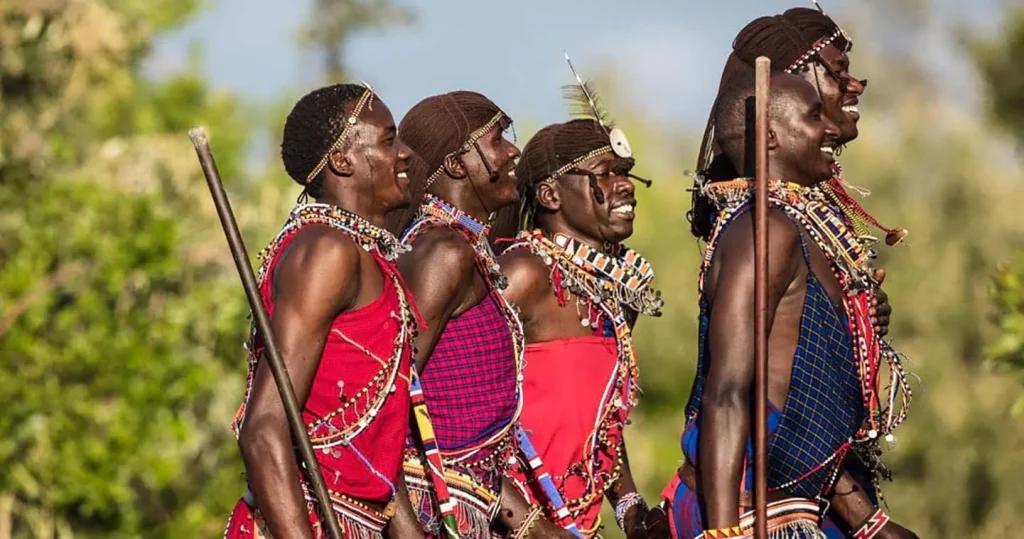
Maasai Village Tours Masai Mara
Maasai Village Tours Masai Mara experiences give travelers an opportunity to learn about the people whose history, identity, livestock traditions and cultural landscapes are closely connected with the wider Mara region of southwestern Kenya.
For many visitors, a safari to the Masai Mara begins with wildlife. They come to see:
- lions;
- elephants;
- leopards;
- cheetahs;
- wildebeest;
- zebra;
- giraffes;
- buffalo;
- the Great Wildebeest Migration.
Yet the Masai Mara is not only a wildlife destination. It is also part of a living cultural landscape shaped by Maasai communities who have occupied and used these grasslands for generations. A thoughtfully arranged Maasai village tour in the Masai Mara can therefore add an important human dimension to a safari. Depending on the village and arrangement, visitors may learn about:
- traditional homestead organization;
- livestock;
- cattle culture;
- family life;
- traditional clothing;
- ceremonies;
- songs and dance;
- beadwork;
- house construction;
- local education;
- modern community life;
- conservation partnerships;
- tourism and livelihoods.
However, cultural tourism should be approached differently from a wildlife sighting. A Maasai community is not an attraction in the same sense as a lion or scenic viewpoint, and people are not exhibits. The strongest village visits are based on:
- respect;
- consent;
- meaningful interaction;
- fair compensation;
- realistic expectations;
- sensitivity toward photography;
- avoidance of exploitative performances.
A good visit should leave travelers with a more nuanced understanding of Maasai life while creating genuine economic benefit for participating households and communities.
This detailed guide explains how Maasai Village Tours Masai Mara experiences work, what to expect, how long they take, what they may cost, what travelers can learn, how to behave respectfully, how to handle photography and shopping, and how to combine a village visit with a wider Masai Mara safari. Individual species, river crossings and mountain views can never be guaranteed.
Who Are the Maasai?
The Maasai are among East Africa's best-known pastoral communities and are strongly associated with areas of southern Kenya and northern Tanzania. Their cultural identity has historically been closely connected with:
- cattle;
- mobility;
- grazing;
- family and clan structures;
- age-set systems;
- distinctive dress;
- oral traditions;
- livestock-based livelihoods.
Cattle traditionally carry enormous social and economic importance. They can represent:
- wealth;
- food security;
- social status;
- family assets;
- cultural identity.
However, travelers should avoid assuming that every Maasai household today lives exactly as families may have lived generations ago. Maasai communities are dynamic, and contemporary life can include combinations of:
- livestock keeping;
- education;
- tourism;
- small businesses;
- salaried employment;
- conservation-related work;
- agriculture in some areas;
- modern housing;
- mobile phones;
- transportation;
- participation in national political and economic systems.
A responsible cultural visit should acknowledge both tradition and change.
Why Visit a Maasai Village During a Masai Mara Safari?
A village visit can help travelers understand that the Mara landscape is not an isolated wilderness disconnected from people. Community land and pastoral livelihoods form an important part of the broader ecosystem. Travelers may learn about:
- how livestock and wildlife share landscapes;
- why community conservancies matter;
- how tourism revenue can support local livelihoods;
- challenges around human-wildlife coexistence;
- education and healthcare;
- changing land-use patterns;
- traditional knowledge;
- modern aspirations.
For travelers who spend several days focused exclusively on wildlife, a cultural encounter can provide useful perspective. It can also help explain why conservation in the wider Mara is closely tied to local communities.
What Happens During a Maasai Village Tour in Masai Mara?
Exact experiences vary widely, and there is no single standardized Maasai village tour. A typical visit may involve several components.
Welcome to the Village
Visitors are usually welcomed by a local guide or community representative. The guide may explain:
- the layout of the settlement;
- who lives there;
- how the community is organized;
- the history of the village;
- how tourism visits are managed.
This introduction is useful because it prevents the visit from becoming a sequence of unexplained photographs.
Traditional Singing and Dancing
Some visits include traditional songs or dances. These performances can involve:
- call-and-response singing;
- rhythmic movement;
- group participation;
- jumping displays associated with some male ceremonial traditions.
Travelers are sometimes invited to join, though participation is usually optional. Rather than treating the performance simply as entertainment, ask the guide what the songs or movements represent. Meaning can differ according to:
- age group;
- ceremony;
- community;
- context.
Maasai Jumping Dance
One of the most photographed aspects of Maasai tourism is the jumping display often associated with young men. Visitors sometimes know it simply as "the Maasai jumping dance." However, travelers should understand that cultural practices have context, and the performance presented during a tourism visit may be adapted for visitors rather than reproducing a full ceremonial event.
Ask questions. The experience becomes more valuable when you understand:
- who traditionally participates;
- what the activity signifies;
- when it would normally occur.
Visiting a Maasai Homestead
A traditional Maasai settlement is often referred to as a manyatta or enkang, although terms and usage can vary according to context. The settlement may contain:
- family houses;
- livestock enclosures;
- pathways;
- communal spaces.
Visitors may be shown how homes are traditionally constructed. Materials can include locally available resources such as:
- timber;
- branches;
- mud;
- grass;
- other organic materials.
House designs reflect practical needs and locally available materials.
Inside a Maasai House
Some village tours include an opportunity to enter a traditional home. Interior spaces may be relatively dark because openings are small. A guide may explain:
- sleeping arrangements;
- cooking areas;
- storage;
- family use of space;
- ventilation;
- construction methods.
Visitors should follow instructions carefully and not enter homes without invitation. These are private family spaces, even when tourism visits are routinely hosted.
Livestock and Cattle Culture
Cattle are central to many aspects of traditional Maasai culture. A village visit may include discussion of:
- grazing;
- cattle ownership;
- herding;
- livestock protection;
- milk;
- ceremonial significance;
- family wealth.
Depending on time of day, livestock may be away grazing rather than present inside the settlement.
Goats and Sheep
Goats and sheep can also be important livestock. Their role may include:
- household food;
- trade;
- savings;
- social obligations.
The precise livestock mix differs among households and locations.
Fire-Making Demonstration
Some village visits include demonstrations of traditional fire-making techniques. A local host may show how friction can be used to create enough heat to ignite dry material, and visitors may be invited to try. This can be an engaging activity, especially for families.
However, it should be presented in proper context rather than implying that communities have no access to modern tools. Demonstrations often showcase traditional skills, not necessarily the only method used in daily life.
Maasai Beadwork
Beadwork is one of the most recognizable forms of Maasai artistic expression. Visitors may see or purchase:
- bracelets;
- necklaces;
- belts;
- ornaments;
- decorative items.
Colors and designs can carry meanings related to:
- community;
- identity;
- age;
- personal taste;
- ceremonial use.
Interpretations vary, and travelers should avoid relying on oversimplified internet lists claiming every color always has exactly one universal meaning. Ask the artisans themselves.
Buying Crafts During a Village Tour
Many village visits conclude with an opportunity to buy locally produced crafts, which can be an important source of income. Items may include:
- beadwork;
- jewelry;
- carvings;
- decorative objects;
- small souvenirs.
If you want to purchase something, buying directly from participating artisans can provide more immediate local benefit than purchasing imported or mass-produced souvenirs elsewhere.
Do You Have to Buy Anything?
No. You should not feel obligated to purchase crafts. However, village markets can sometimes involve energetic sales approaches. A respectful way to handle this is simply to say politely that you are looking and purchase only items you genuinely want. Your safari guide can sometimes explain local pricing expectations before the visit.
Bargaining at Maasai Villages
Bargaining may occur, but travelers should keep perspective. Do not turn a relatively small price difference into an aggressive negotiation, and remember that tourism-related sales may contribute directly to household income. Reasonable negotiation is different from attempting to push prices as low as possible simply because bargaining is expected.
How Long Does a Maasai Village Tour Take?
A typical cultural visit may last approximately 45 minutes to 2 hours, depending on:
- village;
- activities;
- number of visitors;
- questions;
- shopping;
- whether the experience is part of a broader community program.
A short stop can provide an introduction, while a longer interaction usually allows more meaningful discussion.
Best Time of Day for a Village Visit
Village visits are generally arranged between safari activities. Common times include:
- late morning;
- midday;
- early afternoon;
- late afternoon.
From a safari-planning perspective, midday can work particularly well. Early morning and late afternoon are often the best periods for wildlife game drives because predators are more active and photographic light is better, so scheduling the village visit during the middle of the day can reduce interference with prime wildlife-viewing hours.
Can You Visit a Maasai Village After a Morning Game Drive?
Yes. A common schedule might be:
- Early morning: game drive
- Late morning: return toward camp
- Midday: Maasai village visit
- Afternoon: lunch/rest
- Late afternoon: game drive
This structure works well because it uses the less productive wildlife hours for cultural activity.
Can You Combine a Maasai Village Tour with a Full-Day Game Drive?
Yes, but it requires planning. A full-day game drive usually prioritizes wildlife and may take you far from villages included in your safari program. If you specifically want a village visit, communicate this before the day begins so your guide can plan the route accordingly.
Maasai Village Tour from Masai Mara Camps
Many camps and lodges can arrange visits to nearby communities, and the exact arrangement depends on the property's location. Some accommodations have long-standing relationships with specific villages or community projects, while others may arrange visits through local guides. Ask before booking if cultural interaction is important to you.
Village Tours in Mara Conservancies
Community conservancies provide particularly important context for cultural tourism. Many conservancies are built on arrangements involving local landowners who lease or manage land for conservation and tourism. This creates a connection between:
- tourism;
- wildlife conservation;
- pastoral livelihoods;
- community income.
A conservancy-based stay can therefore provide a useful opportunity to learn about how local communities participate in wildlife conservation.
Community Conservancies and Maasai Landowners
The greater Mara ecosystem includes areas where Maasai landowners participate in conservancy agreements. These arrangements can provide income linked to:
- land leases;
- tourism;
- conservation;
- employment.
The exact structure differs between conservancies, and travelers should avoid assuming that every conservancy operates under the same model. A local guide or camp manager can explain how their particular area works.
Wildlife and Livestock Coexistence
One of the most interesting topics to discuss during a cultural visit is the relationship between livestock and wildlife. Pastoral communities live in landscapes that may also support:
- lions;
- leopards;
- hyenas;
- elephants;
- buffalo;
- other wildlife.
This creates both opportunities and challenges. Issues can include:
- livestock predation;
- grazing competition;
- water access;
- habitat conservation;
- compensation programs;
- tourism revenue.
Understanding these relationships provides a much more sophisticated view of conservation than simply assuming protected areas exist independently from local communities.
Human-Wildlife Conflict
Wild predators can threaten livestock, and elephants and other wildlife can also create problems in agricultural areas. Human-wildlife conflict is therefore a serious conservation challenge. Community-based tourism can contribute indirectly to conservation when local residents receive tangible economic benefits from wildlife.
The basic principle is simple: if communities receive meaningful benefits from conservation, wildlife can become an economic asset rather than only a source of risk.
Maasai Culture and Modern Life
One of the biggest mistakes visitors can make is assuming that "authentic" Maasai culture means rejecting everything modern. Culture evolves. A Maasai person can:
- wear traditional clothing;
- use a smartphone;
- attend university;
- manage a tourism business;
- own livestock;
- drive a vehicle;
- work as a conservation professional.
None of these things automatically makes that person less Maasai. Authenticity should not be measured by how closely someone matches a tourist's expectation of pre-modern life.
Traditional Clothing
Visitors often associate the Maasai with distinctive red or brightly colored cloth. Clothing styles can vary according to:
- individual preference;
- age;
- occasion;
- location;
- community.
Traditional dress remains an important visual aspect of identity, particularly during ceremonies and community presentations.
Why Is Red Associated with Maasai Clothing?
Red is strongly associated with Maasai visual identity, but not everyone wears red all the time, and other colors can also be common. Travelers should avoid interpreting every clothing color through rigid symbolic categories unless the meaning is explained by the person wearing it.
Maasai Jewelry
Jewelry and beadwork can communicate:
- identity;
- aesthetics;
- ceremonial importance;
- craftsmanship.
Women frequently play an important role in beadwork production, so tourism-related craft sales can directly support women within participating communities.
Maasai Education
Education is an important part of contemporary community life. Depending on the village, travelers may learn about:
- local schools;
- school attendance;
- travel distances;
- educational aspirations;
- tourism-supported education projects.
Some tours may include school visits, but these should be approached with particular sensitivity.
Should Tourists Visit Maasai Schools?
Only when the visit is formally arranged and welcomed by the school. Children should not become tourist attractions. Responsible school visits should:
- respect teaching time;
- protect children's privacy;
- avoid intrusive photography;
- be guided by teachers or community representatives.
Travelers should never wander into a school independently.
Donations to Schools or Communities
Travelers sometimes want to bring donations, but good intentions can produce poor results if donations are inappropriate or unevenly distributed. Instead of randomly handing out:
- sweets;
- money;
- pens;
- clothing
to children, ask the community representative what is genuinely needed. Structured contributions are usually more useful.
Why You Should Not Hand Out Sweets to Children
Distributing sweets can encourage begging and may create health or dental problems. It can also cause competition among children. If you want to contribute, ask whether the community has an organized project such as:
- school supplies;
- education funds;
- clean water;
- healthcare;
- women's groups.
Photography During Maasai Village Tours
Photography is one of the most important etiquette considerations. Never assume that paying for a village tour automatically gives unlimited permission to photograph every person, and before taking portraits, ask. The local guide can explain:
- where photography is welcome;
- whether permission is required;
- whether certain areas or ceremonies should not be photographed.
Photographing Children
Children deserve the same respect as adults. Avoid:
- intrusive close-ups without consent;
- photographing vulnerable situations;
- turning children into props;
- encouraging staged begging scenes.
Where possible, seek guidance from parents or the community host.
Portrait Photography
If someone agrees to a portrait, take time rather than photographing quickly and leaving. You might:
- introduce yourself;
- ask permission;
- take a few photographs;
- show the image afterward if appropriate.
This creates a more human interaction.
Should You Pay Individuals for Photographs?
Practices vary. Some communities incorporate photography into the village-visit fee, while in other situations individuals may request payment. Ask your guide about expectations before beginning photography, and avoid creating conflict by negotiating portrait payments independently without understanding local arrangements.
Drone Photography at Maasai Villages
Do not assume drone use is acceptable. Even outside protected areas, drones raise:
- privacy;
- safety;
- regulatory;
- cultural concerns.
Flying over people's homes without explicit permission is inappropriate. If professional aerial filming is planned, permissions should be arranged well in advance.
Respectful Questions to Ask
A village tour becomes more meaningful when visitors ask thoughtful questions. Possible topics include:
- livestock;
- education;
- family life;
- local conservation;
- tourism;
- beadwork;
- housing;
- community projects;
- changing land use;
- youth employment.
Open questions are often better than questions built on stereotypes.
Questions to Avoid
Avoid questions that assume:
- everyone has identical beliefs;
- every household lives traditionally;
- poverty defines community identity;
- people should reject modern technology;
- all Maasai customs are unchanged.
Ask with curiosity rather than treating people as anthropological exhibits.
Language During a Village Tour
Maasai communities may speak Maa as well as Kiswahili and, in many tourism settings, English. Your local host or guide usually handles interpretation if necessary. Learning a simple greeting can be appreciated, but do not worry about perfect pronunciation.
Is a Maasai Village Tour Authentic?
This question requires nuance. Some tourism visits are highly structured, and certain activities may be performed specifically because visitors expect them. That does not automatically make the entire encounter false, because tourism itself is now part of the local economy.
A more useful question is: Does the visit provide respectful interaction and meaningful community benefit? A highly staged stop designed primarily to sell souvenirs may feel less meaningful, while a visit that includes conversation, context and community involvement can be much richer.
How to Choose a Responsible Maasai Village Tour
When possible, ask your safari operator:
- Does the community directly benefit from the visit?
- Is the entrance fee paid to the village or community organization?
- Are local residents guiding the experience?
- Is photography handled respectfully?
- Are school visits managed appropriately?
- Is craft income retained locally?
- Does the tour avoid exploitative interactions?
- Is participation voluntary?
These questions help identify better cultural tourism experiences.
What Does a Maasai Village Tour Cost?
Pricing varies according to:
- village;
- location;
- tour structure;
- whether the experience is private;
- whether it is included by the camp;
- activities.
Some operators include the village visit within a wider safari quotation, while others list it as an optional activity. Because arrangements can change, travelers should request the current price rather than relying on old figures found online.
Is the Village Entrance Fee Included in a Masai Mara Safari?
Not always. Your safari quotation should clearly state whether the cultural visit is:
- included;
- optional;
- payable locally.
Ask before travel to avoid confusion.
Where Does the Money Go?
This varies. Ideally, the fee should provide direct benefit to the participating community. It may support:
- households;
- guides;
- community funds;
- education;
- cultural groups;
- local projects.
Ask your operator how the specific village manages tourism income if this is important to you.
Tipping During a Village Tour
Tipping practices vary. If a local guide has provided an excellent experience, a tip may be appreciated, but avoid distributing money randomly among individuals. Your safari guide can advise on local expectations.
Buying Beadwork as Community Support
Purchasing locally made beadwork can be a direct way to support artisans. Before buying, ask:
- who made the item;
- whether the artisan receives the income;
- whether prices are fixed or negotiable.
Choosing one well-made item you genuinely value is often better than buying many souvenirs out of obligation.
Maasai Village Tours for Families
Cultural visits can be excellent for families. Children can learn about:
- different styles of housing;
- livestock;
- craft skills;
- songs;
- traditional games;
- daily routines.
The experience can make a safari more educational. Parents should encourage children to ask respectful questions rather than treating the village as entertainment.
Maasai Village Tours for Couples
Couples can include a cultural visit between game drives. A private visit can sometimes provide more time for conversation than a larger group experience. This may work especially well for:
- honeymoon safaris;
- anniversary trips;
- private Kenya tours.
Maasai Village Tours for Groups
Groups should be kept manageable. Very large tourism groups can overwhelm small villages and make meaningful interaction difficult, so if traveling with a large group, ask whether the community can accommodate everyone comfortably.
Cultural Tours for Photographers
Photographers should communicate their objectives before the visit. A specialist cultural photography session may require different arrangements from an ordinary village tour. If you want:
- portraits;
- documentary photography;
- commercial images;
- extended shooting time,
these requirements should be discussed in advance. Do not assume an ordinary entrance fee covers commercial photography rights.
Professional Filming in Maasai Communities
Commercial filming requires careful planning. Issues may include:
- model releases;
- location consent;
- community permission;
- national regulations;
- compensation;
- child protection;
- drone permissions.
Professional crews should make formal arrangements rather than arriving and negotiating informally on the day.
Cultural Sensitivity and Clothing
Safari clothing is generally suitable for village visits, and visitors do not need to imitate Maasai dress. Comfortable, modest travel clothing is appropriate. Consider:
- lightweight trousers;
- shirt or blouse;
- walking shoes;
- sun protection.
Avoid wearing ceremonial clothing purely as a costume unless invited as part of the experience.
Can Visitors Wear Maasai Clothing?
Sometimes hosts may invite visitors to try a garment or piece of jewelry. If offered, this can be an enjoyable form of participation, so follow the host's guidance. The difference between respectful participation and costume-like mockery depends largely on attitude and context.
Footwear
Village ground may be:
- dusty;
- muddy after rain;
- uneven.
Comfortable closed shoes are practical, and expensive formal footwear is unnecessary.
What to Bring
For a village visit, consider:
- camera;
- phone;
- drinking water;
- sun hat;
- sunscreen;
- small amount of cash if buying crafts;
- respectful curiosity.
You generally do not need special equipment.
Cash for Village Visits
Cash can be useful for:
- craft purchases;
- tips;
- small local expenses.
Your safari guide can advise what currency and denominations are practical. Avoid carrying or displaying large amounts of cash unnecessarily.
Village Tours During the Great Migration
A cultural visit can easily be included during migration season, and the Great Migration does not change the basic structure of the cultural experience. However, safari schedules can become extremely wildlife-focused when river crossings are possible, so travelers should decide how important the village visit is compared with maximizing time near migration areas. If cultural interaction is a priority, schedule it deliberately rather than leaving it as an optional activity that may never happen.
Village Tours Outside Peak Season
Outside the busiest migration months, village visits may feel less rushed and safari itineraries can have greater flexibility. Green-season travel can also provide:
- fewer tourists;
- beautiful landscapes;
- more relaxed pacing.
Cultural experiences are available throughout much of the year, although exact local arrangements vary.
Weather Considerations
A village visit can be affected by:
- heavy rain;
- muddy roads;
- extreme midday heat.
During wetter months, take lightweight rain protection and suitable shoes. Your guide may adjust timing according to road conditions.
Combining a Maasai Village Visit with a Hot-Air Balloon Safari
These activities are very different but can be included within the same itinerary. A balloon safari usually begins very early, so a village visit could then be arranged later in the day, depending on:
- location;
- fatigue;
- game-drive schedule.
Avoid overloading the day. Safari travel is more enjoyable when there is enough time to appreciate each activity properly.
Combining a Village Visit with a Walking Safari
In some conservancies, travelers can combine cultural interaction with guided walks. This can create a deeper understanding of how local people interpret the landscape. Walking guides may explain:
- tracks;
- plants;
- traditional knowledge;
- livestock;
- wildlife behavior.
Availability depends on the conservancy and camp.
Combining a Village Tour with Night Game Drives
A conservancy itinerary could include:
- Morning: game drive
- Midday: community visit
- Afternoon: rest
- Evening: game drive and sundowner
- After dark: night drive
This provides an unusually diverse safari day.
Maasai Village Tour and Wildlife Safari Balance
A first-time traveler does not need to choose between culture and wildlife, because a well-designed itinerary can provide both. For example, a four-night Masai Mara stay might include:
- multiple morning game drives;
- multiple afternoon game drives;
- one village visit;
- one sundowner;
- one night drive where available;
- optional balloon safari.
The cultural visit occupies only part of the trip but adds significant context.
How Many Village Visits Do You Need?
For most travelers, one well-organized visit is sufficient. A single meaningful interaction is usually more valuable than visiting several villages superficially. Travelers with specialist interests in:
- anthropology;
- community conservation;
- development;
- cultural photography
may want more extensive community engagement.
Avoid "Village Hopping"
Visiting several villages simply to compare dances or purchase souvenirs can reduce cultural interaction to entertainment. It is generally better to spend more time in one community, ask thoughtful questions and understand the local context.
Community-Based Tourism and Conservation
Community tourism can play an important role in the wider Mara conservation economy. Tourism-related benefits can include:
- employment;
- guide income;
- craft sales;
- land-lease income;
- community projects;
- education support.
When tourism revenue is linked to conservation, wildlife can generate economic value beyond protected reserve boundaries.
Why Conservancies Matter
Wildlife does not remain permanently inside the Masai Mara National Reserve, and animals move across broader landscapes. Conservancies can help protect important:
- grazing areas;
- migration routes;
- predator territories;
- dispersal areas.
Local landowner participation is therefore central to protecting the greater ecosystem.
Maasai Guides
Many safari guides and camp staff working in the Mara come from local communities. They may bring extensive knowledge of:
- wildlife;
- tracking;
- plants;
- weather;
- landscape;
- cultural history.
A safari led by a knowledgeable local guide can naturally integrate cultural and ecological interpretation throughout the journey.
Traditional Ecological Knowledge
Pastoral communities develop knowledge through long relationships with landscapes. This can include understanding of:
- rainfall;
- grazing;
- water;
- livestock;
- predators;
- plants.
Responsible tourism should recognize this knowledge rather than portraying conservation as something introduced entirely by outsiders.
Conservation Is Not Always Simple
Community conservation involves real trade-offs. Restricting livestock access to certain areas can affect livelihoods, predators can kill cattle, wildlife can compete for water, and tourism revenue can be uneven. Travelers should therefore avoid romanticizing conservation. Ask local hosts about both:
- benefits;
- challenges.
The answers often provide a much richer understanding of the Mara.
Common Misconceptions About Maasai Village Tours
"Everyone Lives Exactly as Their Ancestors Did"
False. Culture changes.
"Using Phones Makes a Village Inauthentic"
False. Modern technology and cultural identity can coexist.
"All Maasai Communities Are the Same"
False. Communities vary.
"Every Dance Is a Sacred Ceremony"
Not necessarily. Some tourism performances are adapted for visitors.
"Buying Crafts Is Charity"
Not necessarily. It is a commercial exchange and can be treated respectfully as such.
"You Can Photograph Anyone Because You Paid"
False. Consent still matters.
Avoiding Exploitative Cultural Tourism
Travelers should be cautious of experiences that:
- pressure children to beg;
- encourage intrusive photography;
- offer no clear community benefit;
- create humiliating performances;
- misrepresent modern community life;
- treat poverty as entertainment.
Ask your operator to prioritize responsible community partnerships.
Should You Give Money to Children?
Generally, avoid handing money directly to children, as this can encourage begging and create tension. If you want to contribute, ask about organized community initiatives.
Should You Bring Gifts?
Only if advised. Random gifts may be:
- unnecessary;
- difficult to distribute fairly;
- culturally inappropriate.
Ask what is genuinely useful.
Respect Private Areas
Not every part of a village is intended for tourists. Do not:
- wander independently;
- enter homes without invitation;
- photograph private spaces without permission;
- open doors;
- handle personal belongings.
Follow your host.
Respect Livestock
Do not approach or touch livestock without guidance, as animals may be unfamiliar with visitors. Cattle, goats and other livestock are valuable household assets.
Respect Ceremonies
If you happen to encounter an actual family or community ceremony, do not assume tourist access. Ask before:
- observing;
- photographing;
- filming.
Some events may be private.
Best Village Tour for First-Time Visitors
The best experience is usually one that combines:
- local guiding;
- conversation;
- cultural explanation;
- craft demonstration;
- respectful photography;
- direct community benefit.
Avoid selecting a tour simply because it promises the biggest performance. Depth of interaction matters more.
Sample Half-Day Cultural Experience
A half-day program might include:
10:30 AM – Arrive at Community
Meet your local host.
10:45 AM – Cultural Introduction
Learn about:
- Maasai history;
- livestock;
- settlement structure.
11:15 AM – Homestead Walk
See traditional house construction and community spaces.
11:45 AM – Beadwork and Craft Demonstration
Meet artisans and learn about their work.
12:15 PM – Questions and Conversation
Discuss:
- education;
- conservation;
- tourism;
- contemporary life.
12:45 PM – Optional Craft Shopping
Purchase locally produced items if desired.
1:00 PM – Depart
Return to camp for lunch or continue with the safari.
Sample Masai Mara Day with Village Tour
Early Morning
Depart camp for a wildlife drive. Search for:
- lions;
- cheetahs;
- leopards;
- elephants;
- hyenas.
Late Morning
Return toward the camp or community area.
Midday
Visit a Maasai village and learn about:
- homes;
- livestock;
- beadwork;
- modern community life.
Afternoon
Return for lunch and rest.
Late Afternoon
Take another wildlife drive and finish with sunset over the Mara plains.
Sample 3-Day Masai Mara Safari with Village Visit
Day 1: Nairobi to Masai Mara
Travel from Nairobi by road or scheduled flight. Arrive, check in and enjoy an afternoon game drive, looking for resident wildlife including:
- elephants;
- giraffes;
- lions;
- antelope.
Return to camp for dinner.
Day 2: Game Drive and Maasai Village Tour
Begin with an early morning game drive while predators remain active. Return later in the morning and visit a participating Maasai community to learn about:
- settlement design;
- cattle;
- beadwork;
- traditional and modern life.
Return for lunch, then take another game drive in the afternoon.
Day 3: Final Safari and Nairobi
Take a final sunrise game drive and return for breakfast. Transfer by road or scheduled flight to Nairobi.
Sample 4-Day Masai Mara Cultural and Wildlife Safari
Day 1
Travel to the Mara and take an afternoon wildlife drive.
Day 2
Full-day game viewing.
Day 3
Morning game drive followed by Maasai village visit and afternoon safari.
Day 4
Final sunrise game drive and departure.
This provides a better balance than trying to fit every experience into a short two-night itinerary.
Sample 5-Day Masai Mara Conservancy and Culture Safari
A more immersive itinerary could include Days 1–2 in Masai Mara National Reserve, Days 3–4 in a Mara conservancy, and departure on Day 5. Activities could include:
- reserve game drives;
- community visit;
- walking safari;
- sundowner;
- night drive;
- predator viewing.
This combination provides a broader understanding of the greater Mara ecosystem.
Maasai Village Tour for Honeymoon Safaris
A honeymoon does not need to consist only of luxury camps and romantic meals, and a respectful cultural visit can add depth. Couples might combine:
- private game drives;
- village visit;
- sundowner;
- bush breakfast;
- balloon flight;
- luxury accommodation.
Maasai Village Tour for Photography Safaris
A photography itinerary should allocate enough time to avoid rushing the cultural visit. Discuss:
- portrait permission;
- lighting;
- group size;
- commercial-use restrictions.
For serious documentary work, separate arrangements may be necessary.
Maasai Village Tour for Educational Groups
Schools, universities and specialist groups can use community visits to explore subjects such as:
- pastoralism;
- conservation;
- tourism;
- land use;
- development;
- human-wildlife conflict.
Educational visits should be coordinated carefully to ensure the community also benefits from the interaction.
Maasai Village Tours and Responsible Tourism
Responsible cultural tourism is fundamentally about reciprocity. Visitors receive:
- knowledge;
- hospitality;
- stories;
- cultural insight.
Communities should receive:
- fair compensation;
- respectful treatment;
- control over how they are represented;
- meaningful economic benefit.
This balance is essential.
Questions to Ask Your Safari Operator
Before booking a Maasai village tour in Masai Mara, ask:
- Which community will we visit?
- How long is the visit?
- Is the village fee included?
- Who receives the entrance fee?
- Is the experience community-run?
- Is photography permitted?
- Are there additional photography charges?
- Is craft shopping optional?
- Can the tour be private?
- Is the community near our camp?
- What time of day is recommended?
- Can we combine the visit with our game-drive schedule?
- Are school visits involved?
- Does the operator support community projects?
- What behavior is expected from visitors?
Maasai Village Tours Masai Mara FAQs
Can you visit a Maasai village in the Masai Mara?
Yes. Cultural visits can be arranged with participating communities in the wider Masai Mara region.
How long does a visit take?
Many visits last approximately 45 minutes to two hours, depending on the program.
Is a Maasai village tour worth it?
For travelers interested in culture, conservation and local life, a well-run visit can add valuable context to a wildlife safari.
Is it authentic?
Experiences vary. Some tourism activities are structured for visitors, but a responsible community-led experience can still provide meaningful interaction and insight.
Can I take photographs?
Usually, but permission and local rules should always be respected. Ask before photographing individuals.
Can I photograph children?
Only with appropriate consent and guidance from the community host.
Do I need to buy souvenirs?
No. Purchasing crafts is optional.
Can I bargain?
Reasonable bargaining may be possible, but avoid aggressive negotiation.
Can I give children money?
It is generally better not to hand money directly to children. Ask about organized community initiatives instead.
Can I bring gifts?
Ask your operator or community host first. Unplanned gifts can be difficult to distribute fairly.
What should I wear?
Comfortable, modest safari clothing is suitable.
Is the village tour included in the safari price?
Sometimes. Check your quotation carefully.
Are Maasai villages inside the national reserve?
Communities and tourism villages are generally associated with the wider Mara landscape and surrounding community areas rather than being ordinary settlements in the central wildlife-viewing zones of the reserve.
Can children join?
Yes. Cultural visits can be particularly educational for families.
Can I combine the visit with a game drive?
Yes. Midday visits often fit well between morning and afternoon wildlife drives.
Can I visit during migration season?
Yes. Village tours can be arranged throughout the safari season, subject to local availability.
Can I visit a school?
Only where such visits are formally arranged and welcomed by the school.
Are village tours available from conservancy camps?
Often, yes. Exact opportunities depend on the property and conservancy.
Is a Maasai Village Tour Worth Adding to a Masai Mara Safari?
For many travelers, yes. The wildlife of the Mara is extraordinary, but understanding the landscape without understanding the people connected to it gives only part of the story. A village visit can help explain:
- who owns or uses surrounding land;
- how livestock shapes livelihoods;
- why conservancies exist;
- how tourism contributes to household income;
- why wildlife conservation requires community participation.
The strongest visits are not about collecting photographs. They are about conversation. You may begin the visit knowing the Maasai mainly through images of red clothing, beadwork and jumping dances, and you may leave thinking instead about:
- land rights;
- education;
- cattle;
- conservation;
- changing lifestyles;
- tourism;
- family aspirations.
That shift in understanding is what makes responsible cultural tourism valuable.
Respect Comes Before Photography
The easiest principle to remember during any cultural visit is simple: Ask before you photograph. A safari traveler would never expect unlimited access to a stranger's home in Nairobi, London or New York simply because they had paid a tour fee, and the same standard should apply in a Maasai village. Respect creates better encounters.
Community Benefit Matters
Travelers should also consider whether their spending supports the people hosting them. A strong village-tour model allows communities to benefit through:
- entrance fees;
- guide income;
- craft sales;
- employment;
- community initiatives.
Choosing responsible operators can therefore make cultural tourism part of a wider sustainable-tourism strategy.
Plan Maasai Village Tours Masai Mara
Safari Trips to Kenya can incorporate Maasai Village Tours Masai Mara experiences into customized Kenya safari itineraries. Your Masai Mara safari can combine:
- Maasai community visits;
- morning game drives;
- afternoon game drives;
- lion safaris;
- leopard safaris;
- cheetah safaris;
- Great Migration viewing;
- bird watching;
- photography safaris;
- Mara conservancies;
- walking safaris where permitted;
- night drives where permitted;
- sundowners;
- bush breakfasts;
- hot-air balloon safaris;
- road or fly-in transfers;
- budget, mid-range and luxury accommodation.
If cultural interaction is important to you, mention it at the beginning of the planning process. We can then structure the day so that the village visit does not unnecessarily replace the best early-morning or late-afternoon wildlife-viewing periods. We also recommend prioritizing visits that provide direct community benefit and meaningful local interaction rather than treating the experience simply as another tourism stop.
A well-planned Masai Mara journey should reveal more than wildlife. It should help you understand the broader landscape—its animals, people, livelihoods and conservation relationships. That is the real value of adding a responsible Maasai village tour in Masai Mara to your Kenya safari.
Related Masai Mara Guides
Continue planning your safari with:
- Masai Mara Lion Safari
- Masai Mara Leopard Safari
- Masai Mara Cheetah Safari
- Masai Mara Photography Safari
- Masai Mara Bird Watching
- Masai Mara Night Game Drives
- Masai Mara Conservancies
- Masai Mara Wildlife
- Great Wildebeest Migration
- Masai Mara Safari Packages
Next mapped page: #367