
Samburu National Reserve
Rare Wildlife, Dramatic Northern Kenya Landscapes and the Samburu Special Five
Samburu National Reserve is one of Kenya’s most distinctive safari destinations, offering a dramatically different experience from the grassy plains of the Masai Mara or the elephant landscapes of Amboseli.
Northern specialists — Grevy’s zebra, reticulated giraffe, Beisa oryx, gerenuk and Somali ostrich — are one of the biggest reasons to include Samburu. Individual sightings, including leopards and wild dogs, can never be guaranteed.
- Location Northern Kenya, Samburu County
- Major river Ewaso Nyiro
- Best For Special Five, photography, northern Kenya circuits
- Typical Stay 2–4 nights (3 nights a strong choice)
- From Nairobi About 5–6 hours or more by road
- Access Road and air from Nairobi
Overview
Located in the semi-arid region of northern Kenya, Samburu is characterised by rugged hills, rocky outcrops, dry riverbeds, open scrubland, doum palms and the life-giving Ewaso Nyiro River. Against this landscape lives an unusual collection of wildlife, including several species that are difficult or impossible to see in Kenya’s more southerly parks.
The reserve supports elephants, lions, leopards, cheetahs, African wild dogs, spotted hyenas, buffaloes, hippos, crocodiles and an impressive diversity of birds. The Ewaso Nyiro acts as the ecological heart of the reserve, attracting wildlife to its banks and sustaining ribbons of riverine vegetation through an otherwise dry landscape.
Samburu is particularly rewarding for travellers who have already experienced classic East African savannahs and want a completely different ecosystem. It is equally suitable for first-time visitors combining northern Kenya with the Masai Mara.
The reserve pairs particularly well with Ol Pejeta Conservancy, Laikipia, Lake Nakuru and the Masai Mara, producing a Kenya itinerary with remarkable ecological diversity.
Why Visit Samburu National Reserve?
Samburu deserves a place on a Kenya safari because it offers something fundamentally different. Rather than repeating the wildlife and scenery of the Masai Mara, it expands the safari into the dry northern landscapes of Kenya.
-
See the Samburu Special Five
Grevy’s zebra, reticulated giraffe, gerenuk, Beisa oryx and Somali ostrich are adapted to the dry ecosystems of northern Kenya. For visitors combining Samburu with southern Kenya, finding these species adds considerable variety. Sightings are never guaranteed.
-
Excellent Elephant Viewing
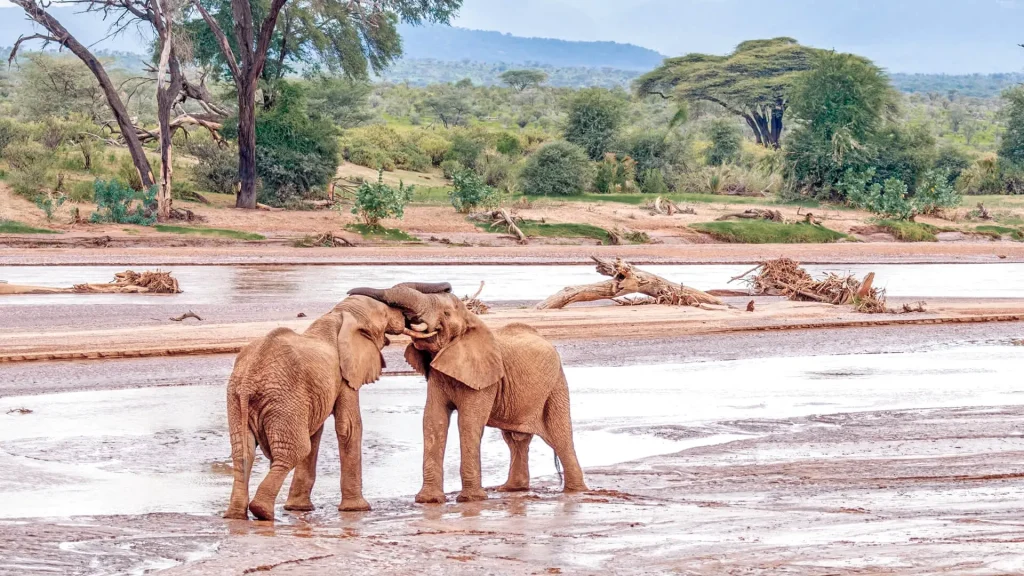
Herds frequently move between the dry interior and the Ewaso Nyiro, where they drink, feed and sometimes bathe. The contrast between grey elephants, red-brown earth, doum palms and riverine landscape creates exceptional photographic opportunities — never a promise on a given drive.
-
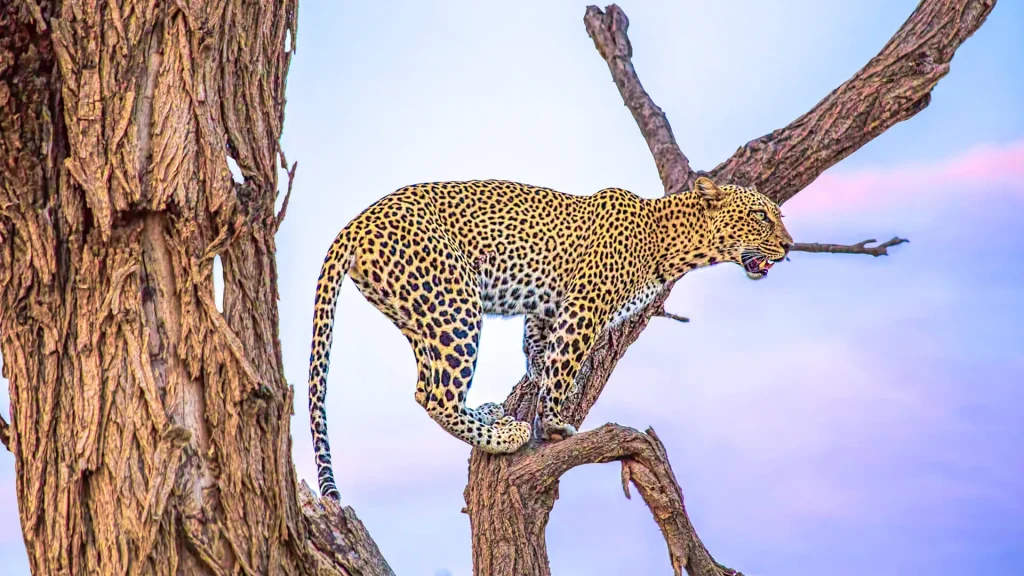
Excellent Leopard Country
Riverine vegetation along the Ewaso Nyiro creates good leopard habitat: cover, shade and prey. Leopards are naturally elusive and sightings can never be guaranteed, but Samburu is considered one of Kenya’s rewarding destinations for travellers particularly interested in big cats.
-
Dramatically Different Landscapes
This does not look like the Masai Mara. Red and ochre earth, dry plains, rocky hills, thorn scrub, doum palms, acacia woodland, sandy riverbeds and riverine forest make longer Kenya itineraries far more varied.
-
The Ewaso Nyiro River
In a generally dry environment, reliable water attracts wildlife from considerable distances. Crocodiles and hippos inhabit sections of the river, while trees along its banks provide habitat for birds, monkeys and leopards.
-
Rich Samburu Culture
The reserve takes its name from the Samburu people, whose pastoral culture has long been associated with northern Kenya. They share certain connections with the Maasai but maintain their own identity. Choose community visits that are respectful, authentic and benefit host communities.
Understanding the Samburu Ecosystem
Samburu is part of a larger northern Kenya conservation landscape. Wildlife moves through adjoining protected areas, community lands and conservancies according to rainfall, water and grazing. The reserve lies on one side of the Ewaso Nyiro; Buffalo Springs lies across the river; Shaba lies farther east. Together they create a much broader safari ecosystem.
-
Semi-Arid Plains
Dry grassland and scrub adapted to limited rainfall. Species such as oryx and gerenuk are particularly suited to these conditions.
-
Riverine Forest
Vegetation becomes dramatically greener around the Ewaso Nyiro. These habitats provide food, water, shade and cover.
-
Acacia and Thorn Scrub
Giraffes, gerenuk and elephants feed within scrub and woodland areas.
-
Rocky Hills
Rocky formations add dramatic scenery and provide habitat for smaller mammals, reptiles and birds.
-
Dry Riverbeds
Seasonal waterways remain important wildlife corridors even when little surface water is visible.
Top Things to Do in Samburu
-

Morning Game Drives
Temperatures are cooler and predators may still be active. Ideal for searching for lions, leopards, cheetahs, elephants and Special Five species. Light is particularly attractive for photography.
-

Afternoon Game Drives
Wildlife activity often increases toward evening. Golden light across Samburu’s dry landscapes can produce beautiful photographs.
-

Search for the Special Five
Finding all five northern specialists introduces travellers to the adaptations that allow wildlife to survive in northern Kenya. Nothing is guaranteed on a given drive.
-
Elephant Watching
Allow time to observe family behaviour: how calves remain protected, how elephants communicate and how groups approach water.
-

Birdwatching
Particularly valuable if your Kenya itinerary also includes southern parks. The change in habitat brings a corresponding change in birdlife.
-

Wildlife Photography
Photograph animals within their environment — river, doum palms, red earth — rather than relying only on close-up portraits. Serious photographers should consider a private vehicle and three or four nights.
Plan a Samburu Safari
Catalogs and planning pages for Samburu itineraries, photography, families, costs and first-time questions.
- Samburu Safaris Browse Samburu itineraries by duration and camp style.
- Safari Packages Ready-made circuits that include Samburu with Ol Pejeta, the Mara or Nairobi road trips.
- Things to Do Morning and afternoon drives, birding, photography and the Special Five.
- Photography Safari River light, red earth and private vehicles for a slower photographic stay.
- Family Safari Distinctive northern species that children can learn to tell apart.
- Honeymoon Safari Dramatic landscapes, smaller safari atmosphere and luxury lodges.
- Safari Cost What a Samburu stay actually costs — lodges, fees and transfers.
- Entrance Fees Current reserve-fee notes, quoted when we plan your safari.
- Travel Guide Practical destination notes for first-time visitors.
- FAQs Extended answers beyond the summary on this page.
Popular Samburu Safaris
View All Safari Packages-
6 Days Ol Pejeta Samburu and Aberdare Safari
A 6 day Kenya journey connecting Nairobi, Ol Pejeta, Samburu or Buffalo Springs and Aberdare.
Aberdare, Nairobi, Ol Pejeta
View Safari -
15 Days Kenya Reserves Lakes and Southern Parks
A 15 day Kenya journey connecting Nairobi, Ol Pejeta, Samburu or Buffalo Springs, Solio, Lake Nakuru, Maasai Mara,…
Amboseli, Lake Naivasha, Lake Nakuru
View Safari -
14 Days Kenya Wildlife Safari and Diani Flight Extension
A 14 day Kenya journey connecting Nairobi, Ol Pejeta, Samburu, Solio, Lake Naivasha, Maasai Mara and Diani Beach.
Diani Beach, Lake Naivasha, Masai Mara
View Safari -
14 Days Kenya Northern and Southern Wildlife Safari
A 14 day Kenya journey connecting Nairobi, Ol Pejeta, Samburu, Solio, Lake Nakuru, Maasai Mara, Lake Naivasha, Amboseli,…
Amboseli, Lake Naivasha, Lake Nakuru
View Safari -
16 Days Kenya Northern Reserves Amboseli and Beach
A 16 day Kenya journey connecting Nairobi, Ol Pejeta, Samburu or Buffalo Springs, Solio, Lake Nakuru, Maasai Mara,…
Amboseli, Diani Beach, Lake Naivasha
View Safari -
10 Days Kenya Northern Reserves and Maasai Mara
A 10 day Kenya journey connecting Nairobi, Ol Pejeta, Samburu or Buffalo Springs, Solio, Lake Nakuru, Maasai Mara…
Lake Naivasha, Lake Nakuru, Masai Mara
View Safari

Wildlife & Birds
Samburu offers a mixture of familiar East African wildlife and northern specialists. The Special Five — Grevy’s zebra, reticulated giraffe, gerenuk, Beisa oryx and Somali ostrich — are adapted to dry country and are among the reserve’s signature animals. None of those sightings is guaranteed on a given drive.
Elephants frequently use the Ewaso Nyiro corridor. Lions, leopards and cheetahs occur; leopards are associated with the wooded riverbanks. African wild dogs may occur in the broader northern Kenya landscape — they are highly mobile and sightings are unpredictable.
-
Grevy’s zebra
The largest living wild zebra. Narrower stripes, large rounded ears and a white belly distinguish it from plains zebra.
-
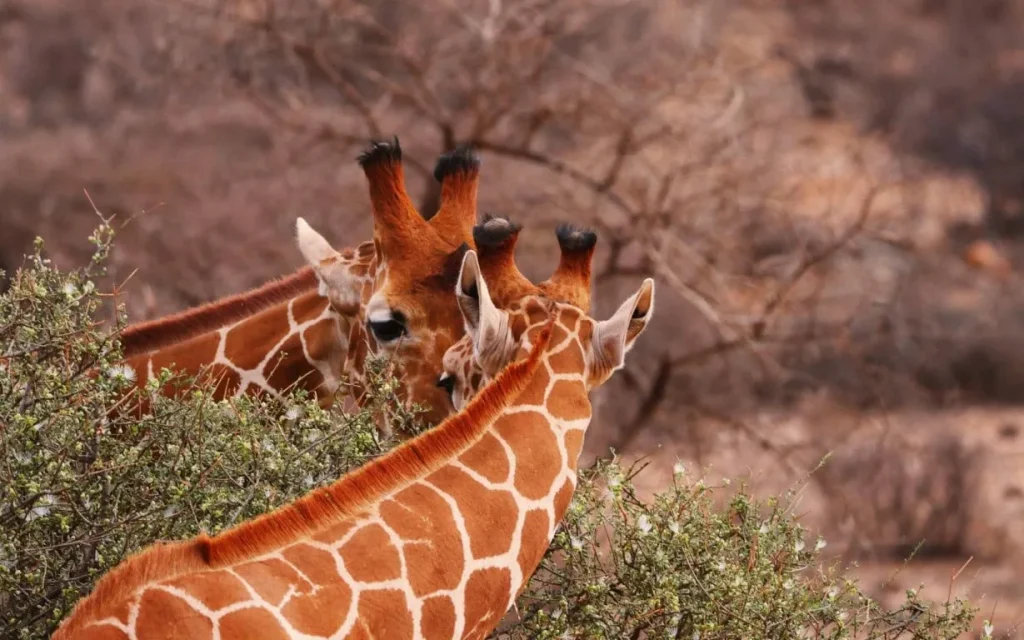
Reticulated giraffe
Sharply defined reddish-brown patches separated by bright white lines. Outstanding photographic subjects against acacia and rugged horizons.
-
Gerenuk
Sometimes called the giraffe gazelle. An exceptionally long neck; it often feeds standing upright on its hind legs.
-
Beisa oryx
Long, straight horns and distinctive facial markings. Strongly adapted to dry conditions.
-
Somali ostrich
Differs from the common ostrich. Adult males are notable for the bluish-grey colour of the neck and legs.
-
Elephants
Among the most frequently sought large mammals. Watching herds descend toward the Ewaso Nyiro can be a highlight. Sightings are never guaranteed.
-
Lions
Occur throughout the ecosystem. Early morning drives provide particularly good opportunities to search for predators before temperatures rise.
-
Leopards
Strongly associated with the wooded river corridor. Naturally elusive — sightings can never be guaranteed.
-
Cheetahs
Favour open landscapes where they can use speed to hunt. Sightings are less predictable than elephants or some plains game.
-
African wild dogs
May occur within the broader northern Kenya ecosystem. Highly mobile. Encountering a pack is particularly special and never promised.
-
Hippos and crocodiles
The Ewaso Nyiro supports aquatic wildlife, a remarkable contrast with dry landscapes only a short distance from the river.
-
Birds
Northern Kenya supports species that may not occur on a typical southern itinerary: raptors, hornbills, bee-eaters, bustards and dry-country specialists.
Wildlife & Photography Guides
Special Five, elephants, birds and landscape photography — sightings are never guaranteed.
- Samburu Wildlife Elephants, predators, river species and northern specialists — never guaranteed.
- Samburu Special Five Grevy’s zebra, reticulated giraffe, gerenuk, Beisa oryx and Somali ostrich.
- Samburu Birds Dry-country specialists, raptors and riverine birdlife along the Ewaso Nyiro.
- Photography Safari Photograph wildlife within river, doum palm and red-earth landscapes.
Best Time to Visit

Samburu can be visited throughout the year. It is typically hotter and drier than highland parks such as the Masai Mara — pack layers for early drives and sun protection for the middle of the day. Wildlife distribution, vegetation and road conditions still change with rainfall. Individual species can never be guaranteed.
-
Dry-season Samburu
Animals become increasingly dependent on reliable water. The Ewaso Nyiro becomes especially important. Advantages can include wildlife concentrations near water, thinner vegetation and good road conditions. Dust is part of the visual character.
-
Green-season Samburu
Rain can transform the reserve surprisingly quickly. Vegetation becomes greener, skies more dramatic and bird activity can increase. Road conditions may occasionally become more challenging after heavy rain.
How to Get There

-
Nairobi to Samburu by Road
Samburu lies considerably farther north of Nairobi than Lake Nakuru. Driving commonly requires about 5–6 hours or more, depending on traffic, road conditions, stops and lodge location. Road travel combines naturally with the Mount Kenya region, Ol Pejeta, Laikipia and Lake Nakuru.
-
Flying to Samburu
Light-aircraft connections can dramatically reduce transfer time. Fly-in arrangements work especially well for luxury safaris, honeymoons, short itineraries and travellers combining distant destinations. Schedules should be checked for travel dates and lodge location.
Where to Stay
Samburu offers camps and lodges from relatively simple to luxurious. Consider more than the room: location, game-drive access, distance to wildlife areas, views, family facilities, meals, electricity and Wi-Fi. A cheaper lodge farther away can erase the saving in transfer time.
View Samburu LodgesWhere to Stay in Samburu
Lodges and camps by budget. Location affects drive times as much as the room.
How Many Days Do You Need in Samburu?
For most travellers, two to four nights works well. Two nights provides an introduction and opportunities to search for the Special Five. Three nights is a strong choice for most itineraries — several morning and afternoon drives without feeling rushed.
Four nights is recommended for photographers, birdwatchers, wildlife enthusiasts and a slower pace. Longer stays also improve the chance of finding elusive predators such as leopards — still never guaranteed.
Samburu Safari Cost
The price of a Samburu safari varies considerably. Major factors include number of nights, accommodation, number of travellers, private or shared vehicle, season, road versus air transport, park fees and additional destinations.
A private road safari for four travellers using mid-range accommodation may offer very different value from a two-person luxury fly-in safari. Park fees can change — we confirm current rates when we quote rather than publishing a permanent table here.
What usually makes a Samburu safari more expensive
- Luxury lodges
- Private guiding
- Internal flights
- Peak travel dates
- Single-room occupancy
- Longer stays
- Private photography vehicles
How to reduce Samburu safari costs
- Travelling by road
- Combining Samburu efficiently with Ol Pejeta
- Travelling as a small private group
- Choosing mid-range accommodation
- Travelling outside the highest-demand dates
- Avoiding unnecessary one-night stops
First Safari, Families & Practical Planning
-
Is Samburu Good for a First Kenya Safari?
Yes, particularly when combined with another destination. Samburu introduces northern Kenya’s distinctive ecology, while the Masai Mara provides classic open-savannah viewing. A strong first-time circuit might be Nairobi → Samburu → Ol Pejeta → Lake Nakuru → Masai Mara.
-
Samburu Family Safari
Children can learn to distinguish Grevy’s zebra from plains zebra, reticulated giraffe from other giraffes, and gerenuk from other antelopes. A private vehicle is often worthwhile so drives can be adapted to heat and the family’s pace.
- Children’s ages
- Private safari vehicle
- Swimming pool and family rooms
- Game-drive length and heat
- Meal flexibility
-
Samburu Honeymoon Safari
Dramatic landscape, a smaller safari atmosphere and luxury lodges can work very well for couples. Combine with the Masai Mara and the Kenya Coast if you want savannah and beach after northern Kenya.
-
What to Pack
Samburu can be hot and dusty. Lightweight safari clothing, sun protection and a light jacket for early drives are useful. Photographers should carry lens-cleaning equipment.
- Neutral-coloured shirts and lightweight trousers
- Hat, sunglasses, sunscreen and insect repellent
- Comfortable shoes and a light jacket
- Binoculars, camera, chargers and spare batteries
- Reusable water bottle and personal medication
-
Responsible Safari Travel
Wildlife frequently moves outside formally protected areas. Respect viewing distances, follow guide instructions, avoid littering, use responsible cultural experiences and never pressure guides to disturb animals.
Samburu vs Masai Mara
These destinations should not be viewed as substitutes. Combine both: you move from the dry northern ecosystem into classic Mara grasslands. Great Migration river crossings and individual species can never be guaranteed.
Choose Samburu for
- Special Five and rare northern species
- Reticulated giraffes and Grevy’s zebras
- Dry northern landscapes
- Riverine elephant viewing
- Lower-volume safari atmosphere
Choose Masai Mara for
- Abundant big cats
- Great Migration possibilities — never guaranteed
- Large plains-game concentrations
- Expansive grasslands
- Conservancy experiences
Combine Samburu with Other Destinations
Northern Kenya circuits and Mara pairings that start or finish in Samburu.
- Samburu + Ol Pejeta Northern specialists plus rhino conservation. Samburu is not a rhino park.
- Samburu + Masai Mara Dry northern landscapes then classic Mara grasslands. Complementary, not substitutes.
- Nairobi to Samburu A focused northern Kenya safari from Nairobi by road or air.
- Buffalo Springs National Reserve Natural springs across the Ewaso Ng’iro — quieter game-drive territory in the same ecosystem.
- Shaba National Reserve Volcanic wilderness and a quieter third reserve on the same northern circuit.
- Samburu to Masai Mara (9 days) A longer Kenya circuit that links northern Kenya with the Mara.
- Ol Pejeta Conservancy The logical rhino pairing on a northern Kenya road safari.
- Laikipia Private northern safari country on the same overland axis as Samburu.
- Lake Nakuru A natural stop on the Nairobi → Samburu → Ol Pejeta → Nakuru → Mara circuit.
Travel Tips
- Two to four nights works well; three nights is a strong choice for most itineraries.
- The Ewaso Nyiro is the ecological heart of the reserve — especially in the dry season.
- Leopards, wild dogs and the Special Five can never be guaranteed on a given drive.
- Combine with Ol Pejeta, Laikipia, Lake Nakuru or the Masai Mara rather than treating Samburu as a one-night stop.
- Samburu can be hot and dusty. Pack layers, sun protection and lens-cleaning kit.
- Choose lodge location for game-drive access, not only the room category.
FAQs
Where is Samburu National Reserve?
Samburu National Reserve is located in northern Kenya in Samburu County.
Is Samburu a national park?
No. Its correct name is Samburu National Reserve.
What is Samburu famous for?
Samburu is particularly famous for its Special Five, elephants, leopards, the Ewaso Nyiro River and dramatic semi-arid landscapes.
What are the Samburu Special Five?
Grevy’s zebra, reticulated giraffe, gerenuk, Beisa oryx and Somali ostrich. Sightings of any one of them can never be guaranteed.
Is Samburu worth visiting?
Yes. It is particularly worthwhile when combined with southern Kenya because it adds wildlife and landscapes that may not be encountered elsewhere on the itinerary.
How many days do I need in Samburu?
Two to four nights works well for most travellers. Three nights provides a particularly good balance.
Can you see leopards in Samburu?
Samburu has a strong reputation for leopard viewing, although no individual wildlife sighting can be guaranteed.
Are there wild dogs in Samburu?
African wild dogs occur within the broader northern Kenya landscape, but they are highly mobile and sightings are unpredictable.
Does Samburu have rhinos?
Samburu is not generally selected primarily for rhino viewing. Travellers particularly interested in rhinos should consider combining it with Ol Pejeta.
How far is Samburu from Nairobi?
Road journeys commonly take around five to six hours or more depending on traffic, road conditions, stops and your final lodge.
Can I fly to Samburu?
Yes. Air transfers can be particularly useful for luxury and shorter itineraries.
Is Samburu suitable for children?
Yes. Its distinctive wildlife can make it particularly interesting for families, especially with a private vehicle.
How much does a Samburu safari cost?
It depends on accommodation, season, number of travellers, length of stay and transport. A single headline price is rarely useful.
What are the Samburu entrance fees?
Official fees may change. We confirm current rates when we quote rather than publishing a permanent table on this page.
Can I combine Samburu with Masai Mara or Ol Pejeta?
Yes. Samburu plus Masai Mara is one of the best ways to experience contrasting northern and southern Kenyan ecosystems. Ol Pejeta is an especially logical road-safari combination for rhino conservation.
Is Samburu safe?
Samburu is an established safari destination. Follow guide, lodge and reserve instructions and normal wildlife-safety precautions.
Browse Samburu Guides
Already know what you need — the Special Five, a photography stay, a packing list? Search below, or open a topic and jump straight in.
No pages match that search.
Safari planning 6 pages
Wildlife 3 pages
Activities 2 pages
When to travel 2 pages
Costs and getting there 5 pages
Where to stay 3 pages
Ready to Explore Northern Kenya?
A Samburu safari is especially valuable for travellers who want to see more of Kenya than its most famous southern parks. Two nights can introduce the Special Five; three or four nights suit elephants, predators, birding and photography.
Tell us your travel dates, number of travellers, preferred accommodation level, approximate budget, number of safari days, wildlife priorities, whether photography is important, whether you prefer road or fly-in travel, and other Kenya destinations you want to visit.
We can then design a Samburu safari around your priorities rather than forcing a fixed itinerary.
- Tailor-Made Safaris
- Best Price Guarantee
- No Hidden Costs
- 24/7 Support
- Local Safari Experts 24/7 support in Kenya
- Tailor-Made Safaris Personalized to your needs
- Best Price Guarantee No hidden costs
- Responsible Tourism Travel with a positive impact