

Cheetahs During Great Migration
Cheetahs during the Great Migration are among the most fascinating predators to observe in the grasslands of Kenya and Tanzania. While lions often attract attention through their social behaviour and powerful appearance, cheetahs offer a different kind of wildlife experience. Their slender bodies, remarkable acceleration, careful hunting strategies and dependence on suitable open habitats make them especially interesting for safari travellers and wildlife photographers.
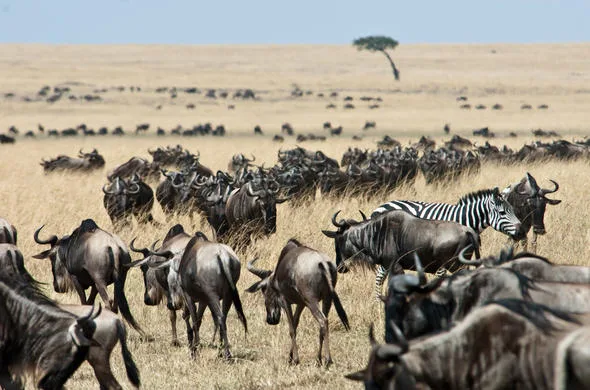
The Great Wildebeest Migration moves through the Serengeti-Mara ecosystem as grazing animals respond to changing rainfall and vegetation. Large herds of wildebeest, zebras and other herbivores occupy different parts of the landscape throughout the year, creating opportunities for several predator species.
Cheetahs are part of this ecological system, but their relationship with the migration differs from that of lions, hyenas and crocodiles. They often target smaller prey such as gazelles and may hunt young wildebeest when circumstances are favourable. Their hunting strategy depends on speed, precise timing and the ability to approach prey closely before beginning a chase.
For travellers planning a Masai Mara cheetah safari or Serengeti cheetah safari, understanding where cheetahs live, how they hunt and why their sightings are unpredictable can greatly improve the experience.
Understanding Cheetahs in the Great Migration Ecosystem
Cheetahs inhabit open and semi-open landscapes where they can locate prey visually and use available cover for stalking. The Serengeti-Mara ecosystem provides extensive grasslands, scattered shrubs and gently rolling terrain that can support cheetahs and their prey.
Unlike wildebeest, cheetahs do not undertake a regular annual migration following a fixed route. Their movements are influenced by home ranges, prey availability, breeding behaviour, competition and other environmental factors. Some cheetahs remain within familiar areas for extended periods, while others may move across substantial distances.
When migratory herds enter a region, they may change local prey availability and predator interactions. However, cheetahs do not depend exclusively on migrating wildebeest. Resident gazelles and other smaller antelopes are important food sources, meaning cheetah viewing can remain possible outside the main migration months.
Why Cheetahs Are Exceptional Hunters
Cheetahs are specialised for rapid acceleration and short-distance pursuit. Their lightweight bodies, long limbs, flexible spines and specialised claws contribute to their running ability. However, hunting involves much more than simply running quickly. A successful cheetah must locate suitable prey, approach without being detected, choose an appropriate moment to accelerate and control the chase.
Exceptional Acceleration
Cheetahs are widely recognised as the fastest land mammals. Their running ability allows them to accelerate rapidly over short distances, but they cannot maintain maximum speed for long periods. A prolonged chase is physically demanding and can result in exhaustion or injury. For this reason, cheetahs generally benefit from approaching prey as closely as possible before beginning pursuit.
Hunting by Sight
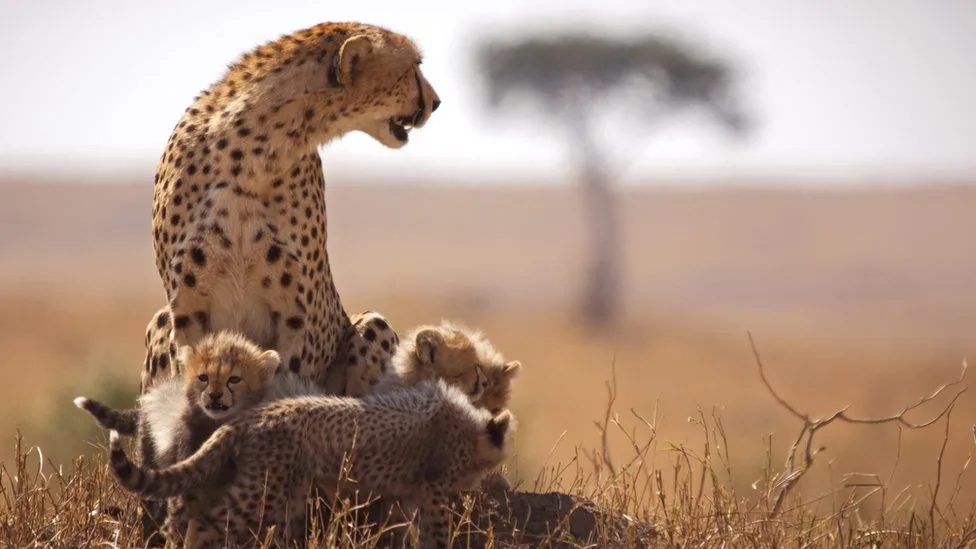
Cheetahs rely heavily on vision to locate prey. They may use termite mounds, small rises or other elevated positions to scan surrounding grassland. Their characteristic dark facial markings are visually distinctive, although popular explanations of their exact function should not be treated as settled science. A cheetah may spend considerable time watching grazing animals before deciding whether conditions favour a hunt.
Stalking Behaviour
Once a suitable target is identified, the cheetah may lower its body and move carefully through available cover. The approach can be slow and deliberate. If prey animals detect the predator too early, the cheetah may abandon the attempt rather than waste energy on a chase with little chance of success. This stalking phase can provide excellent opportunities for observing natural behaviour.
The Chase
When the cheetah begins pursuit, rapid acceleration and sharp changes of direction become important. Gazelles and other prey animals may escape by turning suddenly, changing speed or reaching cover. A chase may end quickly, whether successful or unsuccessful, and visitors should not assume that every stalking sequence will result in a kill.
Do Cheetahs Hunt Wildebeest During the Migration?
Cheetahs can hunt young wildebeest, particularly when vulnerable animals are available. However, adult wildebeest are relatively large and potentially dangerous prey for a cheetah. Cheetahs frequently target smaller antelopes, including gazelles, because these animals are more manageable relative to the predator's body size and hunting strategy.
During the seasonal calving period in the southern Serengeti ecosystem, young wildebeest may provide additional opportunities for predators. Nevertheless, it would be inaccurate to describe cheetahs as predators that primarily hunt adult migrating wildebeest. Their diet varies with location, prey availability, individual ability and group composition.
Cheetahs Versus Lions During the Great Migration
Cheetahs and lions differ in several important ways. Lions are larger, more powerful cats that may hunt cooperatively and capture substantial prey. Cheetahs are lighter and rely more heavily on speed and precision during pursuit.
Hunting Strategy
Lions frequently use concealment, ambush and short bursts of speed. Cheetahs also stalk prey, but their acceleration and ability to change direction during a chase are central to their hunting technique.
Prey Selection
Lions can hunt large herbivores, including adult wildebeest and buffalo. Cheetahs generally focus on smaller prey, although groups of cheetahs may sometimes tackle larger animals.
Social Behaviour
Lions live in prides with complex social relationships. Female cheetahs are generally solitary except when raising cubs, while males may live alone or form coalitions.
Competition
Lions may threaten cheetahs or displace them from kills. Cheetahs therefore face challenges not only from prey animals but also from larger carnivores. These differences make observing both species particularly rewarding on a Great Migration predator safari.
Cheetah Social Behaviour
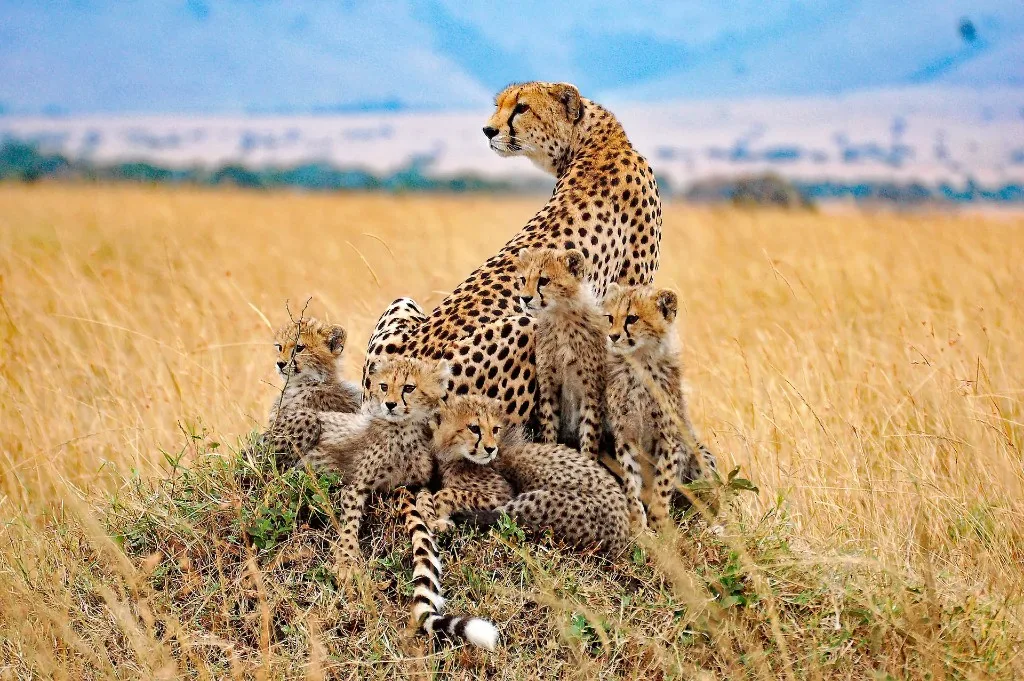
Cheetah social organisation differs from that of lions. Adult females generally occupy overlapping home ranges and spend much of their lives alone, except when accompanied by dependent cubs. Males may live alone or form coalitions, sometimes consisting of brothers. Coalitions can help males defend territories and compete for access to females.
Female Cheetahs and Cubs
Female cheetahs raise their cubs without the regular assistance of adult males. Young cubs are vulnerable to predators, including lions and hyenas. Mothers must balance hunting, protecting their young and moving between suitable areas. Observing a mother with cubs can be a memorable experience, but safari vehicles should maintain appropriate distances and avoid interfering with their movements.
Male Coalitions
Male cheetah coalitions are among the species' most interesting social arrangements. Coalition members may travel, rest and hunt together. Cooperation can provide advantages in territorial competition and, under some circumstances, hunting. However, not every male cheetah belongs to a coalition, and group composition varies.
Where to See Cheetahs During the Great Migration
Masai Mara National Reserve
The Masai Mara National Reserve is one of Kenya's best-known destinations for cheetah viewing. Its open grasslands provide suitable habitat for cheetahs and several of their preferred prey species. Cheetahs may be observed resting on small rises, scanning the plains or moving through grassland in search of prey.
The reserve also supports lions, leopards, spotted hyenas and other carnivores. During migration periods, large wildebeest herds may occupy parts of the landscape, creating opportunities to observe predator-prey interactions. However, cheetahs can also be seen outside the main migration months because resident prey remains available.
Mara Triangle
The Mara Triangle contains open grassland and other habitats suitable for cheetahs. Wildlife viewing conditions vary according to season, vegetation and animal movements. The area can be attractive for photographers who want to observe predators in expansive landscapes. As with the rest of the ecosystem, sightings are not guaranteed.
Mara Conservancies
Conservancies surrounding the national reserve provide additional cheetah habitats. Depending on the conservancy, wildlife-viewing rules may limit vehicle numbers and regulate activities. A quieter viewing environment can be valuable when observing sensitive predators. However, travellers should confirm the exact access arrangements associated with their accommodation.
Central Serengeti
The central Serengeti offers opportunities to observe cheetahs in open grasslands and surrounding habitats. Resident prey populations support predators throughout the year. The region can be a good choice for travellers interested in general big-cat viewing rather than one specific migration event.
Southern Serengeti and Ndutu
The Ndutu area and southern Serengeti ecosystem are particularly interesting during the seasonal wildebeest calving period. Open landscapes provide suitable hunting environments for cheetahs. Young wildebeest and resident gazelles can create opportunities for predator activity. The exact distribution of wildlife depends on rainfall and vegetation conditions.
Northern Serengeti
The northern Serengeti is best known for seasonal migration activity around the Mara River. Cheetahs also occur in suitable open habitats, although their distribution is not determined solely by river-crossing activity. Visitors should not assume that the busiest migration viewing areas are necessarily the best places for cheetah observation.
Best Time to See Cheetahs During the Great Migration
Cheetahs can be observed throughout the year in suitable parts of the Serengeti-Mara ecosystem. However, the seasonal distribution of grazing animals and vegetation can influence visibility and hunting opportunities.
January to March
The southern Serengeti ecosystem often supports large wildebeest concentrations during the calving period. This season can provide opportunities to observe cheetahs hunting smaller prey and interacting with young migratory animals. The open landscapes of the Ndutu region are particularly attractive for photography.
April to June
Rainfall can create greener landscapes and taller vegetation. Cheetahs remain active, but locating them may become more challenging in some areas. Road conditions and seasonal camp operations should be considered when planning travel.
July to October
The main migration season in the northern Serengeti and Masai Mara attracts considerable safari interest. Cheetahs may be encountered in open grasslands, although their sightings are not dependent on river crossings. These months can be rewarding for a Masai Mara cheetah safari, especially when the itinerary allows several game drives.
November and December
As rainfall patterns change, migratory herds often begin moving southward. Resident prey remains available in many cheetah habitats. Wildlife viewing continues, although weather and vegetation conditions vary.
What Time of Day Are Cheetahs Most Active?
Cheetahs are primarily daytime hunters, although their activity patterns can vary. They often hunt during daylight, when visibility helps them locate and pursue prey. Early morning and late afternoon can be particularly rewarding because temperatures are generally cooler.
Morning Game Drives
Early morning provides opportunities to observe cheetahs scanning grasslands, moving between resting locations or beginning hunting activity. Soft morning light can also be attractive for photography. However, a morning sighting does not guarantee a chase.
Midday Behaviour
Cheetahs may rest during the hottest parts of the day. They sometimes use elevated positions or shaded areas to observe their surroundings. Resting behaviour is normal and should not be interpreted as a disappointing sighting.
Afternoon Activity
Cheetahs may become more active as temperatures fall. Late afternoon can offer good light and opportunities to observe movement or hunting preparation. The actual timing depends on weather, prey activity and individual circumstances.
How to Recognise Cheetah Hunting Behaviour
Understanding behavioural clues can help safari visitors appreciate a cheetah sighting. A cheetah may begin by standing on a termite mound or small rise and scanning the surrounding area. It may then lower its body, focus intently on a group of prey animals or move gradually through vegetation. The predator might pause repeatedly while assessing the distance and behaviour of potential targets. A sudden acceleration may follow, but the cheetah can also abandon the attempt.
Signs of Hunting Interest
Potential signs of hunting interest include:
- Focused observation of a particular group of animals
- Lowered posture
- Deliberate movement through cover
- Repeated attention towards the same prey group
These behaviours do not always lead to a hunt. A knowledgeable guide can explain what the cheetah appears to be doing without claiming certainty about its intentions.
Why Hunts Fail
Prey animals may detect the cheetah early, escape through rapid turns or reach terrain that makes pursuit difficult. The cheetah may also abandon a chase to conserve energy. Failed hunting attempts are a normal part of predator ecology.
After a Successful Hunt
Following a successful chase, a cheetah may need time to recover before feeding. Other carnivores can pose a threat to its kill. Safari vehicles should avoid crowding the animal, particularly when it is exhausted or feeding.
Cheetahs and Other Predators
Cheetahs share the Serengeti-Mara ecosystem with lions, leopards, spotted hyenas and other carnivores. Competition can influence their behaviour and use of habitat.
Lions
Lions are considerably larger and may kill cheetahs or their cubs. Cheetahs generally avoid direct confrontations with lions.
Spotted Hyenas
Hyenas may displace cheetahs from kills and pose risks to young animals. Cheetahs sometimes abandon food when larger competitors approach.
Leopards
Leopards and cheetahs use different hunting strategies and often occupy somewhat different habitat niches. Nevertheless, competition and occasional aggressive encounters can occur. These relationships help explain why cheetahs need suitable hunting areas and opportunities to avoid larger carnivores.
Cheetah Photography in the Masai Mara
A cheetah photography safari requires patience, appropriate equipment and ethical viewing practices. Cheetahs can move suddenly, making them challenging photographic subjects. A versatile telephoto lens is useful for capturing portraits, movement and hunting behaviour without approaching too closely.
Photographing Cheetahs at Rest
Resting cheetahs provide opportunities to capture facial details, body posture and environmental context. Look for natural compositions that include grassland, termite mounds or distant herds. Avoid asking the guide to move unnecessarily close simply to fill the frame.
Photographing a Cheetah Running
Fast shutter speeds can help freeze movement during a chase. Continuous autofocus and burst shooting may improve the chances of capturing a sharp image. However, photographers should prepare their equipment before the action begins rather than distracting the guide during a critical wildlife encounter.
Capturing Environmental Portraits
Wide compositions can show a cheetah within the vast landscapes of the Masai Mara or Serengeti. These photographs communicate habitat and scale rather than focusing only on the animal's face.
Ethical Photography
Responsible cheetah photography means:
- Never encouraging a guide to drive into the path of a hunting cheetah
- Not surrounding animals or blocking escape routes
- Not interfering with prey
- Protecting the wildlife that makes the safari possible
Planning a Masai Mara Cheetah Safari
A cheetah-focused safari should allow enough time to explore different habitats. Three or four nights in the Masai Mara can provide a useful introduction, while dedicated photographers may prefer longer stays. A private safari vehicle offers flexibility to remain at a sighting when appropriate.
Choosing a Guide
An experienced guide can recognise cheetah habitats, identify behavioural clues and position the vehicle responsibly. Good guiding involves patience and respect for wildlife regulations. The quality of interpretation can make even a resting cheetah sighting highly rewarding.
Choosing Accommodation
Accommodation location affects daily game-drive logistics. Properties situated near suitable wildlife habitats may reduce transfer times, but no camp can guarantee nearby cheetah sightings. Essential, Comfort, Premium and Signature accommodation can all support excellent wildlife experiences.
Private Versus Group Safaris
A private Masai Mara safari allows greater flexibility for photography and specialised wildlife interests. Group safaris may offer better value but usually involve shared schedules. Travellers should choose according to their budget and desired level of flexibility.
Suggested 4-Day Masai Mara Cheetah Safari
The following is a proposed itinerary rather than a confirmed package.
Day 1: Nairobi to Masai Mara
Depart Nairobi and travel towards the Masai Mara region. The journey passes through the Great Rift Valley and rural landscapes before reaching the safari area. Depending on arrival time, enjoy an afternoon game drive. Your guide can introduce the reserve's grassland habitats and begin searching for cheetahs and other wildlife.
Overnight: Selected Masai Mara accommodation.
Day 2: Full-Day Cheetah and Big Cat Safari
Spend the day exploring suitable open grasslands. Your guide may search for cheetahs resting on elevated ground, scanning prey or moving between hunting areas. Other wildlife may include lions, elephants, giraffes, zebras, buffalo and antelopes. Allow time to observe behaviour without rushing between sightings.
Overnight: Masai Mara accommodation.
Day 3: Migration and Predator Photography
Enjoy another full day of wildlife viewing. During migration periods, large wildebeest herds may occupy parts of the ecosystem. Your guide can explore areas suitable for cheetahs while also looking for other predators. If wildlife activity is limited in one location, the route can be adjusted according to conditions and reserve regulations.
Overnight: Masai Mara accommodation.
Day 4: Return to Nairobi
After breakfast, begin the return journey to Nairobi. A short morning wildlife activity may be possible depending on the final schedule. The safari concludes with a greater appreciation of cheetah behaviour and the wider migration ecosystem.
Cheetah Conservation and Responsible Tourism
Cheetahs face significant conservation challenges across their range. Habitat loss, fragmentation, declining prey availability, conflict with people and other pressures affect their long-term survival. Their need for extensive landscapes makes habitat connectivity particularly important.
Protected areas such as the Masai Mara and Serengeti provide important habitats, but conservation also depends on surrounding landscapes and local communities. Responsible tourism can contribute to conservation by supporting wildlife-based livelihoods and encouraging protection of natural habitats. However, tourism must be managed carefully to avoid disturbing sensitive animals.
How Visitors Can Help
Visitors can support cheetah conservation by:
- Choosing responsible safari operators
- Following wildlife-viewing regulations
- Avoiding activities that interfere with hunting or cub-rearing behaviour
- Respecting vehicle limits at sightings
- Never pressuring guides to approach animals too closely
- Supporting conservation initiatives with credible local partnerships where possible
A successful safari should leave wildlife undisturbed.
Frequently Asked Questions
Can I see cheetahs during the Great Migration?
Yes. Cheetahs occur in suitable parts of the Serengeti-Mara ecosystem and may be encountered during migration-focused safaris.
Do cheetahs follow migrating wildebeest?
Cheetahs do not undertake the same seasonal migration as wildebeest. Their movements are influenced by prey availability, home ranges and other factors.
Do cheetahs hunt wildebeest?
Cheetahs may hunt young wildebeest, but they often target smaller prey such as gazelles. Adult wildebeest are relatively large and dangerous targets.
Is the Masai Mara good for cheetahs?
Yes. Its open grasslands provide suitable habitat, although sightings depend on location, conditions and animal behaviour.
Is the Serengeti better than the Masai Mara for cheetahs?
Both destinations offer opportunities. The best choice depends on season, accommodation, habitat and the overall safari itinerary.
When are cheetahs most active?
Cheetahs frequently hunt during daylight, particularly when conditions are suitable. Early morning and late afternoon can be rewarding viewing periods.
How fast can cheetahs run?
Cheetahs are the fastest land mammals and can achieve exceptional speeds over short distances. Exact maximum speeds vary between individuals and conditions.
Can I photograph a cheetah hunt?
It is possible, but hunts are unpredictable. Ethical viewing and appropriate distances must take priority over obtaining photographs.
Are cheetahs dangerous to safari visitors?
Cheetahs are wild predators and must be treated with respect. Visitors should remain in vehicles where required and follow the guide's instructions.
How many days should I spend on a cheetah safari?
Three or four nights is a useful starting point, while specialised wildlife photographers may prefer longer stays.
Book a Cheetah Safari with Safari Trips to Kenya
Watching cheetahs during the Great Migration provides an opportunity to appreciate one of Africa's most specialised predators. Their hunting strategies, social relationships and interactions with other carnivores reveal a fascinating side of the Serengeti-Mara ecosystem.
At Safari Trips to Kenya, we can help plan Masai Mara cheetah safaris, private big-cat photography holidays and combined Kenya and Tanzania wildlife itineraries. Share your travel dates, number of travellers, accommodation preferences and interest in cheetah behaviour or photography, and we can help design a safari with suitable guiding, realistic travel arrangements and enough time to enjoy the wildlife responsibly.