
AmboseliNational Park
Elephants, Mount Kilimanjaro and One of Kenya’s Most Iconic Safari Landscapes
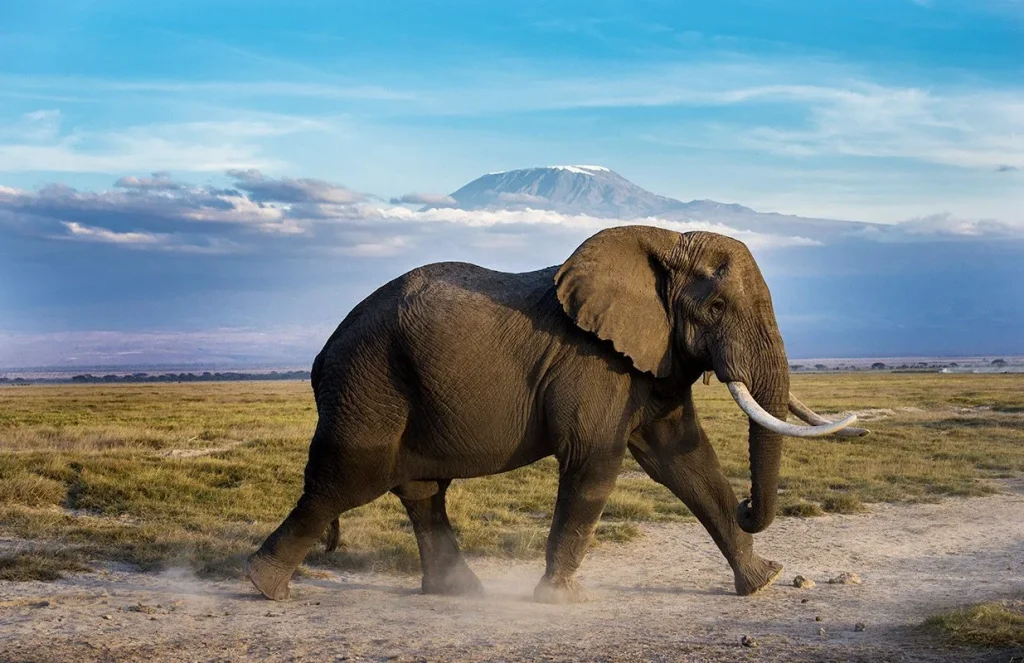
Amboseli National Park is one of Kenya’s most distinctive safari destinations, celebrated for its large elephant herds, open plains, seasonal wetlands and extraordinary views of Mount Kilimanjaro, the highest mountain in Africa.
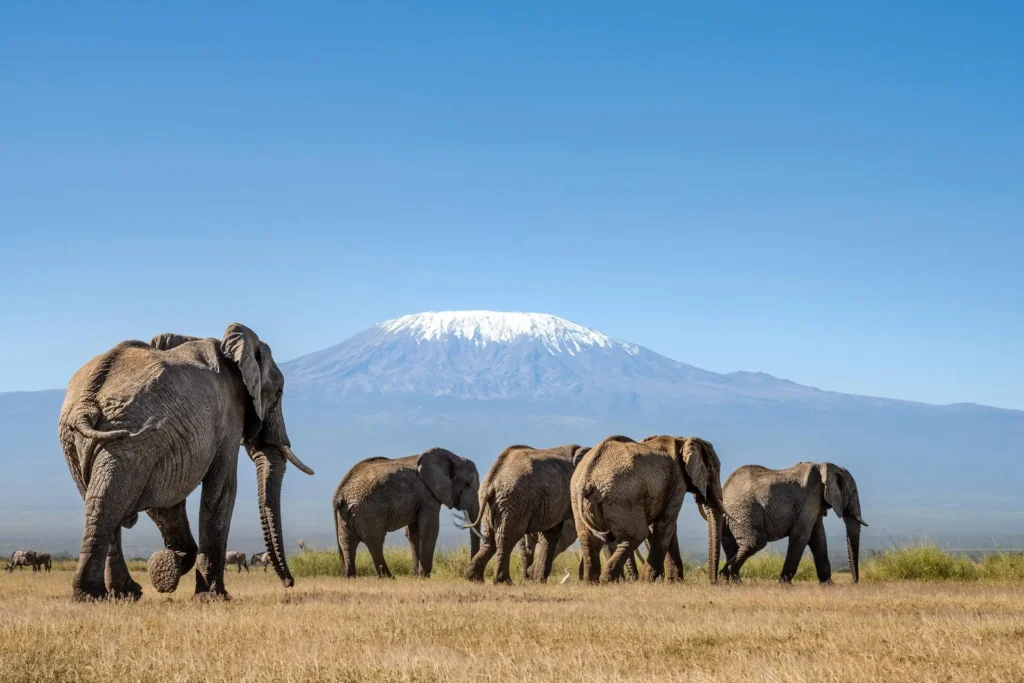
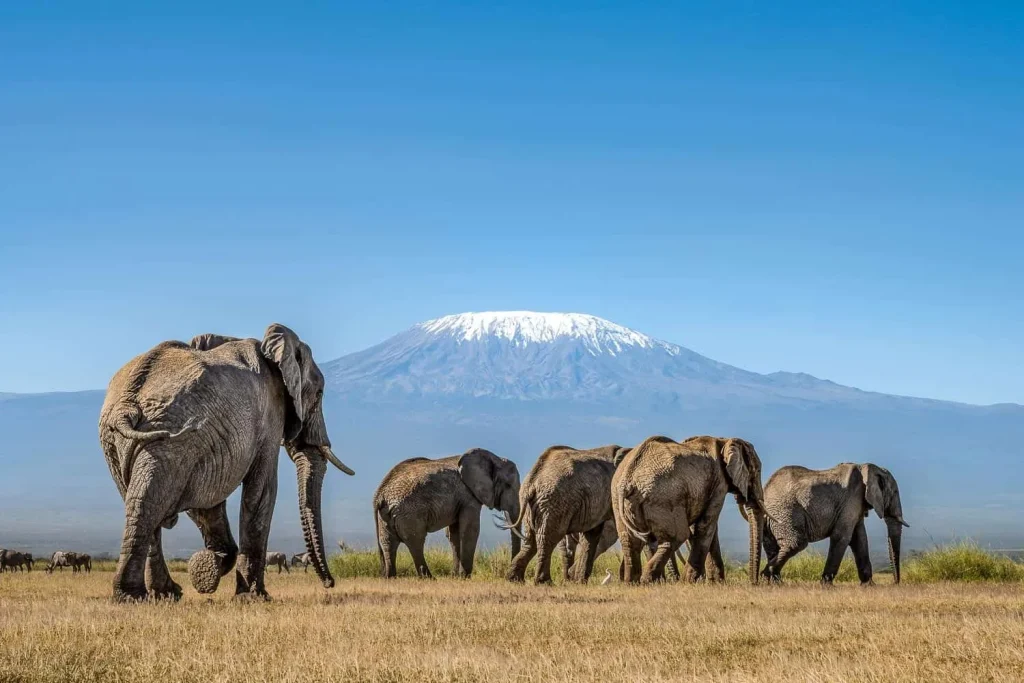
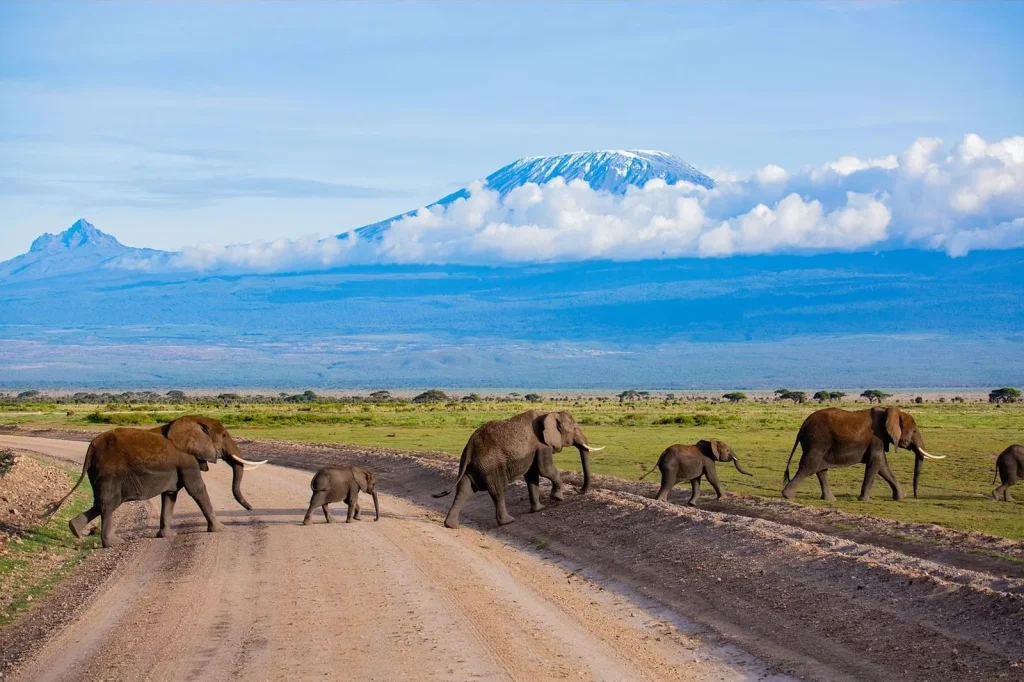
Few safari scenes are more recognisable than a herd of elephants crossing the plains with Kilimanjaro rising behind them. Visibility of the mountain is never guaranteed — cloud often gathers as the day warms.
- LocationSouthern Kenya, near the Tanzania border
- LandscapePlains, wetlands, seasonal lakebeds, acacia woodland
- Best ForElephants, photography, first safaris, families
- Typical Stay2–3 nights (longer for photography)
- From NairobiAbout 240 km / 4–5 hrs by road
- AccessRoad from Nairobi, with air access possible
Overview
Located in southern Kenya close to the Tanzanian border, Amboseli lies within a much larger ecosystem shaped by volcanic geology, underground water, seasonal rainfall and centuries of wildlife movement. Although parts of the surrounding landscape appear dry and dusty, underground water originating from the Kilimanjaro region feeds swamps and wetlands that provide permanent water for wildlife.
As a result, Amboseli can produce remarkable concentrations of elephants, buffaloes, zebras, wildebeest, giraffes, hippos and numerous antelope species around its water-rich areas. Predators including lions, spotted hyenas, cheetahs and jackals are also present, although Amboseli’s safari identity is most closely associated with its elephants and spectacular scenery.
The park is relatively compact compared with enormous wilderness areas such as Tsavo. This makes it possible to explore several habitats without spending entire days travelling between distant sections of the park.
Amboseli combines extremely well with the Masai Mara, Tsavo East, Tsavo West, the Kenya Coast and northern Tanzania, making it an important building block in longer East African itineraries.
Why Visit Amboseli National Park?
Amboseli has a character very different from Kenya’s other major wildlife destinations. The attraction is not based simply on how many species you can tick off a list. It is the combination of wildlife, landscape, light, elephants and Kilimanjaro that creates the experience.
Exceptional Elephant Viewing
Large family groups can often be seen crossing the open plains, drinking in the wetlands, feeding in swamps or moving between habitats. Open terrain frequently allows visitors to observe elephants for extended periods rather than catching only brief glimpses through dense vegetation. Some of Amboseli’s mature bulls are particularly impressive. No sighting is guaranteed.
Extraordinary Views of Mount Kilimanjaro
Although Kilimanjaro lies across the border in Tanzania, some of its most famous wildlife views are seen from Amboseli. On clear mornings and evenings the mountain can dominate the skyline. Cloud often gathers as the day progresses, so early mornings can be particularly valuable. Visibility is never guaranteed.
A Compact and Rewarding Safari Destination
Amboseli is relatively manageable in scale, which is attractive for first-time visitors, families, travellers with limited time and photographers combining several parks. Game drives can move between dry plains, wetlands, woodland and viewpoints without the extremely long transfers required in some larger protected areas. Wildlife is never guaranteed.
Excellent Wildlife Photography
Photographers are attracted by elephants beneath Kilimanjaro, dusty plains, lions in open grassland, buffaloes emerging from wetlands, waterbirds, silhouettes at sunrise and sunset, dry-season dust and storm clouds in wetter periods. A private vehicle allows more control over positioning and how long you remain at a sighting.
Excellent Birdlife
Although Amboseli is best known for elephants, its wetlands, grasslands and woodland support rich birdlife. Swamps can be particularly productive. Depending on season, visitors may encounter pelicans, herons, egrets, storks, kingfishers, raptors, bustards, secretarybirds, ostriches and waterfowl. Sightings vary.
Understanding the Amboseli Landscape
Amboseli’s landscape can appear surprisingly harsh. Large sections of the park are dry and dusty for significant periods of the year. Yet beneath the surface, water plays a central ecological role. Rainfall and snowmelt from the Kilimanjaro region can filter underground through porous volcanic material and emerge here, feeding permanent swamps. The contrast between dry plains and green wetlands is one of the park’s defining characteristics.
Open Plains
Wide, relatively flat plains provide excellent visibility. These areas support zebras, wildebeest, gazelles, elephants and predators. During dry periods, dust creates Amboseli’s characteristic pale landscape.
Wetlands and Swamps
Permanent wetlands are ecological lifelines. Elephants often enter the swamps to feed on aquatic vegetation while buffaloes, hippos and many bird species use the same habitat. The contrast between green swamp vegetation and the surrounding dry plains can be dramatic.
Acacia Woodland
Woodland provides habitat and shade for giraffes, elephants, birds and various smaller species.
Seasonal Lake Areas
Lake Amboseli is generally seasonal rather than a permanently full lake. When water conditions change, the lake area can attract significant birdlife and alter wildlife movement patterns.
Observation Hill
Observation Hill provides an elevated perspective over part of the ecosystem. From the viewpoint, visitors can appreciate how wetlands, plains and surrounding landscapes connect.
Top Things to Do in Amboseli

Morning Game Drives
Early morning is one of the best periods to explore. Temperatures are cooler, wildlife may be more active and Kilimanjaro can sometimes be clearest before cloud develops. Morning light is particularly good for photography.

Afternoon Game Drives
Late afternoon brings softer light and gradually cooling temperatures. Animals that rested through the heat may become more active. Photographers can take advantage of warmer light as sunset approaches.
Elephant Watching
Rather than stopping briefly for a photograph, spend time observing family relationships, feeding, drinking, calf behaviour and interactions between groups. A knowledgeable guide greatly enriches the experience. Sightings are never guaranteed.

Visit Observation Hill
Panoramic views over wetlands and surrounding plains. The elevated position helps visitors understand Amboseli as an ecosystem rather than a collection of individual sightings.
Birdwatching
Wetlands and dry habitats attract very different species. Dedicated birdwatching can easily be incorporated into regular game drives.

Wildlife Photography
A photography-oriented safari should ideally include a private vehicle, early starts, several nights and patience for Kilimanjaro visibility. The mountain and individual species can never be guaranteed.
Plan an Amboseli Safari
Catalogs and planning pages for Amboseli itineraries, photography, families, costs and first-time questions.
- Amboseli SafarisBrowse Amboseli itineraries by duration and camp style.
- Safari PackagesReady-made circuits that include Amboseli with Tsavo, the Mara or the coast.
- Things to DoGame drives, Observation Hill, birding and photography.
- Photography SafariPrivate vehicles, early light and realistic Kilimanjaro expectations.
- Family SafariCompact game-drive areas and elephant viewing that works well with children.
- Honeymoon SafariKilimanjaro scenery, intimate lodges and easy coast extensions.
- Safari CostWhat an Amboseli stay actually costs — lodges, fees and transfers.
- Entrance FeesCurrent park-fee notes, quoted when we plan your safari.
- Travel GuidePractical destination notes for first-time visitors.
- FAQsExtended answers beyond the summary on this page.
Popular Amboseli Safaris
View All Safari Packages15 Days Kenya Reserves Lakes and Southern Parks
A 15 day Kenya journey connecting Nairobi, Ol Pejeta, Samburu or Buffalo Springs, Solio, Lake Nakuru, Maasai Mara,…
Amboseli, Lake Naivasha, Lake Nakuru
View Safari6 Days Nairobi Amboseli Tsavo West and Taita Hills
A 6 day Kenya journey connecting Nairobi, Amboseli, Tsavo West and Taita Hills or LUMO.
Amboseli, Nairobi, Taita Hills
View Safari7 Days Maasai Mara Lake Naivasha and Amboseli Safari
A 7 day Kenya journey connecting Nairobi, Maasai Mara, Lake Naivasha and Amboseli.
Amboseli, Lake Naivasha, Masai Mara
View Safari11 Days Amboseli Tsavo and Watamu Beach
A 11 day Kenya journey connecting Nairobi, Amboseli, Tsavo West, Tsavo East and Watamu.
Amboseli, Nairobi, Tsavo East
View Safari4 Days Nairobi and Amboseli Elephant Safari
A 4 day Kenya journey connecting Nairobi and Amboseli.
Amboseli, Nairobi
View Safari14 Days Kenya Northern and Southern Wildlife Safari
A 14 day Kenya journey connecting Nairobi, Ol Pejeta, Samburu, Solio, Lake Nakuru, Maasai Mara, Lake Naivasha, Amboseli,…
Amboseli, Lake Naivasha, Lake Nakuru
View Safari
Wildlife & Birds
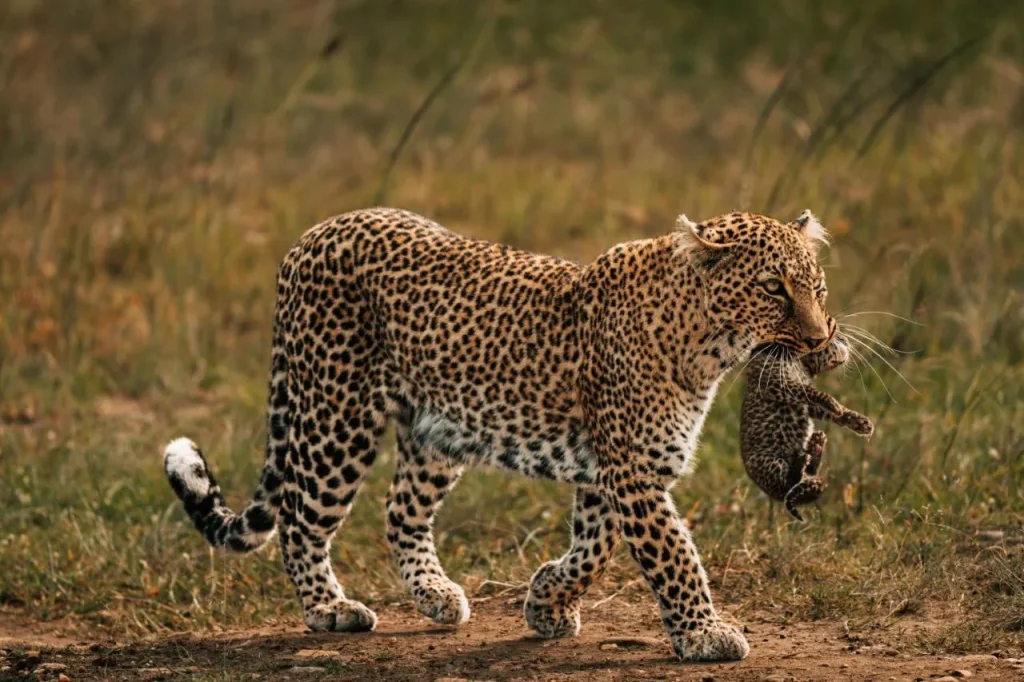
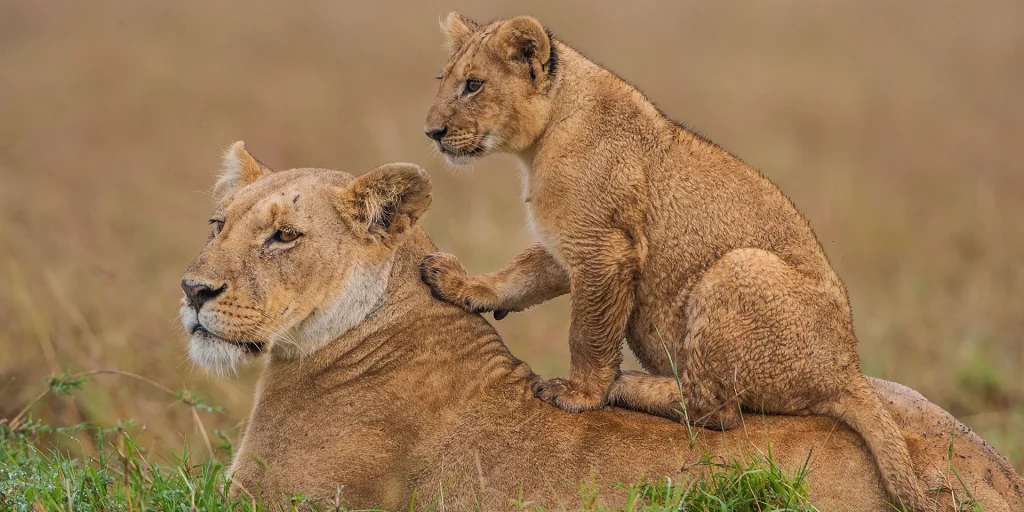
Amboseli is best known for elephants, but the park supports a much broader wildlife community. Open landscapes provide unusually good opportunities to watch elephant social behaviour — family groups led by experienced matriarchs, calves close to their mothers, and mature bulls travelling alone or in loose associations. None of those sightings is guaranteed on a given drive.
The elephants of Amboseli have played an important role in the park’s international reputation: open terrain, wetland concentrations in drier periods, long-term elephant research, and impressive adult bulls. Photographers hoping for elephants beneath Kilimanjaro need elephant movement, vehicle positioning and mountain visibility to coincide — never a promise.
Elephants
The undisputed stars of Amboseli. Open plains allow extended viewing of family groups, swamp feeding, dust bathing and mature bulls. Sightings are never guaranteed.
Lions
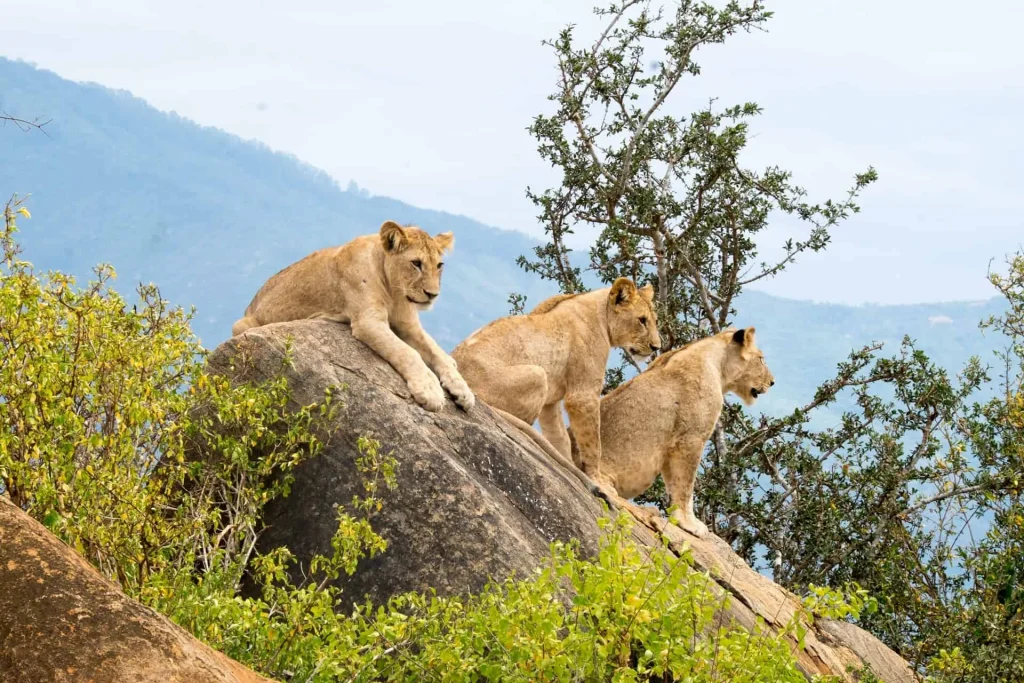
Lions occur in the ecosystem and can sometimes be found hunting or resting on the open plains. Compared with the Masai Mara, predator density may feel less predictable.
Cheetahs
Cheetahs favour open habitats where visibility and speed help when hunting. Sightings are less predictable than elephant encounters but can be particularly rewarding.
Spotted hyenas
Important predators and scavengers. They may be encountered alone or in groups and sometimes interact with lions around carcasses.
Buffaloes
Frequently associated with reliable grazing and water. Large animals emerging from green swamps into dry open country can create impressive scenes.
Giraffes
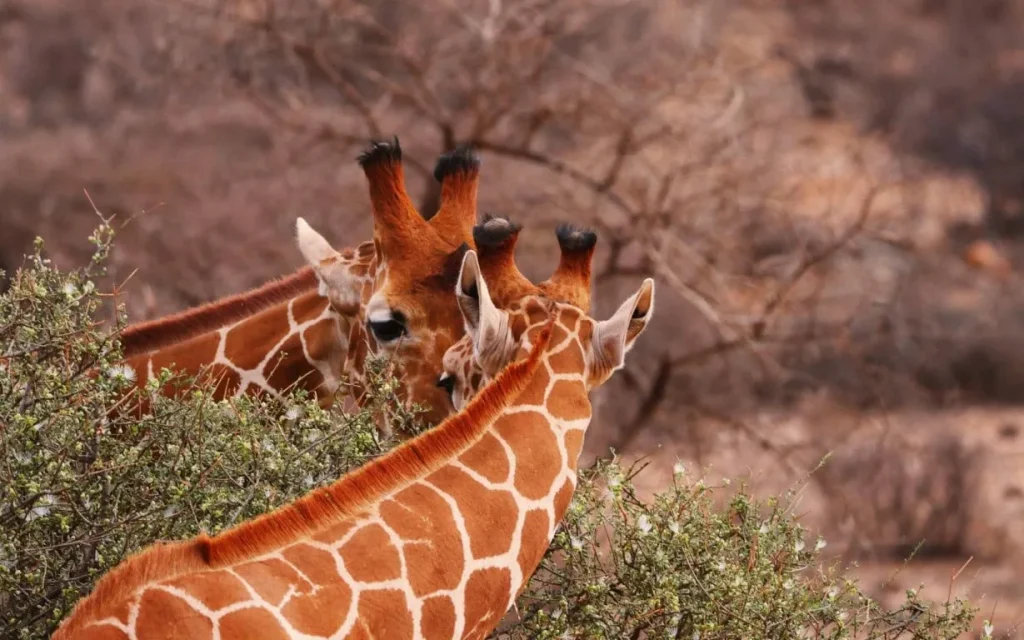
Often associated with acacia woodland and bushland. Their silhouettes against Kilimanjaro provide another classic Amboseli photographic opportunity.
Zebras and wildebeest
Occur on the plains and help support the predator community. Distribution changes according to grazing and water availability.
Hippos
Wetland habitats support hippos. They spend much of the day in water and emerge to feed, generally during cooler periods.
Antelope and smaller wildlife
Depending on habitat and luck, travellers may encounter gazelles, impalas, waterbuck and other species.
Birds
Wetlands and dry habitats attract very different species. Dedicated birdwatching can be incorporated into regular game drives.
Wildlife & Photography Guides
Elephants, birds and landscape photography — sightings and Kilimanjaro views are never guaranteed.
- Amboseli WildlifeElephants, plains game, predators and wetland species — never guaranteed.
- Amboseli ElephantsFamily herds, swamp feeding and mature bulls on open ground.
- Amboseli BirdsWetland and dry-country species around the swamps and plains.
- Photography SafariLandscape-oriented wildlife photography, including Kilimanjaro when the sky is clear.
Best Time to Visit
Amboseli can be visited throughout the year, but seasonal conditions influence wildlife distribution, landscapes, road conditions, birdlife, visitor numbers and photography. There is no single month that is best for every traveller. Kilimanjaro visibility is never guaranteed.
- Dry-season viewing
As surface water becomes scarcer, animals increasingly rely on permanent wetlands. Vegetation may become shorter, improving visibility. Landscapes can become dusty and visitor numbers may be higher in popular travel periods.
- Green-season Amboseli
Rain transforms the ecosystem. Grasslands become greener, skies can be dramatic, birdlife is often excellent and visitor density may fall. Rainfall may occasionally affect road conditions and mountain visibility.
- January – March
Relatively warm conditions and good wildlife viewing. Photography can be excellent when the atmosphere is clear enough for Kilimanjaro.
- April – May
Generally part of the wetter season. The landscape may become lush. Road conditions can be more variable. Photographers who enjoy dramatic weather and fewer visitors may appreciate this period.
- June – October
A popular safari period. Conditions become progressively drier and wildlife may concentrate around reliable water. Works particularly well within a wider Kenya circuit including the Masai Mara.
- November – December
Shorter rains may refresh the landscape. Wildlife remains present, while greener scenery creates a very different atmosphere from the driest months.
How to Get There
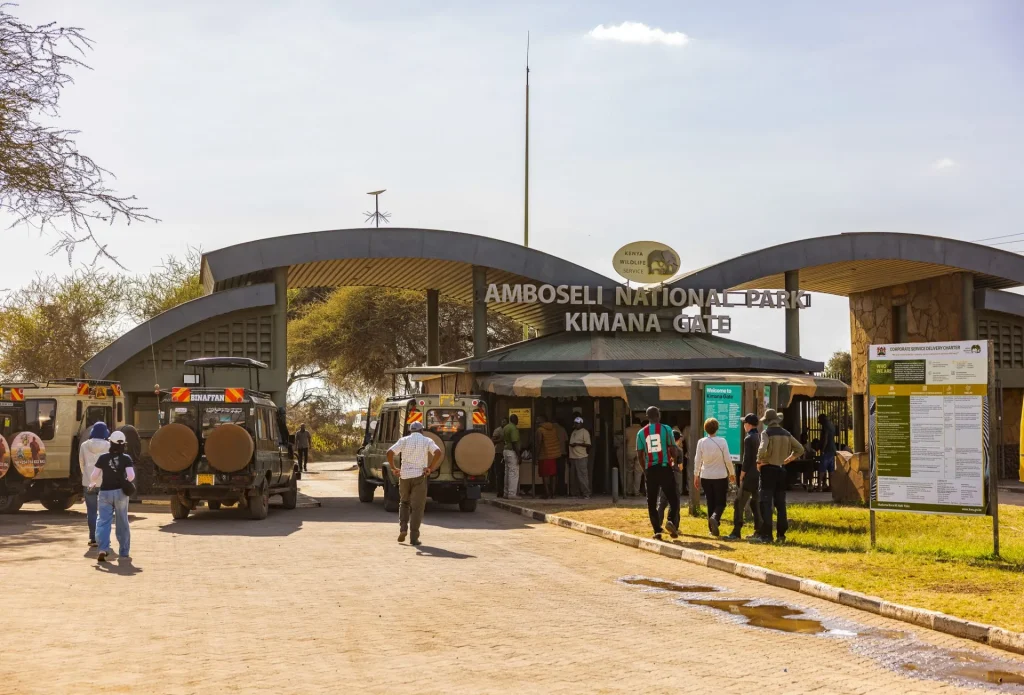
- Nairobi to Amboseli by Road
Amboseli lies roughly 240 kilometres from Nairobi depending on route and final lodge. The journey commonly takes about 4–5 hours, depending on Nairobi traffic, road conditions, weather, stops, the park entrance and accommodation location. Private road transfers work particularly well when combining Amboseli with other Kenya parks.
- Flying to Amboseli
Light-aircraft services can provide a faster alternative. Flying can be attractive for luxury travellers, honeymooners, short Kenya itineraries and visitors connecting distant parks. Flight availability varies, so routing should be checked when designing the itinerary.
Where to Stay
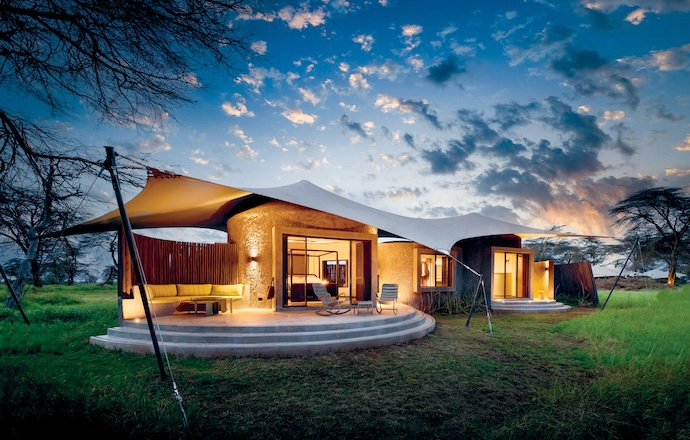
The most important decision is not simply luxury versus budget. Location matters: a lodge closer to the park may reduce daily transfer time, while a property farther away may offer better value, different scenery or additional cultural experiences. Evaluate distance to gates, travel time, room quality, views, family facilities, meals, vehicles and photographic opportunities.
View Amboseli LodgesWhere to Stay in Amboseli
Lodges and camps by budget. Location affects drive times as much as the room.
How Many Days Do You Need in Amboseli?
For most Kenya itineraries, two to three nights works well. One night is technically possible, but often rushed — a significant portion of the itinerary may be consumed by travel.
Two nights is a good minimum for many visitors, usually allowing several game-drive opportunities and more than one chance to see Kilimanjaro clearly. Three nights is excellent for photographers, elephant enthusiasts, families and slower-paced safaris. Four nights or more suits specialised photography, birding or a slow safari pace.
Amboseli Safari Cost
There is no single fixed price for an Amboseli safari. Costs depend on season, number of travellers, duration, accommodation category, private or shared vehicle, road or air transport, park fees, optional activities and whether Amboseli is combined with other parks.
A two-night road safari using a comfortable mid-range lodge will cost substantially less than a luxury fly-in itinerary with private guiding. Park fees form an important part of the total and can change — we confirm current rates when we quote rather than publishing a permanent fee table here.
What usually makes an Amboseli safari more expensive
- Premium luxury lodges
- Private safari vehicle
- Peak-season travel
- Air transfers
- Single-room supplements
- Private photographic guiding
- Longer itineraries
How to reduce the cost
- Road travel from Nairobi
- Travelling as a couple or small group
- Choosing mid-range accommodation
- Travelling outside peak demand periods
- Combining Amboseli efficiently with Tsavo
- Avoiding unnecessary one-night stops
First Safari, Families & Practical Planning
Is Amboseli Good for a First Safari?
Yes. Amboseli works particularly well for first-time safari visitors because it provides several iconic elements in one destination: elephants, classic safari plains, predators, giraffes, wetland wildlife, birdlife and Kilimanjaro scenery. Travellers expecting the same predator concentrations found in the Masai Mara should understand that Amboseli offers a different experience. The strongest Kenya itineraries often combine both.
Amboseli Family Safari
Amboseli can be an excellent choice for families because wildlife concentrations can provide rewarding sightings without covering enormous distances. Elephants are particularly engaging for children. A private vehicle is often worthwhile so game drives can be adapted to the family’s pace.
- Children’s ages and lodge child policies
- Private vehicle and shorter game drives
- Family rooms and flexible meals
- Swimming pool availability
- Travel time from Nairobi
- Malaria and general health advice
Amboseli Honeymoon Safari
Amboseli can form part of a romantic Kenya itinerary: Kilimanjaro scenery, sunrise game drives, intimate lodges, private vehicles, outdoor dining and an easy combination with the Kenya Coast. Popular routes include Amboseli → Masai Mara → Diani, or Amboseli → Tsavo → the coast.
What to Pack
Packing should reflect both warm daytime temperatures and cooler mornings. Dust can be significant during dry periods. Photographers should carry lens-cleaning equipment.
- Light neutral-coloured clothing, long trousers and breathable shirts
- Fleece or light jacket, hat, sunglasses and sunscreen
- Comfortable closed shoes and insect repellent
- Reusable water bottle, binoculars and camera equipment
- Chargers and personal medication
Responsible Safari Travel
Amboseli is an established tourism destination. Follow guide instructions, stay in the vehicle unless invited out in a designated location, keep noise levels low around animals, and never assume drone use is permitted. Tourism works best when wildlife conservation and local communities benefit from the same landscape.
Amboseli vs Masai Mara and Tsavo
Many travellers compare Amboseli with the Masai Mara when planning a Kenya safari. They are complementary rather than interchangeable. If time and budget allow, visit both — a safari combining Amboseli and Masai Mara provides far more ecological variety than choosing either destination alone.
Amboseli and Tsavo provide very different experiences. Amboseli is more compact, famous for elephants and Kilimanjaro. Tsavo is much larger, wilder and characterised by dramatic landscapes. A combination works especially well for travellers going from Nairobi toward Mombasa or Diani.
Choose Amboseli for
- Elephants
- Kilimanjaro views
- Landscape photography
- Wetland ecosystems
- Relatively compact game-drive areas
Choose Masai Mara for
- Large predator populations
- Great Migration possibilities — never guaranteed
- Broad safari variety
- Extensive savannah
- Conservancy experiences
Combine Amboseli with Other Destinations
Classic Kenya circuits and safari-and-beach pairings that start or finish in Amboseli.
- Amboseli + Masai MaraElephants and Kilimanjaro plus big-cat country. One of Kenya’s classic combinations.
- Nairobi to Amboseli SafariRoad and fly-in safaris from the capital to elephant country beneath Kilimanjaro.
- Mombasa to Amboseli SafariA coast-to-Kilimanjaro safari, often via Tsavo East or Tsavo West.
- Diani to Amboseli SafariLeave the south coast for elephants, wetlands and possible Kilimanjaro views.
- Amboseli + Tsavo WestA natural overland pairing: wetlands and Kilimanjaro, then volcanic wilderness.
- Amboseli + Tsavo EastA popular route toward the Kenya Coast, with vast open wilderness.
- Amboseli + Diani BeachSafari then coast. Works especially well when Tsavo sits between Amboseli and the beach.
- Chyulu Hills National ParkGreen volcanic hills, walking and lava country between Amboseli and Tsavo. Kilimanjaro views are never guaranteed.
Travel Tips
- Two to three nights is the usual stay; photographers should allow three or more for Kilimanjaro light.
- Kilimanjaro is often clearest in the early morning. Cloud can hide it even in the dry season — never guaranteed.
- Dust is part of Amboseli. A buff, sealed camera bag and a longer lens help on open-plain drives.
- Choose lodge location for gate access, not only the room category.
- Combine with Tsavo, the Masai Mara or Diani Beach rather than treating Amboseli as a one-night checklist stop.
- Elephants, predators and Kilimanjaro views can never be guaranteed on a given day.
FAQs
Where is Amboseli National Park?
Amboseli is located in southern Kenya near the border with Tanzania. It lies within the wider Kilimanjaro ecosystem.
What is Amboseli famous for?
Amboseli is best known for its elephants and spectacular views of Mount Kilimanjaro. It is also renowned for wildlife photography, wetlands and excellent birdlife.
Is Amboseli worth visiting?
Yes. Amboseli offers a safari experience that is significantly different from the Masai Mara, Samburu or Tsavo. It is especially worthwhile for elephant enthusiasts and photographers.
Can you see Mount Kilimanjaro from Amboseli?
Yes, under clear weather conditions. Kilimanjaro is in Tanzania but can be viewed from Amboseli. Visibility is never guaranteed because cloud frequently covers the mountain. Early mornings are often clearest.
How many days do I need in Amboseli?
Two to three nights works well for most travellers. Photographers may prefer three or more nights. A one-night visit is usually too rushed after the Nairobi transfer.
Are elephants guaranteed in Amboseli?
No wild animal sighting can be absolutely guaranteed. Amboseli is particularly famous for its elephant population and provides very strong elephant-viewing opportunities, but nothing is promised on a given drive.
Does Amboseli have the Big Five?
Several Big Five species occur in the wider region, but Amboseli should not primarily be marketed as a Big Five checklist destination. Travellers whose priority is seeing all five often combine Amboseli with other Kenya parks. Individual species can never be guaranteed.
Is Amboseli good for lions?
Lions occur in the ecosystem. Travellers whose highest priority is predator density often combine Amboseli with the Masai Mara.
How far is Amboseli from Nairobi?
Approximately 240 km depending on the route and final lodge. Driving normally takes roughly 4–5 hours, although traffic and road conditions affect actual travel time.
Can I fly to Amboseli?
Yes. Scheduled or charter flight options may be available depending on itinerary and travel dates.
Can Amboseli be visited from Nairobi in one day?
A very long day trip may technically be possible, but it is generally not the best safari experience because significant time is spent travelling. At least two nights is preferable when possible.
Is Amboseli suitable for children?
Yes. The relatively compact safari area and strong elephant viewing can make it particularly engaging for families, especially with a private vehicle.
How expensive is an Amboseli safari?
The cost depends on season, accommodation, transport, safari length and number of travellers. A single headline price is rarely useful.
What are the park entrance fees?
Fees can change according to residency and official conservation policies. We confirm current non-resident rates when we quote rather than publishing a permanent table on this page.
Can I combine Amboseli with Masai Mara or the beach?
Yes. Amboseli plus Masai Mara is one of the best Kenya combinations because the two destinations provide very different wildlife and landscapes. Amboseli also combines well with Tsavo followed by Mombasa, Diani or another Kenya Coast destination.
Is Amboseli safe?
Amboseli is an established tourism destination. Follow normal safari precautions and always follow the instructions of professional guides and lodge staff. Never leave a safari vehicle independently around wildlife.
Browse Amboseli Guides
Already know what you need — elephant viewing, a photography stay, a packing list? Search below, or open a topic and jump straight in.
No pages match that search.
Safari planning 6 pages
Wildlife 3 pages
Activities 2 pages
When to travel 2 pages
Costs and getting there 7 pages
Where to stay 3 pages
Ready to Experience Amboseli?
An Amboseli safari can be designed in many different ways: two or three nights from Nairobi, a photographer’s stay of three or four nights, a family circuit with the Masai Mara, or Amboseli plus Tsavo and the Kenya Coast.
Tell us your intended travel dates, number of travellers, ages of children, preferred accommodation level, approximate budget, wildlife priorities, whether photography is important, whether you prefer road or air travel, and which destinations you want to combine with Amboseli.
Our safari specialists can then build the route around your interests rather than forcing you into a fixed itinerary.
- Tailor-Made Safaris
- Best Price Guarantee
- No Hidden Costs
- 24/7 Support
- Local Safari Experts24/7 support in Kenya
- Tailor-Made SafarisPersonalized to your needs
- Best Price GuaranteeNo hidden costs
- Responsible TourismTravel with a positive impact