
Great Migration FAQs
The Great Wildebeest Migration is one of Africa’s most extraordinary wildlife phenomena. Each year, enormous numbers of wildebeest, accompanied by zebras and other grazing animals, move through the Serengeti–Mara ecosystem in search of suitable pasture and water.
The migration attracts travellers from around the world, particularly those hoping to witness dramatic river crossings, predator activity and vast herds moving across open grasslands. However, planning a migration safari can be confusing. Travellers often encounter conflicting information about the best month to visit, whether Kenya or Tanzania is better, where to stay and how much time to allow.
The most important fact is that the migration is a natural process rather than a scheduled event. Rainfall and grazing conditions influence the location and movement of the herds. This Great Migration FAQs guide answers common questions about migration timing, safari destinations, river crossings, wildlife, accommodation, costs and practical travel arrangements.
Understanding the Great Migration
1. What is the Great Wildebeest Migration?
The Great Wildebeest Migration is the continuous seasonal movement of large wildebeest populations through the Serengeti–Mara ecosystem of Tanzania and Kenya. The animals follow changing rainfall patterns and the availability of nutritious grass. Zebras and other herbivores also participate in the broader movement, which includes grazing, calving, predator interactions and river crossings — an ongoing ecological cycle rather than one single event.
2. Where does the Great Migration take place?
The migration occurs primarily across Tanzania’s Serengeti ecosystem and Kenya’s Masai Mara ecosystem. Different parts of the landscape become important at different times of year: the southern Serengeti and adjoining Ndutu area are particularly associated with calving, the western and central Serengeti are relevant during other seasonal movements, and the northern Serengeti and Masai Mara are associated with the northern migration period.
3. How many wildebeest participate?
The migration involves well over a million wildebeest, together with large numbers of zebras and other grazing animals. Population estimates vary according to research methods and environmental conditions, and the precise number of animals present in any particular area changes throughout the year. Travellers should think of the migration as a vast ecological movement rather than a single herd travelling together.
4. Why do wildebeest migrate?
Wildebeest move primarily in response to rainfall, pasture quality and water availability. Fresh grass is particularly important for grazing animals, and seasonal conditions create changing opportunities across the ecosystem. The movement also influences predators, scavengers and other wildlife.
5. Does the migration happen every year?
Yes. The migration is a recurring natural phenomenon. However, the precise timing and routes vary, and rainfall patterns can cause herds to arrive earlier or later than expected. A safari should therefore be planned around likely seasonal areas rather than exact dates.
Best Time to See the Migration
6. What is the best time for the Great Migration?
The best time depends on the experience you want. January to March is often associated with calving in the southern Serengeti ecosystem, while July through October is popular for northern migration viewing in the northern Serengeti and Masai Mara. Other months offer opportunities to observe herd movements in different parts of the Serengeti. There is no single month that is best for every migration experience.
7. When does the migration reach the Masai Mara?
Large numbers of wildebeest often enter the Masai Mara ecosystem between approximately July and October. However, arrival dates vary with rainfall and grazing conditions. Some herds may remain in Tanzania while others move into Kenya, so visitors should not expect all migrating animals to arrive together.
8. Is August the best month for the migration?
August is a popular month for Masai Mara migration safaris. Large herds may be present, and river crossings are possible, although crossings cannot be guaranteed. August also attracts considerable visitor demand, so accommodation should be booked early.
9. Can I see the migration in September?
September is often an attractive month for northern migration viewing. Large herds may remain in the Masai Mara and northern Serengeti, although herd distribution varies between years. A knowledgeable guide and suitable accommodation location are important.
10. Can I see the migration in October?
Yes, migration herds may still be present in the Masai Mara or northern Serengeti during October. However, southward movements can begin as conditions change, and October should not be treated as a guaranteed river-crossing month.
11. Can I see the migration in January or February?
Yes, but the main migration focus is usually in Tanzania rather than Kenya. The southern Serengeti and Ndutu ecosystem are associated with the calving period, which can be an excellent time to observe young wildebeest and predator activity.
12. Is the Great Migration visible in April or May?
The migration continues throughout the year. During April and May, herds may be moving through parts of the Serengeti ecosystem. Rainfall can influence road conditions and herd distribution, and these months offer different experiences from the northern river-crossing season.
Mara River Crossing Questions
13. What are the Mara River crossings?
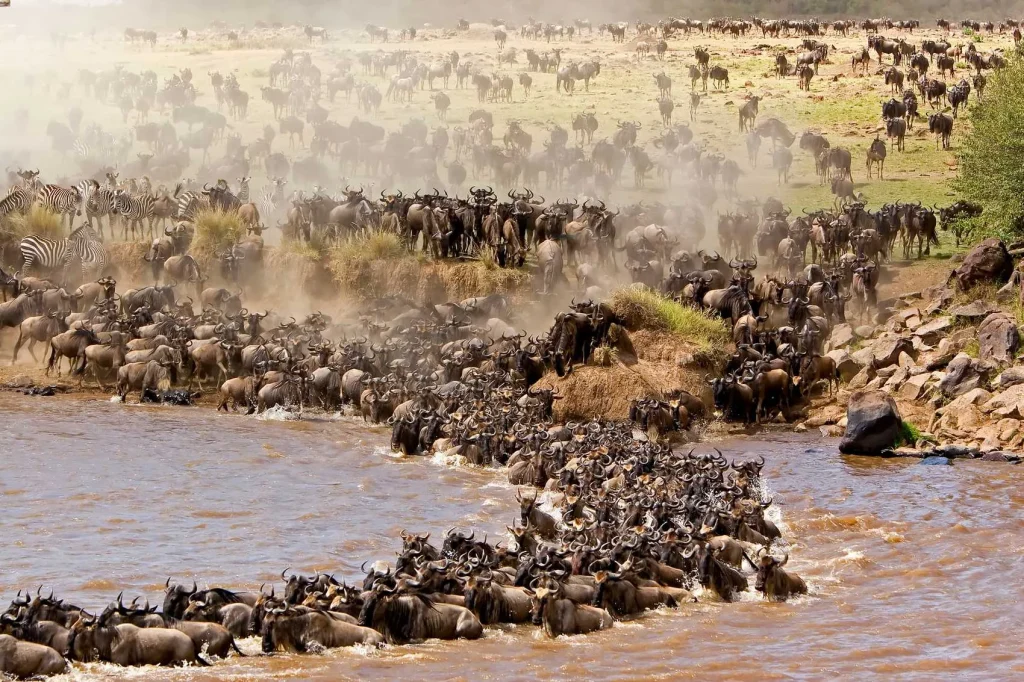
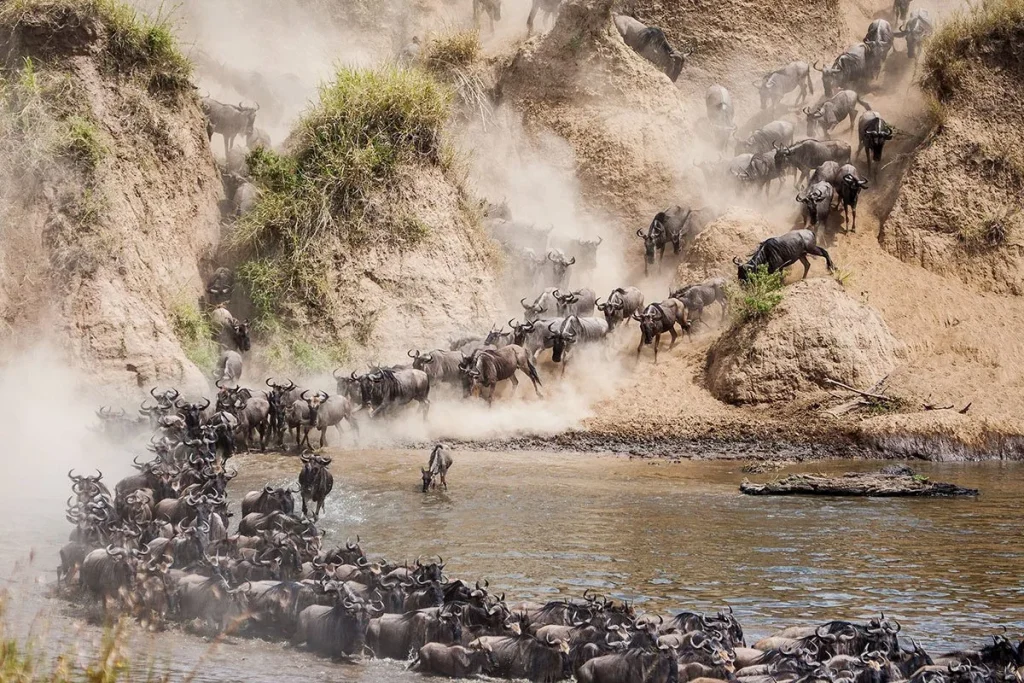
Mara River crossings occur when migrating wildebeest and other animals attempt to cross sections of the river during their seasonal movements. These events can be dramatic because of steep banks, strong currents and crocodile activity. Crossings are natural and unpredictable, and they are among the most photographed events of the migration.
14. Are river crossings guaranteed?
No. A herd may approach a riverbank and wait for hours or days, turn away without crossing, or cross suddenly. No responsible safari operator should guarantee a particular crossing.
15. Which month is best for river crossings?
July through September is a commonly targeted broad period for northern river-crossing activity, although events can occur outside this range. Timing varies according to rainfall and herd movement, so visitors should allow several days rather than relying on a single game drive.
16. How long does a river crossing last?
Crossing duration varies considerably. Some events involve a relatively short movement of animals, while others continue for extended periods. Herds may cross in waves, pause or change direction, and the event cannot be predicted precisely.
17. Can tourists get close to river crossings?
Visitors can observe crossings from permitted locations under their guide’s direction. Vehicles must follow park regulations, and tourists should not approach dangerous riverbanks on foot. Responsible viewing protects both wildlife and visitors.
Kenya vs Tanzania Migration Safaris
18. Is Kenya or Tanzania better for the Great Migration?
Both countries offer excellent migration experiences at different times. Kenya’s Masai Mara is particularly attractive during the northern migration period, while Tanzania’s Serengeti provides opportunities to follow different phases of the migration throughout the year. The best destination depends on travel dates and wildlife interests.
19. Can I see the migration only in Kenya?
Yes, during periods when herds occupy the Masai Mara ecosystem. However, the main migration remains in Tanzania during much of the year. Travellers visiting Kenya outside the northern migration period can still enjoy resident wildlife.
20. Is the Serengeti better than the Masai Mara?
Neither destination is universally better. The Serengeti covers a much larger area and supports different phases of the migration, while the Masai Mara offers well-known northern migration viewing and substantial resident wildlife. Travel dates, accommodation location and available time are more useful considerations than a simple ranking.
21. Can I combine the Masai Mara and Serengeti?
Yes. A combined Kenya and Tanzania safari can provide a broader wildlife experience. However, border procedures, transfers and flight arrangements require careful planning, and a longer itinerary is usually preferable.
Wildlife Questions
22. What animals can I see during the migration?
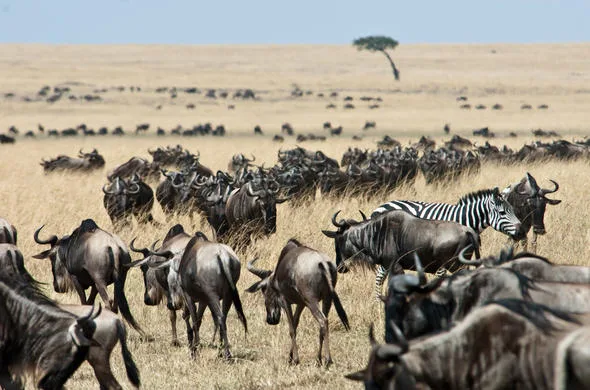
Wildebeest and zebras are central to the migration. Travellers may also encounter gazelles, lions, cheetahs, leopards, hyenas, elephants, giraffes and numerous birds. Not all species participate in the migration itself — many are resident within the ecosystem.
23. Are predators common during the migration?
Predators are important components of the Serengeti–Mara ecosystem. Lions, cheetahs, leopards and hyenas may hunt or scavenge in areas used by migrating herds. However, predator sightings and hunting events cannot be guaranteed.
24. Can I see the Big Five?
The broader Kenya and Tanzania safari regions offer opportunities to encounter Big Five species, although the likelihood varies by destination. Rhinoceros sightings in particular may require visiting suitable protected areas. No safari can guarantee all five species.
25. Is the calving season worth visiting?
Yes. The calving season offers opportunities to observe young wildebeest and the ecological interactions associated with new births. It can be especially rewarding for photographers and wildlife enthusiasts. The southern Serengeti and Ndutu ecosystem are commonly considered for this experience.
Safari Duration and Itinerary Questions
26. How many days do I need for a migration safari?
Three days can provide a short introduction to the Masai Mara, although four or five days allow more time for wildlife viewing. Travellers particularly interested in river crossings may benefit from longer stays, and a Kenya and Tanzania combination generally requires additional time.
27. Is a three-day Masai Mara safari enough?
A three-day safari can be enjoyable, but it usually includes travel on the first and last days, leaving limited time for game drives. A longer stay provides more flexibility when wildlife movements are unpredictable.
28. Should I choose a private or group safari?
A private safari offers flexibility over departure dates, game-drive priorities and accommodation, while a group safari can reduce transport costs. Photographers and families may particularly appreciate private arrangements. The best choice depends on budget and travel preferences.
29. Should I travel by road or fly?
Road safaris allow visitors to experience the countryside and can offer good value, while fly-in safaris reduce some long transfers. Light-aircraft flights may have restrictive luggage allowances. A mixed itinerary can also be practical.
Accommodation Questions
30. Where should I stay during the migration?
The best location depends on the season. During the northern migration period, accommodation in suitable parts of the Masai Mara or northern Serengeti may be useful. During calving season, southern Serengeti and Ndutu accommodation is often relevant. However, herd movements remain unpredictable.
31. Is it better to stay inside the Masai Mara?
Inside-reserve accommodation can reduce some travel time to particular wildlife areas. However, adjoining conservancies offer different experiences and arrangements. The best choice depends on game-drive access, budget and preferred activities.
32. How early should I book migration accommodation?
Popular camps can fill well in advance during peak migration periods. Booking several months ahead is advisable, especially for August and September. Families requiring specific room arrangements should plan early.
Safari Cost and Practical Questions
33. How much does a Great Migration safari cost?
Costs vary according to accommodation, season, transport, park fees, group size and itinerary length. A shared road safari generally costs less per person than a private luxury fly-in itinerary. Travellers should request a complete quotation with clear inclusions.
34. Are park fees included in migration safari packages?
Many organised packages include park and conservation fees, but this should never be assumed. Check the quotation carefully. Fees can change and may vary between reserves, conservancies and national parks.
35. Is the Great Migration suitable for families?
Yes. Family safaris can be designed around children’s ages and interests. Private transport, suitable accommodation and flexible schedules may improve comfort. Parents should also consider the possibility of witnessing predator hunts or difficult river crossings.
Additional Planning Advice
What Should I Pack?
Useful packing items include:
- Lightweight clothing in neutral colours
- A warm layer for early morning game drives
- Comfortable footwear
- A hat, sunscreen and sunglasses
- Binoculars
- Suitable camera lenses, spare batteries and storage cards for photographers
- A rain jacket for changing weather
Do I Need Travel Insurance?
Comprehensive travel insurance is strongly recommended. A suitable policy should cover medical treatment, emergency evacuation and trip interruption. Travellers should review the policy conditions before departure.
Is the Migration Safari Safe?
Organised safaris can be safe when visitors follow professional guidance and park regulations. Wild animals must always be treated with respect. Do not leave vehicles without permission or approach animals on foot.
Can I Use a Drone?
Drone operations are subject to national aviation rules and protected-area restrictions. Do not assume that a drone may be used simply because it is small. Obtain all necessary permissions before travelling.
Can I Combine the Migration with Other Parks?
Yes. Popular combinations include the Masai Mara with Amboseli, Lake Nakuru, Samburu or Ol Pejeta. Tanzania itineraries may combine the Serengeti with Ngorongoro Crater. The best combination depends on available time and travel routes.
Choosing the Right Migration Safari
The most important decision is to match your itinerary to the migration phase you want to experience. If your priority is calving, consider the southern Serengeti during the appropriate season. If you want opportunities for northern river crossings, consider the Masai Mara or northern Serengeti during the broad migration period. If you are interested in general wildlife rather than a particular event, both ecosystems offer rewarding experiences outside peak migration months.
Accommodation location, guide quality and sufficient time in the parks are often more important than trying to select one supposedly perfect date.
Common Migration Safari Planning Mistakes
One common mistake is assuming that the migration occurs only in August. The migration is continuous, with different seasonal phases. Another mistake is expecting a river crossing on a particular day — natural events cannot be scheduled.
Travellers sometimes choose accommodation far from the areas they hope to explore, creating unnecessary driving. Others attempt to visit too many parks in a short itinerary. A successful safari should balance wildlife opportunities with realistic logistics.
Responsible Migration Tourism
The Serengeti–Mara ecosystem supports an internationally important wildlife movement. Visitors should follow park regulations and guide instructions, avoid blocking migrating herds or pressuring animals towards river crossings, and avoid littering or disturbing wildlife. Respect local communities and their role in conservation. Responsible tourism helps protect the migration experience for future generations.
Plan Your Great Migration Safari with Safari Trips to Kenya
The Great Wildebeest Migration offers different wildlife experiences throughout the year. The best safari is one that matches your travel dates, interests and expectations with the most suitable region of the ecosystem.
Safari Trips to Kenya can help organise private and group migration safaris, suitable accommodation and practical transport arrangements. We can also combine the Masai Mara with other Kenya destinations or help plan broader East African wildlife itineraries.
Contact us with your preferred travel dates, number of travellers, accommodation budget and available days. We will help you develop a realistic migration safari designed around the wildlife experiences you value most.