
Buffalo Springs National Reserve
Springs, Elephants, Rare Northern Wildlife and Quiet Safaris in Kenya’s Samburu Ecosystem
Buffalo Springs National Reserve is one of northern Kenya’s most rewarding safari destinations: dry savannah, acacia bushland, riverine habitat, natural springs and the unusual wildlife that makes the greater Samburu ecosystem distinctive.
It sits in Isiolo County, immediately south of Samburu National Reserve across the Ewaso Ng’iro River. Together with Shaba, the three reserves form one landscape. Grevy’s zebras, reticulated giraffes, elephants and cats occur — none of those sightings can be guaranteed.
- Location Isiolo County, northern Kenya
- Famous for Natural springs, Special Five and quieter game drives
- Best For Northern wildlife, elephants, photography and birding
- Typical Stay 2–3 nights within the Samburu ecosystem
- Water Ewaso Ng’iro River and permanent springs
- Ecosystem Samburu–Buffalo Springs–Shaba
Overview
Buffalo Springs shares much of its wildlife with Samburu but has its own scenery and a slower safari atmosphere. Permanent springs in a semi-arid landscape, together with the river, help sustain animals in the dry and influence where they drink and feed.
Positioning is Special Five plus natural springs, Ewaso Ng’iro, elephants and a quieter northern Kenya safari — not a Masai Mara, Amboseli or Nakuru substitute. There is no Buffalo Springs child silo; narrower planning lives on Samburu pages.
A strong northern route is Nairobi → Ol Pejeta → Samburu → Buffalo Springs → Shaba. Combine rather than choose one reserve as a duplicate of the others.
- Samburu Special Five
- Natural springs
- Samburu National Reserve
- Shaba National Reserve

Why Visit Buffalo Springs?
The strongest appeal is the dry-country ecosystem and northern specialist wildlife — a different Kenya from the Mara, Amboseli or Lake Nakuru.
-
Samburu Special Five
Grevy’s zebra, reticulated giraffe, gerenuk, Beisa oryx and Somali ostrich. Grevy’s zebras have narrower stripes, large rounded ears and a white belly. Sightings are never guaranteed.
-
Natural springs
Permanent water in an otherwise semi-arid landscape. Springs and the river concentrate wildlife in the dry, which can make viewing excellent — never promised.
-
Elephants on the Ewaso Ng’iro
Riverine woodland and doum palms give elephant photographs a different look from Amboseli plains or Tsavo red dust.
-
Quieter game drives
Samburu carries more international recognition. Buffalo Springs often means fewer vehicles and a slower style of watching.
-
Lions, leopards and cheetahs
Cats occur. Leopards are elusive; cheetahs are unpredictable. Do not choose Buffalo Springs only for high-density predator viewing.
Understanding the Buffalo Springs Landscape
Water availability shapes the reserve. Open plains, acacia bushland, riverine woodland, springs and doum palms sit close together and support different animals.
-
Open dry plains
Habitat for Grevy’s zebra, oryx, gazelles and ostriches — and better predator visibility when animals are out.
-
Acacia bushland
Browsers such as giraffes, gerenuks and elephants use this cover.
-
Riverine woodland
Greener, denser vegetation along the Ewaso Ng’iro — important for elephants, buffaloes, leopards, birds and crocodiles.
-
Springs and doum palms
The signature Buffalo Springs look: water in dry country, palms and a quieter northern Kenya atmosphere.
Top Things to Do in Buffalo Springs
-
Morning game drives
Cooler hours for cats, elephants moving to water and Special Five searching on open plains.
-
Afternoon game drives
Springs, riverine woodland and golden light on dry-country landscapes.
-

Special Five safari
A focused search for northern specialists — never marketed as a checklist you will complete.
-
Visit the springs
The namesake habitat. Keep wildlife distance and follow guide instructions at water.
-

Birdwatching
River, springs and dry bush support different bird communities in one compact reserve.
-

Photography
Doum palms, springs and northern coat patterns — a different Kenya from Mara grasslands.
Plan a Buffalo Springs Safari
Buffalo Springs has no child silo in the sitemap. Plan it with Samburu, Shaba and northern Kenya pages.
- Samburu Safaris Pace a northern Kenya stay across Samburu, Buffalo Springs and Shaba.
- Samburu Safari Packages Ready-made northern circuits that can include Buffalo Springs.
- Best Time to Visit Samburu Dry-country seasons for the wider Samburu ecosystem — not a Buffalo Springs child URL.
- Samburu and Ol Pejeta Special Five plus rhinos. Buffalo Springs is not a rhino park.
- Nairobi to Samburu Road or fly-in from Nairobi into the Samburu–Buffalo Springs landscape.
- Getting to Samburu Access notes for the wider northern Kenya cluster.
Wildlife & Birds
Market Buffalo Springs around northern specialists, springs and elephants, not a conventional Big Five promise. The Special Five, elephants, buffaloes, lions, leopards, cheetahs, hyenas, crocodiles and dry-country birds all occur. Individual sightings can never be guaranteed.
This is not a rhino park. Combine Lewa or Ol Pejeta if rhinos matter. It is also not a Mara substitute — pair the two rather than treating one as a duplicate.
-
Grevy’s zebra
An endangered northern icon. Narrower stripes, large ears, white belly. Never guaranteed.
-
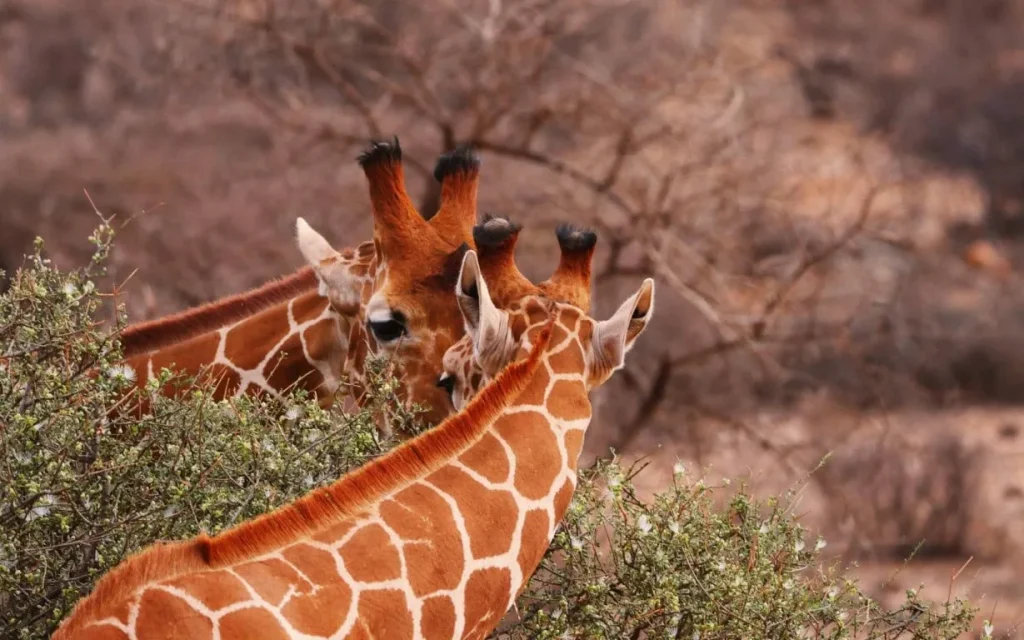
Reticulated giraffe
Polygonal coat patches photograph well against acacias, doum palms and dry plains.
-
Gerenuk, oryx and Somali ostrich
The rest of the Special Five. Gerenuks browse on hind legs; oryx use open country; ostriches are the northern form.
-
African elephants
Often tied to river and spring habitat. A major reason to add Buffalo Springs to a Samburu stay.
-
Birds
Vulturine guineafowl, hornbills, bee-eaters, rollers and raptors. Birding is a strong reason to stay longer.
Special Five and Nearby Nature
Grevy’s zebras, elephants and northern specialists — sightings are never guaranteed.
- Samburu Special Five Grevy’s zebra, reticulated giraffe, gerenuk, Beisa oryx and Somali ostrich — never guaranteed.
- Samburu Wildlife Elephants, cats and dry-country specialists across the river from Buffalo Springs.
- Shaba National Reserve Volcanic wilderness and a quieter third reserve in the same ecosystem.
- Lewa Wildlife Conservancy Rhinos and private conservation — Buffalo Springs is not a rhino park.
Best Time to Visit

Buffalo Springs can be visited through much of the year. Dry months often concentrate wildlife around springs and the river; greener months bring different light and vegetation. Month-by-month notes for the ecosystem live on the Samburu best-time page rather than an invented Buffalo Springs child URL.
-
Dry season
Often easier wildlife viewing around water. Days are hot; mornings and late afternoons remain the productive hours.
-
Green season
Lusher photography and sometimes quieter lodges. Wildlife can disperse; heavy rain can slow roads.
-
Time of day
Mornings for activity and cooler air; afternoons for springs, riverine cover and sunset light.
How to Get There

-
Nairobi to Buffalo Springs
Usually by road as part of a northern circuit, or by domestic flight into the wider Samburu region. A strong road line is Nairobi → Ol Pejeta → Samburu / Buffalo Springs.
-
Flying in
Fly-in safaris cut time for honeymooners, luxury travellers and shorter itineraries. Check schedules for travel dates.
Where to Stay
Treat accommodation across the Samburu–Buffalo Springs ecosystem rather than as isolated lodging islands. Prioritise location, river access, game-drive territory, private vehicles and lodge size. Saving on a distant room can cost game-drive time. There is no Buffalo Springs lodging URL in the sitemap — use Samburu accommodation pages.
View Buffalo Springs LodgesWhere to Stay for Buffalo Springs
Choose lodges across the Samburu–Buffalo Springs ecosystem rather than treating the river as a hard lodging border.
How Many Days Do You Need in Buffalo Springs?
One night is usually too short. Two nights work when you are already staying in the wider Samburu area. Three nights are a strong minimum for exploring Samburu and Buffalo Springs together. Four nights are excellent if Shaba is included. Photographers and birders may want more.
Buffalo Springs Safari Cost
Price depends on lodge category, season, private or shared vehicle, reserve fees, flights versus road, and whether you also stay in Samburu or Shaba. Official charges can change — we confirm current rates when we quote rather than publishing a permanent table here.
What usually increases the cost
- Riverfront luxury camps
- Private vehicles and specialist guiding
- Fly-in connections
- Adding Shaba or Lewa nights
How to keep costs in check
- Combining with an existing Samburu stay
- Mid-range lodges with strong locations
- A northern road circuit via Ol Pejeta
- Two or three well-paced ecosystem nights
First Safari, Families & Practical Planning
-
Families
Springs, elephants and distinctive northern animals work well with children. Heat, dust and drive length still matter — a private vehicle gives the most flexibility.
-
Honeymooners
Quieter roads and scenic river camps pair well with Ol Pejeta or Lewa on a northern honeymoon, then the Mara if predators matter. River crossings inland are never guaranteed.
-
What to pack
Neutral lightweight clothing, a warm layer for early drives, hat, high-SPF sunscreen, insect repellent, binoculars, camera, reusable bottle and personal medication. Northern Kenya is dusty and bright.
-
Responsible travel
Keep distance at springs and the river, never feed animals, stay on authorised roads, keep noise low and follow guide instructions. Grevy’s zebra conservation makes habitat protection especially important.
Buffalo Springs vs Samburu, Shaba and the Mara
Neither Buffalo Springs nor Samburu is universally better. Samburu is the flagship northern reserve; Buffalo Springs adds springs, quieter roads and extra game-drive territory across the same river. Combine them. Shaba is more volcanic and remote — a third reserve, not a duplicate.
The Masai Mara is stronger for predators, open savannah and Great Migration possibilities. Buffalo Springs is stronger for Special Five, springs and a slower northern atmosphere. River crossings and individual species can never be guaranteed. They complement each other on a longer Kenya safari.
Choose Buffalo Springs for
- Natural springs in dry country
- Special Five and elephants
- Quieter game drives than famous southern parks
- A second reserve beside Samburu
Pair with
- Samburu for the flagship northern safari
- Shaba for volcanic wilderness
- Lewa or Ol Pejeta for rhinos
- Masai Mara for predators and open plains
Combine Buffalo Springs with Other Destinations
The strongest route is Nairobi → Ol Pejeta → Samburu → Buffalo Springs → Shaba.
- Samburu National Reserve The flagship pairing: same river, same Special Five, more recognised game drives.
- Shaba National Reserve Volcanic scenery and a quieter third reserve on the same northern circuit.
- Lewa Wildlife Conservancy Northern specialists plus rhinos and private conservancy guiding.
- Samburu and Ol Pejeta Add rhino conservation after springs and dry-country game drives.
- Laikipia Private northern safari country on the same overland axis.
- Mount Kenya Alpine walking before or after a northern game-drive stay.
Travel Tips
- Plan Buffalo Springs as part of the Samburu ecosystem, not as a competing alternative.
- Grevy’s zebras, cats and elephants can never be guaranteed.
- Keep distance at springs and never feed wildlife.
- Add Shaba for volcanic wilderness, or Lewa for rhinos.
FAQs
Where is Buffalo Springs National Reserve?
In Isiolo County in northern Kenya, immediately south of Samburu National Reserve.
Is Buffalo Springs part of Samburu?
It is a separate national reserve in the same wider ecosystem. The Ewaso Ng’iro River separates the two.
What is Buffalo Springs famous for?
Natural springs, the Samburu Special Five, elephants and quieter northern Kenya game drives.
What are the Special Five?
Grevy’s zebra, reticulated giraffe, gerenuk, Beisa oryx and Somali ostrich. Sightings are never guaranteed.
Can I see elephants, lions or leopards?
They occur. Leopards are elusive and cheetahs unpredictable. No individual sighting can be guaranteed.
Is Buffalo Springs crowded?
It generally receives less safari traffic than Kenya’s most famous reserves.
Is it better than Samburu?
Neither is universally better. They are best combined on one northern safari.
Can I combine it with Shaba, Lewa or Ol Pejeta?
Yes. Shaba completes the three-reserve ecosystem. Lewa and Ol Pejeta add rhinos, which Buffalo Springs does not focus on.
How many nights should I stay?
Two to three nights within the wider Samburu ecosystem works well; four if you also include Shaba.
Are there rhinos?
Buffalo Springs is not a rhino-focused destination. Combine Lewa or Ol Pejeta if rhinos matter.
Browse Buffalo Springs and Samburu Guides
There is no Buffalo Springs child silo — plan with Samburu, Shaba and northern Kenya pages.
No pages match that search.
Northern Kenya planning 6 pages
Wildlife 3 pages
Nearby destinations 7 pages
Ready to Explore Buffalo Springs?
Buffalo Springs works best as a quieter northern Kenya safari featuring springs, elephants and the Special Five — usually combined with Samburu rather than booked as a one-night add-on.
A strong itinerary is Nairobi → Ol Pejeta → Samburu → Buffalo Springs → Shaba. Tell us your dates, travellers, children’s ages, budget, whether the Special Five or elephants matter most, and whether you also want rhinos or the Mara.
We can then place Buffalo Springs correctly in the northern circuit and send a quote. River crossings and individual species are never guaranteed.
- Tailor-Made Safaris
- Best Price Guarantee
- No Hidden Costs
- 24/7 Support
- Local Safari Experts 24/7 support in Kenya
- Tailor-Made Safaris Personalized to your needs
- Best Price Guarantee No hidden costs
- Responsible Tourism Travel with a positive impact