

Best Time for Mara River Crossing
The best time for Mara River crossing safaris is generally between July and October, when large herds of wildebeest and zebra move through the northern Serengeti and Kenya’s Masai Mara ecosystem. August and September are particularly popular months for travellers hoping to witness animals crossing the Mara River, although the timing changes from year to year.
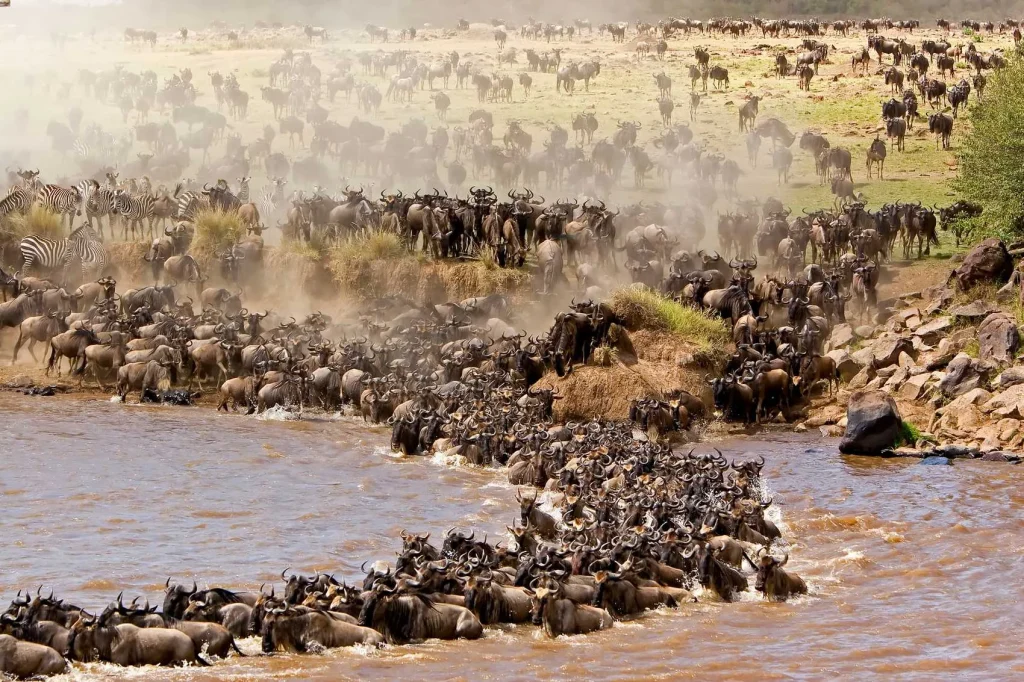
Watching thousands of wildebeest gather along a riverbank is one of the most remarkable wildlife experiences in East Africa. The animals may approach the water, retreat, regroup and wait for hours before a few individuals finally enter the river; sometimes an entire herd follows, and on other occasions the animals abandon the crossing point without entering the water. This unpredictability is fundamental to understanding the Great Wildebeest Migration: river crossings are natural events driven by grazing conditions, rainfall, herd movements and animal behaviour, and they cannot be scheduled or guaranteed, even during the busiest migration months.
For travellers planning a Masai Mara migration safari, choosing the right season is only part of the preparation. The location of your accommodation, number of safari days, experience of your guide and flexibility of your itinerary all influence the opportunities available. This guide explains when river crossings are most likely, what to expect each month, where to stay, how many days to allow and how to organise a rewarding safari without relying on unrealistic promises.
When Is the Best Time to See the Mara River Crossing?
The main planning window for Mara River crossings in Kenya runs from July through October. During these months, migrating wildebeest and zebra commonly occupy parts of the Masai Mara and the northern Serengeti, moving between grazing areas on both sides of the Kenya–Tanzania border. The migration does not follow an exact annual timetable: some years substantial herds reach the Mara ecosystem earlier than expected, while rainfall patterns in other years keep them farther south for longer, and movements may reverse when fresh grazing becomes available elsewhere.
For many travellers, August and September provide a useful balance between the historical likelihood of substantial herd activity and the possibility of observing river crossings, although these months also attract high visitor numbers and premium accommodation prices. July can be excellent when the herds arrive early, while October may still offer significant crossing activity if animals remain in the region—neither month should be dismissed simply because it falls outside the most popular August–September window.
The important distinction is between seeing migrating herds and witnessing an actual crossing. Thousands of wildebeest may be present in the reserve without crossing the river during your visit, so a well-planned Kenya wildebeest migration safari combines time near suitable river sections with broader wildlife viewing across the Masai Mara.
Mara River Crossing Season: Month-by-Month Guide
January: Migration Herds Usually Farther South
January is generally outside the principal Mara River crossing season; much of the migratory wildebeest population is typically farther south in the Serengeti ecosystem, where seasonal grazing conditions influence herd movements.
The Masai Mara remains worthwhile for travellers interested in resident wildlife—lions, elephants, giraffes, buffalo, antelope and other animals occupy the ecosystem throughout the year. January often provides relatively dry safari conditions and good visibility in open grassland, which can suit wildlife photography for visitors who prefer fewer migration-season vehicles. However, travellers whose primary objective is a Mara River crossing safari should choose another period.
February: Excellent Resident Wildlife, Limited Crossing Prospects
February generally continues the relatively dry conditions experienced during January, and wildlife viewing can be productive around areas where animals concentrate near available water and grazing. The main migration herds are normally associated with the southern Serengeti during this period, so February is better suited to a general Masai Mara wildlife safari than a dedicated river-crossing itinerary. Travellers can enjoy predator searches, open-plains game drives and photography without the intense visitor pressure associated with peak migration months.
March: Transition Towards the Rainy Season
March is a transitional month in many parts of Kenya: conditions may remain relatively dry early in the month, while rainfall becomes more frequent as the long-rains season approaches. Grass growth can change wildlife distribution, and some roads may become slippery following heavy showers. The principal migratory herds are generally not concentrated around the Kenyan Mara River crossing points.
March can still suit travellers seeking quieter safari experiences, but it is not a recommended month for planning a river crossing.
April: Green Landscapes and Long Rains
April commonly falls within Kenya’s long-rains period. The Masai Mara becomes greener, seasonal water sources fill and vegetation can grow rapidly, creating attractive scenery for landscape photography. Birdwatching may also be rewarding, and wildlife remains present throughout the reserve.
However, heavy rainfall can make some tracks difficult to navigate; certain seasonal camps may close, while others offer reduced accommodation rates. The main migration is generally farther south, making April unsuitable for travellers specifically seeking a Great Migration river crossing.
May: Quiet Safaris Before the Migration Season
May often continues the long-rains period, although rainfall varies between years. The Masai Mara can be particularly green, with comparatively few safari vehicles in some areas—appealing for travellers interested in resident predators, birds and peaceful landscapes. The main migrating herds are usually not yet established in the Kenyan Mara.
For visitors planning a migration-focused trip, May is better used for advance preparation, selecting accommodation and confirming arrangements for later in the year.
June: The Migration Season Approaches
June marks an important transition towards drier conditions in the Mara ecosystem. As the rains diminish and grazing patterns change, migrating herds may begin moving northwards, although their exact location depends on conditions experienced during the preceding months. Some years bring early movement towards the northern Serengeti and Mara ecosystem, while other years see herds remain farther south.
June can offer rewarding general wildlife viewing and may appeal to travellers who prefer to avoid the busiest months. Nevertheless, it remains an uncertain choice for anyone specifically hoping to witness a river crossing in Kenya.
July: Early Mara River Crossing Opportunities
July is commonly considered the beginning of the main Mara River crossing season. Migrating wildebeest and zebra may start arriving in substantial numbers around the northern Serengeti and Masai Mara, and as herds move between grazing areas some approach established crossing locations along the Mara River.
The first major crossings can be especially dramatic, but their timing varies considerably—early July may be too soon in some years, while late July can offer excellent opportunities when herds have reached the appropriate river sections. For travellers booking July departures, allowing several days in the Mara is preferable to relying on a single game drive.
August: One of the Most Popular Months for River Crossings
August is among the most frequently recommended months for a Masai Mara migration safari. Large herds are often present in the wider ecosystem, and river-crossing activity may occur at different points along the Mara River. Relatively dry conditions can make wildlife easier to observe where grass has become shorter, and predators may be active around concentrations of grazing animals.
However, August is a busy safari month: popular river viewpoints may attract numerous vehicles, and accommodation in desirable locations can sell out well in advance. Travellers should choose operators that prioritise responsible wildlife viewing rather than competing aggressively for positions beside crossing points. Although August offers promising conditions, it is still possible to spend several days in the Mara without witnessing an actual crossing.
September: Strong Migration Viewing Potential
September is another excellent month to consider for Mara River crossing safaris. Large herds may continue moving through the Masai Mara and Mara Triangle, sometimes crossing the river repeatedly as grazing conditions change. The landscape is often relatively dry, with favourable visibility for observing wildlife across open plains—especially appealing to photographers who want several opportunities to observe herd behaviour, predators and changing light across the savannah.
Visitor numbers can remain high, particularly near popular crossing locations. A stay of four or more nights can provide greater flexibility for responding to changing herd movements, although even an extended safari cannot guarantee a crossing.
October: Late-Season Migration Opportunities
October can still provide rewarding river-crossing opportunities when significant herds remain in the northern migration ecosystem. As seasonal conditions change, animals may begin moving southwards towards the Serengeti—some herds depart earlier, while others remain longer. The short rains may begin during October, although their timing and intensity vary.
Travellers visiting during this period should approach the migration with flexible expectations: some years provide excellent late-season activity, while others see the main herds move away earlier. October is often worth considering for visitors who want to combine migration possibilities with a broader Kenya wildlife safari.
November: Herds Usually Move South
November is generally associated with the southward movement of migrating wildebeest as fresh grazing becomes available elsewhere. Short rains may bring greener landscapes and increased bird activity. Although some animals can remain in the Mara ecosystem, November is not normally considered a reliable month for planning a major Mara River crossing; resident wildlife continues to provide opportunities for game drives.
December: A Good General Safari Month
December is usually outside the main Mara River crossing period. The principal migration herds are commonly farther south, while resident animals continue to occupy the Masai Mara. December can offer attractive landscapes, wildlife photography and rewarding family safaris, particularly during holiday periods, but travellers interested primarily in river crossings should plan for July through October instead.
Why Do Wildebeest Cross the Mara River?
The Great Wildebeest Migration is a continuous movement of grazing animals through the Serengeti–Mara ecosystem. Wildebeest respond to changes in rainfall, grass growth and access to water, and their movements follow suitable grazing rather than national borders or fixed dates.
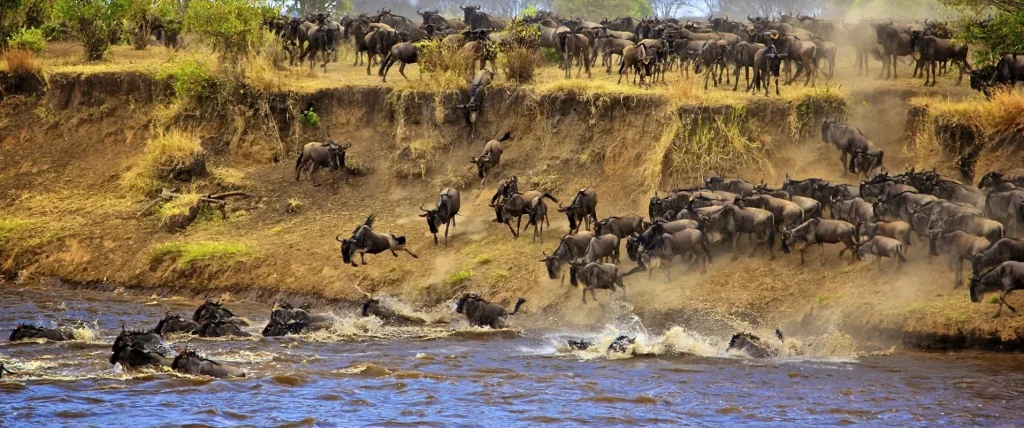
The Mara River runs through an important part of this landscape. Depending on where animals are feeding and travelling, herds may need to cross the river to reach grazing on the opposite bank. Crossings can involve small groups or enormous concentrations; herds sometimes gather for long periods, apparently reluctant to enter the water.
The river presents hazards including steep banks, strong currents and Nile crocodiles in parts of the channel. However, it is important not to portray every crossing as a mass mortality event—many animals cross successfully, and the level of danger varies with river conditions, crossing location and herd behaviour.
Where Are the Best Mara River Crossing Locations?
Mara Triangle
The Mara Triangle occupies the western section of the Masai Mara ecosystem, bordered by the Mara River and the Oloololo Escarpment.
It is one of the most important areas to consider for a migration-focused safari.
Several river sections are accessible from established game-drive routes, and the landscape offers excellent opportunities for observing wildebeest, zebra, elephants and predators.
Accommodation within or conveniently located near the Triangle can reduce the time required to reach relevant river areas.
Nevertheless, the most useful location changes as the herds move, so the advice of an experienced guide is essential.
Central Masai Mara
The central reserve contains additional sections of the Mara River and surrounding grasslands.
During migration season, herds may approach different riverbanks, gather in large numbers and cross at locations that are not necessarily active every day.
Staying in a well-positioned camp can help maximise the time available for game drives.
Travellers should ask about actual travel times from their accommodation to the river rather than assuming that every lodge described as being in the Masai Mara is equally convenient.
Northern Serengeti
The northern Serengeti in Tanzania is another important part of the Mara River crossing landscape.
The river extends across the international migration ecosystem, and crossings can occur on the Tanzanian side as well as in Kenya.
Travellers planning a combined Kenya and Tanzania migration safari may benefit from visiting both regions, provided sufficient time is available.
However, adding another country involves additional transport, park fees and border logistics. It does not guarantee a crossing.
How Many Days Should You Spend in the Masai Mara?
For a general Masai Mara safari, two or three nights can provide an introduction to the reserve’s wildlife. For travellers whose main interest is the wildebeest river crossing, a longer stay is preferable.
A three-night safari usually provides two full days of game viewing, depending on arrival and departure arrangements—worthwhile, but with limited flexibility if herds are far from accessible crossing points. Four or five nights provide more opportunities to explore different parts of the reserve and respond to changing migration conditions.
A longer stay also reduces the temptation to spend every hour waiting at the river; lions, cheetahs, elephants, hyenas and other resident wildlife can make the safari rewarding even when no crossing occurs. At Safari Trips to Kenya, migration itineraries can be planned around the traveller’s available time, accommodation preferences and preferred balance between river watching and general game drives.
What Happens During a Mara River Crossing Safari?
A typical migration game drive begins early in the morning, when temperatures are cooler and wildlife is often active.
Your guide may first investigate recent herd movements, drawing on observations from previous game drives and information shared through appropriate guiding networks.
If substantial herds are approaching a river section, the itinerary may focus on observing their behaviour from a permitted viewing location.
The animals can spend considerable time moving along the bank, drinking, gathering or retreating. A crossing may begin suddenly, or the herd may move away.
A responsible guide will maintain appropriate distances, follow reserve regulations and avoid obstructing wildlife routes.
Depending on the day’s conditions, the safari may also include predator viewing, plains wildlife, birdwatching and landscape photography.
The experience should be approached as a full-day wildlife safari rather than a scheduled crossing performance.
Best Time of Day for Mara River Crossings
There is no reliable fixed hour when wildebeest cross the Mara River.
Crossings may occur at different times during daylight, depending on animal movements, river conditions and other environmental factors.
Early morning game drives are valuable because wildlife is often active and the light is attractive for photography. However, a crossing may occur later in the morning or during the afternoon.
Travellers should avoid planning their entire safari around claims that crossings occur at a particular hour.
Where park regulations and accommodation arrangements allow, a full-day game drive with a packed lunch can provide flexibility to remain in suitable areas without returning to camp during the middle of the day.
Weather During the Mara River Crossing Season
July and August are generally relatively dry months in the Masai Mara, although occasional rainfall remains possible.
Morning temperatures can be cool, particularly during early departures in open safari vehicles. Travellers should carry a warm fleece or jacket.
Afternoons are often more comfortable, but the sun can be strong.
September commonly offers dry conditions and open visibility, while October may bring increasingly variable weather as the short-rains period approaches.
Rainfall can change road conditions and herd movements. It can also alter river levels, which may affect where animals attempt to cross.
For this reason, a good migration itinerary should remain flexible rather than promising the same route every day.
Choosing Accommodation for a Migration Safari
Accommodation location is especially important during the Masai Mara migration season.
A comfortable lodge far from the river may provide excellent general wildlife viewing but require long drives to reach crossing areas.
Travellers should compare the location of each property, reserve access arrangements and the time required to reach relevant wildlife areas.
Safari Trips to Kenya uses four accommodation categories to help travellers compare options.
Essential Accommodation
Essential safari accommodation focuses on practical comfort and value.
Properties may include established tented camps or modest lodges with private or shared facilities, depending on the selected package.
Travellers should check the camp’s exact location, meal arrangements and access to the reserve before booking.
Comfort Accommodation
Comfort safari accommodation generally offers en-suite rooms or permanent safari tents, established dining facilities and a more relaxed stay.
This category is suitable for travellers who want comfortable facilities without prioritising luxury services.
Location remains more important than decorative features when the main objective is migration viewing.
Premium Accommodation
Premium Masai Mara camps typically offer more spacious accommodation, attentive service and attractive settings.
Some properties are conveniently positioned for accessing important wildlife areas.
Travellers should confirm whether game drives, park fees and transfers are included in the quoted price.
Signature Accommodation
Signature safari accommodation may include exclusive tented camps, luxury lodges and properties offering highly personalised services.
These options can be attractive for honeymooners, photographers and travellers seeking privacy.
However, expensive accommodation does not guarantee better migration sightings. Wildlife movements remain unpredictable regardless of the price paid.
Private Safari or Group Safari for the Mara River Crossing?
A Private Kenya Safari offers flexibility to adjust game-drive plans according to wildlife movements.
Travellers can spend more time photographing animals, remain longer in productive areas and adapt the pace of the day in consultation with their guide.
A Kenya Group Safari can reduce transport costs by sharing a vehicle and guide with other travellers.
Group departures are particularly useful for solo travellers and couples seeking a more affordable migration experience.
However, shared itineraries may operate on fixed schedules, with less flexibility to remain near a river crossing for extended periods.
Before booking, confirm the maximum group size, vehicle seating arrangements, accommodation category and number of full game-drive days.
How Much Does a Mara River Crossing Safari Cost?
The price of a Masai Mara migration safari depends on several factors rather than the migration season alone.
Important considerations include accommodation category, length of stay, vehicle arrangements, transport method, park fees and the number of travellers sharing the safari.
July through September commonly attracts strong accommodation demand, and many camps apply high-season rates.
Travellers should also consider the cost of park entry, which may vary according to visitor category, season and the applicable reserve regulations.
A complete quotation should clearly explain what is included, particularly accommodation, meals, safari transport, professional guiding, game drives and applicable entrance fees.
Optional activities, drinks, gratuities, personal expenses and certain transfers may be excluded.
Because fees and accommodation rates can change, request an updated quotation for your specific travel dates rather than relying on an old advertised price.
Practical Tips for Planning a Successful River Crossing Safari
Book Accommodation Early
Popular migration-season camps can fill well in advance, especially during August and September.
Booking early provides a wider choice of locations and accommodation categories.
Choose a Suitable Safari Vehicle
A 4×4 safari Land Cruiser with a pop-up roof can provide good visibility and practical access on established safari routes.
Confirm the vehicle arrangement before booking, especially when travelling in a group.
Allow Enough Time
A longer safari creates more opportunities to observe migration activity.
It also allows time to explore the Mara’s resident wildlife rather than focusing exclusively on river crossings.
Travel With an Experienced Guide
A knowledgeable guide can interpret animal behaviour, identify productive wildlife areas and adjust the day’s route responsibly.
Experience is particularly valuable when herds are moving between different parts of the ecosystem.
Respect Wildlife and Reserve Rules
Vehicles should not block crossing routes or pressure animals towards the water.
Travellers should remain inside vehicles except in designated areas and follow their guide’s instructions.
Responsible viewing protects wildlife and improves the experience for other visitors.
Bring Appropriate Photography Equipment
- Use a camera with a telephoto lens to photograph animals from a respectful distance.
- Carry a shorter lens for landscape scale and large herds.
- Pack spare batteries, sufficient memory cards, dust protection and binoculars.
Can You Combine the Migration With Other Kenya Safari Destinations?
A migration safari can be combined with several other Kenyan destinations.
Lake Nakuru National Park offers opportunities to look for rhinos, buffalo, giraffes and a variety of birdlife.
Lake Naivasha provides a contrasting Rift Valley experience, with boat excursions and walking opportunities at selected wildlife sanctuaries.
Amboseli National Park is particularly well known for elephants and views towards Mount Kilimanjaro when conditions are clear.
Travellers with more time may also consider Samburu National Reserve, Ol Pejeta Conservancy or a Diani Beach holiday extension.
The most practical combination depends on the total number of travel days. Adding too many destinations to a short itinerary can result in excessive driving and limited wildlife-viewing time.
Frequently Asked Questions About Mara River Crossings
What Is the Best Month for Mara River Crossing?
August and September are often the strongest planning choices, based on the typical presence of migrating herds in the Mara ecosystem. July and October can also be productive. No month guarantees a crossing.
Are Mara River Crossings Guaranteed?
No. Crossings depend on natural herd movements, grazing conditions and animal behaviour. Even travellers visiting during peak season may not witness one.
Can I See the Great Migration Without a River Crossing?
Yes. Large wildebeest and zebra herds, predator activity and movements across the plains are all part of the Great Wildebeest Migration.
Is July Too Early for a Migration Safari?
Not necessarily. Significant herds can reach the Mara ecosystem during July, although the timing varies annually. Late July may offer better prospects than early July in some years.
Is October Too Late for Mara River Crossings?
October can still be worthwhile when herds remain in the region. However, southward migration movements may already be underway.
How Many Nights Are Recommended?
Four or five nights are a useful choice for travellers who place a high priority on river-crossing opportunities. Shorter safaris can still provide excellent wildlife viewing.
Which Is Better for Migration Viewing, the Mara Triangle or Central Masai Mara?
Both can be productive. The best location depends on current herd movements, accommodation position and access to relevant river sections.
Can Children Join a Migration Safari?
Yes, many migration safaris are suitable for families. Parents should choose appropriate accommodation, realistic game-drive durations and a comfortable vehicle arrangement.
Is a Balloon Safari Included?
A Masai Mara hot air balloon safari is generally an optional activity unless specifically included in the package quotation. Balloon flights provide a different perspective on the landscape but do not guarantee views of river crossings.
Plan Your Mara River Crossing Safari With Safari Trips to Kenya
Choosing the best time for Mara River crossing involves balancing the seasonal migration pattern with realistic expectations about wildlife behaviour.
For most travellers, July to October offers the most suitable planning window, with August and September particularly popular for migration-focused safaris.
However, a successful trip depends on more than the month. The right accommodation location, sufficient time in the reserve, experienced guiding and a flexible itinerary are equally important.
Safari Trips to Kenya can help you plan a private Masai Mara migration safari or explore suitable Kenya group safari departures, with accommodation options ranging from Essential to Signature.
Share your preferred travel dates, number of travellers, accommodation category and available safari days to receive a tailored proposal.
The aim is to create a rewarding Masai Mara wildlife experience, with the possibility of witnessing one of nature’s most extraordinary river crossings.