
Masai Mara National Reserve
Kenya’s Most Famous Safari Destination
The Masai Mara is the safari landscape many travellers imagine when they think of Africa: golden grasslands, scattered acacia trees, enormous skies, big cats in the morning light and herds moving across the plains.
Resident wildlife is excellent throughout the year. The Great Migration can add huge herds and the possibility of Mara River crossings — never a guarantee.
- Location Southwestern Kenya, Narok County
- Ecosystem Greater Serengeti–Mara
- Best For Wildlife, photography, families, first safaris
- Typical Stay 3–4 nights (longer for migration or photography)
- From Nairobi About 5–6 hours by road
- Access Road and scheduled or charter flights
Overview
Located in southwestern Kenya, the Masai Mara forms the northern part of the Serengeti–Mara ecosystem, one of Africa’s most important wildlife landscapes. The reserve and surrounding conservancies support lions, elephants, buffaloes, leopards, cheetahs, giraffes, zebras, wildebeest, hippos, crocodiles and many antelope species.
The Mara is internationally known for the Great Wildebeest Migration. During part of the year, large migratory herds move into the wider Mara ecosystem from Tanzania’s Serengeti, creating extraordinary wildlife concentrations and the possibility of dramatic Mara River crossings.
The Masai Mara should not be regarded only as a migration destination. Resident wildlife remains excellent throughout the year, and every season offers a different safari experience.
Travel during the drier months and the grasslands become increasingly open, making wildlife easier to locate around water. Visit during the greener months and the Mara turns lush — dramatic skies, newborn animals, migratory birds and often fewer safari vehicles.
For many travellers it is the natural starting point for a Kenya safari: a short journey from Nairobi, part of a longer circuit through Amboseli, Lake Nakuru, Samburu or Laikipia, or combined with Tanzania, the Kenya coast, Zanzibar or gorilla trekking in Uganda and Rwanda.
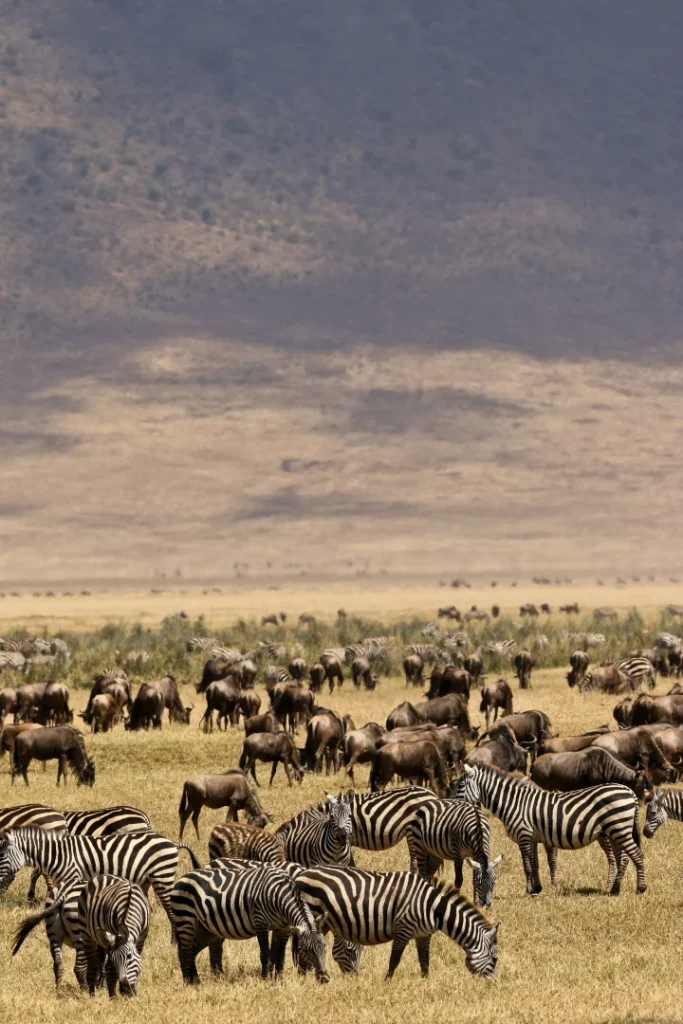
Why Visit the Masai Mara?
Few safari destinations combine wildlife density, open landscapes, predator activity, cultural experiences and accommodation choice as strongly as the Mara.
A safari here can be designed for almost any traveller — from a first-time visitor hoping to see the Big Five to an experienced photographer wanting several days with a particular pride of lions or coalition of cheetahs.
-
Outstanding Resident Wildlife
Wildlife viewing does not depend entirely on migratory herds. Lions, elephants, buffaloes, giraffes, zebras, hyenas and many antelope species can be encountered in every season. Open terrain often makes animals easier to observe than in heavily wooded parks.
-
One of Africa’s Great Big-Cat Destinations
Lions are particularly prominent, with large prides and nomadic males moving through established territories. Leopards prefer cover along riverine woodland and drainage lines. Cheetahs use the open plains, where they can scan wide areas for prey.
-
The Great Wildebeest Migration
The Mara is one of the most famous places to experience wildebeest, zebras and other grazers moving through the Serengeti–Mara ecosystem. The migration adds enormous numbers to an already rich resident wildlife base, and can create intense predator activity around water.
-
Excellent Photography
Wide horizons, dramatic skies, open terrain and abundant wildlife make the Mara especially rewarding for photographers. Consider a private vehicle, longer game drives and a camp placed for the light and the wildlife you care about.
- Lions against open savannah
- Cheetahs on termite mounds
- Elephants at sunrise
- Leopards in riverine trees
- Wildebeest herds and river crossings (never guaranteed)
- Maasai culture, thunderstorms, balloon flights and sunset silhouettes
The Masai Mara Landscape
The Mara is sometimes described simply as open grassland, but the ecosystem is more varied than that. Different habitats support different species and create different game-viewing conditions.
-
Open Plains
Large areas of grassland provide habitat for wildebeest, zebras, gazelles, topi and other grazers. These plains are also important hunting grounds for lions and cheetahs.
-
Riverine Forests
Along rivers and seasonal waterways the vegetation thickens. These belts can provide shade and cover for elephants, leopards, monkeys and many bird species.
-
Acacia Woodland
Acacia-dotted country creates some of the most recognisable Mara scenery. Giraffes frequently browse here, while elephants move between woodland, grassland and water.
-
The Mara River
The Mara River is one of the most important natural features in the ecosystem. It provides permanent water for resident wildlife and becomes especially famous in migration season when wildebeest may attempt to cross. Hippos and crocodiles live here year-round. Crossings are never guaranteed.
Top Things to Do in Masai Mara
-
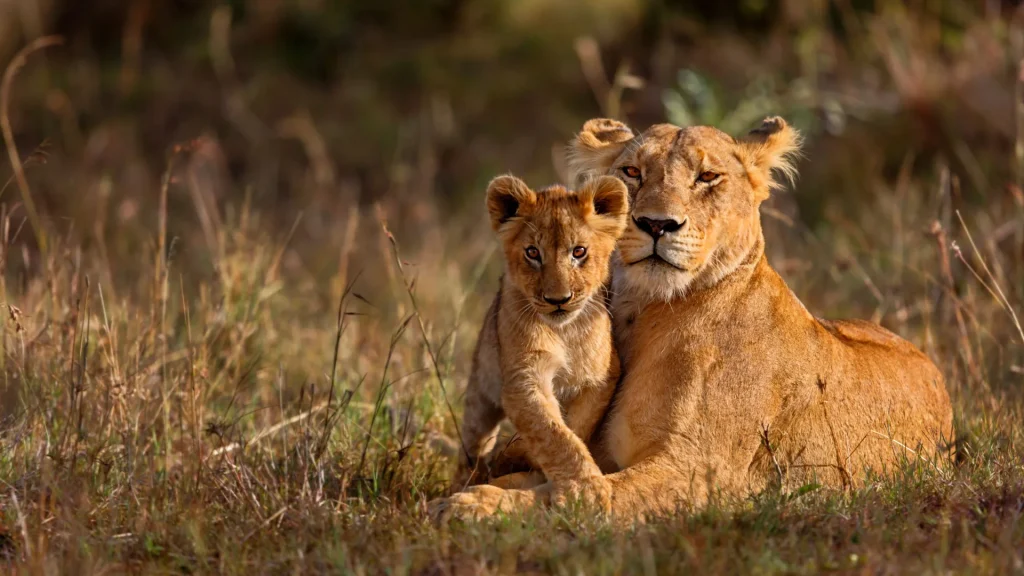
Game Drives
The central activity on almost every Mara safari. Early mornings are cooler and predators may still be active; late afternoons bring attractive light and often continue into sunset. Full-day drives help when exploring distant sections of the ecosystem.
-
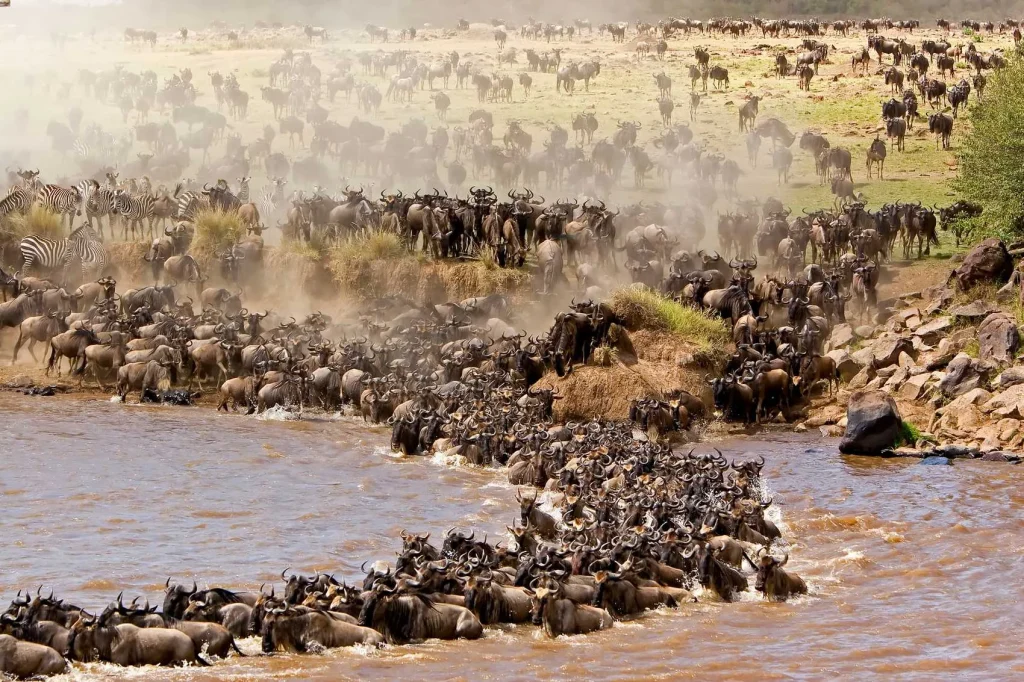
Witness the Migration
In the dry months, wildebeest and zebra often graze the northern plains. River crossings can happen; they are never guaranteed.
-
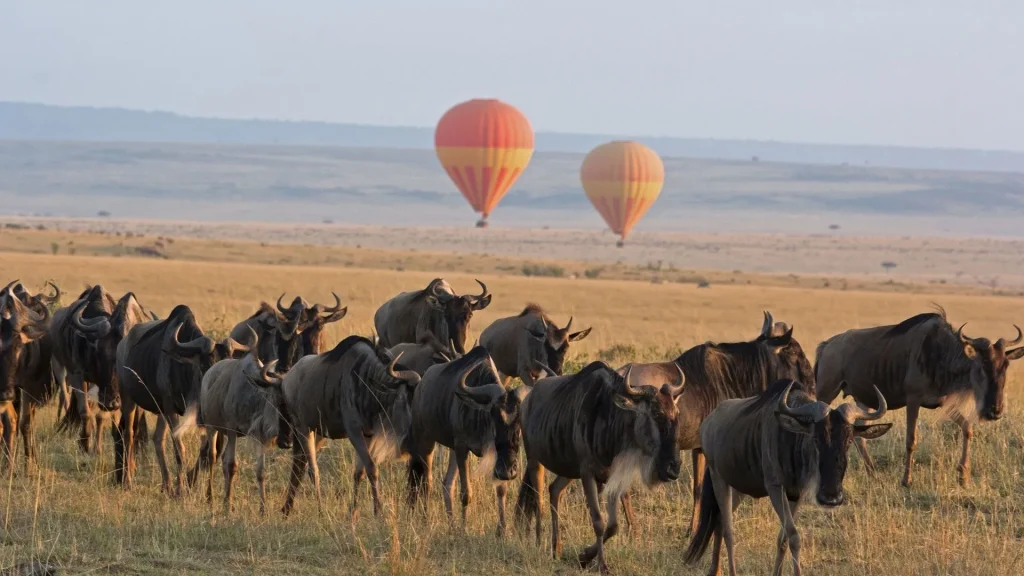
Hot Air Balloon Safaris
Flights normally begin around sunrise and may pass over plains, rivers, wildlife and woodland. Balloons are optional, usually extra cost, and should be booked in advance in busy periods. Wind can cancel a morning.
-
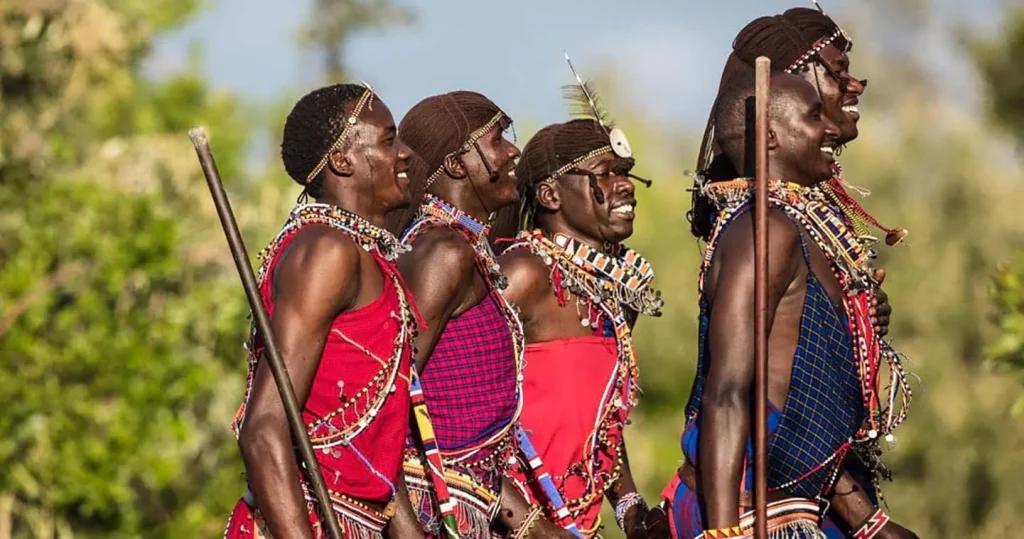
Maasai Village Visits
The region is home to Maasai communities whose pastoral traditions are closely connected to the landscape. Responsible visits should be genuine, respectful and designed to benefit the local community.
-
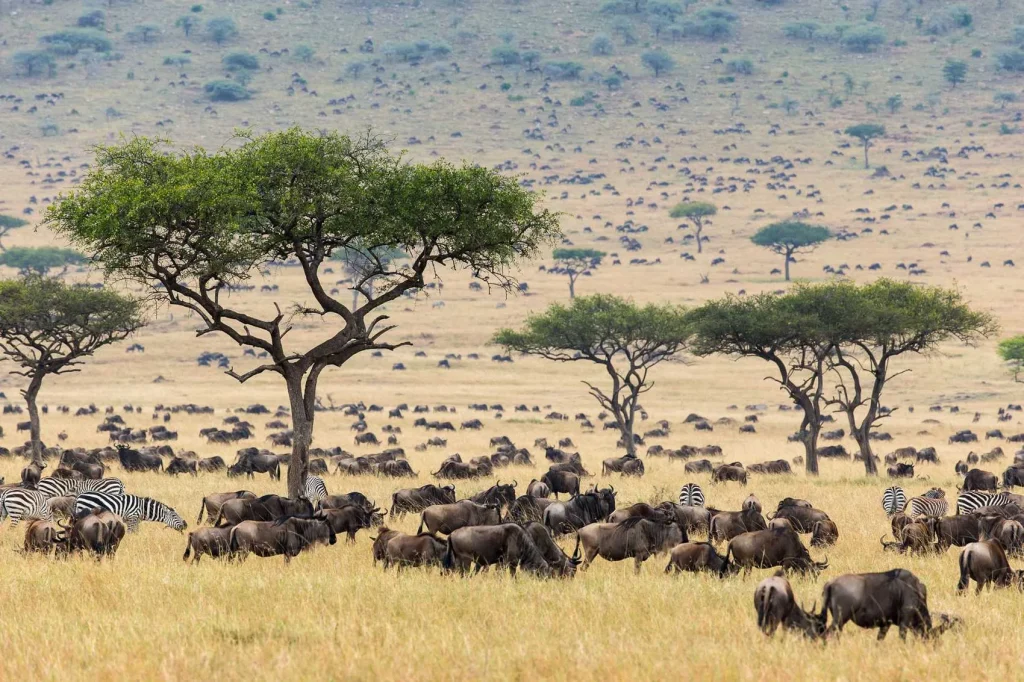
Wildlife Photography
Open grassland and vehicle-based viewing suit first-time safari photographers as well as more serious shooters. Light is best at the edges of the day.
-
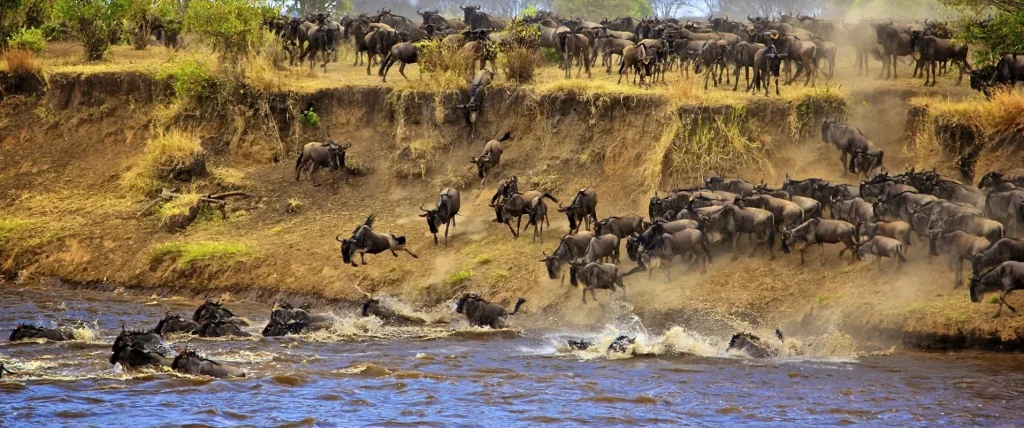
Mara River Safari
Time on the Mara and Talek rivers for hippo, crocodile and, in some dry-season weeks, wildebeest crossings — possible, never guaranteed.
Plan a Masai Mara Safari
Catalogs and planning pages for Mara itineraries, styles, costs and first-time questions.
- Masai Mara Safaris Browse Mara itineraries by duration and camp style.
- Safari Packages Ready-made circuits that start or finish in the Mara.
- Masai Mara Tours Guided game-drive days shaped around your dates.
- Masai Mara Holidays Longer stays and Mara-plus-coast or Mara-plus-park pairings.
- Luxury Mara Safari Premium camps, flights, private vehicles and exclusive conservancies.
- Budget Mara Safari Focus spending on wildlife experiences rather than luxury accommodation.
- Family Safari Minimise long drives and choose family-friendly rooms, meals and vehicle rules.
- Honeymoon Safari Private camps, balloon flights, sundowners and romantic dining.
- Safari Cost What a Mara stay actually costs — camps, fees and flights.
- Entrance Fees Narok County and Mara Triangle fees, quoted at current rates.
- Private Safari Your own vehicle and guide — especially useful for families, couples and photographers.
- Complete Safari Guide One page for first-timers covering parks, camps and timing.
Popular Masai Mara Safaris
View All Safari Packages-
3 Days Masai Mara Safari from Nairobi
Plan a 3 Days Masai Mara Safari with expert guides, game drives and carefully chosen camps. Request a…
Masai Mara
View Safari -
3 Days Masai Mara Fly-in Safari
Plan a 3 Days Masai Mara Fly-in Safari with expert guides, game drives and carefully chosen camps. Request…
Masai Mara
View Safari -
4 Days Masai Mara Safari
Plan a 4 Days Masai Mara Safari with expert guides, game drives and carefully chosen camps. Request a…
Masai Mara
View Safari -
5 Days Masai Mara & Lake Nakuru
Explore a 5 Days Masai Mara & Lake Nakuru safari with Big Five game drives, rhino viewing, Rift…
Masai Mara, Lake Nakuru
View Safari -
7 Days Masai Mara, Nakuru & Amboseli
Explore the 7 Days Masai Mara, Nakuru & Amboseli with a day-by-day safari plan, key wildlife experiences, destinations,…
Masai Mara, Lake Nakuru, Amboseli
View Safari -
8 Days Masai Mara & Diani Beach
Explore the 8 Days Masai Mara & Diani Beach with a day-by-day safari plan, key wildlife experiences, destinations,…
Masai Mara, Diani Beach
View Safari
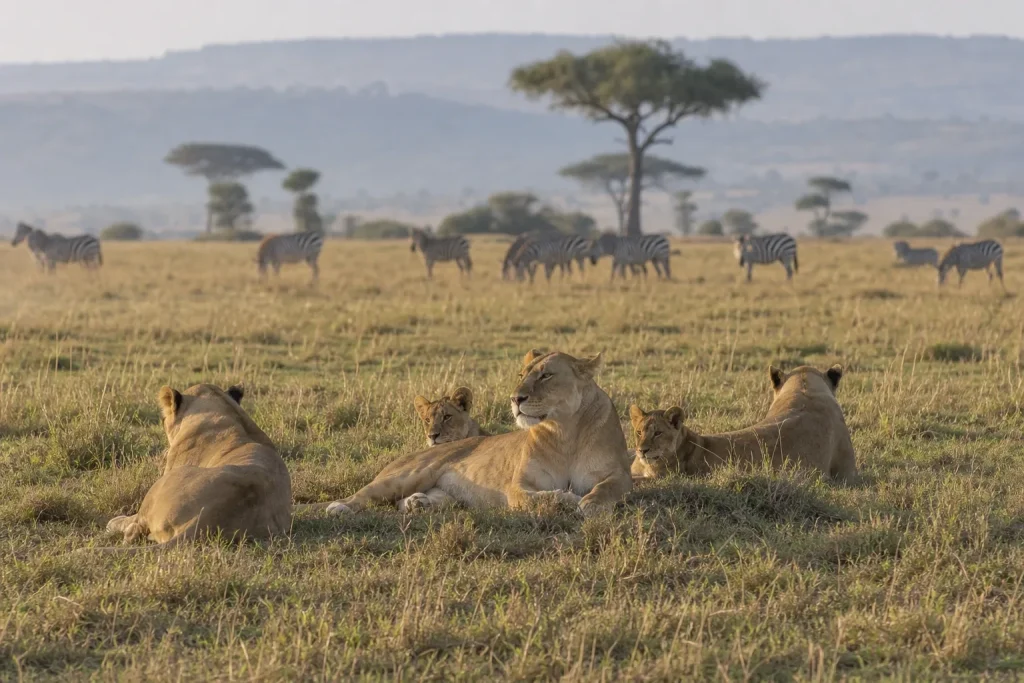
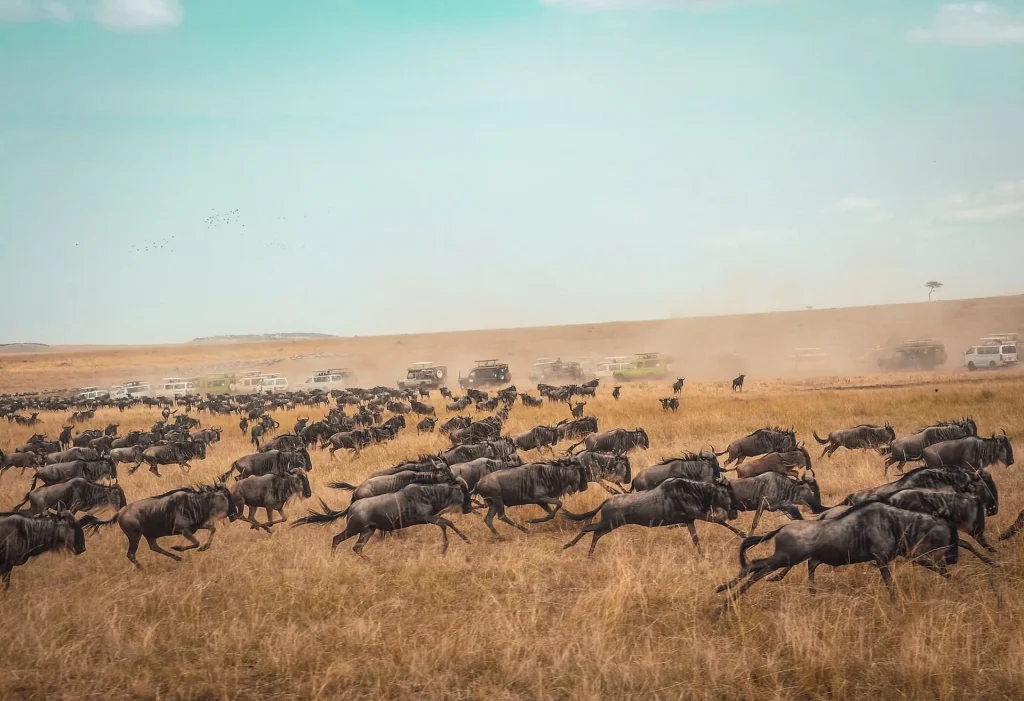
The Great Wildebeest Migration
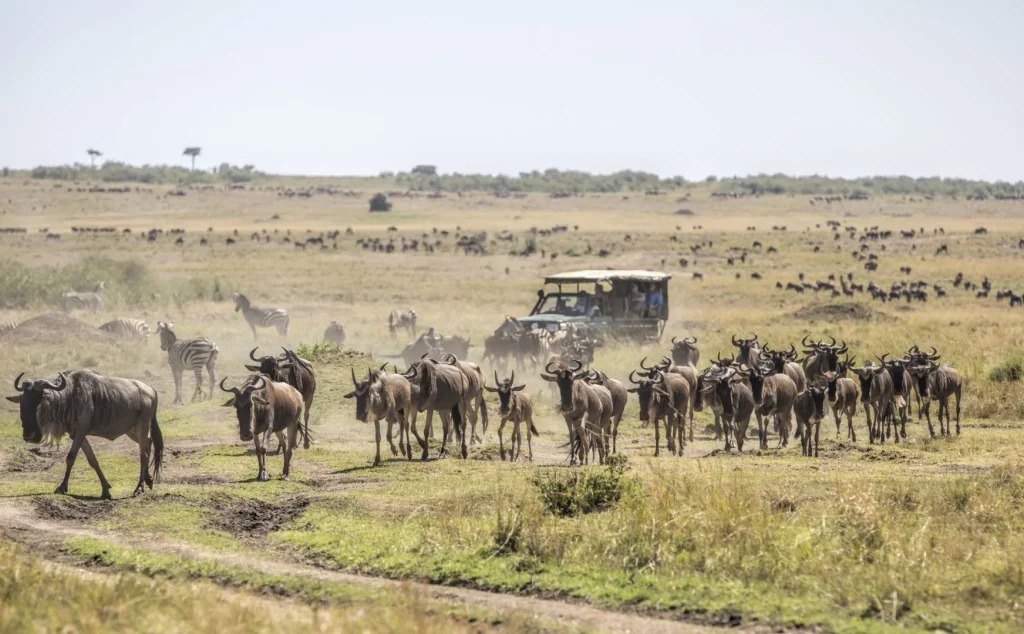
The Great Wildebeest Migration is a continuous ecological cycle, not a single event. Wildebeest and zebras move through the Serengeti–Mara ecosystem in response to rainfall, fresh grazing and water. Exact timing varies from year to year.
Large herds generally begin moving toward the northern Serengeti and Mara as conditions change in the middle of the year. Some eventually enter Kenya’s Masai Mara; others may remain on the Tanzanian side of the border.
-
Mara River Crossings
River crossings are the most famous part of the migration. Wildebeest often gather along the banks before entering the water. Sometimes thousands cross in a short period. At other times herds approach, wait for hours and move away without crossing. That unpredictability is part of the experience. A crossing should never be marketed as guaranteed. If crossings are a major priority, allow enough time in the Mara rather than expecting a specific event on a single game drive.
-
Migration Photography
Migration-focused photographers should plan differently from general safari travellers. Vehicle positioning, light direction, crowd levels and patience become especially important.
Wildlife & Birds
The Masai Mara supports an impressive range of mammals, birds and reptiles. None of those sightings is guaranteed on a given drive.
The Mara is also an excellent destination for birdwatchers. Grassland, woodland, rivers and seasonal wetlands create a range of habitats. Commonly sought birds include raptors, vultures, bustards, secretarybirds, ostriches, rollers, hornbills and waterbirds. A private vehicle is valuable if birds are the main interest, so the pace can follow birding rather than large mammals alone.
-
Lions
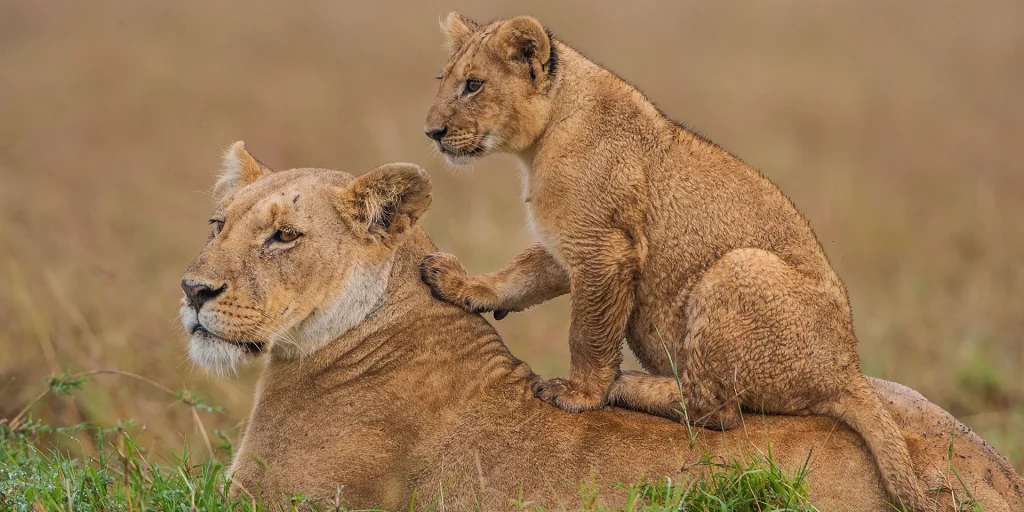
One of the reserve’s most important attractions. Open habitat gives a good chance to watch pride behaviour, territorial interactions, hunting attempts and cubs. Some prides hold long-term territories; male coalitions may cover wider areas.
-
Leopards
More secretive than lions. They frequently use thicker vegetation, rivers and trees where they can rest or store prey. Patient early-morning and late-afternoon viewing may provide good opportunities.
-
Cheetahs
The open Mara plains provide excellent hunting habitat. Cheetahs rely on visibility and speed, making grassland particularly suitable.
-
Elephants
Family groups move through many parts of the ecosystem, feeding in grassland, woodland and riverine habitat. Their presence alongside giraffes, zebras and plains game creates classic Mara scenes.
-
Buffaloes
Can occur in large herds where grazing and water are available. Older males may also be encountered alone or in small groups.
-
Rhinoceros
Rhinos occur in the wider Mara ecosystem but are much harder to encounter than lions, elephants or buffaloes. Travellers whose main priority is rhino viewing often combine the Mara with Ol Pejeta or Lake Nakuru.
-
Giraffes
Widespread and often associated with acacia woodland. Height and distinctive silhouettes make them especially photogenic against the open horizon.
-
Wildebeest & zebras
Resident animals are present throughout the year. During migration season, numbers increase dramatically as migratory herds move through the wider ecosystem.
-
Hippos & crocodiles
The Mara River and other waterways support large hippos and Nile crocodiles. They become especially prominent during migration season.
-
Hyenas
Spotted hyenas are important predators and scavengers. They live in complex social groups and often interact with lions around kills.
-
Antelope
Visitors may encounter Thomson’s gazelles, Grant’s gazelles, impalas, topi, elands, waterbuck, hartebeest, dik-dik and bushbuck.
Wildlife & Migration Guides
Species, predators, birds and wildebeest movement — sightings are never guaranteed.
- Masai Mara Wildlife Year-round plains game, cats and riverine woodland.
- Big Five Lion, leopard, elephant, buffalo — rhino is rarer and never guaranteed.
- Predators Cats, hyena and hunting strategy on open grass.
- Wildebeest Migration Herds typically reach the Mara from July. Crossings are never guaranteed.
- River Crossing Possible in the dry months — never promised on a given day.
- Big Cats Lion, leopard and cheetah on the same grassland.
- Birds of the Mara Well over 450 species recorded across grass, river and woodland.
- Migration Photography Light, vehicles and realistic crossing expectations.
Mara Conservancies
The wider Mara ecosystem includes both the national reserve and a network of surrounding conservancies. Where you stay can significantly change the safari: classic reserve landscapes and river country, or lower camp density with night drives and walking.
- Mara Triangle West of the Mara River — rich wildlife habitat, extensive open landscapes, separate fees and classic crossing country in some dry-season weeks.
- Mara North Conservancy One of the best-known conservancy areas adjoining the reserve — community-owned land and low-density tourism, with night drives and walking.
- Olare Motorogi Conservancy Associated with exclusive safari camps, excellent predator viewing and low camp density.
- Naboisho Conservancy Wildlife conservation, community partnerships and varied activities including walking and night drives.
- Ol Kinyei Conservancy A low-density conservancy option within the greater Mara ecosystem, suited to walking and quieter camps.
- Lemek Conservancy Located within the wider northern Mara landscape — a quieter base beside the Triangle and the public reserve.
- Ol Chorro Conservancy Private-conservancy wildlife experiences north of the main reserve, suited to exclusive camps and night activity.
- Siana Conservancy Lies on the eastern side of the Mara ecosystem — a practical add-on to a reserve or conservancy circuit.
Reserve or Conservancy: Which Should You Choose?
The reserve contains many of the classic Mara landscapes and important wildlife habitats. It is particularly relevant for traditional game drives and sections of the Mara River associated with migration movements.
Conservancies surrounding the reserve generally operate with lower accommodation densities and more controlled vehicle numbers. Activities may include game drives, night drives, guided walks, sundowners, bush meals and community visits.
Many experienced travellers combine a stay near or inside the national reserve with several nights in a conservancy — two different styles of Masai Mara experience. For many, that combination is the strongest itinerary.
Choose the main reserve if you want
- Classic Mara landscapes
- Extensive traditional game drives
- Key sections of the Mara River
- Migration-focused safari planning
Choose a conservancy if you want
- Lower visitor density
- Night game drives
- Guided walks
- Intimate tented camps
- More exclusive wildlife viewing
Best Time to Visit

The Masai Mara can be visited throughout the year. The best month depends on what you want to experience — migration herds, quieter conservancies, or green-season cats — not because wildlife disappears in the rains.
-
July – October
Most strongly associated with migration activity: large wildebeest herds, river-crossing possibilities, predator activity and dry-season viewing. Also one of the busiest periods — demand for camps, vehicles and flights can be high. Crossings are never guaranteed.
-
November
Short rains often begin to refresh the landscape. Wildlife remains excellent, while visitor numbers may fall after the peak migration season.
-
December – February
Warm conditions, good general game viewing and attractive photographic opportunities. Resident wildlife remains strong.
-
March
Conditions begin changing as the wetter season approaches. Visitor numbers are often lower than during peak migration periods.
-
April – May
Greener months. Rainfall can affect some roads. Benefits may include fewer visitors, lush scenery, dramatic clouds, lower seasonal rates at some properties and excellent photography.
-
June
A transition toward drier conditions. The landscape remains attractive while safari demand begins increasing before peak migration season.
How to Get There

-
By Road from Nairobi
Driving is popular for private Kenya safaris. The journey commonly takes about 5–6 hours, depending on Nairobi traffic, road conditions, weather, stops, the reserve gate and lodge location. Road travel works especially well when the Mara is part of a longer circuit.
-
By Air
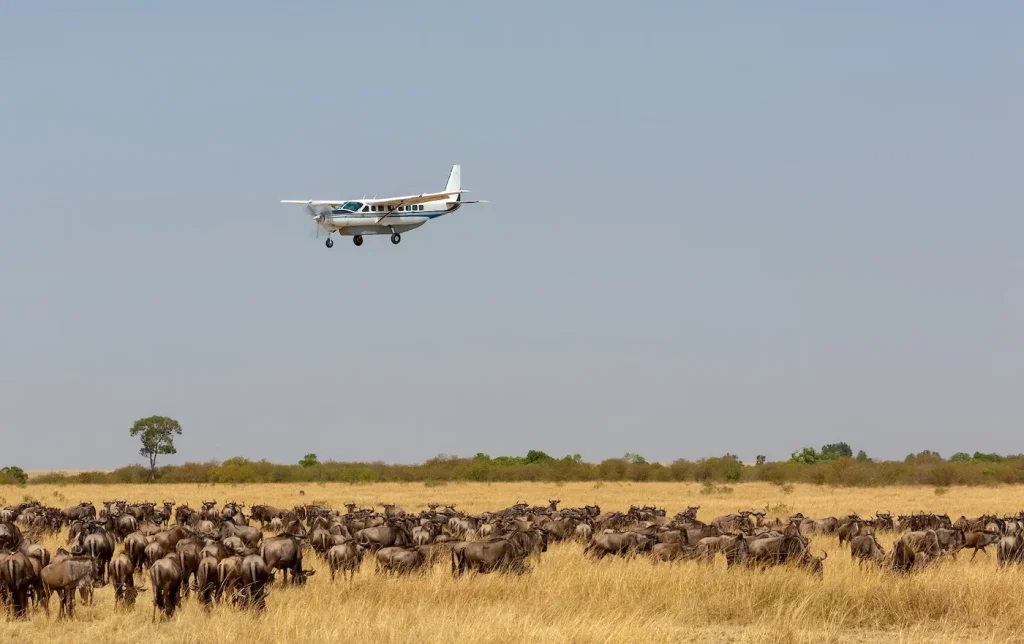
Scheduled flights on small aircraft from Nairobi can cut travelling time considerably. Your correct airstrip depends on camp location — Ol Kiombo, Keekorok, Musiara and conservancy strips all serve different stays.
-
Fly-in Safari
Particularly suitable for short itineraries, luxury travel, honeymooners and travellers combining several distant regions.
-
Road Safari
Road safaris often provide better overall value and can easily combine the Mara with other Kenya destinations.
Where to Stay
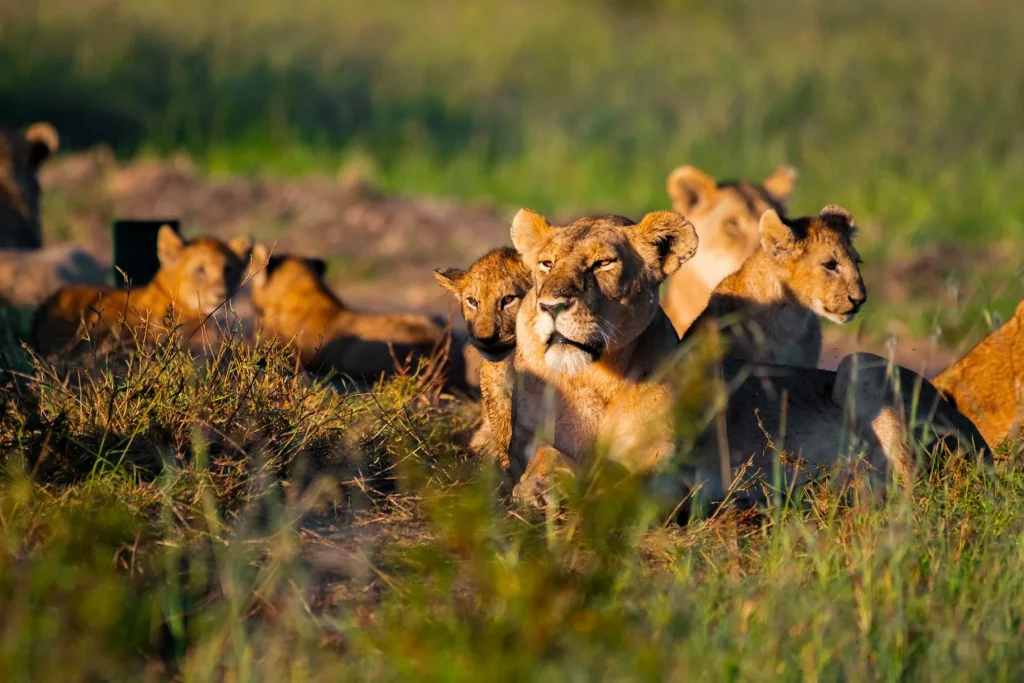
Accommodation ranges from simple safari camps to some of Africa’s most exclusive lodges. Choosing a stay should involve more than a price category: location affects game-drive distances, reserve and migration access, conservancy activities, vehicle density, transfer time and overall safari style.
View Masai Mara LodgesMasai Mara Map
Where to Stay in the Masai Mara
Reserve lodges, tented camps and conservancy stays by budget and occasion.
- Where to Stay Start here: location affects drive times, river access and safari style as much as budget.
- Safari Lodges Permanent lodges across the reserve, gates and adjoining conservancies.
- Tented Camps A classic Mara stay — from simple safari tents to luxurious tented suites.
- Luxury Lodges Large rooms or tented suites, private decks, fine dining and high personal service.
- Mid-range Lodges Comfort and safari value — lodges and camps close to reserve gates or conservancies.
- Budget Lodges Wildlife over luxury. Check location so transfer costs do not erase the saving.
- Migration Camps Chosen for proximity to areas where migration activity may occur — never a guarantee.
- Camps Near Mara River Appealing for migration-focused visits. No location can guarantee a crossing.
- Family Camps Interconnecting rooms, meal flexibility, pools, child policies and shorter drives.
- Honeymoon Camps Smaller camps with privacy, private dining, scenic settings and flexible activities.
Masai Mara
Month by Month
The reserve is open all year. Use the month guides for weather and crowding, and the migration notes for wildebeest movement — never as a guarantee of a river crossing.
- Open Year-Round The Mara can be visited in every month
- Dry Season Viewing June to October is typically the clearest
- Migration Window Herds are often possible July to October
The Mara Year
-
 January
Resident wildlife
Migration notes
-
 February
Warm & clear
Migration notes
-
 March
Green transition
Migration notes
-
 April
Long rains
Migration notes
-
 May
Quiet & lush
Migration notes
-
 June
Dry season starts
Migration notes
-
Prime Migration
 July
Herds may arrive
Never guaranteed
Migration notes
-
Prime Migration
 August
River crossings
Never guaranteed
Migration notes
-
Prime Migration
 September
Herds often present
Never guaranteed
Migration notes
-
 October
Herds may remain
Migration notes
-
 November
Green season
Migration notes
-
 December
Festive safari
Migration notes
Weather, crowding and wildebeest movement vary each year. River crossings are never guaranteed.
How Many Days Should You Spend?
For many first-time visitors, three to four nights provides a strong introduction. A shorter stay can work, but the safari becomes more dependent on luck and timing.
Longer stays are especially valuable for photographers, migration-focused travellers, repeat visitors, birdwatchers, and anyone combining a reserve stay with conservancy nights.
Masai Mara Safari Cost
The cost of a Masai Mara safari varies greatly. A budget road safari and a luxury fly-in conservancy safari are completely different products, so a single headline price is rarely useful.
Important factors include season, accommodation level, number of travellers, number of safari days, private or shared vehicle, park and conservancy fees, road or flight transport, optional activities, room type and meal plan.
What usually increases the price
- Peak migration season
- Luxury camps
- Private conservancies
- Private vehicles
- Internal flights
- Balloon safaris
- Longer stays and premium rooms
What can reduce the cost
- Travelling outside peak periods
- Choosing road transport
- Sharing a safari vehicle
- Selecting mid-range accommodation
- Travelling with a small private group
- Combining parks efficiently
First Safari, Families & Practical Planning
-
Planning a First Masai Mara Safari
The Masai Mara is particularly suitable for travellers visiting Africa for the first time. Wildlife density is high, landscapes are open and there is a wide range of accommodation.
- Spend at least three nights
- Choose accommodation based on location
- Travel with a knowledgeable guide
- Include both morning and afternoon game drives
- Allow flexibility for wildlife sightings
- Avoid an itinerary with too many destinations
-
Masai Mara with Children
Children can enjoy the Mara immensely, but safari design should depend on their ages.
- Private safari vehicle
- Shorter game drives
- Family rooms and flexible meals
- Pool access and child activity programmes
- Medical access
- Minimum ages for walking or balloon safaris
-
Honeymoon Planning
The Mara works particularly well for honeymooners because camps can offer privacy and personalised service.
- Private game drives
- Balloon safari
- Bush breakfast and sundowners
- Private dinner
- Conservancy stay
- Beach extension
-
What to Pack
Packing should focus on comfort and practicality. Early mornings can feel surprisingly cool even when daytime temperatures are warm.
- Neutral-coloured clothing, light shirts and long trousers
- Hat, sunglasses, sunscreen and insect repellent
- Comfortable closed shoes and a light jacket
- Camera, spare batteries and binoculars
- Travel documents and medication
-
Safari Vehicles
Vehicle quality influences comfort and wildlife viewing. Private vehicles are particularly useful for photographers and families.
- Elevated visibility and open or pop-up roof viewing
- Comfortable seating and sufficient luggage storage
- Charging facilities where available
- Reliable communication, appropriate tyres and suspension
-
Masai Mara Safety
The Masai Mara is an established safari destination, but wildlife areas require common-sense precautions.
- Follow guide instructions
- Avoid leaving vehicles without permission
- Never approach animals
- Remain inside camp after dark unless escorted
- Store food appropriately and respect lodge safety rules
- Carry suitable travel insurance
Compare the Mara with Other Parks
Side-by-side guides if you are choosing between savannah parks — or between the reserve and a conservancy.
- Masai Mara vs Serengeti The same ecosystem — different safari logistics, landscapes and travel possibilities.
- Masai Mara vs Amboseli Choose the Mara for predators and migration possibilities; Amboseli for elephants and Kilimanjaro.
- Masai Mara vs Samburu Classic savannah wildlife versus arid landscapes and distinctive northern species.
- Masai Mara vs Tsavo The Mara is more compact and wildlife-focused; Tsavo is an enormous wilderness.
- Masai Mara vs Ngorongoro A broad open ecosystem versus wildlife concentrated inside a volcanic caldera.
- Masai Mara vs Kruger Both are major safari destinations, but landscape, management and camp style differ considerably.
- Mara Triangle vs Reserve Separate management, fees and vehicle rules on the west bank of the Mara River.
- Mara North vs Reserve Conservancy nights with walking and night drives versus classic public-reserve game drives.
Combine the Mara with Other Destinations
Popular Kenya circuits and safari-and-beach pairings that start or finish in the Mara.
- Masai Mara + Lake Nakuru A popular pairing for Mara predators plus rhinos and Rift Valley landscapes.
- Masai Mara + Amboseli Combines big-cat country with elephants and Kilimanjaro views.
- Masai Mara + Samburu An excellent route for travellers wanting ecological variety.
- Masai Mara + Laikipia Good for travellers seeking private conservancies and exclusive activities.
- Masai Mara + Diani Beach One of the strongest safari-and-beach combinations in Kenya.
- Masai Mara + Tanzania The Mara can be combined with Serengeti, Ngorongoro and other northern Tanzania destinations.
Travel Tips
- Three to four nights is a sensible minimum; longer is better for photographers, birders and migration-focused travel.
- Choose camp location for game-drive distance, river access and conservancy activities — not only the room category.
- Your camp’s airstrip and gate should drive the transfer. Road from Nairobi is commonly 5–6 hours.
- The Mara Triangle is a separate management area with its own fees and vehicle rules.
- Balloon mornings cancel in wind. Treat them as a bonus, not the reason you booked the Mara.
- Pack layers, dust protection and binoculars. Early mornings can be cool even in warm months.
- Follow guide instructions, stay in the vehicle unless invited out, and remain in camp after dark unless escorted.
- River crossings and individual species — including the Big Five — can never be guaranteed.
FAQs
Where is the Masai Mara?
The Masai Mara is located in southwestern Kenya in Narok County, along the border with Tanzania.
Is Masai Mara worth visiting?
Yes. It is one of Kenya’s strongest safari destinations because of its resident wildlife, large predator populations, beautiful landscapes and migration opportunities.
Is Masai Mara only worth visiting during the migration?
No. Resident wildlife makes the Mara rewarding throughout the year.
When does the migration reach Masai Mara?
Large migratory herds are generally associated with the Mara ecosystem during part of the middle and later part of the year, but exact timing changes according to rainfall and grazing conditions.
Can river crossings be guaranteed?
No. River crossings are unpredictable natural events and can never be guaranteed.
Can I see the Big Five?
The wider ecosystem supports the Big Five, but individual sightings can never be guaranteed. Rhino is much harder to encounter than lion, elephant or buffalo.
How many nights should I stay?
Three to four nights is a good starting point for many travellers. Longer stays are worthwhile for photographers and migration-focused safaris.
Is Masai Mara suitable for families?
Yes, particularly when using family-friendly accommodation and a private safari vehicle.
Is a balloon safari worth doing?
For travellers who enjoy aerial scenery and unique experiences, it can be one of the most memorable activities in the Mara. Flights can cancel in wind and are usually an extra cost.
Can I walk in Masai Mara?
Walking safaris are available in selected surrounding conservancies and designated areas with qualified guides.
Are night game drives allowed?
Night drives are mainly associated with surrounding conservancies rather than the central national reserve.
Can I fly from Nairobi?
Yes. Scheduled flights operate between Nairobi and several Mara airstrips. The right strip depends on your camp.
Can I drive from Nairobi?
Yes. Road safaris are one of the most common ways to reach the Mara. The journey commonly takes about 5–6 hours depending on traffic, weather and lodge location.
Is Masai Mara expensive?
It can suit several budgets. Cost varies greatly depending on season, accommodation, transport and safari style. A single headline price is rarely useful.
Can I combine Masai Mara with Tanzania?
Yes. The Mara combines naturally with the Serengeti and other northern Tanzania destinations.
Can I combine Masai Mara with a beach holiday?
Yes. Diani, Watamu and Zanzibar are popular extensions.
Is Masai Mara good for photography?
Yes. The open landscape, wildlife density and dramatic light make the Mara one of Africa’s best-known photographic destinations.
Do I need binoculars?
They are highly recommended, especially for birds and wildlife at greater distances.
What colours should I wear?
Neutral colours such as khaki, brown, beige and green are generally practical for safari travel.
Is Wi-Fi available?
Many lodges and camps provide internet access, although connection quality varies by location.
Can I visit Masai Mara on a short safari?
Yes. Short safaris from Nairobi are possible, although longer stays provide more wildlife-viewing opportunities.
Browse Masai Mara Guides
Already know what you need — a balloon flight, a conservancy stay, a packing list? Search below, or open a topic and jump straight in.
No pages match that search.
Plan your safari 19 pages
- Masai Mara Safaris
- Masai Mara Safari Packages
- Masai Mara Tours
- Masai Mara Holidays
- Masai Mara Travel Guide
- Luxury Masai Mara Safari
- Budget Masai Mara Safari
- Private Masai Mara Safari
- Masai Mara Family Safari
- Masai Mara Honeymoon Safari
- Masai Mara Fly-in Safari
- Masai Mara Road Safari
- Masai Mara Safari Cost
- Masai Mara Safari Prices
- Masai Mara Entrance Fees
- First Safari to Masai Mara
- Complete Masai Mara Safari Guide
- Masai Mara Family Planning Guide
- Masai Mara Honeymoon Planning Guide
Wildlife & migration 22 pages
- Masai Mara Wildlife
- Masai Mara Big Five
- Masai Mara Predators
- Big Cats of Masai Mara
- Birds of Masai Mara
- Masai Mara Wildebeest Migration
- Masai Mara River Crossing
- Masai Mara Migration Photography
- Masai Mara Lion Safari
- Masai Mara Leopard Safari
- Masai Mara Cheetah Safari
- Birds of Masai Mara (Wildlife hub)
- Predators of Masai Mara
- Masai Mara Wildebeest Migration (Migration hub)
- Masai Mara Migration Guide
- When Migration Reaches the Mara
- When Migration Leaves the Mara
- How Long Migration Stays
- Masai Mara River Crossings
- Serengeti to Masai Mara Crossing
- Masai Mara to Serengeti Crossing
- Masai Mara Migration Camps
Things to do 9 pages
Getting there & practicalities 21 pages
- Best Time to Visit Masai Mara
- Masai Mara Weather
- Masai Mara Climate
- Masai Mara Seasons Guide
- How to Get to Masai Mara
- Nairobi to Masai Mara
- Nairobi to Masai Mara (Travel Guide)
- Nairobi to Masai Mara Safari
- Mombasa to Masai Mara Safari
- Diani to Masai Mara Safari
- Naivasha to Masai Mara
- Flights to Masai Mara
- Masai Mara Airstrips
- How Many Days in Masai Mara
- What to Pack
- Masai Mara Packing Guide
- Safari Tips
- Masai Mara Safety
- Masai Mara FAQs
- Masai Mara with Children
- Safari Vehicles
Where to stay 19 pages
- Where to Stay in Masai Mara
- Masai Mara Safari Lodges
- Masai Mara Tented Camps
- Luxury Lodges Masai Mara
- Mid-range Lodges Masai Mara
- Budget Lodges Masai Mara
- Migration Camps Masai Mara
- Camps Near Mara River
- Family Camps Masai Mara
- Honeymoon Camps Masai Mara
- Best Lodges Masai Mara
- Luxury Masai Mara Camps
- Mid-range Masai Mara Camps
- Budget Masai Mara Camps
- Migration Camps (Accommodation hub)
- Family Camps (Accommodation hub)
- Honeymoon Camps (Accommodation hub)
- Fly-in Camps Masai Mara
- Small Luxury Camps Masai Mara
Combine with other parks 8 pages
Conservancies 64 pages
Month by month 24 pages
Ready to Explore the Masai Mara?
A Masai Mara safari should be designed around what you actually want to experience — three nights in a comfortable lodge, a week split between reserve and conservancy, a private photographic vehicle, or a beach extension after the plains.
Tell us when you want to travel, how many people are going, your preferred accommodation category, approximate budget, whether the Great Migration is important, which wildlife you most want to see, whether you prefer road or fly-in travel, and whether you want to combine the Mara with other destinations.
Our safari team can then create a tailor-made itinerary around your priorities.
- Tailor-Made Safaris
- Best Price Guarantee
- No Hidden Costs
- 24/7 Support
- Local Safari Experts 24/7 support in Kenya
- Tailor-Made Safaris Personalized to your needs
- Best Price Guarantee No hidden costs
- Responsible Tourism Travel with a positive impact