
1 Day Kenya Safari
Plan a 1 Day Kenya Safari with private transport, expert guiding and wildlife viewing. Explore the best one-day…
View SafariHandpicked Kenya Safari Tours for Every Traveler
Explore Ngorongoro safaris in Tanzania with detailed crater itineraries, Big Five wildlife, accommodation, safari costs, best seasons and Serengeti combinations.
The Ngorongoro Crater is widely recognised as one of the world's largest intact, unfilled volcanic calderas. Formed through the collapse of a massive volcano millions of years ago, it covers approximately 260 square kilometres and is enclosed by walls rising hundreds of metres above the crater floor.
The first view from the rim is one of the highlights of a Ngorongoro Crater Safari. The basin stretches across the landscape below, with open plains, patches of woodland, wetlands and the pale surface of Lake Magadi visible under favourable conditions.
Descending into the crater adds another dimension to the experience. The landscape that appeared almost flat from above becomes a varied ecosystem, with animals moving between feeding areas, water sources and resting habitats.
Ngorongoro supports a substantial population of large mammals, making it one of Tanzania's best-known wildlife destinations. Lions, buffaloes, zebras, wildebeests, gazelles and spotted hyenas are among the animals visitors may encounter.
Black rhinos are a particularly important conservation species. Although they occur within the crater, they are not guaranteed sightings and may remain far from accessible roads.
Elephants are also present, with large bulls frequently associated with the crater floor. Wildlife viewing is influenced by weather, vegetation, animal movements and the number of hours available.
Ngorongoro lies between the Arusha region and the Serengeti, making it a natural component of many Tanzania Safari Packages.
A carefully designed itinerary can include Tarangire's baobab landscapes, Ngorongoro's volcanic basin and the Serengeti's extensive plains. This combination provides more ecological variety than visiting a single destination.
The Ngorongoro Conservation Area is internationally significant for both natural and cultural heritage. The wider protected area includes important archaeological landscapes, pastoral communities and ecosystems extending beyond the crater itself.
A visit can introduce travellers to the relationship between wildlife protection, land management, tourism and local livelihoods. Responsible safari planning should recognise this complexity rather than presenting the region as an empty wilderness.
Showing 1–12 of 215 safaris
Plan a 1 Day Kenya Safari with private transport, expert guiding and wildlife viewing. Explore the best one-day…
View SafariExplore the 10 Days Family Kenya Safari with a day-by-day safari plan, key wildlife experiences, destinations, accommodation ideas,…
View SafariExplore the 10 Days Fly-in Kenya Safari with a day-by-day safari plan, key wildlife experiences, destinations, accommodation ideas,…
View SafariExplore the 10 Days Honeymoon Kenya Safari with a day-by-day safari plan, key wildlife experiences, destinations, accommodation ideas,…
View SafariPlan a 10 Days Kenya Big Five Safari with expert guides, game drives and carefully chosen camps. Request…
View SafariA 10 day Kenya journey connecting Nairobi, Ol Pejeta, Samburu or Buffalo Springs, Solio, Lake Nakuru, Maasai Mara…
Lake Naivasha, Lake Nakuru, Masai Mara
View SafariPlan a 10 Days Kenya Safari with expert guides, game drives and carefully chosen camps. Request a quote.
View SafariPlan a 10 Days Kenya Safari & Diani Beach with expert guides, game drives and carefully chosen camps.…
Diani Beach
View SafariPlan a 10 Days Kenya Wildlife Safari with expert guides, game drives and carefully chosen camps. Request a…
View SafariPlan a 10 Days Luxury Kenya Safari with expert guides, game drives and carefully chosen camps. Request a…
View SafariA 10 day Kenya journey connecting Nairobi, Maasai Mara, Lake Naivasha, Amboseli and Diani Beach.
Amboseli, Diani Beach, Lake Naivasha
View SafariPlan a 10 Days Masai Mara & Amboseli with expert guides, game drives and carefully chosen camps. Request…
Masai Mara, Amboseli
View SafariThe Ngorongoro Conservation Area is a UNESCO World Heritage Site covering a much larger region than the crater alone. Its landscapes include volcanic highlands, grasslands, forests, archaeological sites and areas historically used by pastoral communities.
The conservation area has a different management framework from Tanzania's national parks. It was established with multiple objectives involving wildlife conservation and human land use, although these objectives have generated significant policy debates and challenges over time.
Travellers should distinguish between a safari on the crater floor and visits to other parts of the conservation area. The most familiar wildlife excursion involves descending into the crater, but the surrounding highlands also offer impressive scenery and opportunities for carefully arranged activities.
Lions are among the crater's most recognisable predators. They may be observed resting on open grasslands, moving between habitats or interacting within family groups.
A guide can help visitors understand pride behaviour, territorial relationships and the role of large herbivores in supporting predator populations.
Black rhinos are one of the most sought-after species on Ngorongoro Wildlife Safaris. Their presence reflects the importance of long-term protection and monitoring.
They can be difficult to locate and may be visible only at considerable distances. Binoculars and a telephoto lens are particularly helpful.
Elephants use different parts of the crater and surrounding highlands. Large bulls are frequently encountered on the crater floor, although their movements vary.
Watching elephants feed or move through woodland offers opportunities to understand their ecological importance.
Buffaloes occur in substantial numbers in suitable habitats. They may be observed grazing, resting or moving between water sources.
Their unpredictable behaviour means visitors should always maintain appropriate distances.
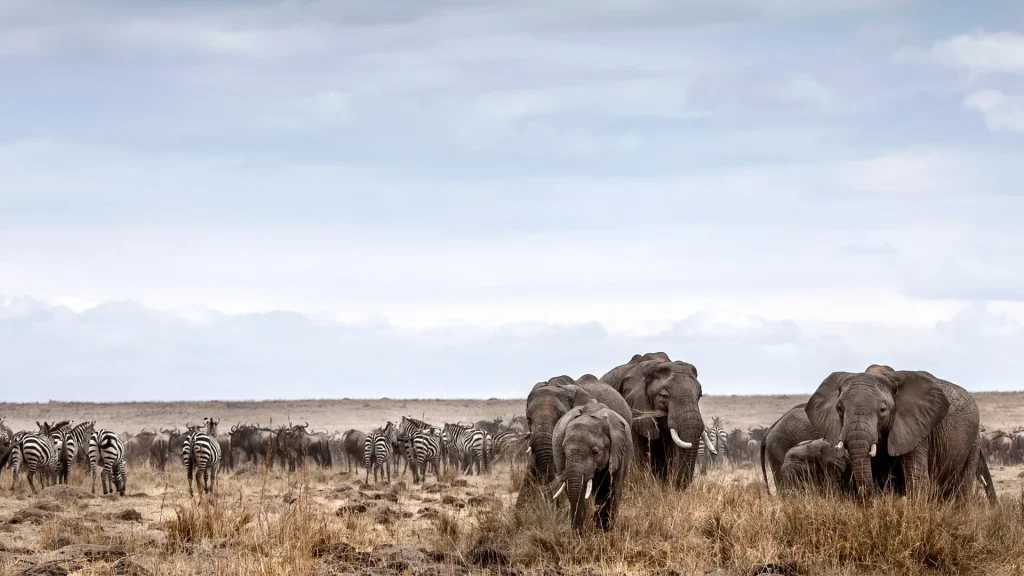
Plains zebras and wildebeests are important grazers in the crater ecosystem. They use grasslands according to vegetation and water availability.
Their interactions with predators form part of the crater's ecological dynamics.
Spotted hyenas are both effective hunters and scavengers. They live in complex social groups and may be seen moving across open terrain or resting near dens.
Observing hyenas can provide insight into social behaviour that is often overlooked during safaris focused exclusively on lions.
Hippos inhabit suitable freshwater areas within the crater. They spend much of the day in water and may emerge to graze at night.
Visitors should observe them only from authorised locations.
The crater supports a wide variety of birds associated with grasslands, wetlands and woodland. Flamingos may occur at Lake Magadi when environmental conditions are suitable.
Other birds include raptors, waterbirds and numerous smaller species. Birdwatchers should allow time for careful observation.
Ngorongoro is often promoted as a Big Five Safari destination because lions, leopards, elephants, buffaloes and black rhinos occur within the wider conservation landscape.
However, a visitor should not expect to see all five during a single crater game drive. Leopards are especially elusive, and rhinos may be distant or hidden.
A rewarding safari is better measured by the quality of wildlife encounters, interpretation and time spent observing animal behaviour.
A one-day crater excursion is possible from suitable accommodation in Karatu or the Ngorongoro highlands. It usually involves an early departure, descent to the crater floor, game drives and a return to the lodge later in the day.
A same-day trip from Arusha involves considerably more driving and should be assessed carefully. Travellers seeking a comfortable experience generally benefit from staying closer to the crater before the excursion.
A 2 Days Ngorongoro Safari allows travellers to leave Arusha, spend a night near the crater and undertake a game drive the following day.
This arrangement reduces the need for an extremely early departure from Arusha on the crater day.
A 3 Days Ngorongoro Safari provides a more relaxed schedule and may include a nearby attraction or additional time in the highlands.
The extra day can be particularly useful for families, photographers and travellers who prefer not to rush.
A five-day programme can combine Ngorongoro with Tarangire and the Serengeti, although the exact allocation of nights should reflect driving distances.
Travellers who prioritise wildlife photography may prefer fewer destinations and more time in each.
A 7 Days Serengeti and Ngorongoro Safari provides a stronger balance between travel and wildlife viewing.
Depending on the season, it may include central Serengeti or other regions appropriate for wildlife movements, followed by a crater excursion.
The following programme is an illustrative itinerary and can be adjusted according to accommodation, travel dates and additional destinations.
Your safari begins with pickup from your hotel in Arusha or another agreed location. Meet your professional driver-guide and depart west through northern Tanzania's varied landscapes.
The journey passes towns, agricultural areas and countryside before approaching the highlands near Karatu. Your guide can explain the region's geography, farming activities and importance to Tanzania's safari tourism industry.
Depending on the confirmed programme, the journey may include a suitable stop for refreshments or sightseeing. The schedule should avoid unnecessary detours that reduce time available for relaxation.
Arrive at your selected lodge in Karatu or the Ngorongoro highlands during the afternoon. After check-in, enjoy time to appreciate the surroundings and prepare for the next day's crater excursion.
Dinner and overnight at the lodge.
Accommodation: Selected Essential, Comfort, Premium or Signature property.
Meals: As specified in the quotation.
Begin early with breakfast and depart towards the Ngorongoro Conservation Area. After completing entrance procedures, travel to the crater rim and descend along the designated access road.
The descent reveals the crater's impressive scale. Open grasslands, woodland and wetlands become increasingly visible as the vehicle approaches the floor.
Spend the permitted game drive period exploring suitable tracks in search of lions, elephants, buffaloes, zebras, wildebeests, hyenas and black rhinos. Your guide will adapt the route according to wildlife movements and current access conditions.
The crater's grasslands may support large groups of grazing animals, while woodland and wetlands provide opportunities to observe different species. Birdwatchers may enjoy waterbirds and raptors.
Lunch is normally arranged as a picnic at an authorised location. Follow the guide's instructions, particularly around wildlife and food.
Continue the game drive before ascending the crater wall using the designated exit road. Return to your lodge in the afternoon or evening.
Dinner and overnight.
Safari activities: Ngorongoro Crater game drive.
Accommodation: Second night in the selected lodge.
After breakfast, check out and begin the return journey towards Arusha.
The route passes through highland scenery and agricultural landscapes, with suitable stops arranged according to the schedule.
Arrive in Arusha later in the day and transfer to the agreed hotel or onward departure point.
Travellers connecting to flights should allow sufficient time for road conditions and airport formalities.
For many visitors, the most rewarding option is a combined Serengeti and Ngorongoro Safari.
The Serengeti offers extensive plains, predator populations and seasonal wildebeest movements, while Ngorongoro provides a distinctive volcanic setting and concentrated wildlife habitats.
A practical itinerary often begins in Arusha, continues through Tarangire or another northern circuit destination, visits the Serengeti for several nights and includes Ngorongoro before returning to Arusha.
The precise sequence depends on accommodation, road conditions and the season. Travellers interested in the migration should understand that herds move across a large ecosystem and do not follow fixed dates.
These months often bring relatively warm conditions and periods of dry weather. Wildlife viewing can be rewarding, although the crater may also experience rain.
The longer rainy season brings greener landscapes and potentially challenging road conditions in some areas.
Mist and cloud may affect views from the crater rim, but the scenery can be particularly attractive.
This period is often comparatively dry and is popular for northern Tanzania safaris. Early mornings on the crater rim can be cold.
Accommodation and safari demand may increase during peak holiday months.
Shorter rains may occur, bringing fresh vegetation and changing wildlife distributions.
The crater remains a year-round wildlife destination, and no month guarantees particular sightings.
Essential Ngorongoro Safari Lodges generally prioritise affordability and practical comfort. Many are located around Karatu, where travellers can access a wider range of accommodation.
Comfort Ngorongoro Accommodation provides a balance between facilities, service and price. It is suitable for couples, families and small groups.
Premium Ngorongoro Lodges may offer upgraded rooms, scenic highland settings and additional hospitality facilities.
Location matters because accommodation close to the crater rim can reduce transfer time before the morning descent.
Signature Ngorongoro Safari Lodges focus on distinctive settings and high-end hospitality.
Properties such as Ngorongoro Crater Lodge are associated with luxury experiences, subject to availability and current arrangements.
The price of a Ngorongoro Safari Package depends on duration, group size, accommodation category, transport and applicable conservation charges.
Crater excursions can involve separate vehicle and conservation fees. These should be confirmed according to current official rates.
Private safari costs generally decrease per person when several travellers share the vehicle and guide.
Accommodation on or near the crater rim may cost more than options in Karatu, but it can provide logistical advantages.
A written quotation should clearly identify park and conservation fees, accommodation, meals, transport and any optional activities.
A Private Ngorongoro Safari provides flexibility for wildlife viewing and photography. Families and travellers with specialist interests may appreciate having exclusive use of the vehicle.
Group safaris can reduce per-person costs, but the itinerary follows a shared schedule.
Both private and group visitors must comply with crater access rules and applicable time restrictions.
Ngorongoro receives substantial visitor traffic, making responsible wildlife viewing especially important.
Stay on authorised tracks, respect speed limits and avoid crowding animals. Never ask a guide to approach wildlife too closely or interfere with natural behaviour.
Use designated picnic areas, remove litter and avoid feeding animals.
Cultural experiences should be arranged respectfully, with appropriate community participation and compensation.
Bring warm clothing for early mornings on the crater rim, lightweight clothing for warmer conditions, sunscreen, a hat and comfortable footwear.
Binoculars are useful for distant rhinos and birds. A camera with both telephoto and wide-angle options is valuable for wildlife and landscape photography.
Travellers should consult appropriate medical guidance before visiting Tanzania and ensure that travel insurance covers the planned activities.
Confirm current visa and entry requirements before departure.
A single crater game drive provides an introduction, but two or three days allow a more comfortable overall itinerary.
Yes. Its volcanic landscape and varied wildlife habitats make it one of northern Tanzania's most distinctive safari destinations.
Black rhinos occur in the crater, but sightings are not guaranteed.
The destinations offer different experiences. Ngorongoro provides concentrated wildlife viewing within a volcanic basin, while Serengeti offers extensive plains and seasonal migration activity.
Yes. However, staying near Karatu or the crater before the excursion often creates a more comfortable schedule.
Yes, provided the itinerary, accommodation and game drive duration suit the children's ages and needs.
The conservation area is a year-round destination, although access arrangements and conditions should be confirmed before travel.
Yes. A cross-border safari can include Ngorongoro and Kenya destinations such as the Masai Mara or Amboseli, with appropriate immigration and transport arrangements.
Ngorongoro Safaris combine extraordinary volcanic scenery, rewarding wildlife viewing and opportunities to learn about conservation in one of Africa's most important protected landscapes.
Safari Trips to Kenya can help plan a Ngorongoro extension within a broader Tanzania or East African safari, with accommodation options ranging from Essential to Signature and itineraries designed around your interests.
Contact Safari Trips to Kenya with your preferred travel dates, number of travellers and desired destinations to discuss a personalised Ngorongoro safari itinerary.