
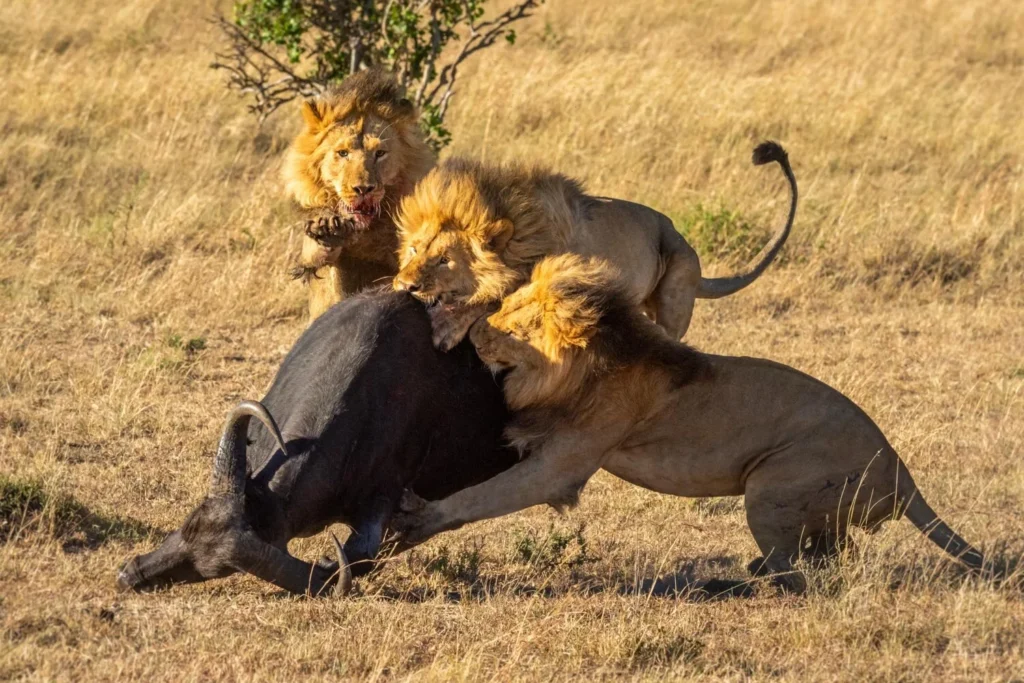
Masai Mara Predators
The Masai Mara predators are among the main reasons this part of Kenya is considered one of Africa’s premier safari destinations. The reserve and surrounding conservancies support an extraordinary concentration of carnivores, including lions, leopards, cheetahs, spotted hyenas, jackals, servals and smaller predators.
The abundance of herbivores across the wider Masai Mara ecosystem provides a strong prey base for these carnivores. Resident populations of wildebeest, zebra, gazelles, impalas, topis and other antelopes support predators throughout the year, while the seasonal Great Migration can dramatically increase prey numbers in parts of the ecosystem.
For travellers interested in animal behaviour, the Mara is especially rewarding because predator sightings are not limited to resting animals. Visitors may witness hunting attempts, territorial disputes, cub rearing, competition at kills, scavenging and interaction between rival carnivore species. Individual species, river crossings and mountain views can never be guaranteed.
Why Are There So Many Predators in Masai Mara?
The Mara supports large predator populations because the ecosystem offers the main ingredients carnivores need:
- Abundant prey
- Open hunting grounds
- Permanent and seasonal water
- Riverine cover
- Woodland
- Large territories
- Connected wildlife habitat
- Migration corridors
The open grasslands make hunting possible for species such as lions and cheetahs, while riverine vegetation and wooded areas provide cover for leopards. Predators are therefore distributed differently according to habitat and hunting strategy.
Main Predators of Masai Mara
The main predators travellers may encounter include:
- Lions
- Leopards
- Cheetahs
- Spotted hyenas
- Jackals
- Servals
- Caracals
- African wild cats
- Nile crocodiles
Some are frequently encountered, while others are far more elusive.
Lions
The lion is the dominant large terrestrial predator of the Masai Mara. Several prides and male coalitions occupy territories across the ecosystem. Lions may be seen: Resting, Hunting, Feeding, Mating,Caring for cubs ,Defending kills, Fighting rivals, Interacting with hyenas
Because lions are social cats, sightings can involve multiple animals at the same time.
Lion Hunting Behaviour
Lions often hunt cooperatively, and females usually perform much of the hunting for a pride. Possible prey includes:
- Wildebeest
- Zebra
- Buffalo
- Topi
- Eland
- Impala
- Gazelles
- Warthogs
Large prey can provide food for several pride members. However, lions are opportunistic and may also steal kills from hyenas, cheetahs or leopards.
When Do Lions Hunt?
Lions can hunt at any time, but cooler periods are often more favourable. They may be particularly active:
- At night
- Around dawn
- In the early morning
- Near sunset
During hot midday periods, lions frequently rest. This is why early morning game drives can be particularly productive.
Lion Prides
Lion prides are structured social groups. A pride may contain:
- Adult females
- Cubs
- Juveniles
- Adult males associated with the territory
Females are usually related, while male lions often form coalitions and compete for control of pride territories. These changes in male dominance can strongly affect cub survival.
Lion Cubs
Lion cubs are born vulnerable and remain heavily dependent on their mothers. They gradually learn:
- Social behaviour
- Stalking
- Hunting techniques
- Pride hierarchy
Young lions often play together, and play helps develop coordination and hunting skills.
Male Lion Coalitions
Male lions commonly form coalitions, and these groups can consist of brothers or unrelated males. Coalitions may:
- Patrol territories
- Challenge rival males
- Defend prides
- Mate with females
Territorial battles can be violent.
Leopards
The leopard is the Mara’s most secretive large cat. Leopards are solitary and often use vegetation for cover. They are frequently associated with:
- Riverine forest
- Woodland
- Drainage lines
- Thick bush
- Mature trees
Unlike lions, leopards usually hunt alone.
Leopard Hunting Behaviour
Leopards rely heavily on stealth, approaching prey quietly before attacking at close range. Common prey can include:
- Impalas
- Young antelopes
- Small mammals
- Hares
- Monkeys
- Birds
Their ability to climb trees is one of their major advantages.
Leopards and Trees
Leopards often climb trees to:
- Rest
- Escape disturbance
- Scan the landscape
- Avoid lions
- Avoid hyenas
- Store prey
A leopard may drag a kill into a tree to reduce the risk of losing it to larger competitors.
Leopard Territories
Both male and female leopards maintain territories, and male territories may overlap those of several females. Because leopards are solitary and secretive, knowledge of individual territories helps experienced guides locate them.
Cheetahs
The cheetah is one of the most celebrated predators of the Masai Mara. The open plains provide ideal habitat for this speed-dependent hunter, and cheetahs are often found on short-grass plains. They generally favour areas where they can:
- See prey clearly
- Avoid dense vegetation
- Accelerate quickly
Cheetah Hunting Behaviour
Cheetahs rely on speed rather than strength. A typical hunt involves:
- Detecting suitable prey.
- Moving closer while remaining concealed.
- Accelerating rapidly.
- Attempting to trip the prey.
- Using a throat hold to subdue it.
Most pursuits are relatively short because high-speed running is extremely demanding.
What Do Cheetahs Hunt?
Common prey includes:
- Thomson’s gazelles
- Young impalas
- Young wildebeest
- Hares
Cheetahs usually prefer smaller prey than lions.
Cheetah Mothers and Cubs
Female cheetahs raise cubs alone. Cubs remain with their mother while learning essential survival skills, and as they grow, mothers may provide opportunities for them to practise hunting. Young cheetahs must learn:
- Stalking
- Timing
- Chasing
- Handling prey
Cub mortality can be high because lions, hyenas and other predators pose a threat.
Male Cheetah Coalitions
Male cheetahs may live alone or form coalitions, which are often composed of brothers. Working together can help males:
- Defend territories
- Secure access to females
- Compete more effectively
Spotted Hyenas
The spotted hyena is one of the most important predators in the Masai Mara ecosystem. Despite their reputation as scavengers, spotted hyenas are highly capable hunters, and they may kill a significant proportion of their own food.
Hyena Clans
Spotted hyenas live in complex social groups called clans. Clans can contain:
- Adult females
- Adult males
- Juveniles
- Cubs
Females are generally socially dominant, and hyena society is highly structured.
Hyena Hunting Behaviour
Hyenas can hunt alone or in groups. Possible prey includes:
- Wildebeest
- Zebra
- Gazelles
- Antelopes
They rely on endurance and teamwork rather than explosive speed, and can pursue prey over considerable distances.
Hyenas and Lions
Competition between lions and hyenas is one of the most dramatic predator relationships in the Mara. Both species compete for:
- Food
- Territory
- Carcasses
Lions may steal hyena kills, and hyenas may also mob lions and attempt to take food. The outcome often depends on the number and sex of animals involved, and adult male lions can dominate large numbers of hyenas.
Jackals
Jackals are smaller but important predators and scavengers. They commonly feed on:
- Small mammals
- Insects
- Eggs
- Reptiles
- Carrion
- Newborn animals
Jackals may wait near kills made by larger predators.
Black-Backed Jackals
Black-backed jackals are commonly associated with open country and often occur in pairs. They are highly adaptable and can survive on many different food sources.
Side-Striped Jackals
Side-striped jackals may also occur in suitable habitats. They generally favour slightly more wooded environments than black-backed jackals.
Servals
The serval is a medium-sized cat with long legs and large ears. It hunts mainly in grasslands and wet areas. Typical prey includes:
- Rodents
- Birds
- Frogs
- Small reptiles
Servals often use their exceptional hearing to locate prey hidden in grass.
Serval Hunting Technique
A serval may leap vertically before pouncing onto prey. Its long legs allow it to move through tall vegetation and strike downward, and this distinctive hunting style can be fascinating to observe.
Caracals
The caracal is another medium-sized cat found within the wider ecosystem. It is recognised by:
- Reddish coat
- Long legs
- Black ear tufts
Caracals are much less frequently seen than lions, cheetahs or leopards. Their prey can include:
- Birds
- Rodents
- Small antelopes
A caracal sighting is generally considered special.
African Wild Cats
African wild cats are smaller predators that resemble domestic cats. They feed mainly on:
- Rodents
- Birds
- Reptiles
- Small mammals
They are usually difficult to see during daytime safari drives.
Nile Crocodiles
The Nile crocodile is the dominant aquatic predator in the Mara River. Large crocodiles are especially famous during migration-season river crossings. They may prey on:
- Wildebeest
- Zebras
- Antelopes
- Fish
- Other animals entering the river
Crocodiles use ambush rather than pursuit.
Crocodiles During the Great Migration
When large herds enter the Mara River, crocodiles may position themselves near crossing areas. However, not every crossing involves predation. Crocodile activity depends on:
- Crossing location
- Water depth
- Current
- Herd movement
- Individual crocodile behaviour
Predators During the Great Migration
The Great Migration can dramatically increase prey availability. Predators may benefit from:
- Large wildebeest herds
- Zebra herds
- Young animals
- Injured animals
- Animals exhausted after river crossings
This can produce intense predator activity.
Lions During Migration Season
Lions may position themselves near areas where migrating herds gather, and large numbers of wildebeest can provide significant hunting opportunities. However, lions remain resident and hunt throughout the year.
Cheetahs During Migration Season
Cheetahs may benefit from young or smaller migratory animals. They generally avoid targeting large adult wildebeest because of the risk and size difference.
Hyenas During Migration Season
Hyenas can take advantage of:
- Hunting opportunities
- Injured animals
- Carcasses
- Predator kills
Large migration concentrations can therefore support intense feeding activity.
Leopards During Migration Season
Leopards are less directly dependent on migrating wildebeest than lions and hyenas. They generally continue hunting within established territories.
Predator Competition
Predators frequently compete with one another. Common interactions include:
- Lions vs hyenas
- Lions vs cheetahs
- Lions vs leopards
- Hyenas vs cheetahs
- Hyenas vs leopards
- Jackals around larger predators
Competition can involve food, territory or direct threats.
Lions vs Cheetahs
Lions pose a serious threat to cheetahs. They may kill adult cheetahs or cubs even when food is not the main motivation, and this competition is one reason cheetahs depend on open visibility and speed.
Lions vs Leopards
Lions can kill leopards, so leopards often use trees and dense vegetation to reduce encounters with lions.
Hyenas vs Cheetahs
Hyenas may steal kills from cheetahs. Because cheetahs are relatively lightly built, they often abandon a carcass rather than risk injury.
Hyenas vs Leopards
Leopards may avoid losing kills to hyenas by carrying prey into trees. This behaviour provides a major advantage in areas where scavenger pressure is high.
Predators and Vultures
Vultures often reveal the location of carcasses. Safari guides may watch:
- Circling vultures
- Vultures descending
- Large groups gathering on trees
These signs can indicate a kill or dead animal nearby.
Predator-Prey Relationships
The Mara supports a complex food web. Examples include:
| Predator | Common Prey |
|---|---|
| Lion | Wildebeest, zebra, buffalo, antelope |
| Leopard | Impala, smaller antelope, monkeys |
| Cheetah | Gazelles, young antelopes |
| Spotted hyena | Wildebeest, zebra, antelope |
| Serval | Rodents, birds |
| Jackal | Small mammals, insects |
| Crocodile | Animals entering rivers |
No predator succeeds during every hunting attempt.
Why Hunts Fail
Predators often fail because prey species have evolved their own survival strategies. These include:
- Speed
- Herding
- Vigilance
- Alarm calls
- Defensive horns
- Group protection
Cheetahs, for example, may abandon a pursuit if prey gains sufficient distance.
Best Time to See Predators
Predators can be observed throughout the year. However, the cooler periods of the day are often best.
Early Morning
Excellent for:
- Lions
- Hyenas
- Cheetahs
- Leopards
Animals may still be active after the night.
Late Afternoon
Predators often become more active as temperatures decline.
Midday
Many predators rest, but important activity can occur at any time.
Best Season for Predator Viewing
Predator viewing is good year-round.
Dry Season
Advantages may include:
- Shorter vegetation
- Easier visibility
- Concentrated prey
Green Season
Advantages include:
- Attractive landscapes
- Fewer vehicles
- Young animals
- Dramatic photography
Migration Period
Can offer increased prey concentrations and heightened predator activity.
Best Areas to See Predators
There is no single area where predators remain permanently. They move according to:
- Territory
- Prey
- Water
- Breeding
- Weather
- Human disturbance
Guides use current information and local knowledge to choose routes.
Predators in the Mara Triangle
The Mara Triangle supports:
- Lions
- Leopards
- Hyenas
- Cheetahs in suitable habitat
- Crocodiles along the river
Migration activity can further increase predator opportunities.
Predators in Private Conservancies
Conservancies surrounding the reserve can provide excellent predator viewing. Advantages may include:
- Lower vehicle density
- Controlled tourism
- Off-road viewing under local rules
- Night game drives
Night drives can reveal predators that are less visible during the day.
Night Predator Viewing
Selected conservancies offer night game drives. Possible sightings may include:
- Lions hunting
- Hyenas
- Leopards
- Servals
- Genets
- Civets
- Jackals
Night drives provide a different perspective on predator behaviour.
Predator Photography
Masai Mara is one of Africa’s strongest destinations for predator photography. Photographers may focus on:
- Portraits
- Hunting behaviour
- Cubs
- Interaction between species
- Predators at sunrise
- Silhouettes
- Feeding behaviour
A private safari vehicle provides the most flexibility.
Photographing Lions
Lion photography can include:
- Pride behaviour
- Cubs
- Males
- Hunting
- Territorial interactions
Early and late light often produces the strongest results.
Photographing Leopards
Leopards can be challenging because they often use dense vegetation. Patience is essential, and guides should not be encouraged to pressure or surround an animal for a photograph.
Photographing Cheetahs
Open grasslands allow excellent opportunities to photograph cheetahs. Their hunting behaviour can happen quickly, so photographers should keep cameras ready.
Photographing Hyenas
Hyenas provide fascinating behavioural photography. Clans have complex social relationships that are often overlooked by visitors focused exclusively on big cats.
Predator Safari With Children
Children often find predators particularly exciting. Families can look for:
- Lions
- Cheetahs
- Hyenas
- Crocodiles
However, some predator encounters may involve feeding or hunting, so parents should prepare younger children for natural wildlife behaviour.
Predator Safari for Photographers
Serious photographers should consider at least four or five nights. Additional time allows:
- Repeated visits to territories
- Better lighting opportunities
- Longer behavioural observation
- More flexibility
Predator Safari During Migration
Travellers specifically interested in predator-prey interactions may choose migration season. However, migration activity is unpredictable and exact locations change, so a longer stay provides more flexibility.
Predator Safari Outside Migration Season
Predator viewing remains excellent because the Mara supports substantial resident prey. This can also offer advantages such as:
- Fewer tourists
- Less crowding
- More relaxed sightings
Responsible Predator Viewing
Predators can attract many safari vehicles, so responsible viewing is extremely important. Visitors should:
- Maintain reasonable distance
- Keep noise low
- Avoid blocking hunting paths
- Give mothers with cubs space
- Never surround predators excessively
- Follow guide instructions
Wildlife should be allowed to behave naturally.
Watching a Hunt Responsibly
A hunt is a natural event. Safari vehicles should not:
- Interfere
- Block prey
- Block predators
- Push animals into better photographic positions
- Chase an animal after it begins moving
Responsible guides allow the encounter to unfold naturally.
Predators and Conservation
Large carnivores require substantial habitat. Conservation therefore depends on maintaining:
- Protected areas
- Wildlife corridors
- Prey populations
- Community lands
Predators moving outside protected areas can sometimes come into conflict with livestock owners, so community conservation is essential.
Lion Conservation
Lions face pressures including:
- Habitat loss
- Human-wildlife conflict
- Declining prey outside protected areas
Protecting corridors and creating economic benefits from wildlife can support long-term survival.
Cheetah Conservation
Cheetahs require extensive open habitat. They can face pressure from:
- Habitat fragmentation
- Competition with larger predators
- Human-wildlife conflict
Large connected landscapes are particularly important.
Leopard Conservation
Leopards are adaptable but still depend on secure habitat and prey. Conservation outside protected areas also matters because leopards may range widely.
Hyena Conservation
Hyenas play an essential ecological role, functioning as both predators and scavengers. Despite their importance, they are sometimes misunderstood and negatively perceived.
The Role of Predators in the Ecosystem
Predators help regulate herbivore populations. They also:
- Remove weak animals
- Influence prey behaviour
- Support scavengers
- Help maintain ecological balance
Their presence is one sign of a functioning ecosystem.
How Many Days for a Predator Safari?
For predator-focused travellers:
- 2 days: Short introduction
- 3 days: Good chance of several predator species
- 4 days: Strong predator safari
- 5+ days: Better for behaviour and photography
Longer stays provide the greatest flexibility.
Combining Masai Mara With Other Predator Destinations
Masai Mara can be combined with:
Amboseli
Good for elephants with additional predator viewing.
Samburu
Offers a different northern ecosystem.
Tsavo
Provides vast landscapes and large carnivores in a different setting.
Serengeti
Forms the natural continuation of the Mara ecosystem and creates an outstanding big-cat safari combination.
Masai Mara vs Serengeti for Predators
Both destinations provide exceptional predator viewing. The Mara’s relatively compact scale and open plains can make predators easier to locate, while the Serengeti covers a much larger area and offers enormous ecological variety. Combining both creates one of Africa’s strongest predator-focused journeys.
Beyond Predators
Although predator sightings are exciting, a complete Mara safari should also appreciate:
- Herbivores
- Birds
- Rivers
- Insects
- Plant life
- Scavengers
- Landscape
Predators exist because the wider ecosystem remains productive.
Frequently Asked Questions About Masai Mara Predators
What predators live in Masai Mara?
Major predators include lions, leopards, cheetahs, spotted hyenas, jackals, servals, caracals and Nile crocodiles.
Which predator is easiest to see?
Lions and spotted hyenas are generally among the most regularly encountered large predators.
Are leopards common?
Leopards are present but are secretive and more difficult to locate.
Are cheetahs common in Masai Mara?
The Mara is one of Kenya’s best cheetah habitats, although individual sightings are never guaranteed.
Do hyenas hunt?
Yes. Spotted hyenas are highly effective hunters and do not depend only on scavenging.
What do lions eat?
Common prey includes wildebeest, zebra, buffalo and various antelope species.
What do cheetahs hunt?
Cheetahs generally target gazelles and other relatively small or young ungulates.
What do leopards hunt?
Leopards feed on animals including impalas, smaller antelopes, monkeys and small mammals.
Are there crocodiles in Masai Mara?
Yes. Nile crocodiles occur in the Mara River.
Can I see predators hunting?
Possibly. Hunts occur naturally and unpredictably and cannot be guaranteed.
What is the best time of day to see predators?
Early morning and late afternoon are generally productive because temperatures are cooler.
Is migration season best for predators?
Migration season can increase prey concentrations, but excellent predator viewing is possible throughout the year.
Can I see predators outside migration season?
Yes. Resident prey supports predator populations year-round.
Can lions kill hyenas?
Yes. Lions and hyenas are competitors and can kill one another.
Do lions kill cheetahs?
Yes. Larger predators such as lions can kill cheetahs, particularly cubs.
Why do leopards carry kills into trees?
They may do so to reduce the risk of losing food to lions, hyenas and other scavengers.
Can I see nocturnal predators?
Night drives in selected conservancies may provide opportunities to see nocturnal carnivores.
Is Masai Mara good for predator photography?
Yes. The combination of open habitat and high carnivore density makes it an excellent destination.
How many days should I stay for predator viewing?
Three to four nights is a strong starting point, while five or more nights is better for photographers and serious wildlife enthusiasts.
Are predator sightings guaranteed?
No. All predators are free-ranging wild animals and sightings can never be guaranteed.