

There are wildlife experiences that impress through scale, such as thousands of wildebeest moving across the Masai Mara. Others are memorable because of their intimacy. Bwindi gorilla trekking belongs firmly in the second category.
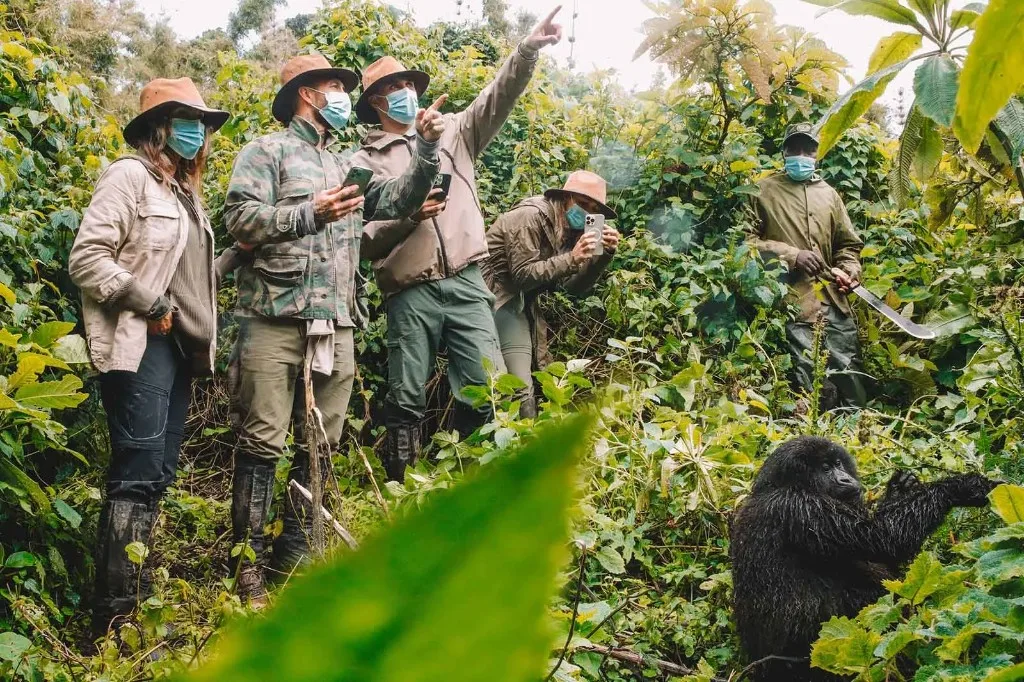
Deep within the forests of southwestern Uganda, small groups of visitors accompany trained guides and trackers in search of habituated mountain gorilla families. The experience involves walking through tropical forest, following signs of gorilla activity and, when a family is located, spending a carefully regulated period observing these remarkable primates.
Unlike a conventional safari, where wildlife is usually viewed from a vehicle, gorilla trekking takes place on foot. The forest can be steep, muddy and densely vegetated, and the time needed to find a gorilla family varies, making each trek different.
For travellers planning a Kenya wildlife safari, adding Uganda’s mountain gorillas creates an extraordinary contrast. One part of the holiday may involve lions, elephants and cheetahs on open savannah; another introduces the quiet, enclosed world of an ancient tropical forest.
At Safari Trips to Kenya, we can help travellers combine Kenya’s major safari destinations with a gorilla trekking extension in Uganda, coordinating the travel route, accommodation and permit arrangements.
Where Is Bwindi Impenetrable National Park?
Bwindi Impenetrable National Park is located in southwestern Uganda near the borders with Rwanda and the Democratic Republic of the Congo. The park protects a mountainous tropical forest recognised for its exceptional biodiversity.
Bwindi is a UNESCO World Heritage Site and one of the world’s most important habitats for endangered mountain gorillas. Its landscape includes steep ridges, valleys, streams and dense vegetation, and elevation varies considerably across the forest, contributing to different habitats and weather conditions.
The park is divided into several visitor trekking areas, commonly referred to as sectors. These sectors are important because gorilla trekking permits are issued for particular locations, and accommodation should be selected accordingly.
Why Trek Mountain Gorillas in Bwindi?
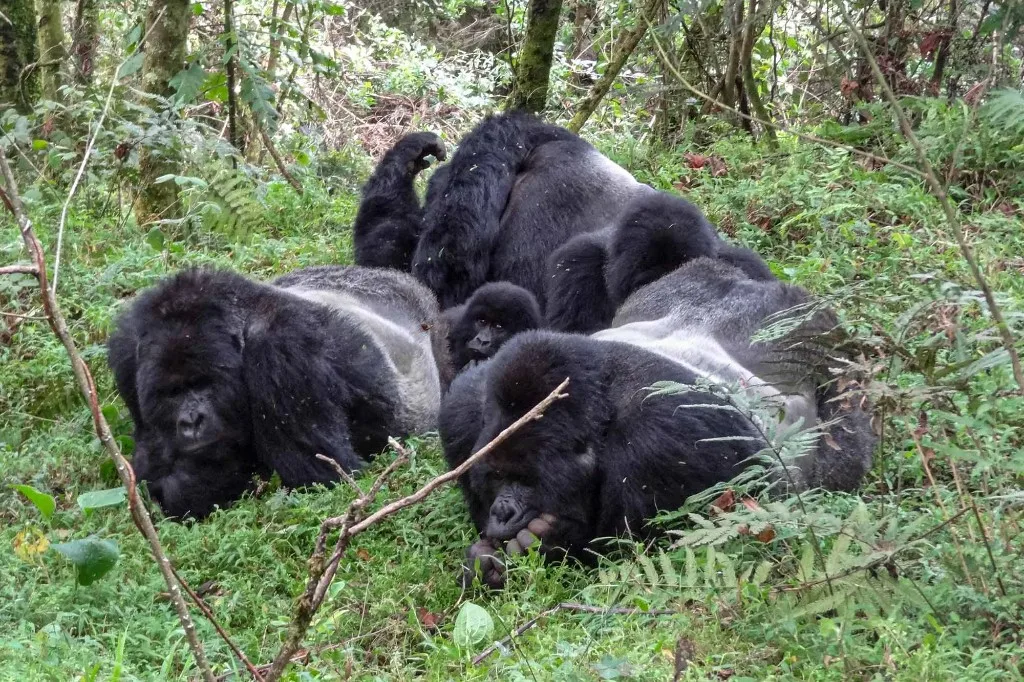
Mountain gorillas are among the world’s most extraordinary primates. They live in social family groups, often led by a dominant adult male known as a silverback, and a family may also include adult females, younger males, juveniles and infants.
Watching their behaviour at close but regulated distances offers an opportunity to observe social interactions that are difficult to appreciate in photographs or documentaries. Visitors may see gorillas feeding on vegetation, grooming one another, resting or moving through the forest, and young gorillas sometimes play while adults remain nearby.
The experience is not staged. Gorilla behaviour is natural, and sightings vary according to the family and conditions. The privilege of observing these animals is closely connected to conservation measures intended to protect them and their habitat.
How Bwindi Gorilla Trekking Works
A typical Bwindi gorilla trekking experience begins early in the morning at the designated briefing point. Visitors meet park personnel and receive instructions about safety, behaviour and trekking procedures, then are allocated to a gorilla family and accompanied by authorised guides.
Trackers may already be in the forest searching for signs of the assigned family. The trekking group follows the guide along forest trails and, where necessary, through less established terrain. The walking time varies considerably: some groups may locate gorillas relatively quickly, while others may spend several hours trekking before reaching them.
Once the family is located and conditions permit, visitors normally receive up to one hour of observation, then return to the starting point. Because gorillas move freely, no operator can guarantee a particular trekking duration or the exact behaviour visitors will observe.
Bwindi Gorilla Trekking Sectors
Choosing the correct trekking sector is one of the most important parts of planning a Uganda gorilla safari.
Buhoma Sector
Buhoma is located in the northern part of Bwindi. It is one of the park’s longest-established gorilla trekking areas and offers a range of accommodation options. Buhoma can be particularly convenient for itineraries connecting Bwindi with the Ishasha area of Queen Elizabeth National Park, and the region also offers forest scenery and selected community and nature activities.
Ruhija Sector
Ruhija is situated in the eastern part of Bwindi at relatively high elevation. The area is known for its forest landscapes and birdlife, and accommodation options include lodges and guesthouses serving travellers with different budgets. Road access and travel times should be checked carefully when planning connections from other destinations.
Rushaga Sector
Rushaga is located in southern Bwindi. It is an important trekking area and is also associated with the gorilla habituation experience. The sector can be convenient for travellers arriving from Kigali through southern Uganda, and accommodation ranges from simpler guesthouses to more comfortable safari lodges.
Nkuringo Sector
Nkuringo is another southern Bwindi trekking area. Its dramatic mountain scenery attracts travellers interested in forest landscapes and hiking. The terrain can be demanding, and road access should be considered when choosing accommodation. Some properties offer views across the surrounding highlands.
How Much Does a Bwindi Gorilla Trekking Permit Cost?
For foreign non-resident visitors, the standard Uganda gorilla trekking permit has been priced at USD 800 per person under the Uganda Wildlife Authority tariff applicable to recent seasons. Different rates may apply to foreign residents, East African citizens and other eligible categories.
Permit tariffs can change, and any promotional or seasonal discounts require confirmation for the exact travel dates. A standard gorilla trekking permit provides access to an authorised trek and the regulated gorilla observation period, subject to park rules. It does not ordinarily include international flights, accommodation, long-distance transport or personal expenses.
Because permits are limited, availability should be checked before finalising accommodation and flights.
How to Book Gorilla Trekking Permits
Gorilla permits are managed by the Uganda Wildlife Authority (UWA). Travellers can arrange permits through authorised tourism operators or the relevant official booking channels. The booking process generally requires the preferred trekking date, visitor details and the applicable permit payment.
A confirmed permit is associated with a particular trekking date and sector. This is why travellers should not reserve a lodge in one sector without confirming where their gorilla trek will take place. Permits are especially important for travellers combining Uganda with Kenya because flights and cross-border travel need to fit the trekking date.
Gorilla Trekking Rules
Gorilla trekking operates under conservation and visitor safety regulations. Visitors must follow the instructions given by park personnel. Key requirements include the following:
- Maintain the prescribed distance from gorillas and avoid direct contact, following instructions if an animal approaches.
- Do not use flash photography.
- Visitors who are ill with potentially transmissible infections should not participate because gorillas are susceptible to human diseases.
- The minimum age for standard gorilla trekking is generally 15 years.
Current rules, including health requirements and distancing instructions, should always be confirmed before travel.
How Difficult Is Gorilla Trekking?
Gorilla trekking in Bwindi can be physically demanding. The forest contains steep slopes, uneven trails, roots, rocks and potentially muddy ground, and rain can make sections slippery. The difficulty of a particular trek depends on the gorilla family’s location and the route selected by the guides.
Travellers should be prepared for several hours of walking, even though some treks are shorter. A reasonable level of fitness is beneficial. Visitors with mobility limitations should discuss their requirements well in advance; depending on the sector and local arrangements, additional assistance or specialised carrying services may be possible at extra cost, but these arrangements must be confirmed before travel.
What to Wear for Gorilla Trekking
Suitable clothing makes a significant difference to comfort. Recommended items include the following:
- Long trousers and long-sleeved shirts to help protect against vegetation, insects and scratches.
- Sturdy waterproof hiking boots with good grip.
- Gardening-style gloves when holding vegetation on steep sections.
- A lightweight waterproof jacket, because rain can occur throughout the year.
- Drinking water, a packed lunch, sunscreen, personal medication and a small backpack rather than bulky luggage.
Best Time for Bwindi Gorilla Trekking
Bwindi can be visited throughout the year. Relatively drier periods, often around June to August and December to February, are popular because trekking conditions may be somewhat easier. However, rain can occur in any month.
March to May and September to November are generally associated with wetter conditions in many parts of southwestern Uganda. The forest is exceptionally green during rainy periods, but trails may become slippery. Gorilla sightings are not necessarily better in the dry season because habituated families are tracked throughout the year. The most suitable time depends on travel preferences, permit availability and the other destinations included in the itinerary.
Gorilla Trekking Versus Gorilla Habituation
Standard gorilla trekking and the gorilla habituation experience are different activities. Standard trekking normally provides up to one hour with a habituated gorilla family once located.
The habituation experience involves visiting a gorilla group undergoing a controlled habituation process and may provide up to four hours of observation under the applicable programme rules. The habituation experience has different permit costs, participant limits and availability and is generally associated with southern Bwindi.
Travellers interested in extended gorilla observation should confirm current programme arrangements and permit availability before booking.
How to Reach Bwindi from Entebbe
Travelling by road from Entebbe or Kampala to Bwindi typically requires a full day, often around eight to eleven hours or longer depending on the trekking sector, traffic, road conditions and stops. The journey passes through southwestern Uganda’s countryside and highlands.
Some travellers break the journey with an overnight stay near Lake Mburo or another suitable location. Domestic flights may be available between Entebbe and airstrips serving the Bwindi region. However, flights do not land inside the national park, and a road transfer is still required from the airstrip to the selected lodge. Flight schedules, baggage limits and transfer times must be confirmed when preparing the itinerary.
How to Reach Bwindi from Kigali
For some travellers, Kigali to Bwindi gorilla trekking offers a practical route. The journey involves travelling from Rwanda into Uganda through an authorised border crossing, and driving times depend on the border used, the trekking sector and immigration procedures.
A transfer to southern Bwindi may take approximately four to six hours or more, depending on conditions. Travellers must meet the entry requirements of both countries, and visa arrangements, passport validity and any applicable health documentation should be checked before departure.
Combining Bwindi Gorilla Trekking with a Kenya Safari
A Kenya and Uganda safari is particularly attractive because the two countries offer contrasting wildlife experiences. Kenya is famous for its savannah parks, while Uganda offers mountain gorillas and additional primate experiences. A combination may include the Masai Mara, Amboseli, Lake Nakuru and Bwindi.
The main logistical consideration is how to connect the Kenyan safari route with Uganda. Flights between Nairobi and Entebbe are one option, subject to schedules and availability. Travellers may also consider routing through Kigali when it fits their overall journey. The most practical sequence depends on arrival and departure airports, gorilla permit dates and the number of days available.
Masai Mara and Bwindi Gorilla Trekking
Combining the Masai Mara with Bwindi creates a particularly memorable safari. In the Masai Mara, visitors explore open grasslands in search of lions, elephants, cheetahs, buffaloes and migrating wildebeest during suitable months. In Bwindi, the experience changes completely: instead of scanning distant plains from a vehicle, visitors walk beneath a forest canopy with trained guides.
A journey combining both destinations offers opportunities to appreciate two very different ecosystems. For travellers with limited time, flights can reduce some of the long-distance travel.
Suggested 10-Day Kenya and Uganda Safari
Day 1: Arrival in Nairobi
Arrive at Jomo Kenyatta International Airport and transfer to your hotel. Meet your safari representative for an introduction to the journey.
Day 2: Nairobi to Masai Mara
Travel through the Great Rift Valley towards the Masai Mara and enjoy an afternoon game drive if arrival time permits.
Day 3: Full-Day Masai Mara Safari
Explore the reserve, searching for lions, elephants, giraffes, buffaloes and other wildlife. During the migration season, wildebeest herds may also be present.
Day 4: Masai Mara Wildlife Exploration
Enjoy another full day of wildlife viewing. Your guide will select suitable routes according to current conditions and wildlife activity.
Day 5: Masai Mara to Nairobi
Return to Nairobi and overnight near the airport or in the city.
Day 6: Nairobi to Entebbe
Take a scheduled flight to Entebbe, subject to availability. Transfer to your hotel and relax.
Day 7: Entebbe to Bwindi
Travel towards Bwindi by road or combine a domestic flight with a road transfer, depending on the package. Arrive at your selected lodge near the confirmed trekking sector.
Day 8: Bwindi Gorilla Trekking
Attend the morning briefing and begin your gorilla trek with authorised guides. After the trek, return to your lodge for relaxation.
Day 9: Bwindi to Entebbe
Return to Entebbe using the agreed transport arrangements and spend the evening near the airport.
Day 10: Departure
Transfer to Entebbe International Airport for your onward flight. This sample itinerary can be modified to include chimpanzee trekking, Queen Elizabeth National Park or additional Kenya destinations.

Accommodation in Bwindi
Bwindi offers accommodation across several price categories. Essential accommodation may include simple guesthouses and budget lodges. Comfort accommodation generally provides private bathrooms, suitable meals and convenient access to trekking areas. Premium accommodation offers enhanced facilities, attractive locations and additional services, and Signature accommodation focuses on distinctive settings and high levels of personalised hospitality.
The most important consideration is proximity to the correct trekking briefing point. A lodge in the wrong sector can create an impractical early morning transfer.
Can You See Gorillas and the Big Five on One Safari?
Yes. A combined Kenya and Uganda itinerary can include opportunities to see the Big Five and mountain gorillas. However, sightings of individual wildlife species are never guaranteed.
The Masai Mara, Ol Pejeta and other Kenyan destinations provide opportunities for large mammal viewing. Bwindi provides the mountain gorilla experience. Travellers should allow sufficient time for both rather than attempting to combine too many destinations into a rushed itinerary.
Responsible Gorilla Tourism
Gorilla tourism is closely connected to conservation. Permit systems, visitor limits and trekking regulations are intended to reduce disturbance and support protected-area management. Travellers contribute by following park rules, respecting health requirements and avoiding behaviour that could place gorillas at risk.
Visitors should never attempt to touch gorillas or approach them beyond the authorised distance. Responsible tourism also includes respectful engagement with communities living around Bwindi, and community-guided activities, crafts and local services may provide additional opportunities to support livelihoods.
Frequently Asked Questions
How Much Is a Bwindi Gorilla Permit?
The standard foreign non-resident permit has been USD 800 under recent UWA tariffs. Confirm the applicable rate for your travel dates.
How Long Do You Spend with Gorillas?
Standard trekking normally permits up to one hour of observation after the assigned gorilla family is located.
Is Gorilla Trekking Guaranteed?
Permits provide access to an organised trekking experience, but gorillas are wild animals and sightings cannot be absolutely guaranteed.
Can I Trek Gorillas from Kenya?
Yes. A Kenya safari can be combined with flights and transfers to Uganda.
Which Bwindi Sector Is Best?
The best sector depends on permit availability, travel route, accommodation preferences and individual circumstances.
Can Children Trek Gorillas?
The minimum age is generally 15 years under standard trekking rules.
Can I Visit Bwindi All Year?
Yes. Gorilla trekking operates throughout the year, subject to park conditions and permit availability.
Plan Your Bwindi Gorilla Trekking Safari
Bwindi gorilla trekking is one of East Africa’s most distinctive wildlife experiences. Combining it with a Kenya safari allows travellers to enjoy both the open savannahs of the Masai Mara and the forest habitats of Uganda’s mountain gorillas.
At Safari Trips to Kenya, we can help coordinate the itinerary, transport, accommodation and permit arrangements. Contact our team with your preferred travel dates, group size and Kenya safari interests to request a personalised Kenya and Uganda gorilla safari.