

Crocodiles During Great Migration
Crocodiles During the Great Migration: The Mara River’s Most Formidable Predators
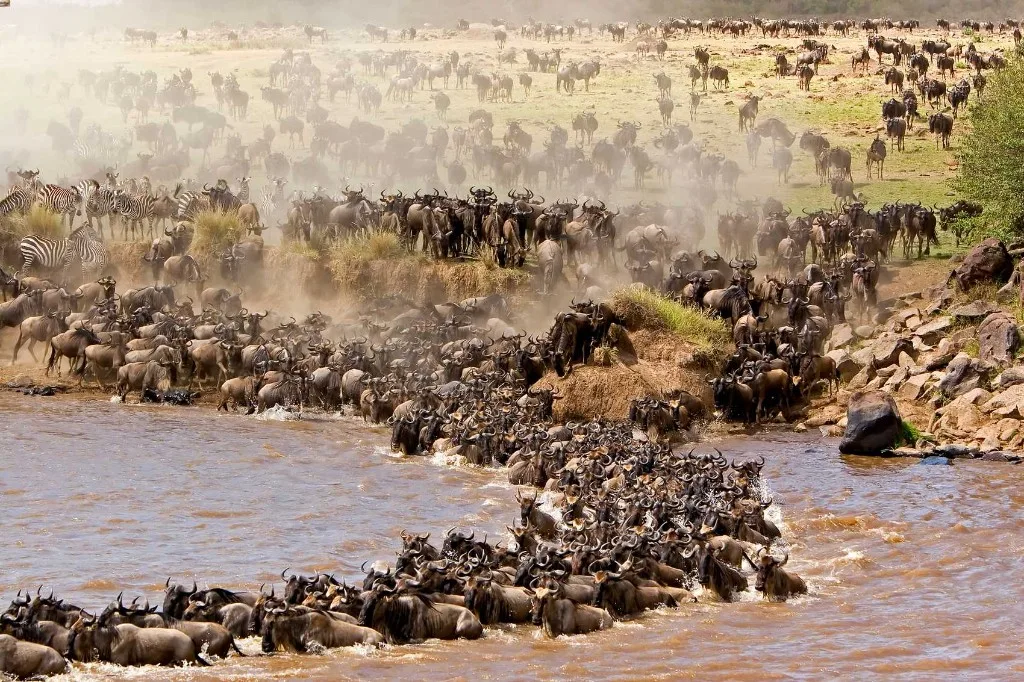
At first, the riverbank can appear almost peaceful. Wildebeest gather on the opposite side of the Mara River, occasionally moving forward before retreating into the herd. Zebras stand among them, calling and watching the water. Below the surface, Nile crocodiles may remain almost invisible, with only their eyes and nostrils breaking the surface.
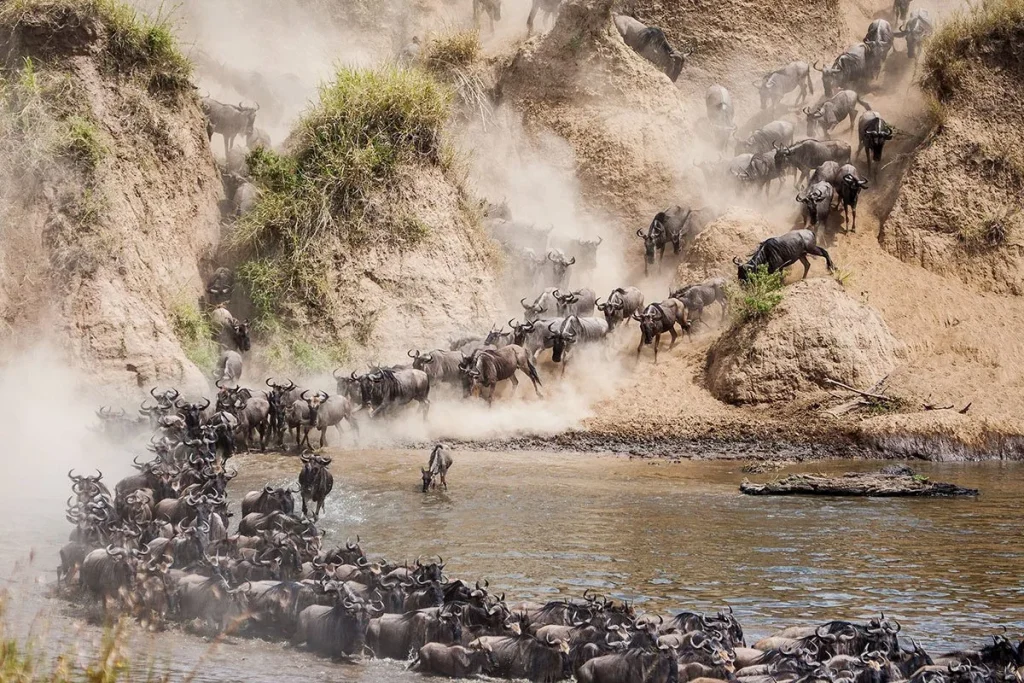
Then the herd begins to move. One animal enters the river, followed by several others. Within moments, dozens or hundreds may be swimming, scrambling and struggling to reach the opposite bank. Some encounter steep slopes or strong currents; others face one of Africa’s most formidable aquatic predators.
Crocodiles during the Great Migration are part of one of the world’s most dramatic natural wildlife events. Their presence helps explain why the Mara River crossings are so unpredictable, dangerous and compelling to observe. However, crocodile attacks are only one aspect of the crossing—many wildebeest successfully reach the opposite bank, and not every crossing involves an attack. Drowning, difficult riverbanks, crowding and exhaustion can also threaten migrating animals.
For travellers planning a Masai Mara migration safari, understanding crocodile behaviour and river-crossing patterns makes the experience more meaningful. It also helps establish realistic expectations: the migration is a natural process, not a scheduled performance.
Why Crocodiles Are Important During the Great Migration
The Great Wildebeest Migration involves the seasonal movement of large numbers of wildebeest, accompanied by zebras and other grazing animals, through the Serengeti–Mara ecosystem. These movements are influenced primarily by rainfall, grazing conditions and the availability of water. During parts of the year, migrating herds move through northern Tanzania and Kenya’s Masai Mara region, and some animals cross the Mara River or its tributaries as they move between grazing areas.
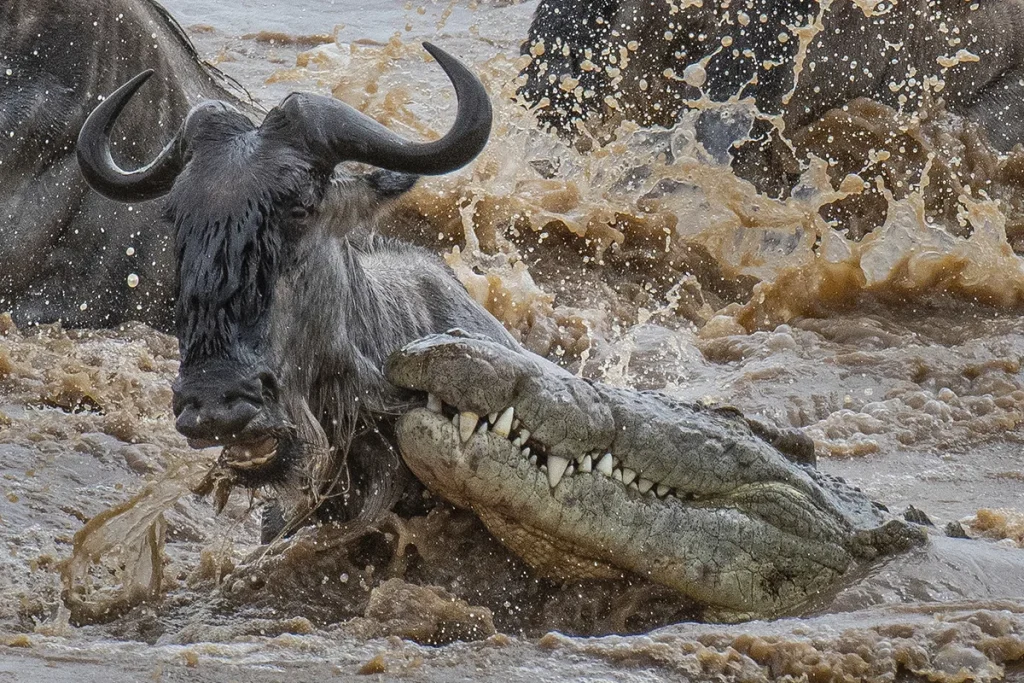
The river presents several hazards—strong currents, submerged obstacles, steep banks and crowding can all affect the animals attempting to cross. Nile crocodiles add another challenge. As ambush predators, they can exploit the brief period when swimming animals are vulnerable and unable to move as effectively as they do on land. The interaction between migrating herbivores and crocodiles illustrates the connections between terrestrial and aquatic ecosystems: the river does not simply divide the landscape; it also supports fish, birds, reptiles and other wildlife whose survival is linked to seasonal ecological processes.
What Species of Crocodile Hunts Wildebeest?
The principal crocodile associated with the Mara River crossings is the Nile crocodile, scientifically known as Crocodylus niloticus. It is one of Africa’s largest living reptiles and an exceptionally powerful aquatic predator. Adult Nile crocodiles can exceed four metres in length, while particularly large individuals may grow even bigger.
Their bodies are adapted for life in water: a muscular tail provides propulsion, and the eyes and nostrils are positioned high on the head, allowing the animal to remain mostly submerged. Crocodiles can wait for prey with very little visible movement. They also possess strong jaws and conical teeth adapted for gripping animals. Unlike mammals, crocodiles cannot chew food in the same way—they may swallow smaller prey whole or tear larger carcasses into manageable pieces, and their feeding behaviour varies according to the size of the crocodile, available prey and environmental conditions.
How Nile Crocodiles Hunt During River Crossings
Ambush Beneath the Surface
Nile crocodiles are effective ambush predators. A crocodile may remain submerged near a crossing area, using the water to conceal most of its body, and when a suitable opportunity develops it can accelerate rapidly over a short distance. The attack may appear sudden to an observer because much of the predator’s preparation occurs underwater. However, crocodiles do not attack every animal that enters the river—their behaviour depends on hunger, opportunity, prey position and other circumstances.
Targeting Vulnerable Animals
A crocodile may attempt to seize an animal that is struggling, isolated or swimming close to its position. Young or smaller animals can be vulnerable, although large crocodiles are capable of attacking substantial prey. The apparent chaos of a large crossing can create opportunities for ambush, but the majority of animals in some crossings may pass without being attacked.
Gripping and Submerging Prey
When a crocodile catches an animal, it may attempt to hold and submerge it. Crocodiles are powerful in water, where their body structure and muscular tails provide advantages, and a struggling wildebeest may be unable to escape a firm grip, particularly in deep water. These encounters can be distressing to witness; travellers should understand that predation is a natural ecological process and should not be interrupted.
The Death Roll
Crocodiles are known for a rotating behaviour commonly called the death roll. This movement may help subdue prey or tear pieces from a larger carcass. It is not performed during every attack—the behaviour depends on the circumstances and the size of the prey.
Feeding After a Crossing
Crocodiles may feed on animals they have caught or on carcasses already present in the river. A large crossing can create feeding opportunities for multiple species; scavenging birds and other animals may also use carcasses, and the resulting transfer of nutrients contributes to the river ecosystem.
Why Wildebeest Cross Rivers Despite the Danger
It is tempting to imagine that wildebeest knowingly choose a dangerous crossing point, but their movements are better understood through herd behaviour and environmental pressures. Migrating animals respond to grazing conditions, water availability and the movement of other animals. When a herd reaches a river, individuals may hesitate—the opposite bank may offer access to grazing areas, but entering the water carries risks.
A crossing can begin when a few animals move forward and others follow. The process may stop unexpectedly or develop into a large movement. This explains why a herd can remain beside the river for hours before crossing—or leave without crossing at all.
Where Do the Famous Crocodile Crossings Happen?
Mara River in Kenya’s Masai Mara
The Mara River flows through the wider Serengeti–Mara ecosystem and is the setting for many well-known migration photographs. Within Kenya’s Masai Mara region, suitable river viewpoints may provide opportunities to observe migrating animals approaching or crossing the water. However, the precise crossing locations change—a point that was productive yesterday may be quiet today—and guides must follow reserve regulations when positioning vehicles.
Mara River in Northern Serengeti
The Mara River also flows through northern Tanzania, and crossings can occur on both sides of the international border. Travellers should not assume that all famous Mara River crossings take place inside Kenya. The best destination for a particular trip depends on the migration’s actual position, travel dates and available safari arrangements.
The Talek River and Other Watercourses
The broader ecosystem contains other rivers and watercourses that animals may cross. However, these should not be confused with the major Mara River crossing areas—a safari itinerary should identify the intended region rather than promise a specific crossing point.
When Can You See Crocodiles During the Great Migration?
The period most commonly associated with Mara River crossings is approximately July to October, but the timing changes from year to year. Rainfall patterns influence grazing conditions and the movement of the herds—in some years, substantial migration activity may develop earlier or continue later. There is no reliable calendar date on which the first major crossing must occur, and a particular week cannot be guaranteed to produce crossings.
Crocodiles are resident animals in suitable river habitats, so they may be observed outside the main migration period. The difference during migration season is the potential interaction between crocodiles and large numbers of moving herbivores.
July: Arrival of Migrating Herds
July is often associated with the movement of migrating animals towards the northern Serengeti and Masai Mara region. Some years produce substantial crossing activity during this month; in other years, the herds may be distributed differently. Travellers visiting in July should allow several days rather than expecting a crossing immediately after arrival.
August: A Popular River-Crossing Period
August is among the most popular months for Great Migration river crossing safaris. Large herds may be present in the wider Mara ecosystem, but popularity does not guarantee a crossing—animals may gather near the river without entering it, and the number of vehicles near productive viewpoints can also be high. Responsible guiding and patience are particularly important.
September: Continued Migration Activity
September can provide rewarding opportunities to observe migrating wildebeest and zebras. Some herds may cross rivers repeatedly as grazing conditions change, while other groups may remain away from the river. Photographers should avoid assuming that all migration activity occurs at one location.
October: Changing Herd Movements
During October, seasonal conditions may encourage herds to move towards other parts of the ecosystem. Crossing activity can continue, but its location and intensity vary. Travellers should seek current local information when planning their safari.
Do Crocodiles Gather Specifically for the Migration?
Nile crocodiles inhabit suitable waterways throughout the year, and their presence is not limited to the migration season. However, seasonal concentrations of prey can create important feeding opportunities. Large crocodiles may occupy favourable positions near areas where animals regularly enter the water, and their movements and feeding behaviour are influenced by several factors, including water conditions, prey availability and interactions with other crocodiles. It would be inaccurate to suggest that every crocodile migrates to the Mara River for the crossings—many are resident within the river system.
How Dangerous Are Mara River Crossings for Wildebeest?
River crossings involve multiple risks. Crocodile predation is the most visually dramatic, but it is not the only cause of mortality. Animals may drown in strong currents or become trapped against steep banks; crowding can make entry and exit difficult, and some animals may be injured during the crossing. The risks vary considerably between crossing sites and environmental conditions—a crossing involving hundreds of animals may appear chaotic, yet many individuals can reach the opposite bank successfully. The outcome cannot be predicted reliably in advance.
Are Crocodile Attacks Guaranteed During a Crossing?
No. Even when a large herd crosses a river inhabited by crocodiles, an attack is not guaranteed. Crocodiles may remain inactive or feed on other available prey; some crossings occur quickly with relatively little visible predation, while others involve prolonged interactions. A responsible safari operator should never promise that visitors will witness a crocodile killing a wildebeest—the objective should be to observe natural wildlife behaviour rather than a particular violent outcome.
How Long Does a Wildebeest Crossing Last?
Crossing duration varies widely. A small group may cross within minutes, while a large herd may take considerably longer. Sometimes a crossing begins, stops and resumes; animals may also abandon an attempted crossing. The number of animals, river conditions and accessibility of the opposite bank all influence the event. Travellers should be prepared for long periods of waiting followed by sudden activity.
Best Time of Day for River Crossings
There is no fixed time of day when wildebeest must cross the Mara River. Crossings may occur during different daylight hours, and morning and afternoon game drives can both provide opportunities. The most important factors are the presence of migrating herds, their behaviour and suitable access to the river. A guide may spend considerable time monitoring animals near potential crossing areas—patience is more useful than relying on a rigid timetable.
How to Plan a Mara River Crossing Safari
A successful migration-focused itinerary requires realistic expectations.
Allow Several Nights
A single day in the Masai Mara may not provide enough time to observe a crossing. Three or four nights can improve the opportunity to encounter migration activity, although sightings remain unpredictable.
Choose the Right Area
Accommodation location affects travel time to relevant river sections. A camp located far from the intended crossing areas may require long daily drives, so travellers should discuss the likely migration region before selecting accommodation.
Use an Experienced Guide
A knowledgeable guide can interpret herd movements and identify appropriate legal viewing positions. Experience is particularly valuable when several potential crossing areas are active.
Remain Flexible
Wildlife movements may require changes to the planned game-drive route. A flexible itinerary is preferable to one that promises a specific crossing at a particular hour.
Photography Tips for Crocodiles and River Crossings
Mara River crocodile photography can be challenging because activity is unpredictable. Practical pointers include:
- A telephoto zoom lens allows photographers to capture distant animals without approaching the riverbank
- Fast shutter speeds and continuous autofocus help with sudden movement
- Consider wider images showing the scale of the crossing, not only predation
- Protect equipment from dust, water spray and harsh sunlight, and remain inside permitted viewing areas
Ethical Wildlife Viewing at the Mara River
The migration is a natural wildlife event, and human interference can create serious problems. Vehicles should not block animals attempting to enter or leave the river; drivers must follow reserve regulations and instructions from authorised staff. Visitors should not approach the water’s edge outside permitted areas. Crocodiles are dangerous wild animals and should never be approached on foot. Photographers should avoid pressuring guides to obtain unsafe positions—the welfare of the animals and safety of visitors must take priority.
What Other Predators Can Be Seen During the Migration?
Crocodiles are not the only predators associated with migrating herbivores. Lions may hunt wildebeest and zebras on the plains; spotted hyenas can hunt and scavenge; cheetahs may pursue suitable prey in open grassland habitats; leopards occur in the ecosystem but are more difficult to observe. Predator sightings depend on natural movements and cannot be guaranteed. The migration provides opportunities to observe a broader predator–prey system rather than a single species.
Is the Great Migration Suitable for Families?
A migration safari can be educational and memorable for families. However, river crossings may involve injury, drowning and predation, and parents should consider whether younger children are comfortable witnessing these events. A family itinerary can focus on general wildlife viewing rather than concentrating exclusively on crocodile attacks, and private safari arrangements may provide greater flexibility.
How Many Days Should You Spend in the Masai Mara?
For a migration-focused safari, three or four nights are often preferable to a brief visit. Longer stays provide more opportunities to respond to changing herd movements, but additional days do not guarantee a crossing. Travellers combining the Masai Mara with Amboseli, Lake Nakuru or other destinations should avoid spending too much time on transfers. The best itinerary balances wildlife viewing with practical travel arrangements.
Frequently Asked Questions About Crocodiles During the Great Migration
Do crocodiles eat wildebeest during the Great Migration?
Yes. Nile crocodiles may attack wildebeest during river crossings, although not every crossing involves predation.
Where are the famous crocodile crossings?
Many occur along the Mara River in the wider Serengeti–Mara ecosystem, including areas in Kenya and Tanzania.
What crocodile species lives in the Mara River?
The Nile crocodile, Crocodylus niloticus.
What is the best month to see river crossings?
July to October is the commonly targeted period, but timing varies with rainfall and herd movements.
Can a crossing be guaranteed?
No. Crossings are natural and unpredictable.
Do crocodiles attack every crossing herd?
No. Some crossings occur without visible crocodile attacks.
Are Mara River crocodiles dangerous to people?
Yes. Nile crocodiles are dangerous wild predators. Visitors must remain in permitted viewing areas and follow guide instructions.
How many nights should I book?
Three or four nights are often recommended for a migration-focused safari.
Can I photograph crocodile attacks?
Wildlife photography is possible from permitted locations, but sightings and particular behaviours cannot be guaranteed.
Is the Great Migration only about river crossings?
No. The migration is a year-round ecological movement involving grazing, calving, predator interactions and seasonal changes across the Serengeti–Mara ecosystem.
Plan Your Great Migration Safari with Safari Trips to Kenya
Watching crocodiles during the Great Migration can reveal the extraordinary challenges migrating animals face as they move through East Africa’s landscapes. The Mara River crossings are memorable because they are unpredictable—herds may hesitate, cross successfully or encounter powerful predators waiting beneath the water. Safari Trips to Kenya can help plan a Masai Mara migration safari with suitable accommodation, experienced guiding and enough time to explore the ecosystem responsibly. Contact Safari Trips to Kenya with your preferred dates, number of travellers and accommodation category to request a personalised Great Migration safari proposal.