
An eland standing quietly among the grass can easily be mistaken for domestic cattle at first glance. It has a broad chest, powerful shoulders, a substantial body and a loose fold of skin hanging beneath its neck. But when the animal turns its head, its long, spiralling horns reveal that it belongs to one of Africa’s most remarkable antelope species.
Elands in Kenya are among the country’s most impressive yet frequently overlooked safari animals. They do not attract the same attention as lions, elephants or giraffes, but their size, adaptability and surprisingly graceful movements make them fascinating to observe.
The common eland, Taurotragus oryx, is generally recognised as the world’s largest antelope species. Large adult males can weigh several hundred kilograms, and exceptional individuals may approach or exceed 900 kilograms. Females are usually considerably smaller. Despite their imposing appearance, elands can move with remarkable agility and are capable of running at speed and jumping substantial obstacles when necessary.
In Kenya, elands inhabit suitable grasslands, open woodland and savannah environments. They may be encountered in the Masai Mara, Nairobi National Park and other protected landscapes, although their distribution and visibility vary.
For travellers planning a Kenya safari, learning to recognise elands adds another layer to the wildlife experience. They demonstrate that the African savannah contains far more than the famous Big Five.

What Is an Eland?
An eland is a large African antelope belonging to the family Bovidae, which also includes cattle, buffaloes, goats and sheep. The common eland, Taurotragus oryx, is the species most relevant to conventional wildlife safaris in Kenya.
Elands have a robust body, relatively long legs and distinctive horns that spiral backwards and upwards. Both males and females have horns, although their size and shape may differ. The species is primarily a grazer and browser, feeding on grasses, leaves, shoots and other vegetation according to availability, and its adaptability allows it to survive in a range of habitats.
How Big Are Elands?
The size of an eland is often surprising. A mature male can stand approximately 1.5–1.8 metres at the shoulder, although individual measurements vary, and males are substantially heavier than females. Their muscular necks and broad shoulders give them an almost cattle-like appearance.
The impressive size of a mature bull is particularly noticeable when it stands near smaller antelopes such as impalas or Thomson’s gazelles. However, the species’ large body does not make it slow or clumsy. Elands are capable of rapid movement and impressive jumps.
How to Identify an Eland on Safari
Several physical features help distinguish elands from other Kenyan antelopes:
- Large, heavy body: The broad chest and substantial build are among the most recognisable characteristics, and mature bulls may have especially powerful shoulders.
- Spiral horns: Both sexes have spiralling horns, generally thicker in males.
- Dewlap: A fold of skin beneath the neck, particularly conspicuous in mature males.
- Coat colour: Tan, fawn or greyish coats depending on age and sex, sometimes with faint vertical stripes; older males may become darker.
- Distinctive movement: A deliberate, relaxed gait, with the ability to accelerate rapidly when disturbed.
Where to See Elands in Kenya
Elands occur in suitable habitats across parts of Kenya. However, they are not uniformly distributed, and sightings are not guaranteed.
Masai Mara National Reserve
The Masai Mara is one of the destinations where visitors may encounter elands. Its mixture of open grasslands, wooded areas and seasonal grazing habitats supports numerous herbivore species.
Elands may appear alone, in small groups or in larger aggregations and can be particularly interesting to observe alongside zebras, wildebeest and other antelopes. However, their movements depend on food availability and environmental conditions.
Nairobi National Park
Nairobi National Park offers opportunities to observe elands in a protected savannah landscape close to Kenya’s capital. The park supports several large herbivores and predators, and its accessibility makes it attractive for travellers with limited time in Nairobi.
Nevertheless, visitors should not assume that elands will be visible during every game drive.
Other Savannah and Woodland Areas
Elands also occur in suitable protected areas and conservation landscapes elsewhere in Kenya. Their distribution depends on habitat, grazing conditions and conservation pressures, and travellers particularly interested in seeing elands should discuss recent local sightings with their guide.
Eland Habitat in Kenya
Elands are adaptable herbivores. They occupy open grasslands, savannah woodland and some relatively dry environments, and their ability to consume different types of vegetation allows them to respond to seasonal changes. They may move between habitats as grazing and browsing conditions change.
Water availability is important, but elands can obtain some moisture from vegetation. This adaptability contributes to their broad ecological range.
What Do Elands Eat?
Elands are mixed feeders. Their diet can include grasses, leaves, shoots, herbs and other plant material, and the balance changes with season and habitat. During periods when grasses are nutritious, grazing may be important; at other times, browsing on leaves and shrubs can become more significant. Their flexible diet helps them use different landscapes.
Eland Behaviour and Social Structure
Elands are social animals, although their group structure varies. Females and younger animals may form herds, while mature males may be solitary or associate with other males. Group size can change according to food availability, season and local conditions.
Elands may appear calm while feeding, but they remain alert to potential threats and rely on their senses and ability to move quickly when danger approaches.
Why Do Elands Sometimes Click When Walking?
One unusual feature of elands is the clicking sound sometimes associated with movement. This has been linked to structures around the animal’s legs and tendons, and the sound can be noticeable in large individuals.
Researchers have discussed its possible role in signalling body size or condition, although interpretations should not be presented as settled for every situation. It is one of the distinctive behaviours that makes close observation of elands rewarding.
How Fast Can Elands Run?
Despite their size, elands are capable runners. They can accelerate rapidly when threatened, and their strong legs also allow them to jump obstacles. This is surprising to many visitors who expect such a large antelope to move slowly, although elands generally conserve energy and do not run unnecessarily.
Can Elands Jump?
Yes. Elands are known for their ability to jump remarkably high relative to their size, which helps them negotiate obstacles and escape danger. However, their jumping performance varies with age, size and circumstances, and a mature bull may be less agile than a smaller individual.
Eland Predators in Kenya
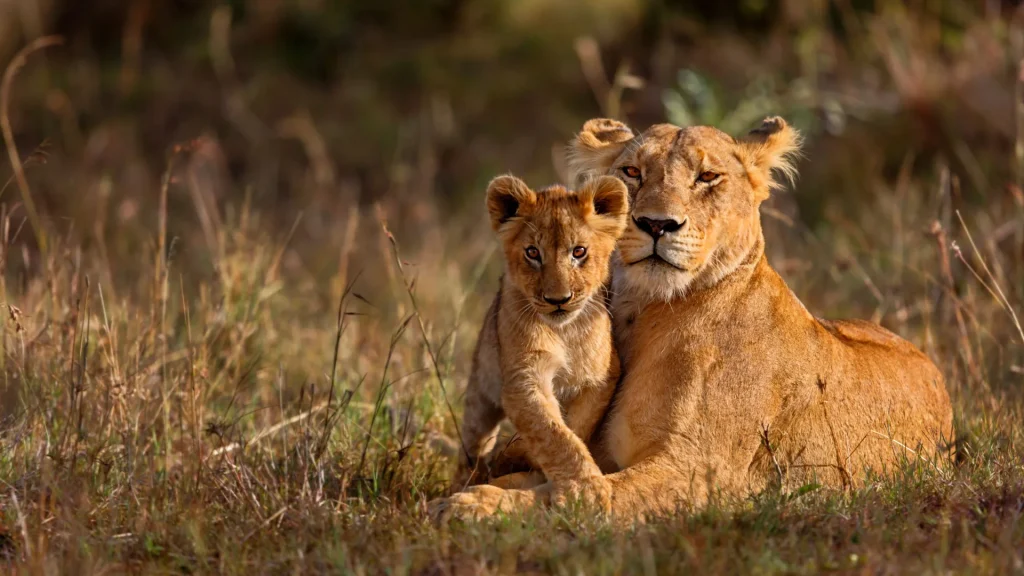
Elands face predation from large carnivores. Lions are capable of hunting elands, although a large adult bull is formidable prey. Spotted hyenas and other predators may target vulnerable individuals, and young animals can face additional risks.
Predation is one of the natural processes influencing herbivore populations, but an eland sighting does not mean a predator encounter is likely.
Eland Calves and Reproduction
Female elands generally give birth to a single calf. Young calves may remain concealed during their earliest days or associate with other young animals as they develop, and mothers provide milk and protection. Calves gradually begin feeding on vegetation, and their survival depends on food availability, environmental conditions and exposure to predators.
Elands Compared with Other Kenyan Antelopes
Kenya supports many antelope species, and distinguishing them can enrich a safari.
Eland Versus Impala
Impalas are much smaller and more slender, with a reddish-brown coat and characteristic markings. Male impalas have lyre-shaped horns, while females lack horns.
Eland Versus Kudu
Greater kudus are more slender and have prominent vertical body stripes. Male kudus have impressive spiral horns, while elands are generally more heavily built.
Eland Versus Hartebeest
Hartebeests have a different body shape, with a relatively elongated face and distinctive horns. They are smaller than mature elands.
Eland Versus Buffalo
African buffaloes are bovines rather than antelopes. They have a heavier appearance and different horn structure, while elands are generally more slender-legged and have spiralling horns.
Best Time to See Elands in Kenya
Elands may be observed throughout the year in suitable habitats. However, their movements and visibility depend on seasonal conditions. During drier periods, animals may concentrate in areas where suitable food remains available, while during wetter periods vegetation can become more abundant and animals may disperse.
There is no single month when eland sightings are guaranteed. Travellers should choose safari dates based on their wider wildlife interests.
Eland Photography Tips
Elands are excellent subjects for wildlife photography because of their size, horns and distinctive facial features. Useful approaches include the following:
- Photograph the horns: A side-on portrait can reveal the spiral structure.
- Include the landscape: A wide image showing an eland within the savannah can communicate its habitat.
- Look for herd behaviour: Groups of elands may provide opportunities to photograph social interactions.
- Use early and late light: Soft morning or afternoon light can reveal coat texture and body shape.
- Keep a respectful distance: Elands are large wild animals; remain in permitted viewing areas and avoid disturbing them.
Are Elands Dangerous?
Elands are generally not aggressive towards safari vehicles when left undisturbed. However, they are powerful wild animals, and a threatened or cornered eland can be dangerous.
Visitors should not approach them on foot without appropriate authorisation and guiding. The safest way to observe elands is from a safari vehicle or another permitted viewing arrangement.
Elands and Conservation in Kenya
The common eland is not generally considered among Africa’s most threatened large antelopes, but local populations can face pressures. Habitat loss, fragmentation, competition for resources and illegal hunting may affect particular areas.
Protected landscapes and wildlife corridors are important for maintaining healthy populations, and community conservation initiatives can also contribute to habitat protection. The conservation situation varies by region.
Why Elands Matter to the Ecosystem
Elands are important herbivores. Their feeding influences vegetation, and they provide prey for large predators. They also contribute to nutrient cycling through grazing, browsing and movement.
Their ecological role illustrates the connections between plants, herbivores and carnivores. A safari that focuses only on predators may overlook these important relationships.
Combining Eland Viewing with a Kenya Safari
Travellers interested in elands can include destinations such as the Masai Mara or Nairobi National Park. These areas also offer opportunities to observe other wildlife.
A longer safari may include Amboseli, Lake Nakuru or Tsavo, depending on travel interests. The route should be designed around realistic driving times.
Frequently Asked Questions About Elands in Kenya
Are there elands in Kenya?
Yes. Common elands occur in suitable savannah and woodland habitats.
What is the largest antelope in Kenya?
The common eland is generally recognised as the largest antelope species.
Where can I see elands?
The Masai Mara and Nairobi National Park are among the places where sightings are possible.
Do male and female elands have horns?
Yes. Both sexes have horns.
Are elands dangerous?
They are powerful wild animals and should be observed from a safe distance.
What do elands eat?
They graze and browse on a variety of vegetation.
Can elands jump?
Yes. They are surprisingly capable jumpers.
Are elands part of the Great Migration?
Elands may move seasonally, but they are not the principal animals associated with the famous wildebeest migration.
Can eland sightings be guaranteed?
No. Their movements and visibility vary.
See Elands on Your Kenya Safari
Elands in Kenya offer a fascinating example of the diversity of African antelope species. Their impressive size, spiral horns and surprising agility make them memorable wildlife subjects.
Safari Trips to Kenya can help plan wildlife itineraries that include suitable eland habitats alongside Kenya’s better-known safari attractions. Contact Safari Trips to Kenya to request a personalised safari based on your preferred travel dates, accommodation category and wildlife interests.