
A herd of African buffalo moving across the savannah is one of the most impressive sights on a Kenyan safari. Their heavy bodies, dark coats and distinctive curved horns give them an unmistakable appearance, while the alert behaviour of a large herd reveals why these animals deserve respect.
Buffaloes may not receive the same attention as lions, elephants or leopards, but they are among Africa’s most formidable large mammals. They are powerful, social animals that occupy an important place in the ecosystems of Kenya’s national parks and reserves.
Buffalo in Kenya can be encountered in destinations such as the Masai Mara National Reserve, Amboseli National Park, Lake Nakuru National Park, Tsavo East, Tsavo West, Nairobi National Park and several conservancies.
The species commonly seen on safari is the African buffalo, Syncerus caffer, often referred to as the Cape buffalo. It is one of the famous African Big Five, alongside the lion, leopard, elephant and rhinoceros. This guide explains where to see buffaloes in Kenya, how they behave, what they eat, why they can be dangerous and how to photograph them responsibly.

What Is an African Buffalo?
The African buffalo is a large wild bovine native to sub-Saharan Africa. It is related to other members of the cattle family but is not the same animal as the domesticated water buffalo found in parts of Asia.
African buffaloes have robust bodies, broad heads, strong legs and distinctive horns. Adult males often develop a thickened horn base across the forehead, commonly called a boss, and the size and shape of the horns vary with age and sex.
Buffaloes are highly social, although group structure changes according to habitat, season and individual circumstances. Large herds may include adult females, young animals and males of different ages, while older males sometimes form smaller bachelor groups or spend periods apart from the main herds.
Are Buffaloes Part of the Big Five?
Yes. The African buffalo is one of the Big Five animals. The term originally came from big-game hunting and referred to five animals considered particularly difficult and dangerous to hunt on foot. Today, the Big Five are primarily associated with wildlife tourism and photography.
The five species are:
- African elephant.
- African lion.
- African leopard.
- African buffalo.
- Rhinoceros.
For safari travellers, seeing all five species can be an exciting objective. However, no safari can guarantee sightings of every species. Buffaloes are relatively widespread in several Kenyan wildlife areas, while rhinos and leopards can be more difficult to encounter.
Where to See Buffalo in Kenya
1. Masai Mara National Reserve
The Masai Mara is one of Kenya’s best-known destinations for observing African buffaloes. The reserve’s grasslands, riverine vegetation and seasonal water sources support buffalo herds, which may be encountered grazing across open plains, resting in shaded areas or moving towards water.
The Masai Mara also supports large predators, particularly lions. Interactions between lions and buffaloes are an important part of the reserve’s ecology, although hunting events are unpredictable. A full-day game drive provides opportunities to explore different habitats and observe herd behaviour.
2. Amboseli National Park
Amboseli National Park is famous for elephants and Mount Kilimanjaro, but it also supports buffaloes. The park’s wetlands are particularly important during dry periods, when animals depend on reliable water sources.
Buffaloes may be observed feeding in grassland areas or resting near wetland habitats. Amboseli’s relatively open landscapes can provide good opportunities for wildlife photography, and the mountain may form an attractive background when visibility is favourable.
3. Lake Nakuru National Park
Lake Nakuru National Park supports buffaloes in its grassland and woodland habitats. The park is also known for rhino conservation, giraffes, zebras and varied birdlife.
Buffaloes may be encountered grazing in open areas or moving between feeding and resting sites. The combination of lake scenery, woodland and grassland makes Lake Nakuru a rewarding destination for photographers.
4. Tsavo East National Park
Tsavo East National Park is one of Kenya’s largest protected wildlife areas. Its landscapes include open plains, seasonal rivers and dry woodland.
Buffaloes occur in the park, although sightings depend on habitat, rainfall and animal movements. During dry conditions, wildlife may concentrate around suitable water sources. Tsavo East is particularly attractive for travellers interested in extensive wilderness landscapes.
5. Tsavo West National Park
Tsavo West National Park offers more varied terrain, including volcanic hills, woodland and rocky landscapes. Buffaloes inhabit suitable areas of the park, but dense vegetation can make them more difficult to locate.
The park also supports elephants, giraffes, antelopes and predators. A safari in Tsavo West provides an opportunity to observe wildlife in a landscape that differs substantially from the open plains of the Masai Mara.
6. Nairobi National Park
Nairobi National Park provides an unusual opportunity to observe wildlife close to Kenya’s capital. Buffaloes are among the large mammals found in the park, alongside rhinos, giraffes, zebras, antelopes and predators.
For travellers with limited time in Nairobi, a guided game drive can provide an introduction to Kenyan wildlife without travelling far from the city.
7. Ol Pejeta Conservancy
Ol Pejeta Conservancy in Laikipia supports buffaloes alongside rhinos, elephants, giraffes and predators. The conservancy is particularly recognised for its wildlife conservation programmes, and buffalo sightings may occur during conventional game drives.
The destination combines well with Samburu and Mount Kenya itineraries.
What Do African Buffaloes Eat?
African buffaloes are primarily grazers. Their diet consists mainly of grasses, although feeding preferences vary according to habitat and seasonal conditions. Buffaloes require access to suitable grazing and water, and during dry periods herds may travel farther between feeding areas and water sources.
Their grazing behaviour influences vegetation structure and nutrient cycling. Large herds can consume substantial quantities of grass, making them important participants in savannah ecosystems, and they also provide prey for large predators, particularly lions.
African Buffalo Herd Behaviour
Buffaloes are social animals, and their group behaviour is one of the most interesting aspects of observing them on safari. A herd may contain dozens or hundreds of individuals, depending on the environment and season, and some populations form particularly large aggregations when conditions are suitable.
Group living can provide advantages against predators. When threatened, buffaloes may gather closely, face a potential danger or move together, and adult animals may respond aggressively when calves are threatened. However, buffalo behaviour is not uniform, and individual reactions can be difficult to predict.
Why Do Buffaloes Form Herds?
Herds provide social and defensive advantages. Large groups can make it more difficult for predators to isolate vulnerable animals, and buffaloes also use social interactions to maintain group cohesion. The size and composition of a herd can change as animals move between feeding areas.
Do Male Buffaloes Live Alone?
Older males sometimes separate from large mixed herds. They may live alone temporarily or form small bachelor groups, and are often encountered resting in vegetation or near water. Travellers should never assume that a solitary buffalo is harmless.
Are African Buffaloes Dangerous?
Yes. African buffaloes are powerful wild animals and can be dangerous when threatened, surprised or approached too closely. Their size, strength and defensive behaviour make them particularly hazardous to people on foot, and they may react aggressively when injured, cornered or protecting young animals.
This is one reason why visitors should never leave safari vehicles in unauthorised areas. Even when buffaloes appear calm, their behaviour can change quickly. A professional guide will assess the animals’ behaviour and maintain a suitable distance.
Safety Rules Around Buffaloes
Respect for buffalo space keeps both visitors and animals safer. Practical guidelines include the following:
- Remain inside your safari vehicle unless your guide confirms that it is safe to leave.
- Never approach buffaloes on foot without authorised professional supervision.
- Avoid standing between a buffalo and its escape route.
- Do not attempt to feed or attract buffaloes.
- Follow all park regulations and guide instructions.
African Buffalo Versus Water Buffalo
African buffaloes and Asian water buffaloes are different animals. The African buffalo is a wild species native to sub-Saharan Africa, while the water buffalo is associated with Asia and has been domesticated in many regions.
Although both belong to the cattle family, they differ in appearance, behaviour and evolutionary history. African buffaloes have not been domesticated in the same way as water buffaloes.
How Big Are African Buffaloes?
African buffaloes are large, heavily built mammals. Adult size varies according to sex, subspecies, habitat and individual condition, and males are generally heavier than females.
Large adult males can weigh several hundred kilograms and may approach or exceed 800 kilograms in some populations. Their muscular bodies and strong horns make them formidable animals, and the thickened horn boss of mature males is particularly distinctive.
How Long Do African Buffaloes Live?
African buffaloes can live for many years in suitable conditions. Lifespan depends on factors such as predation, disease, food availability and environmental conditions, and some individuals may survive into their late teens or beyond.
Young animals face greater vulnerability to predators and other risks. Older buffaloes may become less competitive within large herds and sometimes spend more time in smaller groups.
African Buffalo Predators
Lions are among the most important natural predators of African buffaloes. A single adult buffalo is a difficult animal to overpower, so lions may hunt cooperatively. Calves, injured animals and individuals separated from herds can be more vulnerable.
Spotted hyenas may also prey on vulnerable buffaloes or scavenge carcasses. Predation is an important ecological process, influencing animal behaviour and population dynamics, but hunting events are unpredictable and should never be promised as part of a safari.
Buffaloes and Lions in the Masai Mara
The relationship between lions and buffaloes is one of the most fascinating predator-prey interactions in the Masai Mara. Lions may observe herds for extended periods before attempting a hunt, and buffaloes sometimes respond defensively, gathering together or confronting predators.
These encounters can be dramatic, but most safari sightings involve ordinary behaviour such as grazing, resting and moving between habitats. Travellers should appreciate these quieter moments as part of understanding the species.
Buffalo Calves and Reproduction
Female buffaloes generally give birth to a single calf after a gestation period of approximately eleven months. Calves depend on their mothers for milk during their early development and remain close to adult animals, benefiting from the protection of the herd.
Breeding patterns can vary according to rainfall, food availability and regional conditions. Observing calves within a herd can provide interesting insights into social behaviour, but guides should avoid approaching closely enough to disturb mothers and young animals.
Buffalo Habitat in Kenya
African buffaloes occupy several habitat types, including savannah grasslands, woodland and areas near wetlands. They require access to grazing and water, and their distribution can change seasonally as rainfall influences vegetation growth.
In the Masai Mara, buffaloes may use open grasslands and riverine habitats. In Amboseli, wetlands and surrounding grazing areas are important. In Tsavo, suitable water sources and vegetation influence their movements. This adaptability helps explain why buffaloes occur across several Kenyan protected areas.
Best Time to See Buffalo in Kenya
Buffaloes can be encountered throughout the year in suitable Kenyan wildlife destinations. During relatively dry periods, animals may concentrate around reliable water sources, while in wetter periods fresh grass can allow herds to spread across wider areas.
The best season therefore depends on the destination and local conditions. For general wildlife viewing, January to March and June to October are popular periods in several parks, although buffalo sightings are possible outside these months.
Buffalo Photography Tips
Buffaloes make excellent photographic subjects because of their distinctive horns, powerful build and social behaviour. The following approaches often work well from a vehicle or other authorised viewing position:
- Photograph the horns: The horns of mature males are particularly striking, and side lighting can emphasise their shape and texture.
- Include the herd: Wide photographs can capture the scale of a large buffalo herd moving through the landscape.
- Look for behaviour: Interactions between adults, calves and other herd members can create more interesting photographs than static portraits.
- Use suitable light: Early morning and late afternoon light can produce attractive images.
- Maintain distance: Buffaloes are dangerous wild animals, so never pressure a guide to approach too closely for a photograph.
Buffalo Conservation in Kenya
African buffaloes remain widespread in several Kenyan protected areas, but they face pressures associated with habitat change, disease, human-wildlife conflict and environmental conditions. Conservation depends on protecting suitable habitats, maintaining ecological connections and managing interactions between wildlife and surrounding communities.
Buffaloes can also be involved in disease transmission between wildlife and livestock, making veterinary and land-management considerations important in some regions. National parks, reserves and conservancies contribute to protecting buffalo populations and the ecosystems they occupy.
Buffaloes and the Great Wildebeest Migration
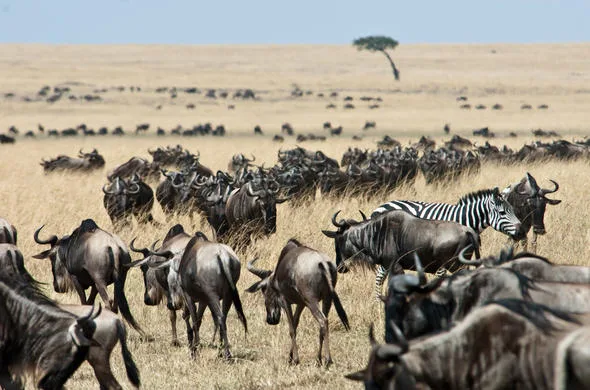
Buffaloes are not part of the annual wildebeest migration in the same way as migrating wildebeest and zebras. However, buffaloes inhabit the Masai Mara ecosystem throughout the year.
During the migration season, travellers may encounter buffalo herds alongside wildebeest, zebras and other grazing animals. The presence of multiple large herbivore species contributes to the ecological richness of the reserve, and a migration safari can provide opportunities to observe buffaloes even when migrating herds are elsewhere.
Suggested Kenya Safari for Buffalo Viewing
A seven-day itinerary combining several wildlife destinations can provide opportunities to observe buffaloes in different habitats.
Day 1: Arrival in Nairobi
Arrive at Jomo Kenyatta International Airport and transfer to your hotel.
Day 2: Nairobi to Lake Nakuru
Travel to Lake Nakuru National Park and enjoy an afternoon game drive.
Day 3: Lake Nakuru Wildlife Safari
Explore the park, searching for buffaloes, rhinos, giraffes and other wildlife.
Day 4: Lake Nakuru to Masai Mara
Travel to the Masai Mara and enjoy an afternoon game drive if timing permits.
Day 5: Full-Day Masai Mara Safari
Spend the day exploring the reserve, searching for buffalo herds, lions, elephants and other wildlife.
Day 6: Masai Mara Wildlife Exploration
Enjoy another full day of game drives, allowing time to observe animal behaviour and different habitats.
Day 7: Return to Nairobi
After breakfast, return to Nairobi for your onward travel arrangements.
Frequently Asked Questions
Where Can I See Buffalo in Kenya?
Buffaloes occur in several destinations, including the Masai Mara, Amboseli, Lake Nakuru, Tsavo East, Tsavo West, Nairobi National Park and Ol Pejeta.
Are Buffaloes One of the Big Five?
Yes. The African buffalo is one of the Big Five.
Are Buffaloes Dangerous?
Yes. They are powerful wild animals and should never be approached closely on foot.
Do Buffaloes Migrate Like Wildebeest?
Buffaloes move according to grazing and water availability, but they do not participate in the famous Serengeti–Mara migration in the same way as wildebeest.
What Do Buffaloes Eat?
They primarily graze on grasses.
Can I Photograph Buffaloes Safely?
Yes, from a suitable safari vehicle and at an appropriate distance under the guidance of a professional safari guide.
What Is the Best Park for Buffalo Photography?
The Masai Mara and Amboseli can provide rewarding opportunities, although sightings and conditions vary.
See Buffalo in Kenya with Safari Trips to Kenya
Buffalo in Kenya are among the country’s most impressive large mammals. Their powerful appearance, social behaviour and interactions with predators make them fascinating animals to observe.
Whether you are exploring the grasslands of the Masai Mara, the wetlands of Amboseli or the varied habitats of Lake Nakuru, buffaloes can be an important part of your wildlife experience. At Safari Trips to Kenya, we arrange private and selected group safaris that explore Kenya’s major wildlife destinations. Contact our team to plan a personalised safari with opportunities to observe buffaloes and other iconic African animals.