
A large bird circles above the savannah, barely moving its wings as it rides a rising column of warm air. Far below, zebras graze among scattered trees. The bird makes another wide turn, gaining height before gliding towards the horizon.
Elsewhere, beside a lake, an African fish eagle calls from a prominent perch. Its striking white head and chest stand out against the surrounding vegetation, while its powerful feet are adapted for gripping slippery prey. These are two of the many experiences that make the eagles of Kenya so rewarding to observe.
Kenya supports a remarkable diversity of birds of prey, from large savannah eagles to specialised forest hunters and fish-eating raptors. Their habitats include grasslands, woodland, mountains, rivers, lakes and coastal ecosystems. For safari travellers, eagles add another dimension to wildlife viewing—they reveal relationships between predators and prey, the importance of habitat diversity and the extraordinary adaptations that allow birds to hunt from the air. Some species are relatively conspicuous, while others are difficult to identify or encounter.
This guide introduces notable eagle species found in Kenya, explains their appearance and behaviour, and identifies suitable destinations for birdwatching and wildlife photography.

Why Kenya Is an Excellent Destination for Eagle Watching
Kenya lies within a region of considerable ecological diversity. Its landscapes range from the open plains of the Masai Mara to the wetlands of the Rift Valley, the woodland of Tsavo and the forests of central Kenya, and these different habitats support varied bird communities.
- Large open-country eagles may search for prey across grasslands.
- Fish eagles inhabit suitable lakes and rivers.
- Forest-associated eagles hunt among trees.
- Some raptors are resident, while others may move seasonally or occur as migrants.
This diversity makes Kenya attractive for both general safari visitors and dedicated birdwatchers. However, identifying eagles requires patience—many species have different plumages depending on age, and distant birds can be difficult to distinguish.
What Makes an Eagle Different from Other Birds of Prey?
The word eagle is commonly used for several groups of relatively large birds of prey. Eagles generally possess strong feet, curved talons and hooked bills, and their wings and body structure vary according to habitat and hunting style. Some soar for long periods, while others use rapid flight through woodland. However, the distinction between eagles, hawks and other raptors is not always straightforward in common naming—accurate identification relies on the bird’s shape, plumage, behaviour and distribution.
African Fish Eagle
The African fish eagle, Icthyophaga vocifer, is one of Africa’s most recognisable birds of prey. It is associated with lakes, rivers and other suitable aquatic habitats. Adult birds have a striking combination of a white head and chest, chestnut body and dark wings, and their calls are among the characteristic sounds of African waterways.
Where to See African Fish Eagles in Kenya
Suitable habitats include parts of the Rift Valley lake system and other waterways. Lake Naivasha and Lake Baringo are well-known birdwatching destinations where fish eagles may be observed, although sightings depend on local conditions.
What Do Fish Eagles Eat?
Fish are an important part of the diet. The birds may also take other suitable prey or scavenge, and their powerful feet and talons help them capture fish near the water’s surface.
Photography Tips
A fish eagle perched in a tree can make an attractive portrait. A telephoto lens is useful, and photographers should avoid encouraging feeding behaviour through artificial baiting.
Martial Eagle
The martial eagle, Polemaetus bellicosus, is one of Africa’s largest and most powerful eagles. It is associated with open woodland and savannah habitats. Adults have a dark upper body and pale underparts marked with spots, and the species has broad wings and a strong build.
Martial Eagle Behaviour
Martial eagles hunt a range of prey, including birds and mammals. Their hunting behaviour varies according to habitat and available prey—they may soar high above the landscape or watch from suitable perches.
Where to See Martial Eagles
Martial eagles occur in suitable habitats in several Kenyan wildlife areas. The Masai Mara, Tsavo ecosystem and other savannah regions can provide opportunities, although the species is not guaranteed during a short safari.
Conservation Concerns
Martial eagles face conservation pressures in parts of their range. Threats can include habitat change, persecution and other human-related factors, and responsible tourism should avoid disturbing nesting birds.
Bateleur
The bateleur, Terathopius ecaudatus, is one of the most distinctive raptors associated with African savannah landscapes. It is often recognised by its short tail, long wings and unusual flight profile. Adults may show contrasting black, chestnut and grey plumage, with bright facial skin, although juveniles look different from adults.
Why Is the Bateleur Easy to Recognise?
Its very short tail creates a distinctive silhouette, and in flight the bird may appear to rock or tilt as it glides—a movement associated with the species’ name.
Bateleur Habitat
Bateleurs favour suitable savannah and open woodland habitats and may be observed soaring or searching for food.
Bateleur Diet
Bateleurs feed on a variety of prey and may also scavenge. Their diet can include small vertebrates and carrion.
Tawny Eagle
The tawny eagle, Aquila rapax, is associated with open and semi-open habitats. Its plumage varies considerably—some individuals appear relatively pale, while others are darker, and this variation can make identification challenging.
Tawny Eagle Behaviour
Tawny eagles hunt and scavenge. They may feed on small mammals, birds and other available food, and they can also be seen near carcasses.
Where to See Tawny Eagles
Suitable savannah habitats in the Masai Mara, Amboseli and Tsavo ecosystems may provide opportunities, although distribution and sightings vary.
African Hawk-Eagle
The African hawk-eagle, Aquila spilogaster, is a powerful raptor associated with woodland and savannah environments. It has a distinctive combination of dark upperparts and pale underparts with dark markings, and its wings and body structure are adapted for active hunting.
Hunting Behaviour
African hawk-eagles may hunt birds and other suitable prey, using surprise and speed when hunting in woodland. Their behaviour differs from eagles that spend long periods soaring over open plains.
Where to Look
Woodland habitats in suitable Kenyan wildlife areas may support this species. A knowledgeable bird guide can help distinguish it from other similarly marked raptors.
Long-Crested Eagle
The long-crested eagle, Lophaetus occipitalis, is particularly distinctive because of the long crest feathers on its head. Its dark plumage and characteristic silhouette make it memorable.
Habitat
Long-crested eagles occur in suitable wooded and agricultural landscapes and may perch on trees or utility poles while searching for prey.
Diet
Small mammals are an important part of the diet, and the species may also take other suitable prey.
Identification
The crest is an important feature, although it may not always be fully raised. Photographers should consider the bird’s overall shape and plumage.
Crowned Eagle
The crowned eagle, Stephanoaetus coronatus, is a powerful forest-associated raptor adapted to hunting in wooded habitats. Its broad wings and strong legs reflect a different hunting strategy from open-country eagles.
Where Crowned Eagles Live
Crowned eagles occur in suitable forest and woodland environments and are generally less likely to be encountered during a conventional open-plains safari.
Hunting Behaviour
The species is capable of taking substantial mammalian prey. However, encounters are uncommon, and visitors should not expect to witness a hunt.
Conservation Importance
Protection of forest habitats is important for this species, and disturbance near nesting areas should be avoided.
Verreaux’s Eagle
Verreaux’s eagle, Aquila verreauxii, is associated with rocky and mountainous habitats. Adults are predominantly dark, with distinctive white markings, and the species is particularly associated with hunting rock hyraxes in suitable areas.
Habitat
Rocky escarpments, cliffs and mountainous terrain can provide suitable habitat.
Where to Look in Kenya
Appropriate highland and rocky habitats may support Verreaux’s eagles. Sightings require local knowledge and patience, and the species is not a typical expectation for every savannah game drive.
Wahlberg’s Eagle
Wahlberg’s eagle, Hieraaetus wahlbergi, is a smaller eagle associated with woodland and savannah habitats. Its plumage varies—some individuals are dark, while others are paler, and this variation can complicate identification.
Behaviour
The species may hunt small vertebrates and other prey and can be seen perched or soaring.
Identification
Wing shape, tail proportions and overall structure are useful, and a field guide or experienced bird guide can help distinguish it from similar species.
Steppe Eagle
The steppe eagle, Aquila nipalensis, is a migratory species that may occur in Kenya during parts of the year. It breeds outside tropical Africa and moves across large distances.
Why Migration Matters
Kenya’s position along important migratory routes means that some raptors are seasonal visitors, and the presence of steppe eagles therefore depends on the time of year.
Identification Challenges
Steppe eagles can resemble other large brown eagles, and age-related plumage differences add complexity. Birdwatchers should use multiple identification features rather than relying on colour alone.
Other Eagles and Similar Raptors in Kenya
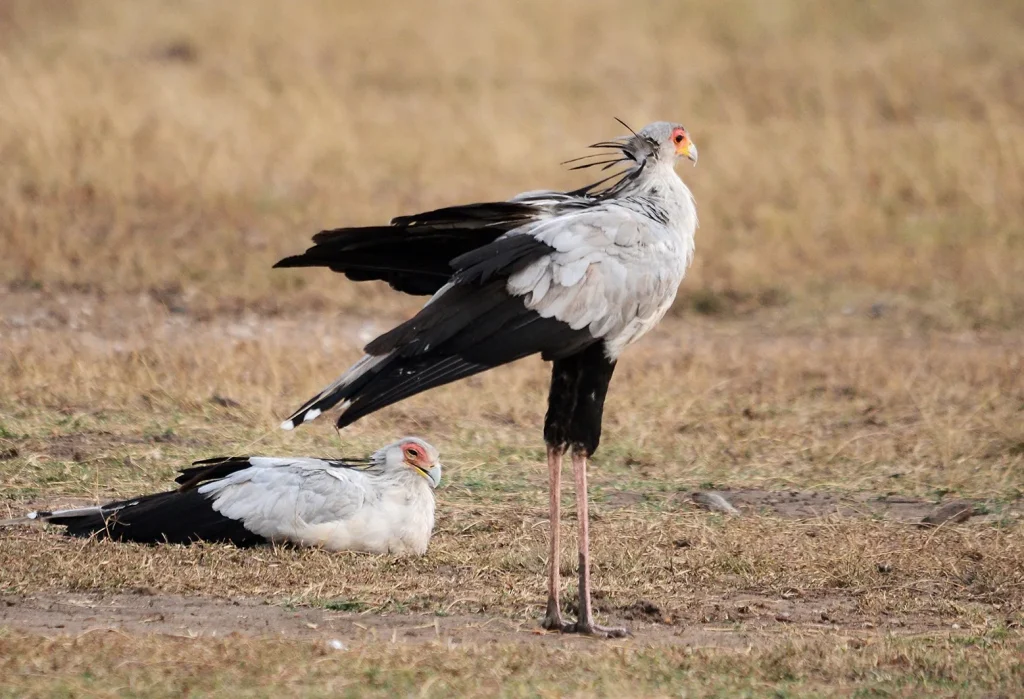
Kenya’s birdlife includes additional eagle species and many other birds of prey. Some are localised, seasonal or difficult to identify, and species lists can change as taxonomy and records are updated. Travellers interested in a comprehensive checklist should use a current regional field guide and reliable bird records. A general safari may produce several eagle sightings, but a dedicated birdwatching itinerary offers more time for identification.
Best Places to See Eagles in Kenya
Masai Mara National Reserve
The Masai Mara’s grasslands and scattered woodland provide suitable habitat for several large raptors. Martial eagles, tawny eagles and bateleurs are among the species birdwatchers may seek, although sightings vary. The reserve is also excellent for observing vultures and other birds of prey.
Amboseli National Park
Amboseli contains open plains, wetlands and woodland habitats that support different bird communities. Eagles may be observed perched, soaring or hunting, and the park’s open landscapes can be attractive for photography.
Tsavo East National Park
Tsavo East offers extensive savannah and woodland habitats that can provide opportunities to observe large raptors. However, the size of the park means that bird sightings depend on the route and habitat.
Tsavo West National Park
Tsavo West’s varied terrain supports different bird habitats—woodland, rocky landscapes and water sources may attract a range of species.
Lake Naivasha
Lake Naivasha is particularly relevant for observing African fish eagles. Boat-based birdwatching may provide opportunities, subject to suitable operators and safety conditions.
Lake Baringo
Lake Baringo is known for its birdlife and aquatic habitats. Fish eagles and other raptors may be observed, and a knowledgeable local guide can help identify species.
Samburu National Reserve
Samburu’s dry woodland and riverine habitats provide opportunities for birdwatching. Different raptor species may be encountered depending on season and habitat.
Best Time to See Eagles in Kenya
Many eagle species are resident in suitable Kenyan habitats and may be observed throughout the year. However, seasonal changes influence behaviour and visibility—migratory species may be present only during particular periods, rainfall can affect prey availability and habitat conditions, and breeding behaviour varies between species. A dedicated birdwatching safari should consider the target species rather than assuming that one season is best for every eagle.
How Eagles Hunt
Eagles use different hunting techniques. Some soar above open landscapes while searching for prey, others watch from elevated perches, forest-associated species may use surprise attacks, and fish eagles hunt around water. The hunting method depends on the species, habitat and prey, and understanding these differences helps birdwatchers interpret behaviour.
How Eagles Use Thermals
Large eagles often use rising columns of warm air called thermals, which allow birds to gain height while using relatively little energy. A soaring eagle may circle repeatedly before gliding towards another area. Thermals are particularly useful over open landscapes, and birdwatchers may notice increased soaring activity as the ground warms.
Eagle Nests and Breeding
Eagles often build substantial nests in trees or on cliffs, depending on the species, and some pairs may use nesting territories over multiple years. Breeding behaviour varies. Visitors should not approach nests closely or attempt to provoke adult birds into flight, because disturbance can affect breeding success. Photographers should use appropriate distances and follow local regulations.
Eagles and Other Safari Wildlife
Eagles are part of the wider ecological system—they hunt prey, compete with other predators and sometimes scavenge. Their presence can reveal information about habitat conditions and food availability. For example, fish eagles are associated with aquatic ecosystems, while some large savannah eagles depend on suitable open-country habitats. Birdwatching therefore adds ecological depth to a wildlife safari.
Eagle Photography in Kenya
Photographing eagles can be rewarding but challenging.
Use a Telephoto Lens
A telephoto lens allows photography from a suitable distance. Longer focal lengths are particularly useful for perched birds and flight images.
Use Fast Shutter Speeds
Eagles can move quickly. A fast shutter speed helps freeze wing movement, although the appropriate setting depends on light and subject movement.
Focus on the Eyes
For perched portraits, sharp focus on the eye can create a strong image.
Photograph Birds in Flight
Continuous autofocus and suitable tracking techniques can help, although birds may change direction suddenly.
Consider the Background
A clean sky or distant landscape can help separate the bird from its surroundings.
Avoid Nest Disturbance
Do not approach nests or pressure guides to obtain unsafe positions.
Binoculars for Eagle Watching
Binoculars are valuable for identifying distant birds and help birdwatchers examine shape, plumage and behaviour before attempting photography. A field guide can provide additional assistance. For difficult identifications, photographs may be reviewed later, although identification should remain cautious when important features are not visible.
Conservation of Eagles in Kenya
Birds of prey face several threats:
- Habitat loss and modification can reduce suitable hunting and nesting areas.
- Poisoning can affect raptors directly or indirectly.
- Collisions and electrocution associated with infrastructure may create risks.
- Human persecution can threaten some species.
Conservation requires habitat protection, safer land-use practices and public awareness. Responsible tourism can support appreciation of birds of prey and their ecological importance.
Why Eagle Sightings Cannot Be Guaranteed
Eagles are mobile wild animals. They may soar at great heights, remain concealed in woodland or occupy large territories, and some species occur at relatively low densities. Even in suitable habitats, a short safari may not produce a sighting. Travellers should approach birdwatching with patience and curiosity—a knowledgeable guide can improve opportunities but cannot control wildlife movements.
Combining Eagle Watching with a Kenya Safari
A birdwatching-focused itinerary can include several habitats. The Masai Mara provides open-country raptor opportunities, Lake Naivasha or Lake Baringo can add aquatic birdlife, and Amboseli and Tsavo offer further savannah and woodland environments. A longer itinerary allows travellers to observe a broader range of species, although the route should be designed around realistic travel times.
Frequently Asked Questions About Eagles of Kenya
Are there eagles in Kenya?
Yes. Kenya supports numerous eagle species in different habitats.
What is the most recognisable eagle in Kenya?
The African fish eagle is particularly recognisable because of its white head and distinctive call.
Where can I see martial eagles?
Suitable savannah habitats, including parts of the Masai Mara and Tsavo ecosystems, may provide opportunities.
Are fish eagles found near lakes?
Yes. African fish eagles are strongly associated with suitable aquatic habitats.
Can I see eagles during a normal safari?
Yes. Eagle sightings are possible during general wildlife game drives.
What is the best time for birdwatching?
It depends on the target species and whether it is resident or migratory.
Are eagles dangerous to tourists?
Eagles are wild predators, but normal observation from appropriate distances is generally safe. Nesting birds should not be disturbed.
What equipment should I bring?
Binoculars and a current field guide are useful. Photographers may prefer a telephoto lens.
Can eagle sightings be guaranteed?
No. Wildlife sightings are unpredictable.
Can I combine birdwatching with a Big Five safari?
Yes. Many Kenya safari destinations support both large mammals and varied birdlife.
Discover the Eagles of Kenya with Safari Trips to Kenya
The eagles of Kenya reveal an extraordinary side of the country’s wildlife. From African fish eagles calling beside lakes to martial eagles soaring over savannah landscapes, these birds provide opportunities to appreciate the diversity of Kenya’s ecosystems.
Safari Trips to Kenya can incorporate birdwatching into private wildlife itineraries, with destinations selected according to your interests and available travel time. Contact Safari Trips to Kenya to plan a Kenya birdwatching safari combining eagles, other birds of prey and the country’s remarkable mammal wildlife.