

The big cats of Kenya are among the country’s most compelling wildlife attractions. Lions resting beneath acacia trees, leopards moving silently through riverine woodland and cheetahs scanning open grasslands are unforgettable sights for travellers on an African safari. Kenya is one of the continent’s most rewarding destinations for observing these predators in their natural habitats, particularly in the Masai Mara, Samburu and selected conservancies.
The three principal large cat species encountered on a conventional Kenya safari are the African lion, African leopard and cheetah. Each has distinctive physical characteristics, hunting techniques, social behaviour and habitat preferences. Although they are often grouped together as big cats, they do not behave in the same way: lions are highly social and may live in prides, leopards are generally solitary and rely heavily on stealth, and cheetahs are adapted for speed and often hunt in open habitats where they can pursue prey.
Understanding these differences makes a safari more rewarding. Rather than simply searching for an animal, visitors can begin recognising tracks, habitat preferences, hunting behaviour and interactions between predators and prey. This guide explains Kenya’s principal big cats, the best destinations for seeing them, seasonal viewing conditions, photography opportunities and conservation challenges.
Which Big Cats Live in Kenya?
Kenya supports three principal large cat species commonly sought on safari. The African lion is the largest of the three and is known for its social structure. The African leopard is a powerful, adaptable predator capable of climbing trees and hunting in varied habitats. The cheetah is the fastest land mammal over short distances and is particularly associated with open grasslands.
Kenya also supports smaller wild cat species, including servals, caracals and African wildcats. These smaller cats are fascinating but are generally more difficult to encounter during conventional daytime game drives. For most safari travellers, the principal focus is on lions, leopards and cheetahs.
African Lions in Kenya
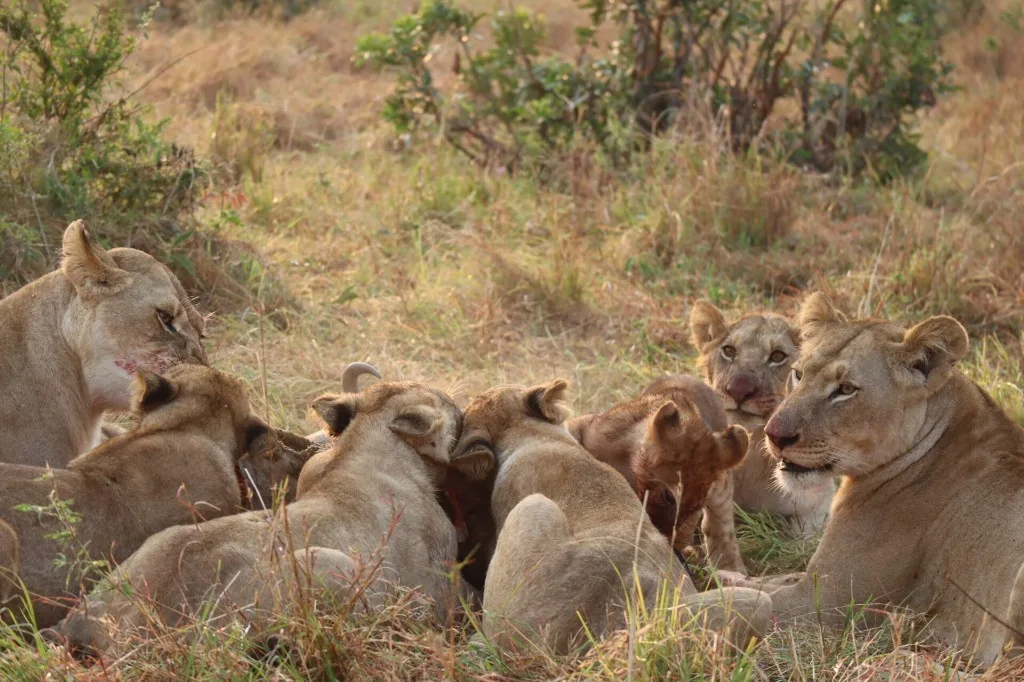
The African lion is one of Kenya’s most iconic predators. Adult males are often recognised by their manes, although mane colour and size vary considerably, while females are generally smaller and play an important role in hunting and raising cubs. Lions occupy a range of habitats, including grassland, savannah and woodland.
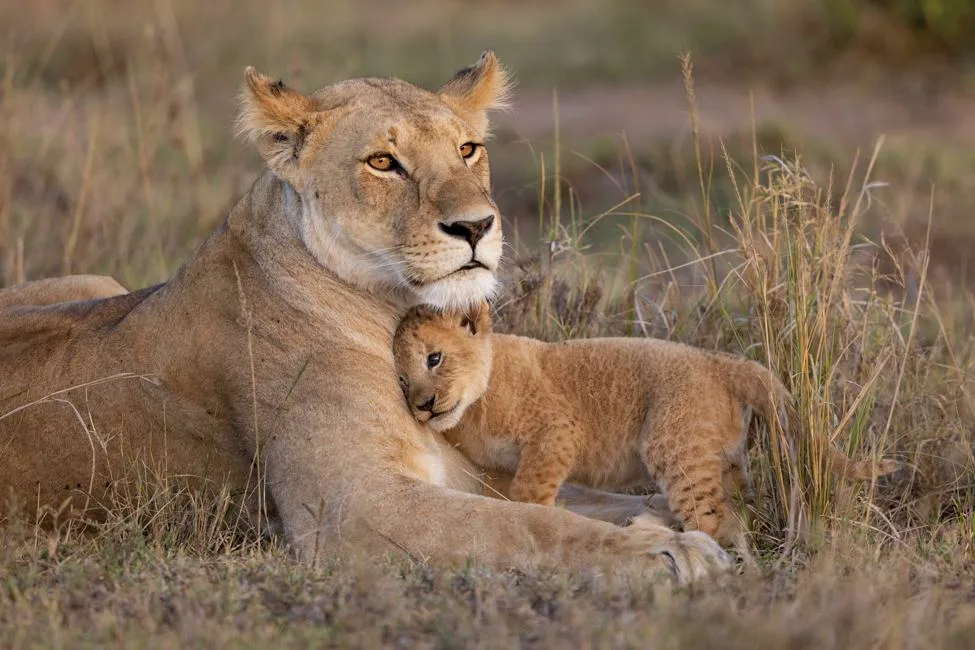
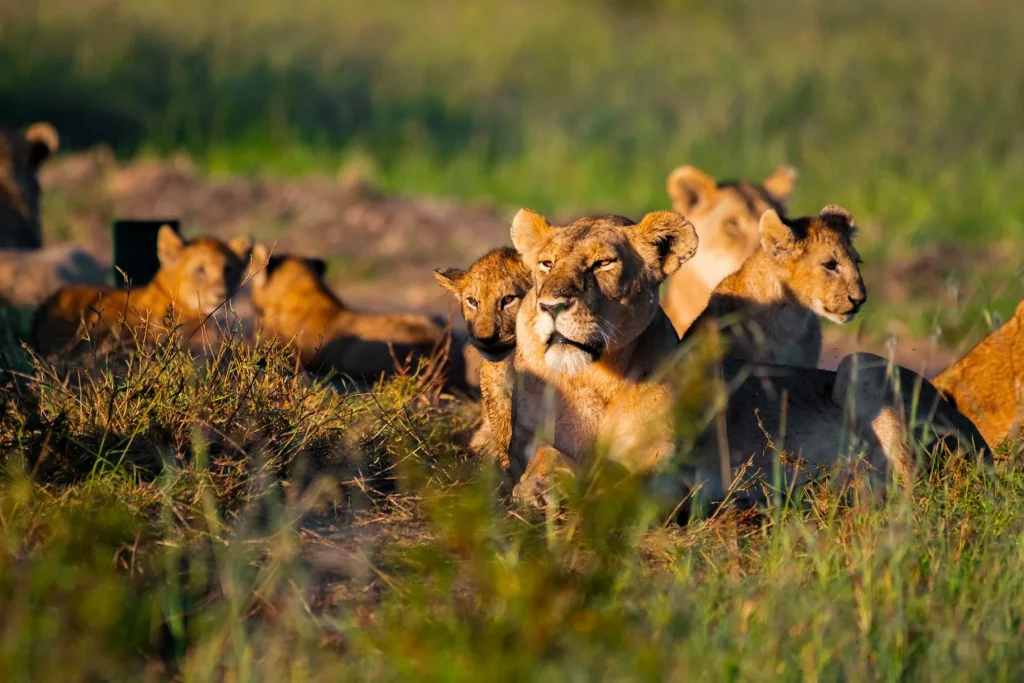
Their social structure is unusual among large cats. A pride may include related females, their offspring and one or more adult males associated with the group, although pride composition changes over time.
Lion Hunting Behaviour
Lions hunt a variety of prey, including antelope, zebra, wildebeest and buffalo. They may hunt individually or cooperatively, depending on prey, habitat and circumstances. Although lions are often associated with nighttime hunting, they can be active during daylight, and cool mornings and late afternoons are useful periods for observing movement and interactions.
Lion Social Behaviour
Lions communicate through vocalisations, scent marking and body language. Roaring can help individuals maintain contact and communicate territorial presence, while grooming and resting together are common social behaviours. Visitors may observe cubs playing, females interacting or adult males patrolling territories, although these behaviours cannot be guaranteed during a short safari.
Best Places to See Lions in Kenya
Masai Mara National Reserve
The Masai Mara is one of Kenya’s strongest destinations for lion viewing. Its open grasslands support substantial populations of grazing animals, providing prey for predators, and lions may be observed resting, hunting or interacting with other pride members.
Samburu National Reserve
Samburu supports lions within its semi-arid landscape. The Ewaso Ng’iro River and surrounding habitats provide important resources for wildlife, and lion sightings are possible throughout the year.
Amboseli National Park
Amboseli supports lions, although the park is more famous for elephants. Visitors may encounter lions in grassland or woodland habitats.
Tsavo East and Tsavo West
Both Tsavo parks support lions. The landscape and vegetation can make sightings more challenging in some areas, but Tsavo offers opportunities to observe predators in extensive wilderness habitats.
African Leopards in Kenya
The African leopard is one of the most elusive animals on a Kenya safari. Leopards are generally solitary and occupy territories that may overlap with those of other individuals, and their spotted coats provide camouflage in woodland, grassland and rocky habitats. Leopards are powerful climbers and may rest in trees or carry prey into branches, although not every leopard spends substantial time in trees, and behaviour varies between individuals.
Leopard Hunting Behaviour
Leopards rely heavily on stealth. They may approach prey quietly before launching a short attack, and their diet includes antelope, smaller mammals, birds and other suitable animals. Leopards are adaptable and can survive in a wide range of habitats, which contributes to their distribution across Kenya.
Leopard Activity Patterns
Leopards are often active during cooler periods and at night, although daytime sightings are possible, particularly in areas where individuals are accustomed to the presence of safari vehicles. A knowledgeable guide may search for signs such as tracks, alarm calls or recent prey activity, but sightings remain unpredictable.
Best Places to See Leopards in Kenya
Masai Mara
The Masai Mara offers opportunities to encounter leopards in riverine woodland and other suitable habitats. Some individuals may be observed resting in trees or moving through vegetation.
Samburu
Samburu is another attractive destination for leopard viewing. Riverine woodland and rocky areas provide suitable habitat.
Laikipia Conservancies
Selected conservancies in Laikipia support leopards. Private conservancy arrangements may offer different guiding experiences, subject to current rules.
Tsavo
Leopards occur in both Tsavo East and Tsavo West, although thick vegetation can make sightings challenging.
Cheetahs in Kenya
The cheetah is one of the most distinctive predators on the African savannah. Its slender body, long legs and flexible spine are adapted for speed, and cheetahs can accelerate rapidly over short distances but cannot maintain maximum speed for long periods. Their hunting strategy differs from that of lions and leopards: cheetahs generally rely on locating prey in relatively open habitats and pursuing it during a short chase.
Cheetah Physical Characteristics
Cheetahs have distinctive dark markings running from the inner corners of their eyes towards the mouth, commonly called tear marks. Their spotted coats provide camouflage in grassland habitats, and unlike most other cats, cheetahs have claws that are less fully retractable, helping provide traction during high-speed movement.
Cheetah Hunting Behaviour
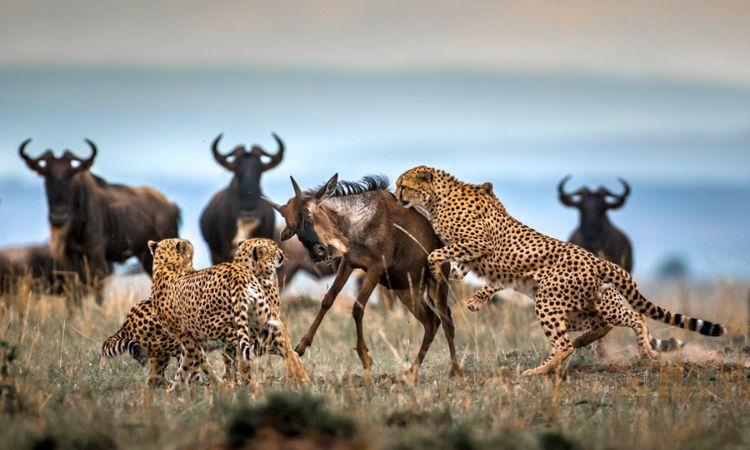
Cheetahs often hunt medium-sized antelope and other suitable prey. They rely on speed and agility rather than prolonged pursuit, and a successful chase is physically demanding—cheetahs may need time to recover. Other predators can sometimes displace cheetahs from their kills, and visitors should never pressure guides to follow a hunting animal too closely.
Best Places to See Cheetahs in Kenya
Masai Mara National Reserve
The Masai Mara is one of Kenya’s strongest destinations for cheetah viewing. Its open grasslands provide suitable hunting habitat, and visitors may encounter solitary individuals, females with cubs or male coalitions.
Samburu and Northern Kenya
Cheetahs occur in parts of northern Kenya, including suitable habitats around Samburu and Laikipia, although sightings can be less predictable than in some open grassland areas of the Masai Mara.
Other Savannah Habitats
Cheetahs may occur in additional suitable landscapes across Kenya. Their distribution depends on prey availability, habitat and human pressures.
Lions Versus Leopards Versus Cheetahs
Although all three are carnivorous cats, they differ in several important ways.
Size and Appearance
Lions are generally the largest and most heavily built. Leopards are muscular, with rosette-shaped coat markings. Cheetahs are more slender, with solid spots and distinctive facial markings.
Social Behaviour
Lions are social and may live in prides. Leopards are generally solitary. Cheetahs are often solitary, although males may form coalitions.
Hunting Techniques
Lions may hunt cooperatively. Leopards rely heavily on stealth and ambush. Cheetahs use speed and agility to pursue prey over short distances.
Preferred Habitats
Lions occupy varied savannah and woodland habitats. Leopards are highly adaptable and use dense vegetation, rocky terrain and other environments. Cheetahs generally favour more open habitats suitable for pursuit hunting.
Best Time to See Big Cats in Kenya
The best time for a Kenya big cat safari is generally during the relatively dry months of January and February and June through October. During these periods, shorter vegetation can improve visibility in some habitats, although big cats remain present throughout the year. The green season can also provide rewarding predator sightings, particularly where prey animals are abundant.
The best month depends on the chosen destination and the behaviour you hope to observe. For the Masai Mara, July through October is particularly popular because of migration activity, while January and February can also offer excellent resident wildlife viewing.
Best Time of Day for Big Cat Sightings
Early morning and late afternoon are generally favourable periods for observing big cats, when temperatures are cooler and predators may be more active. Lions may be seen moving between resting areas or interacting with pride members, leopards may travel through woodland or rest in trees, and cheetahs may scan open grasslands for prey. However, all three species can be encountered at other times of day, and a full-day game drive provides more flexibility than a short excursion.
Big Cats and the Great Wildebeest Migration
The Great Wildebeest Migration influences predator-prey relationships in the Serengeti–Mara ecosystem. When large herds of wildebeest and zebra enter the Masai Mara, predators may take advantage of the increased availability of prey, and lions and other carnivores may be observed hunting or feeding. However, the migration does not guarantee predator sightings or hunting activity, and river crossings are also unpredictable. Travellers should allow several days in the Masai Mara and approach the experience as a broader wildlife safari.
Big Cat Photography in Kenya
Kenya is an excellent destination for big cat wildlife photography. The Masai Mara’s open grasslands provide opportunities to photograph lions and cheetahs against expansive landscapes, while Samburu offers contrasting backgrounds, including dry woodland, rocky terrain and riverine vegetation.
Camera Equipment
Useful kit for predator photography includes:
- A telephoto lens for photographing from a safe distance
- A wider lens to capture animals within their landscape
- Spare batteries and memory cards for long game drives
Lighting
Early morning and late afternoon light can produce attractive photographs, although photographers should be prepared for unpredictable animal movements.
Ethical Photography
Never ask a guide to approach too closely or disturb an animal. Avoid blocking hunting routes or separating mothers from cubs. Responsible photography prioritises wildlife welfare over obtaining a particular image.
Big Cat Conservation in Kenya
Kenya’s large cats face several conservation challenges. Habitat loss and fragmentation can reduce the space available for wildlife, human-wildlife conflict may occur where predators encounter livestock or live near settlements, and declining prey populations can also affect predator survival. Conservation programmes seek to protect habitats, improve coexistence and support scientific monitoring, and responsible safari tourism can contribute through park fees, conservancy revenue and local employment—provided tourism is managed carefully to avoid disturbing wildlife.
Human-Wildlife Conflict and Predator Protection
Predators sometimes move beyond protected areas into landscapes used by people and livestock, which can create conflict when livestock are attacked. Conservation organisations and local communities use different approaches to reduce these risks, including improved livestock enclosures, community monitoring and compensation or coexistence initiatives where available. Long-term conservation depends on protecting wildlife while recognising the needs of people living alongside predators.
Big Cats in National Parks Versus Private Conservancies
Kenya offers big-cat viewing in both public protected areas and private or community conservancies. National parks and reserves generally follow established wildlife-viewing regulations, while private conservancies may operate under different access and activity arrangements. Some conservancies offer specialist guiding experiences, but permissions vary—travellers should confirm whether activities such as night drives are permitted in the selected area, and no operator should promise activities that violate park or conservancy regulations.
How Many Days Do You Need for a Big Cat Safari?
Three nights in the Masai Mara provide a useful introduction to big-cat viewing, while four or five nights are preferable for photographers and travellers particularly interested in predator behaviour. Longer itineraries may combine the Masai Mara with Samburu or Laikipia, increasing opportunities to observe different animals and behaviours. However, sightings remain unpredictable, and no itinerary can guarantee all three species.
Recommended Kenya Big Cat Safari Itineraries
Four-Day Masai Mara Big Cat Safari
A four-day itinerary provides time for several game drives in the Masai Mara, with a focus that may include lions, cheetahs, leopards and other resident wildlife.
Seven-Day Kenya Predator Safari
A seven-day itinerary may combine the Masai Mara with another suitable destination. Travellers should choose the route carefully to avoid excessive driving.
Ten-Day Kenya Wildlife Safari
A longer itinerary may include Samburu, Ol Pejeta, Lake Nakuru and the Masai Mara, providing opportunities to observe predators alongside rhinos, elephants and other wildlife.
Private Versus Group Big Cat Safaris
A private Kenya big cat safari offers flexibility for photography and wildlife observation. Travellers can spend additional time with a sighting when permitted and adjust game-drive plans according to animal movements. A Kenya group safari can reduce transport costs by sharing a vehicle and guide, although group itineraries may have fixed schedules and less flexibility. Travellers should confirm vehicle seating arrangements and group size before booking.
Responsible Big Cat Viewing
Follow these guidelines when observing predators:
- Maintain appropriate distances and do not pressure guides to approach hunting animals too closely
- Avoid surrounding animals with vehicles
- Never feed wildlife
- Remain inside the safari vehicle except where stopping is permitted
- Respect park regulations and the instructions of professional guides
The welfare of the animals should always take priority over photographs or close encounters.
Frequently Asked Questions About Big Cats in Kenya
What Are the Three Main Big Cats in Kenya?
The principal large cats commonly sought on safari are lions, leopards and cheetahs.
Where Is the Best Place to See Big Cats in Kenya?
The Masai Mara is one of the strongest all-round destinations for lions, leopards and cheetahs.
Can You See All Three Big Cats on One Safari?
Yes, it is possible, but sightings are never guaranteed.
What Is the Best Time for a Big Cat Safari?
January, February and June through October are generally excellent choices for many safari destinations.
Are Leopards Harder to See Than Lions?
Leopards are often more elusive because of their solitary behaviour and preference for concealed habitats.
Are Cheetahs Faster Than Lions?
Yes. Cheetahs are adapted for very high speed over short distances, while lions rely on different hunting strategies.
Do Big Cats Hunt During the Day?
Yes. Although many predators are active during cooler periods, hunting can occur at different times.
How Many Nights Should I Spend in the Masai Mara?
Three nights provide a useful introduction. Four or five nights are preferable for dedicated predator photography.
Plan Your Kenya Big Cat Safari With Safari Trips to Kenya
The big cats of Kenya are among the country’s most rewarding wildlife attractions. For lions, leopards and cheetahs, the Masai Mara is one of the strongest destinations, while Samburu and selected Laikipia conservancies offer additional opportunities in contrasting habitats.
Safari Trips to Kenya can arrange a private Kenya big cat safari, a scheduled group departure or a longer wildlife itinerary combining the Masai Mara with other destinations. Share your preferred travel dates, number of travellers, accommodation category and wildlife interests to receive a tailored safari proposal. A well-planned big-cat safari should allow sufficient time for patient observation, responsible photography and an appreciation of the natural behaviour of these remarkable predators.