

Few wildlife encounters create the anticipation of watching a cheetah survey an open African plain. It may stand perfectly still on a termite mound, its slender body outlined against the grassland, before beginning a deliberate approach towards distant antelopes.
For several minutes, little seems to happen. Then the animal accelerates, changing direction with remarkable agility as it pursues its target. Cheetahs in Kenya are among the country’s most sought-after safari animals. Their elegant appearance, extraordinary speed and distinctive hunting behaviour make them favourites among wildlife enthusiasts and photographers.
Kenya offers several important cheetah habitats, particularly in the Masai Mara, Amboseli, parts of Laikipia and selected northern and southern wildlife landscapes. However, cheetahs are not evenly distributed throughout the country. Their presence depends on suitable habitat, prey availability, competition with other predators and the ability to move safely through large landscapes. Understanding these factors helps travellers choose the right safari destinations and develop realistic expectations.
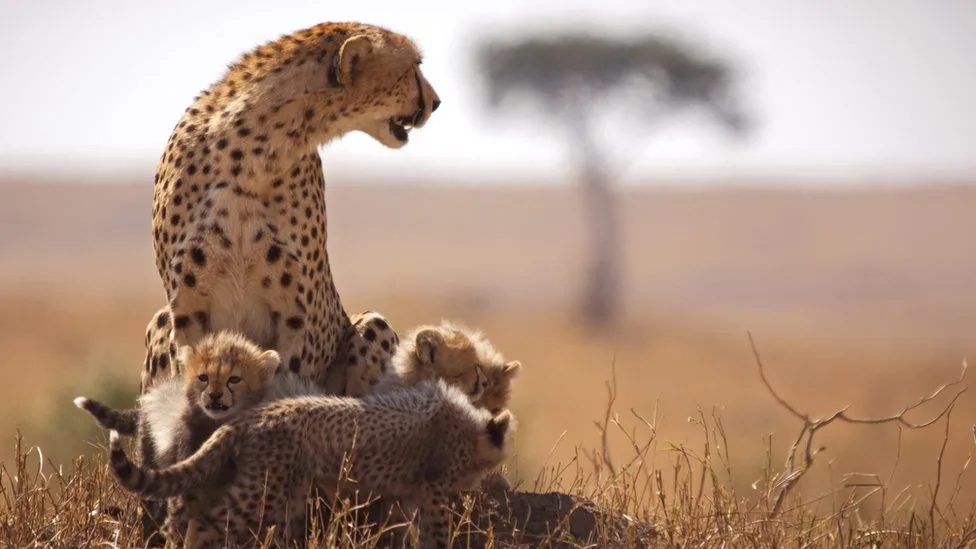
What Is a Cheetah?
The cheetah, Acinonyx jubatus, is a large wild cat recognised for its slender body, long legs, spotted coat and exceptional speed. Unlike lions and leopards, cheetahs are highly specialised for rapid pursuit across relatively open terrain. Their small, rounded heads and distinctive black facial markings make them easy to recognise.
These markings, commonly called tear lines, extend from the inner corners of the eyes towards the mouth. Cheetahs also have long tails that help them maintain balance during rapid turns. Although they belong to the cat family, their appearance and hunting style differ substantially from those of other African big cats.
Where to See Cheetahs in Kenya
Masai Mara National Reserve
The Masai Mara National Reserve is one of Kenya’s best-known cheetah-viewing destinations. Its open grasslands provide suitable habitat for hunting, while resident populations of gazelles and other prey support cheetahs throughout the year. The reserve is also famous for lions, leopards, elephants and the seasonal Great Wildebeest Migration.
Cheetah sightings may occur during morning or afternoon game drives, but their location changes according to territorial behaviour and prey distribution. An experienced guide may look for cheetahs on low rises, termite mounds or open grasslands where visibility is good. The Masai Mara is particularly attractive for travellers who want opportunities to observe several predator species on one safari.
Maasai Mara Conservancies
Selected conservancies bordering the national reserve also provide important cheetah habitat. These areas operate under different access and tourism arrangements from the reserve. Some conservancies limit vehicle numbers and offer more exclusive wildlife-viewing conditions. However, accommodation costs, conservancy fees and activity permissions vary. Travellers should confirm the exact arrangements before booking.
Amboseli National Park
Amboseli National Park is primarily famous for elephants and Mount Kilimanjaro, but cheetahs may also be encountered. Its open grassland habitats can support hunting opportunities. However, cheetah sightings are generally less predictable than in some of the most productive Masai Mara areas. Amboseli is best selected for its overall wildlife and landscape experience, with cheetahs considered an additional possibility.
Laikipia Conservancies
The wider Laikipia region contains ranches, conservancies and varied habitats supporting important wildlife populations. Cheetahs occur in parts of the region, although distribution varies. Some properties offer specialist guiding and conservation-focused experiences. Laikipia can be particularly attractive for travellers interested in wildlife ecology and the relationship between protected areas, community lands and conservation.
Samburu and Northern Kenya
Cheetahs occur in suitable northern Kenyan habitats, including parts of the Samburu ecosystem. However, sightings are not guaranteed. Northern Kenya is especially interesting for its distinctive wildlife, including Grevy’s zebra, reticulated giraffe, gerenuk and Beisa oryx. Travellers interested in cheetahs can include Samburu as part of a broader northern Kenya safari, rather than treating it exclusively as a cheetah destination.
Tsavo Ecosystem
Cheetahs are also found in parts of the Tsavo ecosystem. The extensive landscapes provide habitat, but sightings may be difficult because of the scale of the parks and vegetation conditions. A Tsavo safari is particularly rewarding for elephants, varied scenery and the sense of wilderness.
Why Are Cheetahs Difficult to Find?
Cheetahs are wide-ranging predators that may travel considerable distances while searching for prey or maintaining territories. They also occur at lower densities than many common herbivores. Their spotted coats provide camouflage in grassland habitats. A resting cheetah can be surprisingly difficult to notice, even in relatively open terrain.
Competition with lions and hyenas may also influence where cheetahs spend time. For these reasons, a cheetah sighting often depends on patient observation and knowledgeable guiding.
How Fast Can a Cheetah Run?
Cheetahs are the fastest land mammals over short distances. Their anatomy is adapted for rapid acceleration and high-speed pursuit. A flexible spine increases stride length, while powerful muscles and specialised feet help generate traction. The tail assists with balance during sharp turns.
However, a cheetah cannot sustain maximum speed for long. A chase is physically demanding, and unsuccessful pursuits consume valuable energy. The animal must therefore choose hunting opportunities carefully.
How Cheetahs Hunt in Kenya
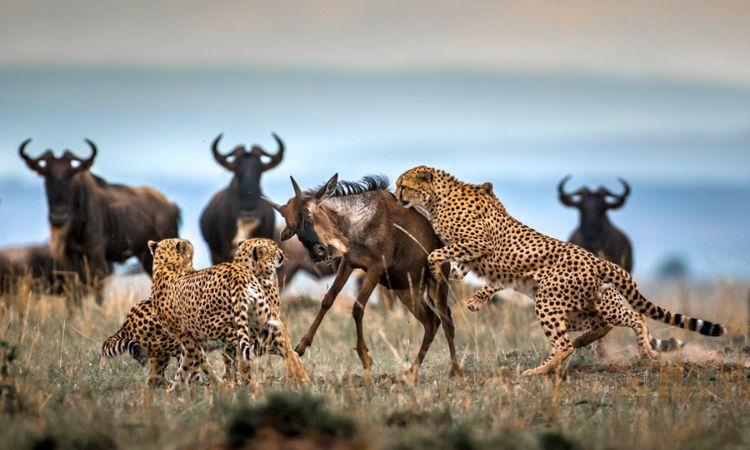
Cheetahs primarily use sight to identify prey. They often hunt in relatively open habitats where they can observe animals from a distance. A typical hunt begins with stalking. The cheetah approaches as closely as possible before accelerating towards its target. It may then use rapid changes of direction to match the prey’s movements.
Successful hunts usually depend on catching the animal quickly. Cheetahs generally favour smaller or medium-sized antelopes, although prey choice varies. After a chase, the cheetah may need time to recover before feeding.
What Do Cheetahs Eat?
Cheetahs are carnivores. In Kenya, their prey may include Thomson’s gazelles, impalas and other suitable antelopes. Young wildebeest or other juvenile herbivores may also be taken when opportunities arise. Prey choice depends on habitat, availability, cheetah age and hunting circumstances.
Male coalitions may sometimes attempt larger prey than a solitary individual. Cheetahs must also consider the risk of losing their kills to lions or hyenas.
Cheetahs Versus Leopards
Cheetahs and leopards are often confused by first-time safari travellers. Both have spotted coats, but their appearance and behaviour differ.
- Body shape: Cheetah: Slender, long-legged. Leopard: Muscular, compact.
- Coat pattern: Cheetah: Solid dark spots. Leopard: Rosette-shaped markings.
- Facial markings: Cheetah: Distinctive tear lines. Leopard: No equivalent prominent tear lines.
- Hunting strategy: Cheetah: Fast pursuit. Leopard: Stalking and ambush.
- Typical habitat: Cheetah: Open grassland and savannah. Leopard: Varied habitats, often with cover.
- Climbing: Cheetah: Can climb but less specialised. Leopard: Highly capable climber.
Leopards often use trees for resting or storing prey, while cheetahs are more strongly associated with ground-based hunting.
Cheetahs Versus Lions
Lions are generally much larger and more powerful than cheetahs. They may hunt cooperatively and can take substantial prey. Cheetahs rely on speed and generally avoid direct confrontation with lions. Lions can threaten cheetah cubs and may steal kills.
This relationship is one reason why cheetahs may favour areas with suitable prey but lower concentrations of larger predators.
Do Cheetahs Live in Groups?
Cheetah social organisation differs between males and females. Adult females are generally solitary except when raising cubs. Males may live alone or form coalitions. Coalitions often consist of brothers, although unrelated males may sometimes associate.
Male coalitions can defend territories and cooperate during hunting. Observing their social interactions can be a particularly rewarding safari experience.
Cheetah Cubs in Kenya
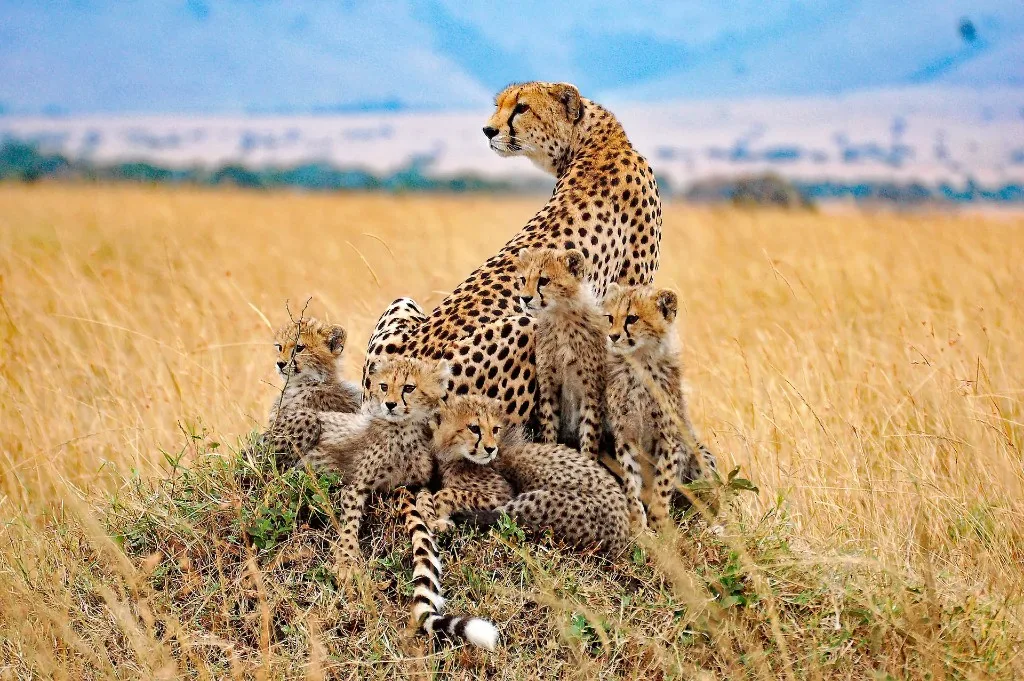
Female cheetahs raise their cubs without permanent assistance from adult males. Young cubs are vulnerable to predators and environmental hazards. Mothers may move them between sheltered locations to reduce danger. As cubs grow, they begin following their mother and learning hunting behaviour.
Seeing a female with cubs can be memorable, but the animals must not be disturbed. Safari guides should maintain appropriate distances and avoid repeated approaches to sensitive locations.
Best Time to See Cheetahs in Kenya
Cheetahs can be encountered throughout the year in suitable Kenyan wildlife habitats. The best time depends on the destination and wider safari interests.
January to March
These months can provide rewarding wildlife viewing in several Kenyan parks. Conditions vary by location, but some areas experience relatively dry weather.
April to May
The long-rains period may produce lush vegetation and challenging road conditions. Wildlife viewing remains possible, although tall grass can make some animals more difficult to locate.
June to October
This is a popular period for Masai Mara safaris. The Great Migration may bring large wildebeest and zebra herds into the ecosystem. Cheetahs remain resident predators, and their sightings are not limited to migration months.
November to December
Seasonal rains may change vegetation and prey distribution. Cheetah viewing remains possible throughout the year.
Are Cheetahs Part of the Big Five?
No. Cheetahs are not among the traditional African Big Five. The Big Five are lions, leopards, elephants, buffaloes and rhinoceroses. However, cheetahs are among the most popular predators to observe on safari.
Travellers interested in large cats often plan itineraries around the Masai Mara’s lions, leopards and cheetahs.
How Many Days Do You Need to See Cheetahs?
A three-day Masai Mara safari may provide opportunities for cheetah sightings. However, a longer stay improves the amount of time available for searching suitable habitats. Four or five days are attractive for travellers who want to concentrate on predators. Dedicated photographers may prefer additional nights and a private vehicle. No number of days guarantees a cheetah encounter.
Cheetah Photography in Kenya
Cheetahs are excellent photographic subjects. Their distinctive markings, elegant posture and hunting behaviour create opportunities for both portraits and action images. Keep these points in mind:
- Use a telephoto zoom for suitable distances without crowding the animals
- Early morning and late afternoon often provide attractive light
- For action photography, continuous autofocus and fast shutter speeds can help capture movement
- Ethical viewing is essential: do not block hunting routes, surround animals or interfere with predator-prey interactions
Conservation Status of Cheetahs
Cheetahs are classified as Vulnerable on the IUCN Red List. Their populations face pressures from habitat loss, fragmentation, declining prey availability and conflict with people. Cheetahs require large connected landscapes, making conservation outside national parks important.
In Kenya, conservancies and community-based initiatives can contribute to protecting wildlife habitat. Long-term conservation depends on cooperation between wildlife authorities, landowners, communities and other stakeholders.
Human-Wildlife Conflict
Cheetahs sometimes move through landscapes used for livestock grazing. Conflict can occur when predators are perceived as threats to domestic animals. Conservation approaches may include improved livestock management, community engagement and measures that reduce opportunities for conflict. Protecting cheetahs requires solutions that consider both wildlife and local livelihoods.
Suggested Five-Day Kenya Cheetah Safari
Day 1: Nairobi to Masai Mara
Depart Nairobi and travel towards the Masai Mara. Arrive at your accommodation and enjoy an afternoon game drive if timing permits.
Day 2: Masai Mara Big Cat Safari
Spend the day exploring grassland habitats, searching for cheetahs, lions and other wildlife.
Day 3: Predator Behaviour and Wildlife Photography
Enjoy another full day of game drives. Your guide may concentrate on suitable cheetah habitats while responding to current wildlife activity.
Day 4: Masai Mara Wildlife Exploration
Continue exploring different areas of the reserve. During migration months, wildebeest and zebra herds may provide additional wildlife interest.
Day 5: Return to Nairobi
After breakfast, return to Nairobi for your onward arrangements.
Frequently Asked Questions
Where Is the Best Place to See Cheetahs in Kenya?
The Masai Mara is one of Kenya’s most recognised destinations for cheetah viewing.
Are Cheetahs Common in Amboseli?
Cheetahs occur in Amboseli, but sightings are unpredictable.
Can Cheetahs Be Seen During the Great Migration?
Yes. Cheetahs inhabit the Masai Mara ecosystem and may be encountered during migration season.
Are Cheetahs Dangerous to Humans?
Cheetahs are wild predators and should never be approached on foot without appropriate professional authorisation.
Can Cheetahs Climb Trees?
Cheetahs can climb some trees or elevated objects, but they are not specialised climbers like leopards.
How Long Do Cheetahs Live?
Lifespan varies according to habitat, health and environmental conditions. Wild cheetahs face substantial risks, particularly during early life.
Are Cheetahs Endangered?
The species is globally classified as Vulnerable, although some regional populations face particularly serious threats.
Book a Kenya Cheetah Safari
Seeing cheetahs in Kenya is one of the most memorable experiences available to wildlife enthusiasts. From the grasslands of the Masai Mara to selected northern and southern habitats, Kenya provides opportunities to observe these extraordinary predators in the wild.
At Safari Trips to Kenya, we arrange private and selected group safaris that can include cheetah-focused game drives alongside other wildlife experiences. Contact our team to plan a personalised Kenya big cat safari.