
Great Migration and Serengeti Safari
Great Migration and Serengeti Safari: Following the Herds Across East Africa
A Great Migration and Serengeti safari is a journey into one of the world’s most remarkable wildlife ecosystems. Across the vast plains of northern Tanzania and southwestern Kenya, enormous numbers of wildebeest, accompanied by zebra and other grazing animals, move in response to seasonal rainfall and fresh grass. Their movements shape the behaviour of predators, influence the wider savannah ecosystem and create unforgettable opportunities for wildlife observation.
The Serengeti is central to this phenomenon. Although the Great Migration is often associated with dramatic river crossings in Kenya’s Masai Mara, the herds spend much of their annual cycle within Tanzania’s Serengeti ecosystem. The southern plains are associated with calving, the central and western regions with seasonal movements, and the northern Serengeti with the Mara River and the approach towards Kenya.
For travellers planning a migration safari, understanding these regional differences is essential. A lodge that provides excellent access to the southern Serengeti during February may be far from the principal northern migration areas in August. Similarly, a traveller visiting the Masai Mara in January should not expect the same migration conditions as someone travelling in September. The best Serengeti migration safari therefore begins with the travel month, not the accommodation brochure.
This guide explains the migration’s seasonal movements, the main Serengeti regions, the differences between Kenya and Tanzania, the most practical safari routes, accommodation considerations and how to plan enough time for unpredictable wildlife events.
What Is the Great Wildebeest Migration?
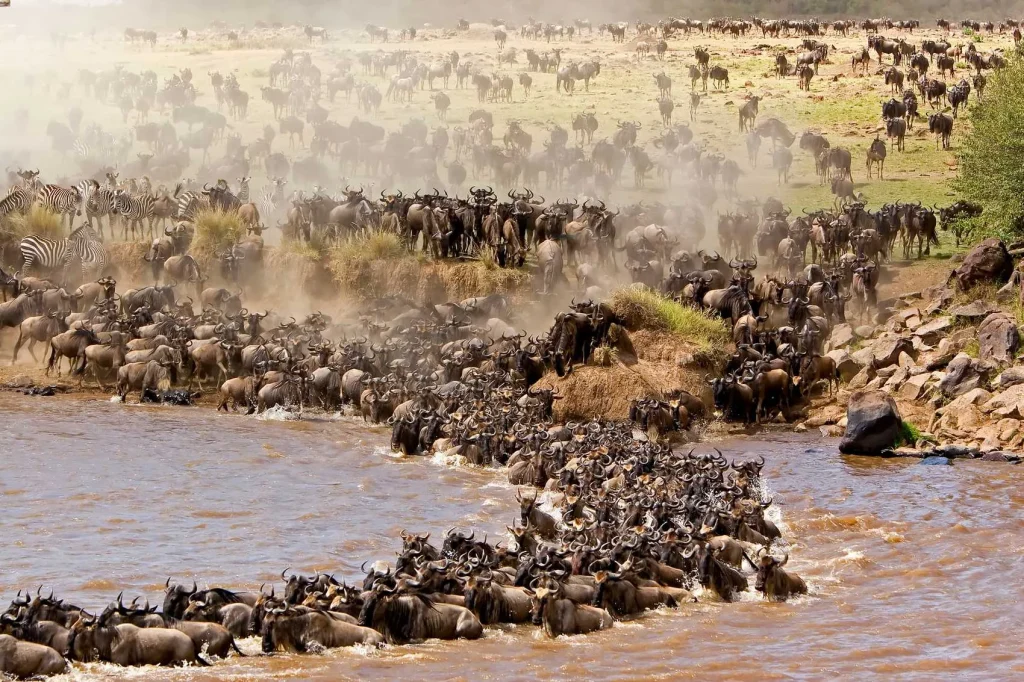
The Great Wildebeest Migration is the continuous seasonal movement of large populations of wildebeest and other grazing animals across the Serengeti–Mara ecosystem, which spans northern Tanzania and southwestern Kenya. Rainfall is the principal driver of herd movement because it influences grass growth, water availability and grazing quality.
The migration is not a single, organised procession. Herds may be spread across enormous areas, and different groups can move at different times. Some animals may remain in a particular region while others travel considerable distances, which is why migration maps should be treated as seasonal guides rather than precise predictions.
Which Animals Participate?
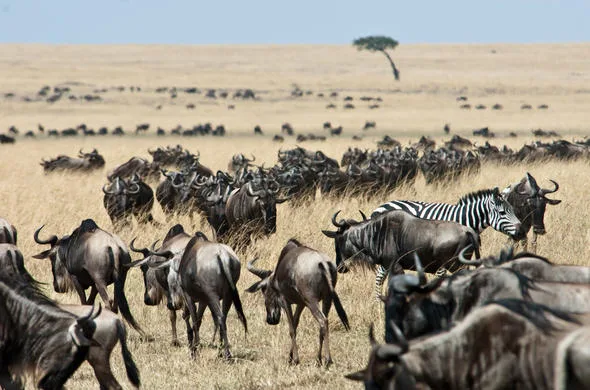
Wildebeest are the principal animals associated with the migration. Large numbers of plains zebras also move through the ecosystem, and other herbivores occupy overlapping habitats. Predators such as lions, cheetahs, leopards and hyenas take advantage of the opportunities created by seasonal concentrations of prey, while vultures and other scavengers play important ecological roles. The migration is therefore much more than a spectacle of moving herds; it is a complex ecological process involving grazing, reproduction, predation and nutrient cycling.
Why the Serengeti Is Essential to a Migration Safari
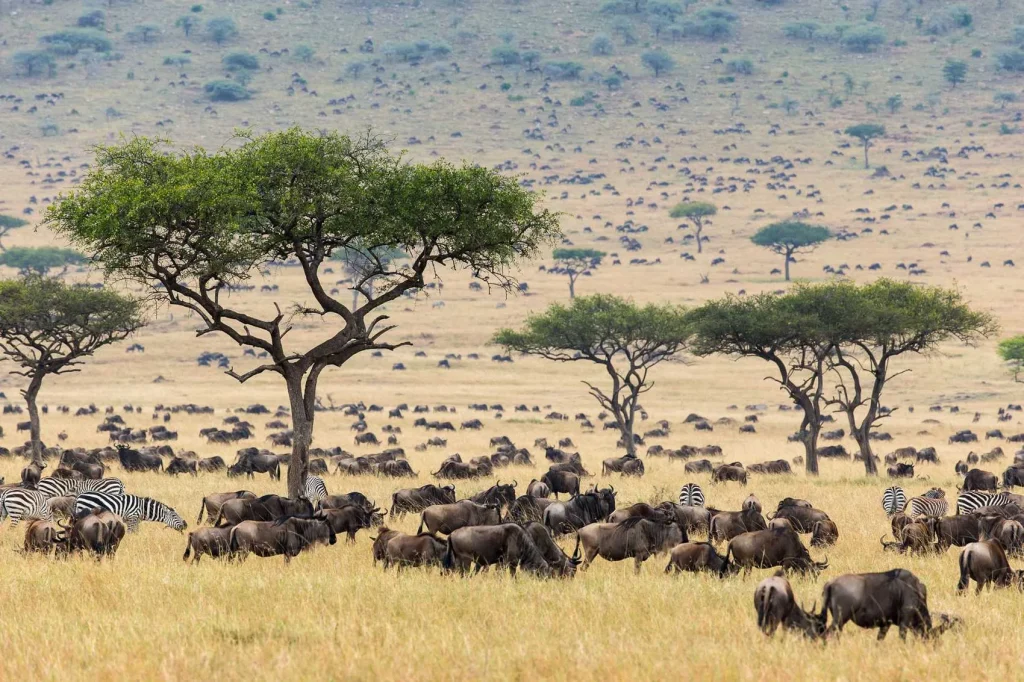
Serengeti National Park protects a substantial part of the migration ecosystem. Its landscapes range from open southern plains to central grasslands, rocky outcrops, woodland and northern river systems, and different regions become particularly attractive at different times of year.
The Serengeti also supports resident wildlife, meaning visitors can enjoy rewarding game drives even when the principal migration herds are elsewhere. Lions, elephants, giraffes, buffalo, leopards, cheetahs and numerous other animals inhabit suitable areas. However, the park is vast; travelling between regions may require long drives or domestic flights, and a successful itinerary selects the most appropriate region rather than trying to explore the entire park in a few days.
Southern Serengeti: The Calving Season
The southern Serengeti calving season is one of the migration’s most remarkable phases. It is generally associated with January through March, although timing varies with rainfall. Large concentrations of wildebeest may gather on the short-grass plains of the southern Serengeti and adjoining Ndutu area, which provide suitable grazing conditions for pregnant females and young animals.
Why Calving Happens Here
The southern plains offer seasonal grass growth influenced by rainfall and soil conditions. Wildebeest may gather in large numbers when grazing is favourable, and many calves are born within a relatively concentrated period. This can create extraordinary wildlife scenes, although individual births cannot be predicted or guaranteed.
Predator Activity During Calving
The presence of vulnerable young animals attracts predators. Lions, cheetahs, hyenas and other carnivores may be active in areas where prey is abundant, but visitors should not assume that every game drive will include a hunt. Responsible guides maintain appropriate distances and avoid interfering with predator-prey interactions.
Best Accommodation Location
For a February migration safari, accommodation in or near the southern Serengeti and Ndutu region can be particularly convenient. However, access regulations differ between Serengeti National Park and surrounding conservation areas, and the chosen camp should match the intended game-drive locations and current seasonal conditions.
Central Serengeti: Year-Round Wildlife and Seasonal Herd Movement
The central Serengeti, including the Seronera region, is one of Tanzania’s best-known safari areas. Its mixture of grassland, woodland and rocky outcrops supports diverse resident wildlife, and the region is particularly attractive for visitors who want a strong general wildlife safari alongside possible migration activity.
Wildlife Highlights
Lions are frequently sought in the central Serengeti. Leopards may be encountered in suitable woodland and riverine habitats, cheetahs favour relatively open areas where they can search for prey, and elephants, giraffes, buffalo and numerous antelope species also occur.
When Migration Herds Pass Through
Herd movements through the central Serengeti depend on seasonal rainfall. The region may be particularly relevant during transitional periods as animals move between southern and northern grazing areas, although precise timing varies between years.
Who Should Stay Here?
The central Serengeti is a good choice for first-time visitors seeking varied wildlife viewing. It can also serve as part of a longer itinerary linking the southern and northern regions. Travellers with limited time should consider whether a central base offers better overall wildlife opportunities than travelling long distances to follow uncertain herd movements.
Western Serengeti: The Grumeti Corridor
The western Serengeti is associated with the Grumeti River and surrounding migration corridors. During parts of the year, herds may move through this region as they travel towards northern grazing areas, and the landscape includes woodland, grassland and riverine habitats.
Grumeti River Crossings
The Grumeti River is associated with seasonal migration crossings, although crossing activity is highly variable. Some herds may cross at different points, while others move through areas without creating dramatic scenes. The presence of crocodiles and other wildlife adds to the river’s ecological importance.
Best Time to Consider Western Serengeti
May and June are often included in seasonal planning for the western corridor, although rainfall patterns can shift herd movements. Travellers should seek current regional advice before selecting accommodation.
Northern Serengeti: Mara River Crossings
The northern Serengeti is particularly attractive during the middle and later months of the year. Its landscapes include grasslands, woodland and the Mara River system, and substantial migration herds may occupy this region before entering Kenya or while moving between grazing areas.
The Mara River Experience
River crossings are among the migration’s most dramatic possible encounters. Wildebeest may gather along riverbanks, hesitate, move away or eventually cross. The presence of crocodiles, steep banks and strong currents can make crossings dangerous, and no operator can predict exactly when or where a crossing will occur. A traveller who spends several days in the northern Serengeti has more opportunities than someone visiting for a single afternoon, but even a longer stay cannot guarantee a crossing.
Best Months
July through October is the principal planning window for northern Serengeti migration viewing, although the exact timing varies with rainfall and herd movements.
Choosing a Camp
Accommodation should be selected according to the intended river and wildlife-viewing areas. Some camps are positioned for convenient access to particular northern regions, while others may require substantial drives. Travellers should ask about actual game-drive distances rather than relying on general descriptions such as “near the migration.”
Masai Mara Versus Serengeti: Which Is Better?
The Masai Mara and Serengeti form part of the same ecological system, but they offer different travel experiences. The Masai Mara is comparatively compact and can provide excellent predator and plains wildlife viewing, while the Serengeti is much larger and covers a broader portion of the migration’s annual movement.
Choose the Masai Mara If
- You are travelling during the principal Kenya migration season, particularly July through October.
- You want to combine migration viewing with other Kenya destinations such as Amboseli, Samburu or Lake Nakuru.
- You prefer a Kenya-focused itinerary.
Choose the Serengeti If
- You are travelling during the southern calving season.
- You want to explore the migration’s seasonal movements across different Tanzanian regions.
- You plan to combine the safari with Ngorongoro Crater or other northern Tanzania destinations.
Choose Both If
- You have sufficient time and budget for a cross-border journey.
- You want to experience different parts of the Serengeti–Mara ecosystem.
- You are comfortable with the additional transfer logistics.
Best Time for a Great Migration and Serengeti Safari
The Serengeti can provide migration opportunities across much of the year, but the most suitable region changes seasonally.
January and February
The southern plains and Ndutu region are particularly attractive for calving-related wildlife activity.
March
The southern region may remain rewarding, although herd movements depend on rainfall.
April
Rainfall can increase, and herds may begin moving towards central regions. Road conditions can become more challenging.
May
Seasonal movement may continue through central and western areas, and the long rains can affect access.
June
The western corridor and movement towards northern regions may be relevant.
July
The northern Serengeti becomes increasingly attractive for migration-focused travel.
August
Northern Serengeti and Masai Mara migration viewing are popular.
September
Substantial herds may remain in northern parts of the ecosystem.
October
Northern migration activity may continue, but movement towards southern areas can begin as conditions change.
November
Herds may move through central and eastern areas in response to rainfall.
December
The southern Serengeti and adjoining plains may become increasingly important as the next calving season approaches.
These patterns are approximate, not fixed.
How Many Days Do You Need?
A three-day Serengeti safari provides a short introduction but limited flexibility. Five days allow more meaningful wildlife viewing in a selected region, while seven or eight days provide opportunities to combine different areas or include Ngorongoro. Ten to twelve days are preferable for travellers combining the Masai Mara, Serengeti and other destinations. The ideal duration depends on the travel month and whether the priority is calving, river crossings or general wildlife viewing.
Recommended 7-Day Serengeti Migration Safari
Day 1: Arrival in Arusha
Arrive at Kilimanjaro International Airport or another suitable entry point. Transfer to your hotel in Arusha and meet your safari representative to review the itinerary.
Day 2: Travel to the Serengeti
Continue towards the Serengeti by road or domestic flight. The selected region should reflect the travel season. Enjoy an introductory game drive if arrival time permits.
Day 3: Full-Day Migration Safari
Spend the day exploring suitable wildlife areas. Your guide will adjust the route according to recent herd movements and park regulations.
Day 4: Additional Serengeti Game Drives
Enjoy another full day of wildlife viewing. The extra time is valuable because migration events are unpredictable.
Day 5: Explore a Second Habitat
Depending on the itinerary, explore another part of the Serengeti or remain in the same region for additional game drives. Avoid unnecessary long transfers if the principal wildlife activity is nearby.
Day 6: Final Full-Day Serengeti Safari
Spend another day observing wildlife. Photographers may choose to focus on particular habitats or species.
Day 7: Return to Arusha
Travel back to Arusha by suitable flight or road arrangement and connect with onward travel.
Recommended 10-Day Masai Mara and Serengeti Safari
A ten-day itinerary can combine Kenya and Tanzania.
Day 1: Arrival in Nairobi
Arrive in Nairobi and transfer to your hotel.
Day 2: Nairobi to Masai Mara
Travel to the Masai Mara by road or domestic flight and enjoy an afternoon game drive if possible.
Day 3: Full-Day Masai Mara Safari
Explore the reserve and search for migration herds when seasonally present.
Day 4: Additional Masai Mara Game Drives
Enjoy another full day in the Mara.
Day 5: Transfer Towards Tanzania
Travel towards the Tanzania portion of the itinerary using a suitable road or flight arrangement. The route must account for border procedures and park access regulations.
Day 6: Serengeti National Park
Explore the selected Serengeti region.
Day 7: Full-Day Serengeti Safari
Enjoy a full day of wildlife viewing.
Day 8: Additional Serengeti Exploration
Spend another day searching for wildlife and migration activity.
Day 9: Travel Towards Arusha or Ngorongoro
Depending on the itinerary, continue towards Ngorongoro or return towards Arusha.
Day 10: Departure
Transfer to the appropriate airport for onward travel.
Can You Drive Directly From the Masai Mara to Serengeti?
Although the two protected areas share an ecosystem, tourists cannot simply drive directly between arbitrary points across the international boundary. Kenya and Tanzania have separate immigration, park access and vehicle regulations, and a cross-border safari must use authorised routes and suitable transfer arrangements. Some itineraries involve road travel through designated border points, while others use flights and coordinated transfers. Travellers should not assume that the shortest distance on a map represents the practical travel route.
Choosing the Right Serengeti Migration Camp
Camp location is one of the most important decisions in a migration safari. A beautifully appointed camp may be unsuitable if it is far from the expected herd concentration during your travel month.
- Southern camps are attractive during the calving season.
- Central Serengeti camps provide access to varied resident wildlife and selected seasonal migration routes.
- Western corridor camps may be useful during movement through the Grumeti region.
- Northern Serengeti camps are particularly relevant for travellers interested in the Mara River and northern migration season.
Some mobile camps relocate during the year; their operating locations should be confirmed before booking.
Private Versus Group Migration Safaris
A private Serengeti migration safari offers flexibility in daily game-drive routes and photography, and is particularly suitable for travellers who want to spend extended time observing particular animals. A group safari can reduce shared transport costs, but group departures generally follow fixed routes and schedules. Travellers should confirm vehicle seating arrangements, group size and accommodation locations. A low advertised price may not provide good value if the itinerary spends too little time in the most suitable migration region.
Serengeti Safari Accommodation Categories
Safari Trips to Kenya uses four accommodation categories:
- Essential — practical comfort and affordability.
- Comfort — established facilities and good value.
- Premium — additional space, attractive locations and personalised service.
- Signature — high-end safari properties and distinctive experiences.
For migration-focused travel, location and guiding quality are often more important than luxury alone.
What Does a Serengeti Migration Safari Cost?
Costs depend on accommodation, travel season, park fees, transport and the number of travellers. High-demand migration periods may attract higher accommodation rates, and domestic flights can reduce travel time but increase costs. Private safaris provide flexibility, while group departures may reduce shared transport expenses. Travellers should compare complete quotations; a detailed proposal should identify accommodation, meals, game drives, guiding, park fees and transfers, while international flights, visas, gratuities and optional activities may be excluded.
Wildlife Photography During the Migration
The Serengeti offers outstanding opportunities for wildlife photography. A telephoto lens is useful for distant animals and predator encounters, while a wider lens can capture the scale of migration herds within the landscape. Early morning and late afternoon light often produces attractive conditions. However, river crossings and hunts are unpredictable; photographers should avoid pressuring guides to approach animals too closely or interfere with their movements. Responsible photography prioritises wildlife welfare.
Responsible Migration Viewing
Wildlife tourism must be conducted carefully during migration events. Vehicles should not block herd movements or crowd river crossing points, and animals should never be driven towards a crossing for photographs. Visitors should remain on authorised routes and follow park regulations, and wildlife should not be fed. Responsible guiding helps protect the natural behaviour that makes the migration so remarkable.
Frequently Asked Questions
What Is the Best Month for the Serengeti Migration?
The best month depends on the experience. January through March is associated with southern calving, while July through October is popular for northern migration viewing.
Can You See the Migration All Year?
Migration activity occurs throughout the year, but the herds occupy different parts of the ecosystem.
Are Mara River Crossings Guaranteed?
No. Crossings are unpredictable natural events.
Is the Serengeti Better Than the Masai Mara?
Neither is universally better. The best choice depends on travel dates and wildlife interests.
How Many Days Should You Spend in the Serengeti?
Four to six days provide a useful experience. Longer stays are preferable for dedicated migration photography.
Can You Combine Kenya and Tanzania?
Yes. A cross-border itinerary can include the Masai Mara and Serengeti with carefully planned transfers.
Do You Need a Private Safari?
No. Both private and group options may be available, although private safaris offer greater flexibility.
Is the Serengeti Suitable for Families?
Yes. Families should consider travel distances, accommodation facilities and the ages of children.
Plan Your Great Migration and Serengeti Safari
A Great Migration and Serengeti safari offers the opportunity to explore the changing rhythms of one of Africa’s most important wildlife ecosystems. The southern Serengeti provides opportunities to observe calving activity, the central and western regions offer varied resident wildlife and seasonal herd movements, and the northern Serengeti is associated with the Mara River and migration towards Kenya.
Safari Trips to Kenya can arrange Tanzania-focused migration safaris or cross-border itineraries combining the Serengeti with the Masai Mara and Ngorongoro. Share your travel month, number of travellers, preferred accommodation category and whether you are most interested in calving, river crossings or general wildlife viewing. The right itinerary follows the seasonal ecology of the migration rather than relying on a fixed calendar or guaranteed event.