
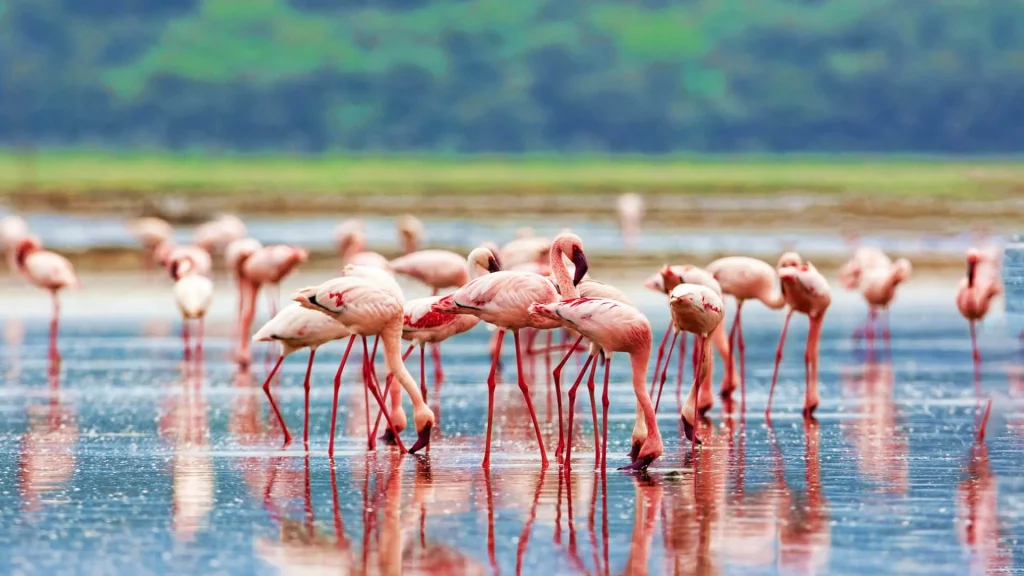
Few wildlife spectacles are as visually striking as thousands of pink flamingos gathered along the shores of an African lake. For decades, flamingos in Kenya have been among the country’s most recognisable natural attractions, transforming sections of the Great Rift Valley into extraordinary landscapes of colour and movement.
Yet flamingo viewing is more complicated than many travel photographs suggest. The birds do not remain permanently at one lake, and a destination famous for flamingos in the past may hold relatively few during a particular visit. Water levels, food availability, salinity and breeding conditions influence where the birds gather.
Kenya’s principal flamingo habitats include Lake Bogoria, Lake Nakuru, Lake Elementaita and other alkaline lakes of the Rift Valley. These environments provide feeding opportunities for two flamingo species: the greater flamingo and the lesser flamingo.
A successful flamingo safari therefore requires more than choosing a lake based on its reputation. It helps to understand how the birds move, which habitats they prefer and how to combine birdwatching with other wildlife experiences. This guide explains the best places to see flamingos in Kenya, the differences between the two species, the influence of seasonal conditions and practical advice for photographers and first-time safari travellers.

Why Are Flamingos Famous in Kenya?
Kenya’s flamingos are closely associated with the alkaline and saline lakes of the Great Rift Valley. These lakes provide specialised environments where microscopic algae, cyanobacteria and small aquatic organisms can flourish. Flamingos have adapted to feeding in such environments through their distinctive bills, which filter food from the water.
When conditions are favourable, large concentrations of birds may gather along shallow shorelines. From a distance, these gatherings can appear as broad pink bands stretching across the water, and the spectacle has made Kenya an internationally recognised birdwatching destination.
However, flamingo numbers can fluctuate dramatically. Changes in lake levels and water chemistry may reduce the availability of suitable food, encouraging birds to move elsewhere. For this reason, no responsible safari operator should guarantee that a particular lake will contain enormous flocks on a specific date.
The Two Flamingo Species Found in Kenya
Kenya is home to both lesser flamingos and greater flamingos. Although they share a similar overall appearance, the species differ in size, feeding habits and conservation status.
Lesser Flamingo
The lesser flamingo is the smaller and generally more numerous of the two species in East Africa. It has a relatively deep, strongly curved bill adapted for filtering very small food particles, and its diet is strongly associated with cyanobacteria and other microscopic organisms found in suitable alkaline waters.
Lesser flamingos often gather in exceptionally large flocks when feeding conditions are favourable. They are particularly associated with the dramatic pink concentrations seen at Rift Valley lakes, and their dependence on specialised wetland habitats makes changes in water conditions especially important.
Greater Flamingo
The greater flamingo is larger, with a longer neck and legs. Its bill is generally paler, with a distinctive dark tip. Greater flamingos consume a wider variety of aquatic organisms, including small crustaceans and other invertebrates.
They may occur alongside lesser flamingos, although the proportions vary by lake and season. Greater flamingos are often easier to identify when birds of both species are standing close together.
Why Are Flamingos Pink?
Flamingos obtain their characteristic colour from pigments known as carotenoids. These pigments originate in organisms consumed through the birds’ diet. After digestion and metabolism, carotenoid pigments contribute to the pink and reddish tones visible in the birds’ feathers and other tissues.
The intensity of the colour can vary according to species, age, diet and individual condition. Young flamingos are generally greyer than mature adults, so the pink colour is connected to the birds’ feeding ecology rather than simply being a decorative feature.
Best Places to See Flamingos in Kenya
1. Lake Bogoria – One of Kenya’s Most Important Flamingo Lakes
Lake Bogoria is among the most significant flamingo habitats in Kenya. Situated in the Rift Valley, the lake is known for its alkaline waters, geothermal features and dramatic surrounding escarpments. It can support large concentrations of lesser flamingos when feeding conditions are suitable.
Why Visit Lake Bogoria?
Lake Bogoria offers a distinctive combination of birdlife and scenery. Flamingos may gather along the shallow shoreline, while steam vents and hot springs reflect the region’s geothermal activity. The surrounding landscape creates striking photographic backgrounds.
The lake is particularly attractive to birdwatchers who want to focus on flamingos rather than combining them with extensive big-game viewing.
What Can You Expect?
Flamingo concentrations can range from relatively small groups to very large flocks, depending on current ecological conditions. Visitors should obtain recent local information before travelling specifically for flamingo photography.
Other Attractions
Lake Bogoria is also interesting for its geology and Rift Valley scenery. The geothermal features should be viewed only from authorised safe areas, and visitors must follow local instructions because hot water and unstable ground can present hazards.
2. Lake Nakuru National Park – Flamingos and Big Game
Lake Nakuru National Park is perhaps Kenya’s most internationally recognised flamingo destination. For many years, images of its shoreline covered in pink birds became synonymous with African birdwatching. However, changes in lake levels and water chemistry have altered flamingo distribution, and large concentrations are no longer a reliable feature of every visit.
Are There Still Flamingos at Lake Nakuru?
Yes, flamingos can still occur at Lake Nakuru, although their numbers vary considerably. Travellers should not expect the lake to look exactly like historic photographs showing enormous uninterrupted pink flocks.
Why Visit Lake Nakuru Anyway?
Lake Nakuru remains an excellent wildlife destination even when flamingo numbers are low. The national park is particularly important for rhinoceros conservation, and visitors may encounter both black and southern white rhinos, although sightings are not guaranteed.
Other wildlife includes buffaloes, giraffes, zebras, waterbucks and predators. The park also supports a wide variety of birds.
Best Travel Style
Lake Nakuru is particularly suitable for travellers who want to combine birdwatching and traditional wildlife viewing. It is commonly included in itineraries connecting Nairobi with the Masai Mara.
3. Lake Elementaita – A Scenic Rift Valley Birdwatching Destination
Lake Elementaita, also spelled Elmenteita, is another important Rift Valley lake associated with flamingos and other waterbirds. The lake lies between Lake Naivasha and Lake Nakuru, and its surrounding landscape includes open plains, woodland and attractive views of the Rift Valley.
Flamingo Viewing at Elementaita
Flamingos may occur when water conditions provide suitable feeding opportunities. As with other Rift Valley lakes, numbers change over time, so the lake should be approached as a broader birdwatching destination rather than a guaranteed location for massive flocks.
Other Birdlife
Lake Elementaita supports a variety of waterbirds and is particularly important for certain breeding and feeding populations. Birdwatchers may encounter pelicans and other aquatic species.
Accommodation
The wider Elementaita area offers lodges and hotels suitable for overnight stays. It can be incorporated into a Rift Valley itinerary without requiring a major diversion from the Nairobi–Nakuru route.
4. Lake Magadi – Alkaline Landscapes and Flamingos
Lake Magadi is situated south of Nairobi in a hot, arid section of the Rift Valley. The lake is known for its highly alkaline environment and striking mineral landscapes. Flamingos may be present in suitable areas when feeding conditions permit.
Why Visit Lake Magadi?
Lake Magadi offers a very different experience from the greener landscapes around Lake Nakuru. Its scenery includes salt formations, open horizons and dramatic colours, and it can be attractive to photographers interested in both birds and landscapes.
Practical Considerations
Temperatures can be high, and road conditions and access arrangements should be checked before departure. Visitors should carry sufficient drinking water and travel with a knowledgeable local guide. Lake Magadi is better suited to travellers interested in unusual landscapes and birdwatching than those seeking a conventional Big Five safari.
5. Other Rift Valley Wetlands
Flamingos are mobile birds, and suitable feeding conditions may attract them to other lakes and wetlands. Their distribution can change over relatively short periods, which is why current local observations are valuable.
A flexible birdwatching itinerary may produce better results than relying entirely on one destination. However, visitors should respect protected-area boundaries and avoid entering sensitive wetlands without authorisation.
Which Lake Is Best for Flamingos in Kenya?
There is no permanently correct answer. Lake Bogoria is often a strong option for travellers whose primary interest is large flamingo concentrations, while Lake Nakuru is particularly attractive for combining flamingos with rhinoceros viewing and other wildlife.
Lake Elementaita offers a scenic birdwatching environment and convenient accommodation options, and Lake Magadi provides unusual alkaline landscapes and possible flamingo sightings. The best choice depends on current bird distribution and the wider safari route. For a dedicated flamingo photography trip, obtaining recent information is essential.
Best Time to See Flamingos in Kenya
Flamingos can occur in Kenya throughout the year. Unlike the Great Wildebeest Migration, their presence at a particular lake does not follow a simple tourist-season calendar.
January to March
These months may offer warm conditions and rewarding birdwatching, although flamingo numbers depend on lake conditions rather than the month alone.
April to May
Seasonal rainfall can affect lake levels, salinity and food availability, and bird distribution may change. Road conditions can also be affected by heavy rainfall.
June to October
These months are popular for Kenya safaris because of generally drier conditions in many wildlife destinations. Flamingos may be present at suitable lakes, but large concentrations cannot be guaranteed.
November to December
Short rains can influence wetland conditions and bird movements, and the landscape may become greener. As in other months, current observations are more useful than broad seasonal promises.
How Do Flamingos Move Between Lakes?

Flamingos are capable of travelling substantial distances between suitable wetlands. Their movements are influenced by food availability, water chemistry and environmental conditions. If a lake becomes less suitable for feeding, birds may relocate, which explains why flamingo numbers can change dramatically between visits.
The birds are part of a wider regional wetland network rather than being permanently attached to one lake, so conservation of multiple lakes is essential.
Flamingo Breeding in East Africa
Flamingos have specialised breeding requirements. Large breeding colonies depend on suitable environmental conditions, including appropriate water levels and protection from disturbance. For lesser flamingos in East Africa, Lake Natron in Tanzania is particularly important as a breeding site.
Kenya’s Rift Valley lakes play important feeding and habitat roles. Travellers should not assume that a large feeding flock in Kenya is necessarily a breeding colony. Understanding this distinction helps explain why regional conservation is important.
Flamingos and the Great Rift Valley Ecosystem
The Rift Valley lakes are ecologically unusual. Some are highly alkaline, while others are freshwater or have different chemical characteristics. These differences influence the plants, microorganisms and animals that can survive in each environment.
Flamingos are adapted to particular feeding conditions, so their presence can reveal something about the ecological character of a lake. However, changes in flamingo numbers should not be interpreted in isolation. Water levels, nutrient availability, climate variability and human activities all influence these ecosystems.
Flamingo Photography Tips
Use a Telephoto Lens
A telephoto lens allows photographers to capture flamingos without approaching them too closely. It is particularly useful for isolating individual birds or small groups.
Photograph Large Flocks
A wider lens can be useful when large concentrations create patterns across the water. Look for reflections, shoreline curves and contrasting colours.
Visit During Good Light
Early morning and late afternoon often provide attractive lighting. Soft light can reveal feather detail and reduce harsh reflections.
Watch Behaviour
Flamingos may feed, preen, walk, fly or interact socially. Observing behaviour can produce more interesting photographs than simply photographing stationary birds.
Respect Wildlife Distances
Do not approach birds so closely that they stop feeding or take flight. Repeated disturbance can interfere with important feeding activity.
What Other Birds Can You See?
A flamingo safari can introduce travellers to many other bird species. Depending on the lake, visitors may encounter pelicans, cormorants, herons, egrets, storks and various shorebirds, and the surrounding woodland and grassland habitats may support additional species.
A knowledgeable bird guide can help identify birds by appearance, calls and behaviour. Birdwatching is often most rewarding when visitors appreciate the full diversity of a wetland rather than focusing exclusively on flamingos.
Combining Flamingos with a Kenya Wildlife Safari
One of the advantages of visiting Kenya’s Rift Valley lakes is the opportunity to combine birdwatching with traditional game drives.
Lake Nakuru and Masai Mara
A Lake Nakuru and Masai Mara safari is a popular combination. Lake Nakuru offers rhinoceros viewing and birdlife, while the Masai Mara provides open grasslands, predators and other savannah wildlife.
Lake Bogoria and Lake Nakuru
This combination is particularly attractive to birdwatchers. It allows travellers to explore two important Rift Valley lakes with different ecological characteristics.
Lake Elementaita and Lake Naivasha
These destinations can be combined in a relaxed Rift Valley itinerary. Lake Naivasha offers boat excursions and birdwatching, while Elementaita provides a different wetland environment.
Suggested Four-Day Flamingo and Wildlife Safari
Day 1: Nairobi to Lake Elementaita
Depart Nairobi after breakfast and travel towards the Rift Valley. Stop at suitable viewpoints along the route, continue to the Lake Elementaita area and check in at your accommodation, then enjoy an afternoon birdwatching excursion where permitted.
Day 2: Lake Bogoria Excursion
Travel towards Lake Bogoria and explore authorised viewing areas in search of flamingos according to current conditions. Enjoy the Rift Valley scenery and geothermal landscape, then return to your accommodation or stay in the wider Bogoria region.
Day 3: Lake Nakuru National Park
Continue to Lake Nakuru National Park for a game drive in search of rhinoceroses, buffaloes, giraffes and other wildlife. Observe flamingos and other birds if present, and overnight near or inside the park.
Day 4: Return to Nairobi
Enjoy breakfast and a final wildlife activity if time permits, then travel back to Nairobi. The itinerary should be adjusted according to current road conditions, accommodation and wildlife priorities.
Flamingos in Kenya Versus Tanzania
Kenya and Tanzania share important East African flamingo populations. Kenya’s Rift Valley lakes are major feeding habitats, while Tanzania’s Lake Natron is especially significant for lesser flamingo breeding.
Travellers interested in flamingo ecology may appreciate a combined East Africa birdwatching itinerary, but cross-border travel requires additional time and careful planning.
Conservation Challenges Facing Flamingos
Flamingos depend on healthy wetland ecosystems. Changes in water levels, pollution, habitat disturbance and other environmental pressures can affect suitable feeding conditions, and human activities around lakes may also influence water quality and habitat availability.
Because flamingos move between different wetlands, conservation must consider the wider regional network—protecting only one lake is insufficient. Responsible tourism can contribute by supporting legitimate conservation initiatives and avoiding disturbance.
Responsible Flamingo Watching
Responsible behaviour helps preserve the quality of the experience for future visitors:
- Remain in authorised viewing areas and do not enter sensitive shoreline habitats without permission.
- Avoid approaching feeding birds too closely.
- Do not use drones where prohibited or where they may disturb wildlife.
- Never feed flamingos.
- Follow instructions from guides and protected-area staff.
What to Pack for a Flamingo Safari
Packing for a flamingo-focused trip is straightforward, but a few items make birdwatching and photography more comfortable:
- Binoculars for scanning flocks and other waterbirds.
- A camera with a telephoto lens for photography.
- Sunscreen, a hat, sunglasses and drinking water.
- Comfortable walking shoes for designated viewing areas.
- A lightweight jacket for cooler mornings.
- Dust protection for camera equipment in open Rift Valley conditions.
Frequently Asked Questions About Flamingos in Kenya
Where can I see flamingos in Kenya?
Lake Bogoria, Lake Nakuru, Lake Elementaita and Lake Magadi are among the important locations.
Which lake has the most flamingos?
Numbers vary. Lake Bogoria can support very large concentrations, but current conditions should be checked.
Are there still flamingos at Lake Nakuru?
Yes, flamingos can still occur, although numbers vary considerably and historic mass concentrations are not guaranteed.
What types of flamingos live in Kenya?
Kenya supports lesser flamingos and greater flamingos.
Why are flamingos pink?
Their colour comes from carotenoid pigments associated with their diet.
What is the best month to see flamingos?
There is no single guaranteed month. Lake conditions and food availability are more important than a fixed calendar date.
Can I combine flamingos with the Masai Mara?
Yes. Lake Nakuru and the Masai Mara are commonly combined in Kenya safari itineraries.
Are flamingos endangered?
Conservation status differs by species. The lesser flamingo faces important conservation pressures associated with its specialised wetland habitats.
Plan a Flamingo Safari in Kenya
Seeing flamingos in Kenya can be one of the most memorable experiences of a Rift Valley journey. Whether you want to photograph large flocks at Lake Bogoria, combine birdwatching with rhinoceros viewing at Lake Nakuru or explore the scenic shores of Lake Elementaita, careful planning improves the experience.
At Safari Trips to Kenya, we arrange customised Kenya birdwatching safaris and wildlife itineraries combining the Rift Valley lakes with the Masai Mara, Amboseli and other destinations. Contact our team with your preferred travel dates, number of guests and wildlife interests to plan a personalised flamingo and wildlife safari.