

Great Migration Complete Planning Guide
Great Migration Complete Planning Guide: When to Go, Where to Stay and How to Plan Your Safari
Planning a Great Migration safari involves more than choosing a date and booking a lodge in the Masai Mara or Serengeti. The migrating herds move across an enormous ecosystem, and their location changes in response to rainfall, grazing conditions and seasonal patterns. The most rewarding itinerary therefore depends on matching your travel dates with the right region, allowing enough time for wildlife viewing and understanding what can—and cannot—be predicted.
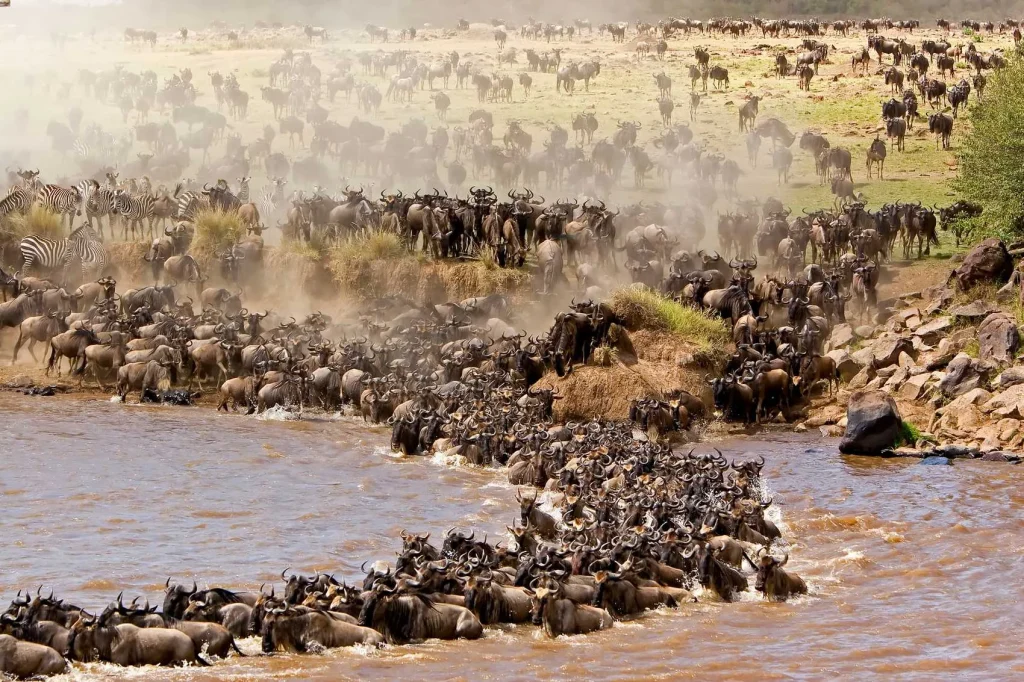
The Great Wildebeest Migration is one of the world’s most extraordinary wildlife phenomena. Vast populations of wildebeest, accompanied by zebras and other grazing animals, move through northern Tanzania and southwestern Kenya, encountering rivers, predators and changing environmental conditions along the way. For many travellers, the most famous images are of wildebeest plunging into the Mara River while crocodiles wait in the water; others dream of the southern Serengeti‘s calving season, when newborn wildebeest appear on the grasslands and predators take advantage of the abundance of prey. Both experiences are remarkable, but they occur in different places and at different times.
This Great Migration complete planning guide explains how to choose your travel month, select the correct safari region, compare Kenya and Tanzania, understand accommodation locations, calculate realistic travel time and prepare for the uncertainties of observing wild animals.
Step 1: Understand What the Great Migration Actually Is
The Great Migration is a continuous ecological process involving the seasonal movement of grazing animals through the Serengeti–Mara ecosystem. It is not one enormous herd moving in a perfectly organised circle—different groups may occupy separate areas, and their movements vary according to rainfall and available pasture. The migration involves reproduction, grazing, predator-prey relationships and the movement of nutrients across the landscape, and the animals do not follow a human timetable.
This is the first principle of responsible migration planning: the calendar provides a guide, not a guarantee.
Why the Herds Move
Wildebeest depend on suitable grazing and access to water. Rainfall encourages fresh grass growth, which can attract large concentrations of animals, and as grazing conditions change herds move towards more favourable areas. These movements may be influenced by local rainfall patterns that differ from long-term seasonal averages, so a safari itinerary should include flexibility whenever possible.
Step 2: Choose the Wildlife Experience You Want
Not every migration safari focuses on the same event. Before choosing a month, decide which experience matters most.
Mara River Crossings
The Mara River crossings are among the migration’s most dramatic possible encounters. They are generally associated with the northern Serengeti and Masai Mara during the middle and later months of the year, but crossings are unpredictable—animals may gather along a riverbank without crossing, and some herds may cross at locations far from your vehicle.
Calving Season
The wildebeest calving season is generally associated with the southern Serengeti and adjoining plains around January through March. Large numbers of calves may be born during a relatively concentrated period, which can create opportunities to observe newborn animals and predator activity.
Large Grazing Herds
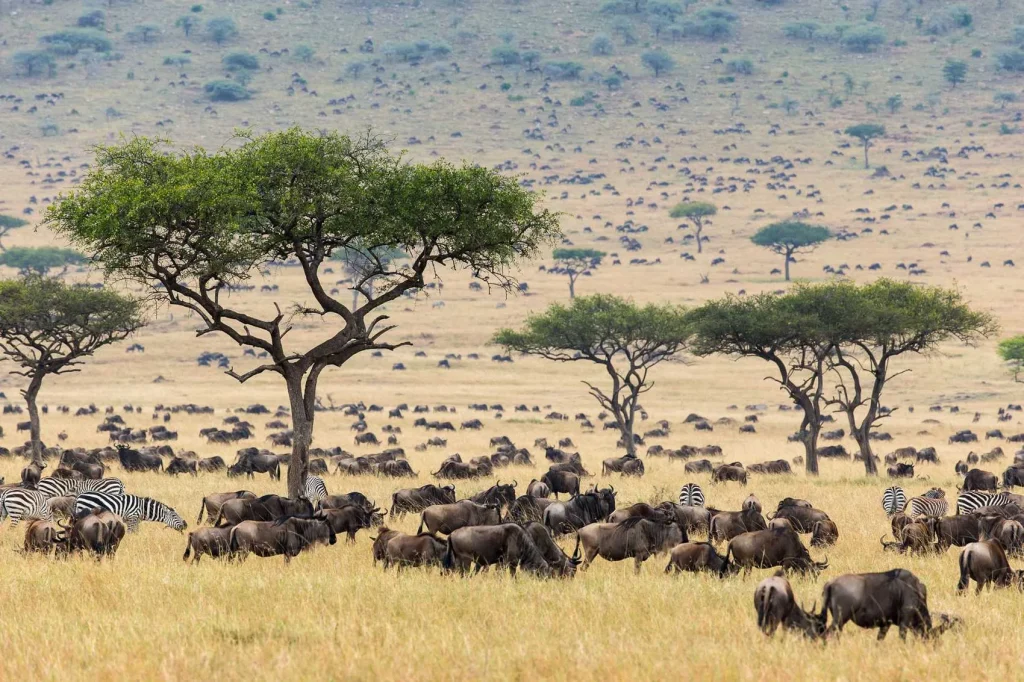
Some travellers are primarily interested in the scale of the migration rather than a particular crossing. Large grazing herds can be impressive even when no dramatic event occurs.
Predator Encounters
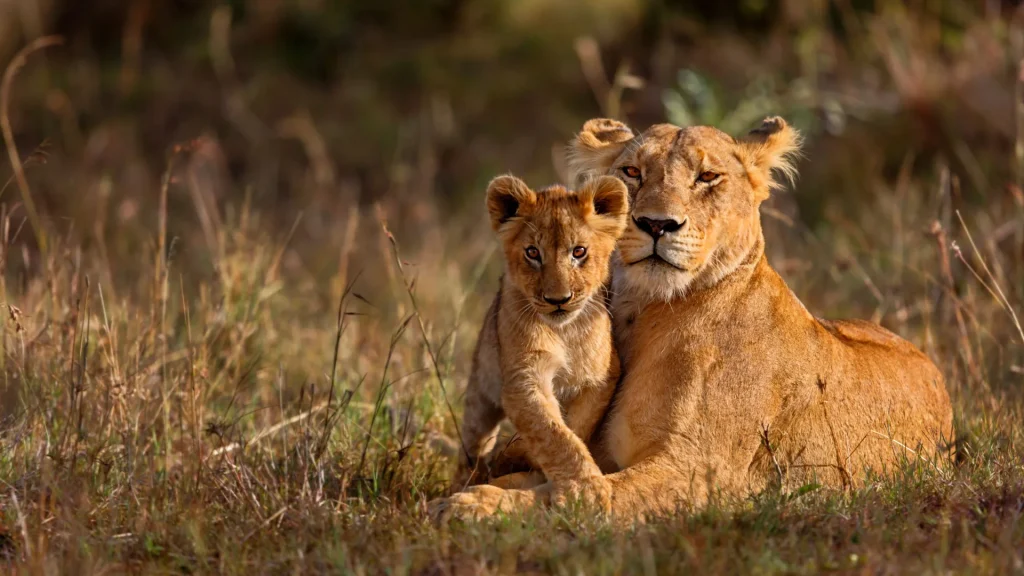
Lions, cheetahs, leopards and hyenas occur throughout suitable parts of the ecosystem. Predator viewing can be rewarding during migration periods, but hunts cannot be guaranteed.
Landscape Photography
The Serengeti and Masai Mara provide expansive grasslands, dramatic skies and opportunities to photograph wildlife within a vast landscape. The best location depends on season and preferred scenery.
Step 3: Understand the Migration Calendar
The following calendar describes typical seasonal patterns rather than exact herd locations.
January: Southern Serengeti
The southern Serengeti and Ndutu region are often important grazing areas, and large concentrations of wildebeest may be present as the calving period approaches.
February: Calving Season
February is frequently one of the strongest months for calving-related wildlife activity, when the southern plains can host substantial numbers of wildebeest and newborn calves.
March: Southern Plains and Seasonal Changes
The herds may remain in southern areas, although movements depend on rainfall. Vegetation can be green, and wildlife photography may be rewarding.
April: Movement and Long Rains
Rainfall often increases and herds may begin moving towards central areas as grazing conditions change. Some roads can become muddy.
May: Central and Western Movement
Migration activity may shift towards central and western parts of the Serengeti, and the western corridor becomes increasingly relevant in seasonal planning.
June: Western Corridor and Northward Movement
Herds may move through the western Serengeti and towards northern areas, and the Grumeti River region can be of interest.
July: Northern Serengeti and Masai Mara
The northern Serengeti becomes attractive for migration-focused travel, and some herds may enter the Masai Mara.
August: Popular River-Crossing Season
August is one of the most popular months for migration safaris, when substantial herds may be present in the northern Serengeti and Masai Mara.
September: Northern Migration Activity
Large herds may continue occupying northern areas, and river crossings remain possible but unpredictable.
October: Transitional Movements
Some herds may remain in the north while others begin moving southwards, with rainfall patterns influencing the timing.
November: Southward Movement
Herds may move through central and eastern parts of the Serengeti, and short rains can influence grazing conditions.
December: Return Towards Southern Plains
The southern Serengeti and adjoining areas may become increasingly important as the next calving season approaches.
Step 4: Choose Between Kenya and Tanzania
The Masai Mara and Serengeti are part of the same ecological system, but they offer different advantages.
Kenya’s Masai Mara
The Masai Mara is particularly attractive during July through October. Its comparatively compact size can make it convenient for migration-focused game drives, and the reserve also supports abundant resident wildlife. It is a strong choice for travellers combining migration viewing with other Kenya destinations.
Tanzania’s Serengeti
The Serengeti covers a much larger portion of the migration’s annual movement and is particularly suitable for travellers interested in the southern calving season, western corridor or northern migration. Accommodation location must be chosen carefully because the park is extensive.
Visiting Both Countries
A Kenya–Tanzania safari can provide a broader experience, but cross-border transfers require careful planning. Travellers should not assume that the Masai Mara and Serengeti can be connected by a simple direct drive across any part of their shared boundary.
Step 5: Select the Correct Safari Region
Choosing the correct region is often more important than choosing the most expensive lodge.
Southern Serengeti and Ndutu
Best suited to calving-season itineraries.
Central Serengeti
Suitable for varied resident wildlife and selected seasonal migration movements.
Western Serengeti
Relevant during parts of the movement towards northern grazing areas.
Northern Serengeti
Particularly attractive for Mara River-focused itineraries.
Masai Mara
Popular during the principal Kenya migration season.
Surrounding Conservancies
Conservancies around the Masai Mara can offer distinctive safari experiences, but access arrangements differ. Travellers should confirm whether their accommodation includes game drives inside the national reserve and what additional fees or transfers apply.
Step 6: Decide How Many Days to Spend
A migration safari should allow enough time for unpredictable animal movements.
Three Days
A three-day Masai Mara safari provides an introduction but limited flexibility—road transfers may consume much of the first and last days.
Four to Five Days
Four or five days offer a stronger migration-focused experience, and multiple game drives increase opportunities to encounter herds and predators.
Six to Eight Days
This duration allows travellers to explore more than one habitat or combine migration viewing with another destination.
Ten Days or More
Longer itineraries are suitable for cross-border journeys, dedicated photographers and travellers interested in additional parks.
The best itinerary balances travel time with full days spent observing wildlife.
Step 7: Choose Between a Road Safari and Flying Safari
Road Safaris
A road safari can be economical for small groups sharing a vehicle and provides opportunities to observe changing landscapes. However, journeys between Nairobi and the Masai Mara can be lengthy, depending on road conditions and the selected accommodation.
Flying Safaris
Domestic flights can reduce travel time and are particularly useful for travellers with limited holiday time. However, luggage restrictions and flight schedules must be considered.
Cross-Border Flights
Flights between Kenya and Tanzania may require connections and coordinated transfers. The best route depends on the chosen destinations and travel dates.
Step 8: Select the Right Accommodation
Migration accommodation should be selected according to location, guiding arrangements and seasonal relevance. A camp advertised as a migration property may not provide convenient access to the principal herds during every month.
Permanent Safari Lodges
Permanent lodges offer established facilities and may be suitable for general wildlife viewing.
Tented Safari Camps
Tented camps provide an immersive safari atmosphere, with facilities ranging from practical to highly luxurious.
Seasonal Migration Camps
Some camps relocate during the year to improve access to expected migration areas. Travellers should confirm the exact operating location for their dates.
Private Conservancy Accommodation
Conservancy camps may offer lower vehicle density and selected specialist activities, but access to the national reserve may involve separate arrangements.
Step 9: Understand Safari Accommodation Categories
Safari Trips to Kenya uses four accommodation categories: Essential focuses on practical comfort and affordability; Comfort offers established facilities and good value; Premium provides additional space, attractive locations and personalised services; and Signature includes high-end lodges and distinctive safari properties. For migration viewing, location and guiding quality are often more important than luxury alone—a well-positioned Comfort camp may provide a better practical migration experience than a more expensive property located far from the relevant wildlife area.
Step 10: Understand the Cost of a Migration Safari
The cost of a Great Migration safari package depends on several variables, including travel season, accommodation, park fees, transport, guiding and the number of travellers. July through September is a high-demand period in the Masai Mara, and properties with convenient access to popular migration areas may require early booking. Private safaris offer flexibility but can cost more for solo travellers or couples; group departures may reduce shared transport costs. A complete quotation should explain accommodation, meals, game drives, transport and entrance fees, while international flights, visas, optional activities, gratuities and personal expenses may be excluded.
Step 11: Decide Between Private and Group Safaris
Private Migration Safari
A private safari provides flexibility in game-drive timing and wildlife interests and is particularly attractive for photographers, families and travellers who want to spend extended time observing particular animals.
Group Migration Safari
A group safari can reduce costs by sharing a vehicle and guide, but departure dates, accommodation and daily schedules may be fixed. Travellers should confirm the maximum group size, vehicle seating arrangements and whether everyone has a suitable viewing position.
Step 12: Book at the Right Time
Popular migration periods attract substantial demand, and accommodation in convenient locations can become limited months in advance. Travellers planning for July, August or September should consider booking early, particularly for premium and signature properties. However, early booking should not mean ignoring cancellation conditions—before paying a deposit, confirm the accommodation, itinerary, payment schedule and cancellation policy. Migration activity cannot be guaranteed, so travellers should avoid paying extra for promises of a particular river crossing.
Step 13: Understand River-Crossing Reality
River crossings are among the most misunderstood aspects of migration tourism. A crossing cannot be scheduled—wildebeest may gather along a riverbank and hesitate for extended periods, some groups may cross suddenly while others retreat, and crossings can occur at different locations and may be difficult to access. A responsible guide will monitor wildlife movements while respecting park regulations, and vehicles should never pressure animals towards the river or obstruct their routes. The best approach is to allow sufficient time and appreciate the wider wildlife experience.
Step 14: Plan for Wildlife Beyond the Migration
A migration safari should not depend entirely on one event. The Masai Mara and Serengeti support substantial resident wildlife—visitors may encounter lions, cheetahs, leopards, elephants, giraffes, buffalo and numerous antelope species, and birdwatching can also be rewarding. A knowledgeable guide can interpret animal behaviour, habitat relationships and ecological changes. Even without a river crossing, a well-planned safari can be exceptional.
Step 15: Choose Complementary Safari Destinations
Lake Nakuru National Park
Lake Nakuru is an important rhino conservation destination and can complement a Masai Mara safari.
Amboseli National Park
Amboseli is famous for elephants and Mount Kilimanjaro views when conditions allow clear sightlines.
Samburu National Reserve
Samburu offers distinctive northern Kenya wildlife, including the Special Five.
Ngorongoro Crater
Ngorongoro provides an impressive wildlife landscape in northern Tanzania.
Tarangire National Park
Tarangire is known for elephants, baobab trees and seasonal wildlife concentrations.
Kenya Coast
Diani and Watamu offer opportunities to relax after an intensive safari.
Recommended 5-Day Masai Mara Migration Safari
Day 1: Nairobi to Masai Mara
Travel to the reserve by road or domestic flight and enjoy an introductory game drive if timing permits.
Day 2: Full-Day Migration Safari
Explore suitable areas according to current herd movements.
Day 3: Additional Game Drives
Spend another full day searching for wildlife.
Day 4: Further Migration Exploration
Use the additional day to explore different habitats or revisit promising areas.
Day 5: Return to Nairobi
Travel back to Nairobi for onward arrangements.
Recommended 8-Day Kenya Migration Safari
An eight-day itinerary may combine the Masai Mara with Lake Nakuru and Amboseli. Begin with wildlife viewing in Amboseli, continue to Lake Nakuru for rhinos and Rift Valley scenery, and finish with several days in the Masai Mara. However, travel distances should be considered carefully—a private vehicle or selected domestic flights can improve comfort.
Recommended 10-Day Kenya and Tanzania Migration Safari
A ten-day itinerary can combine the Masai Mara, Serengeti and Ngorongoro. Spend several days in the Masai Mara, transfer towards Tanzania using a suitable authorised route, explore the Serengeti region appropriate to the season, and finish with a Ngorongoro Crater game drive. This itinerary requires careful coordination of border arrangements and travel times.
Migration Safari Photography Tips
The best images often come from patient observation. Useful practices include:
- Using a telephoto lens for distant wildlife and a wider lens to capture the scale of grazing herds.
- Working in early morning and late afternoon light when conditions are often most attractive.
- Protecting equipment from dust during dry periods.
- Carrying spare batteries and memory cards.
- Avoiding requests for guides to approach animals too closely or obstruct their movements.
What to Pack for a Migration Safari
Practical packing for most vehicle-based safaris includes:
- Lightweight, neutral-coloured clothing for game drives.
- A warm layer for early mornings, particularly during cooler months.
- A hat, sunscreen and sunglasses.
- Binoculars for improved wildlife viewing.
- A camera with suitable lenses for photography.
- Comfortable footwear for lodge and camp use.
- Necessary personal medication and current travel health advice before departure.
Travel Documents and Entry Requirements
Kenya and Tanzania have separate immigration requirements. Travellers should verify current visa or electronic travel authorisation rules for their nationality and confirm passport validity requirements. For cross-border safaris, confirm whether additional documentation or health certificates are required. Travel insurance is strongly recommended.
Responsible Migration Tourism
Wildlife tourism should protect natural behaviour. Vehicles must not block river crossings or surround animals excessively; guides should follow authorised routes and protected-area regulations; wildlife should never be fed; and travellers should respect local communities and conservation programmes. Responsible tourism helps maintain the ecosystems that make the migration possible.
Common Migration Planning Mistakes
Common mistakes include booking the wrong region for the travel month, expecting a river crossing on a particular day, underestimating road transfer times, choosing accommodation based on photographs without checking location, and crowding an itinerary so that wildlife-viewing time is reduced. The most effective approach is to prioritise suitable locations, realistic travel arrangements and several full game-drive days.
Frequently Asked Questions
What Is the Best Month for the Great Migration?
July through September is popular for northern migration viewing. January through March is attractive for the southern Serengeti calving season.
Is the Migration Only in Kenya?
No. The migration moves through the Serengeti–Mara ecosystem across Tanzania and Kenya.
Are River Crossings Guaranteed?
No. Crossings are unpredictable natural events.
How Many Days Do You Need?
Four or five days provide a useful migration-focused experience. Longer stays offer greater flexibility.
Is a Private Safari Better?
Private safaris offer flexibility, while group safaris can reduce shared transport costs.
Can You See the Big Five?
The ecosystem supports several Big Five species, but sightings of all five are not guaranteed.
Can You Combine the Migration With a Beach Holiday?
Yes. The Masai Mara can be combined with Diani, Watamu or other coastal destinations.
Should You Book Early?
Yes, particularly for popular July–September dates and accommodation in convenient migration areas.
Plan Your Great Migration Safari With Safari Trips to Kenya
The most successful Great Migration safari is built around realistic expectations and a carefully selected location. The migration is a natural process, and its most dramatic events cannot be guaranteed—but choosing the appropriate region, allowing several game-drive days and travelling with an experienced guide can create outstanding wildlife-viewing opportunities.
Safari Trips to Kenya can arrange private migration safaris, scheduled group departures and customised Kenya–Tanzania itineraries. Share your preferred dates, number of travellers, accommodation category and principal wildlife interests to receive a tailored safari proposal.