
1 Day Kenya Safari
Plan a 1 Day Kenya Safari with private transport, expert guiding and wildlife viewing. Explore the best one-day…
View SafariHandpicked Kenya Safari Tours for Every Traveler
Explore Tarangire safaris in Tanzania, including elephant game drives, ancient baobabs, the best time to visit, safari lodges and northern circuit itineraries.
Tarangire National Park lies in northern Tanzania, southwest of Arusha and south of the Lake Manyara region. It forms part of the well-established northern safari circuit, which also includes Lake Manyara National Park, the Ngorongoro Conservation Area and Serengeti National Park. The park covers approximately 2,850 square kilometres, and its varied habitats make it considerably more diverse than visitors might expect from photographs showing only dry grassland and baobab trees.
The Tarangire River flows through the park and provides a crucial source of water, especially during drier months. Seasonal wetlands and surrounding ecosystems also influence animal movements, meaning wildlife viewing changes throughout the year.
The journey from Arusha to the park generally takes around two and a half to three hours by road, although actual travel time depends on the departure point, traffic, road conditions and selected entrance gate. Many northern Tanzania itineraries begin with an overnight stay in Arusha before travelling to Tarangire. This arrangement is particularly useful for guests arriving on international flights, because it allows time to rest before the safari begins.
Tarangire provides a contrasting experience to the Serengeti and Ngorongoro. It is especially appealing for travellers interested in elephants, baobab landscapes, birdwatching and quieter wildlife observation. The park is also a logical first stop when travelling from Arusha towards Lake Manyara and Ngorongoro. Including it at the beginning of an itinerary helps create a natural route rather than repeatedly returning to the same roads.
Showing 1–12 of 215 safaris
Plan a 1 Day Kenya Safari with private transport, expert guiding and wildlife viewing. Explore the best one-day…
View SafariExplore the 10 Days Family Kenya Safari with a day-by-day safari plan, key wildlife experiences, destinations, accommodation ideas,…
View SafariExplore the 10 Days Fly-in Kenya Safari with a day-by-day safari plan, key wildlife experiences, destinations, accommodation ideas,…
View SafariExplore the 10 Days Honeymoon Kenya Safari with a day-by-day safari plan, key wildlife experiences, destinations, accommodation ideas,…
View SafariPlan a 10 Days Kenya Big Five Safari with expert guides, game drives and carefully chosen camps. Request…
View SafariA 10 day Kenya journey connecting Nairobi, Ol Pejeta, Samburu or Buffalo Springs, Solio, Lake Nakuru, Maasai Mara…
Lake Naivasha, Lake Nakuru, Masai Mara
View SafariPlan a 10 Days Kenya Safari with expert guides, game drives and carefully chosen camps. Request a quote.
View SafariPlan a 10 Days Kenya Safari & Diani Beach with expert guides, game drives and carefully chosen camps.…
Diani Beach
View SafariPlan a 10 Days Kenya Wildlife Safari with expert guides, game drives and carefully chosen camps. Request a…
View SafariPlan a 10 Days Luxury Kenya Safari with expert guides, game drives and carefully chosen camps. Request a…
View SafariA 10 day Kenya journey connecting Nairobi, Maasai Mara, Lake Naivasha, Amboseli and Diani Beach.
Amboseli, Diani Beach, Lake Naivasha
View SafariPlan a 10 Days Masai Mara & Amboseli with expert guides, game drives and carefully chosen camps. Request…
Masai Mara, Amboseli
View SafariSeveral features distinguish Tarangire from other Tanzanian safari destinations. First, the park is widely associated with substantial elephant populations; large family groups can be encountered in suitable habitats, and their social interactions provide rewarding opportunities for patient observation. Second, Tarangire's baobab trees create a dramatic visual identity, with immense trunks and unusual shapes that make the landscape instantly recognisable.
Third, the park's seasonal water sources can influence the movement and concentration of wildlife. During dry periods, the river and other reliable water sources become particularly important. Finally, Tarangire offers excellent opportunities for birdwatching, with species associated with grasslands, woodland, wetlands and riverine habitats. Together, these characteristics make a Tarangire wildlife safari an excellent addition to a comprehensive Tanzania holiday.
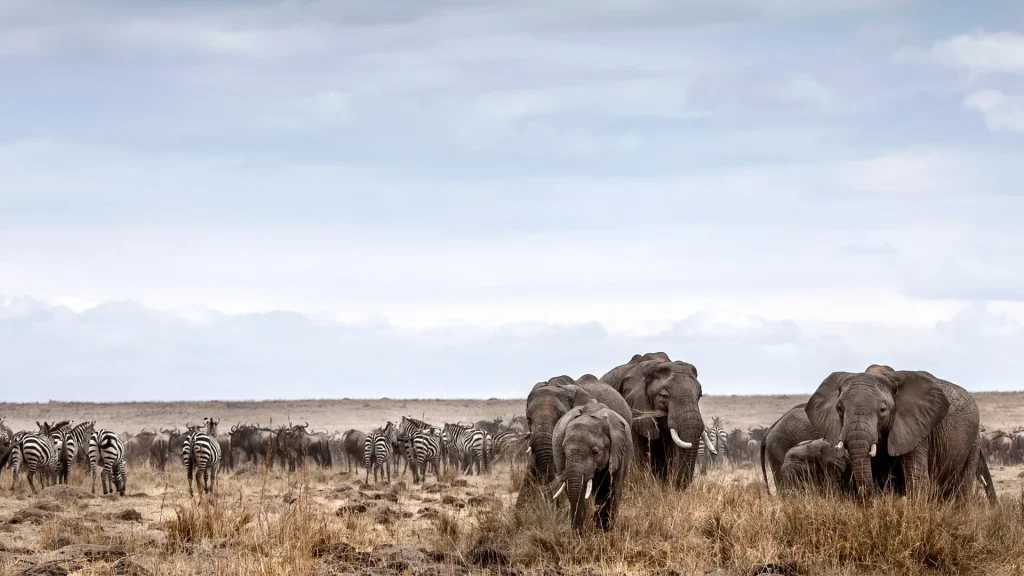
Elephants are undoubtedly among Tarangire's greatest attractions. The park is recognised for its elephant herds, and visitors may encounter family groups moving through woodland, feeding near the river or gathering around water.
Elephants live in complex social groups. A family may include adult females, juveniles and calves, with experienced females helping guide movements and responses to the surrounding environment. Watching elephants interact can be more rewarding than simply photographing them. Visitors may see calves playing, adults feeding together or groups pausing while younger animals navigate difficult terrain. An experienced guide can help explain observable behaviour without disturbing the herd.
Mature bulls may travel alone or associate temporarily with other males. Their impressive size and tusks can make them memorable photographic subjects. However, large bulls deserve particular respect. Safari vehicles should maintain appropriate distances, avoid obstructing their movements and never deliberately provoke a reaction.
Tarangire's elephants are sometimes seen feeding near or interacting with baobab trees. Elephants may strip bark or use trees as part of their feeding behaviour, especially when environmental conditions are demanding. Photographs of elephants beneath towering baobabs are among the classic images associated with the park.
Responsible game driving is essential. Guides should avoid surrounding herds, separating mothers from calves or blocking access to water. Wildlife encounters are most rewarding when animals are allowed to behave naturally.
Baobabs are among the most recognisable trees in East Africa, and Tarangire is particularly famous for them. Their massive trunks, broad branches and unusual silhouettes create a landscape unlike the open plains of the central Serengeti.
Baobabs provide ecological benefits to wildlife and other organisms. Their flowers, fruit, bark and cavities can support different species, while the trees themselves contribute to the character of dryland habitats. Some baobabs live for many centuries, making them remarkable features of the landscape.
Early morning and late-afternoon light can reveal the texture of the trunks and create dramatic silhouettes. A wide-angle lens is useful for showing a tree within its surroundings, while a longer lens can isolate distinctive shapes. The most memorable photographs often combine a baobab with naturally positioned wildlife, rather than relying on the tree alone.
The baobabs are part of a wider ecosystem containing grasses, shrubs, woodland and seasonal water sources. A good safari guide can explain how these habitats influence animal distribution.
Although elephants are the principal attraction for many travellers, Tarangire supports a broad range of wildlife.
Lions inhabit suitable areas of the park and may be encountered resting, moving through grassland or observing prey. Sightings depend on animal movements, vegetation and the time of day.
Leopards are present but can be difficult to locate. Their secretive behaviour and preference for cover mean that sightings are especially rewarding when they occur.
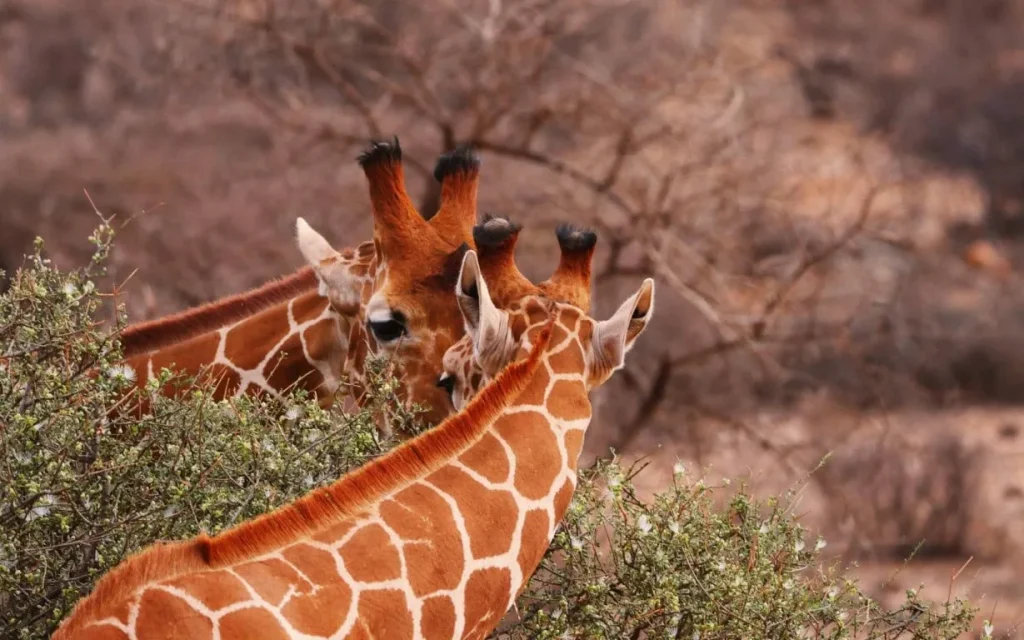
Giraffes may be seen feeding among acacia and other trees. Their height makes them relatively easy to spot in some habitats, although dense woodland can conceal them.
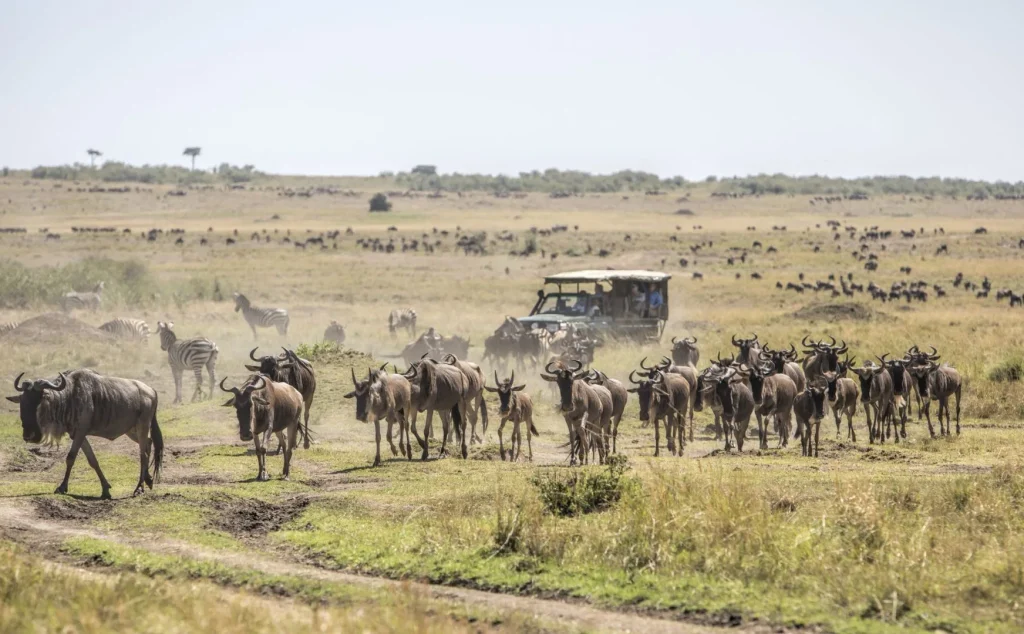
These grazing animals move through suitable areas according to food and water availability. Seasonal movements can create interesting concentrations.
African buffaloes may be observed in herds or smaller groups. They are powerful animals and should always be viewed from a safe distance.
Tarangire supports several antelope species, including impalas, waterbuck and other grazers and browsers.
Monkeys, mongooses and other smaller animals may also be encountered. The diversity of wildlife makes Tarangire suitable for travellers interested in ecological relationships rather than only the largest mammals.
Tarangire is widely regarded as one of Tanzania's excellent birdwatching destinations. The combination of wetlands, woodland, riverine vegetation and open grassland creates habitats for hundreds of species.
Eagles, vultures and other raptors may be observed perched in trees or soaring above the landscape.
Seasonal swamps and water sources attract species associated with aquatic habitats.
Bustards, ostriches and other open-country birds may be encountered in suitable areas.
Bee-eaters, lovebirds and other woodland species can add colour and variety to a safari.
Travellers interested in birds should tell their guide before the safari begins. This allows more time for smaller sightings and identification. Binoculars are essential, while a telephoto lens is useful for bird photography.
The Tarangire River is central to the park's ecology. During dry periods, water becomes less widely available across the surrounding landscape. Animals may move towards the river and other reliable sources, increasing the chances of seeing multiple species in certain areas. These movements are seasonal and should not be confused with the famous Serengeti-Mara Great Migration.
From approximately June to October, conditions are often drier, and wildlife concentrations around water can be particularly rewarding. Large herbivores may gather in suitable areas, while predators respond to prey distribution.
During wetter months, vegetation becomes greener and water may be available over a wider area. Animals can disperse, making some sightings less concentrated. However, the landscape becomes attractive for photography, and birdwatching can be excellent.
Even during favourable months, animal movements depend on rainfall, food, water and other environmental conditions. A responsible safari operator should describe likely opportunities rather than promise specific sightings.
Game drives are the main activity on most Tarangire safari packages.
Early morning is often rewarding because temperatures are cooler and light conditions are attractive. A guide may explore riverine habitats, woodland or open areas according to recent wildlife activity.
Afternoon drives provide different lighting and opportunities to observe animals as temperatures change. The warm colours of the landscape can be especially attractive near sunset, subject to park operating hours.
A full-day excursion allows more time to explore the park and can be particularly useful for photographers. The route should include suitable breaks and should not attempt to cover the entire park in a single day.
Authorised walking activities may be available through approved arrangements. These require appropriate guides or rangers and must follow park regulations. Visitors should never leave their safari vehicle in unauthorised locations.
Balloon experiences may be offered through approved operators, subject to availability, weather and current permissions. They should be booked in advance and treated as an optional specialist activity rather than a standard inclusion.
Tarangire is open throughout the year, but different seasons offer different experiences.
The dry season is especially popular because wildlife may gather around reliable water sources. Vegetation can be less dense in some areas, improving visibility. This is also a busy safari period, so accommodation should be booked well in advance.
Rainfall may bring greener landscapes and changing wildlife movements. Road conditions and game-drive routes can vary.
These months can offer rewarding wildlife viewing, although conditions depend on rainfall.
The long rains can create lush scenery and interesting birdwatching opportunities. Some roads may become muddy, and particular lodges may operate seasonal schedules. The best time to visit Tarangire therefore depends on whether your priority is dry-season wildlife concentrations, green landscapes, birdwatching or lower visitor numbers.
Accommodation ranges from practical lodges outside the park to high-end tented camps and exclusive safari properties.
Essential options focus on clean, comfortable rooms and practical access to the safari route. They may be located outside the national park, requiring additional driving time.
Comfort properties may offer larger rooms, swimming pools, gardens and more extensive dining facilities.
Premium camps can provide an immersive safari atmosphere with comfortable en-suite accommodation.
Signature properties may offer exceptional locations, personalised guiding and more exclusive experiences.
Staying inside the park can reduce some daily transfer time, but it may involve additional fees and a higher accommodation cost. Properties outside the park can be more economical, although guests should consider driving distances and gate opening times. The right choice depends on the itinerary, budget and preferred level of comfort.
A day trip from Arusha is possible, but it provides limited time inside the park after accounting for travel. One overnight stay allows more flexibility. Two nights are recommended for travellers who want multiple game drives and time to explore different habitats, while three nights may be suitable for photographers, birdwatchers and visitors who prefer a slower safari pace.
Depart Arusha after breakfast and travel towards Tarangire. Enter the park and begin a game drive through suitable wildlife habitats, looking for elephants, giraffes, zebras and other animals. Enjoy a picnic lunch or continue to your lodge, depending on the itinerary.
Overnight: Selected Tarangire lodge or tented camp.
Start early to enjoy cooler temperatures and morning wildlife activity. Explore different areas of the park, including riverine habitats and baobab landscapes, and spend time observing elephant behaviour and birdlife. Return to accommodation in the late afternoon.
Overnight: Tarangire lodge or tented camp.
Enjoy a final game drive if time and park arrangements permit. Depart for Arusha or continue towards Lake Manyara and Ngorongoro.
Tarangire works particularly well within a northern Tanzania circuit.
Lake Manyara adds a different landscape, with forest, lake habitats and escarpment scenery.
Ngorongoro offers a remarkable concentration of wildlife within a volcanic caldera.
The Serengeti adds expansive plains, predators and seasonal wildebeest movements.
A wildlife safari can be followed by a beach holiday on Zanzibar.
Travellers visiting Kenya may combine Tarangire with Amboseli, the Masai Mara and other destinations, subject to border logistics and travel time.
The cost of a Tarangire safari depends on the number of travellers, duration, accommodation category, vehicle arrangements and season. Private safaris typically offer greater flexibility, while shared departures may reduce the per-person cost.
Travellers should compare quotations carefully. A low headline price may exclude park fees, accommodation upgrades, transfers or certain meals. A complete proposal should clearly identify inclusions, exclusions and payment conditions.
A few practical preparations help make the most of time in the park:
Yes. Tarangire is particularly rewarding for elephant viewing, baobab landscapes, birdwatching and seasonal wildlife concentrations.
Two nights provide a good balance of game drives and relaxation.
The parks offer different experiences. Tarangire is particularly associated with elephants and baobabs, while Serengeti is known for its vast plains and wildebeest migration.
Yes, but sightings are not guaranteed.
The dry season is particularly popular because elephants may gather near reliable water sources.
Yes. A day trip is possible, although an overnight safari provides more time.
Yes. The park and surrounding area offer a range of premium and luxury accommodation.
Yes. A northern Tanzania safari followed by Zanzibar is a popular combination.
A Tarangire safari is an excellent choice for travellers seeking elephants, spectacular baobab scenery and varied wildlife in one of Tanzania's most distinctive national parks. Whether you want a short excursion from Arusha, a relaxed three-day safari or a longer journey through Tarangire, Ngorongoro and Serengeti, thoughtful planning makes a substantial difference.
Contact Safari Trips to Kenya with your travel dates, number of guests, accommodation preferences and preferred destinations. We can help arrange a private or group safari that incorporates Tarangire into a rewarding Tanzania or East Africa itinerary.