Where Is Serengeti National Park?
Serengeti National Park is located in northern Tanzania, west of the Ngorongoro Conservation Area and south of Kenya's Masai Mara ecosystem.
- The park covers approximately 14,763 square kilometres and forms the central protected area of a much larger ecological landscape.
- Its extensive size means that travel between regions can take several hours.
- The southern plains, central Seronera area, western corridor and northern Serengeti offer different wildlife experiences.
- Accommodation location is therefore one of the most important factors when planning a safari.
Understanding the Serengeti Safari Regions
Central Serengeti – Seronera
- Central Serengeti is among the most popular areas for first-time visitors.
- Its combination of grasslands, woodland and riverine habitats supports a broad range of resident wildlife.
- Lions, leopards, elephants, giraffes and numerous grazing animals may be encountered.
- Central Serengeti can be particularly attractive for travellers whose main objective is general wildlife viewing rather than a specific migration event.
- The area also offers a range of accommodation options, from tented camps to high-end lodges.
Southern Serengeti and Ndutu
The southern Serengeti ecosystem is famous for short-grass plains associated with the wildebeest calving season.
- Large herds may gather in suitable southern areas between approximately January and March, depending on rainfall.
- The broader Ndutu region includes land within the Ngorongoro Conservation Area, so travellers should confirm the exact location and applicable fees.
- Southern safaris are especially attractive for observing newborn animals and predator interactions.
Western Serengeti
- The western corridor extends towards the Grumeti River.
- Its landscape includes grassland, woodland and river habitats.
- Migration herds may move through this region during parts of the middle of the year.
- The area also supports resident wildlife and can be rewarding outside the main migration period.
Northern Serengeti
- Northern Serengeti is particularly associated with the Mara River and seasonal migration activity.
- The region offers rolling landscapes, river systems and wildlife habitats distinct from the southern plains.
- Travellers hoping to witness river crossings should allow several nights because crossings are unpredictable.
Eastern Serengeti
- Eastern Serengeti contains extensive grasslands and wildlife habitats.
- Some areas receive fewer visitors than the central region, although access and accommodation may be more limited.
- It can be attractive for longer or specialist itineraries.
Wildlife on Serengeti Safaris
Lions
- Lions are among the most recognisable predators in Serengeti.
- They may be observed resting, interacting within prides, moving across grasslands or hunting.
- A professional guide can explain pride structure, territorial behaviour and the relationship between lions and their prey.
- Hunting encounters are unpredictable and should never be promised.
Leopards
- Leopards are secretive cats often associated with woodland and riverine habitats.
- They may rest in trees or move through dense cover.
- Their elusive behaviour makes patient observation particularly important.
Cheetahs
- Cheetahs favour suitable open habitats where they can detect and pursue prey.
- They may be encountered scanning the plains or resting between hunting attempts.
- Guides should maintain appropriate distances, particularly around cubs.
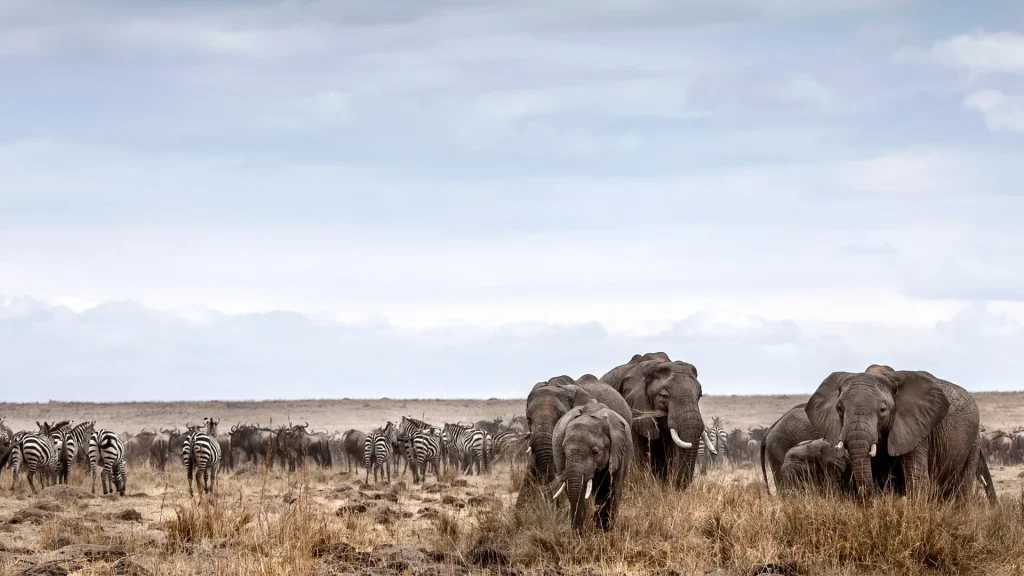
African Elephants
- Elephants occur in different parts of the Serengeti.
- They may be seen feeding, moving between habitats or interacting in family groups.
- Observing elephant behaviour can be one of the most memorable parts of a safari.
African Buffaloes
Buffaloes are important grazing animals and may occur in groups of different sizes. They are powerful and potentially dangerous, so appropriate viewing distances are essential.
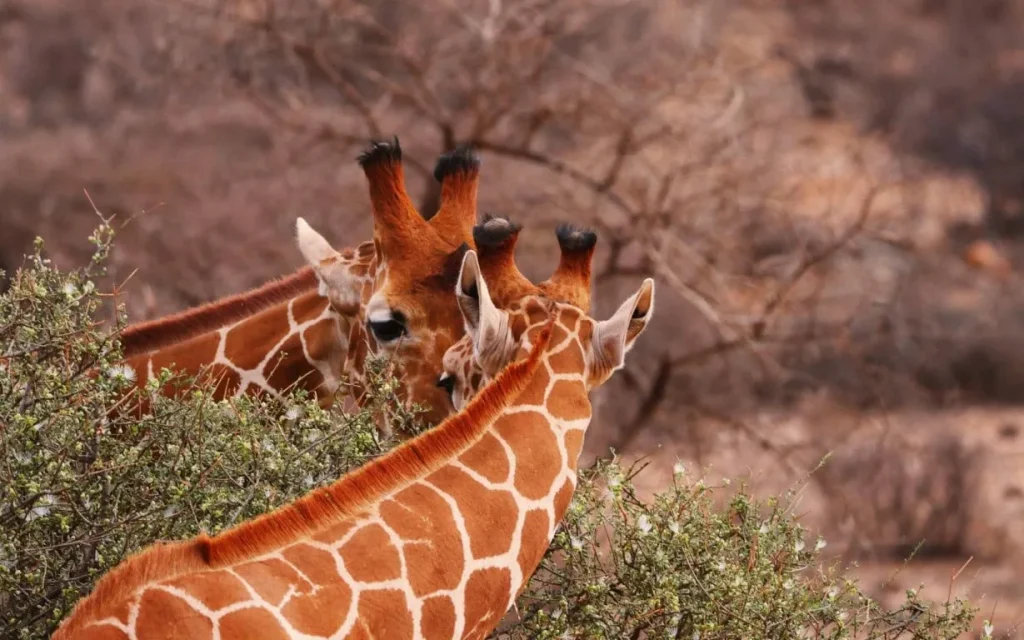
Giraffes
Giraffes browse on trees and shrubs in suitable habitats. Their movements and feeding behaviour provide interesting photographic opportunities.
Wildebeests and Zebras
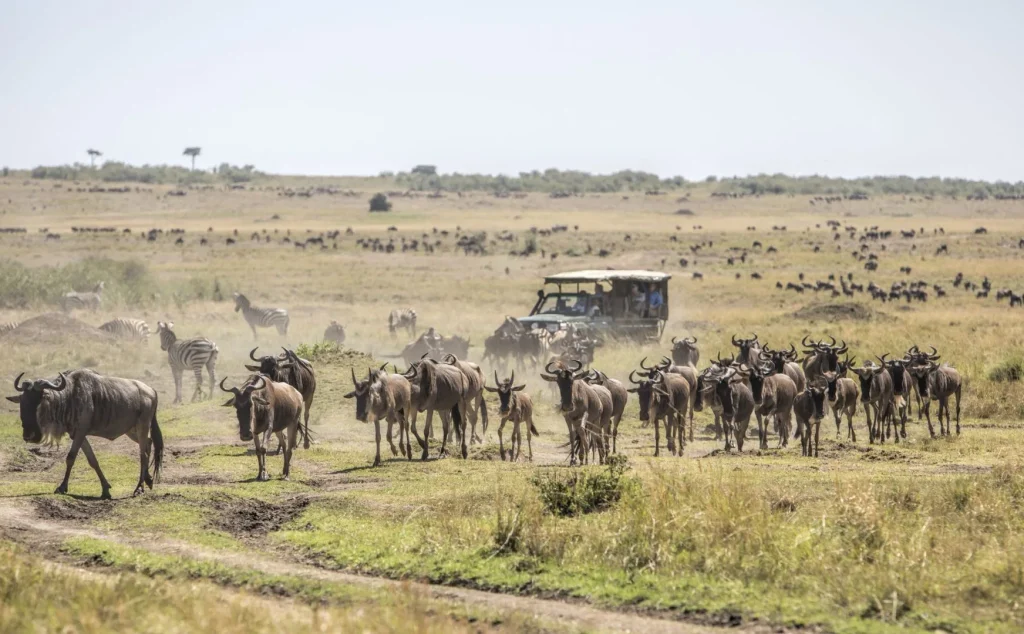
- Wildebeests and zebras are central to the migration ecosystem.
- Their seasonal movements influence grazing patterns and predator activity.
- Large herds can be impressive, but their location varies throughout the year.
Spotted Hyenas
Spotted hyenas are effective hunters and scavengers. Their complex social organisation makes them fascinating animals to observe.
Hippopotamuses
Hippos inhabit suitable rivers and pools. They spend much of the day in water and may emerge to graze at night.
Birdlife
The Serengeti supports numerous birds associated with grasslands, woodland, rivers and wetlands. Birdwatching is rewarding for travellers willing to spend time observing smaller species.
The Great Migration on Serengeti Safaris
- The Great Migration is a continuous annual process rather than a single event.
- Herds move according to seasonal rainfall, fresh grass and water availability.
- The broad pattern often involves southern calving areas early in the year, movement through central and western regions during subsequent months, and northern migration activity during parts of the dry season.
- However, animals do not follow a fixed calendar.
- Herds may divide, change direction or remain in an area longer than expected.
- Travellers should therefore avoid booking a safari based on promises of guaranteed migration sightings.
January to March – Calving Season
- The southern short-grass plains are often important during the calving period.
- Large numbers of wildebeest calves may be born, attracting predators.
- February is traditionally a particularly important month, although timing varies.
April to June – Central and Western Movement
Herds may move through central and western areas as grazing conditions change. The western corridor and Grumeti region can become important.
July to October – Northern Serengeti
Northern Serengeti is traditionally popular for Mara River crossing opportunities. However, crossings cannot be predicted precisely.
November and December – Southward Movements
Changing rainfall patterns may encourage herds to return towards central and southern areas. The distribution of animals varies between years.
Types of Serengeti Safaris
Private Serengeti Safaris
- A Private Serengeti Safari generally includes a dedicated vehicle and professional driver-guide.
- This arrangement is suitable for couples, families, photographers and small groups.
- It provides flexibility for wildlife viewing and rest stops, subject to park regulations.
Group Serengeti Safaris
Group safaris follow a shared itinerary and can reduce per-person transport costs. Travellers should confirm group size, vehicle seating and accommodation arrangements.
Luxury Serengeti Safaris
Luxury Serengeti Safaris may include high-end tented camps, domestic flights and personalised hospitality. The exact inclusions should be confirmed in writing.
Family Serengeti Safaris
Family itineraries can be designed with shorter game drives, suitable accommodation and flexible meal arrangements. Children's ages should be considered when choosing activities and lodges.
Photography Serengeti Safaris
Photography-focused programmes may include private vehicles, specialist guiding and longer stays in productive wildlife areas. The goal is to allow time for observing behaviour and working with different lighting conditions.
Fly-In Serengeti Safaris
Fly-in safaris use domestic flights to reach selected Serengeti airstrips. They can reduce long road transfers, particularly for remote regions.
Serengeti Safari Itineraries
3 Days Serengeti Safari
- A three-day safari provides a short introduction to the park.
- It is particularly practical when domestic flights reduce transfer time.
- The programme typically includes arrival and an afternoon game drive, a full day of wildlife viewing and departure on the third day.
4 Days Serengeti Safari
Four days allow additional wildlife viewing and a more relaxed pace. Travellers can explore different habitats and revisit productive locations.
5 Days Serengeti Safari
Five days provide a strong balance between travel and wildlife viewing. The programme can focus entirely on Serengeti or include another destination, depending on transport arrangements.
7 Days Serengeti and Ngorongoro Safari
A seven-day itinerary can combine Serengeti with Ngorongoro Crater and another northern Tanzania destination. This offers contrasting ecosystems and a broader wildlife experience.
10 Days Tanzania Wildlife Safari
A ten-day programme allows a more relaxed journey through several destinations. Possible combinations include Tarangire, Serengeti, Ngorongoro and Lake Manyara.
Detailed 6 Days Serengeti and Ngorongoro Safari Itinerary
The following itinerary illustrates a practical northern Tanzania safari. The final programme should be adjusted according to accommodation and travel dates.
Day 1: Arrival in Arusha
- Arrive at Kilimanjaro International Airport or another agreed arrival point.
- Meet your safari representative and transfer to the selected hotel in Arusha.
- Depending on arrival time, enjoy a relaxed afternoon.
- Your guide can review the safari route and answer questions about the journey.
- Dinner and overnight according to the accommodation plan.
Day 2: Arusha to Serengeti National Park
- Depart after breakfast towards the Serengeti.
- The road journey passes through northern Tanzania's highland landscapes and conservation areas.
- Allow sufficient time for travel, entrance procedures and comfort stops.
- Arrive in the Serengeti and enjoy wildlife viewing if time permits.
- Continue to the selected lodge or tented camp for dinner and overnight.
Day 3: Full-Day Serengeti Wildlife Safari
- Begin early for a game drive.
- Explore grasslands, woodland and riverine habitats in search of lions, leopards, cheetahs, elephants, giraffes and other wildlife.
- Your guide will adapt the route according to recent animal movements and road conditions.
- Enjoy a picnic lunch at an authorised location or return to camp according to the schedule.
- Continue game viewing in the afternoon.
- Return for dinner and overnight.
Day 4: Serengeti Wildlife and Photography
- Spend another day exploring the Serengeti.
- The additional time allows travellers to observe animal behaviour without rushing.
- Photographers may prefer to spend longer at suitable sightings.
- Depending on the season, the guide may explore areas associated with migration movements.
- No particular wildlife event can be guaranteed.
- Return to camp for dinner and overnight.
Day 5: Serengeti to Ngorongoro Highlands
- Enjoy a morning game drive before departing towards the Ngorongoro region.
- Travel through scenic landscapes and arrive at the selected lodge in Karatu or the highlands.
- Relax and prepare for the following day's crater excursion.
- Dinner and overnight.
Day 6: Ngorongoro Crater Safari and Return to Arusha
- Depart early for the crater.
- Descend along the authorised access road and explore the crater floor in search of wildlife.
- Lions, buffaloes, elephants, zebras, wildebeests and black rhinos may be encountered, although sightings are not guaranteed.
- Enjoy a picnic lunch at an authorised location.
- Ascend the crater wall and begin the journey towards Arusha.
- Because this can be a long day, onward flight arrangements should allow sufficient time.
Best Time for Serengeti Safaris
- The best time depends on the desired wildlife experience.
- January to March: Often attractive for southern calving-season activity.
- April and May: Green landscapes and rainy-season conditions, with possible muddy roads.
- June: Potential migration activity in central and western regions.
- July to October: Popular for northern Serengeti and Mara River crossing opportunities.
- November and December: Changing rainfall and southward herd movements.
- Resident wildlife remains present throughout the year.
Serengeti Safari Accommodation
Essential
Essential Serengeti Safari Accommodation prioritises practical comfort and affordability. Travellers should consider location carefully because a lower room rate may involve longer transfers.
Comfort
Comfort Serengeti Safari Camps offer a balance between facilities and price. They may include private bathrooms, comfortable beds and full-board meals.
Premium
Premium Serengeti Lodges may offer upgraded rooms, scenic settings and attentive service.
Signature
Signature Serengeti Safari Camps focus on distinctive locations and high-end hospitality. The best choice depends on the traveller's interests, budget and preferred region.
Permanent Lodges and Mobile Camps
- Permanent lodges remain in fixed locations throughout the year.
- They are suitable for travellers seeking established facilities and consistent access to resident wildlife.
- Mobile camps may relocate seasonally to areas associated with expected migration movements.
- However, their movements are planned in advance and cannot guarantee proximity to the main herds.
- Travellers should compare the complete safari experience rather than choosing solely by accommodation style.
Serengeti Safari Costs
- The cost of Serengeti Safaris depends on duration, season, accommodation, transport and group size.
- Private safari costs are shared among the travelling party.
- Premium and Signature accommodation can significantly increase the budget, particularly during popular migration periods.
- Domestic flights reduce travel time but add to the overall cost.
- Park fees and conservation charges should be confirmed according to current official rates.
- A written quotation should specify accommodation, meals, transport, game drives, fees and optional activities.
Road Safari Versus Fly-In Safari
- Road safaris allow travellers to experience the landscapes between Arusha, Ngorongoro and Serengeti.
- However, long transfers can reduce wildlife viewing time.
- Fly-in safaris are particularly useful for short itineraries and remote northern or western regions.
- Flights may operate on shared scheduled services even when the ground safari is private.
- Travellers should confirm luggage limits and airstrip transfers.
Serengeti Safaris for Families
- Families can enjoy the Serengeti with an itinerary designed around children's ages.
- Private vehicles allow flexible rest stops and shorter game drives.
- Parents should confirm family room availability, child policies and safety arrangements at the selected camp.
- Some tented properties are unfenced, so children must follow staff instructions.
Serengeti Honeymoon Safaris
- The Serengeti offers scenic landscapes, intimate tented camps and rewarding wildlife experiences.
- Couples may choose Premium or Signature accommodation for a more personalised stay.
- Special arrangements such as private dining or exclusive vehicles should be confirmed in advance.
- Combining Serengeti with Zanzibar can provide a balance between wildlife and beach relaxation.
Serengeti and Masai Mara Safaris
- The Serengeti and Kenya's Masai Mara form part of the same wider wildlife ecosystem.
- A combined safari can introduce travellers to different landscapes and seasonal wildlife patterns.
- However, the two destinations are separated by an international border, and transfers require appropriate planning.
- Travellers should allow sufficient days for immigration procedures, transport and wildlife viewing.
- A combined safari is particularly attractive for visitors seeking an extended East African experience.
Serengeti and Ngorongoro Safaris
- Ngorongoro Crater provides a contrasting experience to the Serengeti's extensive plains.
- Its volcanic basin supports grasslands, wetlands and woodland within a relatively compact area.
- Combining the two destinations allows travellers to explore different habitats and wildlife communities.
- A well-designed itinerary should include enough time for both destinations rather than treating Ngorongoro as a rushed stop.
Practical Serengeti Travel Advice
Pack lightweight neutral-coloured clothing, warm layers for early mornings, sunscreen, insect repellent and comfortable footwear.
- Bring binoculars for distant wildlife and birds.
- Photographers should carry spare batteries, memory cards and dust protection.
- Follow all park regulations and remain inside the safari vehicle except at authorised locations.
- Never feed animals or ask guides to approach wildlife too closely.
- Travellers should confirm current Tanzania entry requirements and obtain appropriate medical advice before departure.
Responsible Safari Tourism
- The Serengeti is an internationally important conservation landscape.
- Responsible tourism helps protect wildlife habitats and natural behaviour.
- Stay on authorised tracks, respect speed limits and avoid crowding predators.
- Do not obstruct migration routes or disturb animals during hunting or calving.
- Choose operators that employ qualified guides and demonstrate responsible environmental practices.
Frequently Asked Questions
01Is Serengeti worth visiting?
Yes. Its wildlife diversity, landscapes and seasonal migration activity make it one of Africa's most important safari destinations.
How many days should I spend in Serengeti?
Three nights provide a useful introduction. Four or more nights allow a more relaxed experience.
What animals can I see?
Lions, leopards, cheetahs, elephants, buffaloes, giraffes, zebras, wildebeests and many other species occur in the park.
When is the best time to visit?
The best time depends on wildlife interests. General wildlife viewing is rewarding year-round, while migration activity changes location seasonally.
Can I see the Big Five?
All five species occur in the broader landscape, but black rhinos are rare and sightings cannot be guaranteed.
Can I visit Serengeti from Arusha?
Yes. Road and domestic flight options are available.
Are private safaris available?
Yes. Private itineraries can be arranged for couples, families and small groups.
Can I combine Serengeti with Ngorongoro?
Yes. It is one of the most popular northern Tanzania safari combinations.
Can I combine Serengeti with Kenya?
Yes. A cross-border itinerary can include the Masai Mara and other Kenyan destinations.
Are river crossings guaranteed?
No. Crossings depend on natural herd movements and cannot be scheduled.
Book Your Serengeti Safari with Safari Trips to Kenya
Serengeti Safaris combine exceptional wildlife, remarkable landscapes and opportunities to observe some of Africa's most important ecological processes.
- Safari Trips to Kenya can help develop a personalised Serengeti itinerary as part of a Tanzania or combined Kenya and Tanzania holiday.
- Choose from Essential, Comfort, Premium and Signature accommodation according to your budget and travel preferences.
- Contact Safari Trips to Kenya with your travel dates, number of travellers, preferred safari duration and wildlife interests to discuss your customised Serengeti safari.