
11 Days Kenya Photography Safari
Plan a 11 Days Kenya Photography Safari with expert guides, game drives and carefully chosen camps. Request a…
View SafariHandpicked Kenya Safari Tours for Every Traveler
Plan a Kenya cheetah photography safari in the Masai Mara. Explore the best habitats, photography techniques, safari itinerary, accommodation and seasons.
Kenya's grassland ecosystems provide important habitat for cheetahs. These predators generally favour landscapes where they can detect prey and move efficiently, although they also use more complex habitats than the familiar image of completely open plains suggests.
The Masai Mara is particularly attractive because its grasslands support populations of gazelles, impalas and other prey species. The wider ecosystem includes protected reserve areas and neighbouring conservancies, creating opportunities for extended wildlife photography itineraries.
Kenya also offers a well-established safari industry with experienced guides, photographic vehicles and accommodation at different comfort levels. This infrastructure makes it possible to design tours around the specific needs of photographers.
The quality of the experience depends heavily on the guide. An experienced photography-oriented guide understands how to position a vehicle without disturbing wildlife, how to anticipate changes in animal behaviour and why photographers may prefer to remain with one subject for an extended period.
Showing 1–12 of 12 safaris
Plan a 11 Days Kenya Photography Safari with expert guides, game drives and carefully chosen camps. Request a…
View SafariJoin a 13 Days Kenya Photography Safari featuring Amboseli elephants, Lake Nakuru rhinos and Masai Mara big cats,…
View SafariCapture Kenya on a 14 Days Kenya Photography Safari with private game drives, elephants, big cats, rhinos, landscapes…
View SafariExplore the 17 Days Kenya Photography Safari with a day-by-day safari plan, key wildlife experiences, destinations, accommodation ideas,…
View SafariExplore the 19 Days Kenya Photography Safari with a day-by-day safari plan, key wildlife experiences, destinations, accommodation ideas,…
View SafariExplore the 21 Days Kenya Photography Safari with a day-by-day safari plan, key wildlife experiences, destinations, accommodation ideas,…
View SafariPlan a 3 Days Masai Mara Safari with expert guides, game drives and carefully chosen camps. Request a…
Masai Mara
View SafariJoin a 6 Days Kenya Photography Safari with private game drives, sunrise and sunset shoots, big cats, elephants,…
View SafariExplore our 8 Days Kenya Photography Safari with dedicated game drives, expert guiding, wildlife photography opportunities and flexible…
View SafariPlan an 8 Days Migration Safari in Kenya with Masai Mara game drives, wildebeest viewing, river crossing insights,…
Masai Mara
View SafariPlan a 9 Days Kenya Photography Safari with expert guides, game drives and carefully chosen camps. Request a…
View SafariExplore Migration Photography Safari with guidance on migration timing, herd movements, river crossings, safari locations, camps, photography and…
Masai Mara
View SafariCheetahs differ considerably from lions and leopards in their hunting strategies and social organisation. They rely heavily on eyesight to locate prey and use remarkable acceleration during relatively short pursuits. Their slim bodies, long legs and flexible spines are adaptations associated with high-speed movement.
However, high-speed hunting is energetically demanding. Cheetahs spend substantial periods resting, scanning their surroundings and conserving energy. Adult females are generally solitary except when raising cubs. Males may live alone or form coalitions, sometimes involving brothers or other associated males.
Understanding these patterns helps photographers anticipate possible interactions and choose suitable compositions. A cheetah standing on a termite mound, for example, may be scanning the landscape for prey or assessing its surroundings. This behaviour can provide an opportunity for a striking environmental portrait. A mother travelling with cubs may offer opportunities to photograph social interactions, but such situations require especially careful viewing distances.
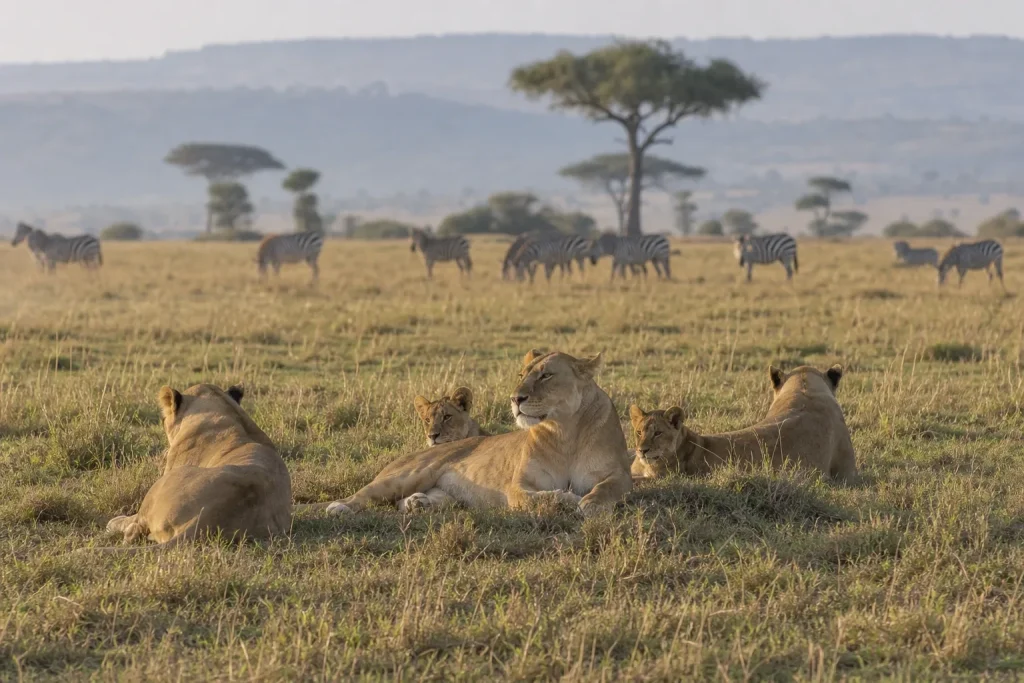
The Masai Mara National Reserve is the principal destination for many specialist cheetah photography safaris. Its broad grasslands and varied terrain provide opportunities to observe cheetahs moving, resting and hunting. Photographers can create images with expansive backgrounds, isolated trees, rolling plains and dramatic skies.
The Mara also supports lions, leopards, elephants, giraffes and numerous other animals, making it rewarding even when cheetahs are temporarily difficult to locate. A longer stay is particularly valuable because cheetah sightings and behaviour are unpredictable.
The conservancies surrounding the Masai Mara offer additional photography opportunities. Different conservancies operate under their own access rules, vehicle regulations and conservation arrangements. Some provide lower vehicle densities or specialised safari activities, although conditions vary between areas.
Photographers should select accommodation and conservancies according to their wildlife interests, access arrangements and permitted activities. It is important not to assume that every conservancy offers identical access or unrestricted off-road driving.
The Laikipia region supports a variety of wildlife, including predators in suitable habitats. It offers a different landscape from the Masai Mara, with a mixture of grassland, woodland and semi-arid environments. Cheetah sightings are less predictable than in the most productive parts of the Mara, but Laikipia can be rewarding for photographers interested in a broader wildlife experience.
The Samburu ecosystem is another possible destination for predator photography. Its dry landscapes, acacia woodland and distinctive vegetation create opportunities for environmental images. Cheetahs occur in suitable northern habitats, although they should not be treated as guaranteed sightings. Samburu is particularly valuable for travellers who also want to photograph leopards, elephants and northern Kenya's distinctive herbivores.
Cheetahs can be photographed throughout the year, but seasonal conditions influence the appearance of the landscape, visibility and photographic opportunities.
These months often provide relatively dry conditions in the Masai Mara region. Grass height and vegetation density vary with rainfall, but open areas can provide favourable visibility. Clear mornings may offer attractive light for portraits and behavioural photography.
The main rainy season can produce green landscapes and dramatic skies. These conditions may appeal to photographers interested in environmental compositions. However, heavy rain can affect road access, visibility and equipment handling.
This is a popular period for Masai Mara safaris. Grassland conditions and wildlife movements vary throughout the season. The wider migration period may create opportunities to photograph predators and large herbivore herds, although cheetah hunts and migration encounters cannot be predicted.
Short rains may bring fresh vegetation and changing light conditions. The landscape can become particularly attractive for photographers seeking green backgrounds. As with every season, flexibility is important.
A private Kenya photography safari gives photographers control over how long they remain with particular subjects. On a conventional shared game drive, travellers may have different interests. Some want to see as many animals as possible, while others prefer to spend an hour observing one cheetah.
A private vehicle allows the guide to respond to photographic priorities. Photographers can request additional time for portraits, behaviour sequences or changing light conditions. A dedicated vehicle also helps manage equipment and seating arrangements. For serious photographers, fewer passengers can be more important than a larger number of destinations.
A suitable safari vehicle should provide stable viewing positions and sufficient space for camera equipment. Open-sided photographic vehicles may be available in certain locations, subject to operator arrangements and reserve regulations. Conventional safari vehicles with pop-up roofs can also be effective.
The important consideration is whether photographers can work comfortably without obstructing one another. A private vehicle for two photographers often provides more flexibility than a fully occupied vehicle. Camera bags, lenses and support equipment should be secured during movement.
Wildlife photographers commonly rely on telephoto lenses because subjects must be photographed from safe distances. Useful starting points include: Technique and anticipation remain essential; expensive equipment cannot replace good positioning or an understanding of cheetah behaviour.
Cheetahs are famous for their speed, but photographing a sprint is technically challenging. A successful image requires the photographer to anticipate movement, maintain focus and use an appropriate shutter speed. When a cheetah begins moving, photographers should watch its body language and the direction of potential prey.
A wide enough composition allows room for unexpected changes in direction. Continuous autofocus can help track the animal. High shutter speeds may be necessary to freeze movement, depending on light and the desired visual effect. Not every hunt results in a chase, and photographers should never pressure guides to provoke animal movement.
Portraits are among the most achievable and rewarding images on a cheetah safari. The distinctive black tear markings running from the eyes towards the mouth create a recognisable facial expression. Photographers should pay attention to eye contact, head position and background separation.
Low shooting angles can create more intimate compositions, provided they can be achieved safely from the vehicle. Soft morning and afternoon light often produces pleasing results. A portrait can be particularly effective when the cheetah is alert and looking towards the horizon.
Environmental photography places the animal within its natural landscape. Rather than filling the frame with the cheetah, the photographer includes grasslands, trees, hills or dramatic skies. These images communicate habitat and scale. The Masai Mara is particularly suitable for this style because of its expansive scenery.
A cheetah standing on a termite mound beneath a broad sky can create a powerful image even when the animal occupies only a small portion of the frame.
Cheetah cubs can provide memorable photographic opportunities, particularly when interacting with their mother or siblings. However, young cubs are vulnerable, and their welfare must take priority over photography. Vehicles should maintain appropriate distances and avoid surrounding family groups.
Photographers should never request that guides approach den sites or interfere with the movement of a mother and cubs. Natural interactions are more valuable than images obtained through disturbance.
Arrive at Jomo Kenyatta International Airport and transfer to your Nairobi hotel. Depending on your arrival time, meet your safari representative for a briefing. Discuss your photographic objectives, camera equipment and preferred subjects. Overnight in Nairobi.
After breakfast, travel towards the Masai Mara region by road or domestic flight, according to the selected package. Arrive at your accommodation and prepare for an introductory afternoon game drive. The guide will begin exploring suitable predator habitats. The first excursion provides an opportunity to assess lighting conditions and familiarise yourself with the landscape.
Overnight in the Masai Mara.
Begin before or around sunrise, according to park access rules and the lodge's location. Explore grassland habitats where cheetahs may be encountered. If a suitable subject is located, spend time observing behaviour rather than immediately moving to another animal. Your guide will position the vehicle carefully to avoid disturbance.
Enjoy additional photography in the afternoon. Overnight in the Masai Mara.
Spend the day concentrating on cheetahs and other predators. The guide may explore different areas according to recent observations and habitat conditions. Photographic opportunities may include portraits, walking behaviour, interactions and environmental compositions. If cheetahs are not located, the day can also provide rewarding lion, leopard or general wildlife photography.
Overnight in the Masai Mara.
Continue exploring the Mara ecosystem. A longer stay allows photographers to revisit productive areas and work with changing light conditions. The guide may focus on cheetahs during the morning and other wildlife later in the day. Possible subjects include giraffes, elephants, zebras, birds of prey and antelopes.
Overnight in the Masai Mara.
Enjoy another full day of wildlife photography. The programme can be adapted according to the most rewarding sightings of the previous days. Photographers may prefer to concentrate on a particular cheetah or explore a different section of the ecosystem. Use the final afternoon to capture additional landscape and wildlife images.
Overnight in the Masai Mara.
After breakfast, depart the Masai Mara. Return to Nairobi by the agreed road or flight arrangement. Transfer to your hotel or airport. Travellers interested in a more extensive photography programme can extend the safari to ten or fourteen days.
Accommodation location can significantly influence the quality of a photography safari. A lodge close to productive wildlife habitats may reduce travel time and allow earlier access to game-viewing areas. Essential accommodation is suitable for photographers prioritising guiding and wildlife access over luxury.
Comfort accommodation provides practical facilities and a relaxing environment after long photography sessions. Premium accommodation offers enhanced comfort and attractive settings. Signature accommodation is appropriate for travellers seeking luxury, privacy and personalised hospitality. When selecting accommodation, photographers should also consider battery-charging facilities, equipment storage and meal flexibility.
The cost of a specialist photography safari depends on the duration, accommodation category, transport arrangements and number of photographers. Private vehicles increase flexibility but may cost more per person than shared safaris. Longer stays in the Masai Mara can reduce the proportion of time spent travelling.
Park and conservancy fees vary according to location and travel dates. Domestic flights may be included to reduce travel time. A detailed quotation should identify accommodation, meals, guiding, vehicle arrangements, park fees and any additional services.
Responsible photography is essential for protecting wildlife. Vehicles should not block a cheetah's movement or interfere with a hunt. Photographers should avoid surrounding animals with multiple vehicles. Guides must respect park and conservancy regulations.
Flash photography should be avoided when it could disturb wildlife. Cheetah cubs and family groups require particular sensitivity. The welfare of the animal must always take priority over obtaining a photograph.
The Masai Mara ecosystem is among Kenya's most established destinations for cheetah photography.
No. Cheetahs are wild animals, and sightings depend on natural movements and environmental conditions.
Five to seven days in a productive wildlife area provide more flexibility than a short visit. Dedicated photographers may prefer longer stays.
Hunting behaviour may be observed, but it cannot be guaranteed or scheduled.
A telephoto zoom lens is useful for wildlife photography. The ideal equipment depends on your camera system and preferred photographic style.
It is not essential, but a private vehicle is strongly recommended for serious photography.
Yes. Beginners can benefit from professional guiding and a slower wildlife-viewing schedule.
Yes. The Masai Mara supports lions, leopards, elephants, giraffes, zebras and numerous other photographic subjects.
A successful Kenya cheetah photography safari requires patience, knowledgeable guiding and enough time to observe natural behaviour. Safari Trips to Kenya can arrange a private photography itinerary in the Masai Mara with suitable accommodation, dedicated transport and a programme designed around your interests. Whether you are an experienced wildlife photographer or an enthusiastic beginner, we can tailor the safari to your preferred travel dates, duration and budget. Contact Safari Trips to Kenya to request a personalised Kenya cheetah photography safari package.