
Masai Mara Game Drives
Masai Mara game drives are the heart of most safari experiences in Kenya's famous Masai Mara ecosystem. They allow travelers to explore the open plains, river valleys, woodland, rolling grasslands and predator territories of one of Africa's most celebrated wildlife destinations from specially adapted safari vehicles accompanied by professional driver-guides.
For many visitors, the classic image of a Kenya safari is exactly this: leaving camp shortly after sunrise, driving across golden grasslands in a 4×4, spotting a pride of lions in the distance, pausing beside elephants, watching giraffes browse among scattered acacias and following the movement of wildebeest, zebras and gazelles across the plains. Yet a good Masai Mara game drive is much more than simply driving around looking for animals.
The quality of the experience depends on:
- Where you are staying.
- Which section of the Mara you explore.
- Time of day.
- Season.
- Guide experience.
- Vehicle configuration.
- Whether you use a private or shared vehicle.
- How much time you allow.
- Weather.
- Wildlife movement.
- Your own patience and expectations.
A knowledgeable guide reads the landscape constantly. They may look for:
- Fresh predator tracks.
- Circling vultures.
- Alarm calls.
- Herd behavior.
- Vehicle movement in the distance.
- Dust indicating moving animals.
- Known predator territories.
- Water availability.
- Seasonal migration patterns.
This is why game driving is not simply transportation. It is a form of wildlife interpretation, and a strong guide understands not only where animals were yesterday, but why they may move into a particular habitat today.
This detailed guide explains everything you need to know about Masai Mara game drives, including morning and afternoon drives, full-day safaris, private vehicles, wildlife, migration viewing, photography, costs, seasons, driving etiquette and how to get the most from every hour in the field. Individual species, river crossings and mountain views can never be guaranteed.
What Is a Masai Mara Game Drive?
A game drive is a guided wildlife-viewing excursion using a safari vehicle. In the Masai Mara, vehicles are typically adapted for wildlife viewing and may include:
- Pop-up roof.
- Large windows.
- Raised seating.
- Four-wheel drive.
- Radio communication.
- Charging points.
- Cooler box.
- Binocular storage.
- Extra ground clearance.
The vehicle allows guests to safely move between wildlife habitats while observing animals from an appropriate distance. The guide usually serves several roles:
- Driver.
- Wildlife tracker.
- Naturalist.
- Interpreter.
- Safety officer.
- Route planner.
The combination of guide skill and vehicle quality can have a major impact on the safari.
Why Game Drives Are the Main Masai Mara Activity
The Masai Mara covers a large wildlife landscape. Animals are distributed over vast areas, and many species move continuously. A vehicle allows travelers to explore substantially more territory than they could on foot, which increases opportunities to encounter:
- Lions.
- Leopards.
- Cheetahs.
- Elephants.
- Buffaloes.
- Giraffes.
- Wildebeest.
- Zebras.
- Hyenas.
- Hippos.
- Crocodiles.
- Gazelles.
- Topi.
- Warthogs.
- Numerous birds.
Game drives also allow guests to remain inside a safe viewing environment when observing potentially dangerous animals.
What Wildlife Can You See on Masai Mara Game Drives?
The Masai Mara is famous for its exceptional wildlife diversity. No sighting is guaranteed, but potential encounters include many iconic African species.
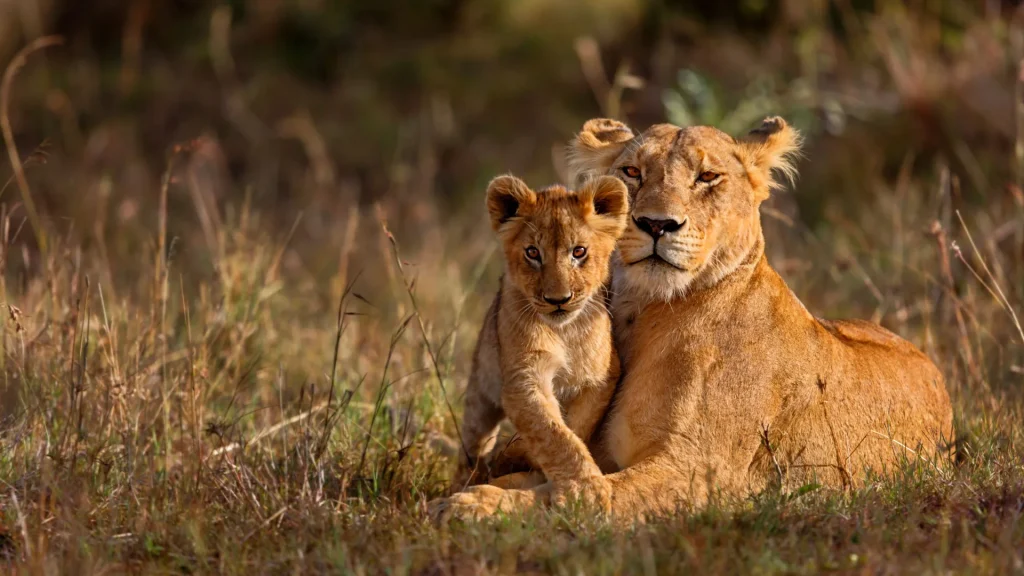
Lions
Lions are one of the most sought-after animals on Masai Mara game drives, and the wider Mara ecosystem supports numerous lion prides and territorial males. Possible encounters include:
- Lions sleeping in grass.
- Females hunting.
- Males patrolling.
- Cubs playing.
- Pride members feeding.
- Lions drinking.
- Territorial disputes.
Early morning is often productive because lions may still be active after a night of movement or hunting.
Leopards
Leopards are more elusive. They tend to favor habitats offering:
- Dense vegetation.
- Riverine woodland.
- Trees.
- Drainage lines.
- Rocky cover.
Guides may search for leopards by looking for:
- Tracks.
- Alarm calls.
- Known territories.
- Prey remains.
- Activity in trees.
Seeing a leopard can require substantial patience.
Cheetahs
Open plains provide ideal habitat for cheetahs, which rely heavily on sight when hunting. A guide may search for cheetahs around:
- Open grasslands.
- Termite mounds.
- Slight rises.
- Areas with gazelles.
A cheetah hunt can be spectacular, but it should never be expected on every game drive.
Elephants
Elephants can be encountered throughout different sections of the Mara ecosystem. They may appear:
- In family groups.
- As solitary bulls.
- Near woodland.
- Around water.
- On open plains.
Spending time quietly observing elephant behavior can be one of the most rewarding game-drive experiences.
Buffaloes
Buffaloes can occur in large herds or smaller groups, and older bulls may sometimes be found alone. They are powerful animals and should be observed with appropriate distance and respect.
Giraffes
Giraffes are a classic Mara sight. Their height and slow movement make them excellent subjects for landscape photography.
Wildebeest
Wildebeest occur as resident animals and as part of the vast migratory population that moves between Tanzania and Kenya. During the migration season, herd concentrations can become enormous.
Zebras
Zebras frequently occur alongside wildebeest. They are common across open grassland and often form large mixed groups.
Hyenas
Spotted hyenas are important predators and scavengers. They can be particularly active in early morning or late afternoon.
Hippos
Hippos are associated with rivers and permanent water. They are often seen resting in water during the day.
Crocodiles
Nile crocodiles can be encountered in major waterways, particularly around famous migration crossing areas.
Antelopes
Potential antelope species include:
- Topi.
- Impala.
- Thomson's gazelle.
- Grant's gazelle.
- Eland.
- Waterbuck in suitable habitats.
Morning Masai Mara Game Drives
Morning game drives are among the most productive safari activities. They commonly begin around sunrise or slightly earlier depending on camp location and access rules, and the exact schedule varies.
Why Morning Is Good
Temperatures are cooler, predators may still be active and animals are often moving between nighttime and daytime locations. Morning light is also soft and attractive for photography. Possible highlights include:
- Lions walking.
- Hyenas returning from hunting.
- Cheetahs searching for prey.
- Elephants feeding.
- Giraffes silhouetted against sunrise.
- Birds becoming active.
Typical Morning Schedule
A morning game drive may involve:
- 5:30–6:00 a.m.: Wake-up.
- 6:00–6:30 a.m.: Tea, coffee or light snack.
- Around sunrise: Depart camp.
- Several hours later: Return for breakfast or enjoy breakfast in the bush depending on arrangement.
Times differ between camps.
Afternoon Masai Mara Game Drives
Afternoon game drives typically begin after the heat of midday begins to decline. Animals that spent several hours resting may start moving again, and the final two hours of daylight can be particularly rewarding. Possible afternoon experiences include:
- Elephants crossing plains.
- Lions becoming active.
- Cheetahs scanning for prey.
- Grazing herbivores.
- Sunset silhouettes.
The warm evening light is excellent for photography.
Full-Day Masai Mara Game Drives
A full-day Masai Mara game drive can be one of the best ways to explore the reserve thoroughly. Rather than returning to camp at midday, guests remain in the field with a picnic meal, which allows guides to travel farther from the lodge or camp.
Advantages of a Full-Day Game Drive
A full-day drive can provide:
- More wildlife-viewing time.
- Access to distant areas.
- Better migration flexibility.
- Time to follow predators.
- Opportunity to explore different habitats.
- Reduced backtracking to camp.
Full-day drives are especially valuable for travelers staying outside the central reserve.
Typical Full-Day Schedule
You may leave around sunrise. Depending on camp arrangements, you could carry:
- Picnic breakfast.
- Picnic lunch.
- Water.
- Snacks.
The guide then plans the route according to:
- Wildlife reports.
- Weather.
- Migration movement.
- River conditions.
- Guest interests.
You may return to camp near sunset.
Half-Day vs Full-Day Game Drives
Both can be excellent.
Half-Day Drives
Advantages include:
- More rest.
- Time for lunch at camp.
- Less time sitting in a vehicle.
- Suitable for families.
Full-Day Drives
Advantages include:
- Greater geographical coverage.
- More wildlife opportunities.
- Better for migration-focused safaris.
- Stronger for photographers.
- Less time spent returning to camp.
The best approach may be to combine both.
Private Masai Mara Game Drives
A private game drive means the vehicle is reserved for your party. This is one of the best upgrades available on safari. Advantages include:
- Flexible departure time.
- More space.
- Greater privacy.
- Control over wildlife priorities.
- Longer time at sightings.
- Better photography.
- Easier family travel.
Who Benefits Most?
Private vehicles are particularly useful for:
- Photographers.
- Honeymooners.
- Families.
- Birders.
- Repeat safari travelers.
- Guests with mobility needs.
- Travelers focused on specific wildlife.
Shared Masai Mara Game Drives
Shared drives are common at many safari camps, with several guests traveling together in one vehicle. This reduces cost and can also be sociable, but compromises are required. One guest may want to spend 45 minutes watching a leopard while another wants to leave after five minutes. One traveler may be interested in birds while another wants only Big Five sightings. Shared drives work best when expectations are flexible.
What Is the Best Safari Vehicle?
The most common high-quality safari vehicle is the 4×4 Toyota Land Cruiser or a similar customized 4×4. Important vehicle features include:
- Pop-up roof.
- Strong suspension.
- High ground clearance.
- Comfortable seats.
- Good visibility.
- Reliable tires.
- Charging points.
- Proper maintenance.
A vehicle should also have enough room for passengers.
How Many People Should Share a Safari Vehicle?
This depends on the vehicle. Some vehicles may carry six or seven passengers, but fewer passengers usually create a better safari experience. Benefits of lower occupancy include:
- More window access.
- Easier photography.
- More space for camera equipment.
- Faster boarding.
- Less movement inside vehicle.
Photographers should ideally prioritize low vehicle occupancy.
Pop-Up Roof Game Drives
Many Kenya safari vehicles use pop-up roofs. During wildlife viewing, passengers can stand and photograph through the open roof area. Advantages include:
- Higher viewpoint.
- Wide visibility.
- Protection when roof is closed.
- Excellent photography.
Guests should sit down when instructed, particularly when vehicles are moving quickly or approaching difficult terrain.
Open-Sided Vehicles
Some conservancies and camps use open-sided safari vehicles. These can offer:
- Excellent visibility.
- Easy photography.
- Strong connection with the environment.
However, vehicle type depends on location and regulations, and open vehicles are not always used for long highway transfers.
Masai Mara Game Drive Rules
Responsible game drives follow wildlife-protection rules. Visitors should expect guides to respect regulations involving:
- Vehicle positioning.
- Speed.
- Off-road driving.
- Wildlife distance.
- River access.
- Number of vehicles around certain sightings.
- Opening and closing times where applicable.
Guests should never pressure a guide to break rules for a photograph.
Off-Road Driving
Off-road driving regulations vary between different parts of the Mara ecosystem. Certain conservancies may permit controlled off-road driving under specific rules, while inside protected areas restrictions may apply. Drivers should always follow current regulations. Uncontrolled off-road driving can damage:
- Grasslands.
- Soil.
- Sensitive habitat.
- Animal breeding areas.
Best Time of Day for Masai Mara Game Drives
The most productive periods are generally early morning and late afternoon. These periods offer:
- Cooler temperatures.
- Increased predator activity.
- Better photography light.
However, wildlife can be seen throughout the day, and unexpected events can occur at midday.
Midday Game Drives
Many travelers return to camp around midday, but staying in the field can produce surprises. Animals do not stop behaving because tourists normally eat lunch at noon. You may encounter:
- Elephants drinking.
- Lions moving.
- Cheetahs hunting.
- Large herds.
- Predator conflicts.
The disadvantage is harsher light and higher temperatures.
Best Season for Masai Mara Game Drives
Game drives are rewarding throughout the year, though the character of the experience changes seasonally.
January–February
This period is often relatively dry, with excellent resident wildlife and generally fewer crowds than migration season.
March–May
This is the wetter period. Advantages include:
- Green landscapes.
- Fewer tourists.
- Excellent photography.
- Birdlife.
Roads can become challenging.
June
Conditions generally begin drying, which can make this an excellent transitional month.
July–October
This is the main dry and migration period. Potential highlights include:
- Large wildebeest herds.
- Zebras.
- Predator activity.
- Good road conditions.
This is also the busiest period.
November–December
Short rains can rejuvenate the landscape, and wildlife remains excellent.
Masai Mara Game Drives During the Great Migration
The Great Wildebeest Migration is one of the main reasons visitors choose the Masai Mara. Large migratory herds often reach the greater Mara ecosystem between roughly July and October, though exact timing changes each year.
What Can You See?
Possible migration experiences include:
- Vast grazing herds.
- Wildebeest moving in lines.
- Zebra concentrations.
- Predator activity.
- River gatherings.
- Crossings.
However, the migration should never be reduced only to river crossings.
Game Drives for Mara River Crossings
Travelers hoping to see a river crossing should allow substantial time, because crossings are unpredictable. Animals may gather and then:
- Wait.
- Retreat.
- Move downstream.
- Cross suddenly.
- Cross outside your viewing location.
Guides monitor herd movement and often position vehicles near likely crossing areas. Patience is essential, and no safari company can responsibly guarantee a crossing.
Predator-Focused Game Drives
The Masai Mara is one of Africa's celebrated predator destinations. Predator-focused drives may search specifically for:
- Lions.
- Leopards.
- Cheetahs.
- Hyenas.
Guides may use:
- Tracks.
- Alarm calls.
- Known territories.
- Radio reports.
- Prey behavior.
Lions
Often easiest to locate among the major cats.
Leopards
Usually more difficult and habitat-dependent.
Cheetahs
Often associated with open plains.
Hyenas
Can be especially active around dawn and dusk.
Big Five Game Drives
The traditional Big Five are:
- Lion.
- Leopard.
- Elephant.
- Buffalo.
- Rhinoceros.
The Mara supports classic Big Five safari experiences, but rhinos are less frequently encountered than some of the other species. If seeing rhinos is a major priority, adding Ol Pejeta or Lake Nakuru may improve the overall Kenya itinerary.
Birding Game Drives
Birdwatchers can enjoy exceptional diversity. A bird-focused game drive may concentrate on:
- Grassland birds.
- Raptors.
- Vultures.
- Wetland species.
- Woodland birds.
Potential sightings include:
- Secretary birds.
- Lilac-breasted rollers.
- Southern ground hornbills.
- Bustards.
- Eagles.
- Vultures.
- Storks.
- Cranes.
Tell your safari operator in advance if birding is a primary interest.
Photography Game Drives
Photography safaris require different pacing. A photographer may want to spend a long time at one sighting waiting for:
- Better light.
- Eye contact.
- Movement.
- Interaction.
- Clean background.
A private vehicle is strongly recommended.
Best Vehicle Positioning
Good guides consider:
- Light direction.
- Background.
- Animal movement.
- Distance.
- Safety.
Sometimes moving only a few meters changes the photograph dramatically.
Best Lenses for Masai Mara Game Drives
A versatile wildlife kit may include:
- Telephoto zoom.
- Mid-range zoom.
- Wide-angle lens.
A lens range around 100–400mm is useful for many wildlife situations. A wider lens helps capture:
- Large herds.
- Landscapes.
- Elephants close to the vehicle.
- Camp scenes.
Carry spare batteries and memory cards.
Using Binoculars
Binoculars significantly improve game drives. They are useful for:
- Identifying distant predators.
- Birdwatching.
- Scanning tree lines.
- Watching behavior without approaching too closely.
Even travelers carrying cameras should bring binoculars.
What to Wear on a Masai Mara Game Drive
Wear practical, layered clothing. Early mornings can feel cold and midday can become warm, so layering allows adjustment throughout the day. Useful items include:
- Neutral shirts.
- Long trousers.
- Fleece.
- Light jacket.
- Closed shoes.
- Hat.
- Sunglasses.
What to Carry
A small day bag might contain:
- Camera.
- Binoculars.
- Sunscreen.
- Hat.
- Water.
- Personal medication.
- Power bank.
- Spare batteries.
- Light jacket.
Avoid carrying unnecessary large bags inside the vehicle.
Are Game Drives Safe?
Yes, when conducted by professional guides who follow wildlife rules. Guests should remain inside the vehicle unless specifically told otherwise. Animals generally perceive the vehicle as a single object, so standing outside unexpectedly can change the situation.
Can Animals Approach the Vehicle?
Yes. Wildlife may sometimes approach closely, including:
- Elephants.
- Lions.
- Giraffes.
- Cheetahs.
- Antelopes.
Stay calm and follow guide instructions. Do not:
- Reach toward animals.
- Feed them.
- Make sudden loud movements.
- Lean dangerously outside the vehicle.
What Happens if an Elephant Approaches?
Your guide will assess the animal's body language. Remain quiet and do not attempt to attract the elephant's attention. Experienced guides know when to:
- Remain still.
- Reverse slowly.
- Give the animal more room.
Guests should not interfere.
Can You Get Out of the Vehicle?
Only at authorized locations or under guide instruction. Possible places include:
- Picnic sites.
- Designated viewpoints.
- Camp areas.
Never exit the vehicle independently in wildlife habitat.
Game Drive Etiquette
Good safari etiquette improves the experience for everyone.
Keep Voices Low
Noise can disturb wildlife and other guests.
Do Not Demand Close Approaches
A responsible guide maintains safe distances.
Avoid Blocking Other Vehicles
Guides should position vehicles fairly around popular sightings.
Give Animals Space
Wildlife must always have a clear escape route.
Do Not Litter
Carry all waste out.
Respect Photography Space
Avoid standing in front of other passengers' cameras unnecessarily.
Avoiding Crowded Sightings
Popular predator sightings can attract many vehicles during peak season. A good guide may choose to:
- Wait for other vehicles to leave.
- Approach later.
- Search for another predator.
- Explore quieter habitat.
Seeing a famous lion with 25 vehicles around it may be less enjoyable than spending an hour alone with elephants elsewhere.
Game Drives in the Masai Mara National Reserve
The national reserve offers extensive wildlife habitat and some of the ecosystem's most famous safari areas. Game drives here may explore:
- Plains.
- Rivers.
- Woodland.
- Predator territories.
Reserve access requires relevant fees.
Game Drives in Mara Conservancies
Conservancies around the national reserve may offer a somewhat different safari model. Potential differences include:
- Lower vehicle density.
- Controlled tourism numbers.
- Different driving rules.
- Additional activities such as walking or night drives in some areas.
Exact experiences vary by conservancy.
Should You Combine Reserve and Conservancy Game Drives?
Yes, where itinerary logistics permit. The combination can provide:
- Wider wildlife coverage.
- Different landscapes.
- Different vehicle densities.
- Additional activities.
A multi-location Mara safari can be particularly rewarding for longer trips.
Masai Mara Game Drive Cost
The cost of game drives depends on several factors, including:
- Private or shared vehicle.
- Road or fly-in safari.
- Accommodation package.
- Park fees.
- Duration.
- Season.
- Group size.
Some camps include game drives in a full safari package while others charge separately, so always confirm.
Is a Private Game Drive Worth the Cost?
For many travelers, yes. It is particularly valuable if you:
- Want photography flexibility.
- Have children.
- Prefer privacy.
- Have a strong interest in birds.
- Want specific departure times.
- Dislike sharing.
For budget travelers, shared drives remain a good option.
Game Drive Costs for Families
A private vehicle can sometimes provide better value for families than paying several individual shared-drive rates. Families also benefit from:
- Flexible bathroom breaks.
- Shorter drives.
- Child-friendly guide pacing.
Game Drives for Honeymooners
Private drives work particularly well for couples. They provide:
- Privacy.
- Flexible schedule.
- Longer stops.
- Easy coordination with sundowners.
A honeymoon safari should not feel like a group bus tour unless that is what the couple prefers.
Game Drives for Solo Travelers
Solo travelers can usually join shared drives, which helps reduce cost. Ask about:
- Vehicle capacity.
- Daily schedule.
- Private vehicle supplement.
How Long Should a Game Drive Last?
There is no universal rule. Common options include:
- 2–3 hour drive.
- 3–4 hour drive.
- Half-day drive.
- Full-day drive.
Wildlife conditions should influence the schedule. If an exceptional sighting develops, a good guide may stay longer when practical.
How Many Game Drives Per Day?
A typical safari may include a morning drive and an afternoon drive. Alternatively, it may include one full-day drive. Some travelers alternate, for example:
- Day 1: Afternoon drive.
- Day 2: Morning + afternoon.
- Day 3: Full-day drive.
- Day 4: Morning drive.
This provides useful variety.
How Many Days of Game Drives Do You Need?
For a meaningful first safari, 3 nights is a strong minimum. Four nights provides better flexibility, and during migration season you may want to consider 4–5 nights if wildlife is your main priority.
Sample 3-Night Masai Mara Game Drive Plan
Day 1
Arrive, take an afternoon game drive, enjoy the sunset, then have dinner and overnight at camp.
Day 2
Take an early morning game drive and return for breakfast. Rest at camp, then head out on an afternoon game drive.
Day 3
Take a full-day game drive with picnic lunch to explore a wider section of the Mara.
Day 4
Take a final morning drive, then depart.
Sample 4-Night Game Drive Plan
Day 1
Arrival and afternoon safari.
Day 2
Morning and afternoon drives.
Day 3
Full-day exploration.
Day 4
Morning drive followed by relaxed afternoon or second drive.
Day 5
Final early drive and departure.
Game Drives During Rain
Rain does not necessarily cancel a safari, and animals remain active. Storms may produce:
- Dramatic skies.
- Excellent photography.
- Cooler temperatures.
Roads can become muddy, so a capable 4×4 is important, and guides may change routes.
Game Drives in Dusty Conditions
Dry-season roads can become dusty. Protect:
- Cameras.
- Lenses.
- Phones.
A light scarf can also be useful, and camera bags should stay closed when possible.
Can Children Join Masai Mara Game Drives?
Yes. Families should consider:
- Child age.
- Attention span.
- Drive duration.
- Vehicle comfort.
Young children may enjoy shorter drives more than full-day excursions, and a private vehicle provides valuable flexibility.
Game Drives for Older Travelers
Older travelers should consider:
- Vehicle step height.
- Seat comfort.
- Drive duration.
- Rough roads.
Safari vehicles can be bumpy, so inform the operator in advance about mobility concerns.
Can Pregnant Travelers Go on Game Drives?
Safari roads can be rough. Pregnant travelers should seek appropriate medical advice and discuss travel stage and comfort with their healthcare professional. The operator should also be informed in advance.
Accessible Game Drives
Some camps can accommodate travelers with mobility limitations. Important questions include:
- Vehicle access.
- Step height.
- Room accessibility.
- Bathroom design.
- Assistance availability.
Discuss requirements before booking.
Game Drives During Migration Peak Season
Peak season requires additional planning, as popular sightings can become crowded. Useful strategies include:
- Leave early.
- Use a private vehicle.
- Stay several nights.
- Explore quieter areas.
- Avoid chasing every radio report.
A strong guide helps balance migration viewing with quality wildlife encounters.
Migration Game Drive Strategy
A good migration safari involves flexibility, and the guide may adjust plans according to herd reports. One day could focus on open plains, another on river areas and another on predator territories. Do not insist on following a rigid predetermined route if wildlife has moved elsewhere.
Do Guides Use Radios?
Many safari guides communicate by radio or other approved systems, which can help them locate significant wildlife. However, radio information should complement—not replace—tracking skill. The best guides understand habitats and animal behavior rather than simply racing toward every reported sighting.
What Makes a Great Safari Guide?
A great guide combines:
- Wildlife knowledge.
- Tracking ability.
- Driving skill.
- Communication.
- Patience.
- Safety awareness.
- Cultural knowledge.
- Photography awareness.
- Respect for wildlife.
A guide who knows when not to approach an animal is often better than one who always tries to get closest.
What Makes a Bad Game Drive?
Common problems include:
- Overcrowded vehicle.
- Poor guiding.
- Constant rushing.
- Ignoring birds and smaller wildlife.
- Driving too close.
- Breaking rules.
- Insufficient time.
- Poor vehicle maintenance.
Choosing a reputable safari operator reduces these risks.
How to Get More From Your Game Drives
Tell Your Guide Your Interests
On the first day, explain whether you especially enjoy:
- Big cats.
- Elephants.
- Birds.
- Photography.
- Migration.
- General wildlife.
Ask Questions
Guides usually enjoy explaining animal behavior. Ask:
- Why is that lion alone?
- Why are gazelles staring in one direction?
- Why do vultures circle?
- Why is that elephant flapping its ears?
Be Patient
Some of the best behavior develops slowly.
Use Binoculars
Do not expect every animal to be beside the road.
Watch Behavior
A sleeping lion can become fascinating if you notice:
- Ear movement.
- Cub interactions.
- Grooming.
- Territorial responses.
Common Game Drive Mistakes
Leaving Too Late
Morning wildlife activity may already have declined.
Only Looking for the Big Five
This causes travelers to ignore fascinating smaller species.
Spending the Whole Drive Behind a Camera
Take photographs, but also watch with your own eyes.
Chasing Every Sighting
Constant driving can reduce observation quality.
Talking Loudly
Wildlife encounters are better when guests remain calm.
Expecting Guarantees
Nature is unpredictable.
Masai Mara Game Drives vs Zoo Visits
A safari is fundamentally different from visiting captive animals. Wildlife chooses:
- Where to go.
- Whether to appear.
- Whether to hunt.
- Whether to sleep.
The unpredictability is central to the experience, and a day with fewer animals can still be rewarding if you learn to read landscapes and behavior.
Responsible Masai Mara Game Drives
Safari tourism should protect the environment that attracts visitors. Responsible drives should:
- Follow legal tracks and rules.
- Avoid harassment.
- Keep appropriate distance.
- Minimize crowding.
- Avoid littering.
- Respect nesting areas.
- Never feed animals.
- Never interfere with hunts.
Ethical Predator Viewing
Predators are particularly vulnerable to disturbance when:
- Hunting.
- Feeding.
- With cubs.
- Resting near dens.
Vehicles should not:
- Surround them completely.
- Block escape routes.
- Separate adults from young.
- Force them to move.
Wildlife welfare comes before photographs.
Ethical Migration Viewing
Migration crowds require discipline. Vehicles should avoid:
- Blocking river exits.
- Preventing wildebeest from approaching water.
- Creating barriers.
- Driving dangerously close to herds.
A river crossing should unfold naturally.
Best Camps for Game Drives
The best camp depends less on luxury classification and more on:
- Exact location.
- Wildlife access.
- Guide quality.
- Vehicle policy.
- Distance to preferred habitats.
When selecting accommodation, ask how game drives operate.
Questions to Ask Before Booking
Ask:
- Are game drives private or shared?
- How many passengers per vehicle?
- Is a window seat guaranteed?
- Can full-day drives be arranged?
- Are park fees included?
- Which areas are normally explored?
- What time do drives start?
- Can picnic meals be arranged?
- Are private vehicles available?
- What vehicle type is used?
These questions reveal far more than room photographs.
Combining Game Drives With Other Activities
Masai Mara game drives can be combined with:
- Hot-air balloon safari.
- Guided walking in permitted areas.
- Cultural visits.
- Birdwatching.
- Sundowners.
- Bush breakfasts.
- Photography sessions.
However, wildlife drives should remain the foundation of most Mara itineraries.
Game Drives and Hot-Air Balloon Safaris
A balloon safari provides an aerial perspective. It complements rather than replaces game drives, and the two experiences are very different. From the air you appreciate:
- Landscape scale.
- Herd movement.
- River patterns.
From a vehicle you gain:
- Close wildlife viewing.
- Behavior.
- Photography flexibility.
Game Drives and Walking Safaris
Guided walking provides a slower perspective. Walks focus more on:
- Tracks.
- Plants.
- Insects.
- Smaller wildlife.
Game drives cover far more territory, so a combination provides a broader understanding of the ecosystem.
Game Drives and Cultural Visits
A cultural visit can help explain the human dimension of the Mara. The ecosystem is surrounded by Maasai communities whose land-use decisions play an important role in conservation, and combining wildlife and cultural experiences can create a more complete understanding of the region.
Masai Mara Game Drives for First-Time Visitors
First-time travelers should prioritize:
- At least 3 nights.
- Experienced guide.
- Proper 4×4.
- Early morning drives.
- One full-day drive.
- Enough rest.
Do not try to combine too many parks into too few days. A slower safari usually produces a better wildlife experience.
Masai Mara Game Drives for Repeat Visitors
Repeat safari travelers may enjoy:
- Longer stays.
- Private vehicles.
- Green-season travel.
- Bird-focused drives.
- Predator behavior.
- Smaller conservancies.
Repeat visitors often become less concerned with seeing every famous species and more interested in behavior.
Frequently Asked Questions About Masai Mara Game Drives
What is a Masai Mara game drive?
It is a guided wildlife-viewing excursion in a safari vehicle through the Masai Mara ecosystem.
What animals can I see?
Potential wildlife includes lions, leopards, cheetahs, elephants, buffaloes, giraffes, wildebeest, zebras, hyenas, hippos, crocodiles, antelopes and numerous birds.
What is the best time for a game drive?
Early morning and late afternoon are generally the most productive periods.
How long does a game drive last?
Drives can range from around two or three hours to a full day.
Can I do a full-day game drive?
Yes. Full-day drives with picnic meals are particularly useful for exploring distant parts of the Mara.
Is a private game drive better?
It offers more flexibility, privacy and photography space, but costs more.
Are shared game drives good?
Yes. They offer lower cost and can be sociable, but provide less control.
Can I see the Big Five?
Several Big Five species are regularly encountered in the Mara, but no wildlife sighting is guaranteed.
Can I see the Great Migration?
Large migratory herds are often present in the wider Mara ecosystem roughly between July and October, though timing varies annually.
Can a river crossing be guaranteed?
No. Crossings are completely natural and unpredictable.
Are game drives safe?
Yes, when operated by professional guides who follow wildlife regulations.
Can children go on game drives?
Yes. Families may prefer shorter drives or private vehicles for flexibility.
Do I need binoculars?
They are highly recommended.
What should I wear?
Wear neutral layered clothing, comfortable shoes, a hat and a warm layer for early mornings.
Can animals come close to the vehicle?
Yes. Remain calm and follow guide instructions.
Can I leave the vehicle?
Only at permitted locations and when instructed by your guide.
Can I take photographs?
Yes. Game drives provide excellent wildlife-photography opportunities.
Are game drives included in camp prices?
Sometimes. Check whether your accommodation is booked on a room, full-board or full game package basis.
What vehicle is normally used?
Customized 4×4 safari vehicles, often Toyota Land Cruisers, are common.
Is June good for game drives?
Yes. June can offer excellent resident wildlife, improving dry-season conditions and fewer visitors than peak migration months.
Is August good?
Yes. August is one of the strongest migration months but also one of the busiest.
Is the rainy season worth visiting?
Yes. Green landscapes, fewer tourists and excellent birding can make wet-season game drives very rewarding.
How Many Masai Mara Game Drives Should You Plan?
For a typical three-night stay, aim for several wildlife sessions rather than only one or two. A balanced schedule might include:
- Arrival afternoon drive.
- Early morning drive.
- Afternoon drive.
- Full-day safari.
- Departure morning drive.
This gives you repeated opportunities to encounter wildlife under different conditions, and weather and animal movement can change dramatically from one drive to the next.
Plan Your Masai Mara Game Drives
Well-planned Masai Mara game drives are about much more than collecting sightings. The strongest safaris combine skilled guiding, enough time, good vehicle positioning, patience and respect for wildlife.
One drive may produce a lion pride at sunrise, another may be dominated by elephants and a third might involve hours following migration herds across the plains. Another could be memorable because of a single leopard resting in a tree. That unpredictability is what makes the Masai Mara extraordinary.
Safari Trips to Kenya can arrange Masai Mara game drives as part of private, family, honeymoon, photographic, budget, mid-range, luxury and Great Migration safaris, with itineraries designed around your preferred pace, accommodation, season and wildlife interests. Game drives can also be incorporated into broader Kenya itineraries combining the Masai Mara with Lake Naivasha, Lake Nakuru, Ol Pejeta, Amboseli, Samburu and the Kenya coast.
The goal is not to drive as far as possible or see the longest species list. It is to give yourself enough time in the field to watch Kenya's wildlife behaving naturally in one of Africa's most remarkable ecosystems.