

Choosing the right mid-range Masai Mara camp can transform a good wildlife holiday into a memorable safari experience. The Masai Mara is one of Kenya's most celebrated wildlife destinations, known for its open grasslands, large predators, elephants, giraffes, abundant antelope species and seasonal Great Wildebeest Migration, and the accommodation you choose influences how much time you spend exploring the reserve, how comfortably you rest between activities and the overall value of your holiday. Mid-range camps occupy an appealing position between basic budget accommodation and high-end luxury safari properties, typically providing comfortable beds, private bathrooms, prepared meals and welcoming communal areas while preserving the atmosphere of staying close to nature.
However, not all camps described as mid-range offer the same experience. Some occupy convenient locations near reserve gates, while others are situated in surrounding conservancies or farther from the main wildlife areas, and a relatively inexpensive camp may become less economical when daily transport and park entry costs are added. This guide explains what to expect from mid-range Masai Mara accommodation, where to stay, which facilities matter most, how accommodation affects game drives and how to choose a camp suited to your safari interests and budget.
What Is a Mid-range Masai Mara Camp?
A mid-range safari camp provides a comfortable accommodation experience without the extensive facilities and personalised services associated with the most exclusive luxury properties. At Safari Trips to Kenya, this standard generally corresponds to our Comfort accommodation category, although some Premium properties may also be considered when seasonal offers or special arrangements make them suitable for the traveller's budget. The emphasis is on practical quality, with clean accommodation, comfortable sleeping arrangements, appropriate bathroom facilities, reliable meals and professional camp management.
Comfortable Permanent Safari Tents
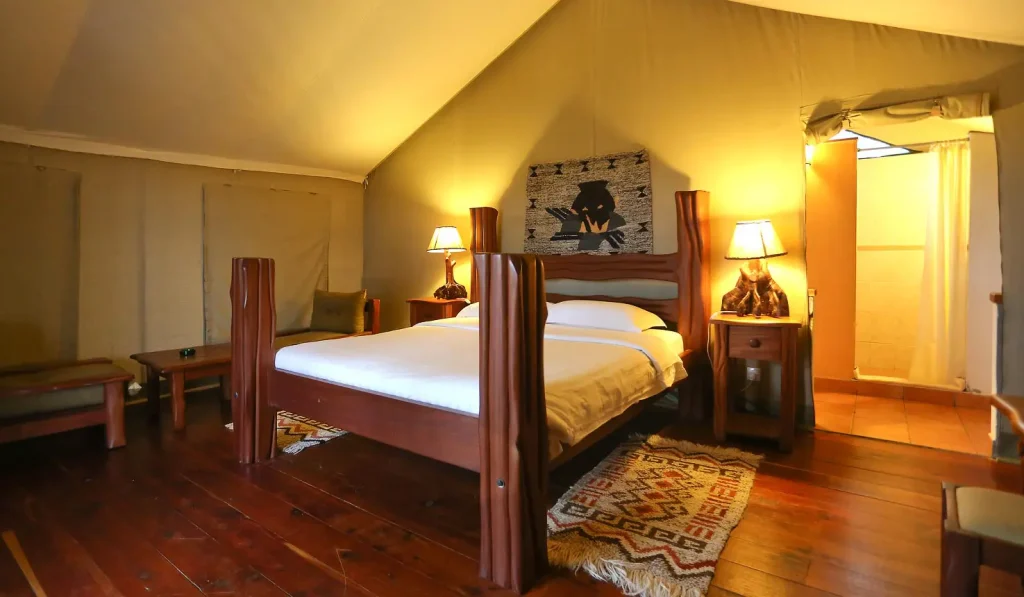
Many mid-range Masai Mara camps use permanent canvas tents rather than conventional hotel rooms. These tents may be built on raised platforms and equipped with proper beds, bedside furniture, lighting and private bathrooms.
Canvas accommodation creates a distinctive safari atmosphere. Guests can hear birds, insects and sometimes distant wildlife while remaining in a protected sleeping space. Facilities differ considerably between properties. Some tents include large windows, private decks and spacious bathrooms, while others are simpler and more compact.
En-suite Bathroom Facilities
Private bathrooms are an important feature for many travellers choosing mid-range accommodation. Depending on the property, facilities may include flush toilets, showers, washbasins and hot-water systems. Some camps use solar power or generators, which can affect the timing and availability of hot water.
Before booking, travellers should verify whether bathrooms are private and attached to the sleeping accommodation rather than shared elsewhere in the camp.
Dining and Hospitality
Most established Comfort-category safari camps provide organised meals in a dining room, restaurant or communal tent. Meal arrangements vary and may include buffet service, set menus or a combination of both. Guests with dietary requirements should communicate them before arrival.
Some camps offer packed breakfasts or lunches for full-day game drives, allowing guests to spend more time exploring the reserve.
Why Choose Mid-range Accommodation in the Masai Mara?
Mid-range camps are particularly attractive to travellers who want to prioritise wildlife viewing without paying for every luxury facility. A well-chosen camp can provide the comfort needed after long game drives while allowing more of the holiday budget to be allocated to additional nights, private guiding or other destinations.
Better Balance Between Cost and Comfort
Basic accommodation can be suitable for adventurous travellers, but some visitors prefer private bathrooms, reliable meals and comfortable beds. Mid-range camps offer these conveniences without necessarily including costly extras such as private plunge pools, extensive spa facilities or highly exclusive service arrangements. This balance makes them popular with couples, families and small groups.
A Traditional Safari Atmosphere
Permanent tented accommodation often feels more closely connected to the surrounding environment than a conventional hotel. The sounds of birds at dawn, changing light across the landscape and evenings around communal dining areas contribute to the safari atmosphere. However, wildlife may move through or near unfenced properties. Guests must follow staff safety instructions and should never assume that an attractive camp setting is free from dangerous animals.
More Flexibility in Safari Planning
Choosing mid-range accommodation can make longer itineraries more affordable. For example, a traveller might prefer three nights in a comfortable camp rather than two nights in a more expensive luxury property. The additional day may provide greater opportunities to explore different habitats, particularly during migration season when animal movements are unpredictable.
Where Are Mid-range Masai Mara Camps Located?
Location is one of the most important factors when comparing camps. Accommodation advertised as being in the Masai Mara may be situated inside the national reserve, near an entrance gate, within a neighbouring conservancy or in a settlement some distance from the main wildlife areas. These distinctions affect daily driving time, access arrangements and the safari experience.
Camps Inside the Masai Mara National Reserve
Accommodation inside the reserve can provide convenient access to established game-drive routes. Guests may spend less time travelling between their accommodation and wildlife-viewing areas, although the advantage depends on the camp's exact position. Availability can be limited, particularly during popular migration months.
Park entry arrangements and the applicable rules must be confirmed before booking.
Camps Near Sekenani Gate
The Sekenani area is an established access point for travellers approaching the Masai Mara from Nairobi. Several camps and lodges operate in the surrounding area, offering a range of accommodation standards. Properties near this entrance can be practical for road-based safaris, but their exact distance from the gate and daily game-drive routes should be verified.
A camp described as being near Sekenani may still require additional transfer time.
Camps Near Talek
The Talek area provides access to sections of the greater Masai Mara landscape. Accommodation varies from simpler tented properties to more comfortable safari camps. Some locations are attractive for travellers who want access to particular wildlife habitats, but game-drive arrangements depend on the property's exact position and applicable entry fees.
Camps Near Ololaimutia
The Ololaimutia area is another accommodation location associated with access to the eastern Masai Mara. It may be suitable for certain road safari itineraries. Travellers should compare actual transfer times, accommodation facilities and the routes used during game drives.
Camps in Neighbouring Conservancies
Some accommodation is situated within conservancies bordering the national reserve. These areas may operate under separate management arrangements and provide access to different safari activities. A conservancy stay does not automatically include unlimited access to the national reserve. Entry fees and transfer arrangements must be confirmed.
Important Features to Compare
When selecting a mid-range Masai Mara camp, the room price should be only one part of the decision.
Distance to Wildlife Areas
A convenient location can reduce time spent on daily transfers and provide more flexibility for early game drives. Ask for the exact camp location and the expected journey to the areas included in your safari programme.
Room Size and Layout
Some tented rooms are spacious enough for additional beds, while others are designed primarily for couples. Families should confirm whether connecting tents, family units or suitable triple arrangements are available.
Electricity and Charging
Many camps use solar power, generators or a combination of energy sources. Charging facilities may be available in rooms or communal areas, and electricity may operate on scheduled hours. Photographers should confirm arrangements for charging camera batteries.
Internet Connectivity
Wi-Fi may be available in selected areas, but connection quality can vary. Remote safari accommodation should not be expected to provide the same internet reliability as a city hotel.
Meals and Dietary Requirements
Check whether the accommodation rate includes breakfast, lunch and dinner. Travellers with vegetarian, vegan, gluten-free or other dietary requirements should notify the operator in advance.
Safety and Security
Some camps are unfenced, allowing wildlife to move through the surrounding landscape. Guests may need staff escorts after dark. Children should be supervised according to camp policies.
Wildlife Experiences From Mid-range Camps
A mid-range accommodation standard does not limit the quality of wildlife experiences available. Game viewing depends primarily on location, guiding, vehicle arrangements, time in the reserve and natural animal movements.
Lions and Other Predators
The Masai Mara supports lions, leopards and cheetahs. Lions may be encountered in open grasslands or near wooded areas, while leopards are generally more elusive. Cheetahs favour suitable open habitats. Sightings cannot be guaranteed, but spending several days in the reserve increases opportunities to explore different habitats.
Elephants and Buffaloes
Elephants and buffaloes are among the larger mammals visitors may encounter. Elephants move between feeding areas and water sources, while buffaloes may occur in herds of varying sizes. Guides maintain appropriate distances and avoid disturbing animals.
Giraffes, Zebras and Antelopes
Giraffes, plains zebras, topis, impalas and gazelles are important components of the ecosystem. Their behaviour provides opportunities to understand grazing patterns, predator relationships and habitat use.
Mara River Wildlife
Suitable sections of the Mara River support hippos, crocodiles and numerous birds. During migration season, wildebeest and zebra may approach the river. River crossings are unpredictable and cannot be guaranteed by any camp.
Mid-range Camps During the Great Migration
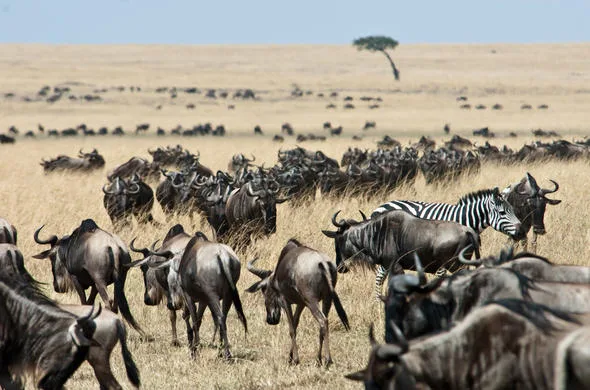
The Great Wildebeest Migration is a major reason travellers visit the Masai Mara between approximately July and October. Large herds may move through the Kenyan section of the Serengeti–Mara ecosystem, although exact timing and distribution vary annually.
Is a Riverfront Camp Necessary?
A camp beside the Mara River can provide attractive scenery, but it is not essential for a rewarding migration safari. Herds move across extensive areas, and crossing locations vary. A well-positioned camp with a knowledgeable guide and suitable transport may be more valuable than accommodation advertised primarily for its river view.
How Many Nights Should You Book?
Three nights provide a reasonable introduction, while four or five nights offer more flexibility for migration-focused travellers. Additional time allows guides to respond to changing herd movements. However, even a longer stay cannot guarantee a river crossing.
Booking During Peak Season
Accommodation demand is often high in August and September. Popular mid-range camps may fill well in advance, particularly for family rooms or larger groups. Early booking provides more choice and reduces the risk of needing to select accommodation far from preferred wildlife areas.
Best Time to Stay in Mid-range Masai Mara Camps
January to March
These months can provide rewarding resident wildlife viewing. The Masai Mara supports lions, elephants, buffaloes, giraffes and other animals throughout the year. Travellers should not expect the large migration crossings associated with the main migration period.
April to June
Rainfall may be more substantial during parts of April and May. The landscape becomes greener, and birdwatching can be rewarding. Some camps may close temporarily, and road conditions can deteriorate after heavy rain.
July to October
This is the most popular period for migration-focused safaris. Accommodation demand and prices often rise. Advance booking is advisable.
November to December
Short rains may bring fresh vegetation and attractive photographic conditions. Resident wildlife remains present, although animals may spread more widely. Holiday demand can increase toward Christmas and New Year.
Suggested Four-Day Mid-range Masai Mara Safari
Day 1: Nairobi to the Masai Mara
Depart Nairobi in the morning and travel southwest toward the Masai Mara. The road journey generally takes approximately five to seven hours or longer, depending on traffic, road conditions and camp location. Arrive at your selected Comfort-category tented camp and check in. Depending on timing, enjoy lunch followed by an afternoon game drive before returning for dinner and overnight.
Day 2: Full-Day Masai Mara Wildlife Safari
Begin early with breakfast or a packed meal. Your professional guide explores suitable habitats in search of lions, elephants, buffaloes, giraffes, zebras and other wildlife. A picnic lunch can be arranged at an appropriate location if included in the package. Continue wildlife exploration during the afternoon.
Day 3: Additional Game Drives
Spend another day exploring different parts of the reserve. During migration season, the programme may include accessible areas near the Mara River when herd movements make them relevant. Photographers may spend longer observing animal behaviour. Return to camp for the final overnight stay.
Day 4: Return to Nairobi
After breakfast, depart the Masai Mara for Nairobi. Depending on the itinerary, an early game drive may be possible. Arrival time depends on road conditions and traffic.
How Much Do Mid-range Masai Mara Camps Cost?
Accommodation rates depend on location, travel season, room category, meal plan and the services included. Peak migration months often attract higher prices. Properties inside the reserve or in particularly attractive locations may cost more than camps farther away. Travellers should compare the total safari package rather than the room rate alone.
Park fees, game-drive vehicles, guiding and transfers can represent a significant part of the overall cost. A written quotation should identify accommodation, meals, transport, game drives, entry fees and exclusions.
Mid-range Camps for Families
Families should choose camps with suitable room arrangements and clear child policies. Some properties offer family tents or additional beds, while others may have restrictions on young children. A private safari vehicle allows families to adjust the pace of game drives. Parents should also consider camp safety, meal flexibility and opportunities for children to rest between activities.
Mid-range Camps for Couples
Couples often appreciate smaller tented camps with comfortable rooms and relaxed communal spaces. A private veranda or attractive landscape view can add to the experience. For special occasions, selected accommodation upgrades may be worthwhile. However, a well-located Comfort-category camp can provide a rewarding safari without requiring a luxury budget.
Private Versus Group Safaris
Private safaris provide exclusive use of the vehicle for the travelling party. They offer flexibility in game-drive schedules and wildlife interests. Group safaris share transport and guiding costs among participants. Before booking a group programme, confirm the maximum group size, vehicle type and accommodation arrangements.
Getting to Mid-range Masai Mara Camps
Road Travel
Road transfers from Nairobi commonly take approximately five to seven hours or longer. Travel time depends on the selected camp, traffic and road conditions. A suitable safari vehicle provides transport for transfers and game drives.
Domestic Flights
Scheduled flights operate from Nairobi's Wilson Airport to selected Masai Mara airstrips. Flying can reduce travel time considerably. Travellers should confirm baggage allowances and onward transfers.
Responsible Safari Accommodation
Responsible camps follow applicable environmental and wildlife regulations. Guests should avoid littering, conserve water and electricity where possible and respect local communities. Wildlife should never be fed or approached. At unfenced camps, follow staff instructions and use escorts after dark when required.
Frequently Asked Questions About Mid-range Masai Mara Camps
Are mid-range Masai Mara camps comfortable?
Many provide en-suite tents, proper beds, organised meals and pleasant communal facilities. Standards vary by property.
Are mid-range camps inside the reserve?
Some are inside the reserve, while others are near entrance gates or in surrounding conservancies.
Can I see the Great Migration from my camp?
Some camps overlook areas used by wildlife, but migration movements and river crossings cannot be guaranteed.
Are game drives included?
This depends on the package. Confirm the written inclusions before booking.
Are mid-range camps suitable for families?
Yes, provided the property offers suitable accommodation and accepts children of the relevant ages.
Is Wi-Fi available?
Some camps offer Wi-Fi, but reliability varies.
Can I book a private safari?
Yes. Private safaris can be arranged with Comfort-category accommodation.
How many nights should I stay?
Three nights provide a comfortable introduction, while longer stays are useful for migration viewing and photography.
Book Mid-range Masai Mara Camps With Safari Trips to Kenya
The best mid-range Masai Mara camp combines comfortable accommodation, a practical location and reliable safari arrangements. Safari Trips to Kenya helps travellers compare Comfort-category camps, select suitable accommodation and arrange private or group safaris. Contact our team to discuss your travel dates, group size, preferred facilities and wildlife interests. We can help create a Masai Mara safari that balances accommodation quality, game-viewing opportunities and value.