

How Long Migration Stays in Masai Mara
The Great Wildebeest Migration is commonly associated with the Masai Mara from approximately July to October, giving travellers a broad seasonal window of around three to four months. However, this does not mean that all migratory herds arrive in July, remain in Kenya for exactly four months and then leave together.
The reality is more complex. The Great Migration is a continuous movement of animals through the Serengeti–Mara ecosystem. Herds respond to rainfall, grass growth and water availability rather than fixed dates. Some wildebeest may enter the Masai Mara earlier than expected, while others may arrive later; different groups may move between northern Tanzania and Kenya several times as conditions change, and some animals may remain in particular areas while others travel elsewhere. For safari travellers, this variability is one of the most important things to understand before booking.
The question is not simply how long the migration stays in Masai Mara, but when the herds are most likely to be present, which areas they may use and how much time a visitor should allow for wildlife viewing. This guide explains the typical migration window, the differences between July, August, September and October, and how to plan a safari without relying on guaranteed dates.
How Many Months Does the Migration Stay in Masai Mara?
The Masai Mara migration season is commonly described as lasting from July through October. This is a useful planning guide, not an exact timetable. In some years, significant herds may be present earlier, while in others movement into Kenya may be delayed; the departure of herds towards Tanzania is also influenced by environmental conditions.
Therefore, it is more accurate to describe the migration as having a broad seasonal presence in the Mara rather than a fixed four-month stay.
Does the Migration Stay for Exactly Four Months?
No. There is no universal arrival or departure date, and different herds follow different routes. Some may spend extended periods in Kenya, while others may cross the border and return; the number of animals present can change considerably during the season.
Why Does the Timing Change?
Rainfall influences grass growth, and wildebeest move in search of suitable grazing. If conditions remain favourable in one region, animals may stay longer; if grazing conditions change, herds may move elsewhere. These environmental factors make exact predictions difficult.
When Does the Migration Arrive in Masai Mara?
The arrival of migratory herds in the Masai Mara often begins during the middle part of the year. July is commonly associated with increasing migration activity in northern areas of the ecosystem, although the precise timing varies. Some herds may remain in northern Tanzania, while others cross into Kenya.
It is important to distinguish between animals approaching the Mara River and animals already grazing within the Masai Mara. The presence of wildebeest in the northern Serengeti does not necessarily mean that large herds have entered Kenya.
July: The Beginning of the Main Migration Window
July is a popular month for travellers interested in the Great Migration. Depending on rainfall and grazing conditions, migratory herds may be moving through northern Tanzania and into the Masai Mara. However, July is not guaranteed to provide large concentrations of wildebeest in every part of the reserve.
What Can Travellers Expect in July?
Visitors may encounter migrating herds, resident wildlife and predator activity. The Mara supports lions, elephants, giraffes, buffaloes, zebras and many other animals throughout the year, so a July safari can therefore be rewarding even if the migration is delayed.
Are River Crossings Guaranteed in July?
No. River crossings are unpredictable. Some herds may approach the river and turn away, while others may cross at different locations; a crossing cannot be scheduled for a particular day.
August: A Popular Migration Month
August is often considered one of the strongest months for migration-focused safaris in the Masai Mara. Large herds may be present across parts of the ecosystem, although their distribution changes and some areas may have extensive grazing herds while others are quieter.
Why Is August Popular?
August falls within the commonly recognised migration window and is also a popular travel period for international visitors. Accommodation demand can therefore be high, and travellers with fixed August dates should consider booking early.
Can You See a Mara River Crossing in August?
Possibly, although crossing activity depends on animal movements. Even when large herds are present, they may not cross during a visitor’s stay, so a safari should include enough time for other wildlife experiences.
September: Migration Activity May Continue
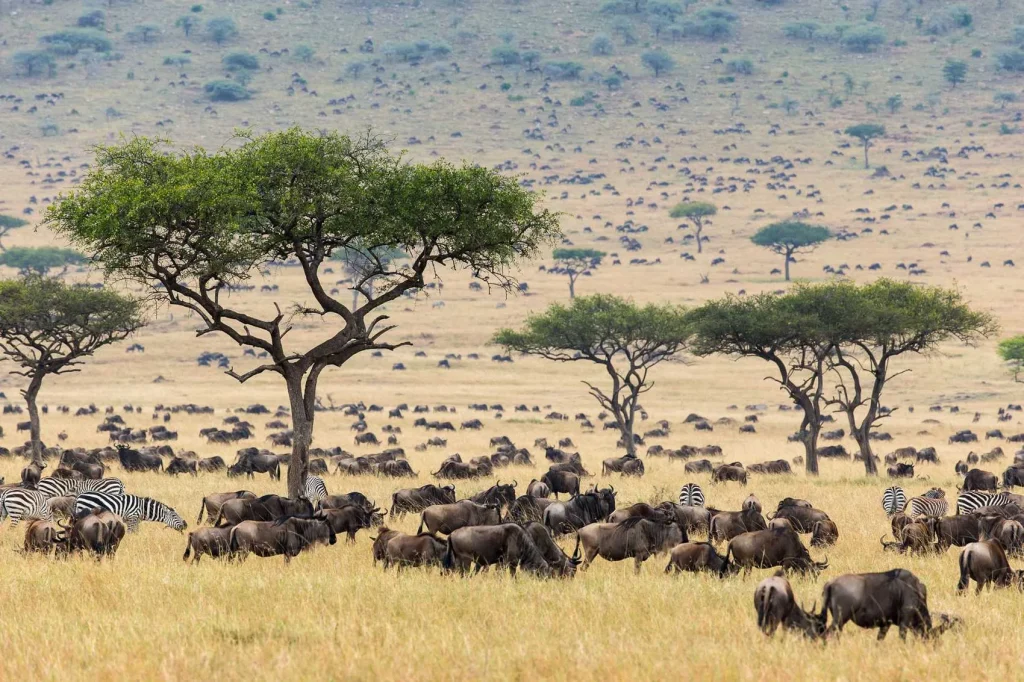
September can also be an excellent month for a migration safari. Large numbers of wildebeest may remain in parts of the Masai Mara, although the exact distribution depends on conditions and some herds may move towards northern Tanzania while others remain in Kenya.
Is September Better Than August?
Neither month is universally better. August is often popular for migration viewing, and September may also provide excellent opportunities. The best choice depends on actual herd movements, accommodation availability and the traveller’s preferences. A safari operator should avoid guaranteeing that one month will always outperform the other.
October: The Later Migration Window
October is commonly associated with the later part of the Masai Mara migration season. Some migratory herds may still be present, while others may already have moved towards Tanzania; the timing depends on rainfall and grazing conditions.
Is October Too Late?
Not necessarily. Migration activity may continue during October, although the likelihood of finding large herds in particular areas can change. Travellers visiting in October should plan around the wider wildlife experience rather than relying exclusively on migration sightings.
What Happens After October?
As environmental conditions change, many migratory herds move towards central and southern parts of the Serengeti ecosystem. This movement does not occur simultaneously, and different groups may travel along different routes. The migration continues throughout the year; the animals do not simply disappear when the commonly advertised Masai Mara season ends, but move into other parts of the ecosystem.
Where Do Wildebeest Go After Leaving Masai Mara?
Many migratory wildebeest eventually move towards the southern Serengeti and nearby Ndutu region, which are particularly important during the calving season. However, the route is not a fixed straight line, and herds may travel through northern, central and other parts of the Serengeti as timing varies according to environmental conditions.
Does the Migration Return to Masai Mara Every Year?
The Great Migration is an annual ecological cycle, although the precise distribution of herds changes from year to year. The Masai Mara remains an important part of the wider ecosystem, and travellers should understand that annual migration patterns are broad tendencies rather than guarantees.
Is the Migration Present in Masai Mara All Year?
The main migratory herds are not consistently present in the Masai Mara throughout the year. However, the reserve supports resident wildebeest and other wildlife; a visitor may see wildebeest outside the main migration season without that necessarily meaning the large migratory herds are present. The Masai Mara remains a rewarding safari destination throughout the year.
When Is the Best Month to See the Great Migration?
For travellers whose primary objective is observing large migratory herds in the Masai Mara, August and September are commonly considered strong planning months. However, July and October can also provide opportunities, and no month guarantees a particular concentration of animals. The best safari should balance seasonal expectations with accommodation location, trip duration and wildlife interests.
How Long Should You Stay in Masai Mara During Migration Season?
Two Nights
Two nights provides a short introduction but offers limited flexibility, and travel time may reduce the number of game drives.
Three Nights
Three nights allows several wildlife-viewing opportunities and is a practical choice for many travellers.
Four Nights
Four nights provides more time to explore different areas, which can be valuable during migration season.
Five Nights or Longer
Longer stays may suit photographers and migration enthusiasts. Additional time does not guarantee a river crossing, but it can reduce pressure to experience everything immediately.
Why the Location of Your Camp Matters
The Masai Mara ecosystem is extensive. Accommodation described as being in the Mara may be located inside the reserve, in a surrounding conservancy or near an access gate, and the location influences travel time and game-drive arrangements. A camp that is convenient for one wildlife area may be far from another, and during migration season herds may move across large distances. Travellers should select accommodation according to the intended safari experience.
Masai Mara National Reserve Versus Private Conservancies
The Masai Mara National Reserve and surrounding conservancies offer different arrangements. The national reserve is a major destination for conventional game drives, while private conservancies may offer more exclusive accommodation and different activities. However, a conservancy booking does not automatically include access to the national reserve; travellers should confirm where game drives will take place, which is particularly important for migration-focused itineraries.
How Do River Crossings Affect the Migration Season?
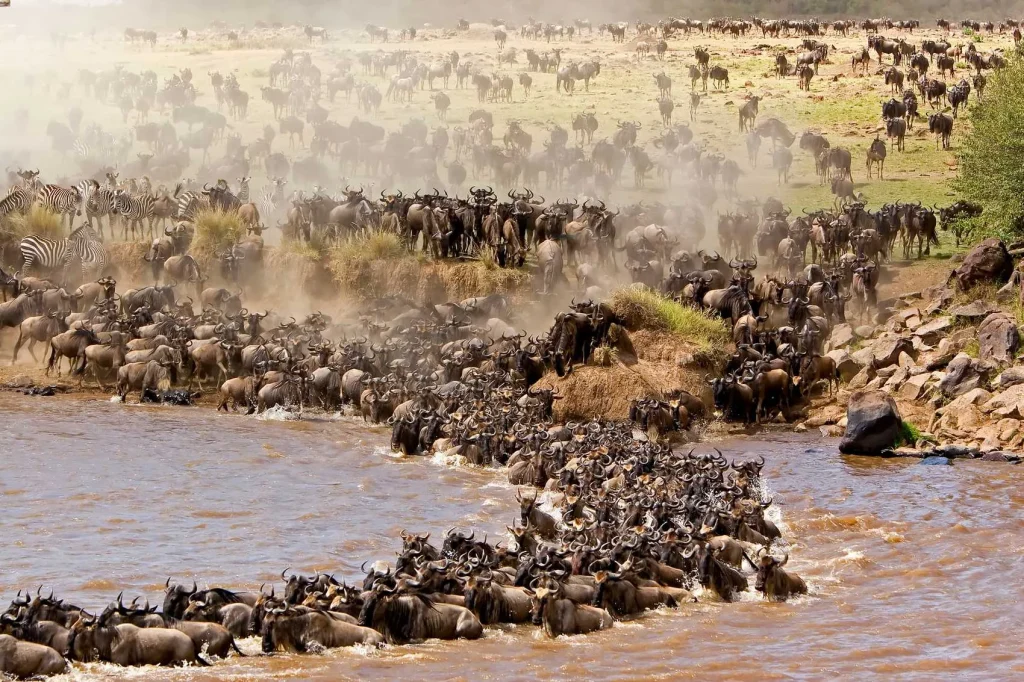
The Mara River is one of the best-known features of the migration. Wildebeest may cross at different locations and times, although the presence of herds near the river does not guarantee a crossing. Animals may gather, hesitate and change direction; some may cross into Kenya while others move back towards Tanzania. River crossings are only one part of the wider migration.
Can You Predict a River Crossing?
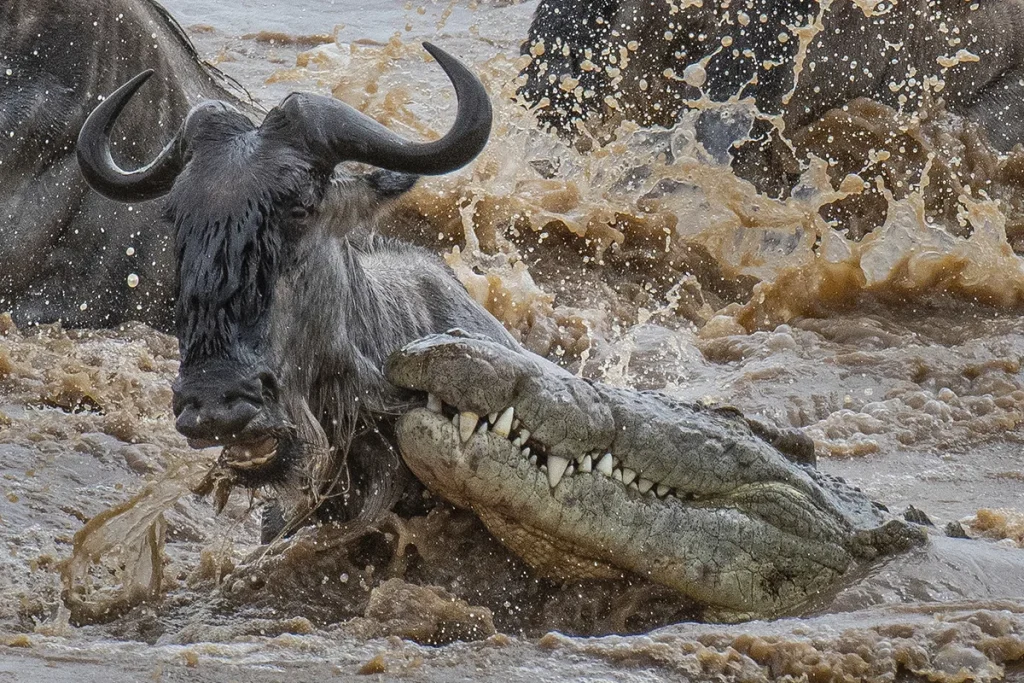
Not reliably. Guides may use current observations and local knowledge to identify areas where herds are gathering, but animals make their own decisions; a crossing may begin suddenly or fail to occur. Travellers should avoid operators promising a guaranteed crossing.
How Many Wildebeest Are in Masai Mara During Migration?
The wider Great Migration involves more than a million wildebeest, but they are not all present in the Masai Mara simultaneously. Herds may be spread across Kenya and Tanzania, and the number present in a particular area changes with seasonal conditions. It is therefore misleading to suggest that the entire migration population occupies the Mara for four months.
Is the Masai Mara Worth Visiting Outside Migration Season?
Yes. The Masai Mara supports substantial resident wildlife, and visitors may encounter lions, elephants, giraffes, buffaloes, zebras, antelopes and numerous birds. Predator sightings are possible throughout the year, and the landscapes also change with rainfall. Travellers who cannot visit during the migration season can still enjoy an excellent safari.
Best Time for Photography During Migration
Photography conditions depend on light, weather and animal movements. Morning and late afternoon often provide attractive light, while large herds can create dramatic landscape photographs and predators and other resident wildlife provide additional subjects. A telephoto lens is useful for distant animals; however, photographers should not pressure guides to approach wildlife too closely.
How to Avoid Crowds During Migration Season
The migration attracts many visitors, and popular wildlife areas may become busy. A well-designed itinerary can help reduce unnecessary congestion, and travellers may consider longer stays, carefully selected accommodation or suitable conservancy arrangements. However, access and activities depend on the specific location, and responsible guides should follow park regulations and avoid crowding animals.
Suggested Four-Day Masai Mara Migration Safari
Day 1: Nairobi to Masai Mara
Depart Nairobi by road or domestic flight, arrive at the selected accommodation and enjoy an afternoon game drive where the schedule permits. Overnight in the Masai Mara.
Day 2: Great Migration Wildlife Safari
Begin early with a game drive and explore areas where migratory herds may be present. Look for wildebeest, zebras, predators and other wildlife; the guide will adjust the route according to current conditions.
Day 3: Additional Migration Viewing
Enjoy another day of wildlife viewing, visiting suitable habitats and river areas where permitted. A river crossing may occur, but it cannot be guaranteed. Return to camp for dinner and overnight.
Day 4: Departure
Enjoy breakfast and a final activity where time permits, then return to Nairobi or continue to another destination.
Planning a Migration Safari from Nairobi
The Masai Mara can be reached from Nairobi by road or domestic flight. Road journeys commonly take several hours, depending on traffic, road conditions and accommodation location, while flights can reduce travel time but involve additional cost. The best transport option depends on budget and itinerary, and travellers should allow sufficient time for transfers.
Combining Masai Mara with Other Kenya Destinations
A migration safari can be combined with Lake Naivasha, Lake Nakuru, Amboseli or Kenya’s coast, although the route should be planned carefully because long transfers can reduce wildlife-viewing time. A safari and beach holiday may be particularly appealing for travellers who want relaxation after several days of game drives.
Frequently Asked Questions
How long does the migration stay in Masai Mara?
The main seasonal presence is commonly associated with July to October, but the timing varies.
Which month has the most wildebeest in Masai Mara?
August and September are often considered strong planning months, but herd distribution changes from year to year.
Does the migration leave in October?
Many herds may begin moving towards Tanzania around the later part of the season, but there is no fixed departure date.
Can I see the migration in November?
Some migratory activity may still occur in parts of the wider ecosystem, but November is outside the commonly advertised main Masai Mara window.
Are wildebeest present all year?
Resident wildebeest may be present, but the main migratory herds are not consistently in the Mara throughout the year.
How many days should I book?
Three or four nights provides useful flexibility for many migration-focused safaris.
Are river crossings guaranteed?
No. Crossings are unpredictable natural events.
Plan Your Masai Mara Migration Safari
Understanding how long the migration stays in Masai Mara helps travellers make informed decisions about when to visit and how much time to allow. The commonly recognised July–October window is a useful guide, but the exact timing of herd movements varies.
At Safari Trips to Kenya, we help travellers plan migration-focused safaris based on realistic seasonal expectations, suitable accommodation and well-organised game drives. Whether you are planning a short Masai Mara safari or a longer Kenya wildlife holiday, our team can prepare a personalised itinerary that gives you time to enjoy the remarkable wildlife of the Mara.