
1 Day Kenya Safari
Plan a 1 Day Kenya Safari with private transport, expert guiding and wildlife viewing. Explore the best one-day…
View SafariHandpicked Kenya Safari Tours for Every Traveler
Explore Kenya wildlife safaris in Masai Mara, Amboseli, Samburu and more. Discover Big Five viewing, safari itineraries, travel seasons and accommodation.
Kenya's wildlife diversity is closely connected to its varied geography. The country contains extensive savannah grasslands, dry northern plains, highland forests, freshwater lakes, wetlands and coastal habitats. These environments support different animal communities, allowing travellers to experience contrasting ecosystems without leaving the country.
The Masai Mara National Reserve is especially attractive for large predators and grazing mammals. Amboseli National Park is celebrated for elephants, while Samburu National Reserve supports species adapted to northern Kenya's drier environment. Lake Nakuru National Park offers rhino-viewing opportunities, and the Laikipia region is associated with important conservation initiatives.
Another advantage is the availability of different safari styles. Travellers can choose road-based wildlife tours, flying safaris, private photographic expeditions, shared group departures and longer itineraries that combine several destinations. Accommodation ranges from practical tented camps to exclusive luxury lodges.
Kenya also has a well-established safari guiding tradition. Experienced guides understand wildlife behaviour, seasonal movement patterns and the different habitats within protected areas. Their knowledge helps visitors interpret what they are observing rather than simply moving from one animal sighting to another.
Showing 1–12 of 215 safaris
Plan a 1 Day Kenya Safari with private transport, expert guiding and wildlife viewing. Explore the best one-day…
View SafariExplore the 10 Days Family Kenya Safari with a day-by-day safari plan, key wildlife experiences, destinations, accommodation ideas,…
View SafariExplore the 10 Days Fly-in Kenya Safari with a day-by-day safari plan, key wildlife experiences, destinations, accommodation ideas,…
View SafariExplore the 10 Days Honeymoon Kenya Safari with a day-by-day safari plan, key wildlife experiences, destinations, accommodation ideas,…
View SafariPlan a 10 Days Kenya Big Five Safari with expert guides, game drives and carefully chosen camps. Request…
View SafariA 10 day Kenya journey connecting Nairobi, Ol Pejeta, Samburu or Buffalo Springs, Solio, Lake Nakuru, Maasai Mara…
Lake Naivasha, Lake Nakuru, Masai Mara
View SafariPlan a 10 Days Kenya Safari with expert guides, game drives and carefully chosen camps. Request a quote.
View SafariPlan a 10 Days Kenya Safari & Diani Beach with expert guides, game drives and carefully chosen camps.…
Diani Beach
View SafariPlan a 10 Days Kenya Wildlife Safari with expert guides, game drives and carefully chosen camps. Request a…
View SafariPlan a 10 Days Luxury Kenya Safari with expert guides, game drives and carefully chosen camps. Request a…
View SafariA 10 day Kenya journey connecting Nairobi, Maasai Mara, Lake Naivasha, Amboseli and Diani Beach.
Amboseli, Diani Beach, Lake Naivasha
View SafariPlan a 10 Days Masai Mara & Amboseli with expert guides, game drives and carefully chosen camps. Request…
Masai Mara, Amboseli
View SafariThe Masai Mara National Reserve is among Africa's most recognised safari destinations. Located in southwestern Kenya, it forms part of the wider Mara-Serengeti ecosystem and is known for its open grasslands, river systems and substantial wildlife populations.
Lions are among the reserve's most sought-after animals. They may be encountered resting, hunting or interacting within family groups. Cheetahs are also associated with the Mara's open landscapes, where visibility can support their high-speed hunting behaviour.
Leopards are present but generally more elusive, often using riverine woodland and other areas that provide cover. Elephants, buffaloes, giraffes, zebras, wildebeest, topis, gazelles and numerous smaller mammals contribute to the reserve's wildlife diversity.
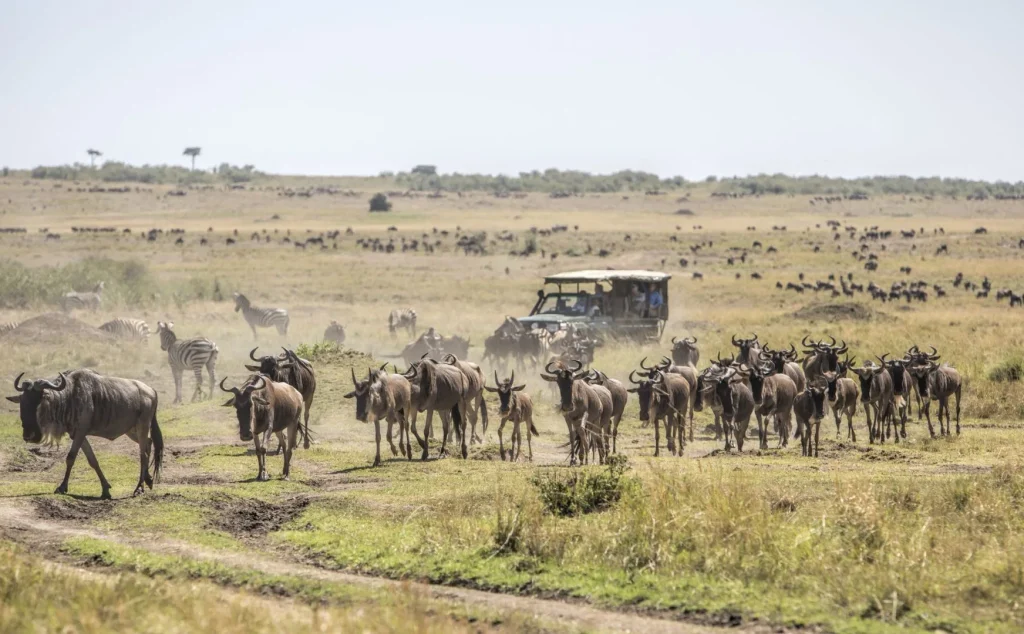
The Mara is particularly famous for the Great Wildebeest Migration, when migratory herds move between the Serengeti and Mara regions according to seasonal grazing conditions. River crossings attract significant interest, but their timing and location remain unpredictable.
A Masai Mara Wildlife Safari normally benefits from at least three days, with additional time recommended for photographers and travellers hoping to observe specific animal behaviour. Staying several nights provides opportunities to explore different sections of the reserve and respond to changing wildlife movements.
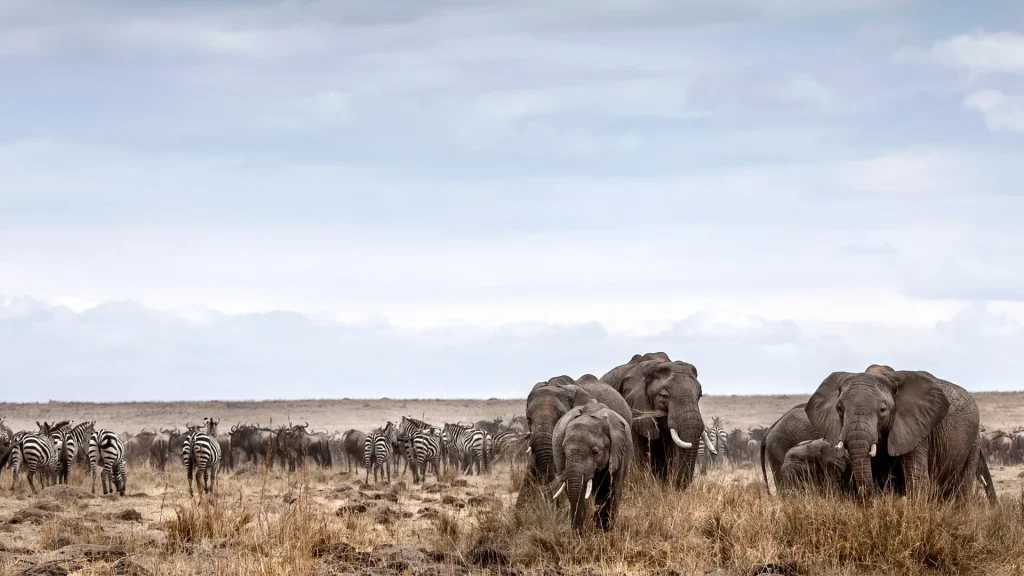
Amboseli National Park is one of Kenya's most important destinations for elephant viewing. Located in southern Kenya near the Tanzanian border, the park is internationally recognised for its elephant populations and the dramatic backdrop of Mount Kilimanjaro.
The mountain rises outside Kenya, but its summit can be visible from Amboseli when weather conditions are clear. Early mornings frequently provide favourable photographic conditions, although clouds can obscure the mountain at any time.
Amboseli's wetlands, open plains and seasonal lakebeds attract elephants, buffaloes, zebras, wildebeest and numerous bird species. Lions and other predators are present, but sightings depend on their movements and local conditions.
The park is particularly rewarding for visitors interested in elephant family behaviour. Herds may be seen feeding, drinking, interacting or moving between different parts of the landscape.
A two- or three-night Amboseli Wildlife Safari provides opportunities for early and late game drives, when temperatures and light conditions are often more comfortable.
Lake Nakuru National Park is situated within Kenya's Great Rift Valley and is known for its rhino conservation, birdlife and varied habitats. The park protects both black and white rhinoceroses, making it an important destination for travellers interested in completing a Kenya Big Five Safari.
Rhinos may be encountered in suitable grassland or woodland areas, although sightings are never guaranteed. Other wildlife includes buffaloes, giraffes, waterbucks, zebras and several predator species.
The lake has historically attracted flamingos, but their numbers fluctuate with changing water levels, food availability and environmental conditions. Visitors should therefore avoid assuming that the enormous flamingo concentrations shown in older photographs will always be present.
Lake Nakuru is often included in road itineraries connecting Nairobi and the Masai Mara. Its compact layout and varied habitats make it suitable for a shorter wildlife stop.
Samburu National Reserve lies in northern Kenya and offers a different environment from the southern savannah parks. Its semi-arid landscapes, rocky terrain and riverine vegetation support wildlife adapted to relatively dry conditions.
The reserve is associated with several distinctive species, including Grevy's zebra, reticulated giraffe, gerenuk, Beisa oryx and Somali ostrich. These are often described collectively as the Samburu Special Five.
Samburu also supports elephants, lions, leopards and numerous bird species. The Ewaso Ng'iro River provides an important source of water and supports vegetation that attracts wildlife.
A Samburu Safari is particularly worthwhile for travellers interested in animal diversity, photography and landscapes that differ from the Masai Mara. Two or three nights generally provide a useful introduction to the reserve.
Tsavo East National Park is known for its extensive semi-arid landscapes, red soils and large elephant populations. Elephants often appear reddish after dust bathing, creating one of the park's most distinctive photographic subjects.
The park supports lions, buffaloes, giraffes, zebras, antelopes and numerous birds. Wildlife is distributed across a large area, so game drives may involve considerable distances between sightings.
The Galana River provides an important ecological feature, supporting vegetation and wildlife along its course. Open landscapes create opportunities to appreciate the scale of Kenya's protected wilderness.
Tsavo East is particularly convenient for travellers combining wildlife viewing with a holiday along the Kenyan coast.
Tsavo West National Park offers more varied terrain than Tsavo East, including volcanic landscapes, hills, woodland and springs. Its scenery is a major attraction, even when wildlife sightings are less concentrated than in some smaller reserves.
Mzima Springs is one of the park's best-known natural features, while the surrounding habitats support elephants, buffaloes, giraffes and other mammals.
A combined Tsavo East and Tsavo West itinerary provides a broader experience of the region's ecology. Travellers should allow sufficient time for road transfers and game drives rather than treating both parks as brief sightseeing stops.
Ol Pejeta Conservancy, located in central Kenya, is widely associated with rhino conservation and responsible wildlife tourism. It supports important populations of black rhinos and provides protected habitat for other large mammals.
The conservancy is also internationally known for its role in efforts to protect the northern white rhinoceros. Conservation programmes and visitor activities are subject to operational rules and should be confirmed in advance.
Wildlife viewing may include elephants, buffaloes, giraffes, lions and other species. Ol Pejeta combines well with Mount Kenya and Laikipia itineraries.
The Laikipia Wildlife Conservancies provide a different safari model, with conservation areas managed through private, community and partnership arrangements.
Depending on the property, travellers may have access to guided walks, night drives, conservation activities and other experiences not available in all national parks.
Laikipia is important for several threatened wildlife species and provides opportunities to learn about conservation beyond traditional park boundaries.
The Big Five refers to lions, leopards, elephants, buffaloes and rhinoceroses. The expression originated in historical hunting terminology but is now widely used in wildlife tourism.
Lions are among the most recognisable animals on a Kenya safari. They live in social groups known as prides, although group structure and behaviour vary.
The Masai Mara is particularly associated with lion viewing, while Amboseli, Samburu, Tsavo and other protected areas also support lion populations.
Early morning and late afternoon can be productive periods for observing lions because temperatures are generally cooler. However, lions may spend substantial portions of the day resting.
Leopards are solitary and often difficult to observe. Their spotted coats provide effective camouflage, particularly in woodland and riverine habitats.
The Masai Mara and Samburu are among the destinations where travellers may have opportunities to encounter leopards. Sightings depend heavily on patience, guide knowledge and the animals' movements.
Leopards may rest in trees, move through dense vegetation or remain hidden for long periods. Visitors should not expect every game drive to produce a leopard sighting.
African elephants are found in several Kenyan wildlife destinations. Amboseli is particularly well known for its elephant populations, while Tsavo, Samburu and the Masai Mara also support these large mammals.
Elephants live in complex social groups and communicate through vocalisations, body language and other signals. Watching their interactions can be one of the most rewarding aspects of a safari.
Guides should maintain appropriate viewing distances, especially around calves and breeding herds.
African buffaloes are widespread in suitable Kenyan habitats and are frequently encountered in grassland and woodland environments.
They may form large herds or occur in smaller groups, including older males. Despite their familiar appearance, buffaloes are powerful wild animals and should always be observed from a safe distance.
Kenya protects both black and white rhinoceroses. Black rhinos are generally more associated with browsing habitats, while white rhinos primarily graze.
Lake Nakuru National Park and Ol Pejeta Conservancy are among the important destinations for rhino conservation and viewing.
Rhino sightings depend on habitat, animal movement and conservation management. Travellers should choose destinations with established rhino populations rather than expecting to find rhinos in every Kenyan park.
Cheetahs are among the fastest land mammals and are especially associated with open grasslands. The Masai Mara provides opportunities to observe them searching for prey, resting or moving through suitable habitats.
Their hunting behaviour differs from that of lions and leopards, making cheetah encounters particularly interesting for wildlife enthusiasts.
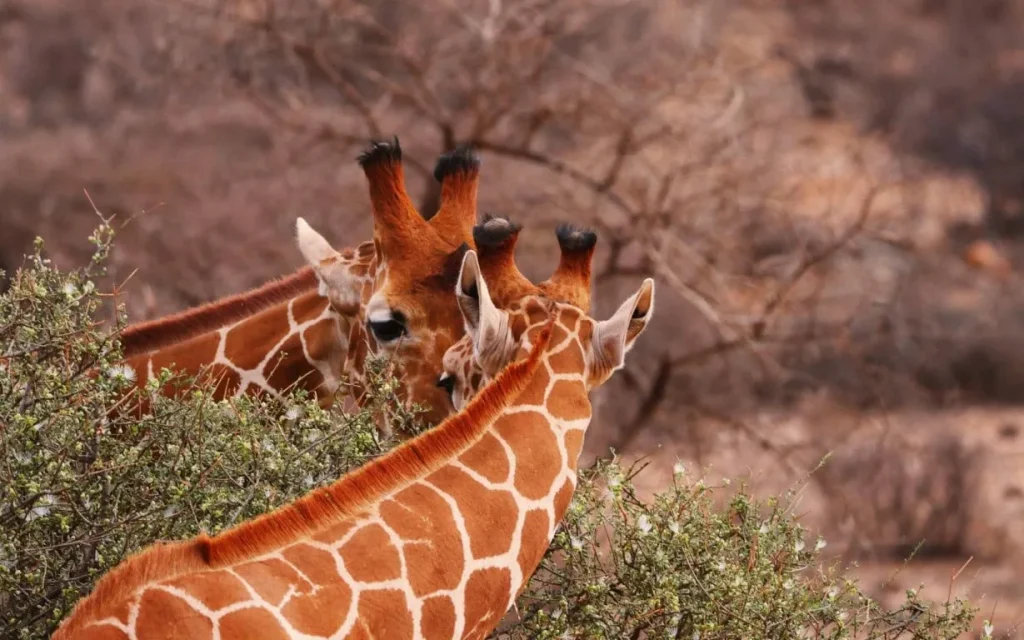
Kenya supports several giraffe populations, including Maasai giraffes, reticulated giraffes and the endangered Rothschild's giraffe, which is commonly treated as a form of northern giraffe.
Different destinations provide opportunities to observe these distinctive animals. Reticulated giraffes are particularly associated with northern Kenya, while Maasai giraffes are found in several southern regions.
Plains zebras are common in many Kenyan savannah parks, while the endangered Grevy's zebra is associated primarily with northern Kenya.
Grevy's zebras have narrower stripes and larger ears than plains zebras. Observing both forms during a multi-park safari helps visitors appreciate the country's wildlife diversity.
Hippos and Nile crocodiles inhabit suitable rivers, lakes and wetlands. The Mara River is particularly associated with both species.
Visitors should remain at safe distances from water bodies and follow guide instructions because hippos and crocodiles can be dangerous.
Kenya's wildlife parks support numerous antelope species, including impalas, gazelles, topis, hartebeests, waterbucks, elands and dik-diks.
These animals are important components of savannah ecosystems and provide prey for predators. Their movements, feeding behaviour and interactions contribute significantly to the overall safari experience.
The Great Wildebeest Migration is one of the most widely recognised wildlife events in East Africa. Large numbers of wildebeest and zebras move through the wider Serengeti-Mara ecosystem in response to seasonal rainfall and grazing opportunities.
The migration is not a single event occurring on one fixed date. Instead, it is a continuous ecological process involving different herd movements throughout the year.
Migratory herds commonly move into the Masai Mara during part of the July-to-October period, although timing varies between years.
Rainfall patterns, grass availability and other environmental factors influence the movement of animals. Some years produce earlier arrivals, while others involve later or more dispersed movements.
The Mara River crossings attract considerable interest because large herds sometimes enter the water while crocodiles and other hazards are present.
However, crossings are unpredictable. Herds may gather near the river for hours or days without crossing, and some may change direction unexpectedly.
Travellers hoping to witness crossings should allow several days in the region and maintain realistic expectations.
Yes. The Masai Mara supports substantial resident wildlife throughout the year, including lions, elephants, giraffes, buffaloes and numerous antelope species.
Travellers visiting outside the principal migration period can still enjoy excellent game viewing, often with different visitor concentrations and seasonal scenery.
Kenya is a year-round safari destination, but seasonal conditions influence wildlife visibility, visitor numbers and travel logistics.
January through March often provides relatively dry conditions in many safari regions. Shorter vegetation and concentrated water sources can make wildlife viewing rewarding.
These months are attractive for travellers interested in elephants, predators and general game viewing without focusing on the migration.
April and May are commonly associated with the long-rains season. Some roads become muddy, and wildlife may spread across wider areas as water becomes more available.
The landscape can be especially green, providing attractive photographic conditions. Some accommodation properties may offer seasonal pricing, although availability should be confirmed.
June through October is generally a popular period for wildlife safaris. Drier conditions in many areas can improve game-viewing access, while the Masai Mara receives additional attention during the migration season.
July, August and September are often busy, making advance accommodation reservations particularly important.
Short rains may occur during November and parts of December, depending on the region. The vegetation becomes greener, and birdwatching opportunities can be rewarding.
December holiday periods often bring increased accommodation demand, especially around Christmas and New Year.
A 3 Days Masai Mara Safari is suitable for travellers with limited time who want a focused introduction to Kenya's wildlife.
Day 1: Nairobi to Masai Mara
Depart Nairobi in the morning and travel southwest toward the Masai Mara. The journey commonly takes approximately five to seven hours or longer, depending on traffic, road conditions and the lodge location.
Arrive at your selected accommodation, with an afternoon game drive possible if the schedule allows. The first excursion introduces the Mara's grasslands and the animals inhabiting them.
Day 2: Full-Day Masai Mara Game Viewing
Spend the day exploring the reserve with your guide. Wildlife sightings may include lions, elephants, giraffes, buffaloes, zebras and various antelope species.
A full-day programme allows time to visit different habitats, observe animal behaviour and enjoy photography without rushing between sightings.
Day 3: Return to Nairobi
After breakfast, begin the return journey to Nairobi. Depending on park arrangements and departure time, a short morning activity may be possible, but this should be confirmed in the itinerary.
Arrive in Nairobi later in the day, allowing sufficient time for onward travel arrangements.
A 5 Days Kenya Wildlife Safari can combine the Masai Mara with Lake Nakuru National Park.
The itinerary typically includes three days in the Masai Mara region, followed by a transfer to Lake Nakuru and a final return to Nairobi.
The Masai Mara provides opportunities for observing predators and large grazing mammals, while Lake Nakuru adds different habitats and rhino-viewing possibilities.
This combination is particularly suitable for travellers seeking a broader range of wildlife without committing to a longer safari.
A proposed 7 Days Kenya Safari may combine Amboseli, Lake Nakuru and the Masai Mara.
Day 1: Nairobi to Amboseli
Travel south toward Amboseli National Park. Depending on arrival time, enjoy an afternoon wildlife excursion.
Day 2: Amboseli Wildlife Viewing
Spend the day observing elephants, wetland habitats and the park's open landscapes. Clear weather may provide views of Mount Kilimanjaro.
Day 3: Amboseli to Lake Nakuru Region
Travel toward the Great Rift Valley. This is a substantial road-transfer day, and an overnight stop or adjusted routing may be appropriate depending on the selected accommodation.
Day 4: Lake Nakuru National Park
Explore Lake Nakuru's grassland, woodland and lakeside habitats, searching for rhinos, buffaloes, giraffes and birds.
Day 5: Lake Nakuru to Masai Mara
Continue toward the Masai Mara and settle into your selected safari lodge or camp. An afternoon game drive may be possible depending on arrival time.
Day 6: Full-Day Masai Mara Safari
Spend the day exploring the reserve, searching for predators, elephants, giraffes and grazing animals.
Day 7: Return to Nairobi
After breakfast, begin the journey back to Nairobi, arriving later in the day.
This proposed route can be adjusted to include additional nights or domestic flights for travellers seeking a more relaxed pace.
A Private Kenya Safari offers flexibility in departure dates, wildlife-viewing schedules and accommodation selection.
Travellers can spend more time observing animals of particular interest, request photographic stops and adjust daily activities according to conditions.
Private safaris are particularly suitable for couples, families, photographers and groups travelling together.
A dedicated guide also provides continuity throughout the journey, helping travellers understand how different wildlife habitats relate to one another.
Private 4x4 safari vehicles are especially useful for extended game drives, although exact vehicle features and passenger capacity should be confirmed before booking.
Kenya Group Safaris allow travellers to share transport and guiding costs with other participants.
They are attractive for solo travellers, friends and couples who prefer a more economical safari arrangement.
Group departures normally operate according to a defined itinerary and schedule, with less flexibility than private tours.
Before booking, travellers should confirm the maximum group size, vehicle arrangement, accommodation category, departure dates and included park activities.
A smaller group can provide a more comfortable wildlife-viewing experience, particularly when several participants are interested in photography.
Accommodation is an important part of the overall safari experience because location, comfort and access arrangements affect the daily programme.
Essential Safari Accommodation focuses on practical comfort and affordability. Travellers may stay in simple lodges or permanent tented camps with basic facilities.
These options are suitable for visitors who want to devote a greater share of their budget to wildlife activities.
Comfort properties generally provide private bathrooms, organised meals and comfortable rooms or safari tents.
They offer a balance between price and convenience and are popular with couples and families.
Premium Kenya Safari Lodges may offer more spacious accommodation, attractive locations, upgraded dining and additional guest facilities.
Some premium properties provide convenient access to important wildlife areas, reducing the amount of time spent travelling to game-drive locations.
Signature accommodation focuses on distinctive settings, privacy and personalised service.
Properties may include exclusive luxury camps, private villas and conservancy lodges offering specialised experiences.
The exact facilities and inclusions differ, so travellers should compare individual properties rather than relying solely on category descriptions.
The price of a Kenya Wildlife Safari Package depends on the number of travel days, accommodation category, season, transport arrangements and number of participants.
Park and conservancy fees can represent a substantial part of the total cost. These fees vary by destination, visitor category and applicable management rules.
Accommodation rates also change throughout the year. Properties in the Masai Mara may be particularly expensive during popular migration months, while other periods can offer more flexibility.
Private safari transport is another important consideration. A vehicle carrying two travellers generally has a higher per-person transport cost than one carrying four or more people, assuming the vehicle remains suitable for the group.
Domestic flights can reduce travel time but increase the package cost. They are particularly useful for travellers combining distant destinations or working within limited holiday periods.
A detailed quotation should explain which meals, park fees, transfers, activities and accommodation arrangements are included.
The inclusions depend on the selected package and should always be confirmed before booking.
Common arrangements may include:
Optional activities, additional flights, gratuities, personal expenses and travel insurance may be excluded.
Travellers should avoid assuming that every activity advertised for a destination is automatically part of their package.
Kenya is an outstanding destination for wildlife photography because of its varied habitats and relatively accessible game-viewing areas.
The Masai Mara is especially attractive for predator photography, while Amboseli provides opportunities to photograph elephants against open landscapes and, when visible, Mount Kilimanjaro.
Early morning and late afternoon often provide softer light, although wildlife activity can occur at any time.
Photographers should bring suitable lenses, spare batteries, sufficient storage and protective equipment for dust and rain.
A private safari can be particularly valuable for serious photographers because it allows greater control over positioning and time spent at individual sightings.
However, photographers must follow park regulations and avoid pressuring guides to approach animals too closely.
Kenya supports an exceptional variety of birdlife across its different habitats.
Wetlands and lakes attract waterbirds, while savannah environments support raptors, ground-dwelling birds and numerous smaller species.
Samburu, Lake Nakuru, the Rift Valley and forested highland regions provide contrasting birdwatching opportunities.
Travellers interested in birds should inform their operator before booking so that suitable destinations, guides and activities can be incorporated.
Binoculars and a field guide are useful, while longer stays allow time to explore different habitats.
Responsible tourism is essential to protecting Kenya's wildlife and preserving the quality of safari experiences.
Visitors should remain inside vehicles where required, follow authorised routes and maintain appropriate distances from animals.
Crowding predators, blocking wildlife movement or encouraging animals to approach vehicles can create unnecessary disturbance.
Professional guides should prioritise animal welfare and visitor safety over obtaining dramatic photographs.
Travellers can also support conservation by choosing accommodation and activities that demonstrate responsible environmental management and meaningful community engagement.
In private and community conservancies, tourism may contribute to habitat protection and local livelihoods, although conservation arrangements differ between properties.
Different parks offer different wildlife strengths. The Masai Mara is particularly attractive for predators, Amboseli for elephants, Samburu for northern species and Lake Nakuru or Ol Pejeta for rhino-related experiences.
Selecting destinations according to your interests is more effective than trying to visit every park in a limited period.
Wildlife sightings are unpredictable, and patience is essential. A longer stay in one destination can sometimes produce a better experience than a rushed itinerary covering several parks.
Even during relatively dry months, rain is possible. Early mornings can be cool, especially in higher-altitude destinations.
Pack lightweight clothing, a warm layer and suitable rain protection.
Binoculars improve the viewing experience, particularly for birds, distant predators and animals that cannot be approached closely.
Wild animals can behave unpredictably. Always follow safety instructions and avoid leaving vehicles in unauthorised areas.
Visitors should check Kenya's current entry authorisation requirements, passport rules and applicable health regulations before departure.
Comprehensive travel insurance should cover medical emergencies, evacuation, cancellations and the activities included in the safari.
Depending on the destination, visitors may encounter lions, leopards, elephants, buffaloes, rhinos, giraffes, zebras, wildebeest, cheetahs, hippos, crocodiles and numerous antelope and bird species.
No particular sighting can be guaranteed.
The Masai Mara is among the most popular destinations for general wildlife viewing and predators. However, Amboseli may be preferable for elephants, Samburu for northern species and Ol Pejeta for rhino conservation.
The best park depends on the traveller's interests.
Yes. Kenya supports all five species, but visitors may need to combine suitable destinations to improve their chances of seeing them.
January to March and June to October are often attractive for game viewing in many regions. Migration-focused travellers commonly consider July to October for the Masai Mara.
Actual conditions vary by destination and year.
Three days can provide an introduction to the Masai Mara, while five to seven days allows a broader itinerary.
Eight to ten days or longer is preferable for travellers wanting several wildlife regions without excessive rushing.
Yes. Many lodges welcome families, and private safaris can be adapted to children's interests and travel tolerance.
Parents should check activity age restrictions and accommodation policies before booking.
Private safaris offer greater flexibility and personalised guiding. Group safaris can be more economical and sociable.
The best option depends on budget, preferred travel style and the importance of schedule flexibility.
Yes. Kenya's national parks can be combined with Diani Beach, Watamu, Mombasa and other coastal destinations.
Domestic flights or carefully planned road routes can connect safari regions with the coast.
No. Kenya's safari animals live in natural environments and move according to their own behaviour and ecological conditions.
Experienced guides can improve the chances of rewarding sightings, but no responsible operator should guarantee specific animals.
A successful wildlife safari is built around realistic expectations, suitable destinations and enough time to appreciate the animals and landscapes. Kenya offers opportunities ranging from focused Masai Mara predator safaris to extended journeys exploring Amboseli, Samburu, Lake Nakuru, Tsavo and Laikipia.
Safari Trips to Kenya can help travellers compare Kenya Wildlife Safari Packages, accommodation categories, private safari arrangements and selected group departures.
Private itineraries can be customised according to travel dates, group size, wildlife interests and preferred comfort level. Travellers may also combine wildlife viewing with cultural experiences, conservation visits or a relaxing holiday along the Indian Ocean coast.
When requesting a safari quotation, provide your preferred travel dates, number of participants, desired trip length, approximate budget and the animals or destinations that interest you most.
With thoughtful planning and knowledgeable guiding, Kenya Wildlife Safaris provide an opportunity to experience the country's remarkable ecosystems and observe some of Africa's most fascinating animals in the wild.