
11 Days Kenya Photography Safari
Plan a 11 Days Kenya Photography Safari with expert guides, game drives and carefully chosen camps. Request a…
View SafariHandpicked Kenya Safari Tours for Every Traveler
Discover Kenya photography safaris in Masai Mara, Amboseli, Samburu and Ol Pejeta. Explore private wildlife photography tours, expert guides and safari packages.
A Kenya photography safari prioritises the quality of photographic opportunities rather than the number of attractions visited. A conventional safari may aim to cover several destinations in a limited period, while a photography-focused itinerary generally allows more time in fewer locations.
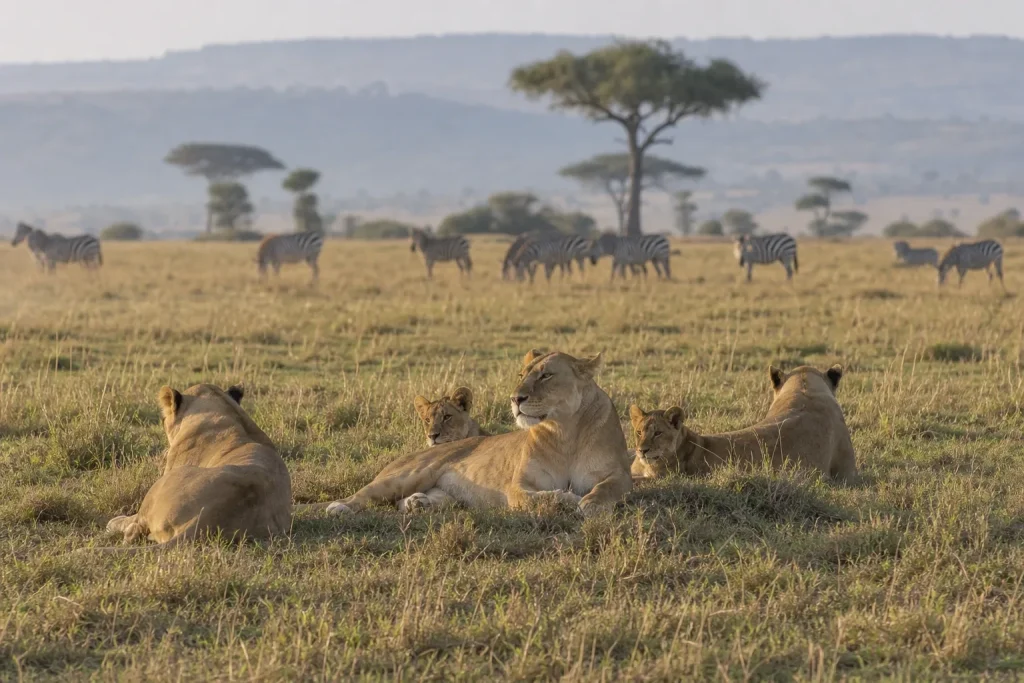
For example, a standard game drive might stop briefly to observe a pride of lions before continuing towards another sighting. A photographer may prefer to remain with the pride for an extended period, waiting for interaction, movement or a change in lighting.
Photography safaris also require attention to vehicle positioning. The direction of sunlight, the height of the camera, the background and the distance to the animal all influence the resulting image. A knowledgeable guide understands these considerations while maintaining appropriate distances and following park regulations.
Another important difference is the daily schedule. Photographers often prefer early departures to make use of morning light and may spend longer in the field when conditions are productive. Accommodation, meal arrangements and transport should support this flexibility.
Showing 1–12 of 12 safaris
Plan a 11 Days Kenya Photography Safari with expert guides, game drives and carefully chosen camps. Request a…
View SafariJoin a 13 Days Kenya Photography Safari featuring Amboseli elephants, Lake Nakuru rhinos and Masai Mara big cats,…
View SafariCapture Kenya on a 14 Days Kenya Photography Safari with private game drives, elephants, big cats, rhinos, landscapes…
View SafariExplore the 17 Days Kenya Photography Safari with a day-by-day safari plan, key wildlife experiences, destinations, accommodation ideas,…
View SafariExplore the 19 Days Kenya Photography Safari with a day-by-day safari plan, key wildlife experiences, destinations, accommodation ideas,…
View SafariExplore the 21 Days Kenya Photography Safari with a day-by-day safari plan, key wildlife experiences, destinations, accommodation ideas,…
View SafariPlan a 3 Days Masai Mara Safari with expert guides, game drives and carefully chosen camps. Request a…
Masai Mara
View SafariJoin a 6 Days Kenya Photography Safari with private game drives, sunrise and sunset shoots, big cats, elephants,…
View SafariExplore our 8 Days Kenya Photography Safari with dedicated game drives, expert guiding, wildlife photography opportunities and flexible…
View SafariPlan an 8 Days Migration Safari in Kenya with Masai Mara game drives, wildebeest viewing, river crossing insights,…
Masai Mara
View SafariPlan a 9 Days Kenya Photography Safari with expert guides, game drives and carefully chosen camps. Request a…
View SafariExplore Migration Photography Safari with guidance on migration timing, herd movements, river crossings, safari locations, camps, photography and…
Masai Mara
View SafariKenya combines wildlife diversity with a broad range of landscapes and established safari infrastructure. The country's protected areas support many large mammals, predators, birds and smaller species that are attractive to photographers.
Photographers may encounter elephants, lions, leopards, cheetahs, buffaloes, rhinoceroses, giraffes, zebras, antelopes and numerous other animals. Each species presents different photographic challenges, from the slow movements of grazing rhinos to the rapid acceleration of hunting predators.
Kenya's scenery is an important part of its photographic appeal. The open plains of the Masai Mara, Mount Kilimanjaro's distant profile above Amboseli, Samburu's dry-country landscapes and Mount Kenya's high-altitude scenery provide distinctive backgrounds.
The Great Wildebeest Migration creates opportunities to photograph enormous herds and dramatic animal movements. However, migration timing varies annually, and specific events such as river crossings cannot be guaranteed.
Kenya supports an extensive range of bird species, making it attractive for both specialist bird photographers and general wildlife enthusiasts.
A range of lodges, camps, professional guides and safari vehicles makes it possible to organise itineraries for different budgets and experience levels.
The Masai Mara is one of Kenya's most celebrated wildlife photography destinations. Its open grasslands provide opportunities to photograph animals against relatively uncluttered backgrounds, while the reserve's predator populations make it especially attractive for action and behavioural photography.
Lions are among the most sought-after subjects in the Masai Mara. Photographers may observe pride members resting, interacting or moving through the grasslands. Social behaviour can provide opportunities for storytelling images, particularly when cubs are present.
Successful lion photography requires patience. Lions may remain inactive for long periods, especially during warm conditions. A photographer who waits respectfully may capture more interesting behaviour than one who moves constantly between sightings.
Cheetahs are particularly associated with open habitats. Their speed makes them challenging subjects, especially when they begin moving rapidly.
A camera with reliable continuous autofocus and a fast shutter speed can be helpful. However, photographers should never ask guides to provoke movement or interfere with hunting behaviour.
Leopards are more elusive and often use areas with trees, shrubs and other cover. Their secretive behaviour can make sightings unpredictable.
When a leopard is encountered, careful composition and patience are important. Photographers should avoid pressuring guides to approach too closely.
During the main migration period, substantial wildebeest and zebra herds may move through the Masai Mara ecosystem. The resulting scenes can provide opportunities for wide environmental images, individual portraits and action photography.
River crossings may occur along the Mara River, but they cannot be scheduled or guaranteed.
Three or four nights can provide a useful introduction to Masai Mara photography. Travellers focusing on migration crossings or predator behaviour may prefer five to seven nights or longer.
Amboseli photography safaris are particularly famous for elephant photography and the possibility of including Mount Kilimanjaro in the background. The park's open plains and wetlands provide distinctive photographic environments.
Amboseli is internationally recognised for long-term elephant research. Photographers may observe family groups feeding, travelling or interacting.
Elephant calves can provide particularly engaging subjects, although visitors should never approach them too closely or interfere with the herd.
Adult male elephants can make impressive photographic subjects. Their size, tusks and presence can be emphasised through thoughtful framing and suitable perspective.
On clear days, Mount Kilimanjaro can provide a dramatic backdrop. Early morning may offer favourable visibility, although clouds can obscure the mountain at any time.
A photographer should plan several opportunities rather than assuming that the mountain will be visible during one particular game drive.
Amboseli's wetlands support birds and other wildlife. These habitats can provide attractive opportunities for photographing animals in water and vegetation.
Two to three nights is suitable for many travellers. Photographers who particularly want Kilimanjaro compositions may benefit from additional time.
Samburu photography safaris offer a different visual experience from the Masai Mara and Amboseli. The reserve's dry landscapes, riverine vegetation and distinctive wildlife create opportunities for unusual compositions.
Grevy's zebras have narrow stripes and large ears, making them distinctive photographic subjects.
Reticulated giraffes are known for their striking coat patterns. They can be photographed against the reserve's dry-country vegetation.
Gerenuks are particularly interesting because of their long necks and unusual browsing behaviour. They may stand on their hind legs to reach vegetation.
These antelopes are adapted to dry environments and have long, straight horns that create elegant photographic silhouettes.
Elephants may be observed in areas associated with the Ewaso Ng'iro River and surrounding habitats.
Two to three nights provides time to explore different areas and seek a variety of photographic subjects.
Ol Pejeta Conservancy is particularly attractive to photographers interested in rhinoceroses and wildlife conservation.
The conservancy supports black and white rhinos, elephants, lions, leopards and other wildlife. It is also internationally associated with efforts to conserve the northern white rhinoceros.
Black rhinos often use habitats with woody vegetation. Their behaviour and surroundings can make photography challenging.
White rhinos are primarily grazers and may be encountered in more open areas.
Ol Pejeta provides opportunities to learn about endangered species protection and conservation management. Specialist visits and photography activities should be arranged through authorised channels.
Two or three nights can provide a rewarding combination of wildlife photography and conservation experiences.
Lake Nakuru National Park offers a mixture of lake, woodland and grassland habitats. It is particularly important for rhinoceros conservation and provides opportunities for bird photography.
Both black and white rhinos are among the park's attractions. Photographers may capture animals against varied vegetation and landscape backgrounds.
The lake and surrounding habitats attract numerous bird species. Flamingo numbers fluctuate according to environmental conditions, so large concentrations should not be assumed.
The lake, surrounding escarpments and woodland areas offer opportunities for wider compositions.
Tsavo East is known for its extensive wilderness and elephants that may appear reddish from dust and soil. The park's broad landscapes can be particularly attractive to photographers interested in environmental wildlife images.
Long focal lengths are useful for distant animals, while wide-angle lenses can communicate the scale of the landscape.
Distances within the park are substantial, so itineraries should allow realistic game-drive times.
Tsavo West offers hills, volcanic features, woodland and varied habitats. Its landscapes differ considerably from the open plains of the Masai Mara.
Wildlife can sometimes be more difficult to locate because of vegetation cover, but the scenery provides opportunities for landscape photography.
Photographers may combine Tsavo West with Amboseli or Tsavo East for a more varied itinerary.
Lake Naivasha is particularly attractive for photographing waterbirds and lakeside landscapes. Boat-based excursions may provide opportunities to observe birds and hippos from suitable distances.
Photographers should use authorised operators and follow safety instructions. Hippos are powerful and potentially dangerous animals, and boats should maintain appropriate distances.
Mount Kenya provides opportunities to photograph forests, moorland, alpine vegetation and dramatic high-altitude scenery.
Mountain photography requires different preparation from a conventional wildlife safari. Weather can change rapidly, and higher elevations can be cold.
Travellers undertaking mountain treks should plan suitable equipment, guiding and acclimatisation.
A private photography safari Kenya itinerary provides a dedicated vehicle and guide. This allows travellers to choose how long to remain at sightings and which photographic subjects to prioritise.
Private safaris are particularly suitable for experienced photographers carrying substantial equipment.
Small-group tours can provide a more affordable alternative while maintaining a photography-focused programme.
However, vehicle occupancy is important. Too many photographers sharing one vehicle can restrict viewing angles and movement.
Beginner-focused safaris provide opportunities to practise camera settings, composition and wildlife observation.
Travellers should choose a programme that allows enough time to learn rather than moving rapidly between destinations.
Professional photographers may require specialised guiding, extended stays, particular vehicle arrangements or permits for commercial assignments.
These requirements should be discussed before booking.
Bird photography often requires long lenses, patience and knowledge of habitats.
Suitable destinations depend on the species of interest and seasonal conditions.
Migration-focused safaris concentrate on the Masai Mara during suitable periods.
Travellers should allow several nights because herd movements and river crossings are unpredictable.
Landscape-focused itineraries may combine Amboseli, Samburu, Mount Kenya and other scenic destinations.
These programmes often prioritise early morning and late afternoon light.
The vehicle is one of the most important elements of a successful photography safari.
A safari Land Cruiser with an appropriate roof opening can provide elevated viewing opportunities.
Photographers should have enough space to use long lenses without obstructing other passengers.
A vehicle carrying fewer photographers generally provides more flexibility.
Beanbags can help stabilise telephoto lenses.
Camera bags, lenses and other equipment should be stored securely.
Ask whether the vehicle or accommodation provides suitable charging facilities.
A camera with reliable autofocus and good image quality is useful. Modern mirrorless and DSLR systems can both produce excellent results.
A telephoto zoom provides flexibility for animals at different distances. Common ranges include 100–400 mm and 200–600 mm, depending on the camera system.
A 70–200 mm lens can be useful for larger animals and environmental compositions.
A wide-angle lens is valuable for landscapes, large herds and scenic compositions.
A second body reduces lens changes and provides backup.
Binoculars help identify wildlife and observe behaviour.
Carry sufficient spares for long game drives.
A reliable image backup routine is important for longer safaris.
Protect equipment from dust, rain and accidental damage.
Fast-moving animals generally require a fast shutter speed. Approximately 1/1600 second or faster can be a useful starting point for running wildlife.
A wider aperture can isolate a subject, while a narrower aperture provides greater depth of field.
Auto ISO can help maintain appropriate exposure as lighting changes.
Continuous autofocus is generally useful for moving subjects.
Burst shooting can capture brief moments of action, but it should be used deliberately.
RAW files provide greater flexibility for post-processing, although they require more storage.
| Subject | Suggested starting approach |
|---|---|
| Resting lion | Moderate shutter speed, eye focus |
| Running cheetah | 1/2000 sec or faster when possible |
| Elephant portrait | Telephoto lens, attention to background |
| Bird in flight | Fast shutter, continuous autofocus |
| Wide landscape | Smaller aperture for depth of field |
| Wildebeest crossing | Fast shutter, burst shooting |
| Backlit wildlife | Monitor highlights carefully |
| Animal interaction | Continuous autofocus, patient observation |
Settings should always be adjusted to actual lighting and equipment.
Kenya offers photographic opportunities throughout the year, although different seasons create different conditions.
These months often provide relatively dry conditions in several safari regions. Wildlife viewing can be rewarding, and landscapes may appear more open.
The long-rains period can bring green scenery, dramatic clouds and changing light. Some tracks may become muddy.
The generally drier months are popular for wildlife photography. This period also overlaps with the main migration season in the Masai Mara.
Short rains may refresh vegetation and create attractive photographic conditions. Weather patterns vary between destinations.
Morning light can be soft and warm. Wildlife may also be active during cooler conditions.
Midday light can be harsh, but it can still provide opportunities for behaviour photography.
Low-angle sunlight can create attractive colours and shadows.
Cloud cover can soften contrast and produce even lighting.
Where possible and permitted, a lower camera perspective can create a stronger connection with the animal.
Sharp eyes are especially important in wildlife portraits.
Environmental compositions show how animals relate to their surroundings.
Observe animals before raising the camera. Understanding their movements can improve timing.
Leaving space around a subject can strengthen the composition.
Social behaviour often produces more meaningful images than static portraits.
A collection of photographs showing habitat, behaviour and interaction can create a richer visual narrative.
Predator photography requires patience and realistic expectations. Lions may rest for long periods, leopards can remain concealed, and cheetahs may move rapidly across open terrain.
Photographers should avoid pressuring guides to provoke movement or approach too closely.
The best photographs often come from observing natural behaviour over time.
Elephants are among Kenya's most rewarding photographic subjects.
Observe interactions between adults and calves.
Elephants use their trunks to gather food and water.
Include the landscape to communicate scale.
Never obstruct an elephant's path or approach too closely.
Kenya's varied habitats support numerous bird species.
Bird photographers should use suitable telephoto lenses and practise continuous autofocus.
Knowledge of feeding habitats and behaviour can improve opportunities.
Patience is particularly important because small birds may move quickly and unpredictably.
Safari Trips to Kenya can help travellers compare accommodation according to comfort and budget.
Practical accommodation focused on value and access to wildlife areas.
Comfortable lodges and camps suitable for general photography safaris.
Higher-end properties with refined facilities and service.
Exclusive accommodation and personalised arrangements.
For serious photographers, location and guiding quality may be more important than luxury facilities alone.
Suitable for a short safari focused on one destination.
Allows more time for repeated game drives and wildlife observation.
Provides opportunities to combine two or three destinations.
Suitable for photographers seeking varied habitats and a relaxed pace.
Arrive at Jomo Kenyatta International Airport and transfer to your selected hotel. Meet your safari representative and review the itinerary, camera equipment arrangements and departure schedule.
Travel to Amboseli and check into your accommodation. Enjoy an afternoon game drive, focusing on elephants, landscapes and other wildlife.
Begin early to take advantage of morning light. Photograph elephant families and explore the park's varied habitats. Look for Mount Kilimanjaro views when weather permits.
Enjoy a final morning game drive if the schedule allows. Return to Nairobi for an overnight stay before continuing towards the Rift Valley.
Travel towards Lake Nakuru National Park. Enjoy an afternoon wildlife excursion, focusing on rhinos, birds and landscape compositions.
Continue towards the Masai Mara. Arrive for an afternoon game drive if travel time permits.
Explore suitable wildlife habitats and search for lions, cheetahs, leopards and other species. Spend time observing behaviour rather than moving rapidly between sightings.
Continue exploring the reserve with a flexible schedule. Photograph grazing animals, predators and the surrounding landscape.
Spend another day photographing wildlife. During migration season, investigate appropriate river areas if current herd movements justify it. Crossings remain unpredictable.
Enjoy a final morning game drive if time permits. Return to Nairobi or transfer for an onward flight.
This itinerary can be customised to include additional nights, domestic flights or alternative destinations.
The cost of a photography safari depends on travel duration, accommodation standard, vehicle arrangements, group size and season.
A private vehicle generally costs more per person for a small group but provides greater flexibility.
Luxury accommodation and domestic flights can increase the overall price.
Travellers should request a detailed quotation identifying all inclusions and exclusions.
Depending on the package, inclusions may cover accommodation, meals, transport, guiding, park fees and scheduled game drives.
International flights, travel insurance, tips, personal expenses and optional activities may be excluded.
Photography-specific arrangements should be clearly documented.
Beginners do not need professional equipment to enjoy wildlife photography.
A camera with a suitable zoom lens can produce rewarding results.
Before travelling, practise changing shutter speed, aperture, ISO and autofocus settings.
A patient guide and flexible itinerary can help beginners develop confidence.
Professional photographers may require specialised guiding, exclusive vehicle use and extended stays.
Commercial assignments may also require additional permissions.
These requirements should be confirmed before departure.
A detailed briefing can help the safari operator understand the photographer's intended subjects and technical needs.
Families can combine wildlife viewing with photography education.
Children may enjoy photographing giraffes, zebras, elephants and birds.
A private vehicle allows flexible game-drive durations and rest breaks.
Parents should supervise children and ensure that wildlife-viewing rules are followed.
Ethical photography is essential for protecting Kenya's wildlife.
Animals should never be disturbed to obtain a photograph.
Photographers should not request illegal off-road driving or block animal movement.
Feeding wildlife is inappropriate.
Sensitive conservation information should be handled responsibly.
Visitors should respect park regulations, local communities and the instructions of professional guides.
Before departure, check camera equipment and practise using essential settings.
Bring spare batteries, memory cards and protective covers.
Pack clothing suitable for cool mornings and warm afternoons.
Arrange suitable travel insurance and consider equipment coverage.
Confirm luggage restrictions if domestic safari flights are included.
Communicate any specialist photography requirements to the operator before booking.
Yes. Kenya offers diverse wildlife, dramatic landscapes and established safari infrastructure.
The Masai Mara, Amboseli, Samburu and Ol Pejeta are excellent choices, depending on the subjects you prefer.
No. Beginners can enjoy photography with suitable consumer cameras and lenses.
A versatile telephoto zoom is useful, complemented by a wider lens for landscapes.
A private safari provides greater flexibility and more room for equipment.
Kenya offers opportunities throughout the year, with different seasonal advantages.
Yes, during suitable periods in the Masai Mara, although river crossings are not guaranteed.
Five to ten days provides a useful starting point, depending on the number of destinations.
Yes. A wildlife safari can be followed by a stay along Kenya's Indian Ocean coast.
Yes. Solo travellers can book private arrangements or enquire about suitable shared departures.
Drone use is regulated and may require specific permissions. Do not operate a drone in protected areas without the necessary authorisation.
Photography involving people should be respectful and based on appropriate consent.
Kenya Photography Safaris offer opportunities to document extraordinary wildlife, natural behaviour and diverse landscapes. From the predators of the Masai Mara to Amboseli's elephants and the rhinos of Ol Pejeta, Kenya provides rewarding experiences for photographers of different skill levels.
Safari Trips to Kenya can help arrange private wildlife photography safaris, suitable vehicles, experienced guides and accommodation selected according to your photographic interests.
Contact Safari Trips to Kenya to discuss your preferred subjects, travel dates, equipment requirements and ideal safari duration.