
9 DAYS / 8 NIGHTS
9 Days Samburu to Masai Mara Safari
Plan a 9 Days Samburu to Masai Mara Safari with expert guides, game drives and carefully chosen camps. Request a quote.
- Wildlife Safari Private Journey
- Private Safari 4x4 Vehicle
- Expert Guide English Speaking
- All Meals Breakfast, Lunch, Dinner
- 24/7 Support We're here to help
01 Overview
Safari Overview
- Duration 9 days / 8 nights
- Destination Masai Mara
- Starts / ends Nairobi
- Safari style Private safari
- Accommodation Essential · Comfort · Premium · Signature
- Best for Wildlife viewing, photography
9 Days Samburu to Masai Mara Safari – Northern Kenya Wildlife to the Legendary Mara
The 9 Days Samburu to Masai Mara Safari is a comprehensive Kenya wildlife journey connecting the rugged, semi-arid landscapes of northern Kenya with the spectacular grasslands of the Masai Mara. It is an excellent itinerary for travelers who want more than the familiar southern Kenya safari circuit and would like to experience the remarkable ecological contrast between Samburu National Reserve, Kenya's central highlands and Rift Valley wildlife areas before finishing with several days of exceptional game viewing in the Masai Mara.
One of the greatest strengths of this itinerary is its wildlife diversity. Samburu introduces species that are difficult or impossible to see on a standard Masai Mara-focused safari. These northern specialists include Grevy's zebra, reticulated giraffe, Beisa oryx, gerenuk and Somali ostrich. Together, several of these species are commonly referred to as the Samburu Special Five.
As the safari progresses southward, the landscape changes dramatically. The dry country surrounding Samburu gives way to higher, greener environments before the route reaches the Great Rift Valley and ultimately the rolling grasslands of the Masai Mara. The final days of the safari concentrate on the Mara's famous populations of lions, leopards, cheetahs, elephants, buffaloes, giraffes, zebras, wildebeest and spotted hyenas. During appropriate months, the greater Mara ecosystem may also contain enormous concentrations of migrating wildebeest and zebra associated with the Great Migration, although herd movements and river crossings are never guaranteed.
This is therefore not simply a nine-day wildlife safari. It is a journey across contrasting Kenyan ecosystems, from northern drylands to classic East African savannah.
9 Days Samburu to Masai Mara Safari at a Glance
A representative itinerary can be structured as follows, and the exact routing can be adjusted according to accommodation availability, road conditions, travel season and your preferred combination of road and air transfers:
- Day 1: Nairobi – Samburu National Reserve
- Day 2: Full-Day Samburu National Reserve Safari
- Day 3: Second Full Day in Samburu – Samburu Special Five
- Day 4: Samburu – Central Kenya / Ol Pejeta Conservancy
- Day 5: Central Kenya – Lake Nakuru / Great Rift Valley
- Day 6: Lake Nakuru – Masai Mara National Reserve
- Day 7: Full-Day Masai Mara Safari
- Day 8: Second Full-Day Masai Mara Safari
- Day 9: Masai Mara – Nairobi / Departure
Why Choose a Samburu to Masai Mara Safari?
Many first-time visitors to Kenya concentrate almost entirely on the Masai Mara. The Mara certainly deserves its reputation, but Kenya contains an extraordinary range of ecosystems beyond its most famous reserve. Samburu is one of the best destinations for demonstrating this diversity. The reserve lies within the drier landscapes of northern Kenya and supports wildlife communities adapted to semi-arid conditions. Several species commonly encountered here are absent or considerably less common in the Masai Mara.
By beginning in Samburu and ending in the Mara, you can see the environmental transformation of Kenya firsthand. The safari moves from:
Dry northern landscapes → central Kenyan highlands → Rift Valley environments → open Masai Mara grasslands.
Wildlife changes along with the landscape. This creates a much richer journey than repeatedly visiting parks with similar habitats.
Major Safari Highlights
Highlights of the 9 Days Samburu to Masai Mara Safari can include:
- Samburu National Reserve
- Ewaso Nyiro River wildlife viewing
- Grevy's zebra
- Reticulated giraffe
- Gerenuk
- Beisa oryx
- Somali ostrich
- Samburu elephants
- Lion and leopard searches
- Central Kenya scenery
- Rhino viewing opportunities depending on routing
- Great Rift Valley landscapes
- Lake Nakuru wildlife where included
- Masai Mara National Reserve
- Multiple full-day Mara game drives
- Lions, leopards and cheetahs
- Elephants and buffaloes
- Great Migration viewing during appropriate periods
- Optional Masai Mara balloon safari
- Excellent wildlife photography
- Birdwatching
- Optional cultural experiences
- Private safari vehicle
- Customizable accommodation
Samburu and Masai Mara – Two Completely Different Safari Worlds
The combination of Samburu and the Masai Mara is particularly rewarding because the reserves look and feel very different.
Samburu
The environment can appear harsh, particularly during dry periods, but the Ewaso Nyiro River provides a critical source of water, and wildlife concentrations around the river can be excellent. Samburu is characterized by:
- Semi-arid landscapes
- Rocky hills
- Dry riverbeds
- Acacia woodland
- Doum palms
- Ewaso Nyiro River
- Open scrub
- Northern specialist wildlife
- Lower-profile but highly rewarding predator viewing
Masai Mara
The contrast between these destinations is one of the central reasons to choose this itinerary. The Masai Mara is characterized by:
- Extensive grasslands
- Rolling savannah
- Seasonal streams
- Riverine woodland
- High herbivore densities
- Exceptional predator populations
- Great Migration activity during appropriate seasons
- Classic East African safari scenery
Itinerary
- Day 1: Nairobi – Samburu
- Day 2: Samburu National Reserve Safari
- Day 3: Second Full Day in Samburu, predators, Elephants and Northern Kenya Wildlife
- Day 4: Samburu, central Kenya / Ol Pejeta
- Day 5: Central Kenya, lake Nakuru and the Great Rift Valley
- Day 6: Lake Nakuru, masai Mara
- Day 7: Masai Mara Safari – Big Cats and Big Five
- Day 8: Second Full, day Masai Mara Safari, great Migration and Mara River
- Day 9: Morning game drive – return to Nairobi

02 Itinerary
9 Days Samburu to Masai Mara Safari: Detailed Itinerary
-

Day 1: Nairobi – Transfer to Samburu National Reserve - Main destination
- Masai Mara National Reserve
- Drive time
- Road transfer as outlined in the itinerary
- Meals
- Lunch, Dinner
Your 9 Days Samburu to Masai Mara Safari begins in Nairobi. Your professional safari driver-guide will meet you at your Nairobi hotel or another agreed pickup location for a briefing before you begin the journey toward northern Kenya.
Leaving the capital, you travel toward Kenya's central highlands. The scenery changes considerably during the journey, as urban development gradually gives way to agricultural landscapes, small towns and increasingly open countryside. Depending on the selected route and weather conditions, distant views toward the Mount Kenya region may be possible.
As you continue north, vegetation becomes progressively drier. The green central highlands eventually transition into the semi-arid landscapes associated with Samburu. This transformation is part of the experience, and by the time you reach the Samburu ecosystem, the scenery is dramatically different from Nairobi.
After entering the reserve or surrounding conservation area, you may begin seeing wildlife almost immediately. Depending on arrival time, you will check into your safari lodge or tented camp, have lunch and take a short rest before departing for your first afternoon game drive.
Your First Samburu Game Drive
Samburu offers an immediate introduction to species that distinguish northern Kenya from the country's southern parks. Your guide will begin searching for the animals collectively associated with the Samburu Special Five, although no individual sighting can be guaranteed. These include: Grevy's zebra, Reticulated giraffe, Beisa oryx, Gerenuk, Somali ostrich.
You may also encounter elephants, impalas, dik-diks, warthogs, baboons and various predators.
The Ewaso Nyiro River is one of the most important ecological features in the reserve. During dry periods, animals frequently concentrate around the river, creating excellent wildlife-viewing opportunities. Elephants may walk down to drink or feed in riverine vegetation, while predators may remain close to areas where prey animals congregate.
As temperatures begin to cool, animal activity often increases, and the late-afternoon light can be particularly attractive against Samburu's dusty landscape. Return to your lodge or tented camp around sunset for dinner.
Destination: Samburu National Reserve
Main experience: Scenic transfer and introductory game drive
Wildlife focus: Samburu Special Five and elephants
Accommodation: Budget, mid-range or luxury safari lodge/camp
Meals: Lunch and dinner, depending on departure arrangements
Where you stay
-
Essential (Budget)
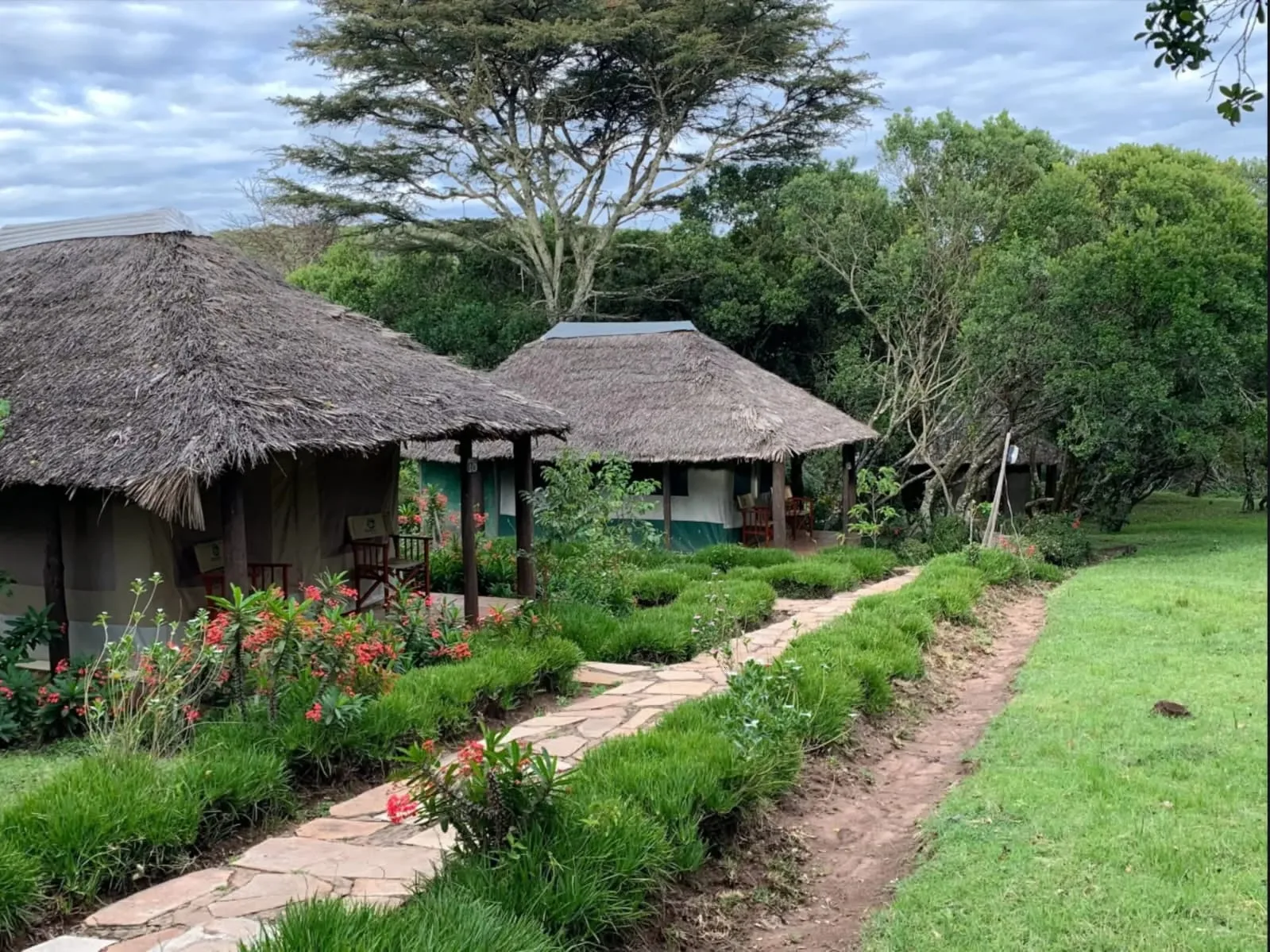
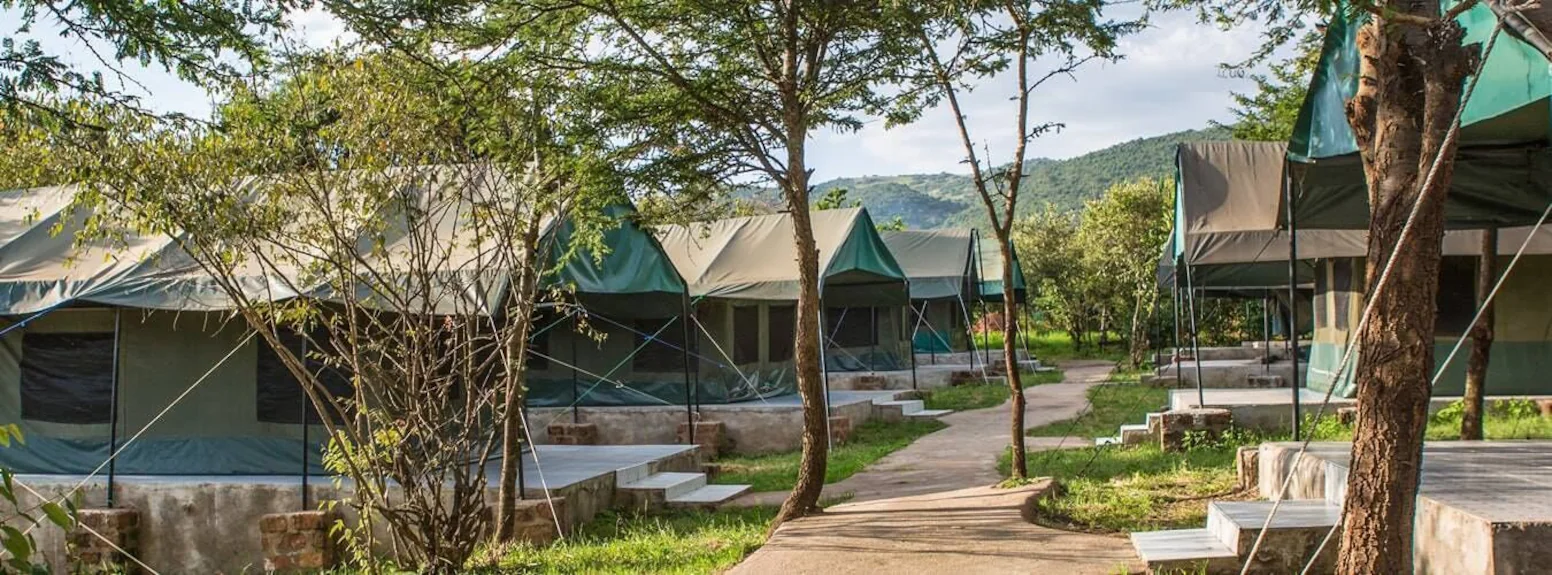
-
Comfort (Mid-range)
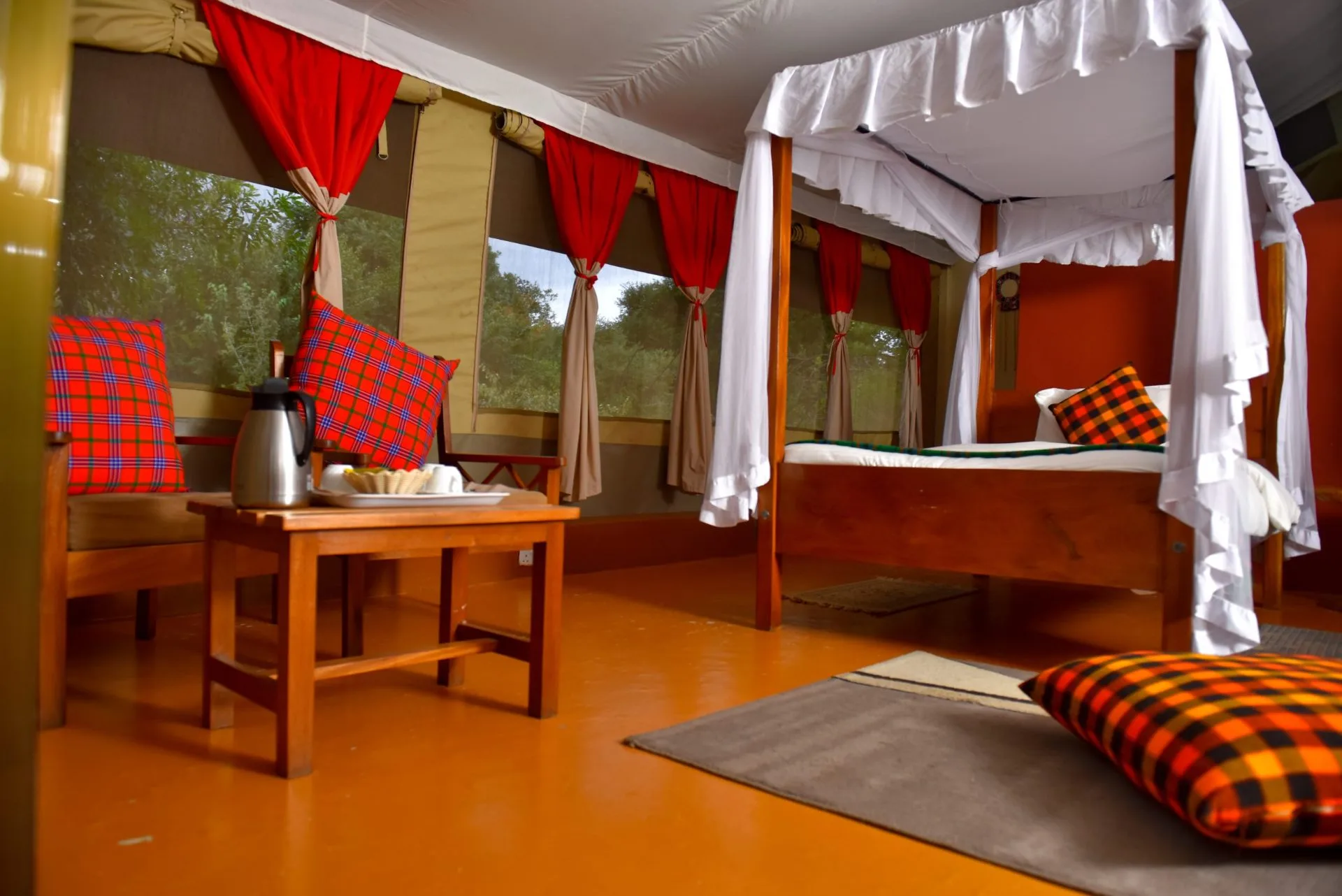
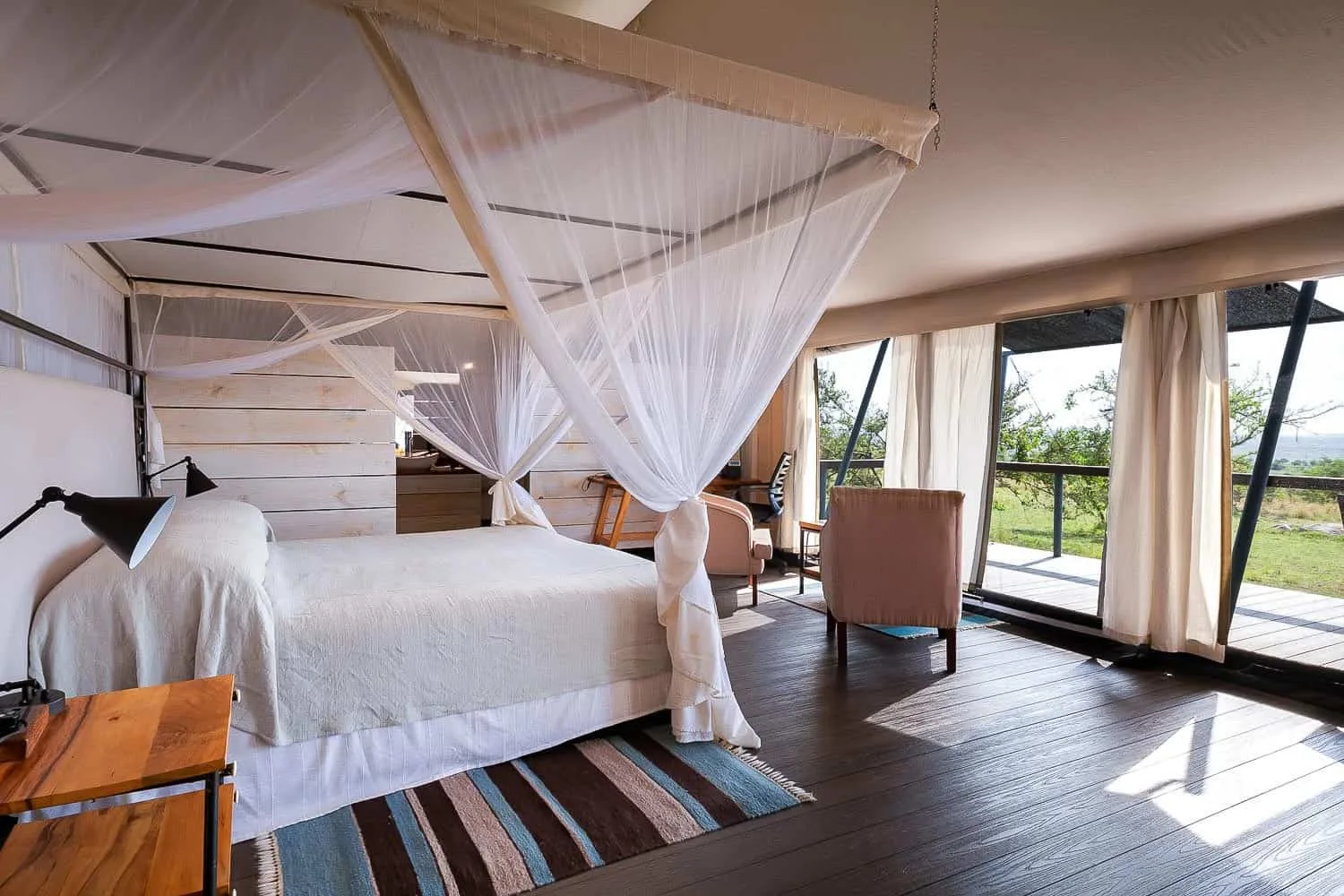
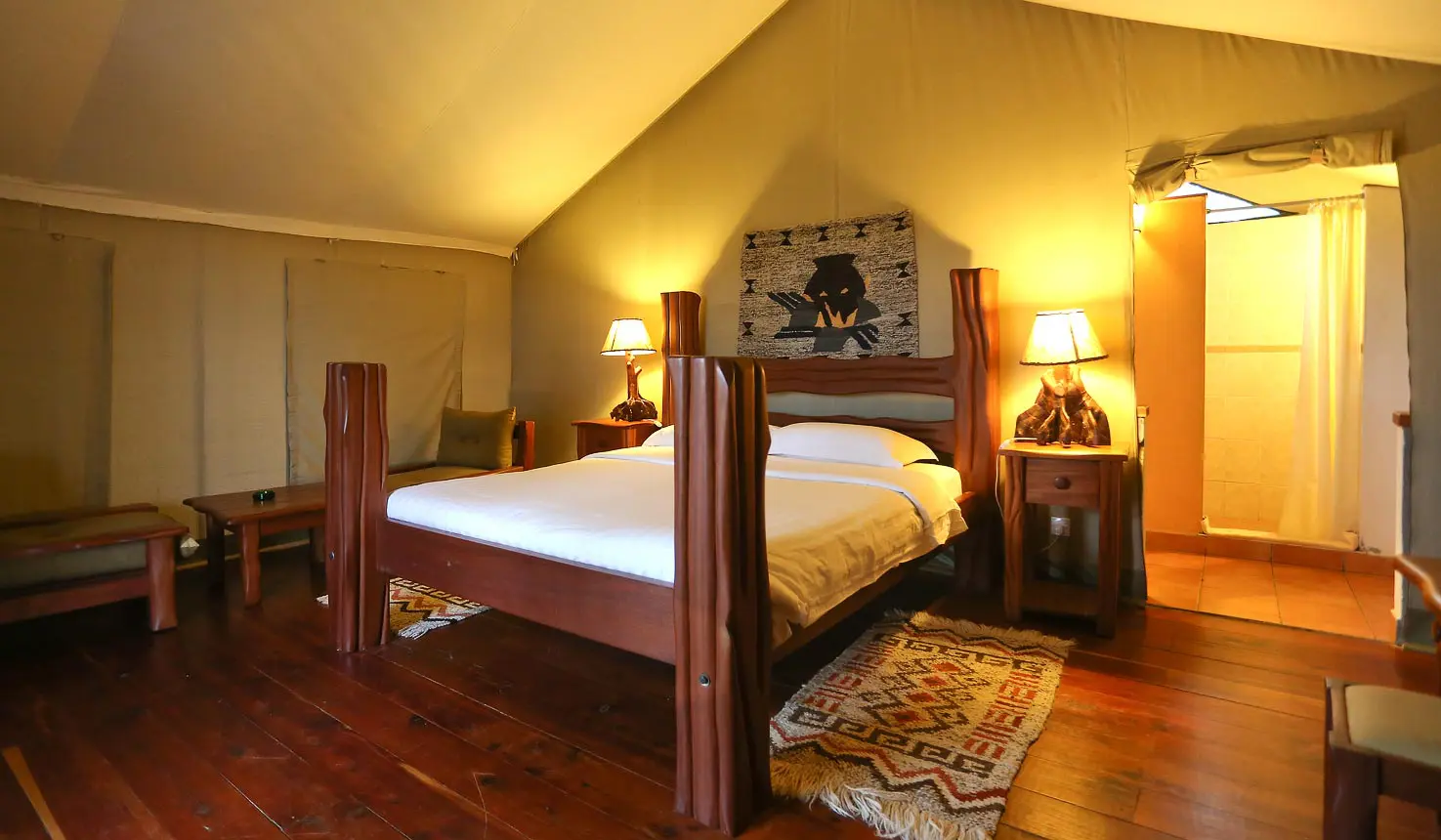
-
Premium (Luxury)
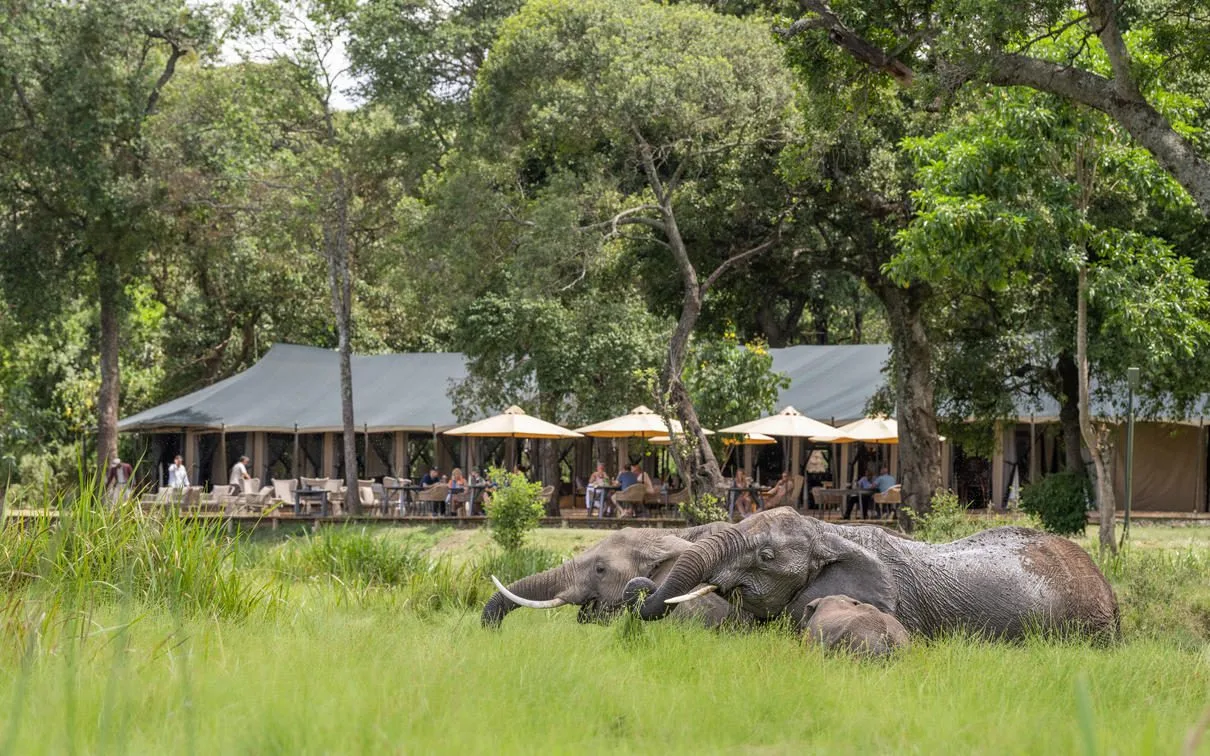
-
Signature (High-end)
-
Day 2: Full-Day Samburu National Reserve Safari - Main destination
- Masai Mara National Reserve
- Meals
- Breakfast, Lunch, Dinner
Wake early for your first complete day in Samburu. The hours around sunrise are especially valuable because temperatures are cooler and predators may still be active after the night. After breakfast – or with breakfast arranged according to your lodge schedule – set out across the reserve.
Samburu's relatively dry terrain creates a distinctive game-viewing experience. Animals are often concentrated around permanent water and productive riverine habitat. Your guide uses knowledge of animal movements, recent sightings, tracks and habitat to decide where to concentrate the morning drive.
Searching for the Samburu Special Five
One of today's principal objectives is to observe the northern specialist species for which Samburu is famous.
Grevy's Zebra
The Grevy's zebra is one of Africa's most distinctive zebra species. Compared with the more widespread plains zebra, Grevy's zebra has narrower stripes, a white belly and noticeably large rounded ears. Northern Kenya is one of its most important remaining strongholds.
Seeing Grevy's zebra in Samburu therefore represents more than simply adding another mammal to your safari list. It provides an opportunity to encounter a species closely associated with the conservation challenges of northern Kenya's drylands.
Reticulated Giraffe
The reticulated giraffe is another northern Kenya specialty. Its striking coat consists of sharply defined polygonal patches separated by bright pale lines. These giraffes are exceptionally photogenic against Samburu's acacia woodland and dry landscapes, and you may encounter solitary males, females with calves or loose groups feeding among trees.
Gerenuk
The gerenuk is one of Samburu's most unusual antelopes. Its long neck and slender body have earned it the nickname "giraffe gazelle." Gerenuks are adapted to dry environments and are famous for standing upright on their hind legs to browse vegetation beyond the reach of many other antelopes. Watching a gerenuk feeding in this way is one of the characteristic wildlife experiences of northern Kenya.
Beisa Oryx
The Beisa oryx is a large, powerful antelope with long straight horns and striking facial markings. Its ability to survive in hot, dry environments makes it particularly suited to Samburu's semi-arid ecosystem.
Somali Ostrich
The Somali ostrich differs visibly from the more familiar common ostrich. Adult males can display striking bluish coloration on the neck and legs, and these enormous birds are frequently encountered moving across open areas.
Elephants of Samburu
Samburu is also an excellent elephant destination. The Ewaso Nyiro River is critically important to elephants, particularly during dry periods. Herds may descend toward the river to drink, bathe and feed, and you may watch elephants digging in sandy areas for water, crossing river channels or interacting along the banks.
Family behavior can be fascinating. Calves remain close to mothers and other females, while young elephants frequently play and test their growing strength. Large bulls may be encountered separately. Because vegetation in some areas is relatively open, elephant photography can be excellent.
Samburu Predators
Although Samburu is best known for northern specialist species, predators are an important part of the ecosystem. Possible sightings include: Lion, Leopard, Cheetah, Spotted hyena, Black-backed jackal, Smaller carnivores.
Leopards are particularly associated with riverine vegetation, rocky areas and habitat providing sufficient cover, lion prides patrol territories where prey is abundant, and cheetahs can occur in more open areas. Predator sightings remain unpredictable, which is why multiple game drives are valuable.
Samburu Birdlife
Samburu is outstanding for birdwatching. The combination of dry bush, riverine forest and open country supports numerous species. Birders can ask the guide to dedicate additional time to identification and photography. Possible sightings include: Vultures, Eagles, Hornbills, Bee-eaters, Kingfishers, Starlings, Weavers, Bustards, Guinea fowl, Secretary birds, Water-associated species along the river.
After a productive day, return to your accommodation for dinner and overnight.
Destination: Samburu National Reserve
Main experience: Full-day wildlife safari
Wildlife focus: Samburu Special Five, elephants and predators
Accommodation: Same lodge/camp
Meals: Breakfast, lunch and dinner
Where you stay
-
Day 3: Second Full Day in Samburu – Predators, Elephants and Northern Kenya Wildlife - Main destination
- Masai Mara National Reserve
- Meals
- Breakfast, Lunch, Dinner
The second complete day in Samburu gives you the luxury of exploring the reserve without feeling pressured to find every important species during a single game drive. Wildlife changes constantly. Animals seen yesterday may have moved several kilometers overnight, predators may become active in completely different areas, and elephants may gather along another section of the river. Your guide will therefore adapt today's route according to previous sightings and current wildlife information.
Sunrise Safari
An early departure can be particularly productive. The light immediately after sunrise gives Samburu's landscape warm tones that are excellent for photography.
Predators may still be moving. Lions that hunted overnight may be feeding or walking toward resting areas, leopards may remain visible before disappearing into thick vegetation, and hyenas can be encountered returning from nighttime activity.
Extended Wildlife Observation
One of the benefits of spending multiple days in a destination is that you can spend more time watching animal behavior. Instead of simply photographing an elephant herd and immediately moving onward, you can remain nearby and observe social interactions.
A reticulated giraffe may spend considerable time carefully selecting leaves from thorny branches, gerenuks may stand upright to browse, and young zebras may interact while adults remain alert for predators. These behavioral observations frequently become more memorable than simply compiling a species checklist.
The Ewaso Nyiro River
The Ewaso Nyiro River is central to Samburu's ecology. In an otherwise dry landscape, the river supports vegetation, wildlife and birdlife. Its importance becomes especially obvious during dry periods, when animals may travel considerable distances to reach water.
Elephants frequently appear along the river, monkeys and baboons use riverine trees, and crocodiles may occur in appropriate sections. Predators understand that prey animals must eventually approach water and may patrol surrounding habitat. Your guide can spend part of the day exploring different stretches of this ecological corridor.
Optional Cultural Experience in Samburu
Depending on the itinerary and your interests, a community visit can be incorporated. The Samburu people are pastoralists whose culture shares certain characteristics with other Maa-speaking communities while maintaining a distinct identity. A responsibly arranged cultural visit may introduce aspects of:
- Traditional livestock keeping
- Samburu clothing and beadwork
- Homestead organization
- Community traditions
- Local livelihoods
- Relationships between wildlife and pastoral communities
- Modern conservation challenges
Cultural experiences should be approached respectfully and should support genuine community participation rather than treating communities as attractions. Return to your lodge or camp for your final evening in northern Kenya.
Destination: Samburu National Reserve
Main experience: Second full-day safari
Optional experience: Samburu cultural visit
Accommodation: Same lodge/camp
Meals: Breakfast, lunch and dinner
Where you stay
-
Day 4: Samburu – Central Kenya / Ol Pejeta Conservancy - Main destination
- Masai Mara National Reserve
- Meals
- Breakfast, Lunch, Dinner
After breakfast, leave Samburu and begin traveling south toward central Kenya. The journey provides another dramatic change of scenery as dry northern landscapes gradually transition toward higher and greener country.
Depending on the final itinerary, today's destination can be the Ol Pejeta Conservancy or another strategically located central Kenya wildlife area. Ol Pejeta is particularly attractive because it adds rhinoceros conservation and another Big Five environment to the journey. After arrival and lunch, begin an afternoon game drive.
Rhino Conservation Experience
If Ol Pejeta is included, rhinoceros become one of the major wildlife priorities. Kenya has invested heavily in rhino conservation, and protected areas such as Ol Pejeta have played an important role in safeguarding these animals. Both black and southern white rhinoceros may be encountered, although sightings cannot be guaranteed. Your guide can explain differences in:
- Body structure
- Feeding behavior
- Habitat preference
- Temperament
- Conservation status
Seeing rhinos adds another completely different wildlife experience after Samburu.
Big Five Wildlife
Ol Pejeta supports all members of the traditional Big Five: Lion, Leopard, Elephant, Buffalo, Rhinoceros.
Other wildlife may include: Giraffe, Zebra, Eland, Waterbuck, Hartebeest, Warthog, Hyena, Jackal, Cheetah.
After the afternoon game drive, proceed to your accommodation for dinner.
Destination: Central Kenya / Ol Pejeta Conservancy
Main experience: Scenic transfer and conservation safari
Wildlife focus: Rhinos and Big Five species
Accommodation: Safari lodge or tented camp
Meals: Breakfast, lunch and dinner
Where you stay
-
Day 5: Central Kenya – Lake Nakuru and the Great Rift Valley - Main destination
- Masai Mara National Reserve
- Meals
- Breakfast, Lunch, Dinner
After breakfast, continue south toward Kenya's Great Rift Valley. Today's journey introduces another important geological and ecological region. The East African Rift has shaped landscapes across Kenya, creating escarpments, valleys, lakes and volcanic features.
Depending on the finalized route, Lake Nakuru National Park can form the principal wildlife destination for the day. Lake Nakuru is relatively compact but supports an impressive variety of wildlife.
Lake Nakuru Wildlife
The park is particularly important for rhinoceros. Both black and white rhinos may be encountered depending on current wildlife distribution, and buffaloes are also common. Other possible mammals include: Rothschild's giraffe, Zebra, Waterbuck, Impala, Warthog, Baboon, Vervet monkey, Lion, Leopard.
Leopards occur but are much more difficult to locate. The varied landscape includes woodland, grassland and lakeshore habitat.
Lake Nakuru Birdlife
Lake Nakuru became internationally famous for flamingos. Flamingo concentrations vary according to lake conditions, food availability, water chemistry and regional movements, so visitors should not assume enormous flamingo numbers will always be present. Nevertheless, the park remains an excellent birding destination. Pelicans and numerous other waterbirds may be observed, while woodland and grassland areas support additional species.
Your guide explores the park before continuing to your lodge. The evening can be spent relaxing and preparing for the journey to the Masai Mara.
Destination: Lake Nakuru / Great Rift Valley
Main experience: Rift Valley wildlife and birding safari
Wildlife focus: Rhinos, buffaloes and giraffes
Accommodation: Safari lodge/camp
Meals: Breakfast, lunch and dinner
Where you stay
-
Day 6: Lake Nakuru – Masai Mara National Reserve - Main destination
- Masai Mara National Reserve
- Meals
- Breakfast, Lunch, Dinner
After breakfast, begin the journey toward the Masai Mara National Reserve. This is one of the most anticipated transitions of the safari. You leave the Rift Valley and continue through rural landscapes toward the greater Mara ecosystem.
As you approach the reserve, the scenery opens dramatically. Rolling grasslands stretch toward distant horizons, and wildlife may begin appearing even outside the formal reserve boundaries. Zebras, giraffes, wildebeest and antelopes commonly inhabit the wider ecosystem. After arrival, check into your selected lodge or tented camp. Depending on timing, enjoy lunch and a short rest before beginning your first Masai Mara game drive.
First Masai Mara Safari
The Mara provides an immediate contrast to Samburu. Instead of dry northern scrub, you now enter broad grasslands supporting enormous numbers of herbivores. Possible first-afternoon sightings include: Lion, Elephant, Buffalo, Giraffe, Zebra, Wildebeest, Topi, Impala, Thomson's gazelle, Grant's gazelle, Warthog, Spotted hyena.
Cheetahs may be encountered scanning open grasslands, while leopards are more strongly associated with riverine woodland and areas providing suitable cover.
Your guide will begin interpreting the ecosystem and identifying areas to explore more thoroughly over the next two days. The late-afternoon light transforms the plains into golden landscapes. Return to your camp or lodge around sunset.
Destination: Masai Mara National Reserve
Main experience: Transfer and introductory Mara game drive
Accommodation: Budget, mid-range or luxury lodge/camp
Meals: Breakfast, lunch and dinner
Where you stay
-
Day 7: Full-Day Masai Mara Safari – Big Cats and Big Five - Main destination
- Masai Mara National Reserve
- Meals
- Breakfast, Lunch, Dinner
Today is dedicated entirely to the Masai Mara. An early start provides the opportunity to experience the reserve when temperatures are cool and predators may still be active. The Mara is particularly celebrated for its big cats.
Lions of the Masai Mara
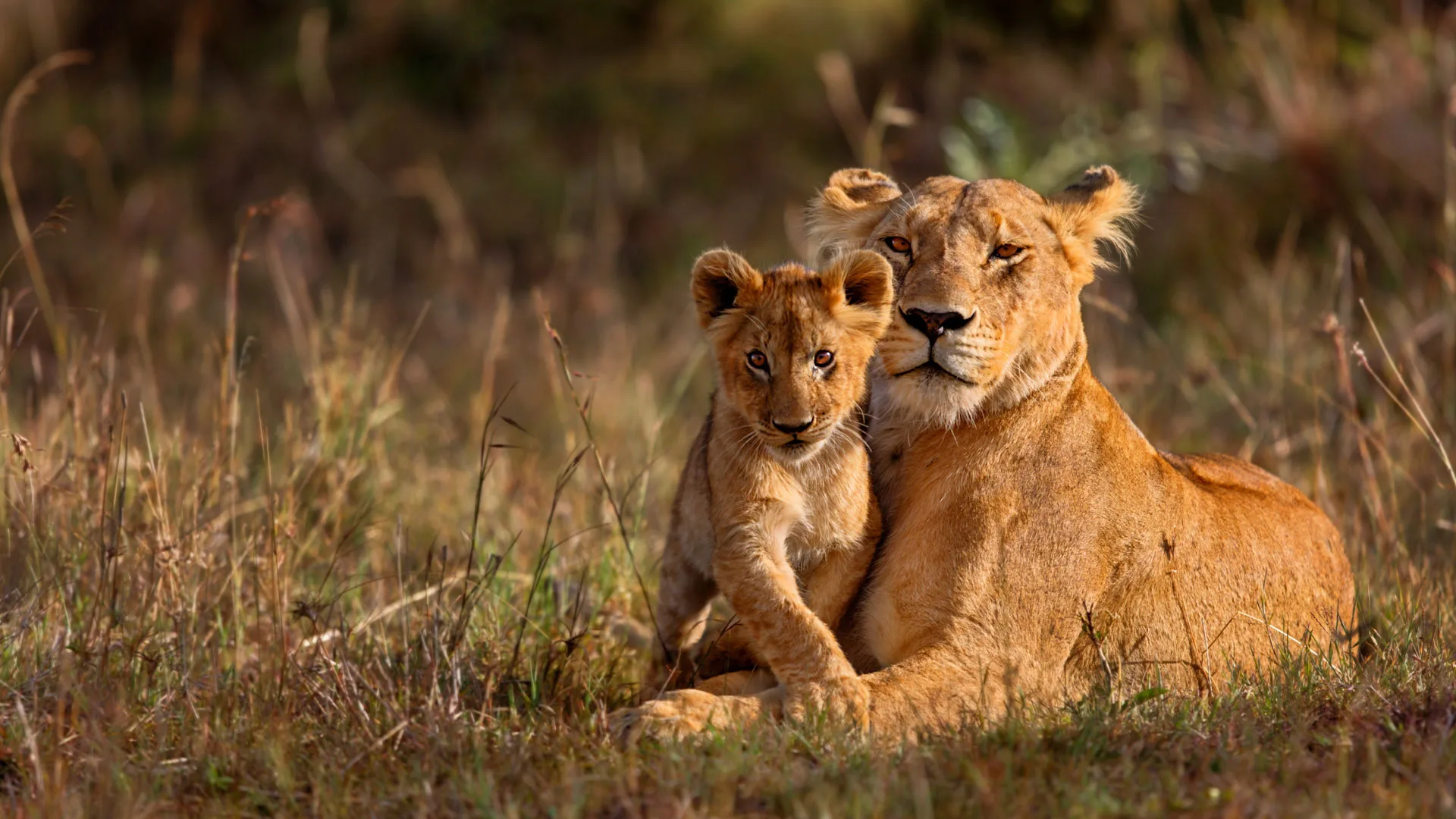
Lions are among the reserve's dominant predators. The ecosystem supports numerous prides whose territories overlap areas with abundant prey. Lions often spend much of the hotter part of the day resting, which makes early morning particularly valuable. Sightings can include:
- Adult males
- Females with cubs
- Large prides resting together
- Lions feeding
- Territorial interactions
- Hunting behavior
- Social grooming
- Cubs playing
Leopards
Leopards require patience. These solitary cats use camouflage extremely effectively, and they may rest on tree branches, hide in dense vegetation or move along river systems. Experienced guides look for indirect clues: antelopes staring intently toward a bush, monkeys giving alarm calls or birds behaving unusually can indicate a predator. A leopard sighting can become one of the safari's defining moments precisely because these cats are less predictable.
Cheetahs
The Masai Mara's open plains provide excellent cheetah habitat. Cheetahs often use termite mounds or other elevated areas to scan for prey, and they primarily hunt smaller and medium-sized animals such as gazelles. Because cheetahs frequently hunt during daylight, travelers occasionally have opportunities to observe hunting behavior. Guides must maintain respectful distances and avoid interfering with natural predator-prey interactions.
Elephants and Buffaloes
The Mara also supports substantial populations of elephants and buffaloes. Elephants may occur in family groups or as solitary bulls, and buffalo herds can number hundreds of animals in productive areas. Large buffalo concentrations can attract lions, sometimes resulting in dramatic interactions.
Full-Day Game Drive or Split Game Drives?
You can generally structure the day in two ways, and both options provide excellent wildlife opportunities. Your private safari can be adapted according to your preferences.
Full-Day Safari
Leave camp early with a picnic lunch and remain in the reserve for most of the day. This is excellent for travelers wanting maximum wildlife time and access to distant areas.
Morning and Afternoon Safaris
Take an extended morning game drive, return to the lodge for lunch and rest, and then leave again during the late afternoon. This format is particularly comfortable for families and travelers who prefer a relaxed pace. Return to your accommodation in the evening.
Destination: Masai Mara National Reserve
Main experience: Full-day wildlife safari
Wildlife focus: Lions, leopards, cheetahs, elephants and buffaloes
Accommodation: Same lodge/camp
Meals: Breakfast, lunch and dinner
Where you stay
-
Day 8: Second Full-Day Masai Mara Safari – Great Migration and Mara River - Main destination
- Masai Mara National Reserve
- Meals
- Breakfast, Lunch, Dinner
The second full day gives you time to explore areas not covered yesterday. Wildlife distribution can vary enormously across the Mara. One sector may contain large concentrations of wildebeest, while another may be productive for lions or cheetahs. Your guide adjusts the route based on current conditions.
Great Migration Experience
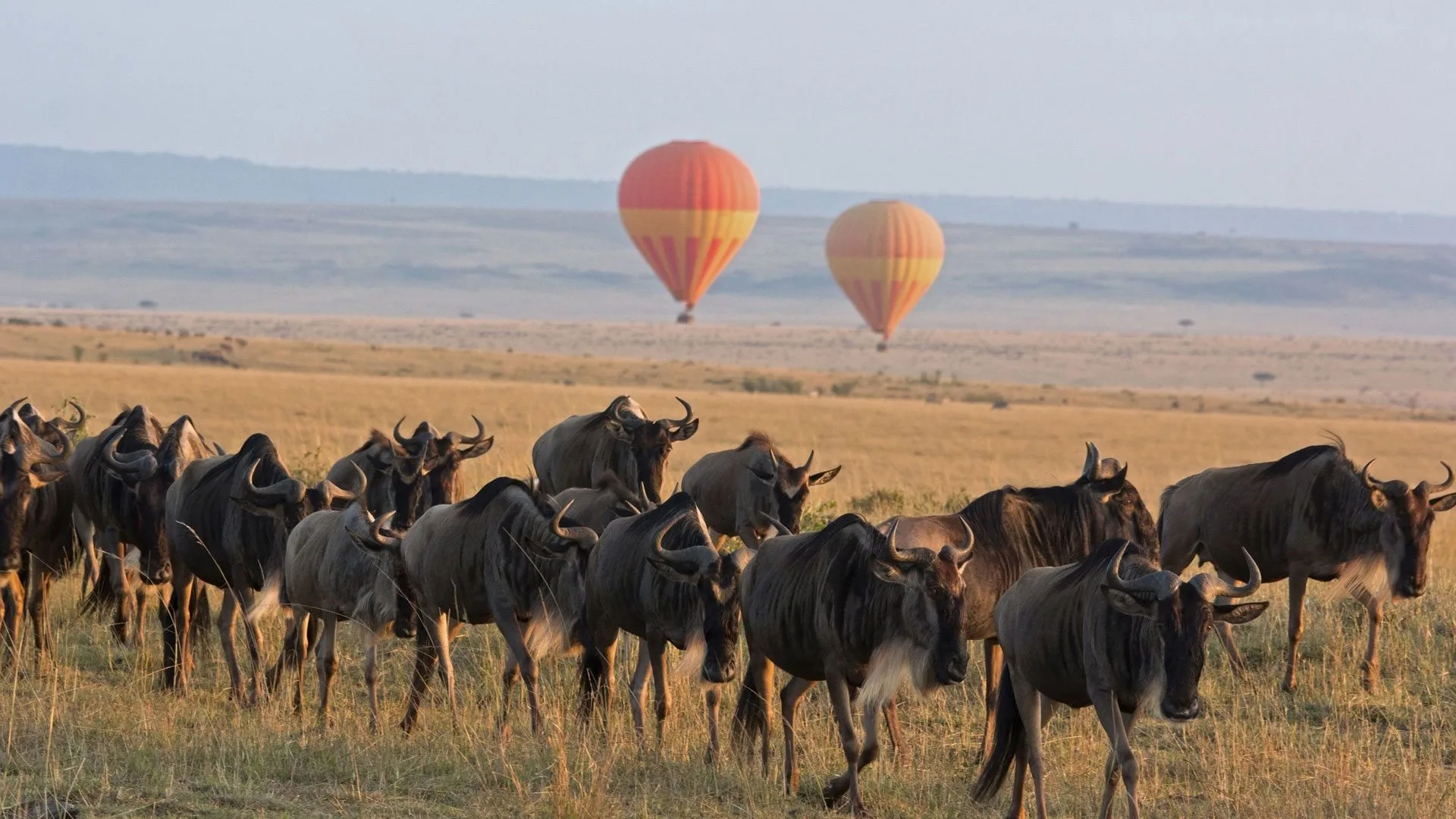
During appropriate periods, the Masai Mara becomes part of one of the greatest wildlife spectacles on Earth. Large numbers of wildebeest and zebras move between Tanzania's Serengeti and Kenya's greater Mara ecosystem in response to rainfall, water and fresh grazing. The migration is continuous and does not operate according to exact dates. Historically, substantial herds may be present in the Mara during parts of the broader July-to-October period, but annual timing varies.
When herds are present, the scale can be extraordinary. Thousands of wildebeest may cover the plains, zebras move among them, and predators take advantage of the increased prey concentrations.
Mara River Crossings
River crossings are among the most dramatic migration events. Large herds may gather near crossing points before entering the water. Nile crocodiles inhabit parts of the river, and strong currents, steep banks and confusion within the herds can make crossings dangerous.
However, crossings are completely unpredictable. Animals can gather at the river and refuse to cross, they may turn around and disappear, or a crossing may happen at another point several kilometers away. For this reason, no responsible operator should guarantee a river crossing. Multiple days in the Mara provide greater flexibility when migration activity is occurring.
Optional Hot-Air Balloon Safari
An optional hot-air balloon safari can be arranged on one of your Mara mornings, subject to weather and operational conditions. The experience normally begins before sunrise. You are transferred to the launch site while the plains remain dark, and after a safety briefing, the balloon is inflated and you lift gently above the ecosystem. As daylight spreads across the Mara, you can see:
- Savannah
- Rivers
- Woodland
- Animal trails
- Wildlife herds
- Distant escarpments
The flight typically lasts around an hour depending on wind conditions, and landing is followed by a traditional breakfast experience. Balloon safaris are charged separately unless specifically included in your package, and advance booking is recommended.
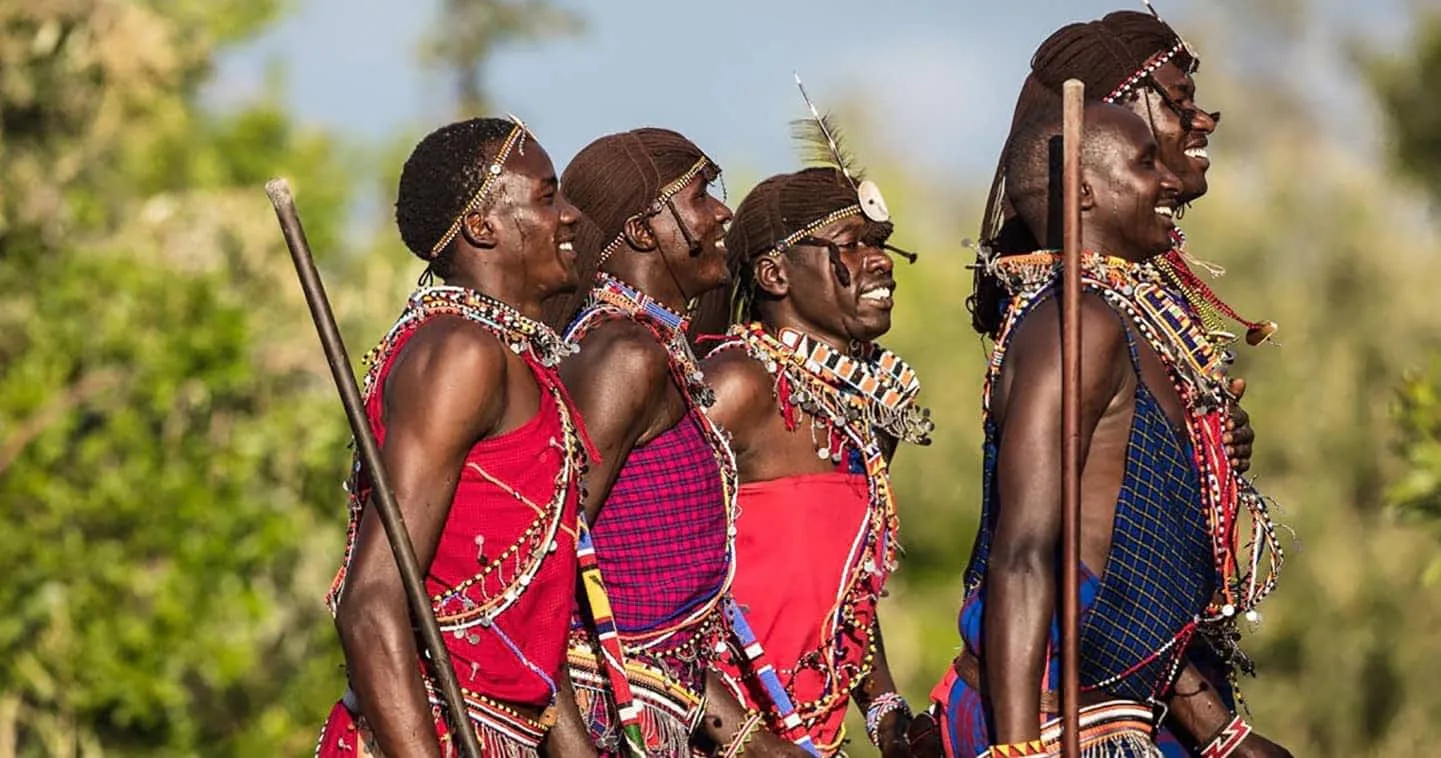
Optional Maasai Cultural Experience
A community experience can also be included. A well-organized visit can introduce travelers to aspects of Maasai culture, including:
- Livestock traditions
- Homestead organization
- Clothing and beadwork
- Community structure
- Traditional and modern livelihoods
- Education initiatives
- Conservation partnerships
The experience is most valuable when it is community-led and conducted respectfully.
Your Final Mara Sunset
The afternoon game drive becomes your final major wildlife excursion of the safari. Rather than focusing solely on finding new species, many travelers use this final drive to appreciate the landscape. A giraffe crossing the horizon, elephants moving through golden grass or lions resting in the evening light can provide a memorable conclusion. Return to camp for dinner.
Destination: Masai Mara National Reserve
Main experience: Second full-day safari
Special focus: Great Migration when seasonally present
Accommodation: Same lodge/camp
Meals: Breakfast, lunch and dinner
Where you stay
-
Day 9: Masai Mara – Nairobi and Departure - Main destination
- Masai Mara National Reserve
- Drive time
- Return transfer as outlined in the itinerary
- Meals
- Breakfast, Lunch
Wake early for your final morning in the Masai Mara. Depending on departure arrangements, you may take a short sunrise game drive. This provides one final opportunity to search for predators and enjoy the cool morning atmosphere. Return for breakfast and check out. You can then travel to Nairobi either by road or domestic flight.
Road Transfer
A private road transfer takes you from the Mara through Narok and onward to Nairobi. Comfort stops can be made during the journey. Upon reaching Nairobi, your guide transfers you to your hotel or Jomo Kenyatta International Airport.
Flight Transfer
Alternatively, transfer to a Mara airstrip and fly to Nairobi. This considerably reduces travel time and is particularly useful when connecting with an international flight.
Your 9 Days Samburu to Masai Mara Safari ends after an extraordinary journey from Kenya's northern drylands to its legendary southern savannah.
The Samburu Special Five
The phrase Samburu Special Five is commonly used to describe several northern Kenya species that make Samburu particularly distinctive. Seeing these species is one of the strongest reasons to include Samburu in a Kenya safari, although individual sightings are never guaranteed.
Grevy's Zebra
Recognized by its narrow stripes, white belly and large ears, Grevy's zebra is much less widespread than the plains zebra.
Reticulated Giraffe
One of Africa's most striking giraffes, characterized by sharply defined geometric coat markings.
Gerenuk
A long-necked antelope famous for standing upright to browse.
Beisa Oryx
A large desert-adapted antelope with long straight horns.
Somali Ostrich
A distinctive ostrich associated primarily with northeastern Africa.
Big Five Opportunities
Depending on the exact route, this safari provides excellent Big Five opportunities.
Big Five Species Strongest Areas on the Route Lion Masai Mara, Samburu, Ol Pejeta Leopard Masai Mara, Samburu Elephant Samburu, Masai Mara Buffalo Masai Mara, Lake Nakuru, Ol Pejeta Rhino Ol Pejeta, Lake Nakuru No wildlife sighting is guaranteed. However, combining multiple ecosystems considerably increases the diversity of animals encountered.
Where you stay
03 Rates
Safari rates 2027-2029
Indicative per person. Season, group size and lodge style change the total — your quotation confirms current rates.
-
Essential (Budget)
Essential (Budget)
Budget camps and lodges suit travelers who prioritize wildlife while keeping costs lower.
Great value camps
-
Comfort (Mid-range)
Comfort (Mid-range)
Mid-range tented camps and lodges balance comfort and price with private rooms or tents and en-suite facilities.
Quoted for your dates
-
Premium (Luxury)
Premium (Luxury)
Luxury camps and lodges focus on location, service and more intimate wildlife experiences.
Premium camps and lodges
-
Signature (High-end)
Signature (High-end)
Signature camps and lodges are the most exclusive stays — small, highly private properties with exceptional guiding and setting.
Exclusive signature stays
04 Activities
Safari activities
Game viewing is the core of this itinerary. Optional extras are quoted separately and depend on season, permits and availability. Individual species and river crossings are never guaranteed.
-
Included
Multiple full-day Mara game drives
Included in a typical day on this safari. Exact timing follows the confirmed itinerary.
View activity -
Optional
Masai Mara balloon safari
Available at extra cost when conditions, permits and your dates allow. Not guaranteed.
View activity -

Included
Excellent wildlife photography
Included in a typical day on this safari. Exact timing follows the confirmed itinerary.
View activity -
Optional
Cultural experiences
Available at extra cost when conditions, permits and your dates allow. Not guaranteed.
View activity
Additional information
Plan This Safari
Why Samburu Is Worth Visiting
Samburu is particularly valuable for travelers who want to understand Kenya beyond its most famous parks. Travelers who visit only the Mara can have an extraordinary safari, but travelers who combine the Mara with Samburu experience a much broader picture of Kenya's biodiversity. The reserve offers:
- Distinctive northern wildlife
- Excellent elephants
- Dramatic dryland landscapes
- River-focused game viewing
- Interesting predator populations
- Outstanding birding
- Strong photography
- Cultural context
- A different atmosphere from southern Kenya
Why Finish in the Masai Mara?
The Masai Mara makes an exceptional finale. By the time you arrive, you have already seen northern specialists, elephants and potentially rhinos. The Mara then adds exceptional predator viewing and enormous concentrations of plains wildlife. Spending the final three nights here allows the safari to build toward its strongest concentration of classic game viewing.
Best Time for the 9 Days Samburu to Masai Mara Safari
This safari can operate year-round.
January to March
These months can provide excellent dry-season wildlife viewing. Samburu animals may concentrate around reliable water sources, and the Mara remains highly productive.
April and May
The longer rains generally occur during this period. Landscapes become greener and visitor numbers can be lower, although some unpaved roads may become difficult after heavy rainfall.
June
June is an excellent transitional month. Vegetation begins changing as the drier season develops.
July to October
This is one of Kenya's most popular safari periods. Samburu can provide excellent dry-season wildlife concentrations, and the Masai Mara may receive migrating wildebeest and zebra. Accommodation demand is high, especially in the Mara.
November
Short rains may transform dry landscapes. The greener scenery can be excellent for photography.
December
December can provide excellent wildlife viewing and is popular around the festive period. Early reservations are advisable.
Safari Accommodation
The itinerary can be arranged at several accommodation levels, and the best category depends on your budget and priorities.
Budget Safari
Budget accommodation emphasizes affordability while retaining the essential safari experience. You may stay in simple lodges or tented camps with private facilities and basic amenities.
Mid-Range Safari
Mid-range accommodation provides a strong balance between comfort and value. Typical features include:
- En-suite rooms or tents
- Comfortable beds
- Restaurant
- Lounge areas
- Good safari locations
- Hot showers
- Electricity or solar power
- Swimming pool at some properties
Luxury Safari
Luxury camps and lodges can provide:
- Premium wildlife locations
- Spacious suites
- High-quality cuisine
- Personalized service
- Smaller guest numbers
- Private decks
- Scenic views
- Premium safari activities
- Enhanced guiding
Road Safari or Fly-In Safari?
The 9 Days Samburu to Masai Mara Safari can be arranged in several ways.
Complete Road Safari
Travel entirely in a private safari vehicle. This provides continuity with the same driver-guide and allows you to experience the changing Kenyan landscape.
Fly-In Safari
Flights can connect Nairobi with Samburu and the Masai Mara. This reduces transfer time considerably.
Road-and-Air Combination
A hybrid itinerary is often an excellent solution. For example, you might travel overland through Samburu, central Kenya and the Rift Valley, then fly from the Masai Mara back to Nairobi. This allows you to experience the scenic overland route without repeating a long road transfer at the end.
Private Safari Vehicle
Private road safaris generally use a customized safari vehicle equipped for wildlife viewing, and a private vehicle is particularly valuable on this itinerary because it allows your guide to adapt game drives around your interests. Features may include:
- Pop-up roof
- Window seating
- Elevated viewing
- Charging points depending on vehicle
- Storage space
- Drinking water
- Radio communication
- First-aid kit
Photography Opportunities
This safari is excellent for photography because each region provides different subjects.
Samburu
Photographic highlights include:
- Reticulated giraffes
- Grevy's zebras
- Elephants
- Gerenuks
- Dry landscapes
- Ewaso Nyiro River
- Doum palms
- Leopards
- Northern birdlife
Central Kenya
Potential highlights include:
- Rhinos
- Mountain scenery
- Open conservancy landscapes
- Big Five species
Lake Nakuru
Highlights may include:
- Rhinos
- Buffaloes
- Giraffes
- Waterbirds
- Rift Valley scenery
Masai Mara
Highlights include:
- Lions
- Leopards
- Cheetahs
- Elephants
- Wildebeest
- Zebra herds
- Great Migration
- Savannah landscapes
- Sunrise and sunset
Family Safari
Families can undertake this itinerary successfully. However, the route includes several transfers, so the itinerary should be designed according to children's ages. Private transport allows greater flexibility, and game drives can be shortened when necessary. Children's ages should always be provided when requesting a quotation. Accommodation can be selected with:
- Family rooms
- Interconnected units
- Family tents
- Swimming pools
- Flexible meal arrangements
Honeymoon Safari
The route is also excellent for honeymooners wanting a safari with substantial variety. Luxury versions can include intimate tented camps, private dining, bush breakfasts, sundowners and fly-in transfers. The contrast between remote Samburu and the expansive Masai Mara creates a particularly memorable honeymoon journey.
What Is Typically Included?
Exact inclusions depend on your quotation, and your personalized quotation should always be treated as the definitive statement of inclusions. A typical package may include:
- Nairobi pickup
- Private safari vehicle
- Professional safari driver-guide
- Eight nights' accommodation
- Meals specified in the itinerary
- Park and reserve fees specified in the quotation
- Scheduled game drives
- Drinking water during safari drives
- Inter-destination road transfers
- Airport transfer at safari completion
- Applicable taxes
What Is Normally Excluded?
Possible exclusions include:
- International flights
- Kenya visa/eTA costs where applicable
- Travel insurance
- Optional balloon safari
- Optional cultural visits
- Alcoholic beverages
- Premium drinks
- Laundry
- Personal shopping
- Gratuities
- Medical expenses
- Activities not specifically included
- Additional hotel nights
- Domestic flights unless specified
What to Pack
Samburu can become hot during the day, while early mornings in central Kenya can feel considerably cooler, so layered clothing is ideal. Useful safari items include:
- Lightweight neutral clothing
- Long trousers
- Long-sleeved shirts
- Warm fleece
- Light jacket
- Comfortable shoes
- Hat
- Sunglasses
- Sunscreen
- Insect repellent
- Binoculars
- Camera
- Spare batteries
- Memory cards
- Charging equipment
- Power bank
- Personal medication
- Small backpack
- Reusable water bottle
- Travel documents
Extend Your Samburu to Masai Mara Safari
Nine days provides a comprehensive safari, but travelers with additional time can easily extend the itinerary. Possible extensions include the following, and these combinations can transform the safari into a longer East African journey.
Amboseli National Park
Add Amboseli for elephants and Mount Kilimanjaro views, which are never guaranteed.
Kenya Coast
Continue to Diani, Mombasa, Watamu, Malindi or another coastal destination for a beach holiday.
Tanzania
Continue into Tanzania for the Serengeti, Ngorongoro Crater and other northern circuit destinations.
Gorilla Trekking
Fly onward to Uganda or Rwanda for mountain gorilla trekking.
Why Book the 9 Days Samburu to Masai Mara Safari?
The greatest strength of this itinerary is contrast. You begin among the dry, rugged landscapes of Samburu, searching for animals specifically adapted to northern Kenya. You watch Grevy's zebras and reticulated giraffes move through landscapes completely different from the grasslands further south. Elephants gather around the Ewaso Nyiro River, gerenuks stretch upward to browse, and predators patrol dry river systems and surrounding bush.
The journey then carries you through central Kenya and the Great Rift Valley, introducing rhino conservation and additional wildlife habitats depending on the final routing.
Finally, you reach the Masai Mara. Here the landscape opens into vast savannah. Lions dominate sections of the plains, cheetahs scan for gazelles, leopards hide along riverine corridors, and elephants and buffaloes move across the grasslands. During migration periods, enormous herds of wildebeest and zebra may transform the ecosystem. Few nine-day Kenya itineraries provide such a broad introduction to the country's ecological diversity.
Plan Your 9 Days Samburu to Masai Mara Safari
The 9 Days Samburu to Masai Mara Safari is ideal for travelers who want to experience both northern Kenya's distinctive wildlife and the legendary game viewing of the Masai Mara. Whether you choose a value-focused private road safari, comfortable mid-range lodges or exclusive luxury camps, the journey can be structured around your preferred travel style. The itinerary can be customized according to:
- Travel dates
- Number of travelers
- Budget
- Accommodation category
- Preferred safari pace
- Wildlife priorities
- Photography interests
- Road or air transportation
- Great Migration interests
- Family requirements
- Honeymoon preferences
- Beach extensions
- Regional East Africa extensions
Request a customized 9 Days Samburu to Masai Mara Safari quotation to create a Kenya safari combining rare northern wildlife, conservation areas, Rift Valley landscapes and some of Africa's most celebrated predator viewing.
Individual species, river crossings and mountain views can never be guaranteed.
Planning Questions
Frequently Asked Questions
Is nine days enough for Samburu and Masai Mara?
Yes. Nine days provides enough time to spend several nights in both major reserves while incorporating central Kenya and Rift Valley destinations along the route.
Why should I visit Samburu?
Samburu offers northern specialist wildlife such as Grevy's zebra, reticulated giraffe, gerenuk, Beisa oryx and Somali ostrich, along with elephants, predators and excellent birdlife.
What are the Samburu Special Five?
They generally refer to Grevy's zebra, reticulated giraffe, gerenuk, Beisa oryx and Somali ostrich.
Can I see elephants in Samburu?
Yes. Samburu is an excellent elephant destination, particularly around the Ewaso Nyiro River.
Are there lions in Samburu?
Yes. Lions occur within the Samburu ecosystem.
Can I see leopards?
Leopards occur in both Samburu and the Masai Mara. The Mara can provide particularly good opportunities, but sightings are never guaranteed.
Can I see cheetahs?
Yes. Cheetahs occur in both northern Kenya and the Mara, with the open Masai Mara plains providing excellent habitat.
Can I see rhinos?
If the itinerary includes Ol Pejeta and/or Lake Nakuru, there are strong opportunities for rhino sightings.
Can I see the Big Five?
Yes, the route provides excellent opportunities to search for all members of the Big Five, especially when rhino-focused destinations are included.
Does this safari include the Great Migration?
The itinerary includes the Masai Mara. If migrating herds are present during your travel dates, migration viewing can form part of your normal game drives.
Are Mara River crossings guaranteed?
No. River crossings are natural and unpredictable.
Can I add a balloon safari?
Yes. A Masai Mara balloon safari can normally be arranged at additional cost.
Can this be a private safari?
Yes. The itinerary is particularly well suited to private travel.
Can we fly between destinations?
Yes. Domestic flights can be incorporated where suitable.
Is this itinerary suitable for photographers?
Yes. It is particularly strong for photographers because Samburu and the Masai Mara provide dramatically different wildlife and landscapes.
Is this safari suitable for families?
Yes. Accommodation and game-drive schedules can be adapted according to children's ages.
Can we extend the safari?
Yes. Extensions can include additional Kenyan parks, the Kenya coast, Tanzania or gorilla trekking in Uganda or Rwanda.
05 Request Quote
Request Quote
Tell us your dates, group size, and preferred lodge style — we will send a tailored quote for this safari.
Want to extend your safari?
Add Amboseli, Diani Beach, Tanzania and Zanzibar, or gorilla trekking in Uganda or Rwanda — we tailor the journey to your dates.