

February Calving Safari
February Calving Safari: Witness the Great Migration’s Newborn Wildebeest in the Southern Serengeti
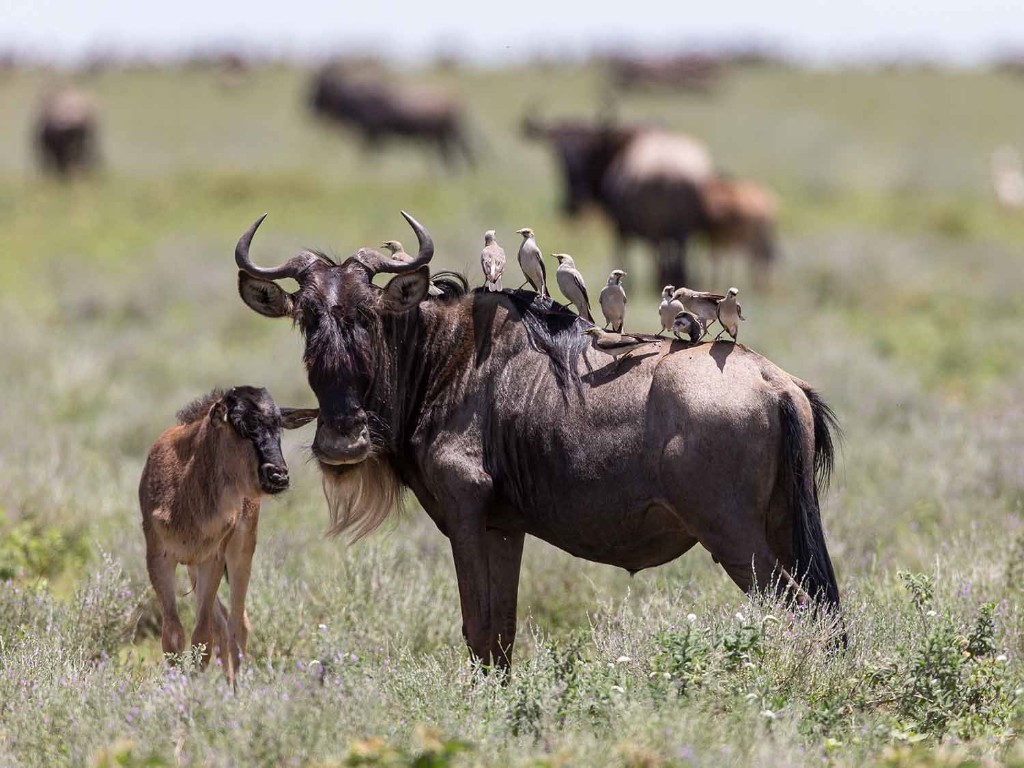
A February calving safari offers one of the most extraordinary wildlife experiences in East Africa. Instead of the dramatic river crossings that have made the Great Migration famous, February introduces visitors to a different chapter of the annual migration: the birth of hundreds of thousands of wildebeest calves across the short-grass plains of the southern Serengeti ecosystem.
The principal calving grounds lie in northern Tanzania, particularly around Ndutu, the southern Serengeti and adjoining areas of the Ngorongoro Conservation Area. Here, enormous herds gather on nutrient-rich grasslands following seasonal rainfall. Newborn wildebeest take their first steps, mothers remain close to their calves, and predators patrol the plains in search of opportunities.
For travellers accustomed to images of wildebeest crossing the Mara River, the calving season reveals another side of the migration. It is less about a single dramatic obstacle and more about the constant struggle to survive, feed and reproduce in one of Africa’s most remarkable ecosystems. February is widely regarded as the central month of the calving season, though the exact timing depends on rainfall, grazing conditions and the distribution of the herds, so a well-planned safari focuses on the right region and allows sufficient time to observe natural wildlife behaviour.
At Safari Trips to Kenya, we help travellers understand the different stages of the migration and plan itineraries across Kenya and Tanzania according to their preferred wildlife experiences.
What Happens During the February Wildebeest Calving Season?
The Great Wildebeest Migration involves the seasonal movement of large numbers of wildebeest, accompanied by zebras and other grazing animals, through the Serengeti–Mara ecosystem. Although the migration is often described as a circular journey, the animals do not follow a rigid calendar; their movements are driven primarily by rainfall and the availability of suitable grazing.
During the early months of the year, substantial herds generally gather across the southern Serengeti’s short-grass plains. These grasslands provide an important feeding environment for pregnant females, and after seasonal rainfall fresh grasses offer nutrients that help support lactation and the demands of raising newborn calves.
The calving period is remarkably concentrated. Commonly cited estimates suggest that approximately 400,000–500,000 wildebeest calves may be born over several weeks, with especially intense activity during the peak period. Not every animal gives birth on the same day, and not every visitor will witness a birth, but the concentration of mothers and young calves can make February exceptionally rewarding.
The experience is particularly fascinating because wildebeest calves are capable of standing and moving relatively soon after birth—essential in an environment where predators are constantly present.
Where Is the Best Place for a February Calving Safari?
The best areas are generally found in the southern Serengeti ecosystem, especially around Ndutu and the adjoining short-grass plains.
Ndutu
Ndutu is one of the most important locations for February migration safaris. The region includes open grasslands, seasonal lakes and areas of acacia woodland—a combination of habitats that supports wildebeest, zebras, gazelles, predators and numerous birds. Ndutu is particularly attractive because wildlife may be encountered across varied terrain within a relatively concentrated geographical area, and the landscape offers excellent photographic opportunities, with herds stretching towards the horizon and individual calves and predators observed against uncluttered grassland backgrounds.
Southern Serengeti National Park
The southern part of Serengeti National Park contains extensive plains used by migratory wildlife. Depending on rainfall and grass growth, large concentrations of wildebeest may occupy these areas during February, and the open terrain is particularly attractive for observing herd movements and predator behaviour.
Ngorongoro Conservation Area
Parts of the Ngorongoro Conservation Area, particularly the Ndutu region, form an important part of the wider calving landscape. The conservation area has its own regulations and fee arrangements, which must be considered when preparing an itinerary. Travellers should distinguish the Ndutu plains from the Ngorongoro Crater itself: both are rewarding destinations, but the principal migration calving experience occurs on the southern plains rather than inside the crater.
Why Do Wildebeest Give Birth on the Southern Plains?
The southern Serengeti’s short-grass ecosystem provides an important combination of food and visibility. The grasses are associated with soils influenced by the region’s volcanic history and, following suitable rainfall, provide nutritious grazing that benefits pregnant wildebeest during the final stages of pregnancy and the period immediately after birth.
The open landscape also allows animals to detect approaching predators, although it does not eliminate the danger. Calving within a relatively concentrated period may provide a survival advantage: when large numbers of calves are born close together, predators cannot capture every vulnerable animal—a phenomenon sometimes described as predator swamping. It does not mean individual calves are safe; lions, cheetahs, hyenas and other predators may take advantage of the abundance of young animals, and the result is an extraordinary period of wildlife activity.
What Wildlife Can You See in February?
Wildebeest and Newborn Calves
The main attraction is the opportunity to observe mothers and calves across the grasslands. Some calves remain close to their mothers, while others gather in loose groups within larger herds. Photographers may capture nursing behaviour, calves following adults and the movement of large family groups, though an actual birth is possible to witness but cannot be guaranteed.
Lions
Lions in the southern Serengeti may be particularly active around areas supporting substantial grazing herds. They can be observed resting, travelling, interacting socially or hunting, but a patient guide may spend considerable time observing a pride and no responsible operator should promise a successful hunt.
Cheetahs
The open plains provide suitable hunting habitat for cheetahs, which rely on speed and often target smaller antelopes or vulnerable animals. February can offer opportunities to observe cheetah behaviour, although sightings depend on territory and prey distribution.
Spotted Hyenas
Spotted hyenas are highly capable predators as well as scavengers and important members of the Serengeti ecosystem. They may be particularly noticeable around large concentrations of herbivores, and their complex social behaviour makes them fascinating photographic subjects.
Zebras
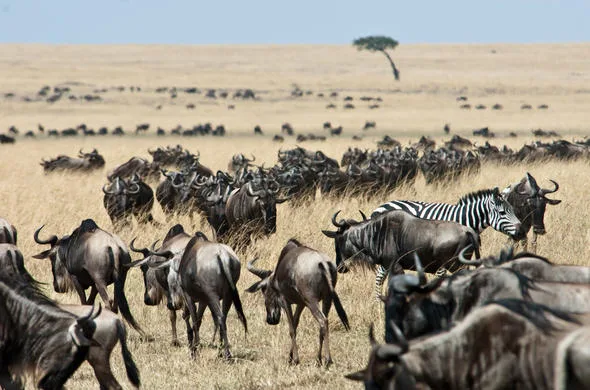
Zebras often share grazing areas with wildebeest, and their movements contribute to the broader dynamics of the migration. The contrasting black-and-white stripes also create striking photographs against the green or golden grasslands.
Gazelles
Thomson’s gazelles and Grant’s gazelles occupy suitable habitats in the wider ecosystem. Their presence adds diversity to the safari and attracts predators such as cheetahs.
Is February Better Than the Mara River Crossing Season?
The answer depends on what you want to experience. A February calving safari focuses on newborn animals, predator interactions and enormous herds across the southern Serengeti, while a Mara River crossing safari focuses on migratory animals attempting to cross rivers in the northern Serengeti and Kenya’s Masai Mara. Both experiences are extraordinary, but they are different.
River crossings can be dramatic and unpredictable: herds may gather near a crossing point and remain there for hours or days without entering the water, and no operator can guarantee a crossing. During calving season, visitors may have repeated opportunities to observe mothers and young animals, although herd concentrations still depend on rainfall. Photographers interested in newborn wildlife and predator behaviour may particularly appreciate February, while travellers whose main ambition is to see the famous Mara River crossings should generally consider the northern migration period instead.
February Weather in Ndutu and Southern Serengeti
February falls within the period when the southern plains may receive seasonal rainfall. Conditions can vary from sunny and warm to cloudy with afternoon showers; daytime temperatures are generally comfortable to warm, while early mornings can feel cooler. Rainfall can transform the landscape into lush green grassland—one reason February photographs often look different from images taken during the dry season—but rain can also affect road conditions, with some tracks becoming muddy and travel times increasing. A suitable 4×4 safari vehicle and experienced guide are essential.
Travellers should pack for variable weather:
- Lightweight clothing and a warm layer for early morning drives
- A waterproof jacket for afternoon showers
Best Camps for a February Calving Safari
Accommodation location is particularly important during the calving season, because a camp situated near the southern plains can reduce driving time and allow more hours observing wildlife.
Ndutu Safari Lodge
Ndutu Safari Lodge is an established permanent property in the Ndutu region. It provides convenient access to surrounding plains, woodland and seasonal lake environments, and is particularly suitable for wildlife-focused travellers who appreciate a traditional atmosphere.
Lake Masek Tented Lodge
Lake Masek Tented Lodge offers comfortable tented accommodation in the Ndutu area, with a location that makes it a useful base for exploring the southern migration landscape.
Lemala Ndutu Tented Camp
Lemala Ndutu is a seasonal camp associated with the calving period. Its tented accommodation appeals to travellers seeking a classic safari experience.
Nomad Serengeti Safari Camp
Nomad Serengeti Safari Camp operates seasonally, moving between locations according to the migration. Travellers must confirm its precise position for their intended dates.
Sanctuary Kusini
Sanctuary Kusini offers luxury tented accommodation in the southern Serengeti and is attractive for travellers seeking an intimate camp and refined service. The best property depends on current herd movements, room availability and the preferred accommodation standard.
How Many Days Do You Need for a February Calving Safari?
A two-night visit provides only a brief introduction. Three nights offer a reasonable starting point for exploring Ndutu and the surrounding plains, while four or five nights provide greater flexibility to explore different areas, respond to changing weather and spend longer observing animal behaviour. For serious photographers, a longer stay may be worthwhile, because the main advantage is not simply the number of sightings but the opportunity to observe how wildlife behaves over time.
Suggested Five-Day February Calving Safari
Day 1: Arusha to Ndutu
Depart Arusha after breakfast and travel towards the Ngorongoro region, continuing to Ndutu while allowing time for road conditions and conservation-area formalities. Enjoy wildlife viewing as you approach the southern plains, check in at your selected lodge or tented camp, and spend the evening relaxing and discussing the following day’s wildlife activities with your guide.
Day 2: Full-Day Ndutu Calving Safari
Begin early, when temperatures are cooler and wildlife may be more active. Explore the short-grass plains in search of wildebeest herds and newborn calves as your guide selects routes according to current wildlife movements. Enjoy a picnic lunch or return to camp depending on the programme, and continue wildlife viewing during the afternoon.
Day 3: Predator and Calving Photography
Spend another day exploring the Ndutu ecosystem, focusing on areas where wildebeest and other herbivores are concentrated. Look for lions, cheetahs and hyenas while allowing time to observe natural behaviour; photographers may prefer to remain at productive sightings rather than covering long distances before returning to camp for dinner and overnight accommodation.
Day 4: Southern Serengeti Wildlife Exploration
Explore additional parts of the southern Serengeti or Ndutu region according to the itinerary and current conditions. This provides opportunities to observe different habitats and wildlife concentrations, and your guide may adjust the route based on recent sightings and rainfall.
Day 5: Return to Arusha
Enjoy breakfast and a final wildlife activity if time permits, then begin the return journey to Arusha or continue to another destination. The departure schedule should account for travel time and any onward flights.
Combining Calving Season with Ngorongoro Crater
The Ngorongoro Crater is a popular addition to a February safari. The crater provides a different wildlife experience from the open Ndutu plains, and visitors may encounter buffaloes, zebras, lions, hippos and other wildlife within the caldera; rhinoceroses also occur, although sightings are not guaranteed. A combined itinerary offers greater ecological variety, and travellers should allow at least one additional night in the Ngorongoro region if they want a relaxed schedule.
Combining Calving Season with Tarangire
Tarangire National Park is known for elephants, baobab trees and varied savannah habitats. Although February is not the classic dry-season concentration period in Tarangire, the park can still provide rewarding wildlife viewing, and combining Tarangire with Ndutu allows travellers to experience different landscapes. The suitability of this combination depends on available time and wildlife priorities.
Can You Combine February Calving with Kenya’s Masai Mara?
Yes, but it is important to understand that the main calving herds are generally in Tanzania during February. The Masai Mara remains an excellent destination for resident wildlife, including lions, elephants, giraffes and other animals, but travellers should not expect the principal migration calving spectacle to occur in Kenya’s Mara.
A combined Kenya–Tanzania itinerary can provide a broader East Africa safari experience—for example, beginning with the Masai Mara before continuing to the Serengeti and Ndutu—but this requires careful planning of border crossings, flights and travel distances.
Photography Tips for February Calving Season
The open plains provide excellent opportunities for wildlife photography. Useful kit and habits include:
- A telephoto zoom lens for newborn calves, predators and distant animals
- A shorter lens for enormous herds against the landscape
- Appropriate shutter speeds for moving animals and protection for equipment from dust and rain
- Patience at sightings, especially when a private safari vehicle allows flexible positioning
Early morning and late afternoon light can be particularly attractive, but births and predator activity may occur at any time.
Responsible Wildlife Viewing During Calving Season
Newborn animals are vulnerable. Safari vehicles should maintain appropriate distances and avoid separating calves from their mothers, and visitors should never encourage guides to chase animals or interfere with predator behaviour. Wildlife photography must not take priority over animal welfare, protected-area rules should be followed at all times, and responsible viewing helps preserve the natural behaviour that makes the calving season so extraordinary.
February Calving Safari Costs
The cost of a February Serengeti calving safari depends on accommodation category, number of travellers, transport and the length of the itinerary. February is a popular month in Ndutu, and well-located camps may have limited availability. A private safari vehicle generally costs more per person for solo travellers than for groups sharing transport; domestic flights can increase the budget but reduce long road transfers. Park and conservation-area fees must also be considered. Travellers should request a complete quotation identifying all major inclusions.
What Should Be Included in Your Safari Package?
A comprehensive calving safari package may include accommodation, meals, professional guiding, a suitable 4×4 vehicle, park fees and scheduled game drives; some itineraries also include domestic flights. Optional activities, premium beverages, gratuities and personal expenses may be excluded. The quotation should identify the exact accommodation and the areas included in the safari—particularly important because the Ndutu region involves different conservation management arrangements.
Practical Packing List
For a February calving safari, pack for warm days, cool mornings and possible rain:
- Lightweight neutral-coloured clothing, a warm jacket and waterproof outerwear
- Comfortable footwear, sunscreen, sunglasses, a hat and insect repellent
- Binoculars for distant wildlife
- Spare batteries, memory cards and protective covers for camera gear
- A small daypack for game drives and soft-sided luggage if domestic light-aircraft flights are included
Frequently Asked Questions About February Calving Safaris
Is February the best month for wildebeest calving?
February is commonly considered the central month of the calving season, but timing depends on rainfall and herd movements.
Where does calving take place?
The principal calving grounds are in the southern Serengeti ecosystem, especially around Ndutu.
Can I see a wildebeest giving birth?
It is possible, but an actual birth cannot be guaranteed.
Are predators active during calving season?
Predators may be particularly active around concentrations of vulnerable young animals, although specific sightings and hunts remain unpredictable.
Is February good for photography?
Yes. Green grasslands, newborn animals and predator activity can provide exceptional photographic opportunities.
How many nights should I stay?
Three or four nights are recommended for a rewarding experience, with longer stays suitable for serious wildlife enthusiasts.
Can I see river crossings in February?
The famous Mara River crossings are not the principal migration attraction in February. The focus is generally on the southern calving grounds.
Should I book accommodation early?
Yes. February is a popular period for Ndutu and southern Serengeti accommodation.
Plan Your February Calving Safari with Safari Trips to Kenya
A February calving safari offers a remarkable opportunity to witness the beginning of life within the Great Migration. From newborn wildebeest taking their first steps to predators moving across the southern plains, the experience reveals the ecological relationships that sustain the Serengeti–Mara ecosystem. At Safari Trips to Kenya, we can help arrange wider East Africa itineraries combining Kenya’s wildlife destinations with Tanzania’s southern Serengeti and Ndutu. Contact our team with your preferred February dates, number of travellers and accommodation preferences to plan a personalised Great Migration calving safari.