
Central Serengeti Migration
Central Serengeti Migration: When the Wildebeest Move Through Seronera
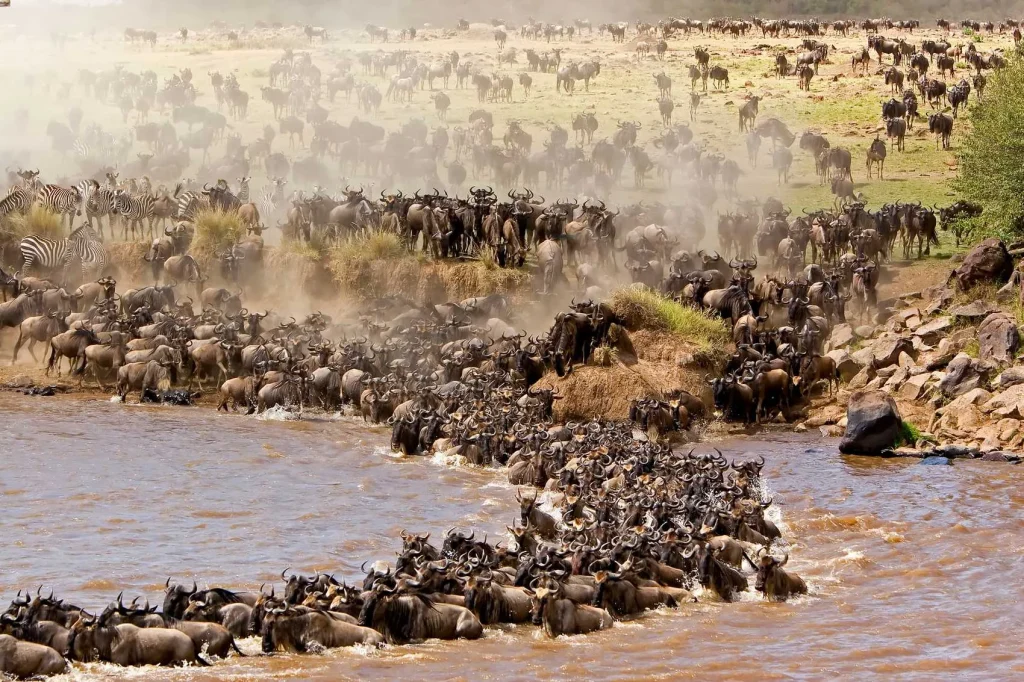
The Central Serengeti Migration is one of the less understood chapters of the Great Wildebeest Migration. Many travellers know about the calving season in southern Tanzania and the famous Mara River crossings farther north. Between these events, however, migrating wildebeest and zebras travel through extensive areas of the Serengeti ecosystem, including parts of the central region.
The movement through Central Serengeti can be impressive. Herds may spread across grasslands, move along seasonal grazing routes or gather in areas where rainfall has produced suitable vegetation. Yet the central region is not simply a corridor that animals pass through on a fixed date. The migration is influenced by rainfall, water availability and grass growth. Different herds can take different routes, and substantial numbers may remain in one area while others move elsewhere.
For safari travellers, this means that understanding the seasonal pattern is essential. At Safari Trips to Kenya, we help visitors plan migration itineraries that account for the changing location of wildlife rather than relying on rigid calendar promises.
What Is the Central Serengeti Migration?
The Central Serengeti Migration refers to the movement of migrating wildebeest and associated grazing animals through the central portion of Serengeti National Park. The region includes the Seronera area and surrounding habitats. During parts of the year, migrating herds may travel through these landscapes as they move between the southern grazing and calving grounds and more northerly or western areas.
The precise route varies. Some animals move through western portions of the ecosystem, while others use more central or eastern areas. The movement is not a single continuous procession following one road or river. For visitors, this creates opportunities to encounter large herds but also makes exact predictions difficult.
Understanding the Great Migration Route
The Great Wildebeest Migration is a year-round ecological process. A simplified annual pattern often includes:
- Southern Serengeti and Ndutu calving areas during the early months of the year.
- Movement away from the southern plains as grazing conditions change.
- Seasonal travel through central, western or other Serengeti habitats.
- Northern Serengeti and Masai Mara migration activity during suitable mid-year and later months.
- Movement back towards southern grazing areas as rainfall patterns change.
This is a general description, not a fixed timetable. Individual herds may move differently, and weather conditions can change the timing substantially.
When Does the Migration Reach Central Serengeti?
There is no single guaranteed month. However, April through June is often discussed in relation to herds moving away from the southern plains through parts of the Serengeti. Central areas may also be used during other phases of the annual movement. The distribution of animals depends on seasonal rainfall and grazing.
Some years may produce substantial concentrations in areas near Seronera. In other years, the main herds may travel through different parts of the ecosystem. Travellers should therefore plan around a broader seasonal window and obtain current wildlife information close to their travel dates.
Central Serengeti Migration Month by Month
January
The main migration concentrations are commonly associated with the southern Serengeti and Ndutu region. Central Serengeti continues to support resident wildlife, but it is not usually the principal calving destination.
February
February is commonly the peak calving period in the southern plains. Travellers focused specifically on newborn wildebeest should generally prioritise Ndutu and the southern Serengeti.
March
As seasonal conditions change, herds may begin spreading into different areas. Some movement towards central habitats may occur, although the pattern varies.
April
April is often associated with wetter conditions and changing herd distribution. Migrating animals may occupy parts of the central and southern ecosystem. Road conditions can be challenging after heavy rainfall.
May
May can be an interesting period for observing migrating herds moving through parts of the Serengeti. However, the main concentrations may be in central, western or other suitable grazing areas.
June
During June, herds may continue moving towards western and northern regions. The exact route depends on rainfall and grazing.
July
Substantial migration concentrations may be farther north or west. Central Serengeti remains productive for resident wildlife.
August
The northern Serengeti and Masai Mara are commonly associated with migration activity. Central Serengeti is generally more relevant for resident wildlife than for the main northern crossing spectacle.
September
Migration activity may remain concentrated in northern areas, depending on conditions.
October
Herd movements can begin changing as seasonal rains influence grazing. Some animals may move southwards through different parts of the ecosystem.
November
Returning herds may occupy central or eastern Serengeti habitats during parts of their movement. The timing varies.
December
The migration may continue towards southern grazing areas. Central Serengeti remains a rewarding year-round wildlife destination.
Why Do Wildebeest Move Through Central Serengeti?
Wildebeest movements are driven largely by the search for suitable grazing and water. Rainfall encourages grass growth, creating changing feeding opportunities across the ecosystem. As conditions become less favourable in one area, herds may move towards others.
The movement is not directed by a single leader or fixed route. Large numbers of animals respond to environmental conditions, producing broad seasonal patterns. Central Serengeti forms part of this connected landscape.
The Role of Seronera
The Seronera Valley is one of the best-known areas within Central Serengeti. It supports resident wildlife throughout the year. During suitable migration periods, wildebeest and zebra herds may move through surrounding grasslands.
However, Seronera should not be treated as a guaranteed migration location during every month. Travellers booking accommodation in the central region should distinguish between general wildlife viewing and a migration-focused safari. The Seronera area’s resident lions, leopards, elephants and other species make it worthwhile even when the main migration is elsewhere.
What Wildlife Can You See During the Central Migration?
Wildebeest
Wildebeest are the principal species associated with the Great Migration. They may travel in large herds or spread across extensive grazing areas.
Zebras
Zebras frequently move through the wider ecosystem alongside migrating wildebeest. Their different grazing preferences contribute to the complexity of the migration.
Thomson’s Gazelles
Thomson’s gazelles and other antelopes occupy suitable Serengeti habitats. Their movements and distribution differ from those of wildebeest.
Lions
Lions are important predators throughout the ecosystem. They may interact with migrating herds when the animals enter their territories.
Cheetahs
Cheetahs are associated with open habitats and may be encountered in suitable grassland areas.
Hyenas
Spotted hyenas are skilled hunters and scavengers. They play an important ecological role during the migration and throughout the year.
Elephants and Buffaloes
These large mammals are part of the region’s resident wildlife and can be encountered independently of the migration.
Central Serengeti Migration Versus Western Corridor
The western Serengeti is associated with seasonal wildebeest movement and the Grumeti River region. The central area around Seronera has different habitats and access routes. During some periods, herds may spread across both broad regions.
Travellers should not assume that a camp in Central Serengeti provides immediate access to all western migration areas. Driving distances can be substantial. A migration-focused itinerary may require accommodation changes to follow the broader seasonal pattern.
Central Serengeti Migration Versus Northern Serengeti
The northern Serengeti is particularly associated with migration activity and possible Mara River crossings during suitable months. Central Serengeti is more widely recognised for year-round resident wildlife.
Travellers hoping to photograph river crossings should generally consider accommodation closer to the northern migration areas during the relevant season. Staying in Seronera and attempting long daily drives to northern crossing sites may be inefficient. The best approach depends on the current herd distribution and available travel time.
Central Serengeti Migration Versus Masai Mara
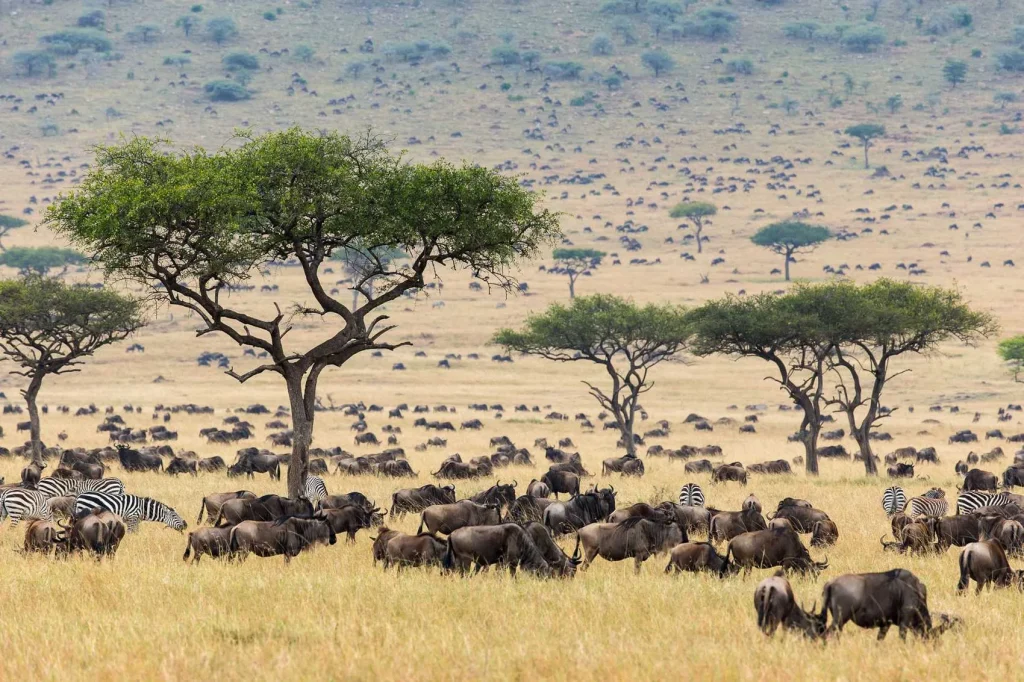
The Masai Mara is located in Kenya, while Central Serengeti is in Tanzania. Both form part of the wider migration ecosystem. The Masai Mara is particularly popular during the northern migration period, when substantial wildebeest herds may enter Kenya.
Central Serengeti can be relevant during transitional movement periods and remains productive for resident wildlife throughout the year. Travellers should choose their destination according to the season rather than assuming that all migration areas offer the same experience simultaneously.
Is Central Serengeti Good for Migration Photography?
Yes, when migrating herds are present. Open grasslands can provide opportunities to photograph large concentrations of animals. Dust, cloud formations and changing light may create atmospheric scenes. Photographers can also focus on predator behaviour and interactions among grazing species.
However, migration photography requires flexibility. A photographer visiting Central Serengeti in August specifically for river crossings may be better served by a northern itinerary.
Best Accommodation for Central Migration Safaris
Accommodation should be selected according to the intended wildlife-viewing areas. Central Serengeti offers permanent lodges and tented camps in different categories. Some seasonal camps elsewhere in the ecosystem relocate to follow broad migration patterns.
Before booking, confirm the actual camp location and operating dates. A property marketed as a migration camp does not guarantee that herds will be nearby during your stay. For travellers focused on Central Serengeti, convenient access to Seronera and surrounding habitats can be valuable.
How Many Days Should You Spend?
Three nights are a practical choice for many travellers visiting Central Serengeti. This allows several game drives and opportunities to explore different habitats. Four or more nights provide additional flexibility for photographers and dedicated wildlife enthusiasts.
If your itinerary includes multiple migration regions, consider spending separate nights in the central and northern or southern areas rather than attempting long daily transfers.
Suggested Six-Day Central Serengeti Migration Safari
Day 1: Arrival in Arusha
Arrive in northern Tanzania and transfer to your hotel. Meet your safari representative and review the itinerary.
Day 2: Arusha to Central Serengeti
Travel towards Serengeti National Park. Enjoy wildlife viewing along suitable routes before reaching your accommodation.
Day 3: Seronera Wildlife and Migration Exploration
Spend the day exploring the Seronera area. Search for resident wildlife and any migrating herds present in the region.
Day 4: Central Serengeti Game Drives
Enjoy another full day of wildlife viewing. Your guide will select routes according to current animal movements, road conditions and wildlife reports.
Day 5: Additional Migration and Predator Viewing
Explore productive habitats, focusing on herd behaviour, predators and other wildlife.
Day 6: Return or Onward Travel
Return towards Arusha or continue to another Serengeti region according to the agreed programme.
Can You Combine Central Serengeti with Kenya?
Yes. A longer East African safari can combine Central Serengeti with Kenya’s Masai Mara, Amboseli or other destinations. However, cross-border logistics require careful planning.
The Masai Mara and Serengeti share an ecosystem, but tourists generally cannot simply drive directly across the international boundary between the protected areas. An itinerary may involve authorised border crossings, longer road transfers or flight connections. Travellers should allow enough time for these arrangements.
Central Serengeti Migration Safari Costs
The price depends on travel dates, accommodation category, transport, park fees and group size. Private safaris provide flexibility but may cost more per person for smaller parties. Domestic flights can reduce road travel but add to the overall price.
A quotation should clearly identify the included accommodation, meals, guiding, park fees and transport. Travellers should also confirm whether the itinerary is designed around migration movements or general resident wildlife.
What to Pack
Packing sensibly helps you stay comfortable during long game drives and variable weather.
- Lightweight safari clothing and a warm layer for early mornings
- Sun protection and comfortable walking shoes
- Binoculars for observing distant herds
- For photographers: suitable lenses, spare batteries, memory cards and dust protection
- Rain protection during wetter periods
- Personal medication and relevant travel documents kept accessible
Responsible Migration Viewing
Wildlife movements should never be obstructed for photographs. Safari vehicles must follow applicable park regulations and remain on authorised routes. Guides should avoid separating animals from herds or interfering with predator-prey interactions.
Visitors should not feed wildlife or encourage dangerous approaches. Responsible tourism protects the natural behaviour that makes the migration remarkable.
Common Planning Mistakes
One common mistake is treating the migration calendar as a guarantee. Another is booking accommodation in Central Serengeti when the main objective is to see northern river crossings. Travellers may also underestimate the distances between different Serengeti regions.
A rushed itinerary can result in excessive driving and limited wildlife-viewing time. The most effective migration safari balances seasonal expectations, accommodation location and sufficient time in the field.
Frequently Asked Questions
When Is the Migration in Central Serengeti?
Migrating herds may pass through central areas during different parts of the year, often associated with transitional movement periods. Exact timing varies.
Is Seronera Good for the Great Migration?
Seronera can offer migration sightings when herds are present, but it is especially well known for resident wildlife.
Can I See River Crossings from Central Serengeti?
The main Mara River crossing areas are farther north. A northern itinerary is generally more practical for crossing-focused travel.
Is Central Serengeti Worth Visiting Without the Migration?
Yes. Its resident wildlife, including lions, leopards, elephants and other species, makes it rewarding throughout the year.
How Many Nights Are Recommended?
Three nights are a useful starting point, while longer stays provide more flexibility.
Can I Combine Central Serengeti with the Masai Mara?
Yes, with suitable transport and cross-border arrangements.
Plan Your Central Serengeti Migration Safari
The Central Serengeti Migration is an important part of the wider movement of wildebeest through East Africa. Although the region does not offer the same seasonal experience as the southern calving plains or northern river crossing areas, it can provide rewarding opportunities to observe migrating herds when conditions are suitable. Its resident wildlife also makes Central Serengeti an excellent safari destination throughout the year.
At Safari Trips to Kenya, we can help design a migration itinerary based on your preferred travel dates, wildlife interests and accommodation requirements.