

Grumeti River Crossing
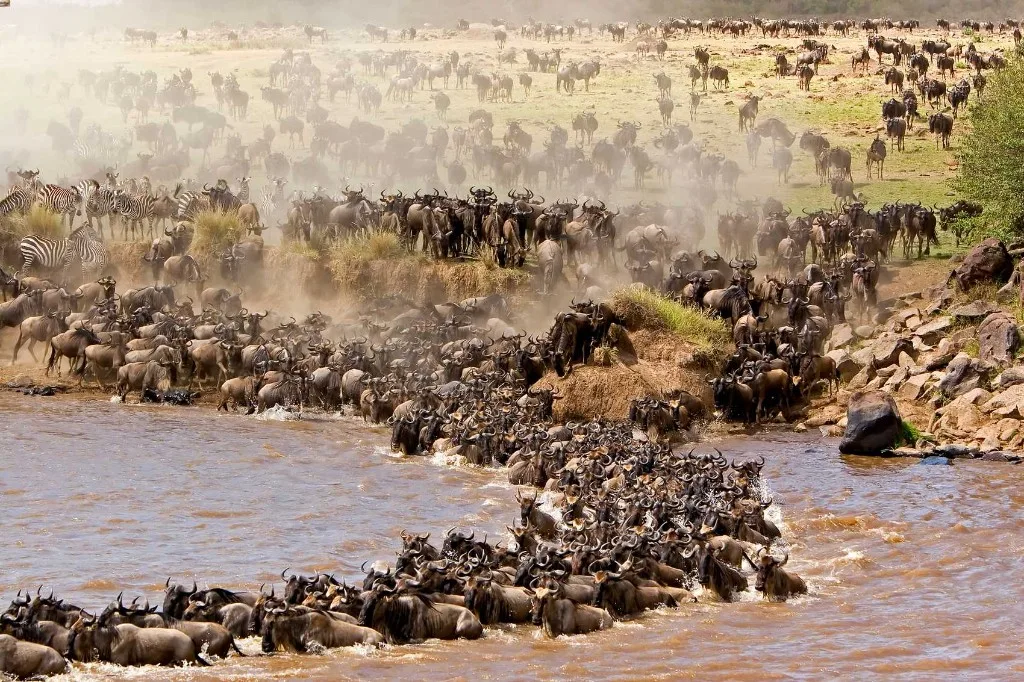
The Grumeti River Crossing is one of the dramatic natural events associated with the Great Wildebeest Migration in Tanzania’s Serengeti ecosystem. As migratory wildebeest move through the western Serengeti, some herds encounter the Grumeti River, where changing water conditions, steep banks and crocodiles can create challenges. For safari travellers, the possibility of witnessing a river crossing is exciting: animals may gather near the river, hesitate, move along the banks or suddenly enter the water. However, the event is not predictable. There is no fixed crossing schedule, and not every herd moving through the western corridor crosses the river at the same location. Some animals may cross in smaller groups, while others may use different routes or encounter sections of the river where the crossing is less dramatic.
A successful Grumeti safari therefore requires realistic expectations. This guide explains where the Grumeti River is located, when crossing activity may occur, why the event is unpredictable and how travellers can plan a safari without relying on guarantees.
Where Is the Grumeti River?
The Grumeti River flows through the western Serengeti region of Tanzania. It forms part of the broader landscape used by wildlife moving through the Serengeti ecosystem, and the river and its surrounding vegetation provide habitat for numerous species. During periods when migratory herds move through the western corridor, some animals may encounter the river. The Grumeti River is not the same as the Mara River, and this distinction matters because the two rivers are associated with different locations and generally different stages of the migration.
When Does the Grumeti River Crossing Happen?
Crossing activity is often associated with May and June, although timing varies considerably. The migration follows rainfall and grazing conditions rather than a calendar; in some years, herds may move through the western corridor earlier, in other years later, and the distribution of animals can also vary across the landscape. A safari booked for a particular week cannot guarantee that wildebeest will cross the Grumeti River during that period.
May
During May, migratory herds may move through parts of the central and western Serengeti and some animals may approach areas associated with the Grumeti River, although their exact distribution depends on environmental conditions.
June
June is commonly associated with migration activity in the western corridor, and some herds may cross the river during this period. However, crossing activity is not continuous.
July
As the season progresses, many herds move towards northern areas of the ecosystem. Some animals may still be present in western areas, depending on the year. Travellers should avoid treating these monthly descriptions as fixed predictions.
Why Do Wildebeest Cross the Grumeti River?
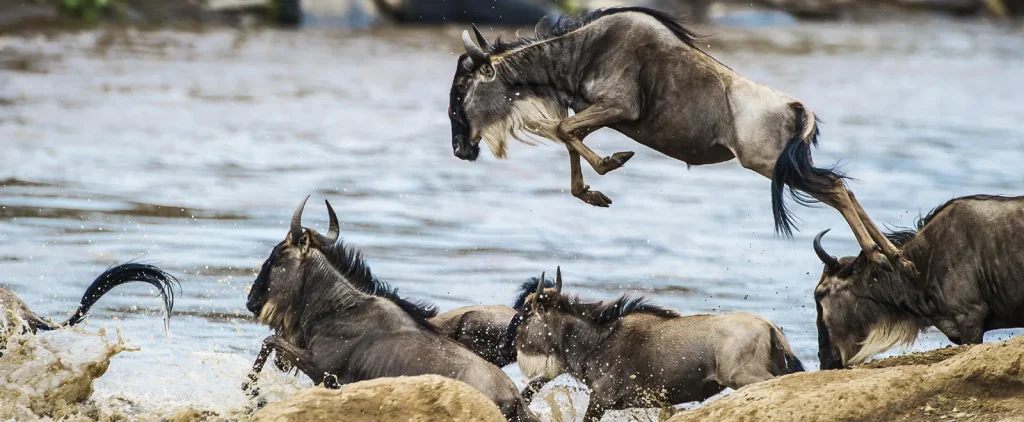
Wildebeest move through the Serengeti ecosystem in response to changing grazing and water conditions. The river may lie across a route used by some migrating animals, and when herds approach they must respond to the conditions they encounter. Water depth, current, bank structure and animal behaviour all influence what happens. Some groups may hesitate for extended periods, others may move along the riverbank, and a crossing may begin suddenly. However, the animals are not attempting to create a dramatic spectacle; they are responding to their environment.
The Role of Crocodiles
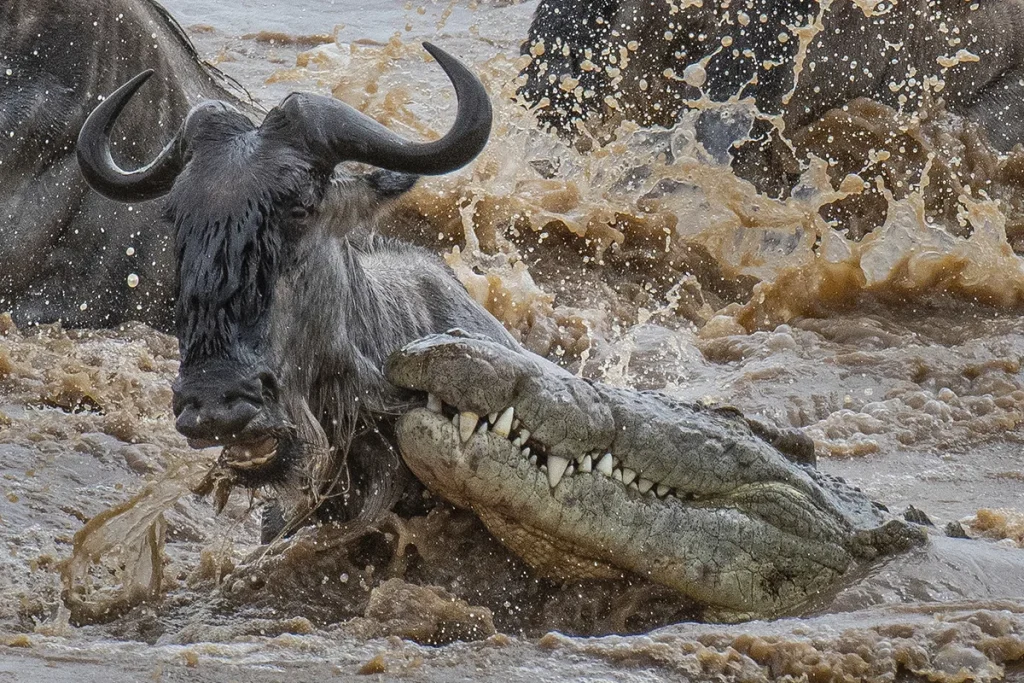
The Grumeti River is associated with Nile crocodiles. These reptiles inhabit suitable freshwater environments and may prey on animals entering the water, which contributes to the river’s reputation as a challenging crossing location. However, not every crossing involves a crocodile attack, predator-prey interactions are unpredictable, and visitors should avoid assuming that dramatic encounters will occur during every visit. Crocodiles are also part of the river’s wider ecosystem, not simply an attraction for tourists.
Why Wildebeest Hesitate Before Crossing
Wildebeest may gather near a river without immediately entering the water because the animals respond to multiple environmental cues.
- Water conditions may appear difficult.
- Banks may be steep or slippery.
- Animals may move along the river looking for a suitable route.
- The behaviour of other herd members can influence movement.
A group may approach the water and then retreat. This uncertainty is one reason river crossing photography requires patience.
How Long Does a Crossing Last?
There is no standard duration. Some crossings may involve relatively small groups moving through quickly, while others may involve larger numbers of animals over a longer period. The event may begin and end before a vehicle reaches a suitable viewing location, or alternatively visitors may spend hours near a river without observing a crossing. A safari guide can use local knowledge and current observations, but cannot control the animals.
Grumeti River Crossing Versus Mara River Crossing
The Grumeti River Crossing and Mara River Crossing are often confused. Both are associated with the Great Wildebeest Migration, but they take place in different geographical settings.
Grumeti River
The Grumeti River is in Tanzania’s western Serengeti. Crossing activity is commonly associated with the western corridor stage of the migration.
Mara River
The Mara River flows through northern Tanzania and southwestern Kenya. Crossings are commonly associated with the northern migration stage, and the Mara River is especially famous for large, dramatic crossing scenes. However, both rivers are subject to unpredictable animal movements, and travellers should choose the location according to their travel dates and broader safari interests.
Is Grumeti Better Than the Mara River?
Neither location is automatically better. The Grumeti region offers western Serengeti landscapes, riverine habitats and opportunities to observe migratory herds, while the Mara River area offers a different geographical setting and is widely associated with dramatic northern migration crossings. The best choice depends on the season, itinerary and wildlife interests. A traveller visiting in June may consider the western Serengeti, while a traveller visiting later in the year may investigate northern Serengeti or Masai Mara migration opportunities, although exact herd locations remain unpredictable.
Can You Guarantee a Grumeti Crossing?
No. No reputable safari operator should guarantee a particular wildebeest river crossing. Even when large herds are present nearby, they may not cross during the visitor’s stay. Animals can change direction, rainfall can alter movement patterns, and crossings may occur at locations that are difficult to access or observe. The best strategy is to plan a safari that remains rewarding even without a crossing.
How Many Days Should You Allow?
Two Days
A short visit may provide opportunities to explore the western Serengeti, although it offers limited flexibility.
Three Days
Three days provides additional opportunities to observe wildlife and changing herd movements.
Four Days or Longer
A longer stay may suit photographers and migration enthusiasts. Additional time can improve flexibility but does not guarantee a crossing; the value of a longer stay lies in the broader wildlife experience.
Where to Stay for the Grumeti River Crossing
Accommodation should be selected according to the intended wildlife-viewing area. The western Serengeti contains a range of tented camps and lodges; some properties are seasonal and others remain in established locations. A property described as being in the Serengeti may be far from the Grumeti River, so travellers should confirm the exact location and estimated travel time.
Mobile Migration Camps
Some mobile camps operate according to expected migration patterns, which can be useful for migration-focused itineraries, although camp positions and dates should be confirmed.
Permanent Tented Camps
Permanent camps may offer established accommodation facilities; their suitability depends on location and current rates.
Luxury Safari Lodges
Higher-end properties may provide additional amenities and services, although luxury accommodation does not guarantee a river crossing.
How to Reach the Western Serengeti
Travellers can reach the Serengeti through road-based or air-supported itineraries. The best route depends on the starting point and accommodation location. Domestic flights may reduce travel time but can increase costs, while road journeys provide opportunities to experience changing landscapes but may involve substantial driving. Travellers should confirm luggage restrictions when flights are included.
Planning from Kenya
The Grumeti River is in Tanzania. Travellers staying only in Kenya’s Masai Mara cannot visit the Grumeti River without entering Tanzania. A combined Kenya and Tanzania safari requires suitable transport, entry documentation and additional planning. The itinerary should identify which national parks and conservation areas are included, and cross-border travel times should be considered carefully.
Suggested Four-Day Grumeti River Safari
Day 1: Arrive in the Western Serengeti
Travel to the western Serengeti using the agreed route, arrive at the selected camp or lodge, and enjoy an afternoon game drive where time permits. Look for migratory herds and resident wildlife, and overnight in the western Serengeti.
Day 2: Explore Grumeti River Habitats
Begin early with a game drive and explore suitable areas associated with the Grumeti River. Look for wildebeest, zebras, crocodiles and other wildlife. A crossing may occur, but it cannot be guaranteed. Continue wildlife viewing during the afternoon and return to accommodation for dinner and overnight.
Day 3: Additional Migration Viewing
Enjoy another day exploring the western corridor. The guide may adjust the route according to current wildlife movements. Look for predators, grazing animals and birds, and photographers can take advantage of changing light conditions before returning to camp for dinner and overnight.
Day 4: Departure or Safari Extension
Enjoy breakfast and a final activity where time permits, then continue to another Serengeti region or departure point.
Photography Tips for River Crossings
River crossing photography requires preparation and patience. A telephoto lens is useful for distant animals and a wider lens can capture the scale of the landscape. Fast shutter speeds may help freeze movement, although camera settings should be adapted to the light and subject. Photographers should avoid focusing exclusively on action, because the behaviour of animals gathering near the river can be equally interesting. A crossing may happen quickly, so equipment should be ready.
Choosing a Viewing Position
The best viewing position depends on park regulations, terrain and animal behaviour. Guides must avoid interfering with wildlife, vehicles should not block animals from approaching or leaving the river, and visitors should remain inside the vehicle where required. The desire for photographs must never override safety or conservation rules.
What Else Can You See Around Grumeti?
The western Serengeti supports wildlife throughout the year. Visitors may encounter elephants, giraffes, buffaloes, antelopes and predators, and birdlife is also varied. Riverine vegetation creates habitats different from the open plains, so a safari can be rewarding even when migratory herds are elsewhere.
Best Time of Day for Wildlife Viewing
Morning and late afternoon are often attractive for wildlife viewing because temperatures are cooler and light conditions may be favourable. However, river crossings do not follow a daily timetable and may occur at different times. A full-day excursion can provide flexibility, but visitors should follow the guide’s advice and applicable park rules.
What to Pack
Pack for western Serengeti game drives and possible river viewing:
- Comfortable, neutral-coloured clothing and a light jacket for cooler mornings
- Sun protection
- Binoculars
- A camera with suitable lenses
- Personal medication and travel documents
- A power bank
Confirm baggage restrictions if using domestic flights.
Responsible River Crossing Tourism
River crossings are sensitive wildlife events. Vehicles should not obstruct animal movement, guides must follow applicable regulations, and visitors should avoid shouting or attempting to influence animal behaviour. Wildlife should be observed at a respectful distance, with the objective of witnessing natural behaviour without disturbing it.
Frequently Asked Questions About Grumeti River Crossings
Where is the Grumeti River Crossing?
It takes place in the western Serengeti region of Tanzania.
What month is best for Grumeti crossings?
May and June are commonly associated with western corridor migration activity, but timing varies.
Are Grumeti crossings guaranteed?
No. Crossings are unpredictable natural events.
Are there crocodiles in the Grumeti River?
Yes. Nile crocodiles inhabit suitable parts of the river system.
Is the Grumeti River in Kenya?
No. It is in Tanzania.
Is Grumeti the same as the Mara River?
No. They are different rivers associated with different migration areas.
How many days should I spend near Grumeti?
Three or more nights may provide greater flexibility, depending on the itinerary and travel time.
Can I combine Grumeti with the Masai Mara?
Yes, within a carefully planned Kenya–Tanzania safari.
Plan Your Grumeti River Crossing Safari
The Grumeti River Crossing is one of the natural events associated with the Great Wildebeest Migration, but its appeal should not be reduced to the possibility of a dramatic crossing. The western Serengeti offers varied landscapes, migratory herds, resident wildlife and excellent opportunities to observe natural behaviour. At Safari Trips to Kenya, we can help travellers understand how the Grumeti stage fits into a broader East African safari and explore suitable itinerary options. A well-planned migration safari allows enough time for wildlife viewing, uses accommodation in an appropriate location and treats river crossings as an extraordinary possibility rather than a guaranteed event.