
11 Days Kenya Photography Safari
Plan a 11 Days Kenya Photography Safari with expert guides, game drives and carefully chosen camps. Request a…
View SafariHandpicked Kenya Safari Tours for Every Traveler
Explore a Kenya lion photography safari in the Masai Mara, Amboseli and Samburu. Discover detailed itineraries, lion behaviour, camera tips, lodges and safari planning.
Kenya offers several advantages for photographers interested in African lions. The country's national parks and reserves contain varied habitats, including open grasslands, woodland, riverine vegetation and semi-arid landscapes. These environments provide different photographic backgrounds and lighting conditions.
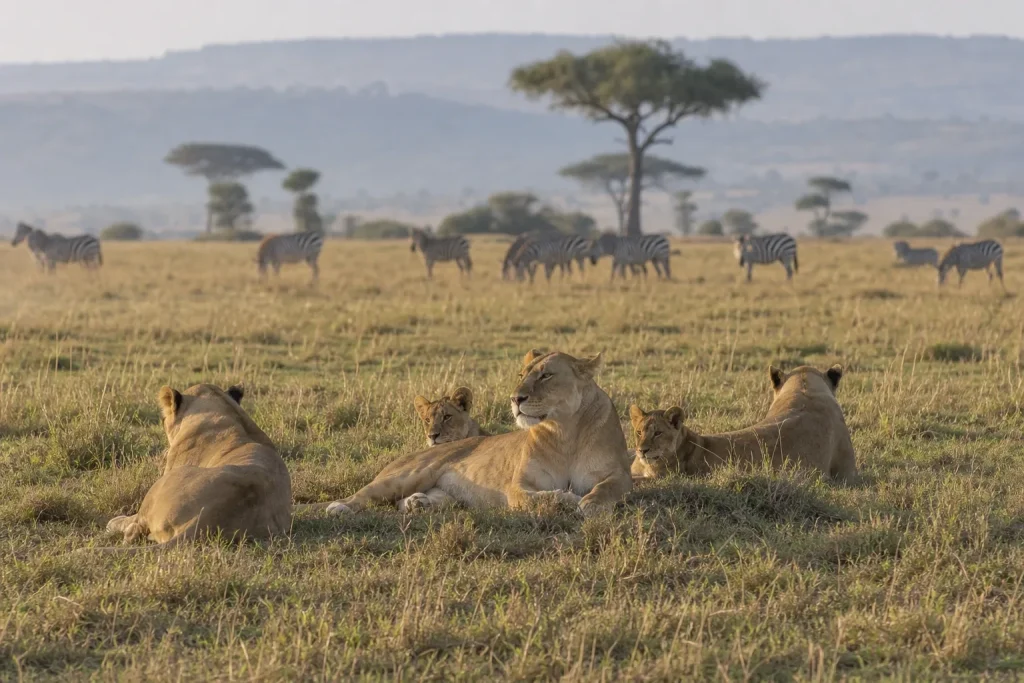
The Masai Mara is particularly attractive because its open landscapes can make lions easier to observe than in densely wooded habitats. The region also supports numerous herbivore species, creating opportunities to document predator-prey relationships. Other destinations provide contrasting scenery. Samburu offers dry-country landscapes, while Amboseli combines savannah habitats with views towards Mount Kilimanjaro when conditions permit.
A carefully planned itinerary can therefore produce a varied photographic portfolio rather than a collection of similar portraits.
Showing 1–12 of 12 safaris
Plan a 11 Days Kenya Photography Safari with expert guides, game drives and carefully chosen camps. Request a…
View SafariJoin a 13 Days Kenya Photography Safari featuring Amboseli elephants, Lake Nakuru rhinos and Masai Mara big cats,…
View SafariCapture Kenya on a 14 Days Kenya Photography Safari with private game drives, elephants, big cats, rhinos, landscapes…
View SafariExplore the 17 Days Kenya Photography Safari with a day-by-day safari plan, key wildlife experiences, destinations, accommodation ideas,…
View SafariExplore the 19 Days Kenya Photography Safari with a day-by-day safari plan, key wildlife experiences, destinations, accommodation ideas,…
View SafariExplore the 21 Days Kenya Photography Safari with a day-by-day safari plan, key wildlife experiences, destinations, accommodation ideas,…
View SafariPlan a 3 Days Masai Mara Safari with expert guides, game drives and carefully chosen camps. Request a…
Masai Mara
View SafariJoin a 6 Days Kenya Photography Safari with private game drives, sunrise and sunset shoots, big cats, elephants,…
View SafariExplore our 8 Days Kenya Photography Safari with dedicated game drives, expert guiding, wildlife photography opportunities and flexible…
View SafariPlan an 8 Days Migration Safari in Kenya with Masai Mara game drives, wildebeest viewing, river crossing insights,…
Masai Mara
View SafariPlan a 9 Days Kenya Photography Safari with expert guides, game drives and carefully chosen camps. Request a…
View SafariExplore Migration Photography Safari with guidance on migration timing, herd movements, river crossings, safari locations, camps, photography and…
Masai Mara
View SafariThe Masai Mara National Reserve is one of Kenya's most celebrated destinations for photographing lions. Its extensive grasslands support lion prides and numerous other predators. Photographers may observe lions resting, walking, interacting with pride members or moving through different habitats.
The relatively open landscape can provide opportunities for clean backgrounds and environmental compositions. Early morning and late afternoon light can be particularly attractive. A longer stay is recommended because lion activity varies from day to day. Three or four nights provide a useful introduction, while serious photographers may prefer five or more nights.
Amboseli National Park is better known for elephants, but lions also inhabit the park. Its open plains and wetland environments provide different photographic opportunities from the Masai Mara. Lion sightings are less predictable than in some areas of the Mara, so Amboseli should generally be considered part of a broader wildlife photography itinerary.
The park is particularly attractive for photographers who want to combine predators with elephants and landscape photography.
Samburu National Reserve offers lion photography in a distinctive northern Kenya environment. Its semi-arid landscapes, acacia woodland and riverine habitats create interesting backgrounds. Lions occur alongside elephants, leopards and northern wildlife species. Samburu is particularly suitable for photographers seeking variety beyond the Masai Mara.
Tsavo East National Park provides expansive landscapes and distinctive red-earth scenery. Lions inhabit the park, although sightings depend on habitat conditions and animal movements. The broad landscapes can be attractive for environmental wildlife photography. Tsavo East can be combined with Tsavo West or the Kenya coast.
Tsavo West National Park offers volcanic scenery, woodland and rocky landscapes. Lions occur in suitable habitats, but vegetation can make photography more challenging. The park is particularly attractive for photographers interested in combining predators with landscape and natural-history subjects.
Successful lion photography begins with understanding natural behaviour. Lions are social cats that often live in groups known as prides. A pride may include related females, their offspring and associated adult males. The composition of prides varies, and individuals may move between groups.
Lions spend substantial periods resting, particularly during hot conditions. Photographers should therefore expect periods of inactivity. However, resting lions can still provide opportunities for portraits, interaction photographs and environmental compositions. Observing posture, head movement and interactions can help photographers anticipate changes in behaviour.
Lion portraits are among the most popular images produced during a Kenya photography safari. A successful portrait should reveal detail, expression and character. Eye contact can create a strong connection between the subject and viewer. A telephoto lens allows photographers to work from a safe distance.
Background selection is important because distracting vegetation can reduce the visual impact of an image. Photographers should consider whether to include the entire animal or concentrate on the head and shoulders. Side lighting can emphasise facial features and the texture of a male lion's mane.
Lion prides provide opportunities for storytelling. Females may interact with cubs, groom one another or rest together. Cubs may play, investigate their surroundings or remain close to adults. These interactions can produce compelling photographs that communicate social relationships.
A sequence of images may tell a more complete story than a single portrait. Photographers should observe carefully and allow behaviour to develop naturally. Vehicles must not interfere with pride movements or separate cubs from adults.
Lion cubs are particularly engaging photographic subjects. Their playful behaviour and interactions with adults can create memorable images. However, cubs are vulnerable, and their welfare must remain the priority. Photographers should never request that guides approach dens too closely or disturb young animals.
A responsible safari maintains suitable viewing distances and follows park regulations. Patience often produces better results than attempting to force a particular composition.
Action photography can be challenging because animal movements are unpredictable. Lions may walk, run, interact with other pride members or occasionally hunt. A fast shutter speed is useful for freezing movement. Continuous autofocus can help track moving subjects.
Photographers should anticipate possible movement by observing posture and direction of travel. However, hunting scenes cannot be guaranteed. The best approach is to remain prepared while allowing natural behaviour to unfold.
Photographing a lion hunt is a goal for many wildlife photographers. However, hunting behaviour is unpredictable and may occur outside accessible viewing areas. Lions may spend long periods resting before becoming active. A photography itinerary should therefore provide enough time to observe natural behaviour without creating unrealistic expectations.
Guides should never attempt to provoke a hunt or interfere with prey animals. Responsible photography respects both predator and prey.
Early morning and late afternoon light are particularly valuable for lion photography. Low-angle sunlight can emphasise fur texture and create attractive highlights. Backlighting may produce dramatic silhouettes or illuminate the edges of a lion's mane. Side lighting can reveal facial structure and create depth.
Midday light may be harsh, but it can still be useful for documenting behaviour. A specialist photography safari should prioritise suitable lighting periods whenever park rules and operating conditions permit.
A telephoto zoom lens is particularly useful for lion photography. A 100–400mm lens or similar focal range provides flexibility for portraits and behavioural images. A 70–200mm lens can be useful when animals are relatively close and a wider composition is desired. Longer telephoto lenses may help photograph distant subjects.
A second camera body can reduce lens changes in dusty conditions. Spare batteries, memory cards and protective equipment are important. Photographers should also consider how much equipment can be carried safely in the safari vehicle.
Camera settings depend on light, movement and the desired result. For resting lions, moderate shutter speeds may be sufficient when the camera is stable. Moving animals require faster shutter speeds. Continuous autofocus can help track subjects walking or running.
A wide aperture may separate the lion from the background. A smaller aperture may be useful when photographing several animals at different distances. Exposure should be checked carefully when photographing dark manes against bright backgrounds. There is no single camera setting suitable for every situation.
A private Kenya lion photography safari provides flexibility in vehicle positioning and the time spent at sightings. Photographers may prefer to remain with one pride for an extended period. A private vehicle can also provide additional space for equipment. The number of photographers per vehicle should be considered during planning.
Vehicle positioning must comply with park regulations and wildlife safety requirements. Photographers should never pressure guides to approach lions too closely.
Lions can be photographed throughout the year. However, seasonal conditions influence vegetation, light and wildlife movements.
These months often provide relatively dry conditions in several safari regions. Open landscapes may offer good visibility.
Rainfall can produce greener vegetation and dramatic skies. However, wet conditions may affect roads and game drives.
This is a popular safari period, particularly in the Masai Mara. The region may experience seasonal migration movements. Accommodation demand can be higher.
Short rains may refresh vegetation. Photographers should prepare for changing weather conditions.
Arrive at Jomo Kenyatta International Airport and transfer to your hotel. Meet your safari representative for a briefing. Discuss photography equipment, preferred subjects and the planned itinerary. Overnight in Nairobi.
Travel towards the Masai Mara by road or domestic flight. Arrive at your lodge and prepare for an afternoon game drive. Begin exploring suitable predator habitats. Overnight in the Masai Mara.
Begin early to take advantage of morning light. Explore areas where lions may be observed. Spend time photographing portraits, pride interactions and environmental scenes. Overnight in the Masai Mara.
Continue exploring the reserve. The guide will look for opportunities to observe lion behaviour. Photographers may spend extended periods with suitable subjects. Overnight in the Masai Mara.
Continue photographing lions and other predators. Cheetahs and leopards may also be encountered, although sightings cannot be guaranteed. Overnight in the Masai Mara.
Enjoy another day of wildlife photography. Use the additional time to explore different habitats and lighting conditions. Overnight in the Masai Mara.
After breakfast, return to Nairobi by road or domestic flight. Continue to your hotel or international departure airport. The itinerary can be extended with Amboseli or Samburu.
A ten-day itinerary provides additional time for photography and the opportunity to explore more than one destination. One possible programme begins with five nights in the Masai Mara. This allows photographers to concentrate on lions, cheetahs, leopards and other wildlife. The itinerary can then continue to Samburu for three nights.
Samburu introduces different habitats and opportunities to photograph northern wildlife. The remaining time is allocated to arrival, departure and transfers. The exact route should be designed around available transport arrangements and accommodation locations.
Accommodation location can influence photography opportunities. A lodge close to productive wildlife habitats may reduce transfer time. Photographers should also consider early breakfast arrangements, charging facilities and equipment storage. Essential accommodation focuses on affordability and practical comfort.
Comfort accommodation provides a balance between price and convenience. Premium accommodation offers enhanced facilities and hospitality. Signature accommodation focuses on luxury, privacy and personalised experiences. The best accommodation is not necessarily the most expensive. Location and guiding quality are particularly important for photography.
Lions are powerful wild animals and must be treated with respect. Photographers should remain inside vehicles unless guides confirm that it is safe and permitted to leave. Vehicles should maintain suitable distances. Flash photography should be avoided when it may disturb animals.
Guides should never provoke lions or interfere with hunting behaviour. The welfare of the animals must always take priority over obtaining a photograph.
The cost depends on duration, accommodation category, season and transport arrangements. Private photography vehicles may increase the cost compared with shared game drives. Longer stays also affect accommodation and park fees. Domestic flights can reduce travel time but add to the overall price.
A detailed quotation should identify accommodation, meals, transport, game drives, park fees and any optional activities.
Allow several nights in the Masai Mara rather than relying on one or two game drives. Prioritise early morning and late afternoon photography. Use a flexible telephoto lens. Keep camera equipment protected from dust.
Observe animal behaviour before taking photographs. Avoid rushing between sightings. Choose a private vehicle if photography is your main priority. Maintain realistic expectations because wildlife behaviour cannot be guaranteed.
The Masai Mara is one of Kenya's most popular destinations for lion photography.
No. Lions are wild animals, and sightings depend on natural conditions.
Four or five nights provide useful flexibility for a photography-focused safari.
A telephoto zoom lens is useful for portraits and behavioural photography.
Yes. The itinerary can be adapted to different experience levels.
It may be possible when cubs are visible naturally, but viewing must not disturb the animals.
No. Hunting behaviour is unpredictable.
Yes. A private vehicle provides greater flexibility for photography.
Yes. Kenya offers opportunities to photograph elephants, giraffes, zebras, cheetahs, leopards and numerous other animals.
A Kenya lion photography safari provides opportunities to document one of Africa's most remarkable predators in natural habitats. Safari Trips to Kenya can arrange private photography itineraries covering the Masai Mara, Samburu, Amboseli and other suitable destinations. Whether your goal is capturing dramatic lion portraits, documenting pride behaviour or developing a varied wildlife photography portfolio, we can tailor the safari to your interests.
Contact Safari Trips to Kenya with your travel dates, preferred duration and photography objectives to request a personalised Kenya lion photography safari package.