
1 Day Kenya Safari
Plan a 1 Day Kenya Safari with private transport, expert guiding and wildlife viewing. Explore the best one-day…
View SafariHandpicked Kenya Safari Tours for Every Traveler
Private Kenya itineraries shaped around your dates, parks and camp style. Wildlife sightings depend on season and luck — we never guarantee a species or a river crossing.
An accessible safari is a wildlife holiday planned around the physical access, mobility and support requirements of the people travelling. For some visitors this may involve a safari vehicle with a ramp and wheelchair restraint system; others may require a lower vehicle step, additional assistance during transfers or accommodation close to the main lodge facilities. Accessibility can also involve hearing, vision, sensory or cognitive requirements, where clear written itineraries, flexible schedules, additional orientation, quieter accommodation or assistance with communication may help.
The goal is not a completely separate wildlife experience but to make the main safari activities as practical, comfortable and inclusive as possible. A well-designed Inclusive Kenya Safari Holiday should allow travellers to enjoy wildlife viewing while understanding the limitations of particular vehicles, lodges and destinations.
Showing 1–12 of 215 safaris
Plan a 1 Day Kenya Safari with private transport, expert guiding and wildlife viewing. Explore the best one-day…
View SafariExplore the 10 Days Family Kenya Safari with a day-by-day safari plan, key wildlife experiences, destinations, accommodation ideas,…
View SafariExplore the 10 Days Fly-in Kenya Safari with a day-by-day safari plan, key wildlife experiences, destinations, accommodation ideas,…
View SafariExplore the 10 Days Honeymoon Kenya Safari with a day-by-day safari plan, key wildlife experiences, destinations, accommodation ideas,…
View SafariPlan a 10 Days Kenya Big Five Safari with expert guides, game drives and carefully chosen camps. Request…
View SafariA 10 day Kenya journey connecting Nairobi, Ol Pejeta, Samburu or Buffalo Springs, Solio, Lake Nakuru, Maasai Mara…
Lake Naivasha, Lake Nakuru, Masai Mara
View SafariPlan a 10 Days Kenya Safari with expert guides, game drives and carefully chosen camps. Request a quote.
View SafariPlan a 10 Days Kenya Safari & Diani Beach with expert guides, game drives and carefully chosen camps.…
Diani Beach
View SafariPlan a 10 Days Kenya Wildlife Safari with expert guides, game drives and carefully chosen camps. Request a…
View SafariPlan a 10 Days Luxury Kenya Safari with expert guides, game drives and carefully chosen camps. Request a…
View SafariA 10 day Kenya journey connecting Nairobi, Maasai Mara, Lake Naivasha, Amboseli and Diani Beach.
Amboseli, Diani Beach, Lake Naivasha
View SafariPlan a 10 Days Masai Mara & Amboseli with expert guides, game drives and carefully chosen camps. Request…
Masai Mara, Amboseli
View SafariYes—wheelchair users can enjoy wildlife safaris in Kenya when suitable transport and accommodation are arranged. Standard safari vehicles are not necessarily wheelchair accessible; many 4x4 Land Cruisers have relatively high steps and require passengers to climb into the vehicle.
For travellers who cannot transfer into a conventional seat, a properly adapted vehicle may be necessary, with a wheelchair ramp, suitable interior space and appropriate restraint systems. Others may prefer a swivel seat or another transfer arrangement; the appropriate solution depends on mobility, equipment and support requirements. Vehicle suitability must be confirmed before booking using photographs, dimensions and details of the access system.
The same principle applies to accommodation: a room described as wheelchair-friendly may still have a narrow bathroom door, a raised shower threshold or an uneven path from the vehicle. An accessible safari is therefore possible, but it requires more detailed planning than a conventional itinerary.
Different national parks present different accessibility considerations. The most suitable destination depends on the traveller's mobility, preferred activities and tolerance for rough roads.
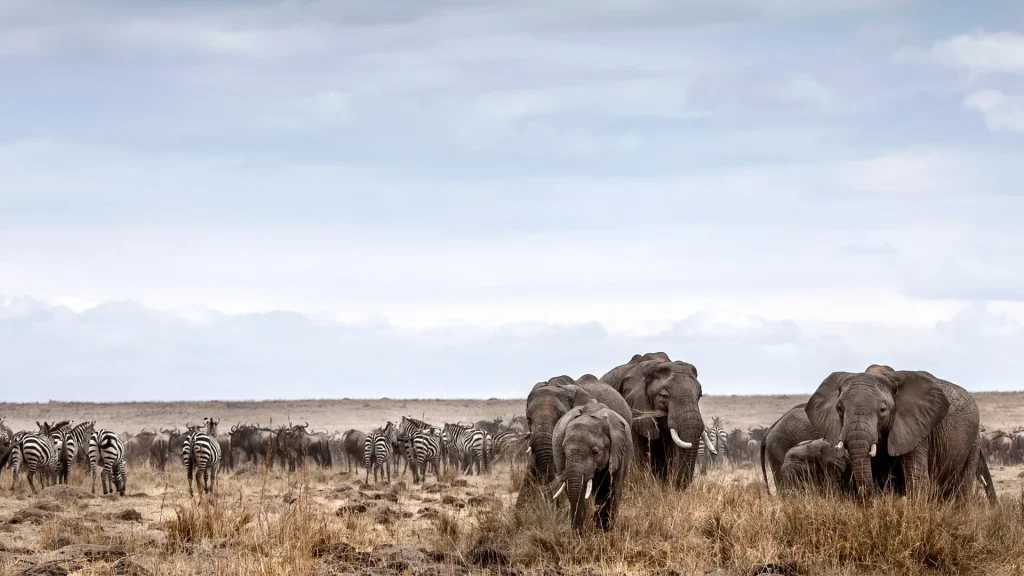
Accessible Amboseli Safaris can be a good option for travellers seeking elephant viewing and relatively open landscapes. Amboseli is known for its elephant populations, wetlands and views towards Mount Kilimanjaro; broad plains create opportunities to observe elephants, buffaloes, zebras, wildebeest, giraffes and birds from a safari vehicle without requiring walking activities.
The park is accessible by road from Nairobi, although the journey generally takes several hours, and travellers who find long transfers uncomfortable may wish to discuss alternative transport arrangements. Relatively open terrain can help wildlife viewing, but park tracks may still be uneven or muddy after rain, so accommodation should be selected carefully—especially where rooms connect to dining areas by gravel or natural-surface paths.
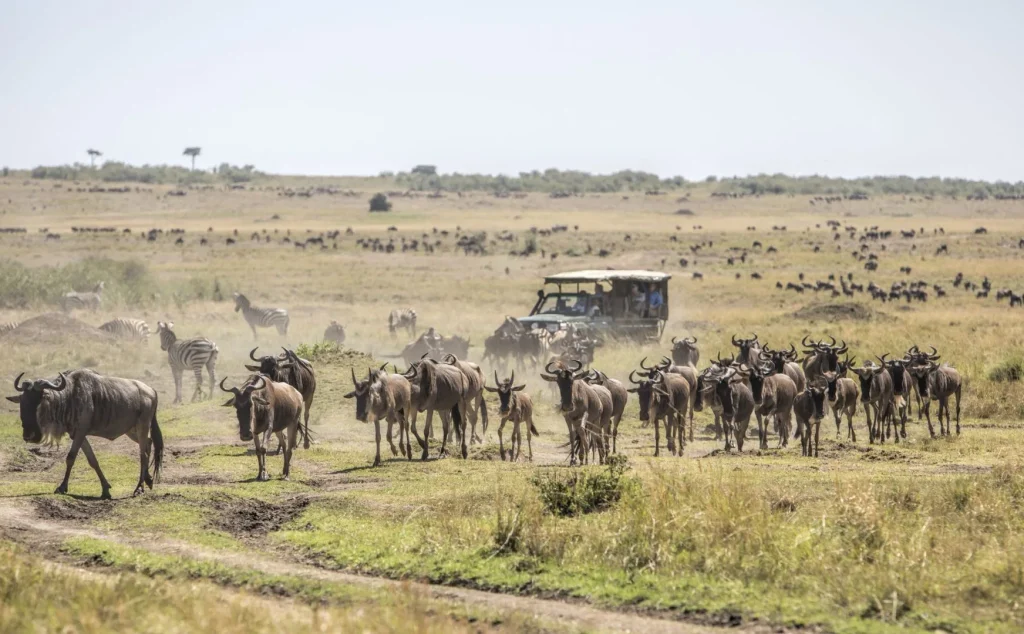
An Accessible Masai Mara Safari provides opportunities to observe lions, cheetahs, elephants, giraffes, buffaloes and numerous other animals. The reserve is also associated with the Great Wildebeest Migration, usually observed in the Mara ecosystem during the July-to-October period, although timing varies.
The Masai Mara is an excellent wildlife destination, but rough tracks and long game drives may involve repeated jolting; travellers who experience pain, fatigue or pressure-related concerns should discuss game-drive duration and seating arrangements before departure. Flying from Nairobi to a suitable Mara airstrip may reduce road travel, though light aircraft commonly involve steps, restricted cabin space and luggage limitations—accessibility arrangements must be confirmed with the airline and relevant service providers.
Accommodation location is particularly important: a camp with a suitable room may still have long or uneven paths between the room, restaurant and vehicle pickup area.
Nairobi National Park can be a practical option for travellers who want a wildlife experience without a lengthy journey to a distant reserve.
Located close to Kenya's capital, the park provides opportunities to observe wildlife including rhinos, giraffes, buffaloes, zebras and various antelopes.
Its proximity to Nairobi makes it suitable for shorter game drives and itineraries with more flexible rest periods.
However, the park's tracks can still be rough, and accessibility depends on the vehicle used.
A Nairobi-based safari can also be useful as an introduction before travelling to more remote destinations.
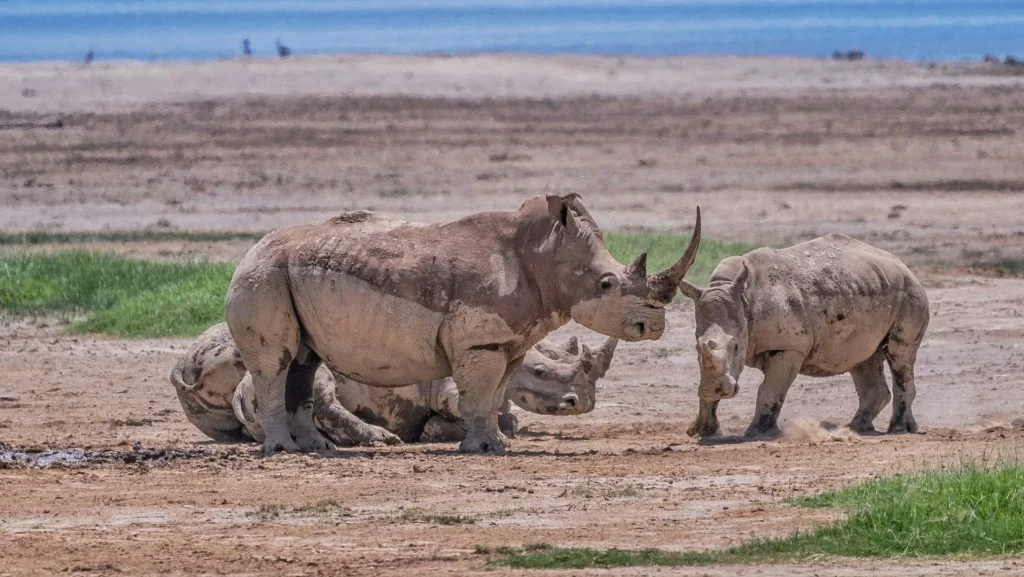
Lake Nakuru National Park is known for its black and white rhino populations, woodland habitats and birdlife.
The park may be included in accessible itineraries travelling between Nairobi and the Masai Mara.
Wildlife viewing is primarily vehicle-based, which can make the experience practical for travellers who prefer not to participate in walking activities.
However, road conditions, viewpoints and accommodation access should be assessed individually.
Some viewpoints involve steps or uneven surfaces and may not be suitable for every visitor.
The park remains rewarding even when certain walking areas cannot be accessed.
Ol Pejeta Conservancy, located in the Laikipia region, is another destination worth considering for accessible wildlife travel.
The conservancy is known for rhino conservation and supports a variety of wildlife, including elephants, buffaloes, lions and other species.
Its location and accommodation options may make it suitable for selected accessible itineraries.
However, access to particular activities, conservation facilities and accommodation areas must be confirmed individually.
Not every experience offered within the conservancy will necessarily be suitable for every traveller.
The Tsavo National Parks offer extensive landscapes and opportunities to observe elephants, buffaloes, giraffes and other wildlife.
They can be incorporated into itineraries combining safari experiences with Kenya's Indian Ocean coast.
However, the large distances involved and variable road conditions require careful consideration.
Travellers with limited tolerance for extended vehicle journeys may prefer a slower itinerary with additional nights in each destination.
Transport is often the most important component of a Wheelchair Accessible Kenya Safari. A suitable vehicle must provide safe entry, comfortable seating and adequate space for the traveller's mobility equipment.
Some specialist safari vehicles are fitted with ramps that allow wheelchair users to enter without transferring into a conventional vehicle seat.
The vehicle should have appropriate wheelchair restraints and passenger safety arrangements.
Travellers should confirm the ramp's dimensions, maximum load, entry angle and compatibility with their wheelchair.
The vehicle's interior height and available turning space may also be important.
Some travellers can transfer from a wheelchair into a vehicle seat with suitable assistance.
A swivel seat or other transfer arrangement may reduce the physical effort involved.
However, transfer methods should be discussed carefully with the traveller and any accompanying support person.
A vehicle should not be described as accessible merely because staff are willing to lift a passenger into it.
Long game drives can be tiring, particularly on rough tracks.
Seat support, legroom, cushioning and the ability to change position may influence comfort.
Travellers who require pressure-relief arrangements should discuss these needs before the safari.
Some travellers use a wheelchair only outside the vehicle and can transfer into a standard seat.
In these cases, the vehicle must have suitable space to transport the wheelchair securely.
Powered wheelchairs may require additional consideration because of their weight, dimensions and battery specifications.
Adapted safari vehicles are specialised and may be limited in number.
Early planning is strongly recommended, particularly during peak travel periods.
Before confirming a booking, travellers should request details of the proposed vehicle and verify that it meets their individual requirements.
Accommodation accessibility involves much more than the presence of a ramp.
A Wheelchair-Friendly Safari Lodge should be assessed according to the entire route the traveller will use, from vehicle arrival to the bedroom, bathroom, restaurant and other facilities.
The route from the vehicle to the room should be checked for steps, steep slopes and uneven surfaces.
A room may have a level entrance but still be difficult to reach because of gravel, sand or long pathways.
Bedroom and bathroom doors must be wide enough for the traveller's wheelchair or mobility equipment.
Measurements should be confirmed rather than relying on general descriptions.
Accessible bathroom requirements vary between travellers.
Some visitors require a roll-in shower, grab rails, a shower seat or sufficient space for side transfers.
Others may need a specific toilet height or assistance with bathing.
Photographs and measurements can help establish whether the facilities are suitable.
Bed height can be important for wheelchair transfers.
Travellers should confirm whether there is sufficient space beside the bed and whether furniture can be rearranged where necessary.
A room may be accessible while the restaurant, lounge or viewing deck is not.
The entire accommodation experience should be considered.
Safari camps may have limited lighting and natural pathways between rooms and common areas.
Travellers who require assistance at night should discuss these arrangements in advance.
Safari Trips to Kenya uses four broad accommodation categories.
Essential Safari Accommodation focuses on practical lodging and affordability.
For accessible travel, suitability must take priority over price. Not every Essential property will have appropriate facilities.
Comfort Safari Accommodation offers a balance between amenities and cost.
Some properties may have suitable ground-floor rooms or adapted facilities, but these must be verified individually.
Premium Safari Accommodation may offer more spacious rooms and additional services.
However, a premium price does not automatically mean a property is wheelchair accessible.
Signature Safari Accommodation focuses on high-end properties and personalised experiences.
Some properties may be able to accommodate specific access requirements, but their suitability depends on the actual room layout, pathways and facilities.
The most appropriate category is the one that meets the traveller's needs while remaining within the preferred budget.
The following is a proposed itinerary combining Nairobi, Amboseli and the Masai Mara. It is intended as a planning example rather than a confirmed accessible package.
All accommodation, transport and activity arrangements must be checked before booking.
Arrive at Jomo Kenyatta International Airport, where pre-arranged assistance and suitable transport can be organised according to the traveller's requirements.
Transfer to a carefully selected Nairobi hotel with facilities appropriate to the guest's mobility needs.
The remainder of the day is reserved for rest after the international journey.
After breakfast, depart Nairobi for Amboseli using the agreed transport arrangement.
The journey normally takes approximately four to five hours, although additional comfort stops may be required.
Arrive at the selected accommodation and allow time to settle in before an afternoon game drive, if practical.
Spend the day exploring Amboseli's wildlife habitats.
Game drives may focus on elephants, wetlands and views towards Mount Kilimanjaro.
The programme can include a midday rest period to reduce fatigue.
Return to Nairobi after breakfast.
This transfer day allows travellers to avoid combining a long cross-country journey with extensive wildlife activities.
Overnight at a suitable Nairobi hotel.
Travel to the Masai Mara by a pre-arranged accessible road vehicle or a suitable flight arrangement, depending on the traveller's requirements.
Flight accessibility must be confirmed before booking.
After arrival, settle into the selected accommodation and enjoy an introductory game drive if practical.
Spend the day exploring suitable wildlife-viewing areas.
The guide can adjust the duration of game drives according to comfort, road conditions and wildlife activity.
A shorter morning drive followed by rest and an afternoon outing may be preferable to a continuous full-day programme.
Return to Nairobi using the agreed transport arrangement.
Allow sufficient time for transfers, rest and international flight connections.
The itinerary can be extended with additional nights to create a more relaxed pace.
No two travellers have exactly the same requirements.
A successful Private Accessible Kenya Safari begins with a detailed discussion of what the traveller can comfortably do and which arrangements are essential.
Travellers using wheelchairs may require adapted transport, step-free accommodation and suitable bathroom facilities.
The type and dimensions of the wheelchair should be considered when selecting vehicles and rooms.
Some travellers can walk short distances but find stairs, uneven paths or prolonged standing difficult.
A lower vehicle step, accommodation close to common areas and shorter walking distances may be sufficient.
Older travellers may prefer slower itineraries, fewer accommodation changes and additional rest periods.
Age alone does not determine accessibility needs, so arrangements should reflect the individual's preferences and abilities.
Clear written itineraries, visual communication and suitable guiding arrangements may improve the experience.
Specialist communication support should be requested in advance.
Guides may provide more detailed verbal descriptions of wildlife, landscapes and activities.
Accommodation orientation and assistance with unfamiliar surroundings can also be important.
Some visitors benefit from predictable schedules, quieter accommodation and reduced exposure to crowded environments.
Private safaris can provide greater flexibility in these circumstances.
A Private Accessible Kenya Safari is generally the most flexible arrangement for travellers with specific mobility or support requirements.
A dedicated vehicle allows the itinerary to be adapted around rest periods, transfer needs and preferred game-drive duration.
Private arrangements can also provide more space for mobility equipment and accompanying support persons.
Group safaris may be possible when the vehicle and accommodation arrangements meet everyone's needs.
However, fixed departure schedules and shared transport can limit flexibility.
Travellers should not assume that a standard group safari can accommodate specialist equipment without prior arrangements.
The generally drier months can be easier for travellers who need firm pathways and more predictable road conditions.
January to March and June to October are often useful planning periods, although conditions vary between destinations.
During rainy periods, unsealed tracks may become muddy, and natural-surface paths around camps can be more difficult to navigate.
However, dry-season travel can also involve dust and higher visitor numbers.
The best time depends on the chosen destination, the traveller's mobility requirements and the specific accommodation arrangements.
For visitors who need adapted vehicles or a limited number of accessible rooms, availability may be more important than seasonal preference.
The cost of an accessible safari depends on the services required.
Specialist transport may cost more than a conventional safari vehicle because adapted vehicles are less widely available.
Accommodation costs depend on the selected property, room category and travel season.
Additional assistance, equipment or specialist services may also influence the total price.
However, accessibility requirements do not automatically mean every part of the safari must be expensive.
A carefully planned itinerary can balance comfort, practical access and budget.
Travellers should request a detailed quotation identifying the confirmed vehicle, accommodation, activities and any additional support services.
The exact inclusions depend on the confirmed arrangements.
A package may include suitable safari transport, accommodation, meals specified in the itinerary, a professional driver-guide, scheduled game drives and applicable park entry fees.
Additional services may include airport assistance, specialist equipment or other support where available.
These arrangements must be clearly identified in the quotation.
Common exclusions include international flights, travel insurance, personal purchases, gratuities and optional activities.
Specialist medical care, personal care assistance, mobility equipment hire and additional support services should not be assumed included unless specifically confirmed.
Travellers should also check the terms of their travel insurance and whether it covers their intended activities and relevant personal requirements.
Before confirming an Accessible Kenya Safari, travellers should discuss several important details:
These details help prevent misunderstandings and make it easier to select suitable suppliers.
Some safari arrangements can accommodate wheelchair users, but accessibility depends on the vehicle, accommodation and itinerary.
This may be possible in a properly adapted vehicle with suitable wheelchair restraints. The arrangement must be confirmed before booking.
Amboseli and Nairobi National Park may be practical options for some travellers, but suitability depends on individual needs and the chosen transport arrangements.
Yes, with suitable transport and accommodation. Rough tracks and long game drives should be considered carefully.
No. Luxury accommodation does not automatically provide wheelchair accessibility.
This may be possible, but vehicle dimensions, wheelchair weight, battery requirements and charging facilities must be checked.
Specialist vehicles are more limited than standard safari vehicles, so early planning is recommended.
Yes, subject to suitable transport, accommodation and beach access arrangements.
Yes. Private itineraries can be developed for families with different mobility and support requirements.
Travellers should share the practical accessibility and support requirements necessary for safe planning. Sensitive medical details should only be provided where genuinely required and through appropriate channels.
An Accessible Kenya Safari should be designed around what the traveller wants to experience, while addressing the practical arrangements needed to make that experience possible. Kenya's wildlife destinations offer opportunities to observe elephants, lions, giraffes, rhinos, birds and remarkable landscapes, and with appropriate planning many travellers with mobility or other accessibility requirements can enjoy them.
Safari Trips to Kenya can help develop a personalised itinerary based on your preferred destinations, travel dates, accommodation budget and accessibility needs. Specialist vehicles, adapted rooms and support arrangements will need to be checked and confirmed before booking. Contact Safari Trips to Kenya with your travel preferences and the accessibility features you require to begin planning a Wheelchair Accessible Kenya Safari or another suitable inclusive wildlife holiday.