
1 Day Kenya Safari
Plan a 1 Day Kenya Safari with private transport, expert guiding and wildlife viewing. Explore the best one-day…
View SafariHandpicked Kenya Safari Tours for Every Traveler
Kenya Birding Safari – Best Birdwatching Destinations & Tours
A Kenya birding safari reveals one of the richest and most rewarding sides of travelling through East Africa. Kenya may be internationally famous for lions, elephants, rhinos, cheetahs and the Great Migration, but the country's extraordinary birdlife is equally capable of defining an entire safari. Related planning topics include birding safari Kenya and Kenya birdwatching safari.
Kenya supports an exceptional variety of birds because its landscapes change dramatically over relatively short distances. Open savannah, Rift Valley lakes, permanent wetlands, highland forests, semi-arid northern country, riverine woodland, coastal forest and Indian Ocean habitats all occur within the same country.
For a birdwatcher, every change in habitat creates new possibilities. One morning may begin with raptors soaring above the Masai Mara. Another might involve watching flamingos and pelicans across a Rift Valley lake. In northern Kenya, the focus can shift toward dry-country specialists, while forest birding introduces a completely different experience based on calls, movement in dense vegetation and patient searching.
A dedicated Kenya birding safari is therefore very different from a conventional wildlife holiday, because there is almost always something to observe. While a pride of lions sleeps through the heat of the day, rollers and bee-eaters remain active. When elephants disappear into woodland, raptors continue circling overhead. A seemingly quiet patch of forest can suddenly become active with a mixed feeding flock.
Birding encourages travellers to look at the entire ecosystem. For serious birdwatchers, photographers and naturalists, Kenya can provide an exceptionally varied safari without sacrificing the country's famous large mammals.
Showing 1–12 of 215 safaris
Plan a 1 Day Kenya Safari with private transport, expert guiding and wildlife viewing. Explore the best one-day…
View SafariExplore the 10 Days Family Kenya Safari with a day-by-day safari plan, key wildlife experiences, destinations, accommodation ideas,…
View SafariExplore the 10 Days Fly-in Kenya Safari with a day-by-day safari plan, key wildlife experiences, destinations, accommodation ideas,…
View SafariExplore the 10 Days Honeymoon Kenya Safari with a day-by-day safari plan, key wildlife experiences, destinations, accommodation ideas,…
View SafariPlan a 10 Days Kenya Big Five Safari with expert guides, game drives and carefully chosen camps. Request…
View SafariA 10 day Kenya journey connecting Nairobi, Ol Pejeta, Samburu or Buffalo Springs, Solio, Lake Nakuru, Maasai Mara…
Lake Naivasha, Lake Nakuru, Masai Mara
View SafariPlan a 10 Days Kenya Safari with expert guides, game drives and carefully chosen camps. Request a quote.
View SafariPlan a 10 Days Kenya Safari & Diani Beach with expert guides, game drives and carefully chosen camps.…
Diani Beach
View SafariPlan a 10 Days Kenya Wildlife Safari with expert guides, game drives and carefully chosen camps. Request a…
View SafariPlan a 10 Days Luxury Kenya Safari with expert guides, game drives and carefully chosen camps. Request a…
View SafariA 10 day Kenya journey connecting Nairobi, Maasai Mara, Lake Naivasha, Amboseli and Diani Beach.
Amboseli, Diani Beach, Lake Naivasha
View SafariPlan a 10 Days Masai Mara & Amboseli with expert guides, game drives and carefully chosen camps. Request…
Masai Mara, Amboseli
View SafariKenya occupies an unusual ecological position. Its landscapes range from sea level on the Indian Ocean to high mountain environments and elevated plateaus. The Great Rift Valley crosses the country, while western Kenya includes forest systems influenced by Central African ecosystems. Northern Kenya becomes progressively drier, creating another completely different set of habitats. This variety supports bird communities associated with:
For birders, this means that a carefully designed itinerary is often more productive than simply spending many days in one national park. Habitat diversity is one of the most important principles of Kenya birding safari planning.
Kenya has recorded well over 1,000 bird species, placing it among Africa's outstanding birding countries. The precise total can change over time as:
For safari planning, however, the most important fact is the sheer diversity. A keen birder travelling across several habitats can accumulate an impressive species list during a single trip. Even travellers who arrive with limited birding experience often finish their safari recognising numerous groups, including:
A longer specialist birding itinerary allows the focus to move beyond the obvious species toward regional specialists, difficult forest birds and challenging raptor identification.
A Kenya birding safari can be designed for many different types of traveller.
Experienced birders may travel with extensive target lists and want to maximise habitat coverage. Their safari may focus on:
Travellers who enjoy birds but still want a traditional wildlife safari can combine birding with:
Photographers may prefer a slower itinerary with more time spent on individual birds and predictable perches.
Kenya is an excellent place to begin birdwatching because many birds are:
Birding keeps children engaged between major mammal sightings and encourages active observation during game drives.
The destinations may sometimes be the same, but the approach is different.
A standard game drive may prioritise:
Birds are often identified only when they are particularly large or colourful.
A birding safari may stop for:
The vehicle may stop far more frequently. Birders may spend twenty minutes studying a bird that a conventional safari vehicle would drive past in seconds. For this reason, serious birders should generally use a private safari vehicle with a birding-focused guide.
Kenya's best birding itinerary normally combines several habitats. Important birding regions include:
The best route depends on:
The Masai Mara is one of Africa's most famous mammal destinations, but its birdlife is exceptional. The wider ecosystem contains:
This supports a broad range of bird species. A typical birding game drive may include:
All of this occurs while lions, elephants, giraffes, cheetahs and other large mammals remain part of the same landscape.
The Mara's open plains make it excellent for watching birds of prey. Birders may find raptors:
Raptor identification is one of the more challenging aspects of African birding. A specialist guide considers:
Juvenile birds can look dramatically different from adults. For serious birders, an experienced guide greatly improves both the species list and identification confidence.
The predator-rich Mara ecosystem supports important scavenger communities. When lions, leopards, cheetahs or hyenas make kills, vultures may eventually arrive. Different vulture species use carcasses in different ways. Some have bills capable of opening tougher sections of a carcass. Others specialise in smaller pieces. Watching vultures feed can reveal:
Vultures also provide an essential ecological service by rapidly removing carcasses from the landscape.
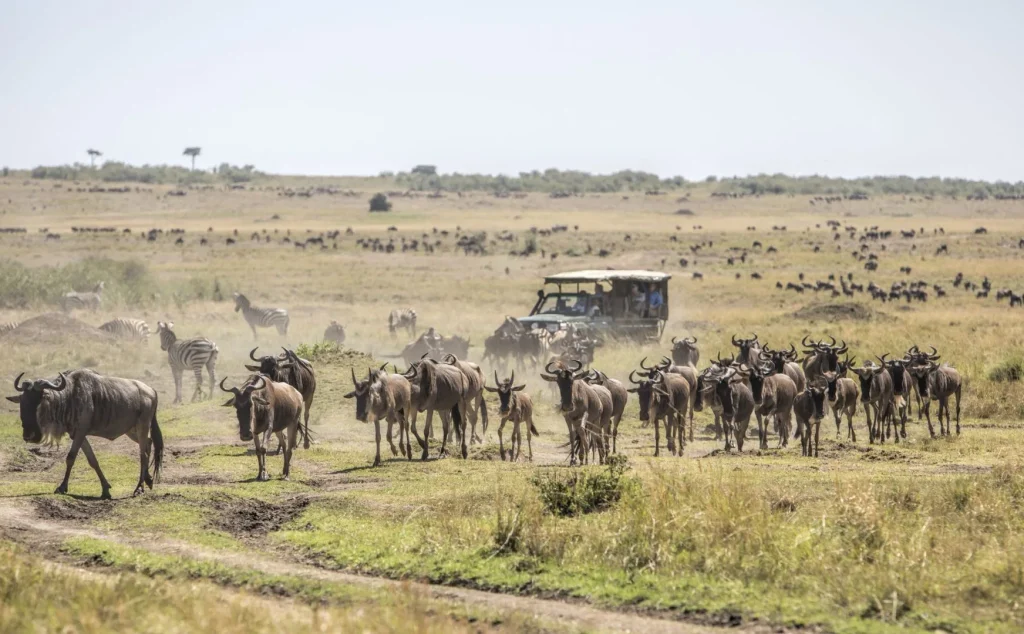
The Great Migration creates an extraordinary ecological setting for birdwatchers when herds are present in the Masai Mara, although timing and herd locations vary from year to year and cannot be guaranteed. Huge concentrations of wildebeest and zebra affect the entire food web. Birds may benefit from:
Vultures and other scavengers become particularly interesting around kills. Birders can therefore experience one of Africa's great mammal spectacles without making birding secondary.
Lake Nakuru National Park provides a very different experience from the Masai Mara. The park combines:
Birdwatching may include:
The park is also important for mammal viewing. Rhinos can make Lake Nakuru especially useful for travellers combining birding with a broader Kenya Big Five safari, although individual species can never be guaranteed.
Lake Nakuru became internationally famous for enormous flamingo concentrations. However, flamingo abundance changes naturally. Numbers may fluctuate according to:
This means travellers should not assume that the same enormous concentrations will always be present. Birds move according to ecological conditions. The broader birding value of Lake Nakuru remains significant even when flamingo numbers fluctuate.
Kenya can provide opportunities to observe both lesser and greater flamingos.
Lesser flamingos are generally:
Greater flamingos are generally:
Mixed groups are particularly useful for learning the differences.
Lake Naivasha introduces freshwater birding. The lake and surrounding vegetation can support:
Birding here can be combined with conventional vehicle-based wildlife activities as well as boat experiences. This makes Lake Naivasha particularly valuable within a Rift Valley itinerary.
A boat trip provides a completely different birdwatching angle. From water level, travellers may observe birds:
Photography can be excellent because the low perspective creates cleaner backgrounds. Potential subjects include:
Camera equipment should be protected from water spray.
Amboseli National Park is internationally famous for elephants and Mount Kilimanjaro, but it also provides excellent birding. The park contains a valuable combination of:
Water attracts both birds and mammals. Birders may observe the following while elephants, buffalo and other mammals remain nearby:
This makes Amboseli particularly suitable for mixed-interest groups.
Wetland zones can be among the most productive parts of Amboseli. Birdwatchers may find:
Wetlands also attract large mammals. A single observation point may provide opportunities to photograph birds together with:
Such interactions help make Amboseli one of Kenya's most visually rewarding safari landscapes.
Northern Kenya introduces a very different ecological world. Samburu and neighbouring landscapes contain semi-arid habitats supporting numerous dry-country birds. This makes the region important for specialist birders who want to move beyond the more familiar savannah species. Habitat can include:
Bird groups may include:
Samburu is also excellent for distinctive northern mammals.
A common birding mistake is spending too many days in similar southern savannah habitats. Northern Kenya solves this problem. As rainfall decreases and vegetation changes, a completely different species community appears.
This means a Samburu + Rift Valley + Masai Mara itinerary can provide far more diversity than repeatedly visiting parks with similar habitats. For experienced birders, ecological variation is more important than simply adding park names.
The enormous Tsavo ecosystem adds another dry-country environment. Its landscapes include:
Birding can be combined with:
Tsavo is also geographically useful for travellers continuing toward the Kenya Coast. A longer itinerary may combine inland birding with coastal forest and shorebird habitats.
Kakamega Forest introduces one of the greatest contrasts in a Kenya birding itinerary. Forest birding differs fundamentally from savannah birding. In open country, birds may be visible from hundreds of metres away. Inside a forest, a bird can sit only a few metres from you and remain invisible. Birders therefore rely much more heavily on:
For serious birders, forest habitat dramatically expands the range of species encountered.
A forest birding walk may initially seem slow. The guide stops. Everyone listens. A call comes from deep vegetation. The bird is not immediately visible, so the group waits. Eventually, movement appears between leaves, and a brief glimpse may provide the identification. This process requires patience. Successful forest birding depends on:
It is one of the most satisfying forms of birdwatching when everything comes together.
The Arabuko Sokoke Forest is one of Kenya's important coastal forest landscapes. For serious birders, the forest gives a strong reason to extend a safari toward the Indian Ocean. Coastal forest supports species and ecological communities that are absent from the Masai Mara and other inland savannahs. A Kenya birding holiday can therefore combine the following without compromising birding diversity:
The Kenya Coast should not be treated only as a beach extension. For birders, coastal habitats introduce another range of possibilities. These can include:
Birdwatchers may encounter:
Travellers can therefore continue adding species even while spending several days near the Indian Ocean.
Kenya's Great Rift Valley is central to many birding itineraries. Its lakes and varied surrounding landscapes support:
Different lakes behave differently. Water chemistry, depth and food availability vary. This causes bird populations to shift between locations. Serious birding itineraries should therefore consider current ecological conditions rather than simply following historic reputations.
Nairobi can be surprisingly productive for birdwatchers. Travellers can begin birding almost immediately after arrival rather than waiting for the main safari to start. The city's wider natural areas and nearby protected habitats provide opportunities to introduce:
This can be particularly useful for:
For dedicated birders, every available morning can contribute to the final trip list.
Higher-elevation landscapes add another important component to Kenya birding. As altitude increases, vegetation and climate change. This creates bird communities different from lowland savannahs. Highland birding can involve:
For serious birders with enough time, including elevation change greatly improves ecological coverage.
Kenya is outstanding for birds of prey. Birders may encounter:
Raptor identification often requires considerable experience. Important features include:
A distant bird circling high above the savannah can become one of the most satisfying identifications of the day.
The secretary bird is one of Africa's most unusual birds of prey. Rather than spending most of its time flying, it hunts on the ground. Its long legs allow it to stride through grassland while searching for prey. Diet may include:
Watching a secretary bird hunt is a major highlight for many birders. Its unusual shape also makes it an excellent photographic subject.
The ostrich is the world's largest living bird. Kenya provides excellent opportunities to see ostriches in open and semi-arid landscapes. They rely on the following rather than flight:
Males and females can show distinctive plumage differences. Their enormous size means safari travellers sometimes stop thinking of them as birding targets, yet they remain one of Africa's most extraordinary birds.
Kingfishers are popular with both birdwatchers and photographers. Different species use different habitats. Some are strongly associated with water. Others hunt insects and small terrestrial animals. Birders may observe kingfishers:
Their bright colours make them especially popular with photographers.
Bee-eaters are among Kenya's most colourful birds. They often hunt from exposed perches. A typical sequence involves:
This predictable behaviour provides excellent photography opportunities. Rather than chasing the bird, photographers can wait at a favoured perch.
Rollers are another classic safari bird. They frequently sit prominently beside roads and tracks. Their plumage becomes especially spectacular in flight. Photographers should watch for:
A roller in good light can be one of the most colourful photographs of an entire safari.
Hornbills are instantly recognisable because of their impressive bills. They occur in various habitats across Kenya. Their diet can include:
Some hornbill species have remarkable breeding behaviour in which the female spends part of the nesting period sealed inside a cavity while the male supplies food. This makes them fascinating birds beyond their striking appearance.
Sunbirds are among Kenya's most colourful smaller birds. They feed heavily on nectar but also take insects. Flowering vegetation can become an excellent birding location. Photographers should often remain near productive flowers rather than follow individual birds. With patience, sunbirds may repeatedly return to the same feeding plants.
Weavers provide some of Africa's most impressive examples of nest construction. Males may build elaborate woven structures using grasses and plant fibres. During breeding periods, colonies can become highly active. Birders may observe:
For photographers, active colonies provide repeated opportunities to capture behaviour.
Wetlands throughout Kenya support a wide variety of large water-associated birds. These may include:
They can be observed:
Photographers should pay attention to reflections, hunting behaviour and interaction between species.
Pelicans are among the largest and most conspicuous waterbirds. They may be observed:
Although they appear heavy on water, pelicans can become surprisingly graceful in flight. Large groups can produce excellent wide-angle compositions.
Kenya's grasslands and drylands support several impressive ground birds. Despite their size, bustards can blend remarkably well into vegetation. Birders should scan for:
Ground birds also help break the habit of looking only into trees and sky.
Oxpeckers are closely associated with African mammals. They may be seen on:
For birders, this creates an excellent opportunity to observe ecological relationships. For photographers, it can produce images combining a bird and iconic mammal in the same frame.
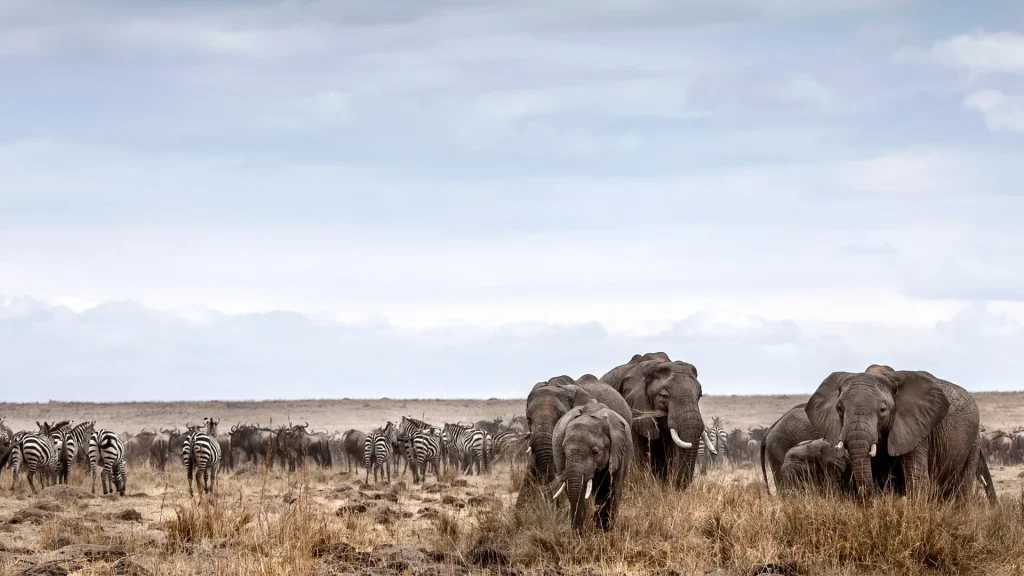
Elephants can indirectly influence birdlife. Their feeding behaviour may:
Birds can exploit these changes. Wetlands used by elephants also support numerous aquatic species. Amboseli is particularly rewarding for travellers wanting to combine elephants and birds.
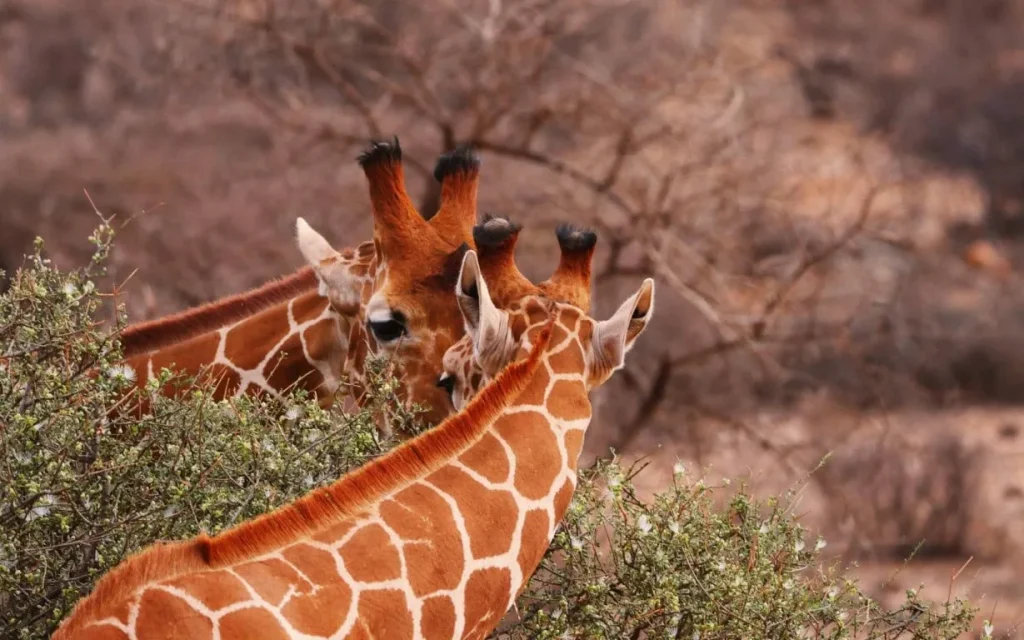
Giraffes also create birding opportunities. Birders should check:
Giraffe behaviour can also provide clues to predators, creating links between birding and wider wildlife observation.
A predator kill can become one of the most interesting birding locations on safari. Once predators begin feeding, scavenging birds may gather. Birders should observe:
A carcass is not merely a predator sighting. It is a small ecological event involving many species.
Birding by sound is essential in Kenya. Many species are heard before they are seen. This is particularly true in:
A skilled bird guide can identify:
Learning common calls dramatically increases the number of birds detected.
A specialist bird guide does far more than name birds. The guide understands:
An experienced guide may hear a species that everyone else misses and position the group where the bird is likely to appear. For dedicated birders, guide quality is one of the most important components of the safari.
Vehicles are excellent birding platforms. They allow travellers to:
Birds often tolerate stationary vehicles remarkably well. A private vehicle is especially important because birders need frequent stops.
Walking allows birders to explore habitats that cannot be appreciated properly from a vehicle. Possible locations include:
Walking helps reveal:
All walking should follow local safety rules and be guided appropriately.
Boat-based birding can provide excellent access to water-associated species. Advantages include:
Lake Naivasha is one example of a destination where boat-based viewing can complement conventional safari birding.
Kenya is one of Africa's strongest bird photography destinations. Possible subjects include:
A bird photography safari generally moves more slowly than a listing-focused birding tour. The objective is quality rather than simply species count.
Useful equipment may include:
A medium-range lens is also useful. It can help photograph:
Travellers using domestic flights should check baggage allowances carefully.
A safari vehicle can function like a mobile hide. Birds may tolerate vehicles better than people approaching on foot. Photographers can stabilise equipment using:
Sudden movement should be avoided. Waiting patiently for the bird to return to a perch usually produces better results than repeatedly chasing it.
Birds in flight require practice. Important factors include:
Large birds such as the following can be excellent subjects for practising flight photography:
Smaller, faster birds become easier once technique improves.
Kenya offers excellent birding throughout the year. The ideal timing depends on your objectives. Important considerations include:
There is no single month that is best for every birding itinerary.
Rain transforms Kenya's landscapes. Green-season birding can provide:
Birds may become especially active as food becomes abundant. Photography can be exceptional.
Dry periods provide different advantages. These may include:
Dry-country landscapes can also produce excellent opportunities for specialised species. The best choice depends on the route.
Kenya receives numerous migratory birds. Some spend part of the year feeding in East Africa. Others pass through during longer journeys. Migrants can significantly increase species diversity. For serious birders, travel dates should therefore be matched carefully to target species where possible.
Many of Kenya's birds remain throughout the year. This means that a successful Kenya birding safari does not depend entirely on migration. Resident birds provide the foundation of the experience. A first-time visitor can still encounter enormous diversity regardless of season.
Beginners do not need to memorise hundreds of birds before travelling. A good guide starts with obvious groups. These might include:
From there, travellers gradually begin noticing:
By the end of the safari, many beginners are surprised by how much they have learned.
Experienced birders may arrive with detailed target lists. These safaris should be designed around:
A serious target-species safari should not simply follow a standard tourist circuit. The route should be built around the birds themselves.
For dedicated birders, send us your target list before travel. This helps determine:
A well-designed target-species itinerary is much more efficient than trying to add birding after the general safari route has already been fixed.
Birding can make family safaris much more interactive. Children can:
This creates activity between major mammal sightings. Rather than asking when the next lion will appear, children begin searching the landscape themselves.
Birding and Big Five wildlife can be combined very effectively, although individual species are never guaranteed. A single itinerary can include:
Destinations such as the following provide strong opportunities for both mammals and birds:
The main requirement is a guide who takes birding seriously.
Travellers interested in both bird and mammal photography should consider a private vehicle. This allows flexibility when deciding whether to spend time with:
A mixed photography itinerary can provide an exceptionally diverse portfolio.
Birding benefits enormously from time.
Suitable for travellers adding birdwatching to a conventional safari.
Allows several major habitats.
A good introduction to Kenya's bird diversity.
Recommended for keen birders.
Excellent for serious birdwatchers seeking broad habitat coverage. The longer the safari, the easier it becomes to include forest, savannah, wetland, northern and coastal habitats.
Arrive in Kenya and begin introductory birding depending on flight time. Birding around suitable Nairobi habitat can introduce several common species.
Travel into the Great Rift Valley. Use suitable stops to begin observing changes in elevation and habitat. Arrive at Lake Naivasha for afternoon birding.
Spend the morning birding around freshwater habitat. A boat excursion can add waterbirds, kingfishers, herons and fish-eating birds. Continue with afternoon birding around woodland and nearby natural areas.
Travel to Lake Nakuru. Focus on waterbirds, raptors and woodland species while also searching for rhinos and other mammals.
Continue toward the Masai Mara. Begin grassland and savannah birding during the afternoon game drive.
Full day in the ecosystem. Search for the following while also enjoying lions, elephants and other wildlife, none of which can be guaranteed:
Enjoy final birding opportunities depending on departure arrangements.
A broader route could include:
Arrival and introductory birding.
Wetland, grassland and dry-country birding combined with elephants, and Kilimanjaro scenery when the sky is clear.
Freshwater birding, boat activities and woodland species.
Waterbirds, raptors and rhino viewing.
Savannah birding, raptors, vultures, grassland species and big cats.
Return for international departure.
A longer specialist itinerary can include northern and southern Kenya. A possible structure:
Exact routing should always be adapted around target species.
For serious birders with 15–21 days, the itinerary can be expanded to include:
This creates one of the most complete birding journeys possible within Kenya.
A Kenya birding safari can end on the Indian Ocean coast without ending the birdwatching. The coast adds:
This makes a birding-and-beach safari especially attractive for couples where one traveller wants intensive birding and the other also wants time to relax.
A private birding safari is the preferred format for serious birdwatchers. Advantages include:
Birding and shared general-interest safaris often do not mix well because the pace is fundamentally different.
Luxury birding safaris can include:
However, the most expensive lodge is not automatically the best birding lodge. Habitat quality should remain the priority.
Mid-range properties often provide excellent value. A small lodge surrounded by productive natural vegetation may offer excellent birding before breakfast. Important factors include:
Many birders spend as much time birding around lodge grounds as they do inside famous national parks.
Birdwatching does not require expensive accommodation. Budget trips can use:
However, serious birders should avoid excessive cost-cutting on:
These factors affect the experience far more than room luxury.
Advantages include:
Disadvantages include:
Advantages include:
For dedicated birders, overland travel can become part of the birding experience.
Recommended items include:
Serious birders may also bring a spotting scope.
Binoculars are arguably the most important item on a birding safari. They help identify:
A comfortable pair that can be carried all day is preferable to excessively heavy equipment. Each serious birder should ideally have their own pair.
A spotting scope can be valuable for:
Scopes are especially useful on specialist birding itineraries. For general wildlife travellers, binoculars may be sufficient.
Maintaining a checklist gives the safari structure. Useful information includes:
For target-species trips, a checklist also helps guide daily priorities. At the end of a longer trip, the final list becomes a valuable record of the journey.
Responsible birding should always minimise disturbance. Avoid:
A bird photograph should never be more important than successful nesting or normal behaviour.
Recorded playback can attract territorial birds. However, excessive use can disturb natural behaviour. Possible impacts include:
Playback should therefore be used conservatively and only where appropriate. Patient observation is often the better approach.
Bird conservation depends on habitat conservation. Threats can include:
Protecting bird habitat also protects:
Bird conservation is therefore part of wider ecosystem protection.
Vultures deserve particular attention. They provide an essential sanitation service by removing carcasses. Threats can include:
Declines in vultures can have serious ecological consequences. Responsible tourism helps maintain landscapes where these important birds survive.
Important bird habitats often occur outside traditional national parks. Community conservancies and locally managed landscapes can protect:
Birding tourism can generate revenue from biodiversity that might otherwise receive little tourism attention. Benefits can include:
Specialist bird tourism therefore has significant conservation potential.
Birding changes the way travellers experience a safari. A game drive without a major predator sighting is never truly empty. The same drive may produce:
Birding teaches travellers to observe rather than simply search for famous mammals. For many repeat safari travellers, birds eventually become just as important as lions and elephants.
We can design a Kenya birding safari according to your experience level, target species and preferred safari style. Your itinerary can combine:
Trips can be arranged as:
If you are an experienced birder, send us your target bird list before travel. We can then design the route around the habitats and regions most likely to produce the species you most want to see.
Tell us your travel dates, number of travellers, birding level, target species, accommodation preference and number of available days, and we can create your Kenya birding safari.
Yes. Kenya is one of Africa's strongest birdwatching destinations because of its enormous habitat diversity and combination of resident and migratory birds.
Kenya has recorded well over 1,000 bird species, although the exact total can change with new records and taxonomic revisions.
Important birding destinations include the Masai Mara, Amboseli, Samburu, Lake Nakuru, Lake Naivasha, Kakamega Forest, Arabuko Sokoke Forest, Tsavo, the Rift Valley and coastal habitats.
Yes. The Masai Mara is excellent for grassland species, raptors, vultures, woodland birds and wetland-associated species.
Yes. Amboseli combines wetlands, open grassland and dry habitats and is particularly rewarding for birders who also want elephants.
Yes. Samburu is especially important for dry-country and northern Kenyan species.
Yes. Lake Naivasha is excellent for freshwater waterbirds, kingfishers, herons, cormorants and other species.
Yes. Lake Nakuru combines aquatic, woodland and grassland birding with opportunities to see large mammals.
Yes. Flamingos occur at suitable lakes, although numbers change according to ecological conditions.
Greater flamingos are generally larger and paler, while lesser flamingos are smaller and often more intensely coloured.
Yes. Several vulture species occur, particularly in wildlife-rich savannah ecosystems.
Yes. Kenya supports an impressive range of raptors.
Yes. Ostriches occur in open and semi-arid habitats.
Yes. Secretary birds can be found in suitable open grassland habitats.
Birding is good throughout the year. The ideal timing depends on target species, migratory birds, rainfall and preferred habitats.
Yes. Green periods can provide breeding activity, insects, fresh plumage, productive wetlands and excellent photography.
Yes. Kenya receives numerous migratory species in addition to its resident birds.
Serious birders should use a specialist guide because identification by call, habitat, plumage and seasonal distribution requires specialised knowledge.
Yes. Kenya is excellent for beginners because many bird species are large, colourful and relatively easy to observe.
Yes. Specialist itineraries can be designed around target birds, habitats and seasonality.
Yes. A private vehicle is strongly recommended for keen birders because it allows frequent stops and flexible timing.
Yes. Kenya is an outstanding bird photography destination.
Yes. Binoculars are essential for any dedicated birding safari.
A spotting scope is useful for serious birders, particularly around lakes, wetlands and open-country habitats.
Yes, in locations where guided walking and nature trails are permitted.
Yes. Destinations such as Lake Naivasha can provide rewarding boat-based birdwatching.
Yes. Birding can make family safaris more interactive and educational.
Yes. Many of Kenya's strongest Big Five destinations are also excellent birding areas.
Yes. The Masai Mara provides excellent birding during the migration period and throughout the year.
Yes. Coastal forest, mangrove, estuarine and shorebird habitats add substantial diversity to an inland safari.
Seven to ten days provides a good introduction. Serious birders may prefer 14–21 days or longer.
Forest birding can be more challenging because birds are often detected by sound and may remain hidden in dense vegetation.
Yes. Lodge grounds can be highly productive, particularly early in the morning and late afternoon.