
The first sign of chimpanzees in a tropical forest is often a sound rather than a sight. A distant call echoes through the trees, followed by another from somewhere deeper in the vegetation. Your guide stops, listens and changes direction. Soon, the forest becomes animated with movement as chimpanzees travel through the canopy or descend towards the ground.
Chimpanzee trekking offers one of East Africa’s most engaging wildlife experiences. Unlike a conventional safari, where animals are usually observed from a vehicle, chimpanzee trekking involves walking through forest habitats with trained guides and trackers. The experience is active, unpredictable and deeply rewarding for travellers interested in primate behaviour.
Chimpanzees are highly intelligent, social animals. Their communities have complex relationships, communication systems and individual personalities. Watching them interact in their natural environment provides a fascinating contrast to the lions, elephants, giraffes and other animals encountered on a traditional Kenya safari.
At Safari Trips to Kenya, we can help travellers combine Kenya’s wildlife destinations with chimpanzee trekking experiences in Uganda or Tanzania, depending on the preferred itinerary.

What Is Chimpanzee Trekking?
Chimpanzee trekking is a guided wildlife activity in which visitors enter suitable forest habitat to locate and observe a habituated chimpanzee community. Habituated chimpanzees have gradually become accustomed to the presence of researchers or authorised visitors. This does not mean they are tame; they remain wild animals and may move rapidly, climb trees or change direction without warning.
A typical trek involves walking with an authorised guide, listening for calls and following signs of chimpanzee activity. Once chimpanzees are located, visitors may observe them for a regulated period, depending on the destination and permit type. The experience varies considerably according to terrain, weather and chimpanzee behaviour.
Where Can You Go Chimpanzee Trekking?
East Africa offers several important chimpanzee habitats. For travellers combining primate experiences with Kenya, Uganda is often the most practical choice because it has established trekking programmes and safari connections. Tanzania also offers notable chimpanzee experiences, particularly in the western part of the country.
Kibale National Park, Uganda
Kibale National Park is one of East Africa’s best-known chimpanzee trekking destinations. Located in western Uganda near Fort Portal, the park protects tropical forest and other habitats supporting numerous primate species. Kibale is particularly attractive because of its established visitor trekking programme and the possibility of combining chimpanzees with other Uganda wildlife destinations.
Visitors commonly begin their trek from designated park briefing points. Guides lead groups into the forest to search for habituated chimpanzees, and the walking time varies depending on the animals’ location.
Budongo Forest, Uganda
Budongo Forest is located in northwestern Uganda, near the Murchison Falls region. It offers opportunities for chimpanzee tracking through authorised programmes and is particularly convenient for travellers combining primates with Murchison Falls National Park.
A safari may include game drives, a boat excursion on the Nile and chimpanzee trekking in the wider Budongo landscape. However, programme availability, access arrangements and activity locations should be confirmed for the intended travel dates.
Kyambura Gorge, Uganda
Kyambura Gorge is located within Queen Elizabeth National Park. Its forested gorge provides habitat for chimpanzees and other wildlife, and the setting is dramatically different from Kibale’s extensive forest. Chimpanzee encounters can be more difficult because the animals move through a relatively challenging landscape. The activity is best considered an additional primate experience rather than a guaranteed alternative to Kibale.
Kalinzu Forest, Uganda
Kalinzu Forest Reserve, near Queen Elizabeth National Park, is another destination associated with chimpanzee tracking. It can be convenient for travellers following a route between Kibale, Queen Elizabeth and Bwindi. The forest supports varied wildlife and birdlife. Current trekking arrangements and fees should be confirmed before travel.
Gombe Stream National Park, Tanzania
Gombe Stream National Park is internationally famous for chimpanzee research associated with Jane Goodall. Located near Lake Tanganyika in western Tanzania, Gombe offers a very different experience from northern Tanzania’s savannah parks. Reaching the park requires additional planning, including transport through the Kigoma region and lake access arrangements. It is most suitable for travellers with sufficient time for a specialist primate itinerary.
Mahale Mountains National Park, Tanzania
Mahale Mountains National Park is another exceptional chimpanzee destination on the shores of Lake Tanganyika. Its remote location and forested mountain landscapes make it attractive to travellers seeking a more exclusive wilderness experience. However, access can be expensive and logistically complex. Mahale is generally better suited to longer, specialist Tanzania itineraries than short Kenya safari extensions.
Is There Chimpanzee Trekking in Kenya?
Kenya has chimpanzees at Sweetwaters Chimpanzee Sanctuary within Ol Pejeta Conservancy, but this is a sanctuary for rescued chimpanzees rather than a wild chimpanzee trekking destination. Chimpanzees are not native to Kenya’s wild forests in the way they are to Uganda and parts of Tanzania.
Visitors to Ol Pejeta may learn about chimpanzee conservation through authorised sanctuary experiences. However, this should not be confused with trekking habituated wild chimpanzees in Kibale or Budongo. For travellers specifically seeking wild chimpanzee trekking, Uganda is generally the most practical addition to a Kenya safari.
What Happens During a Chimpanzee Trek?
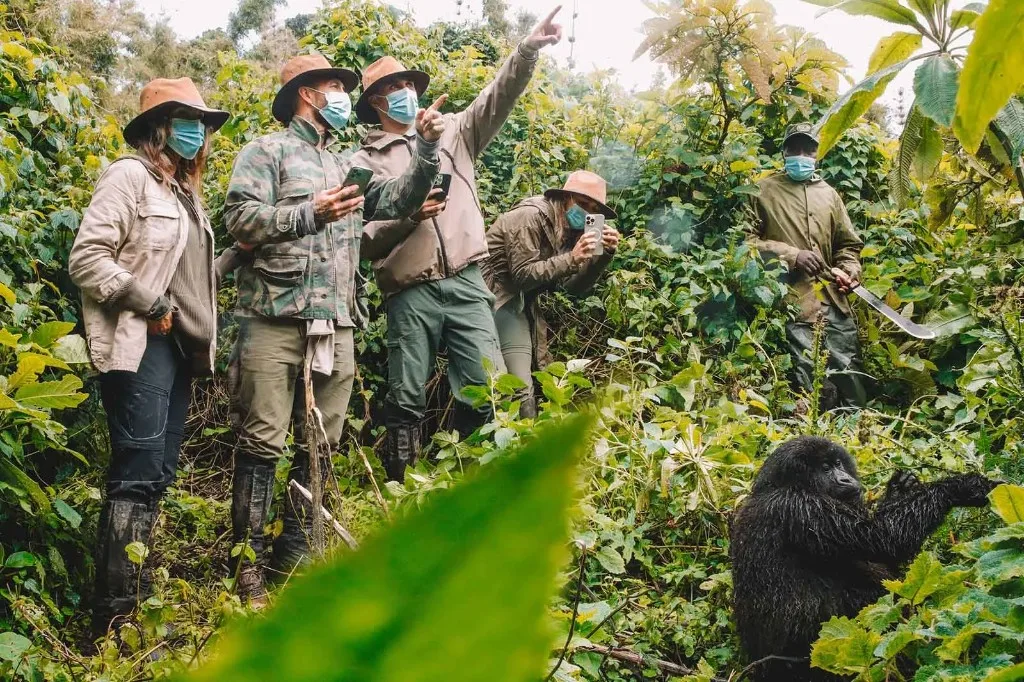
The experience normally begins with a briefing. Park personnel explain the route, safety requirements, observation rules and expected conditions. Visitors then enter the forest with authorised guides. The guide may listen for chimpanzee calls, examine feeding signs or communicate with trackers.
Chimpanzees can move quickly through the forest, and the group may need to follow them over uneven terrain. Once located, visitors observe the animals according to the applicable permit conditions. The chimpanzees may be feeding, grooming, calling, resting or travelling. Some encounters occur at ground level, while others involve animals high in the canopy. After the observation period, the group returns to the starting point.
How Long Does Chimpanzee Trekking Take?
The total duration varies considerably. A standard trekking activity may take several hours, including the walk into the forest, observation time and return. Some groups locate chimpanzees relatively quickly, while others may spend longer searching. The duration depends on chimpanzee movements, weather, terrain and the specific destination. Travellers should avoid scheduling tight onward connections immediately after a trek.
How Much Time Do You Spend with Chimpanzees?
Standard chimpanzee trekking programmes commonly allow approximately one hour of observation once the habituated chimpanzees are located. However, regulations differ between destinations. Some specialist habituation experiences permit longer observation periods. Visitors should confirm the current rules for their exact activity.
Chimpanzee Trekking Versus Chimpanzee Habituation
These are different experiences. Standard chimpanzee trekking involves locating and observing an established habituated community during a regulated visitor programme. A chimpanzee habituation experience may involve spending a longer period with chimpanzees undergoing a controlled habituation process.
Habituation activities can be more demanding and may require an earlier start. They also have different permit fees and availability. Travellers particularly interested in primate behaviour or photography may prefer the extended experience, subject to current programme rules.
Chimpanzee Trekking Versus Gorilla Trekking
Chimpanzee and gorilla trekking are both forest-based primate experiences, but they differ in important ways. Chimpanzees are generally more active and may move rapidly through trees or along the forest floor. Mountain gorillas often spend substantial periods feeding and resting within family groups.
Chimpanzee encounters can involve following moving animals, while gorilla trekking often culminates in observing a relatively settled family. The forest environments, permit fees and observation rules also differ. For travellers with sufficient time, combining both experiences provides an excellent introduction to East Africa’s great apes.
Chimpanzee Trekking Permits and Costs
Permit fees vary by destination, visitor category and activity type. In recent Uganda Wildlife Authority tariffs, the standard foreign non-resident Kibale chimpanzee trekking permit has been priced at approximately USD 250, with higher fees applying to certain extended experiences. However, tariffs can change, and different arrangements may apply at Budongo, Kalinzu and other locations.
The permit price should not be confused with the complete safari cost. Accommodation, transport, guiding outside the park and other activities may be charged separately. Travellers should request current confirmed rates before booking.
How to Book Chimpanzee Permits
Chimpanzee permits should be arranged through the appropriate park authority or authorised booking channels. The process generally requires a preferred date, visitor information and payment. Permit availability can be limited, especially during popular travel periods.
Travellers combining chimpanzee trekking with gorilla trekking should coordinate both permits before finalising their itinerary. It is particularly important to avoid booking accommodation or flights around an unconfirmed trekking date.
Best Time for Chimpanzee Trekking

Chimpanzee trekking is available during much of the year in established destinations, subject to park arrangements. Relatively drier periods can provide more comfortable walking conditions. In Uganda, June through August and December through February are commonly considered popular travel periods.
However, rain can occur throughout the year. Wetter periods may bring muddy trails and challenging terrain, and chimpanzee movements also vary seasonally according to food availability. No month guarantees a particular encounter.
How Difficult Is Chimpanzee Trekking?
Difficulty varies by destination and chimpanzee location. Some treks involve relatively gentle forest trails, while others require climbing slopes, crossing uneven ground or moving through dense vegetation. Chimpanzees may travel quickly, making it difficult to keep pace in some circumstances.
A reasonable level of fitness is helpful. Travellers with mobility limitations should discuss their needs before booking. Guides may be able to recommend suitable arrangements, but accessibility cannot be assumed.
What to Wear for Chimpanzee Trekking
Comfortable forest clothing and footwear make trekking safer and more pleasant. Recommended items include:
- Long trousers and long-sleeved shirts for protection against vegetation and insects.
- Sturdy walking shoes or hiking boots with good grip.
- A lightweight waterproof jacket, because forest weather can change.
- Drinking water, personal medication and any permitted snacks.
- A small backpack rather than bulky luggage.
- Gloves may be useful in some forest conditions.
Chimpanzee Trekking Safety Rules
Chimpanzees are powerful wild animals. Visitors must follow guide instructions and maintain the required distance. Direct contact is not permitted, and flash photography is generally prohibited during regulated primate encounters.
Visitors should not participate when suffering from potentially transmissible illnesses because great apes are susceptible to human infections. Age limits and health requirements vary by programme. Current rules should be confirmed before travel.
Chimpanzee Behaviour to Watch For
Chimpanzees are highly social primates, and their communities contain individuals with complex relationships. Visitors may observe grooming, feeding, vocal communication, play and social displays. Grooming is particularly important in maintaining social relationships.
Chimpanzees may also use tools in some populations, although tool use is not guaranteed during a visitor encounter. Their vocalisations can be loud and distinctive. Observing these behaviours requires patience and respect for the animals’ natural activities.
Chimpanzee Photography Tips
Forest photography presents challenges because light levels can be low and chimpanzees may move quickly between shaded and brighter areas. A camera with reliable autofocus and good low-light performance can be helpful, and a telephoto zoom allows flexibility when animals are at different distances.
Photographers should avoid flash and follow all park rules. It is important not to pursue animals too closely or interfere with their movements.
Combining Chimpanzee Trekking with a Kenya Safari
A Kenya and Uganda primate safari can combine savannah wildlife with forest experiences. A typical journey may begin in Nairobi, continue to the Masai Mara and then connect by air to Entebbe. From Entebbe, travellers can explore Uganda’s western safari circuit.
A longer itinerary may include Kibale, Queen Elizabeth National Park and Bwindi. This provides opportunities for chimpanzee trekking, conventional game drives, boat safaris and mountain gorilla trekking. The route should be planned carefully to avoid excessive driving.
Suggested 10-Day Kenya and Uganda Primate Safari
Day 1: Arrival in Nairobi
Arrive in Kenya and transfer to your hotel.
Day 2: Nairobi to Masai Mara
Travel to the Masai Mara and enjoy an afternoon game drive if timing permits.
Day 3: Masai Mara Wildlife Safari
Spend the day exploring the reserve, searching for lions, elephants, giraffes and other wildlife.
Day 4: Return to Nairobi
Travel back to Nairobi and overnight near the airport.
Day 5: Fly to Entebbe
Take a scheduled flight to Uganda, subject to availability, and transfer to your hotel.
Day 6: Entebbe to Kibale Region
Travel towards Fort Portal and the Kibale region. Arrive at your lodge and prepare for the following day’s trek.
Day 7: Chimpanzee Trekking in Kibale
Attend the morning briefing and join an authorised chimpanzee trek. Afterwards, relax at your lodge or enjoy a suitable optional activity.
Day 8: Kibale to Queen Elizabeth National Park
Travel towards Queen Elizabeth National Park and enjoy wildlife viewing according to the arrival schedule.
Day 9: Queen Elizabeth Wildlife Safari
Explore the park through scheduled game drives and an optional Kazinga Channel boat excursion.
Day 10: Return to Entebbe
Travel back to Entebbe for onward arrangements. For travellers who also want mountain gorillas, additional days should be added for Bwindi.
Accommodation for Chimpanzee Trekking
Accommodation ranges from budget guesthouses to comfortable forest lodges and luxury properties. At Safari Trips to Kenya, we use Essential, Comfort, Premium and Signature categories to help travellers compare options.
For early morning trekking, accommodation location is particularly important. A lodge near the correct briefing point can reduce transfer time and make the experience more comfortable. Travellers should confirm meals, room facilities and transport arrangements before booking.
Responsible Chimpanzee Tourism
Chimpanzee tourism must prioritise animal welfare. Visitor limits, health requirements and observation rules help reduce disturbance and disease transmission. Travellers should follow all instructions and avoid making loud noises or attempting to attract chimpanzees. Feeding wild primates is prohibited.
Responsible tourism also involves respecting forest habitats and supporting conservation initiatives.
Frequently Asked Questions
Where Is the Best Place for Chimpanzee Trekking?
Kibale National Park in Uganda is one of East Africa’s best-known destinations for organised chimpanzee trekking.
Can I Trek Wild Chimpanzees in Kenya?
Kenya has a chimpanzee sanctuary at Ol Pejeta, but established wild chimpanzee trekking is generally undertaken in countries such as Uganda and Tanzania.
How Long Does Chimpanzee Trekking Take?
The total activity commonly takes several hours, depending on the chimpanzees’ location and terrain.
Is Chimpanzee Trekking Difficult?
Difficulty varies. Some routes are relatively manageable, while others involve steep or muddy forest terrain.
Can I Combine Chimpanzees and Gorillas?
Yes. Uganda offers opportunities to combine Kibale chimpanzee trekking with Bwindi gorilla trekking.
Is Chimpanzee Trekking Available All Year?
Many programmes operate throughout the year, subject to local conditions and permit availability.
Are Chimpanzee Sightings Guaranteed?
No. Chimpanzees are wild animals, and sightings cannot be absolutely guaranteed.
Book Your Chimpanzee Trekking Safari
Chimpanzee trekking introduces travellers to one of East Africa’s most intelligent and fascinating wild animals. Whether you choose Kibale, Budongo or a specialist Tanzania destination, the experience offers a memorable contrast to conventional savannah wildlife viewing.
At Safari Trips to Kenya, we can help combine chimpanzee trekking with Kenya’s Masai Mara, Amboseli and other safari destinations, creating a practical itinerary around your travel dates and interests.