
1 Day Kenya Safari
Plan a 1 Day Kenya Safari with private transport, expert guiding and wildlife viewing. Explore the best one-day…
View SafariHandpicked Kenya Safari Tours for Every Traveler
Explore Kenya safaris for seniors with comfortable lodges, relaxed itineraries, private guides, accessible activities and expert travel planning advice.
Kenya has a long-established tourism industry with a wide selection of safari lodges, professional guides, domestic flight connections and wildlife destinations. These facilities make it possible to create itineraries that balance adventure with comfort.
Unlike holidays that require extensive hiking, most traditional Kenyan wildlife safaris involve observing animals from specially designed vehicles. Travellers can enjoy sightings of elephants, lions, zebras, giraffes, antelopes and numerous bird species while seated inside a safari vehicle.
This makes a Kenya wildlife safari particularly appealing to travellers who prefer limited walking. However, game drives can involve uneven tracks, vehicle vibration and periods of sitting, so individual comfort still needs careful consideration.
Many safari lodges also provide comfortable lounges, swimming pools, shaded terraces, private verandas and opportunities to observe wildlife without leaving the property. Some lodges overlook rivers, waterholes or open plains, allowing guests to enjoy the natural surroundings between scheduled activities.
Kenya also offers considerable flexibility. A safari can last four or five days for visitors with limited time or extend to two weeks for those who prefer a slower journey through several wildlife regions.
Showing 1–12 of 215 safaris
Plan a 1 Day Kenya Safari with private transport, expert guiding and wildlife viewing. Explore the best one-day…
View SafariExplore the 10 Days Family Kenya Safari with a day-by-day safari plan, key wildlife experiences, destinations, accommodation ideas,…
View SafariExplore the 10 Days Fly-in Kenya Safari with a day-by-day safari plan, key wildlife experiences, destinations, accommodation ideas,…
View SafariExplore the 10 Days Honeymoon Kenya Safari with a day-by-day safari plan, key wildlife experiences, destinations, accommodation ideas,…
View SafariPlan a 10 Days Kenya Big Five Safari with expert guides, game drives and carefully chosen camps. Request…
View SafariA 10 day Kenya journey connecting Nairobi, Ol Pejeta, Samburu or Buffalo Springs, Solio, Lake Nakuru, Maasai Mara…
Lake Naivasha, Lake Nakuru, Masai Mara
View SafariPlan a 10 Days Kenya Safari with expert guides, game drives and carefully chosen camps. Request a quote.
View SafariPlan a 10 Days Kenya Safari & Diani Beach with expert guides, game drives and carefully chosen camps.…
Diani Beach
View SafariPlan a 10 Days Kenya Wildlife Safari with expert guides, game drives and carefully chosen camps. Request a…
View SafariPlan a 10 Days Luxury Kenya Safari with expert guides, game drives and carefully chosen camps. Request a…
View SafariA 10 day Kenya journey connecting Nairobi, Maasai Mara, Lake Naivasha, Amboseli and Diani Beach.
Amboseli, Diani Beach, Lake Naivasha
View SafariPlan a 10 Days Masai Mara & Amboseli with expert guides, game drives and carefully chosen camps. Request…
Masai Mara, Amboseli
View SafariThe best destinations depend on the traveller's priorities, desired wildlife experiences and tolerance for road journeys.
The Masai Mara National Reserve is one of Kenya's most recognised wildlife destinations and a strong choice for a first African safari.
Its extensive grasslands support lions, elephants, buffaloes, giraffes, zebras, antelopes and many other animals. Leopards and cheetahs also inhabit the ecosystem, although sightings depend on conditions and the movement of wildlife.
One of the advantages of the Masai Mara is that travellers can enjoy excellent wildlife viewing without needing to change destinations frequently. Spending three or four nights in the same camp provides time for several game drives while maintaining a comfortable routine.
The reserve and surrounding conservancies offer accommodation ranging from traditional tented camps to high-end lodges. Many properties have en-suite bathrooms, comfortable beds, restaurant facilities and spacious guest areas.
For seniors who wish to avoid the lengthy drive from Nairobi, scheduled flights to the Mara are an attractive alternative. Flights significantly reduce time spent on the road, although transfers between airstrips and camps still take place in safari vehicles.
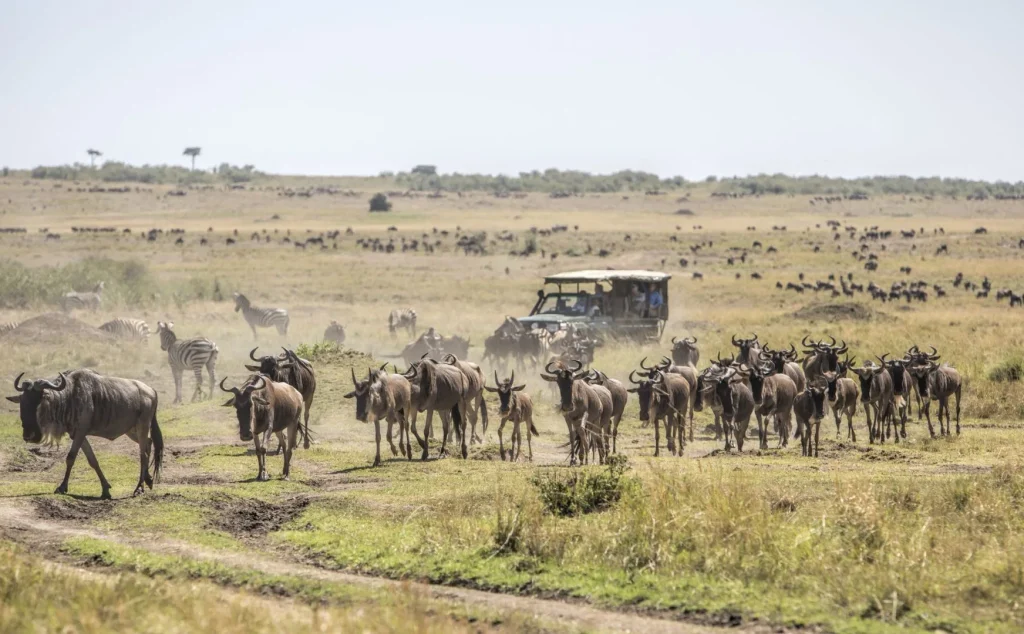
The Great Wildebeest Migration is a major seasonal attraction, particularly when large numbers of wildebeest and zebras move between the Serengeti and Masai Mara ecosystems. Migration movements and river crossings are natural events that cannot be guaranteed on specific dates.
Amboseli National Park is especially suitable for travellers who enjoy elephant photography and open landscapes.
The park is famous for its elephant populations and views of Mount Kilimanjaro, which rises across the border in Tanzania. The mountain is most visible when cloud conditions are favourable, often during the earlier hours of the day.
Amboseli's relatively open environment makes wildlife observation rewarding. Visitors may see elephants crossing grasslands, buffaloes grazing near wetlands, zebras moving through the plains and a wide variety of waterbirds.
The park is a good option for a two- or three-night stay. A relaxed itinerary might include an early morning game drive, breakfast at the lodge, several hours of rest and a shorter afternoon wildlife excursion.
Accommodation selection is important because some properties are inside the park while others are outside its boundaries. Location affects driving distances, park entry arrangements and how quickly guests can reach wildlife-viewing areas.
Lake Nakuru National Park is a useful addition to a senior-friendly safari because it combines wildlife, birdwatching and varied scenery within a relatively compact protected area.
The park contains woodland, grassland, rocky viewpoints and a soda lake. It is particularly associated with rhino conservation, and visitors may encounter both white and black rhinoceroses.
Other wildlife includes buffaloes, giraffes, waterbucks, baboons and numerous birds. Flamingo numbers vary with lake conditions and food availability.
Lake Nakuru can be included between Nairobi and the Masai Mara, although travellers should consider whether the additional road transfer is worthwhile. For guests prioritising a relaxed schedule, spending longer in fewer parks may be preferable.
Ol Pejeta Conservancy, located in the Laikipia region, offers wildlife viewing with a strong conservation focus.
It is known for rhino protection programmes, including its role in northern white rhino conservation. The conservancy also supports elephants, lions, buffaloes and other species.
For travellers interested in conservation, guided educational experiences can add depth to a traditional safari. Activities should be selected according to accessibility, current operating arrangements and individual interests.
Ol Pejeta combines well with Mount Kenya-area accommodation and can form part of a northern Kenya safari without requiring a long circuit through the southern parks.
Samburu National Reserve provides a different landscape from the Masai Mara and Amboseli.
Its semi-arid terrain, riverine vegetation and distinctive wildlife make it attractive to travellers returning to Africa for another safari.
Species associated with northern Kenya include Grevy's zebra, reticulated giraffe, gerenuk, Beisa oryx and Somali ostrich. Elephants are also frequently encountered in the wider ecosystem.
Samburu can involve longer transfers and warmer conditions, so it is often best included in a carefully paced itinerary with several nights at one lodge.
The following itineraries are examples that can be customised according to travel dates, accommodation preferences and mobility considerations.
This itinerary is ideal for travellers who want an immersive wildlife experience without changing lodges repeatedly.
Day 1: Arrival in Nairobi
Arrive at Jomo Kenyatta International Airport, where a representative meets you for a private transfer to your Nairobi hotel. Depending on your flight schedule, the remainder of the day can be reserved for rest and recovery.
Day 2: Fly to the Masai Mara
After breakfast, transfer to Wilson Airport for a scheduled flight to the Masai Mara. Your safari guide meets you at the designated airstrip and transfers you to your accommodation, potentially with wildlife sightings along the way.
Enjoy lunch, settle into your room and take an afternoon game drive if you feel comfortable.
Day 3: Masai Mara Wildlife Viewing
Begin with a morning game drive when temperatures are generally cooler and many animals are active. Return to the lodge for breakfast or lunch and enjoy a relaxed afternoon.
A second game drive can be arranged according to your interests and energy levels.
Day 4: Additional Masai Mara Exploration
Spend another day exploring different parts of the reserve or conservancy. Your guide can concentrate on photography, birdwatching or particular wildlife species.
An optional cultural visit may be possible, subject to the camp's location and arrangements.
Day 5: Return to Nairobi
After breakfast, transfer to the airstrip for your flight to Nairobi. Continue to your international departure or arrange an additional hotel night.
A seven-day safari allows travellers to experience two of Kenya's most famous wildlife regions without an excessively complicated itinerary.
A comfortable arrangement could include one night in Nairobi, two nights in Amboseli, three nights in the Masai Mara and departure arrangements on the final day.
Domestic flights can be considered where routes and schedules make them practical. Some connections may require travelling through Nairobi, so the most convenient sequence should be established before booking.
Amboseli offers elephants and Kilimanjaro scenery, while the Masai Mara provides expansive grasslands and opportunities to observe predators and large herbivore populations.
A longer itinerary is particularly suitable for retired travellers who prefer more time at each destination.
A proposed programme might include:
Alternatively, the programme can incorporate Ol Pejeta or Lake Nakuru where additional destinations are important.
The objective is to avoid creating a schedule in which guests repeatedly pack, travel and check into a different lodge every day.
Accommodation can have a major influence on the comfort of a safari.
At Safari Trips to Kenya, we organise accommodation into four broad categories.
Our Essential category focuses on practical, good-value accommodation with basic comfort and convenient access to safari destinations.
Properties may include permanent safari camps, guesthouses or simpler lodges with private bathrooms and standard meal services.
For senior travellers, we pay particular attention to walking distances, room accessibility and the condition of paths around the property.
The Comfort category is often an excellent balance between affordability and convenience.
Properties generally provide comfortable beds, en-suite bathrooms, dining facilities and attentive service.
Many travellers find this category sufficient for a rewarding safari, particularly when accommodation is selected for location and practical facilities rather than decorative luxury.
Our Premium category is suitable for travellers seeking additional space, refined service and enhanced facilities.
Depending on the property, guests may enjoy larger rooms, spacious verandas, swimming pools, improved dining experiences and more personalised service.
These facilities can be particularly valuable when spending several afternoons relaxing at the lodge.
The Signature category represents high-end safari accommodation where exclusivity, location and personalised service are central considerations.
Some properties offer private plunge pools, dedicated guides, luxury suites and specialised dining arrangements.
However, luxury does not automatically mean accessibility. Certain exclusive camps have raised decks, steps, uneven pathways or remote locations. We therefore recommend evaluating each property's actual layout before making a reservation.
A successful accessible Kenya safari begins with an honest discussion about mobility and physical comfort.
Travellers who use walking sticks, have difficulty climbing steps or require assistance entering vehicles may still be able to enjoy a safari with suitable arrangements.
However, not every lodge, safari vehicle or airstrip is wheelchair accessible.
Before confirming accommodation, we can enquire about ground-floor rooms, step-free access, bathroom layouts, distances between rooms and dining areas, and availability of assistance.
Vehicle access is another important consideration. Traditional safari Land Cruisers may have relatively high entry steps. Guests who find climbing difficult should discuss this before choosing a vehicle.
Where practical, we can investigate appropriate seating positions, assistance and vehicle configurations. Specialist accessibility equipment must be confirmed with the relevant provider rather than assumed available.
Travellers with significant mobility requirements should provide specific details so that each stage of the itinerary can be evaluated individually.
For many senior travellers, a private Kenya safari offers the greatest flexibility.
A private vehicle allows guests to choose when to begin game drives, how long to remain at a wildlife sighting and when to return to the lodge.
If a guest becomes tired, the programme can often be adjusted without inconveniencing other travellers.
Private guiding is also valuable for photography. The guide can spend additional time positioning the vehicle where permitted and helping guests observe animal behaviour.
Group safaris can be more economical because transport and guiding costs are shared. They also provide opportunities to meet fellow travellers.
However, group programmes normally follow fixed schedules and may include longer driving days. Guests should check maximum group size, vehicle seating arrangements and accommodation standards before booking.
Kenya can be visited throughout the year, but seasonal conditions affect wildlife movements, road conditions, temperatures and accommodation rates.
These months are often attractive for wildlife viewing, particularly in several southern safari regions.
Conditions can be relatively dry, although weather patterns vary by location and year.
The period can be suitable for photography and travellers who prefer avoiding the busiest migration-season months.
These months commonly coincide with the longer rainy season in many parts of Kenya.
Landscapes become greener, and some lodges may offer lower seasonal rates. However, muddy roads and heavier rainfall can affect travel comfort.
Guests concerned about uneven driving conditions may prefer another period.
This is a popular safari season, especially in the Masai Mara.
Drier conditions in many wildlife regions can make animals easier to observe around water sources. The migration season also attracts considerable visitor interest.
July through September can be busy, and popular accommodation may need to be reserved well in advance.
The shorter rainy season typically influences parts of Kenya during this period.
Wildlife viewing remains possible, and landscapes may be particularly attractive for photography.
The Christmas and New Year period can bring increased demand and higher accommodation prices.
Several practical decisions can significantly improve the experience.
Choose fewer destinations. Three nights in one wildlife area may be more rewarding than one night each in three different parks.
Consider domestic flights. Flights can reduce lengthy road transfers, although baggage limits and airport connections must be checked.
Select suitable vehicle seating. Comfortable seating, accessible entry and adequate personal space are important on long game drives.
Allow time for rest. Returning to the lodge during the warmer middle of the day can make early morning and afternoon activities more enjoyable.
Discuss dietary requirements. Safari lodges can often accommodate specific diets with advance notice, but arrangements should be confirmed.
Carry essential medication. Keep necessary medication in hand luggage and bring an adequate supply for the journey, along with relevant prescriptions.
Plan for changing temperatures. Early morning drives may be cool, while afternoons can be warm. Layered clothing is useful.
Avoid overloading the itinerary. Optional activities should enhance the holiday rather than create pressure to participate.
Older travellers should consult an appropriate healthcare professional before international travel, particularly if they have existing medical conditions or take regular medication.
A pre-travel consultation can address routine vaccinations, destination-specific health precautions, malaria prevention and the suitability of planned activities.
Travel insurance should cover medical treatment, emergency evacuation and relevant pre-existing conditions according to the policy terms.
Some safari destinations are far from major hospitals. Travellers should understand what medical support is available at their accommodation and how emergency assistance would be coordinated.
It is also important to stay hydrated, use sun protection and avoid excessive physical exertion in hot conditions.
Travellers with respiratory, cardiac, joint or mobility concerns should explain any limitations that may affect long journeys or vehicle access.
Photography is one of the most rewarding aspects of a Kenyan safari.
A good guide can help visitors identify animal behaviour, understand light conditions and position the vehicle appropriately without disturbing wildlife.
A camera with a moderate telephoto lens is useful, although modern smartphones can also capture excellent landscape and nearby wildlife images.
Travellers should avoid carrying unnecessarily heavy equipment if it creates discomfort.
A beanbag or other suitable camera support can help reduce movement during photography from a vehicle.
For guests particularly interested in photography, private guiding and longer stays in one destination provide greater flexibility.
A Kenya safari does not need to consist entirely of game drives.
Depending on the itinerary, travellers may enjoy cultural visits, birdwatching, scenic viewpoints, conservation presentations or time spent observing wildlife from the lodge.
Visits to Maasai or Samburu communities should be arranged respectfully through appropriate local providers, with clear information about what the experience involves.
In Nairobi, suitable activities may include selected museums, cultural attractions and dining experiences.
Walking activities should be assessed individually. Even short guided nature walks may involve uneven ground and require a reasonable level of fitness.
The most rewarding programme combines activities that genuinely interest the traveller with sufficient time to enjoy each experience.
The price of a Kenya safari for older travellers depends on several factors.
Accommodation category is a major consideration. Premium and Signature properties generally cost more than Essential and Comfort options.
Seasonality also affects rates, particularly during peak wildlife-viewing periods and major holidays.
Private vehicles provide greater flexibility but may cost more per person than shared transport, especially for solo travellers or couples.
Domestic flights increase convenience but add transport costs. The number of destinations, park fees, length of stay and included activities also influence the final quotation.
When comparing safari offers, travellers should examine the complete package rather than focusing only on the headline price.
A lower-priced itinerary with long road transfers and frequent lodge changes may not offer the best value for guests who prioritise comfort.
Yes. Kenya welcomes travellers across a wide age range, and many safari experiences involve wildlife viewing from vehicles rather than strenuous physical activity. Suitability depends more on individual health, mobility and itinerary design than age alone.
In many cases, yes. The most important considerations are vehicle access, accommodation layout, transfer arrangements and the traveller's specific requirements. Accessibility should be checked with each provider before booking.
Game drives usually involve sitting in a vehicle for several hours. However, rough roads, vibration and repeated vehicle entry can cause discomfort. Shorter drives and private guiding can help.
Flying is often more comfortable for travellers wishing to reduce long road journeys. However, flights may involve smaller aircraft, luggage restrictions and additional transfers. The best option depends on the route and personal preferences.
Seven to ten days is a useful duration for many senior travellers, allowing several wildlife experiences without excessive travel pressure. Shorter and longer programmes are also possible.
Not necessarily. A comfortable lodge with level pathways, convenient room locations and attentive service may be more suitable than a remote luxury property with numerous steps.
Yes. The Masai Mara can be visited during the migration period, although popular areas may be busy. A carefully chosen camp and experienced guide can help create a more relaxed experience.
Many lodges can accommodate common dietary requirements with advance notice. Specific medical or specialised diets should be discussed before booking.
Yes. Private safaris can be arranged for solo travellers, couples, families and groups of friends.
The best senior safari combines exceptional wildlife experiences with thoughtful planning. Comfortable accommodation, suitable transport, knowledgeable guiding and a relaxed pace can make a significant difference to the overall holiday.
Safari Trips to Kenya can help design a personalised itinerary featuring the Masai Mara, Amboseli, Lake Nakuru, Ol Pejeta, Samburu or other destinations suited to your interests.
Tell us your preferred travel dates, number of travellers, accommodation expectations and any mobility considerations. We can then recommend a practical safari route, appropriate lodges and transport arrangements.
Contact Safari Trips to Kenya to plan a comfortable, privately guided Kenya safari designed around your pace and priorities.