

Great Migration Accommodation Guide
Choosing accommodation for the Great Wildebeest Migration involves considerably more than selecting a beautiful lodge with comfortable rooms. The location of your safari camp can influence how much time you spend watching wildlife, how early you reach important game-viewing areas, whether you can explore quieter conservancies, and how easily you can return to your accommodation after a long day in the bush.
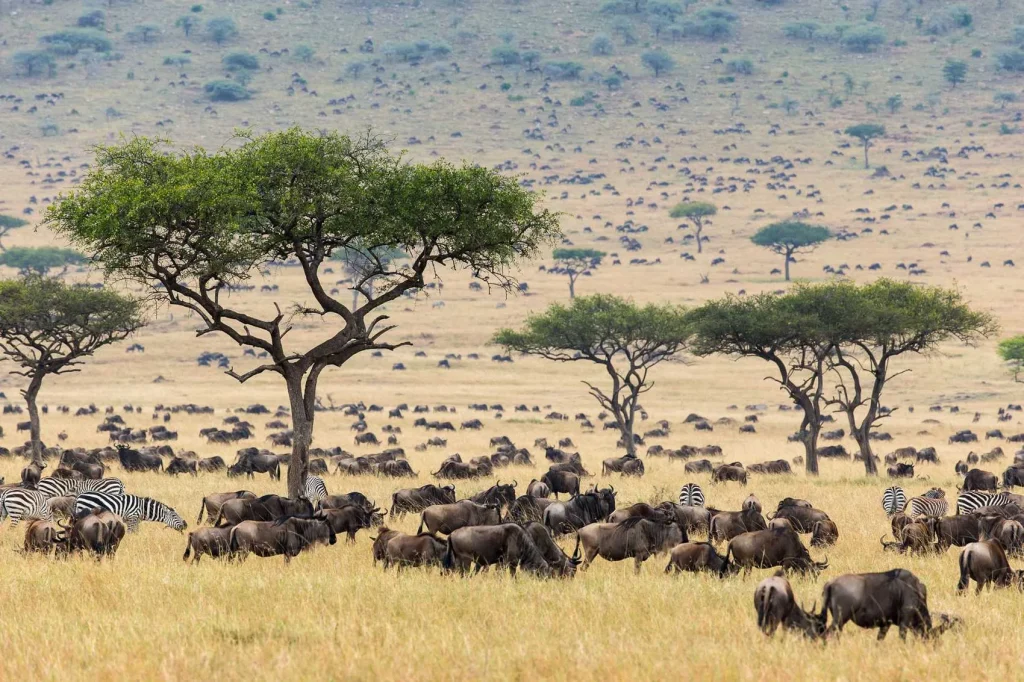
The migration moves through an enormous ecosystem spanning Tanzania's Serengeti and Kenya's Masai Mara. Wildebeest and zebra follow changing grazing conditions, rainfall patterns and the availability of fresh grass. Their movements are not governed by a fixed calendar, and the best accommodation for one month may be less strategically positioned during another.
For travellers visiting Kenya, the main accommodation decision is whether to stay inside the Masai Mara National Reserve, in an adjacent private or community conservancy, or near one of the reserve's entrance gates. Each option offers distinct advantages in terms of wildlife access, privacy, cost, guiding flexibility and safari atmosphere. This Great Migration Accommodation Guide explains how to compare these locations, select an appropriate accommodation category, understand seasonal pricing and avoid common booking mistakes. It also considers family travel, photography safaris, fly-in itineraries and the practical differences between lodges and tented camps.
Understanding Accommodation Locations in the Masai Mara
The Masai Mara ecosystem covers more than the national reserve itself. It includes adjoining conservancies and surrounding pastoral landscapes that form part of a wider wildlife habitat. Accommodation is distributed across several zones, each with a different relationship to the migration.
Staying Inside the Masai Mara National Reserve
Accommodation within the reserve offers direct access to its extensive game-viewing areas without the need to enter through an external gate each morning. This can be particularly valuable during the migration season when early starts help visitors reach productive wildlife areas before vehicle activity increases. A strategically positioned camp may also reduce travel between accommodation and important sections of the Mara River.
However, not every camp inside the reserve is close to a river crossing point. The reserve covers a substantial area, and travelling from one side to another may require considerable time on rough tracks. Before selecting accommodation, ask where the camp is located relative to the areas your safari itinerary intends to explore. A property described as being in the Masai Mara may still be far from the particular river sections you hope to visit.
The principal advantages of reserve-based accommodation include direct access to game drives, fewer daily gate transfers and opportunities to experience wildlife activity around the camp itself. Potential disadvantages include premium seasonal prices, restrictions on certain activities and the possibility of encountering numerous safari vehicles in popular wildlife areas.
Staying Near the Mara River
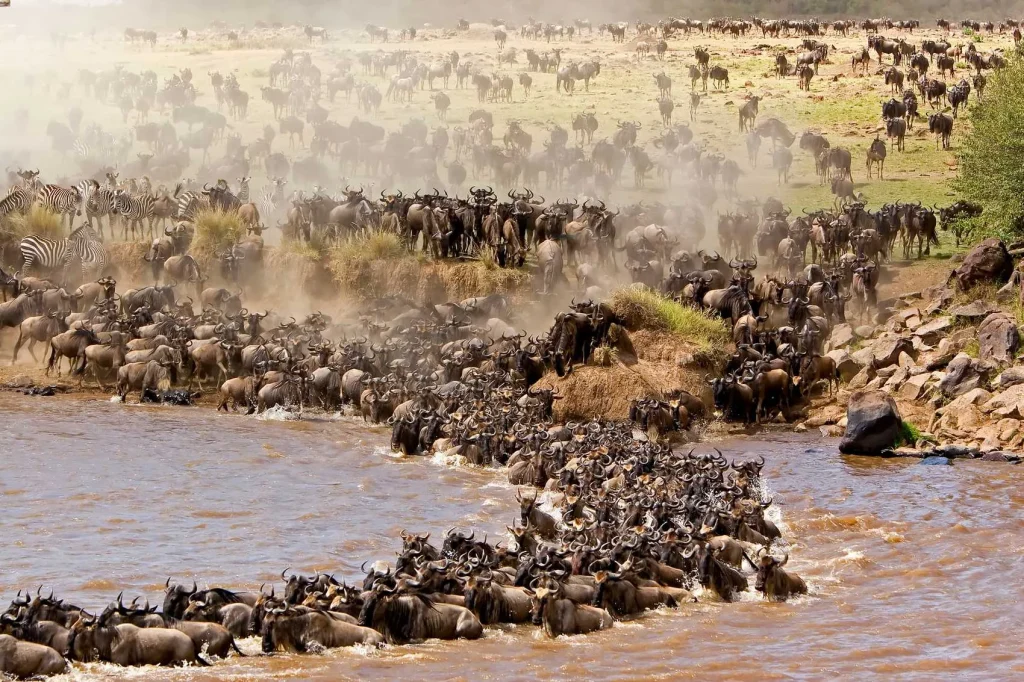
The Mara River is one of the most recognisable locations associated with the Great Migration. During suitable periods, large herds may gather along its banks before attempting crossings. Accommodation near the river can be attractive to photographers and travellers who want to devote substantial time to observing migration behaviour.
Nevertheless, proximity should not be confused with guaranteed sightings. Wildebeest may gather and then retreat without crossing, choose another location, or remain elsewhere because grazing conditions have changed. A camp situated near one river section may still require a lengthy drive to reach another crossing area. Some riverfront properties also overlook stretches that are not commonly used for major crossings.
When considering Mara River safari camps, examine the actual camp location, the available road network and the operator's approach to planning full-day game drives. The most successful migration itineraries generally allow flexibility rather than promising a crossing at a particular hour.
Staying in the Mara Triangle
The Mara Triangle, west of the Mara River, forms an important part of the Masai Mara ecosystem. Its landscapes include rolling grasslands, riverine vegetation and the Oloololo Escarpment. The area is managed separately from the eastern portion of the reserve and offers excellent opportunities to explore migration country.
For visitors interested in crossing activity, accommodation with practical access to the Mara Triangle may be a strong choice. The exact suitability depends on seasonal herd movements, crossing locations and the routes available to safari vehicles. The western side is also attractive to landscape photographers because of its open plains and escarpment views. Accommodation choices should be evaluated according to their position, game-drive arrangements and the amount of time allocated to the area rather than the Mara Triangle name alone.
Staying in Private and Community Conservancies
The conservancies surrounding the Masai Mara provide a different safari experience from the national reserve. Areas such as Mara North Conservancy, Olare Motorogi Conservancy, Naboisho Conservancy and Ol Kinyei Conservancy are known for conservation partnerships involving local landowners and safari tourism operators. Depending on the conservancy and its regulations, visitors may enjoy lower vehicle densities, guided walking activities and night game drives that are generally not available in the same way inside the national reserve.
Conservancy accommodation can be especially appealing to travellers interested in predator behaviour, specialist guiding, conservation and quieter safari experiences. However, an important distinction applies: staying in a conservancy does not automatically provide unrestricted entry to the Masai Mara National Reserve. Reserve entry may require separate fees and specific access arrangements. Travel time to the Mara River also varies considerably. A conservancy camp may be ideal for an extended safari combining migration viewing with other wildlife activities, but less convenient for travellers whose only priority is spending every day near river crossing areas.
Choosing Between Safari Lodges and Tented Camps
Accommodation style affects the atmosphere of a safari, but it does not necessarily determine wildlife-viewing quality.
Traditional Safari Lodges
Masai Mara safari lodges typically provide permanent buildings, established guest facilities and a relatively conventional hotel experience. Depending on the property, facilities may include restaurants, swimming pools, lounges, family rooms and viewing terraces. Lodges are often attractive to families, larger groups and travellers who prefer solid walls and predictable amenities. They can also be practical for visitors with particular mobility requirements, although accessibility must always be confirmed directly because pathways and room layouts vary. The principal consideration is location. A well-positioned lodge may be more useful for migration viewing than a luxurious tented camp requiring longer daily transfers.
Permanent Tented Safari Camps
Permanent tented camps combine canvas accommodation with established facilities. Many have private bathrooms, comfortable beds, electricity and furnished verandas. Some provide an intimate bush atmosphere while retaining the convenience expected from high-quality safari accommodation. Guests may hear wildlife moving around the property at night, although camps operate safety procedures and guests should follow staff instructions when walking after dark.
Permanent tented camps range from relatively simple properties to exceptional luxury establishments. For migration safaris, their greatest advantage is often the possibility of staying in carefully selected wildlife locations.
Seasonal Migration Camps
Seasonal migration camps are designed around wildlife movements and may operate in particular areas during specific periods. In Tanzania, mobile or semi-mobile migration camps are particularly associated with different stages of the Serengeti migration. In Kenya, seasonal camp operations can also provide accommodation tailored to the migration period, although exact locations and operating schedules vary.
These camps may offer a more focused safari atmosphere, smaller guest numbers and flexible wildlife-oriented itineraries. Travellers should confirm bathroom facilities, charging arrangements, road access, luggage restrictions and whether the camp operates during their intended dates. A seasonal camp should never be assumed to be directly beside the herds simply because it carries the migration name.
Great Migration Accommodation Categories
Safari Trips to Kenya uses four broad accommodation categories to help travellers compare experiences without relying entirely on labels such as budget, mid-range or luxury. These categories describe general standards rather than official accommodation ratings.
Essential Accommodation
Essential safari accommodation focuses on affordability, cleanliness and access to game-viewing activities. Properties may include simple tented camps, guesthouses and modest lodges around reserve entrance areas. Rooms generally provide basic sleeping facilities, with bathroom arrangements varying by property. Some camps offer private bathrooms, while others use simpler facilities.
Essential accommodation can work particularly well for travellers who intend to spend most of the day on safari rather than at the property. The trade-off is that lower-priced accommodation outside the reserve may require additional driving and gate procedures. When comparing quotations, consider the total package price rather than the room rate alone. A cheaper camp may not represent a saving if it increases vehicle time, park entry costs or transport requirements.
Comfort Accommodation
Comfort safari accommodation balances location, service and room quality. Properties commonly provide en-suite accommodation, reliable meals, comfortable beds and established guest facilities. This category suits couples, families and first-time safari travellers seeking a good standard of comfort without the highest luxury pricing. Comfort properties may be located inside the reserve, in conservancies or around the main access roads. The strongest choices offer sensible game-drive logistics and knowledgeable guides rather than simply attractive photographs.
Premium Accommodation
Premium migration camps place greater emphasis on accommodation design, guest service, guiding quality and safari atmosphere. Rooms may feature spacious interiors, private terraces, upgraded bathrooms and carefully planned dining experiences. Some properties include additional services such as laundry, specialist activities or private dining, while others charge separately. Premium accommodation is often particularly suitable for honeymooners, photographers and travellers celebrating an important occasion. However, travellers should still assess the camp's actual location and wildlife access before paying for an upgrade.
Signature Accommodation
Signature safari accommodation represents the most exclusive end of the accommodation spectrum. Properties may offer exceptionally spacious suites, personalised service, highly experienced guiding teams and distinctive locations. Some camps operate with very small guest capacities, creating a private atmosphere. Signature accommodation can be valuable for travellers who prioritise privacy, personalised guiding or special experiences. Yet expensive accommodation cannot control migration movements. The quality of a river crossing sighting depends on wildlife behaviour and environmental conditions, not the price of the camp.
Examples of Well-Known Masai Mara Accommodation
The following properties illustrate different accommodation styles and locations. They are examples for comparison rather than confirmed inclusions in a particular safari package.
Governors' Camp
Governors' Camp is an established tented safari property within the Masai Mara National Reserve. Its setting in a wildlife-rich area and traditional tented atmosphere make it a recognisable option for visitors interested in classic Mara safaris. Travellers considering the camp should compare its available room categories, transfer arrangements and game-drive programme.
Mara Serena Safari Lodge
Mara Serena Safari Lodge occupies a prominent position in the Mara Triangle, with views across the surrounding landscape. Its lodge-style accommodation may appeal to travellers who prefer permanent buildings and established facilities. The property's location can be useful for exploring the western portion of the ecosystem, although specific river access and daily routes should be reviewed when planning migration activities.
Angama Mara
Angama Mara is known for its elevated setting near the Oloololo Escarpment and its extensive views over the Mara landscape. It is an example of a high-end safari property where architecture, service and scenery form important parts of the experience. Travellers should distinguish between enjoying the escarpment location and having immediate access to every migration crossing area.
Mara Explorer
Mara Explorer is a luxury tented camp associated with the Mara River environment. It illustrates the appeal of smaller, wildlife-focused accommodation in a riverine setting. As with any camp, its suitability should be judged against the particular itinerary, seasonal availability and game-drive arrangements.
Conservancy-Based Camps
Well-known conservancy properties include camps operating in Mara North, Olare Motorogi and Naboisho. These areas offer opportunities to combine wildlife viewing with conservancy-based activities and a more exclusive atmosphere. Individual properties differ substantially in room standards, reserve access policies and activity inclusions. It is therefore important to compare complete safari arrangements rather than assuming all conservancy camps provide the same experience.
Best Time to Book Great Migration Accommodation
The most popular period for Masai Mara migration safaris generally falls between July and October, although the precise arrival and departure of migrating herds varies. Demand for well-located camps can be particularly strong during the main migration season.
July: Early Migration Season
July is commonly associated with the movement of migrating herds towards Kenya and the northern Serengeti. Some years bring substantial activity earlier than others, while rainfall and grazing conditions influence the pace of movement. Travellers visiting in July should avoid assuming that large Mara River crossings will already be taking place on their chosen dates. Accommodation with access to varied wildlife areas is valuable because it allows guides to adjust the daily programme.
August: Popular Migration Viewing Period
August is often one of the most requested months for the Great Migration in the Masai Mara. Large herds may be present across parts of the ecosystem, and crossing activity can attract considerable attention. Demand for camps and lodges is usually strong, making advance reservations particularly important. Photographers and families travelling during school holidays should consider booking well ahead.
September: Migration and Resident Wildlife
September can provide rewarding migration viewing, with herds sometimes remaining in the Mara ecosystem. It is also an excellent period to appreciate the reserve's resident wildlife, including lions, elephants, giraffes and numerous antelope species. Migration activity remains unpredictable, so flexible game drives are preferable to rigid crossing schedules.
October: Transition Period
October may still offer migration activity, but the timing of herd movements towards Tanzania varies. Rainfall can change grazing conditions and influence the direction of travel. Accommodation decisions during this period should account for the possibility that the largest concentrations of migratory animals may already have moved elsewhere.
How Far in Advance Should You Book?
For popular July-to-September travel dates, beginning accommodation enquiries approximately six to twelve months ahead is sensible, particularly for smaller luxury camps, family rooms and private safari arrangements. Some travellers book even earlier when their dates are fixed. Late availability occasionally exists, but relying on last-minute reservations reduces choice and may require compromises on location or accommodation category.
When making a reservation, request written confirmation of the exact property, room type, meal plan and cancellation conditions. Ask whether park fees, conservancy fees and transport are included in the package.
Accommodation for Migration Photography Safaris
Wildlife photographers should consider several practical requirements beyond room comfort:
- Location — staying within reasonable driving distance of productive wildlife areas can create more opportunities for early morning photography.
- Guiding flexibility — a private photography safari may allow guests to spend longer with individual animal sightings, adjust vehicle positioning and avoid the pace of a mixed-interest group.
- Vehicle design — pop-up roofs, open-sided arrangements and seating configurations offer different photographic advantages.
- Equipment support — photographers may need reliable charging facilities, suitable luggage arrangements and secure storage.
- Safari duration — a single afternoon near the river is rarely sufficient for travellers hoping to document unpredictable crossing behaviour; a stay of several nights provides more opportunities to respond to changing wildlife movements.
Family-Friendly Migration Accommodation
Families should check minimum age policies, room configurations and child-related safety arrangements before booking. Some camps offer family tents or interconnected rooms, while others have restrictions on younger children. Wildlife can move through unfenced safari properties, making supervision essential.
Parents should also consider the length of daily game drives. Young children may enjoy shorter wildlife outings rather than extended periods waiting for a possible river crossing. A lodge with a swimming pool or flexible meal arrangements can make the experience more comfortable, although swimming facilities must be supervised and may not be available at every property. For families, the best accommodation is usually the one that balances wildlife access, suitable facilities and manageable daily schedules.
Fly-In Versus Road Safari Accommodation
Accommodation location also affects the most practical way to reach the Masai Mara.
Road Safaris from Nairobi
A Masai Mara safari from Nairobi commonly involves a substantial road journey, with travel time varying according to traffic, road conditions and the location of the lodge. Road safaris offer flexibility and the opportunity to experience Kenya's changing landscapes. They are also useful for itineraries combining the Masai Mara with Lake Nakuru National Park, Lake Naivasha or other destinations. However, travellers should not assume that all Mara properties can be reached in the same amount of time.
Fly-In Migration Safaris
Scheduled light-aircraft services connect Nairobi's domestic aviation network with several airstrips serving the Mara ecosystem. A fly-in Masai Mara safari can reduce the time spent travelling overland. Flight schedules, airstrip selection and onward transfers must be coordinated with the chosen camp. Some properties are relatively close to an airstrip, while others require a longer game-drive transfer. Light-aircraft luggage limits can be restrictive, so guests should confirm permitted weight and bag type before departure.
Understanding Migration Accommodation Prices
Accommodation costs vary according to season, location, room category, occupancy and the services included. The same camp may charge considerably more during peak migration months than during quieter periods. Several expenses influence the final safari price:
- Park and conservancy fees may be charged separately from accommodation. Their treatment depends on the property and package structure.
- Vehicle and guiding costs can vary between shared game drives and exclusive private vehicles.
- Meal arrangements may range from bed-and-breakfast to full-board or broader packages that include selected drinks and activities.
- Transfers can include road transport, airstrip collection or domestic flights.
- Single supplements may apply when one person occupies accommodation intended for two guests.
A useful quotation should itemise these arrangements clearly enough for travellers to understand what they are purchasing. Avoid comparing two camps purely by their advertised nightly rates.
Common Accommodation Booking Mistakes
Travellers planning migration accommodation often make the same avoidable errors:
- Choosing a camp because it uses the words migration or river in its name without checking its geographical position.
- Assuming that all accommodation described as Masai Mara lies inside the national reserve.
- Underestimating the effect of daily gate transfers when staying outside protected areas.
- Reserving only one night during the main migration season and expecting to witness a river crossing — crossings cannot be scheduled, and extended stays generally provide greater flexibility.
- Booking accommodation before confirming whether preferred safari vehicle, guide and reserve access arrangements are available.
A coordinated package is usually easier to manage than several independently booked services.
How Many Nights Should You Stay?
For a general Masai Mara wildlife safari, two nights can provide an introduction to the reserve, although the available game-viewing time may be limited by transfers. Three nights allow a more comfortable programme with several game drives. Four or five nights are often preferable for travellers strongly focused on migration behaviour and photography.
Longer itineraries can combine different parts of the Mara ecosystem, allowing visitors to experience both the reserve and adjoining conservancies. The ideal duration depends on travel dates, budget and whether the migration is the primary reason for visiting Kenya.
Frequently Asked Questions
What is the best accommodation for the Great Migration?
The best accommodation depends on the month of travel, desired wildlife activities, budget and preferred safari style. A well-located camp with flexible guiding arrangements is often more useful than choosing solely by luxury rating.
Is it better to stay inside the Masai Mara National Reserve?
Staying inside the reserve can reduce daily gate transfers and provide convenient wildlife access. Conservancy accommodation may offer quieter game viewing and additional activities, depending on local regulations.
Can I see wildebeest crossings from my lodge?
Some camps overlook river environments, but a view of the river does not guarantee a crossing. Most visitors should expect to travel with a guide to appropriate viewing areas.
Are migration camps suitable for children?
Many camps welcome families, but age restrictions, family accommodation and safety policies differ. These should be confirmed before making a reservation.
Are luxury camps worth the additional cost?
Luxury camps may provide enhanced comfort, privacy and guiding services. They do not guarantee better migration activity, so location and safari arrangements remain important.
Can I combine a migration safari with other Kenya destinations?
Yes. Popular combinations include Lake Nakuru, Lake Naivasha, Amboseli National Park and Kenya's Indian Ocean coast, including Diani Beach.
Is a private safari better for migration viewing?
A private safari provides greater flexibility in timing, photography and the amount of time spent at individual sightings. Shared safaris can offer better value for travellers comfortable with a group schedule.
Should I book accommodation before flights?
For peak-season travel, it is wise to check accommodation availability before committing to non-refundable international flights, particularly when requesting a specific camp.
Plan Your Great Migration Accommodation with Safari Trips to Kenya
Selecting the right Great Migration safari accommodation is one of the most important decisions in planning a Masai Mara holiday. The strongest itinerary balances camp location, realistic travel times, wildlife access, accommodation quality and the number of nights available.
Safari Trips to Kenya can help travellers compare Essential, Comfort, Premium and Signature accommodation options, alongside private safari arrangements and suitable group departure opportunities. Whether your priority is photographing wildebeest near the Mara River, enjoying a quieter conservancy safari or combining the migration with other Kenyan destinations, the accommodation should support the experience rather than determine it.
Enquire with your preferred travel dates, number of travellers, accommodation expectations and safari interests to begin planning a Great Wildebeest Migration safari suited to your requirements.