

Calving Season vs River Crossing
Calving Season vs River Crossing: Which Great Migration Safari Should You Choose?
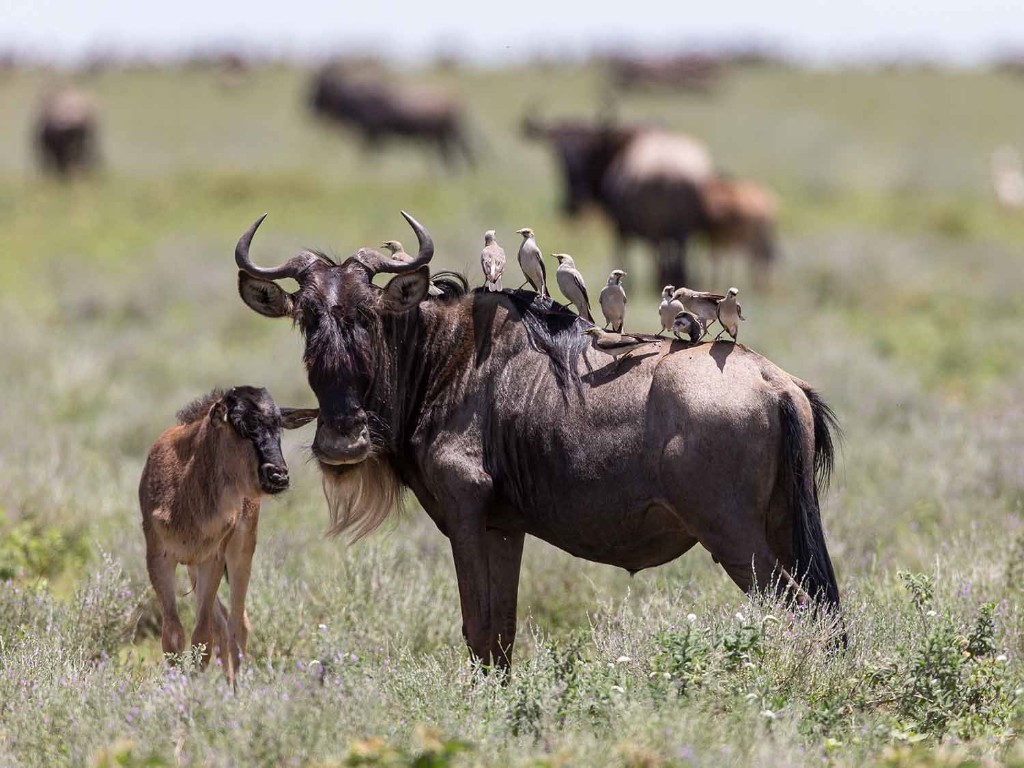
Imagine two very different mornings on an East African safari. In the southern Serengeti, a newborn wildebeest struggles to its feet while its mother stands nearby. Across the short-grass plains, thousands of animals graze, and a cheetah watches from a low rise. The landscape is green, the herds are spread across the horizon, and the story unfolding is one of birth, survival and renewal.
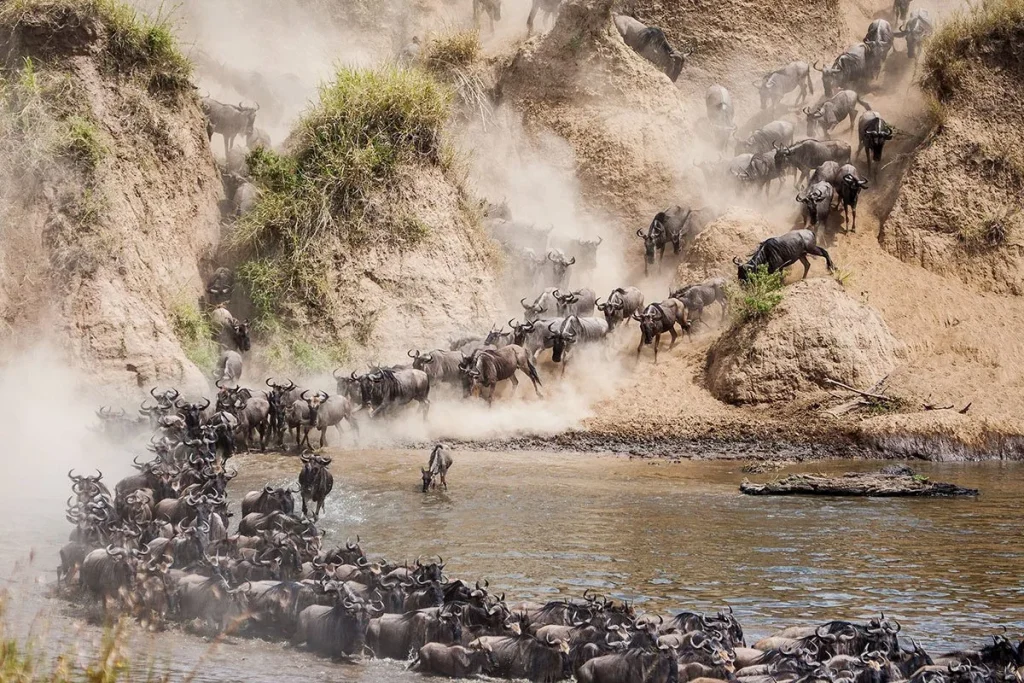
Now imagine a different scene along the Mara River. Hundreds of wildebeest crowd a steep riverbank, hesitating as they assess the water below. Some retreat, others push forward, and suddenly a section of the herd plunges into the river. The animals struggle through currents while others gather along the opposite bank.
Both scenes belong to the Great Wildebeest Migration, but they happen in different locations, at different times of the year, and offer fundamentally different safari experiences. Choosing between the calving season and river crossing season is therefore not simply a question of which wildlife spectacle is more dramatic. It is about your preferred travel dates, interests, photography priorities, tolerance for uncertainty and the type of safari you want. At Safari Trips to Kenya, we help travellers plan migration safaris around the actual seasonal movement of wildlife rather than promising particular encounters on fixed dates.
Understanding the Two Great Migration Experiences
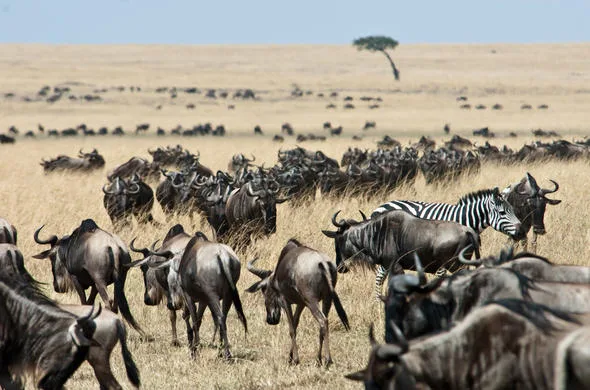
The Great Migration is a year-round movement of wildebeest, zebras and other grazing animals through the Serengeti–Mara ecosystem. Rainfall and grazing conditions influence where the herds travel. The animals do not follow an exact annual timetable, and different groups may occupy different areas simultaneously.
Two periods attract particular attention. The calving season occurs principally on the short-grass plains of Tanzania’s southern Serengeti and Ndutu region. It is commonly associated with January through March, with February often considered the peak. The river crossing season is most closely associated with the northern Serengeti and Kenya’s Masai Mara, generally between July and October, although timing varies. Neither experience is guaranteed on a particular day. The main difference is the type of behaviour visitors hope to observe.
Calving Season vs River Crossing: Quick Comparison
| Feature | Calving season | River crossing season |
|---|---|---|
| Main location | Southern Serengeti and Ndutu, Tanzania | Northern Serengeti and Masai Mara |
| Typical period | January–March | July–October |
| Main attraction | Newborn wildebeest and herd behaviour | Herd movements and possible river crossings |
| Predator interest | Lions, cheetahs, hyenas and other predators | Lions, crocodiles and other predators |
| Landscape | Often green short-grass plains | Variable grasslands and riverine areas |
| Photography | Birth, nursing, young animals and predators | Herd movement, river scenes and dramatic action |
| Predictability | Broad calving concentrations may be observed | Individual crossings are highly unpredictable |
| Best suited to | Wildlife behaviour enthusiasts and photographers | Travellers seeking the classic Mara migration experience |
These periods are seasonal patterns, not fixed guarantees.
What Happens During the Wildebeest Calving Season?
Each year, large numbers of pregnant wildebeest commonly gather across the southern Serengeti and Ndutu plains when rainfall has encouraged fresh grass growth. The short-grass habitats provide important grazing for nursing mothers, and births are concentrated over a relatively short period, producing extraordinary numbers of calves across the landscape.
A newborn wildebeest is usually capable of attempting to stand soon after birth. Healthy calves may begin following their mothers relatively quickly, an important adaptation in an environment where predators are present. Visitors may observe calves nursing, mothers protecting their young, groups of juveniles moving together and large herds spreading across the plains. The experience is not limited to births. The abundance of prey attracts predators, creating opportunities to observe lions, cheetahs, hyenas and other carnivores. However, witnessing an actual birth or hunt is never guaranteed.
What Happens During Mara River Crossing Season?
During suitable months, migrating wildebeest and zebras may move through the northern Serengeti and Masai Mara. Some herds cross the Mara River, while others move through different parts of the ecosystem. River crossings are especially famous because of the challenges animals face when entering the water. Strong currents, steep banks, congestion and crocodiles can make crossings dangerous.
But the popular image of thousands of animals crossing continuously is misleading. Herds may gather near a crossing point for hours without entering the water. They can turn around, move downstream or abandon a crossing attempt altogether. Some crossings involve relatively small groups; others involve enormous concentrations. A guide can monitor herd movements, but cannot predict precisely when a crossing will occur.
Which Season Offers Better Predator Sightings?
Both periods offer excellent potential for predator encounters, although the context differs. During calving season, newborn animals can attract lions, cheetahs, spotted hyenas and other predators. The open plains around Ndutu are particularly interesting for observing predator behaviour. Cheetahs may be easier to watch in open habitats, while lions and hyenas interact with the migrating herds in different ways.
During the northern migration period, lions and other predators remain active throughout the Masai Mara, and crocodiles add another dimension at river crossing sites. However, the presence of predators does not guarantee hunting activity. For travellers particularly interested in cheetah behaviour and newborn wildlife, calving season may be especially appealing. For visitors interested in the dramatic relationship between migrating herds and river environments, the northern migration offers a different experience.
Which Is Better for Wildlife Photography?
The answer depends on the images you hope to create.
Calving Season Photography
Calving season offers opportunities to photograph young animals, maternal behaviour, grazing herds and predator-prey interactions. The southern Serengeti’s open landscapes can be attractive for environmental portraits. Green grass, cloud formations and changing light can create varied backgrounds. Photographers may spend extended periods observing one herd or family group. This is particularly rewarding for those interested in behavioural storytelling.
River Crossing Photography
River crossing photography focuses on movement, anticipation and sudden action. A crossing can produce dramatic images, but photographers may wait for long periods without an event. The busiest crossing points may also attract numerous safari vehicles. Good photography requires patience, suitable positioning and respect for reserve regulations. For a photographer with only a few safari days, relying exclusively on river crossings can be risky. A broader itinerary should include resident wildlife and landscape photography.
Which Season Is Better for First-Time Safari Travellers?
First-time visitors often imagine the Great Migration as one continuous event involving millions of animals crossing rivers. Understanding the seasonal cycle helps establish realistic expectations. Travellers visiting Kenya for the first time may find the Masai Mara migration season especially attractive because it combines migration possibilities with excellent resident wildlife. The reserve supports lions, elephants, giraffes, buffaloes, cheetahs and many other species throughout the year. A river crossing is an additional possibility rather than the only reason to visit.
Calving season is equally rewarding but takes place principally in Tanzania. It may be better suited to travellers whose dates fall between January and March or who are particularly interested in animal behaviour.
Which Is Better for Families?
Both experiences can be suitable for families, but they involve different considerations. Calving season provides opportunities to learn about animal reproduction, survival and ecological relationships. Children may enjoy watching newborn calves and their mothers. However, predator activity can involve distressing scenes. River crossing season can be exciting, but long waits near crossing points may be challenging for younger children. Families should consider game-drive duration, accommodation location and opportunities for breaks. A private safari vehicle can provide useful flexibility.
Which Season Is More Affordable?
Safari costs depend on accommodation, travel dates, group size, transport and park fees. The Masai Mara’s busiest migration months often attract high accommodation demand, and popular camps near productive wildlife areas can become expensive and may sell out well in advance. The calving season also attracts significant demand, particularly around Ndutu during February, and it should not automatically be considered a cheaper alternative. Comparing the two experiences requires looking at the complete itinerary, including flights, park fees, accommodation and road transfers. For travellers already visiting Kenya, adding a Tanzanian calving safari involves additional travel and potentially cross-border arrangements.
Which Destination Is Easier to Reach?
Reaching the Masai Mara
The Masai Mara can be reached by road from Nairobi, commonly requiring approximately five to seven hours or more depending on the accommodation location and road conditions. Scheduled domestic flights may also be available. This makes the Masai Mara relatively convenient for travellers beginning a safari in Kenya.
Reaching Ndutu
Ndutu is generally accessed from Arusha or other points in northern Tanzania. The journey can involve a substantial road transfer, and some itineraries use regional flights to reduce travel time. The best route depends on the camp location, flight availability and the wider safari programme. Travellers combining Kenya and Tanzania should account for immigration requirements and transport connections.
How Many Days Should You Allow?
For a Masai Mara migration safari, three days provide an introduction, but four or five days allow more time for wildlife viewing. Travellers specifically hoping to see a river crossing should consider a longer stay because the event is unpredictable. For Ndutu calving season, three to five nights can provide opportunities to observe varied behaviour. Dedicated photographers may prefer additional days. A longer stay does not guarantee a particular event, but it provides more flexibility when wildlife movements or weather conditions change.
Can You See Calving and River Crossings on One Safari?
Not ordinarily during a single short holiday. The principal calving and northern river crossing periods occur at different times of the year. A traveller visiting in February should not expect the main Mara River crossing spectacle. Likewise, a traveller visiting the Masai Mara in August should not expect the main wildebeest calving concentrations. Some animal births and river movements can occur outside the famous peak periods, but they should not be confused with the principal seasonal spectacles. Travellers who want to photograph both major events may consider two separate journeys.
Suggested Six-Day Calving Season Safari
- Day 1: Arrive in Arusha, Tanzania, and transfer to your hotel.
- Day 2: Travel towards the Ndutu region, with wildlife viewing where conditions permit.
- Day 3: Explore the short-grass plains, searching for calving herds and newborn wildebeest.
- Day 4: Focus on predator behaviour and the wider ecosystem.
- Day 5: Enjoy another full day of wildlife observation, responding to current herd locations.
- Day 6: Return towards Arusha for onward travel.
The route and accommodation should be selected according to seasonal conditions.
Suggested Five-Day Masai Mara River Crossing Safari
- Day 1: Travel from Nairobi to the Masai Mara and enjoy an introductory game drive if arrival time permits.
- Day 2: Explore the reserve, searching for migrating herds and resident wildlife.
- Day 3: Visit suitable northern or riverine areas if current herd movements justify the journey.
- Day 4: Enjoy another full day of wildlife viewing, with flexibility to revisit productive areas.
- Day 5: Return to Nairobi for onward travel.
The itinerary provides opportunities for migration viewing but does not guarantee a crossing.
Common Mistakes When Choosing Between the Two
- Assuming the migration occurs in Kenya throughout the year.
- Booking the southern Serengeti in August specifically for the main calving season.
- Underestimating the unpredictability of river crossings.
- Expecting a migration tour to match peak-season wildlife without checking destination and dates.
- Trying to visit too many parks in a short period instead of allowing sufficient time in one productive region.
Best Time to Book
Popular accommodation in the Masai Mara can sell out well ahead of the busiest migration months. Calving-season camps around Ndutu may also experience strong demand during February. Travellers with fixed dates, particular accommodation preferences or large groups should plan early. However, early booking does not guarantee a specific wildlife encounter.
Frequently Asked Questions
Is Calving Season Better Than River Crossings?
Neither is universally better. Calving is particularly attractive for newborn wildlife and predator behaviour, while river crossings offer the possibility of dramatic herd movements.
Is Calving Season in Kenya?
The principal migration calving areas are in Tanzania’s southern Serengeti and Ndutu region.
When Do Wildebeest Cross the Mara River?
Crossings are commonly associated with July through October, but timing varies and individual events cannot be predicted.
Can I See a River Crossing in February?
The main northern migration crossing season is generally not in February.
Which Is Better for Photographers?
Calving offers newborn and behavioural subjects. River crossings offer potential action photography but require patience and flexibility.
Which Is Better for a Short Safari?
The answer depends on where you are starting and your travel dates. A Masai Mara safari is convenient from Nairobi, while Ndutu is more naturally combined with northern Tanzania.
Choose Your Great Migration Safari with Safari Trips to Kenya
The decision between calving season and river crossing season comes down to what you most want to experience. Choose calving season for newborn wildebeest, predator activity and the green plains of the southern Serengeti. Choose the northern migration period for the possibility of Mara River crossings, large moving herds and classic Masai Mara wildlife viewing. At Safari Trips to Kenya, we can help you plan an itinerary around your travel dates, budget and wildlife interests, with realistic guidance about seasonal conditions.