

The birds of Lake Nakuru have made this Rift Valley destination internationally famous. For decades, photographs of enormous flamingo gatherings along the lake’s shoreline helped establish Lake Nakuru as one of Africa’s best-known birdwatching locations. Yet the park’s birdlife extends far beyond flamingos, with more than 450 bird species recorded across its lake, grassland, woodland and rocky habitats.
Located near Nakuru city in Kenya’s Great Rift Valley, Lake Nakuru National Park protects an important alkaline lake ecosystem and surrounding terrestrial habitats. This combination supports waterbirds, raptors, woodland species and birds associated with open savannah. For birdwatchers, the park offers opportunities to observe greater and lesser flamingos, pelicans, herons, egrets, cormorants, storks, kingfishers and numerous birds of prey, while away from the water visitors may encounter hornbills, rollers, woodpeckers, starlings and other terrestrial species.
Lake Nakuru is also an established wildlife destination, providing opportunities to observe rhinos, buffaloes, giraffes and other mammals. This makes it particularly attractive for travellers who want to combine birdwatching with a traditional Kenya Wildlife Safari. However, visitors should understand that Lake Nakuru’s environment has changed considerably over time: water levels, salinity, food availability and other ecological factors influence the number and distribution of flamingos and other waterbirds. A successful Lake Nakuru Birdwatching Safari therefore involves appreciating the entire ecosystem rather than expecting the lake to look exactly like historical photographs.
Why Lake Nakuru Is Important for Birdlife
Lake Nakuru is a shallow alkaline lake within the eastern branch of the African Rift Valley. Its water chemistry and biological productivity have historically supported food sources used by flamingos and other aquatic birds. The surrounding national park includes grasslands, acacia woodland, euphorbia-dominated areas, rocky slopes and other habitats that support birds not dependent on the lake itself.
The park’s relatively compact geographical area allows visitors to explore several habitats during a single game drive, which is one reason Lake Nakuru has recorded such a substantial number of bird species. The lake also forms part of a wider network of Rift Valley wetlands used by resident and migratory birds, and changes in environmental conditions can influence movements between lakes, making regional conservation particularly important.
Flamingos of Lake Nakuru
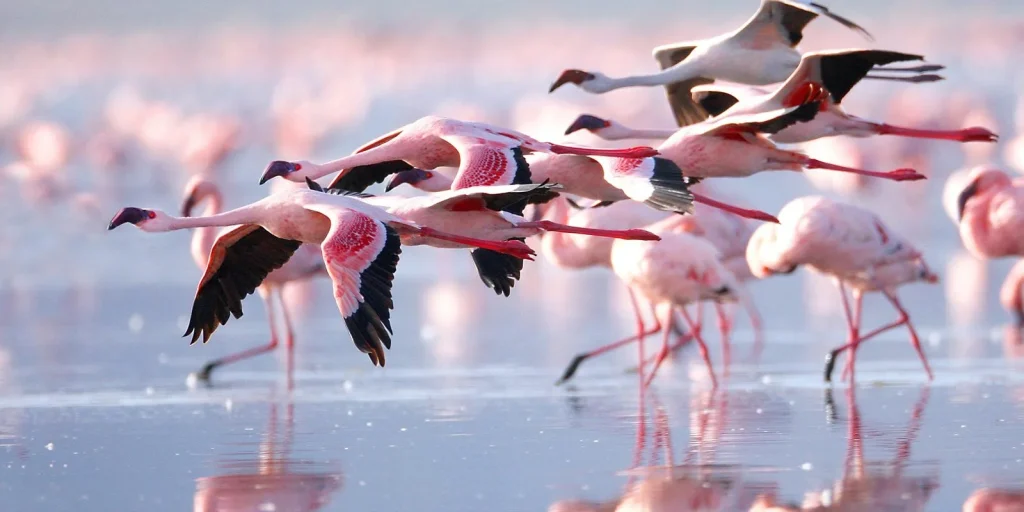
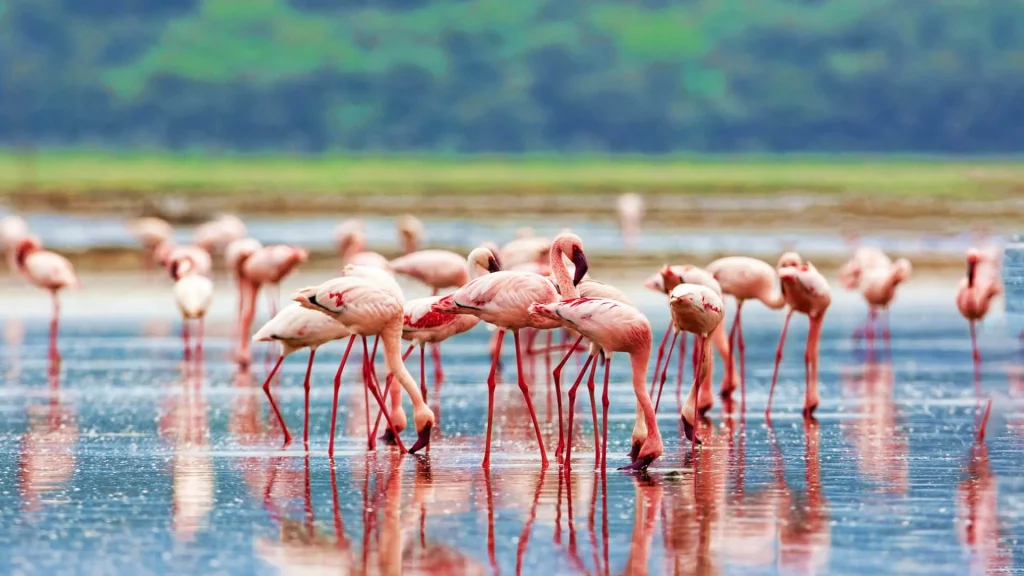
Flamingos are the most famous birds associated with Lake Nakuru. Their pink plumage, long legs and distinctive feeding behaviour make them instantly recognisable, although the two flamingo species commonly associated with East African alkaline lakes differ in several important ways.
Lesser Flamingo
The Lesser Flamingo is generally smaller than the greater flamingo. It has a relatively dark bill with specialised structures used to filter microscopic food from suitable water, and lesser flamingos are strongly associated with alkaline lakes where appropriate cyanobacteria and algae are available.
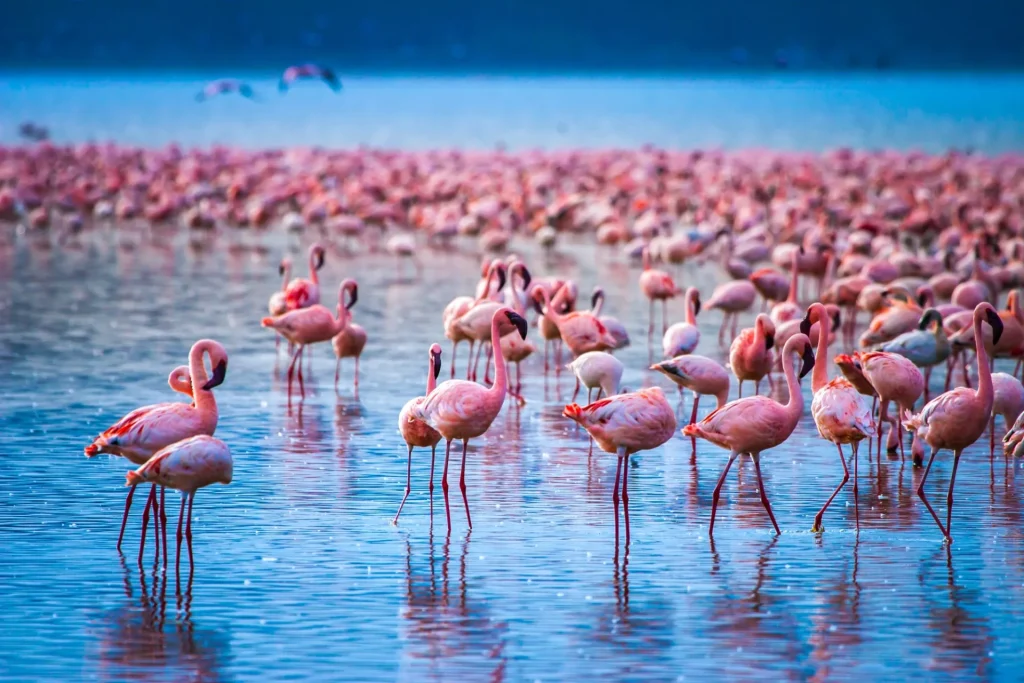
Historically, Lake Nakuru has supported very large concentrations of lesser flamingos, creating the famous pink shoreline scenes seen in photographs and documentaries. However, flamingo numbers are highly variable: changes in lake water levels, chemistry and food availability can cause birds to move between different lakes. Visitors should therefore avoid assuming that large concentrations will be present throughout the year.
Greater Flamingo
The Greater Flamingo is larger and generally paler than the lesser flamingo. Its bill has a different shape and feeding adaptation, and greater flamingos consume a wider variety of small aquatic organisms, including suitable invertebrates. Both greater and lesser flamingos may occur in Lake Nakuru when environmental conditions support them, and birdwatchers can distinguish the two species by examining body size, bill characteristics and overall appearance.
Why Do Flamingo Numbers Change?
Flamingo populations respond to changing environmental conditions. Water depth affects the availability of suitable feeding areas, salinity and other aspects of water chemistry influence the organisms on which flamingos feed, and rainfall and changes in lake levels can alter these conditions. Flamingos are highly mobile and may move between Rift Valley lakes in response to food availability, so the number of flamingos present at Lake Nakuru can vary substantially.
For travellers whose primary goal is to see large flamingo concentrations, it is sensible to consult recent local observations before finalising an itinerary.
Pelicans of Lake Nakuru
Pelicans are another important group of waterbirds associated with Lake Nakuru. Their large bodies, broad wings and specialised bills make them impressive to observe.
Great White Pelican
The Great White Pelican is a large, pale waterbird that may occur in suitable lake habitats. Its enormous bill and throat pouch are adapted for catching fish, and pelicans may be observed swimming, resting or flying above the lake. Their broad wings allow them to soar efficiently, and watching a group of pelicans take flight can be particularly rewarding for photographers.
Pink-backed Pelican
The Pink-backed Pelican is generally smaller than the great white pelican. It is associated with freshwater and other suitable wetland environments in parts of Africa, although its occurrence in the wider region depends on local habitat conditions. Birdwatchers should examine pelicans carefully because different species may use different habitats.
Herons and Egrets
Herons and egrets are important members of Lake Nakuru’s bird community. They are associated with shallow water, wetland margins and other suitable feeding habitats.
Grey Heron
The Grey Heron is a large bird with grey plumage and a long neck. It often waits motionless before striking at fish or other prey.
Purple Heron
The Purple Heron is more closely associated with dense wetland vegetation. Its slender body and subdued colouring help it remain concealed.
Great Egret
The Great Egret is a tall, white bird that feeds in shallow water. Its elegant appearance makes it a popular photographic subject.
Little Egret
The Little Egret is smaller and often more active while feeding. It may use rapid movements to disturb prey. Comparing these birds provides an interesting introduction to the different hunting strategies used by wetland species.
Storks and Other Wading Birds
Lake Nakuru supports several species of large wading birds.
Yellow-billed Stork
The Yellow-billed Stork is a distinctive African wetland bird. Its long bill is adapted for detecting prey in shallow water.
Marabou Stork
The Marabou Stork is a large scavenging bird associated with various African habitats. Its unusual appearance and ecological role make it an interesting subject for wildlife observation.
African Spoonbill
The African Spoonbill has a distinctive flattened bill. It feeds by sweeping the bill through shallow water.
Sacred Ibis
The African Sacred Ibis is recognised by its white body and dark head and neck. It feeds on a variety of small animals and other suitable food sources. These species demonstrate the variety of feeding strategies used by birds occupying the same wetland ecosystem.
Cormorants and Other Aquatic Birds
Cormorants are specialised fish-eating birds. They may be observed diving, swimming or resting near suitable water habitats. The Great Cormorant is a relatively large species with dark plumage, and the Long-tailed Cormorant, also known as the reed cormorant, is smaller. Birdwatchers may observe cormorants spreading their wings while resting.
Other aquatic birds may include ducks, grebes and various species associated with shallow water, although their presence depends on habitat conditions and seasonal movements.
Birds of Prey in Lake Nakuru National Park
The park’s varied habitats support numerous birds of prey. Raptors may be observed soaring above the lake, perched in woodland or hunting across open grassland.
African Fish Eagle
The African Fish Eagle is associated with suitable freshwater and wetland habitats. Its white head and distinctive call make it relatively easy to recognise, although Lake Nakuru is alkaline, suitable aquatic habitats in the wider region may support fish-eating birds.
Martial Eagle
The Martial Eagle is a powerful African raptor associated with savannah and woodland. It hunts a variety of vertebrate prey, and sightings are not guaranteed; the species should be regarded as a special encounter.
Bateleur
The Bateleur is a distinctive eagle recognised by its short tail and unusual flight silhouette. It often spends considerable time soaring while searching for food.
Vultures
Several vulture species occur in Kenya’s savannah ecosystems. These birds play an important ecological role by consuming carrion, although their populations face conservation threats in many parts of Africa. Birdwatchers should appreciate vultures as essential components of healthy ecosystems rather than viewing them simply as scavengers.
Woodland Birds of Lake Nakuru
The national park’s birdlife extends well beyond the lake. Acacia woodland and other terrestrial habitats support numerous smaller birds.
Lilac-breasted Roller
The Lilac-breasted Roller is admired for its colourful plumage. It often perches on exposed branches while searching for insects and other prey.
Hornbills
Hornbills are associated with woodland and savannah habitats. Their distinctive bills and feeding behaviour make them interesting to observe.
Woodpeckers
Woodpeckers search tree trunks and branches for insects and other food. They can be difficult to locate when concealed among foliage.
Starlings
Several starling species occur in suitable Kenyan habitats. Their metallic plumage and social behaviour make them attractive subjects for birdwatchers.
Weavers
Weavers are particularly interesting because of their elaborate nest-building behaviour. Some species construct suspended nests using grass and other plant materials. Observing woodland birds adds variety to a Lake Nakuru safari and helps visitors appreciate the park’s wider ecological importance.
Grassland Birds of Lake Nakuru
Open grasslands support birds adapted to terrestrial feeding and hunting. These may include bustards, francolins, larks and other open-country species. Ground-dwelling birds can be difficult to detect because their plumage blends with surrounding vegetation, so slow game drives and careful observation improve the chances of finding them. Raptors may also hunt above open grasslands, and birdwatchers should scan both the ground and the sky rather than concentrating exclusively on trees.
Best Places for Birdwatching in Lake Nakuru National Park
Lake Shoreline
Suitable shoreline areas provide opportunities to observe flamingos, pelicans, herons and other waterbirds. However, access depends on park regulations, water levels and road conditions, and some historical viewpoints may be affected by changes in the lake’s extent. A knowledgeable guide can select suitable locations according to current conditions.
Baboon Cliff
Baboon Cliff is a recognised viewpoint within Lake Nakuru National Park. It provides elevated views across parts of the lake and surrounding landscape and is particularly useful for appreciating the relationship between the lake and terrestrial habitats. Birdwatching opportunities vary, but the area can be worthwhile for observing birds associated with rocky and open environments.
Lion Hill
Lion Hill is another well-known elevated area within the park. It offers opportunities to appreciate the landscape from a different perspective, and birdwatchers may encounter species associated with woodland, slopes and open country.
Acacia Woodland
Woodland areas are particularly valuable for observing birds that do not depend directly on the lake. Rollers, hornbills, starlings and other species may be encountered, and early morning is often productive because many birds are actively feeding and calling.
Grassland Tracks
Open grassland areas provide opportunities to observe terrestrial birds and raptors. Birdwatchers should explore slowly and remain attentive to movement in the vegetation.
Best Time to See Birds at Lake Nakuru
Lake Nakuru Birdwatching is possible throughout the year, although seasonal conditions influence bird distribution and activity. From approximately November to April, many migratory birds from Europe and Asia are present in suitable East African habitats, which can increase the variety of birds encountered. Rainfall may influence breeding activity and food availability, although heavy rain can affect road conditions and visibility.
The generally drier periods may provide more predictable conditions for game drives. Flamingo concentrations depend more directly on lake conditions and food availability than on a simple seasonal calendar, so travellers should distinguish between the best time for general birdwatching and the best opportunity to observe large flamingo gatherings.
Bird Photography at Lake Nakuru
Bird Photography at Lake Nakuru offers opportunities to photograph waterbirds, raptors and woodland species. Large birds such as pelicans and storks may be easier to photograph than smaller species, and flamingos can create attractive group compositions when suitable concentrations are present. However, photographers should avoid assuming that historical scenes will be available during every visit.
A telephoto lens is useful for capturing detailed images from appropriate distances. Early morning and late afternoon often provide softer light, while strong midday sunlight can create harsh shadows and reduce image quality. Photographers should remain within authorised areas and avoid disturbing wildlife, and a private safari vehicle can provide additional flexibility for observation stops where permitted.
Combining Birdwatching with Wildlife Viewing
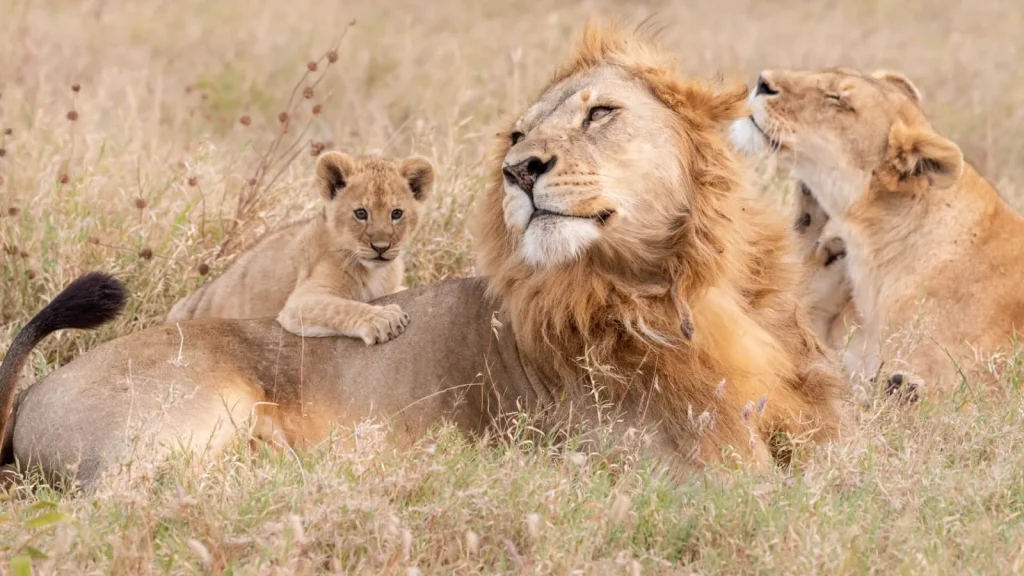
Lake Nakuru is also an important destination for mammal viewing. The park is particularly associated with rhino conservation, and visitors may have opportunities to observe both black and white rhinos, although sightings depend on wildlife movements and conditions. Other mammals include buffaloes, giraffes, zebras and various antelopes, and predators also occur in the park, but sightings are unpredictable.
A combined Lake Nakuru Safari can therefore appeal to travellers interested in both birds and larger wildlife. Birdwatching adds depth to game drives by encouraging visitors to observe different aspects of the ecosystem.
Suggested One-Day Lake Nakuru Birdwatching Programme
Begin early to take advantage of cooler temperatures and morning bird activity. Enter the park through an appropriate gate and explore suitable woodland and grassland habitats, looking for rollers, hornbills, raptors and terrestrial birds. Continue towards accessible lake viewpoints, where waterbirds may be observed; the precise route should depend on current road access, water levels and wildlife activity.
Take a suitable lunch break in an authorised area. In the afternoon, explore additional habitats and revisit productive locations if time permits. A full day allows more relaxed observation than a brief visit, and for dedicated birdwatchers an overnight stay nearby can provide opportunities for both morning and afternoon excursions.
Accommodation for Lake Nakuru Birdwatching
Accommodation options include properties within the national park and others in Nakuru city or surrounding areas. The best choice depends on budget, comfort and access requirements. Staying inside the park may reduce travel time before early morning activities, although park accommodation and access arrangements should be confirmed before booking.
- Our Essential category focuses on practical accommodation for travellers seeking good value.
- Comfort options provide additional amenities while maintaining a reasonable balance between cost and convenience.
- Premium properties offer enhanced facilities and carefully selected locations.
- Signature accommodation is suitable for travellers seeking more exclusive experiences.
For birdwatchers, location and access to productive habitats are often more important than luxury features alone.
Combining Lake Nakuru with Other Birdwatching Destinations
Lake Nakuru can be combined with several other important birdwatching locations. Lake Naivasha provides freshwater habitats and opportunities to observe fish eagles, kingfishers and other aquatic birds. Lake Baringo offers a different combination of freshwater and dry-country species. The Masai Mara National Reserve supports savannah birds, raptors and numerous mammals, and travellers with more time may extend their itinerary to Kakamega Forest or other specialist destinations. A carefully planned route allows visitors to experience different bird communities without unnecessary travel.
Conservation of Lake Nakuru’s Birdlife
Lake Nakuru’s ecological importance depends on the health of its lake and surrounding habitats. Changes in water levels, pollution, habitat disturbance and other environmental pressures can affect bird populations, and flamingos are particularly sensitive to changes in suitable feeding conditions. The conservation of the wider Rift Valley lake system is therefore important because birds move between different wetlands.
- Responsible tourism contributes to conservation by encouraging appreciation of protected habitats.
- Visitors should remain on authorised tracks, avoid disturbing birds and follow park regulations.
- Feeding wildlife or approaching nesting birds too closely should be avoided.
Supporting responsible tourism helps protect the ecological conditions that make Lake Nakuru valuable.
Frequently Asked Questions About Birds of Lake Nakuru
How many bird species are found in Lake Nakuru National Park?
More than 450 bird species have been recorded in the park, reflecting its variety of wetland and terrestrial habitats.
Are flamingos always present at Lake Nakuru?
No. Flamingo numbers vary considerably according to water conditions and food availability.
What is the difference between greater and lesser flamingos?
Greater flamingos are larger and have different bill characteristics and feeding habits. Lesser flamingos are particularly associated with microscopic food sources in suitable alkaline lakes.
Is Lake Nakuru good for birdwatching?
Yes. The park supports numerous waterbirds, raptors, woodland birds and grassland species.
Can I combine birdwatching with rhino viewing?
Yes. Lake Nakuru is an established rhino conservation area and offers opportunities to combine birdwatching with mammal viewing.
How much time should I spend in Lake Nakuru?
A full day provides a useful introduction. An overnight stay allows more time for morning and afternoon wildlife activities.
Is Lake Nakuru suitable for bird photography?
Yes. Its open landscapes and varied habitats provide opportunities to photograph waterbirds, raptors and woodland species.
Plan Your Lake Nakuru Birdwatching Safari
The birds of Lake Nakuru are an important part of Kenya’s natural heritage. Although flamingos remain the park’s most famous attraction, its diverse habitats support many other species that deserve attention.
From pelicans and storks to eagles, rollers and woodland birds, Lake Nakuru offers rewarding opportunities for travellers interested in wildlife beyond the traditional Big Five. Safari Trips to Kenya can incorporate Lake Nakuru Birdwatching into a private wildlife safari, a Rift Valley itinerary or a longer Kenya Birding Safari. Contact our team with your preferred travel dates, number of travellers and birdwatching interests to request a customised safari proposal.