

Great Migration Safari Packing List
Packing for a Great Migration safari is different from packing for an ordinary holiday. You may spend several hours each day in an open-roof safari vehicle, experience cool mornings followed by warm afternoons, travel along dusty roads and photograph wildlife in changing light. If your itinerary includes domestic flights, luggage restrictions may also influence what you can bring.
The good news is that you do not need an enormous wardrobe or specialised expedition equipment. Most travellers can pack comfortably for a week or longer using practical clothing, a few useful accessories and a well-organised day bag. The most important items are those that help you stay comfortable during game drives, protect you from sun and dust, and allow you to enjoy wildlife without unnecessary distractions.
This Great Migration Safari Packing List covers clothing, footwear, cameras, binoculars, luggage, personal care items, travel documents and seasonal considerations for Kenya’s Masai Mara and Tanzania’s Serengeti.
Understanding the Conditions Before You Pack
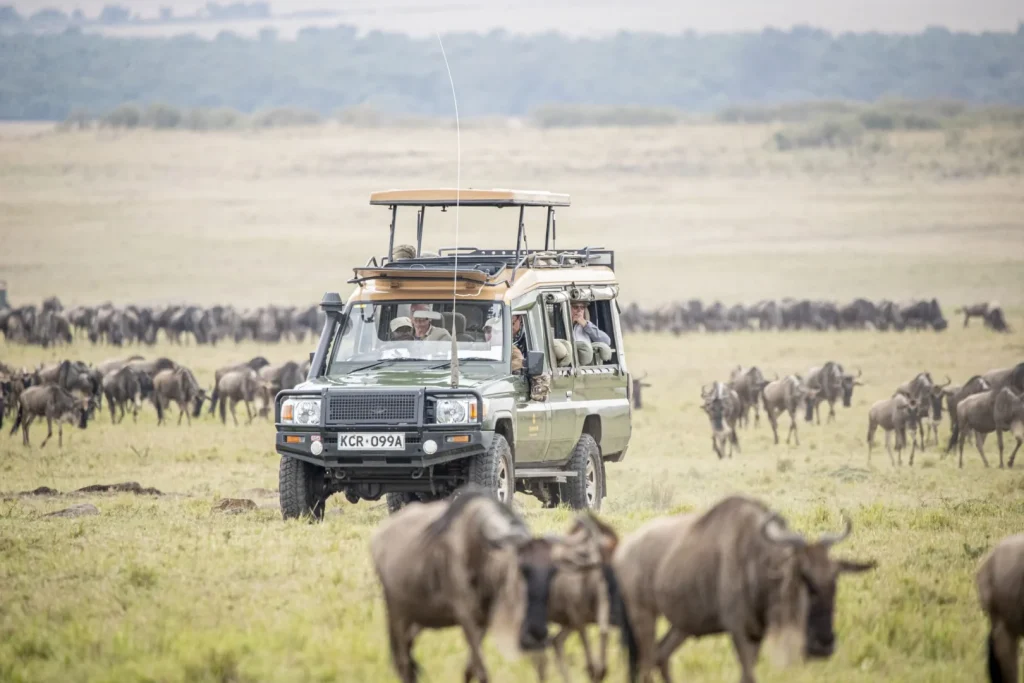
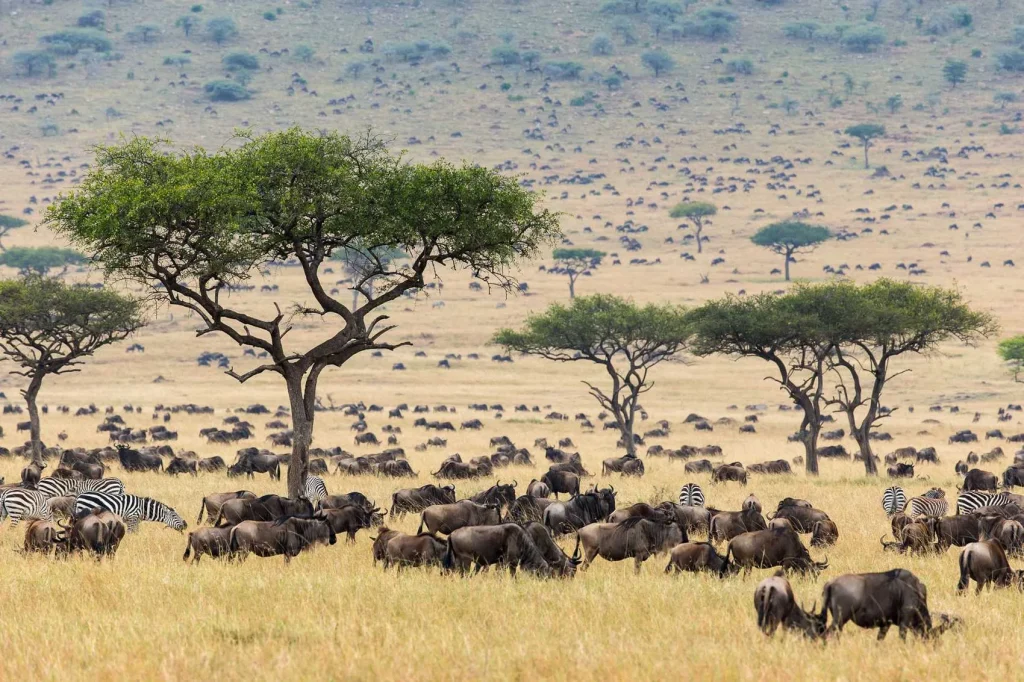
The Great Wildebeest Migration takes place across the Serengeti–Mara ecosystem, where climate and landscape vary according to season and location. During the popular northern migration period, generally July through October, mornings can be cool, particularly in the Masai Mara, while afternoons may become warm and sunny. Dust can be common on dry roads, and during wetter periods rain may arrive unexpectedly.
The southern Serengeti calving season, generally associated with January through March, can offer green landscapes and different weather conditions. For this reason, packing should be based on layers rather than one type of clothing.
Essential Great Migration Safari Packing Checklist
Before exploring each category in detail, use this practical checklist.
Clothing
- Lightweight long-sleeved shirts
- Comfortable short-sleeved shirts
- Long trousers
- Optional shorts for suitable settings
- Warm fleece or lightweight jacket
- Waterproof or wind-resistant outer layer
- Comfortable socks
- Underwear
- Sleepwear
- Sun hat
- Swimwear if your accommodation has a pool
Footwear
- Comfortable closed walking shoes
- Lightweight sandals for the lodge
- Optional walking boots for specialist activities
Wildlife Viewing
- Binoculars
- Camera or smartphone
- Spare batteries
- Memory cards
- Lens cleaning materials
- Protective camera bag
Personal Essentials
- Sunscreen
- Sunglasses
- Lip balm
- Insect repellent
- Personal medication
- Basic toiletries
- Reusable water bottle
- Small day bag
Travel Documents
- Passport
- Required visa or travel authorisation
- Travel insurance details
- Flight information
- Safari booking confirmation
- Emergency contact information
- Any required health documentation
What Clothes Should You Wear on Safari?
Comfort is the main priority. Safari clothing should allow easy movement, protect against sun exposure and remain comfortable during long periods of sitting. Neutral colours such as khaki, olive, beige, brown and muted green are practical because they tend to blend into natural surroundings and can be convenient in dusty conditions.
However, you do not need to buy an entirely new safari wardrobe; ordinary comfortable travel clothing is usually sufficient. Avoid relying exclusively on very dark clothing, which may absorb heat, and note that bright colours are not automatically prohibited on conventional game drives, but muted clothing is generally a practical choice.
Long-Sleeved Shirts
Lightweight long-sleeved shirts are among the most useful items for safari travel. They provide sun protection and can help reduce exposure to insects. Choose breathable fabrics that dry reasonably quickly; two or three long-sleeved shirts may be sufficient if laundry services are available.
A shirt with sleeves that can be rolled up provides flexibility, and you should avoid heavy fabrics that become uncomfortable during warm afternoons.
Short-Sleeved Shirts
Short-sleeved shirts are useful for warm days and relaxing at the lodge. Choose comfortable fabrics and pack a small selection for most safaris. Travellers should consider whether their accommodation provides laundry services because turnaround times and restrictions vary.
Safari Trousers
Comfortable long trousers are useful for game drives because they provide protection from sun, dust and insects. Lightweight hiking trousers or ordinary travel trousers can work well, but avoid clothing that is too tight or restrictive.
Some travellers prefer convertible trousers, although these are not essential. A pair of shorts may be useful for relaxing at the lodge, depending on the setting.
Why You Need a Warm Layer
Many first-time safari travellers underestimate how cool early mornings can feel. The Masai Mara is at relatively high elevation, morning game drives may begin before the day warms up and wind exposure through an open vehicle roof can make conditions feel cooler. A fleece or lightweight insulated jacket is useful, and layering allows you to remove clothing as temperatures rise.
You do not usually need a heavy winter coat for a conventional migration safari.
Rain Jackets and Waterproof Clothing
Rain can occur even during relatively dry months, so a lightweight waterproof jacket that packs easily into a day bag is useful. For wetter-season travel, more substantial rain protection may be appropriate, although most conventional migration viewing takes place from a safari vehicle and bulky rainwear is rarely necessary unless walking activities are included.
Choosing the Right Safari Footwear
For ordinary game drives, comfortable closed shoes are usually sufficient. You do not need heavy hiking boots unless your itinerary includes walking safaris or other specialist activities. Choose shoes with good grip and comfortable soles that are easy to wear during long travel days, and keep lightweight sandals for use at the lodge.
If you are combining the migration with gorilla trekking, different footwear requirements apply. Gorilla trekking involves forest trails and may require sturdy hiking boots.
Socks and Foot Comfort
Comfortable socks are easy to overlook. Choose breathable socks that fit your shoes properly, and for longer journeys consider carrying an extra pair in your day bag. Travellers combining safari drives with walking activities may prefer moisture-wicking hiking socks.
Avoid packing only new shoes or socks that have not been tested, because blisters can make travel unnecessarily uncomfortable.
Hats and Sun Protection
A wide-brimmed hat can provide useful protection during sunny game drives. Choose a hat that fits securely because wind may be noticeable when the vehicle roof is open, although a cap is another practical option.
Sunglasses are useful for bright conditions, and sunscreen should be applied according to the product instructions and reapplied as needed.
Binoculars: One of the Most Important Safari Items
A good pair of binoculars can transform your wildlife-viewing experience. Animals may be visible at considerable distances, and binoculars allow you to observe details that are difficult to see with the naked eye. They are especially useful for birds, distant predators and animals across river systems.
A compact or mid-sized pair is often convenient. Common general-purpose magnifications include 8x and 10x, although higher magnification is not always better because it can make the image harder to hold steady. If travelling as a couple, consider bringing a pair for each person, because sharing one pair can be frustrating when several interesting sightings occur at once.
Cameras for Great Migration Photography
The migration provides opportunities for landscape photography, wildlife portraits and action scenes. A modern smartphone can capture attractive landscapes and nearby animals, although distant wildlife may require a camera with optical zoom.
A mirrorless or DSLR camera with a telephoto lens can be useful, and a versatile zoom allows you to photograph animals at different distances while a wider lens is valuable for capturing large herds and dramatic skies. You do not need professional equipment to enjoy the safari; choose equipment you can operate confidently.
Recommended Camera Accessories
Useful accessories include spare batteries, memory cards and a protective bag. Dust can be a significant issue during dry-season game drives, so a blower and suitable cleaning cloths are helpful. A waterproof cover can protect equipment during rain, and a beanbag may be useful for supporting a long lens on a suitable vehicle opening.
Tripods can be inconvenient inside crowded safari vehicles, so confirm vehicle arrangements before bringing bulky equipment.
Protecting Electronics From Dust
Dust can enter camera bags and settle on lenses, phones and charging ports. Keep equipment inside closed bags when not in use, avoid changing camera lenses unnecessarily in dusty conditions and use appropriate cleaning tools. Do not wipe abrasive dust directly across delicate surfaces.
A small dry bag or protective pouch can also help during sudden rain.
Power Banks and Charging Equipment
Bring charging cables for all your devices. A suitable power bank can be useful during long game drives, although airline rules restrict how power banks and spare lithium batteries may be carried, so check your airline’s current requirements.
Many safari lodges provide charging facilities, but electricity availability may vary because some camps use solar power or generators. Ask your operator about charging arrangements if you rely on specialist camera equipment.
Travel Adapters
Kenya and Tanzania commonly use British-style Type G electrical sockets, although individual properties may have different arrangements. Check the voltage and plug requirements for your devices, and a universal travel adapter can be useful.
Some modern electronics support a wide voltage range, but this should be confirmed on the device label. Avoid carrying unnecessary electrical equipment.
Choosing Safari Luggage
Soft-sided luggage is often practical for safari travel because it can be easier to fit into vehicle storage compartments and smaller aircraft. Hard-shell suitcases may be less convenient on some itineraries.
If your safari includes domestic flights, check the exact baggage allowance because some light-aircraft services have strict weight and bag-size limits, and you should not assume the allowance will match your international flight. A compact day bag is useful for items needed during game drives.
What to Keep in Your Safari Day Bag
Your day bag should contain essentials you may need during the day:
- Binoculars
- Camera
- Spare battery
- Sunscreen
- Sunglasses
- Hat
- Warm layer
- Rain jacket
- Personal medication
- Tissues
- Lip balm
- Water bottle
- Small notebook
Avoid overpacking because a large bag can become inconvenient inside a safari vehicle. Keep valuable equipment secure when travelling on uneven roads.
Personal Medication
Bring sufficient supplies of prescribed medication for the trip. Keep medication in original packaging where practical and carry necessary prescriptions or supporting documentation.
Travellers should seek professional medical advice about vaccinations and malaria prevention based on their itinerary and personal circumstances. Do not assume that all safari destinations have identical health requirements, and carry essential medication in hand luggage rather than checked baggage where permitted.
Insect Repellent
Insect repellent is a useful item for East African travel. Choose a product suitable for your needs and follow the instructions. Long sleeves and trousers can also reduce insect exposure, and some lodges provide mosquito nets or other protective measures.
However, travellers should not rely entirely on accommodation facilities and should ask a healthcare professional about destination-specific malaria prevention.
Toiletries and Personal Care
Pack ordinary toiletries in travel-sized containers where practical. Sunscreen, lip balm and moisturiser can be useful in dry or windy conditions, and hand sanitiser and tissues are convenient during long travel days.
A small first-aid kit may include adhesive dressings and basic personal supplies. Avoid packing large quantities of products that are easily available at your destination unless you require a particular brand.
Travel Documents
Before departure, confirm that your passport meets the relevant validity requirements and check visa or electronic travel authorisation rules for your nationality. Kenya and Tanzania have separate entry requirements, so if your itinerary includes both countries, confirm the rules for each.
Keep digital copies of important documents in a secure location, and a printed copy of your itinerary can be useful if internet access is limited.
Travel Insurance
Travel insurance is strongly recommended. Consider coverage for medical emergencies, trip interruption and other relevant risks, and review exclusions carefully because some specialist activities may require additional coverage.
Carry emergency assistance contact details, and make sure your operator has a reliable way to contact you during the trip.
Packing for July to September Migration Safaris
July through September is a popular period for the Masai Mara and northern Serengeti. Early mornings may be cool, afternoons can be warm and sunny and dust may be common, so pack layers, a warm jacket, sun protection and dust protection for electronics.
A lightweight rain jacket is still useful, and you should not assume that dry-season travel means no chance of rain.
Packing for January to March Serengeti Safaris
The southern Serengeti calving season may bring green landscapes and variable weather. Lightweight clothing remains useful, but carry rain protection and consider a waterproof camera cover. Footwear should be comfortable and suitable for occasional muddy conditions, although precise requirements depend on the itinerary and accommodation.
Packing for April and May
April and May are associated with the long rains in parts of northern Tanzania. Rainfall can be substantial, so waterproof protection for clothing and equipment becomes more important and quick-drying fabrics are useful. Road conditions may be muddy, and travellers should confirm camp operations and transport arrangements.
What to Pack for a Flying Safari
Domestic flights may have stricter baggage allowances than international services, so pack efficiently and choose soft-sided luggage where required. Carry valuable electronics and essential medication according to airline rules, check restrictions on power banks and spare batteries and avoid bringing heavy equipment that you will rarely use.
If travelling with professional camera equipment, discuss luggage needs with the operator before booking flights.
What to Pack for a Road Safari
Road safaris can involve several hours of travel, so comfortable clothing is important. Carry water, snacks where appropriate, sun protection and personal essentials. A neck pillow may be useful for some travellers.
Keep a warm layer accessible and do not pack everything you need during the day at the bottom of your main suitcase.
Packing for Families
Families should pack according to children’s ages and needs. Useful items may include extra clothing, sun protection, personal medication and quiet activities for long transfers. A private safari can provide flexibility for breaks, although some accommodation properties have age restrictions that should be confirmed before booking.
Avoid bringing noisy toys that may disturb wildlife or other visitors.
Packing for Luxury Safari Camps
Luxury accommodation may provide laundry services, toiletries and other amenities, although facilities vary, so ask what is included before packing. Some properties have dress expectations for particular dining settings, but most safari lodges favour comfortable clothing.
A smart-casual outfit may be useful if you prefer dressing up for dinner, although there is generally no need for formal evening wear.
Packing for Safari and Beach Combinations
If your itinerary includes Diani, Watamu or Zanzibar, pack additional clothing for coastal conditions. Swimwear, sandals and lightweight beach clothing may be useful, and consider sun protection suitable for extended time near the water. A small beach bag can be convenient.
If visiting cultural or religious sites, dress respectfully according to local expectations.
Packing for Safari and Gorilla Trekking
A combined Kenya–Uganda safari requires additional preparation. Gorilla trekking involves walking through forest terrain, so sturdy hiking boots, long trousers, long sleeves and rain protection are important. Gardening-style gloves may help protect hands when gripping vegetation, and a small backpack and suitable water supply are useful.
The trekking difficulty varies according to the gorilla family’s location. Do not assume that clothing suitable for a Masai Mara game drive is sufficient for Bwindi.
What Not to Pack
Pack efficiently rather than bringing everything you might conceivably need.
- Avoid excessive clothing and unnecessary valuables.
- Do not bring heavy formal shoes unless they are needed for another part of your journey.
- Large hard-shell luggage may be inconvenient on some safari flights.
- Do not pack prohibited items.
- Check local restrictions on plastic bags and other materials before travelling, because Kenya and Tanzania have environmental regulations that travellers should respect.
How to Pack Light for a 7-Day Safari
For a week-long safari, a small selection of interchangeable clothing is often sufficient. Choose shirts and trousers that can be combined easily, pack one warm layer and one waterproof layer and limit footwear to practical options.
Use packing cubes or similar organisers if helpful, consider laundry availability and remember that a lighter bag makes transfers easier and reduces unnecessary luggage complications.
How to Pack for a 10–14-Day Safari
Longer safaris do not necessarily require twice as much clothing because laundry services can reduce the number of items needed. Pack enough essentials for several days and plan to wash clothing during the trip.
Carry sufficient personal medication for the full journey, bring spare charging equipment and storage for photographs and, if travelling between different regions, include clothing suitable for varying temperatures.
Frequently Asked Questions
Do I Need Safari-Specific Clothing?
No. Comfortable travel clothing in practical colours is generally sufficient.
Are Jeans Suitable for Safari?
They can be worn, but lightweight trousers may be more comfortable in warm conditions and dry faster after rain.
Do I Need Hiking Boots?
Not for ordinary vehicle-based game drives. They may be necessary for walking safaris or gorilla trekking.
Is a Warm Jacket Necessary?
Yes. Early morning game drives can be cool, particularly in the Masai Mara.
Should I Bring Binoculars?
Yes. Binoculars greatly improve wildlife viewing.
Can I Bring a Drone?
Do not assume drones are permitted. Protected areas and national aviation authorities may require special authorisation or prohibit their use.
Can I Use a Smartphone for Photography?
Yes, especially for landscapes and nearby animals.
Are Laundry Services Available?
Many lodges offer laundry, but availability and turnaround times vary.
Should I Bring Cash?
Some cash may be useful for gratuities and personal expenses. Confirm accepted currencies and payment methods with your operator.
What Type of Luggage Is Best?
Soft-sided luggage is often practical, particularly when domestic flights are included.
Final Packing Advice for Your Great Migration Safari
The best Great Migration Safari Packing List is practical rather than excessive. Focus on comfortable clothing, useful layers, sun protection, binoculars, suitable camera equipment and essential travel documents, and adapt your packing to the season, accommodation and transport arrangements.
A July Masai Mara safari may require warmer morning layers and dust protection, while an April Serengeti journey may place greater emphasis on waterproof equipment. Safari Trips to Kenya can provide destination-specific packing guidance when preparing your itinerary. Share your travel dates, selected destinations and whether your safari includes domestic flights, walking activities or a beach extension.
With the right essentials packed, you can concentrate on the experience itself: watching the changing landscapes and remarkable wildlife of the Great Migration.