
Great Migration Rainfall Guide
A dark line of clouds builds over the Serengeti plains. By late afternoon, rain begins falling on grass that has been dry for weeks. Within days, new shoots may appear, attracting grazing animals into areas that were previously less productive. Elsewhere, a large concentration of wildebeest may begin moving as the quality of available pasture changes.
This relationship between rain, grass and animal movement lies at the heart of the Great Wildebeest Migration.
Although the migration is famous for spectacular river crossings in Kenya’s Masai Mara, rainfall is one of the principal forces shaping the entire annual cycle. Wildebeest do not travel north because a particular month has arrived, and they do not return south because a calendar says the migration season has ended. They respond to environmental conditions, particularly the availability of nutritious grazing and water.
Understanding these patterns is one of the most useful things a traveller can do before booking a safari. It explains why the southern Serengeti is especially important during the calving season, why herds may be scattered across different regions, and why an unusually wet or dry period can affect migration timing.
This Great Migration Rainfall Guide explores the weather systems of the Serengeti–Mara ecosystem, explains how seasonal rain influences herd movements, and helps you choose a safari itinerary based on realistic ecological patterns rather than fixed promises.
Why Rainfall Is So Important to the Great Migration
Wildebeest are grazing animals. Their movements are strongly influenced by the availability and nutritional quality of grass. Rainfall encourages new vegetation growth, although the response varies according to soil, temperature, previous grazing and the amount of rain received.
Fresh grass can be particularly valuable for breeding females and growing calves. When suitable pasture becomes scarce in one region, animals may move towards another. This process operates across the enormous Serengeti–Mara ecosystem, which spans northern Tanzania and southwestern Kenya.
Rainfall does not fall evenly across the entire landscape. One area may experience substantial showers while another remains relatively dry. Consequently, different wildebeest herds may move in different directions or occupy separate grazing areas. This is why migration movements can appear scattered rather than forming a single continuous procession.
The Serengeti–Mara Rainfall System
East Africa’s seasonal rainfall patterns are influenced by large-scale atmospheric processes, regional geography and local conditions. Much of northern Tanzania experiences two broad rainy periods, commonly described as the short rains and long rains, although the timing and intensity vary between years.
The Short Rains
The Serengeti short rains are generally associated with approximately November and December. These rains can encourage new grass growth across southern and eastern parts of the ecosystem. As grazing conditions improve, migrating herds may move towards these areas.
However, the short rains do not begin on the same date every year. Some seasons are wetter or drier than expected.
The Long Rains
The Serengeti long rains are commonly associated with March through May. Rainfall may become more sustained during this period, and grass growth, water availability and road conditions can change substantially. Some areas become muddy, and driving may be slower.
For travellers, the long rains can create beautiful green landscapes but also introduce logistical challenges.
The Drier Months
June through September is generally a relatively dry period in many parts of the ecosystem. However, conditions differ between the Masai Mara and individual Serengeti regions. Dry-season grazing patterns contribute to the seasonal importance of northern areas, although rain may still occur, particularly in the Mara. A dry-season safari does not mean completely rain-free weather.
How Rainfall Influences the Annual Migration Cycle
The migration is often presented as a circular route. In reality, the herds respond to changing environmental conditions across a broad landscape. The following seasonal pattern provides a useful framework.
January: Southern Plains Grazing
During January, the southern Serengeti and adjoining plains may offer suitable grazing. The landscape can be relatively green following seasonal rainfall, and large concentrations of wildebeest may gather in preparation for calving.
February: Calving and Nutritious Grass
February is particularly associated with the southern Serengeti calving season. The short-grass plains can provide favourable grazing for breeding females, and large numbers of calves may be born within a relatively concentrated period. Predators may take advantage of the abundance of vulnerable young animals.
March: Changing Conditions
As seasonal conditions change, the herds may remain on southern plains or begin moving towards other grazing areas. The exact pattern depends on rainfall and pasture availability.
April: Long Rains and Green Landscapes
Rainfall may become more sustained, grass growth can be extensive, and some herds may move through central regions, although their distribution varies.
May: Movement Through Central and Western Areas
As conditions change, migration activity may become relevant in central and western parts of the Serengeti. The western corridor is often included in seasonal planning.
June: Northward Movements
Herds may move towards northern grazing areas. The western Serengeti and areas approaching the north can become important.
July: Northern Migration Season
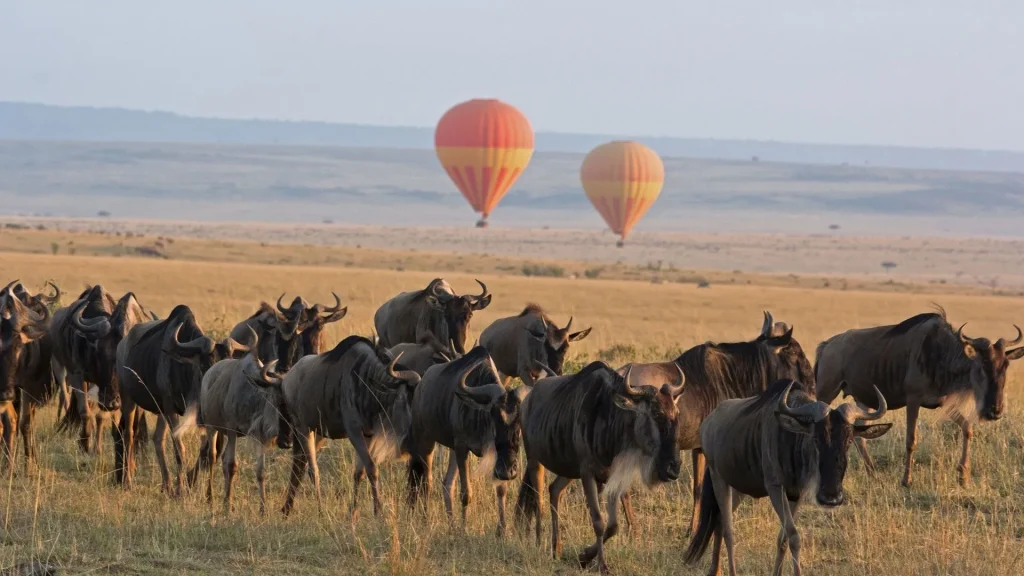
Substantial herds may occupy the northern Serengeti, and some may enter Kenya’s Masai Mara. The Mara River becomes a major focus for migration tourism.
August: Northern Grazing
August is one of the most popular months for northern migration safaris. However, herd locations still depend on grazing and rainfall conditions.
September: Continued Northern Activity
Large concentrations may remain in northern areas. River crossings remain possible, but cannot be guaranteed.
October: Transitional Movements
Some herds may remain in the north while others begin moving towards central or southern regions.
November: Fresh Rain and Southward Movement
Short rains can encourage new grass growth farther south, which may influence herd movements.
December: Return Towards Southern Plains
The southern Serengeti may become increasingly important as the next calving season approaches. These are broad patterns, not a precise annual timetable.
Why the Southern Serengeti Is Important After Rain
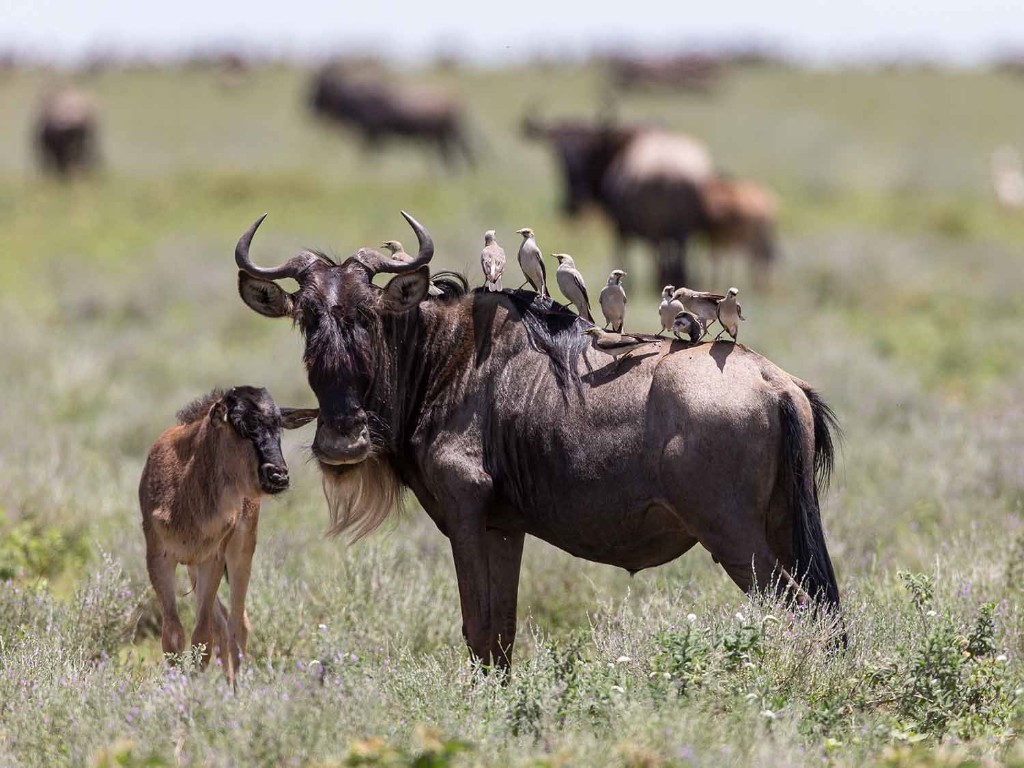
The southern Serengeti is known for its extensive short-grass plains. Seasonal rainfall can produce nutritious grazing that attracts large numbers of wildebeest, and this region is especially important during the calving period.
The combination of suitable pasture and extensive open landscapes supports the seasonal concentration of breeding animals. For travellers interested in calving, the southern Serengeti and adjoining Ndutu area are generally more appropriate than the Masai Mara during January and February.
However, the exact distribution of animals changes according to rainfall. Accommodation should be selected with the intended wildlife-viewing area in mind.
Why Herds Move Towards the Western Serengeti
The western Serengeti forms part of the broader seasonal migration landscape. During certain periods, herds may move through this region as grazing conditions change. The Grumeti River and surrounding habitats become relevant.
However, it is misleading to assume that all herds follow one identical western route. Different groups may move through central, western or other areas, and the distribution depends on local environmental conditions.
For a May or June safari, the selected camp should reflect recent seasonal patterns and realistic access to wildlife.
Why the Masai Mara Becomes Important
The Masai Mara forms the northern Kenyan portion of the Serengeti–Mara ecosystem. During parts of the year, northern grazing conditions may attract substantial migrating herds. July through October is the principal planning period for migration-focused travel in the Mara.
However, the exact arrival and departure of animals varies. Rainfall in the Mara and surrounding regions can influence how long herds remain, and some animals may move between Kenya and Tanzania more than once. This explains why a fixed statement such as “the migration arrives in Kenya in July” is an oversimplification.
Does Heavy Rain Delay the Migration?
It can alter herd movements, but the relationship is not always straightforward. Rainfall may improve grazing in one region and encourage animals to remain there. Alternatively, changing conditions may attract herds towards another area.
The effect depends on where rain falls, how much falls and the condition of the vegetation. A wet period does not automatically mean the migration will be late, nor does a dry period necessarily mean the herds will move early. The ecosystem is too complex for simple predictions.
Does Drought Change Migration Patterns?
Drought can affect grazing quality and water availability. Animals may need to travel farther or concentrate around remaining resources, and prolonged dry conditions can also create ecological stress.
However, herd responses depend on the distribution of suitable habitat and available resources. Travellers should avoid assuming that dry conditions always produce better wildlife viewing. Drought can be harmful to animals and the wider ecosystem.
Responsible safari planning should prioritise conservation and realistic observation rather than treating environmental hardship as an attraction.
Does Rain Affect Mara River Crossings?
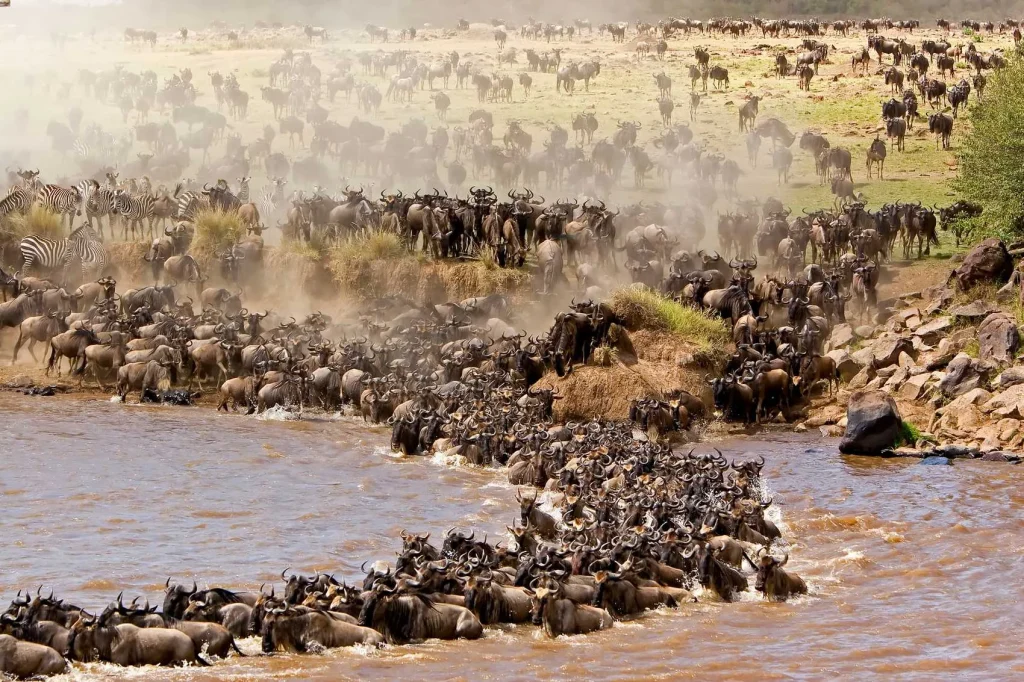
Rainfall can influence river conditions and animal movements. However, a river crossing is not triggered by a simple rainfall threshold. Wildebeest may approach the Mara River because of broader grazing movements. Once near the river, they may hesitate, move away or cross.
River depth, current, bank conditions and herd behaviour can influence what happens. Crossings may occur at different locations. No operator can predict the exact time or guarantee that a crossing will happen during a particular game drive.
Rainfall and the Grumeti River
The Grumeti River is another important feature of the Serengeti ecosystem. Seasonal migration activity may occur in the western corridor. However, Grumeti crossings differ from the famous Mara River scenes, and their visibility varies.
Some animals may cross at different points or move through the region without producing a dramatic spectacle. Travellers should not assume that every visit to the western Serengeti includes a river crossing. The region offers broader wildlife opportunities beyond this event.
How Rain Changes Safari Landscapes
Rainfall affects more than animal movements—it changes the appearance of the landscape. During wetter periods, grasslands may become green and lush, cloud formations can create dramatic photography conditions, waterholes may fill and birdlife can become particularly interesting.
During drier periods, vegetation may become shorter or less dense in some areas, potentially making certain animals easier to spot. However, dust can increase and water sources may become more important to wildlife.
Neither season is universally better. Each offers different experiences.
Is the Rainy Season Bad for Safaris?
Not necessarily. The Serengeti rainy season can provide excellent wildlife viewing, particularly in regions where the migration herds are seasonally concentrated. The green landscape can be beautiful, birdwatching may be rewarding and some properties may offer lower rates outside peak travel periods.
However, there are practical disadvantages. Heavy rain can make some roads muddy or difficult, travel times may increase, certain camps may close seasonally and domestic flight schedules and airstrip conditions should be confirmed. A rainy-season safari requires appropriate planning rather than automatic avoidance.
Is the Dry Season Always Better?
The dry season is popular because road conditions are often more manageable and certain wildlife-viewing areas can be productive. However, it can also be busy. Accommodation demand may be high during the northern migration season, some areas become dusty and animals may be distributed differently depending on local grazing conditions.
The best time depends on whether you prioritise river crossings, calving, photography, accommodation costs or general wildlife viewing.
Rainfall and Wildlife Photography
Rain can create memorable photographic conditions. Dark clouds above the savannah may produce dramatic landscapes, fresh vegetation can provide colourful backgrounds and wet animal coats and reflections may create interesting details.
However, photography during rain requires preparation:
- Use suitable protection for cameras and lenses.
- Carry dry cloths and waterproof bags.
- Avoid changing lenses during heavy rain or dusty conditions.
- Plan for strong contrasts after rainfall when bright skies return.
How Rainfall Affects Safari Roads
Road conditions vary between parks and regions. Some routes become muddy during sustained rain, and a journey that is relatively straightforward in dry weather may take longer after heavy rainfall.
Experienced guides understand local conditions and select suitable routes. A properly equipped safari vehicle is important, but no vehicle can make every road accessible in all conditions.
Travellers should allow realistic transfer times and avoid tight flight connections after long road journeys.
How to Choose a Camp Based on Rainfall
Accommodation location should reflect the travel season. For February, consider camps with practical access to the southern Serengeti and Ndutu region. For August, northern Serengeti or Masai Mara accommodation may be more suitable. For transitional months, choose a property with strong resident wildlife viewing as well as potential migration access.
Some seasonal camps relocate during the year. Always confirm the camp’s actual operating location for your travel dates. A property described as a “migration camp” may not occupy the same site throughout the year.
Can Migration Forecasts Predict Rainfall Effects?
Short-term migration updates can be useful, particularly when based on recent observations by guides. However, they have limits. A report showing herds in one area describes recent conditions, not a guaranteed future location.
Weather forecasts may indicate likely rainfall, but animal movements remain complex. When booking months in advance, use broad seasonal patterns. Closer to departure, ask your operator about current regional conditions.
Avoid relying on undated social media photographs or maps presented as exact predictions.
Best Safari Planning Strategy for Unpredictable Rainfall
A strong migration itinerary has several features:
- It selects the correct general region for the travel month.
- It includes enough game-drive time to respond to changing wildlife conditions.
- It uses accommodation with practical access to relevant habitats.
- It avoids unnecessary long transfers.
- It recognises that resident wildlife is an important part of the experience.
A safari that depends entirely on one river crossing is more vulnerable to disappointment than a well-rounded wildlife itinerary.
Frequently Asked Questions
Does Rain Cause the Great Migration?
Rainfall is a major influence because it affects grass growth and water availability. The migration is also shaped by other ecological factors.
When Are the Serengeti Short Rains?
They are generally associated with November and December, although timing varies.
When Are the Long Rains?
March through May is commonly associated with the long rains in northern Tanzania.
Does the Migration Stop During Rain?
No. The migration is a continuous ecological process.
Can You See the Migration in the Rainy Season?
Yes, particularly when visiting the appropriate Serengeti region.
Does Rain Guarantee River Crossings?
No. River crossings cannot be predicted from rainfall alone.
Is August Completely Dry in the Masai Mara?
No. Rain may still occur.
Should I Avoid April and May?
Not necessarily. These months can offer rewarding wildlife experiences, but road conditions and camp operations require consideration.
Can Rain Change the Herds’ Location?
Yes. Rainfall affects grazing conditions and may influence herd movements.
Which Month Has the Best Weather?
There is no universal answer. Conditions vary by region, and the best month depends on the desired wildlife experience.
Plan Your Great Migration Safari Around the Seasons
The Great Migration is fundamentally connected to the changing ecology of East Africa’s grasslands. Rainfall influences pasture growth, herd movements and the distribution of wildlife across the Serengeti–Mara ecosystem.
Understanding these relationships helps travellers make better decisions about when to visit, which region to choose and how many days to spend on safari.
Safari Trips to Kenya can arrange migration safaris in the Masai Mara and Serengeti, including private tours and customised Kenya–Tanzania itineraries. Share your preferred travel month, number of travellers, accommodation category and principal wildlife interests. The best migration safari follows the broad rhythm of the ecosystem while allowing nature the freedom to be unpredictable.