

Great Migration Predator Guide
The Great Wildebeest Migration is usually described through the movement of enormous herds across the Serengeti-Mara ecosystem. Wildebeest travel in search of suitable grazing, zebras accompany them through many stages of the journey, and dramatic river crossings attract wildlife enthusiasts from around the world. Yet the migration is equally fascinating because of the predators that inhabit the landscapes through which these herds move.
Lions, cheetahs, leopards, spotted hyenas and Nile crocodiles all feature in the wider migration story. Each species hunts differently, occupies different habitats and responds to prey availability in its own way. Understanding these differences can transform a safari from a simple search for dramatic sightings into a much richer experience of African wildlife ecology.
This Great Migration Predator Guide explains the animals you may encounter, how their hunting strategies differ, where predator sightings are possible and how to plan a responsible Masai Mara predator safari or Serengeti predator safari. Importantly, migration predators do not all travel alongside the wildebeest herds. Many are resident animals occupying established territories or home ranges. The passage of migratory prey can create additional feeding opportunities, but the timing and location of individual encounters remain unpredictable.
Understanding the Relationship Between Predators and the Migration
The Serengeti-Mara ecosystem supports a remarkable network of ecological relationships. Rainfall influences grass growth, grazing animals respond to the availability of nutritious vegetation, and predators take advantage of the presence of suitable prey. Wildebeest are particularly important because of their numbers and seasonal movements. Their migration influences grazing patterns, nutrient cycling and food availability for predators and scavengers. Zebras and gazelles also contribute to this dynamic ecosystem, although their movements and habitat preferences are not identical.
Predators differ considerably in their dependence on migratory animals. Lions may hunt wildebeest when large herds enter their territories, but they also feed on resident prey such as buffalo, zebra and antelope. Cheetahs frequently target smaller or more manageable animals, including gazelles and young wildebeest. Leopards are opportunistic hunters with a broad diet, while spotted hyenas hunt and scavenge according to circumstances. Nile crocodiles occupy rivers and other aquatic habitats, and their opportunities to capture crossing animals depend on herd movements, water conditions and the location of individual crossings.
The result is not one continuous spectacle of hunting. Instead, predator activity consists of countless individual encounters, periods of rest, territorial behaviour, feeding, competition and occasional dramatic chases.
Lions During the Great Migration
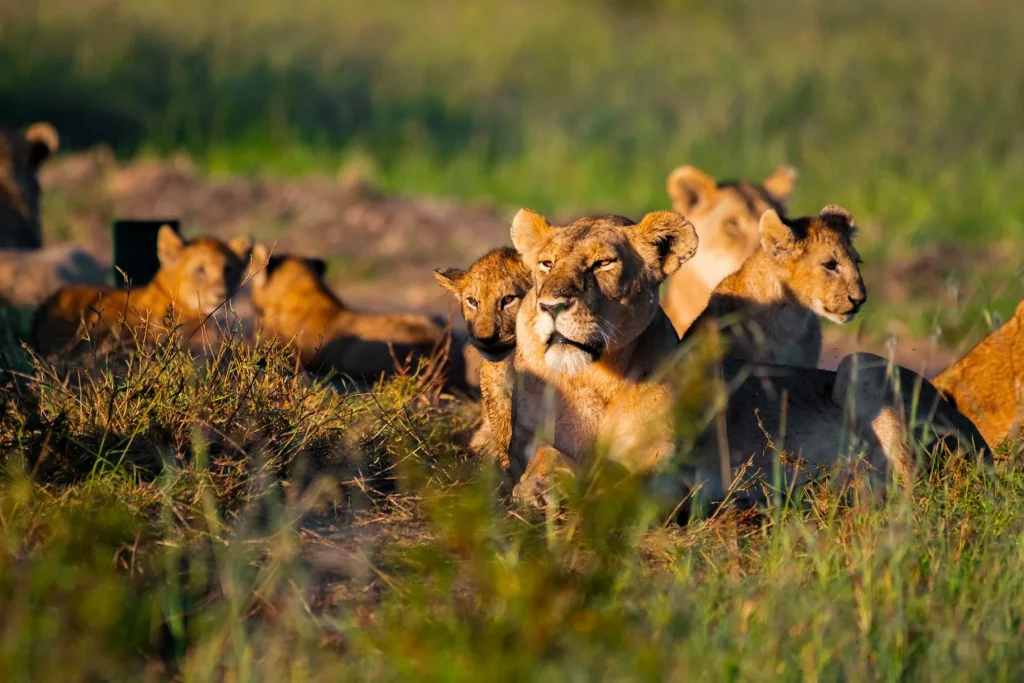
Lions during the Great Migration are among the most sought-after wildlife subjects in Kenya and Tanzania. Their social structure, territorial behaviour and ability to hunt relatively large prey make them especially interesting to observe. Lions live in social groups commonly called prides, although pride composition varies. Related females often form the stable core of a pride, while males may defend access to one or more prides for part of their lives.
A pride's territory can include grassland, woodland, riverine habitats and areas used by migrating herbivores. When wildebeest and zebras move through these landscapes, lions may encounter a greater concentration of potential prey. However, lions do not depend exclusively on migrating wildebeest. Resident prey populations allow many prides to remain within their territories throughout the year.
How Lions Hunt Wildebeest
Lions often use concealment, positioning and short bursts of speed to approach prey. Hunting may involve one lion or several individuals, depending on the circumstances. Open grassland can make approaching prey difficult, while vegetation, uneven ground and darkness may provide opportunities for closer approaches. Lions commonly hunt during cooler periods, including nighttime, although hunting can occur at any hour.
A large wildebeest is not an easy target. Adult animals can defend themselves, and unsuccessful hunting attempts are common. Even when lions approach a herd closely, the animals may detect the threat and escape before a chase begins. For safari visitors, observing the behaviour before a hunt can be as interesting as the chase itself. Lions may watch grazing animals, change position, rest for extended periods or abandon an attempt when conditions become unfavourable.
Where to See Lions
The Masai Mara National Reserve and neighbouring conservancies support lions in suitable habitats. The Serengeti also contains important lion populations, including in its central grasslands and woodland areas. Neither destination guarantees hunting activity. A good predator safari provides enough time to observe animals naturally rather than relying on one particular sighting.
Cheetahs During the Great Migration
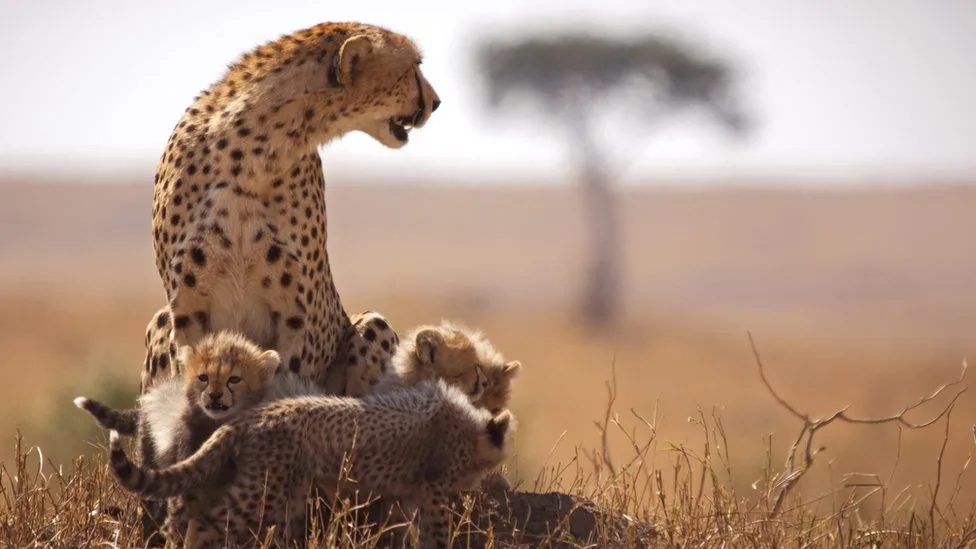
Cheetahs during the Great Migration offer a different wildlife experience from lions. Their slender bodies, long legs and specialised running ability make them remarkable hunters of open country. Cheetahs generally rely on sight to locate prey and use stealth to approach before attempting a rapid pursuit. Their exceptional acceleration is useful over relatively short distances, but prolonged chases are energetically costly. They frequently target gazelles and other manageable prey, including young wildebeest under suitable circumstances. Adult wildebeest are comparatively large and can be dangerous to attack.
Why Open Grasslands Matter
Cheetahs are strongly associated with open habitats where visibility is good and prey can be approached through available cover. Low vegetation, scattered shrubs and gentle rises can provide opportunities to observe prey while still allowing room for pursuit. In the Masai Mara and Serengeti, the suitability of a particular area depends on habitat, prey availability, territorial behaviour and disturbance. Cheetahs may remain in an area even when the largest migratory herds have moved elsewhere, because resident gazelles and other animals provide food.
Watching Cheetahs Responsibly
Cheetahs can be sensitive to disturbance, especially when hunting or caring for cubs. Vehicles that crowd an animal or block its route can interfere with natural behaviour. Responsible guides maintain appropriate distances, avoid surrounding predators and follow all applicable reserve or conservancy rules. Photography should never take priority over the animal's welfare.
Leopards and the Migration
Leopards in the Serengeti and Masai Mara are often associated with riverine woodland, trees, rocky outcrops and other habitats offering concealment. Unlike lions, leopards are generally solitary animals outside mating and maternal relationships. They hunt a variety of prey, including antelopes, smaller mammals and occasionally young wildebeest. Leopards are capable climbers and may carry prey into trees, reducing competition from other carnivores. However, not every leopard kill is stored in a tree, and hunting strategies vary with circumstances.
Why Leopard Sightings Are Unpredictable
Leopards can remain concealed in vegetation for long periods. Their spotted coats provide effective camouflage, making them difficult to locate even when they are relatively close to a safari vehicle. The best opportunities often involve patient observation in suitable habitats rather than simply searching open grasslands. In the Masai Mara, riverine areas and wooded sections can be productive. In the Serengeti, the Seronera region is well known for leopard viewing, although sightings are never guaranteed. A skilled guide can identify tracks, alarm calls and other signs, but these clues do not always lead to a sighting.
Spotted Hyenas: Hunters and Scavengers
Spotted hyenas are among the most misunderstood predators of the migration ecosystem. They are frequently portrayed as animals that depend on stealing food, yet they are highly capable hunters. Spotted hyenas during the Great Migration may hunt wildebeest, zebras and other animals or feed on carcasses created by natural deaths and other predators. Their powerful jaws and digestive systems allow them to consume parts of carcasses that many other carnivores leave behind, making them important contributors to nutrient recycling.
Hyena Clan Behaviour
Spotted hyenas live in complex social groups called clans. Their social relationships involve dominance, cooperation, competition and communication. Clan members may hunt individually or in groups, depending on prey size and conditions. Large concentrations of wildebeest can create feeding opportunities, but hyenas also rely on resident prey and other food sources. Visitors may observe hyenas moving across grassland, resting near dens, interacting with clan members or competing with lions around a carcass.
Lions and Hyenas
Lions and spotted hyenas are ecological competitors. They may attempt to displace one another from kills, and encounters can become aggressive. However, the relationship is more complicated than constant conflict. Both species hunt independently, and the outcome of a confrontation depends on factors such as group size, location and the animals involved. Watching these interactions provides valuable insight into predator competition.
Nile Crocodiles and the Mara River Crossings
The Mara River crocodiles are closely associated with some of the most dramatic images of the Great Migration. Large Nile crocodiles inhabit sections of the river and may prey on animals attempting to cross. Their aquatic hunting strategy differs completely from the pursuit-based hunting of terrestrial predators. Crocodiles can remain largely concealed in water, using patience and sudden movement to capture prey.
What Happens at a River Crossing?
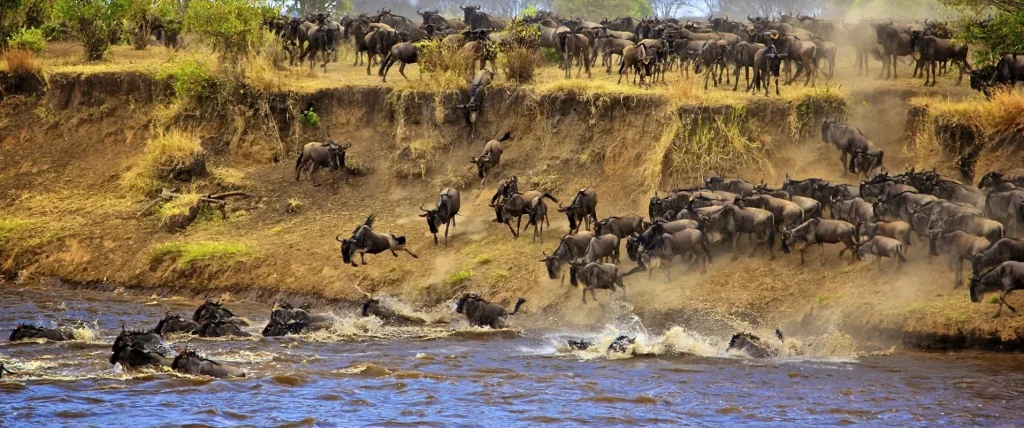
Wildebeest may gather near a riverbank for extended periods before attempting to cross. The decision to enter the water can be influenced by herd behaviour, bank conditions, disturbance and other factors. Once a crossing begins, animals may face strong currents, difficult banks, crowding and crocodile attacks. Not every crossing involves a crocodile attack — many animals cross successfully, while others may struggle because of physical conditions rather than predation. Visitors should avoid assuming that a dramatic crossing will occur simply because herds are visible near the river.
Responsible River-Crossing Viewing
Vehicles must remain in authorised viewing areas and follow reserve regulations. Driving too close to the animals or blocking their movement can disrupt natural behaviour and create unnecessary stress. A responsible guide will prioritise wildlife welfare and legal viewing positions over obtaining dramatic photographs.
Other Predators and Scavengers
Although lions, cheetahs, leopards, hyenas and crocodiles receive the greatest attention, other animals contribute to the migration ecosystem:
- Black-backed jackals may hunt small animals and feed on available carcasses.
- Bat-eared foxes occur in suitable grassland habitats and feed primarily on insects and other small prey.
- Vultures are important scavengers, helping remove carcasses from the landscape; different species use specialised feeding abilities to consume different parts of dead animals.
- Marabou storks and other opportunistic birds may also appear around carcasses.
These species are worth observing because they reveal how food and nutrients move through the ecosystem.
Where Is the Best Place to See Migration Predators?
Masai Mara National Reserve, Kenya
The Masai Mara National Reserve is an excellent destination for observing predators and grazing animals. Its grasslands, river systems and wooded areas support lions, cheetahs, leopards and spotted hyenas. During periods when migratory herds enter the Mara ecosystem, the increased abundance of grazing animals can create additional feeding opportunities. However, the reserve also supports substantial resident wildlife, meaning predator viewing is possible outside the main migration months. The reserve can become busy around popular sightings, so choosing appropriate accommodation and spending several days in the area can improve the overall experience.
Mara Conservancies
The private and community conservancies adjoining the Masai Mara offer alternative safari settings. Depending on the conservancy and operator, activities may include guided game drives and other experiences conducted under local rules. Some conservancies have restrictions on vehicle numbers at sightings, which can contribute to a quieter wildlife-viewing atmosphere. However, conservancy access and national reserve access are not interchangeable. Travellers should confirm the exact areas covered by their safari package.
Central Serengeti
The central Serengeti is well known for year-round predator viewing. Its varied habitats support lions, leopards, cheetahs and hyenas, with resident prey populations contributing to wildlife activity throughout the year. For travellers whose primary goal is big-cat observation rather than a particular river crossing, central Serengeti can be an attractive choice.
Northern Serengeti
The northern Serengeti is especially relevant during periods when migratory herds occupy areas near the Mara River. Predator activity may occur around grazing areas, river corridors and other suitable habitats. However, the presence of migrating herds does not guarantee a hunt or crossing.
Southern Serengeti and Ndutu
The southern Serengeti ecosystem, including the Ndutu area, is particularly interesting during the seasonal calving period. Large numbers of young wildebeest can attract predator attention. Lions, cheetahs and hyenas may take advantage of opportunities involving vulnerable animals. The exact timing varies with rainfall and grazing conditions.
Best Time for a Great Migration Predator Safari
Predator viewing is possible throughout the year, but the experience differs by season and location.
| Period | General migration pattern | Predator safari considerations |
|---|---|---|
| January–March | Herds often occupy southern Serengeti and Ndutu areas | Calving activity may create opportunities to observe predator-prey interactions |
| April–May | Herds may move through central and western areas | Green landscapes, variable weather and changing herd locations |
| June–July | Herds may occupy western and northern routes | Predator activity varies; some river crossings may occur |
| August–October | Herds may occupy northern Serengeti and Masai Mara | Opportunities for observing predators around grazing herds and river systems |
| November–December | Herds often begin moving southward | Resident predators remain active as herd distribution changes |
These are broad seasonal patterns, not fixed migration dates. Rainfall can alter movements substantially.
Planning a Predator-Focused Safari
A successful predator safari begins with choosing the right destination and allowing sufficient time. Three nights in one productive wildlife area can be more rewarding than changing camps every day. Staying longer allows guides to follow local animal activity and provides opportunities to observe behaviour over several game drives. For travellers particularly interested in lions and cheetahs, open grassland areas may be especially appealing. Leopard enthusiasts may prefer itineraries that also include riverine woodland and suitable tree cover. Migration-focused visitors should consider seasonal herd locations, while photographers may prioritise early morning and late afternoon game drives.
Private Versus Group Safaris
A private Masai Mara safari allows more flexibility to spend time observing a particular predator. If a lion pride is resting near a potential hunting area, a private guide may be able to remain longer without conflicting with other guests' interests. Group safaris can provide good value, but schedules and sighting durations are usually less flexible.
Choosing Accommodation
Accommodation should be selected according to location, travel dates and the intended wildlife experience. A lodge close to productive game-viewing areas can reduce daily transfer time. Conversely, a distant property may require substantial driving before reaching the most relevant habitats. Essential, Comfort, Premium and Signature accommodation options can all support excellent safaris when the location and guiding arrangements are appropriate.
Wildlife Photography Tips
Predator photography requires patience, ethical positioning and realistic expectations. Useful guidelines include:
- A telephoto lens for photographing animals at appropriate distances, or a versatile zoom to capture both close compositions and wider environmental scenes.
- Early morning and late afternoon light for attractive photographs, while remaining ready because predators may be active at other times.
- Never encouraging your guide to interfere with the animals, request off-road driving where prohibited, or pressure a driver to block a predator's path.
- Photographing resting, grooming, social interaction and territorial behaviour — these can be just as meaningful as dramatic hunting images.
Understanding Predator Behaviour on Safari
Resting Does Not Mean Inactivity
Lions and other predators spend considerable time resting. This conserves energy and is a normal part of their behaviour. A predator may remain inactive for hours before moving, hunting or interacting with other animals.
Hunting Attempts Often Fail
Predators do not succeed every time they pursue prey. Their success depends on conditions, prey behaviour, individual ability and many other factors. Watching an unsuccessful hunt can still reveal important aspects of predator strategy.
Predators Do Not Follow a Tourist Schedule
Wildlife activity cannot be guaranteed at a particular time or location. A good safari itinerary provides opportunities for observation rather than promising specific behaviour.
Responsible Predator Tourism
Wildlife welfare should remain central to every safari. Responsible viewing means:
- Maintaining appropriate distances, following designated routes and avoiding surrounding animals.
- Respecting reserve regulations and any limits on vehicles at sightings.
- Taking extra care around predators caring for young or preparing to hunt, which can be particularly sensitive to disturbance.
- Remaining quiet, avoiding sudden movements and following the guide's instructions.
Responsible safari tourism supports conservation by demonstrating the economic value of healthy wildlife habitats while reducing unnecessary pressure on animals.
Frequently Asked Questions
Which predator is most commonly seen during the Great Migration?
Lions and spotted hyenas can be relatively conspicuous in suitable habitats, but sighting frequency varies. No predator is guaranteed.
Do lions follow migrating wildebeest?
Many lions occupy established territories and take advantage of migratory prey when herds enter those areas. They do not necessarily follow the migration over long distances.
Are cheetahs common in the Masai Mara?
Cheetahs occur in suitable open habitats, but their distribution and visibility vary. Their conservation status and sensitivity to disturbance make responsible viewing particularly important.
Can I see leopards during the migration?
Yes, leopards inhabit parts of the Serengeti-Mara ecosystem. They are generally more elusive than lions, and sightings depend on habitat and circumstances.
Are crocodile attacks guaranteed at river crossings?
No. Crocodile attacks are unpredictable, and many crossings occur without a visible attack.
Is the Masai Mara or Serengeti better for predators?
Both offer excellent predator-viewing opportunities. The best choice depends on travel dates, preferred species, accommodation and whether you want to focus on the migration.
How many days should I spend on a predator safari?
At least three nights in a productive wildlife area is a useful starting point. Five or more nights can provide greater flexibility for specialised photography and behavioural observation.
Can children join a predator safari?
Yes, with appropriate supervision, suitable accommodation and age-appropriate expectations. Parents should consider whether children are comfortable witnessing natural hunting behaviour.
Book a Great Migration Predator Safari
A Great Migration predator safari offers an opportunity to understand the complex relationships between grazing animals, carnivores and the landscapes they inhabit. Rather than focusing exclusively on dramatic hunting scenes, a rewarding safari reveals the full range of predator behaviour: resting, social interaction, territorial movement, hunting, feeding and competition.
At Safari Trips to Kenya, we can help plan a Masai Mara safari, Serengeti wildlife safari or combined Kenya and Tanzania itinerary around your preferred travel dates and wildlife interests. Contact us with your travel period, number of guests, accommodation preferences and particular interests in lions, cheetahs, leopards, hyenas or river crossings. We can help develop a realistic itinerary that gives you time to appreciate the migration ecosystem responsibly.