

Great Migration and Ngorongoro Safari
A Great Migration and Ngorongoro Safari combines two of East Africa’s most remarkable wildlife experiences: the seasonal movement of enormous wildebeest herds across the Serengeti–Mara ecosystem and wildlife viewing within Tanzania’s extraordinary Ngorongoro Crater.
The Great Migration is a continuous ecological journey involving wildebeest, zebras and other grazing animals as they follow changing rainfall, pasture quality and water availability. The migration takes place across northern Tanzania and southwestern Kenya, creating different wildlife-viewing opportunities throughout the year.
Ngorongoro offers a contrasting experience. Rather than following migrating herds across extensive plains, visitors descend into a vast volcanic caldera containing grasslands, wetlands, woodland and permanent wildlife populations. The crater is internationally recognised for its concentration of large mammals and dramatic scenery.
Combining these destinations creates an itinerary that offers both the scale of the migration and the relatively concentrated wildlife-viewing environment of the crater. However, planning this combination requires an understanding of migration seasonality, travel distances, accommodation locations and the distinction between wildlife experiences in Kenya and Tanzania.
This guide explains how to design a rewarding Great Migration and Ngorongoro Safari, including the best travel periods, suggested itineraries, accommodation options, wildlife highlights and practical considerations.
Understanding the Great Wildebeest Migration
The Great Wildebeest Migration is an annual movement of large herbivore populations through the Serengeti–Mara ecosystem.
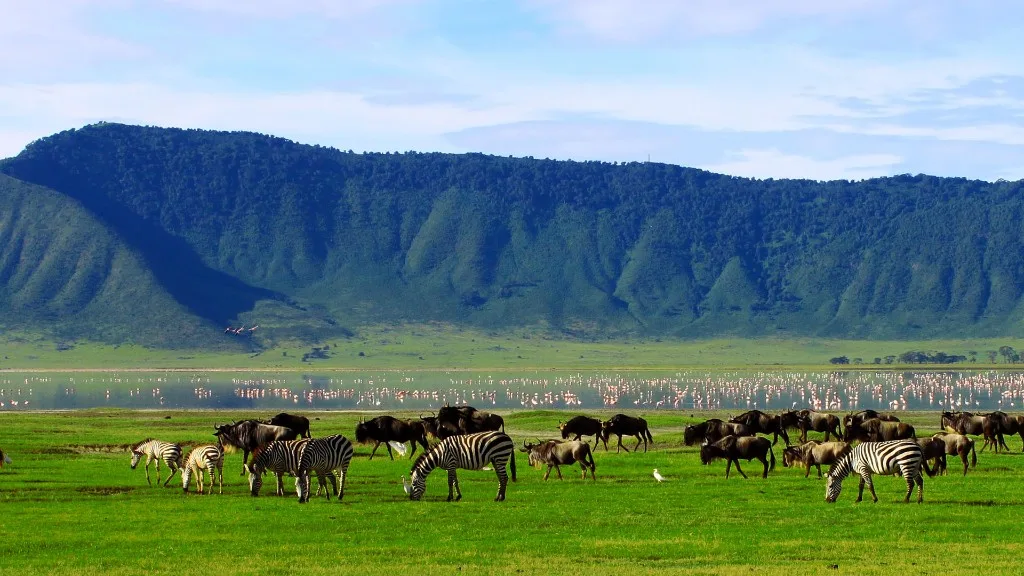
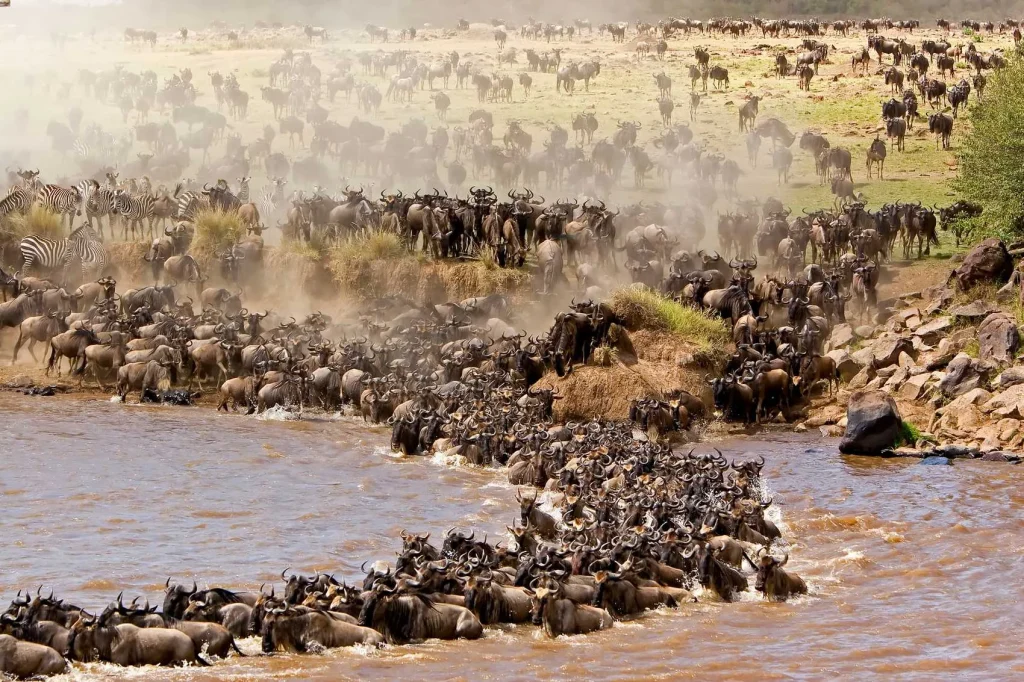
The movement is primarily driven by access to grazing and water, which depend on seasonal rainfall. The migration does not follow a precise calendar. Herds may arrive earlier or later than expected, and different groups can occupy several parts of the ecosystem simultaneously. This is why safari planning should focus on the broad seasonal patterns rather than treating published migration dates as guarantees.
Southern Serengeti: Calving Season
From approximately January through March, large numbers of migratory wildebeest are often found on the southern Serengeti plains and adjoining Ndutu ecosystem. This period is associated with calving, when many young wildebeest are born over a relatively concentrated period. Predators may take advantage of the abundance of vulnerable animals. The exact location of the herds depends on rainfall and grazing conditions.
Central and Western Serengeti
As seasonal conditions change, migrating herds often move northward through the Serengeti. During approximately April through June, movement may occur across central and western parts of the ecosystem. River crossings can occur along parts of the migration route, but their timing is unpredictable.
Northern Serengeti and Masai Mara
From approximately July through October, many migrating animals may occupy the northern Serengeti and Masai Mara ecosystem. This period is particularly associated with dramatic river-crossing scenes. However, crossings are not scheduled events. A herd may wait for hours or days before crossing, and visitors can spend an entire safari without witnessing one.
Returning South
During approximately November and December, many herds move southward as rainfall and grazing conditions change. The cycle continues into the next calving season. Understanding these movements helps determine whether your itinerary should emphasise the Serengeti, Masai Mara or both.
Why Combine the Great Migration with Ngorongoro?
The strongest advantage of this combination is ecological diversity. A migration safari focuses on the movement of large herds through extensive grasslands. Ngorongoro provides opportunities to observe resident wildlife within a comparatively contained landscape. The crater also offers distinctive geological scenery that differs substantially from the open plains of the Serengeti and Masai Mara.
Travellers interested in photography can capture sweeping herd scenes, predator interactions, crater landscapes and varied animal portraits. The combination is particularly attractive to visitors who want to understand how different habitats support wildlife populations. It also provides a broader experience than a safari focused exclusively on river crossings.
Ngorongoro Crater: What Makes It Special?
Ngorongoro Crater lies within Tanzania’s Ngorongoro Conservation Area.
It is a large volcanic caldera formed through geological processes millions of years ago. The crater floor contains grasslands, woodland, wetlands and alkaline lake environments. These habitats support a range of mammals and birds. Visitors commonly explore the crater by safari vehicle, following designated roads and conservation regulations. The descent into the crater is itself memorable because of the elevated views from the rim.
Wildlife in Ngorongoro Crater
The crater supports populations of buffaloes, zebras, wildebeest, gazelles, lions, hyenas and other animals. Black rhinoceroses also occur, although sightings are not guaranteed. Elephants may be encountered, including large bulls. Hippos inhabit suitable freshwater environments. Birdwatching can be rewarding around wetlands and grassland habitats.
The crater’s wildlife is not simply a concentrated extension of the Great Migration. Many animals are resident or move according to local ecological conditions.
What About Giraffes?
Giraffes are generally not a typical feature of the crater floor, although they occur in parts of the wider conservation landscape. Travellers interested in giraffe photography should include suitable habitats elsewhere in the itinerary. This illustrates why combining destinations is valuable: no single protected area provides every wildlife experience.
Masai Mara or Serengeti for the Migration?
The best choice depends primarily on travel dates.
Masai Mara Migration Safari
The Masai Mara National Reserve is particularly attractive during the northern migration period, broadly July through October. Its grasslands support resident wildlife throughout the year. Travellers may encounter large herds during migration season, along with lions, cheetahs and other predators. A Masai Mara and Ngorongoro itinerary involves travel between Kenya and Tanzania, making logistics more complex.
Serengeti Migration Safari
The Serengeti supports the migration during different phases of the year. Southern Serengeti and Ndutu are particularly relevant during calving season. Central and western regions can be important during transitional movement periods. Northern Serengeti is often considered for migration viewing during the middle and later parts of the year. A Serengeti and Ngorongoro itinerary can be organised entirely within Tanzania, potentially simplifying travel arrangements.
Choosing Between Them
If you are travelling in February, a southern Serengeti and Ngorongoro itinerary may be particularly suitable. If travelling in August, the northern Serengeti or Masai Mara may be more relevant for migration-focused wildlife viewing. The itinerary should reflect current seasonal expectations rather than a fixed promise of herd locations.
Best Time for a Great Migration and Ngorongoro Safari
| Travel Period | Migration Focus | Ngorongoro Experience |
|---|---|---|
| January–March | Southern Serengeti and calving areas | Resident wildlife and crater scenery |
| April–June | Central and western Serengeti movements | Green landscapes and variable road conditions |
| July–October | Northern Serengeti and Masai Mara | Often relatively dry conditions |
| November–December | Southward migration movements | Changing vegetation and seasonal rainfall |
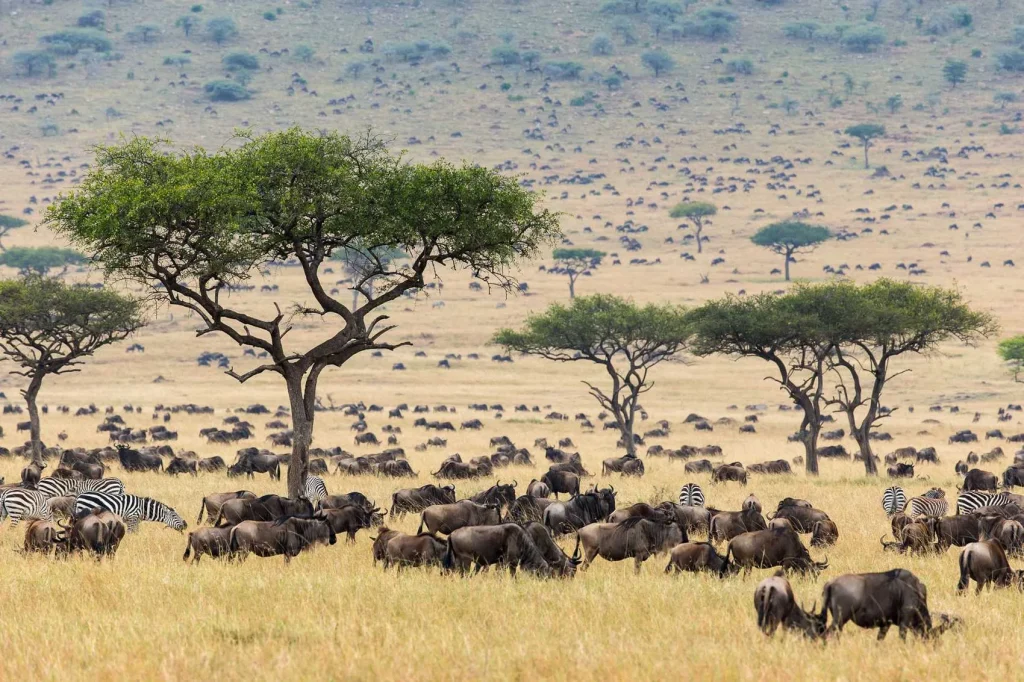
Ngorongoro is a year-round wildlife destination, but visibility, road conditions and visitor numbers can vary. The most appropriate month depends on whether your priority is calving, large herd concentrations, river crossings or general wildlife photography.
Suggested Seven-Day Serengeti and Ngorongoro Safari
A seven-day itinerary can provide a useful introduction to both destinations.
Day 1: Arrival in Arusha
Arrive in Arusha and transfer to your accommodation. Depending on your arrival time, meet your safari representative for an itinerary briefing. Use the evening to rest and prepare for the journey.
Day 2: Travel Towards the Serengeti
Depart after breakfast and travel towards the Serengeti, following the agreed route. The journey can be lengthy, so allow time for stops and road conditions. Enter the national park and enjoy wildlife viewing where practical. Overnight at a lodge or tented camp selected for the season.
Day 3: Full-Day Serengeti Safari
Spend the day exploring suitable wildlife habitats. The guide will adapt the route according to seasonal conditions and available wildlife information. Possible sightings include wildebeest, zebras, lions, giraffes, elephants and antelope. Return to the accommodation for dinner and overnight.
Day 4: Migration-Focused Game Drives
Continue exploring the Serengeti. If travelling during calving season, the itinerary may focus on southern plains and appropriate adjoining areas. During northern migration season, accommodation and routes should be adjusted accordingly. Wildlife encounters remain unpredictable.
Day 5: Transfer Towards Ngorongoro
Enjoy a final Serengeti game drive before travelling towards the Ngorongoro Conservation Area. The journey offers changing landscapes and opportunities to appreciate the scale of the region. Arrive at accommodation near the crater rim or another suitable location.
Day 6: Ngorongoro Crater Game Drive
Begin early for the crater excursion, subject to applicable entry arrangements. Descend into the crater and explore its wildlife habitats. Look for buffaloes, zebras, lions, hippos and other species. Enjoy a picnic lunch at an authorised location before ascending and continuing to the selected accommodation.
Day 7: Return to Arusha
Travel back towards Arusha. Depending on flight schedules, arrange onward transfers or an additional overnight stay. This itinerary is illustrative and must be adjusted for seasonal migration locations and realistic travel times.
A Kenya and Tanzania Migration Combination
Travellers wishing to include both the Masai Mara and Ngorongoro should allow more time. A cross-border itinerary may include Nairobi, the Masai Mara, northern Tanzania, the Serengeti and Ngorongoro. Border procedures, road transfers and possible domestic flights require careful coordination.
Not every airstrip or border crossing offers convenient connections. A well-designed itinerary should avoid unnecessary backtracking. For many travellers, nine to twelve days provides greater flexibility than attempting to combine all destinations within a week.
How Many Days Do You Need?
A five-day itinerary can introduce the Serengeti and Ngorongoro, but travel time may limit wildlife viewing. Seven days provides more flexibility. Nine or ten days allows additional nights in the most seasonally relevant migration region.
A longer itinerary is recommended for photographers, travellers interested in river crossings or visitors combining Kenya and Tanzania. The main objective should be quality time in the parks rather than maximising the number of locations.
Choosing Accommodation
Accommodation location is particularly important during migration season.
Southern Serengeti and Ndutu
These areas are relevant during the calving season. Some accommodation operates seasonally or is positioned to serve particular migration periods.
Central Serengeti
Central Serengeti offers a practical base for general wildlife viewing. It can be useful during several parts of the year, although migration concentrations vary.
Northern Serengeti
Northern accommodation can be advantageous during periods when herds occupy the northern ecosystem. Popular camps may fill early during peak demand.
Ngorongoro Crater Rim
Accommodation near the crater rim may reduce travel time to the descent route. Some properties offer dramatic views, but room rates can be relatively high.
Karatu
Karatu is a common accommodation base for visitors exploring Ngorongoro. It may provide a broader range of lodging options. However, transfer time to the crater must be considered.
Safari Accommodation Categories
Safari Trips to Kenya can help organise itineraries around four broad accommodation preferences:
- Essential focuses on practical facilities and value.
- Comfort offers established lodges and tented camps with suitable amenities.
- Premium provides higher levels of space, service and comfort.
- Signature emphasises distinctive properties and personalised experiences.
The right choice depends on budget, travel style and proximity to the desired wildlife-viewing areas.
Wildlife Photography Tips
Migration photography requires patience. Large herds can produce dramatic scenes, but dust, weather and animal movement affect image quality. Useful practices include:
- A telephoto lens is useful for predators and distant animals.
- A wider lens can capture the scale of herd movements.
- In Ngorongoro, landscape photography benefits from the crater’s elevated viewpoints.
- Early morning light can be particularly attractive.
- Photographers should avoid pressuring guides to approach animals too closely.
Responsible positioning is more important than obtaining a particular image.
Is a River Crossing Guaranteed?
No. River crossings are among the most unpredictable events of the migration. Herds may gather near a river and then retreat without crossing. Some crossings occur quickly, while others involve prolonged waiting. Weather and water conditions influence movement.
Travellers should approach river crossings as a possible highlight rather than the sole measure of safari success. The wider migration experience includes grazing herds, predator behaviour and the extraordinary scale of animal movement.
Safari Costs and Budget Planning
The cost of a Great Migration and Ngorongoro Safari depends on several factors:
- Season, accommodation, park and conservation fees
- Transport, group size and itinerary length
- Premium migration camps may attract higher rates during popular periods
- Ngorongoro crater visits involve specific conservation-area and vehicle-related charges under the applicable rules
- Cross-border itineraries may require additional transfers or flights
Travellers should request a complete quotation identifying all major inclusions and exclusions. Current official fees should be verified before confirming the trip.
Health and Travel Preparation
Visitors should consult a travel-health professional before departure. Entry requirements differ between Kenya and Tanzania and depend on nationality and travel history. Yellow fever documentation may be relevant to certain cross-border travel circumstances. Malaria precautions and other health recommendations should be discussed with a qualified professional. Comprehensive travel insurance is advisable. Travellers should also confirm luggage allowances for any domestic flights.
Responsible Wildlife Tourism
The Serengeti–Mara ecosystem and Ngorongoro Conservation Area are internationally important conservation landscapes. Visitors should follow park regulations and guide instructions. Key practices include:
- Do not feed wildlife or encourage off-road driving where prohibited.
- Maintain appropriate distances from predators and migrating herds.
- Avoid blocking animal movement routes, especially near river crossings.
- Respect local communities and request permission before photographing people.
Responsible tourism supports the long-term protection of these landscapes.
Frequently Asked Questions
Can I combine the Great Migration with Ngorongoro Crater?
Yes. The Serengeti and Ngorongoro are commonly combined in Tanzania safari itineraries.
What is the best month?
It depends on the migration phase you want to experience. January to March often suits calving-focused safaris, while July to October is popular for northern migration viewing.
Is Ngorongoro part of the Great Migration?
The crater supports substantial resident wildlife. The wider conservation area connects ecologically with migration landscapes, but a crater game drive is not the same as following the main migrating herds.
Can I see the Big Five?
The combined region offers opportunities to encounter Big Five species, but sightings are not guaranteed.
How many days should I book?
Seven to ten days is a useful range for many travellers, depending on migration location and travel arrangements.
Is the Masai Mara necessary?
No. A migration and Ngorongoro safari can be organised entirely within Tanzania.
Can I include both Kenya and Tanzania?
Yes, but additional travel time and border logistics should be considered.
Is the safari suitable for families?
Yes, provided the itinerary, accommodation and transfer times are appropriate for the children’s ages.
Plan Your Great Migration and Ngorongoro Safari
A Great Migration and Ngorongoro Safari combines the movement of enormous herds with one of Africa’s most distinctive wildlife landscapes. The key to a successful itinerary is selecting the right migration region for your travel dates and allowing enough time for meaningful wildlife viewing.
Safari Trips to Kenya can help you explore Kenya and Tanzania safari combinations, compare accommodation categories and plan practical travel routes. Whether you are interested in the southern Serengeti calving season, northern migration viewing or a broader East African wildlife holiday, we can help develop a suitable itinerary.
Contact us with your travel dates, number of travellers, preferred accommodation standard and available days to begin planning.