

A Great Migration Gorilla Safari combines two wildlife experiences that could hardly be more different. In Kenya’s Masai Mara, visitors explore open savannah in search of migrating wildebeest, zebras, predators and other plains animals. In Uganda’s Bwindi Impenetrable National Park, travellers leave the safari vehicle behind and enter a tropical mountain forest on foot to encounter endangered mountain gorillas.
The contrast is remarkable. The Masai Mara is a landscape of grassland, river systems and distant horizons. During the migration season, substantial herds may move through the reserve as they follow seasonal grazing conditions across the Serengeti–Mara ecosystem. Bwindi, in southwestern Uganda, is characterised by forest-covered hills, steep valleys and dense vegetation, where gorilla trekking takes place with professional guides and trackers who locate habituated gorilla families within their natural habitat.
For travellers seeking an unforgettable East African journey, these experiences complement each other exceptionally well. However, a successful combined safari requires more planning than a conventional single-country holiday. Kenya and Uganda have separate entry requirements, the Masai Mara migration is seasonal, gorilla permits are limited, and transfers between Nairobi, Entebbe and Bwindi must be coordinated. This guide explains the best time to travel, how to arrange gorilla permits, which Bwindi trekking sector to choose, practical flight connections, accommodation options and recommended itineraries.
Why Combine the Great Migration With Gorilla Trekking?
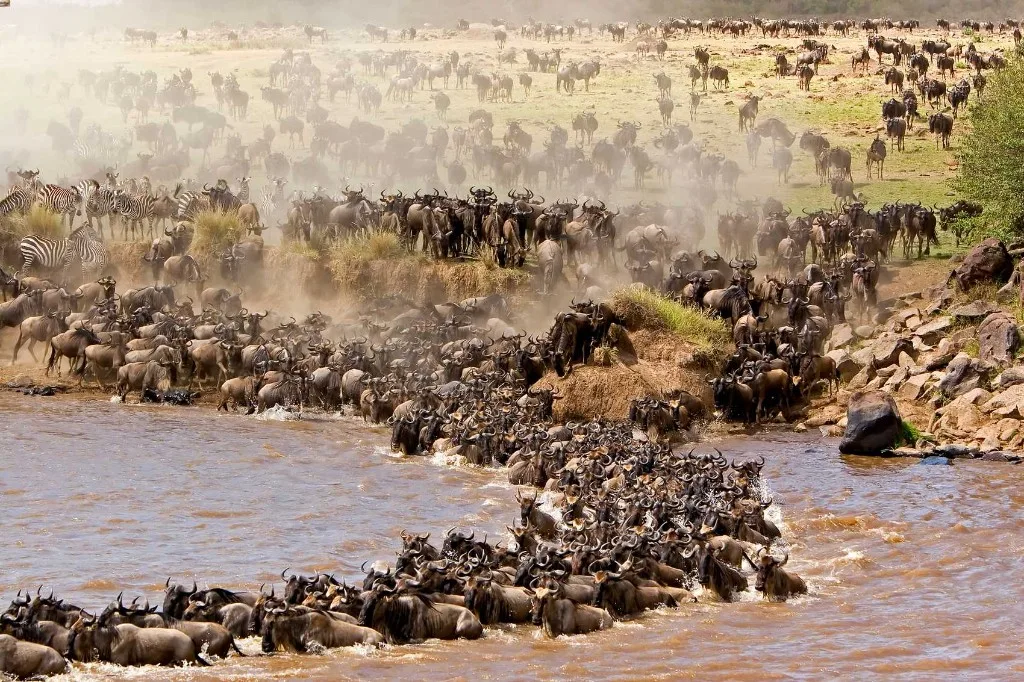
The attraction lies in experiencing two distinct ecosystems during one journey. The Great Wildebeest Migration is a landscape-scale phenomenon—huge numbers of grazing animals move through the Serengeti–Mara ecosystem, responding to rainfall and fresh pasture, while predators such as lions, cheetahs, leopards and hyenas occupy the same landscape.
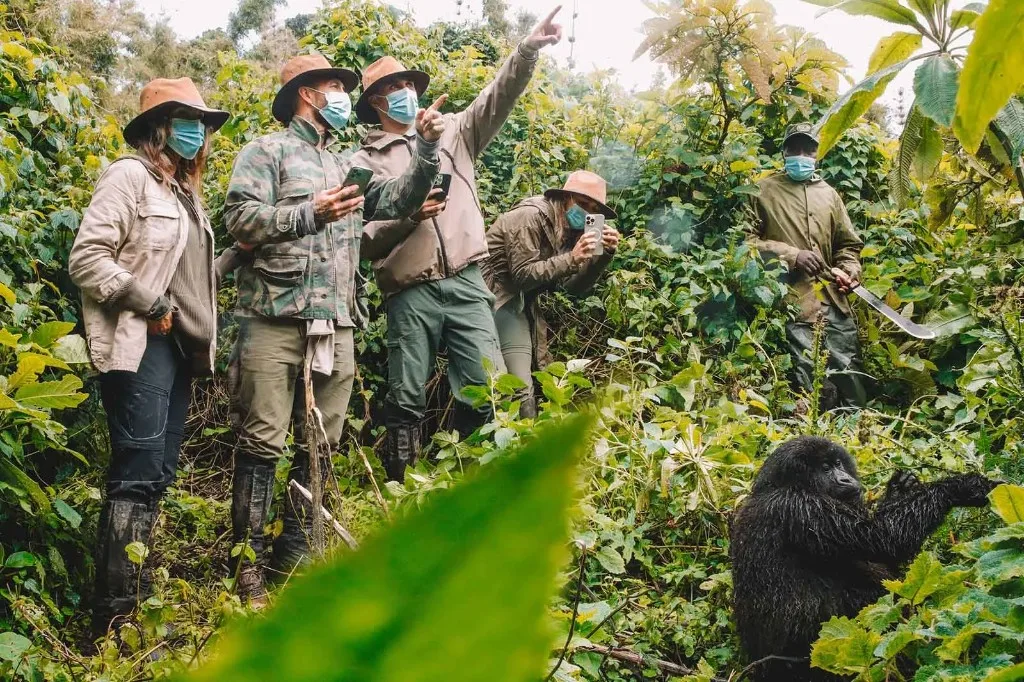
Mountain gorilla trekking is more intimate. Visitors walk through forest with guides and trackers, eventually approaching a habituated gorilla family under carefully regulated conditions. Rather than watching animals across open plains, you may observe gorillas feeding, resting, grooming or interacting at relatively close range while following strict park rules.
The experiences also reveal two different approaches to wildlife conservation. Kenya’s savannah landscapes depend on maintaining extensive wildlife habitats and migration corridors, while Uganda’s gorilla conservation programmes depend on protecting forest habitats, regulating visitor access and supporting surrounding communities.
Understanding the Masai Mara Great Migration
The Masai Mara National Reserve forms part of the wider Serengeti–Mara ecosystem shared by Kenya and Tanzania. Wildebeest and zebras move across this ecosystem in response to seasonal grazing conditions. The migration is continuous, but the main concentrations of animals occupy different regions at different times of year. For travellers visiting Kenya, July through October is the principal period to consider, when substantial herds may be present in the Masai Mara.
Mara River Crossings
River crossings are among the migration’s most famous events. Wildebeest may gather along the Mara River, hesitate and eventually cross, but crossings are unpredictable—a herd may approach the river and turn away without crossing, and other crossings may occur far from the area your guide can reach. A responsible operator cannot guarantee a crossing. Travellers should allow several game drives and appreciate the wider wildlife experience.
Resident Wildlife
The Masai Mara remains an outstanding safari destination outside the migration season. Lions, elephants, giraffes, buffalo, antelope and numerous other species inhabit the reserve, and cheetahs and leopards may also be encountered. This makes the Mara rewarding even when the main migration herds are elsewhere.
Mountain Gorilla Trekking in Uganda
Uganda is one of the principal destinations for observing mountain gorillas in the wild. The main trekking destination is Bwindi Impenetrable National Park, although trekking is also available in Mgahinga Gorilla National Park. Bwindi protects a biologically rich montane forest landscape in southwestern Uganda and is home to several habituated mountain gorilla families that may be visited under regulated tourism arrangements.
The experience begins with an official briefing. Visitors are assigned to trekking groups and accompanied by professional guides and trackers. The trekking duration depends on the gorillas’ location, terrain and weather. Once the assigned family is reached, visitors normally spend up to one hour observing the gorillas under standard trekking arrangements.
Choosing the Right Bwindi Trekking Sector
Bwindi is not one single trekking departure point. The park has several trekking sectors, and choosing the correct accommodation location is essential.
Buhoma
Buhoma lies in the northern part of Bwindi. It is an established gorilla trekking area with a range of accommodation options and can be attractive for itineraries approaching from Queen Elizabeth National Park.
Ruhija
Ruhija is located in the eastern part of Bwindi and offers gorilla trekking in a highland forest environment. The area can be cooler, and road conditions vary with weather.
Rushaga
Rushaga lies in the southern part of Bwindi. It is an important gorilla trekking sector and may be convenient for itineraries approaching from the Kisoro region.
Nkuringo
Nkuringo is also located in southern Bwindi. Its landscape includes steep forested slopes and impressive mountain scenery, and trekking difficulty varies according to the assigned gorilla family and its location.
Why the Sector Matters
A lodge advertised as being near Bwindi may be several hours from your assigned trekking sector. For this reason, the gorilla permit and accommodation should be coordinated together—travellers should not select a lodge before confirming the trekking arrangements.
Best Time for a Great Migration Gorilla Safari
The strongest overall period is generally July through September, with October also worth considering. These months can offer good opportunities for migration viewing in the Masai Mara while coinciding with relatively dry conditions in southwestern Uganda, though weather and wildlife movements remain unpredictable.
July
July can be attractive for migration viewing and gorilla trekking. Some herds may be entering northern parts of the Serengeti–Mara ecosystem, and Bwindi often experiences relatively dry conditions, although rain remains possible.
August
August is one of the most popular months for this combination. Large migration herds may be present in the Masai Mara, and gorilla trekking conditions are often relatively favourable, although accommodation and permits may be in high demand.
September
September offers another excellent planning window. Migration activity may continue in the Masai Mara, while Bwindi often remains suitable for trekking.
October
October can still provide migration opportunities. Rainfall may increase in Uganda as seasonal conditions change, and forest trails can become slippery.
Can You Travel in January or February?
Yes, but the migration component should be reconsidered. During January and February, the principal migrating herds are generally associated with the southern Serengeti and adjoining plains in Tanzania, and a traveller specifically interested in large migration concentrations during these months may prefer a Tanzania and Uganda gorilla safari. The Masai Mara remains excellent for resident wildlife, but it may not provide the main migration spectacle. Gorilla trekking in Uganda remains available throughout the year, subject to permits and park operations.
Gorilla Trekking Permit Requirements
Every participant requires a valid gorilla trekking permit. Uganda’s standard foreign non-resident gorilla trekking permit has been priced at USD 800, although current rates and any applicable promotional offers should be confirmed for the travel dates. Permits are limited and issued for particular trekking arrangements, and the permit cost is separate from accommodation, transport and other safari services unless explicitly included in a package. Travellers should request confirmation of the permit arrangements after the required payment has been processed—a safari quotation alone does not mean a permit has been secured.
How Difficult Is Gorilla Trekking?
Gorilla trekking involves walking through natural forest terrain. Some treks are relatively manageable, while others can be physically demanding—the difficulty depends on the gorilla family’s location, steepness of the terrain, vegetation and weather, and there is no guaranteed walking distance.
Visitors should wear sturdy hiking boots, long trousers and long sleeves; gloves can help protect hands when gripping vegetation; and a walking stick may be useful. Local porters can often be arranged to carry equipment and assist on difficult sections. Travellers with mobility concerns should discuss their needs before booking.
Gorilla Trekking Age and Health Rules
The standard minimum age for mountain gorilla trekking is generally 15 years. Visitors must follow current park health regulations. Because gorillas are vulnerable to human respiratory infections, people experiencing contagious illness symptoms may not be permitted to trek. Visitors must follow guide instructions and maintain the required distance from gorillas; flash photography is prohibited, and the encounter should be quiet and respectful.
Getting From Kenya to Uganda
The most common international route involves travelling from Nairobi to Entebbe. Flight schedules vary and must be checked for the intended travel dates. Travellers may return from the Masai Mara to Nairobi by road or domestic flight before connecting to Uganda, and depending on flight timing, an overnight stay in Entebbe may be advisable. From Entebbe, travellers can reach Bwindi by road or domestic flight.
Domestic Flights to the Bwindi Region
Domestic flights may operate to airstrips such as Kihihi or Kisoro, depending on schedules and arrangements. The suitable airstrip depends on the trekking sector, and a road transfer is still required from the airstrip to the lodge.
Travelling by Road
The road journey from Entebbe to Bwindi is substantial and generally requires most of a day. The exact duration depends on the route, trekking sector, traffic and road conditions. Travellers with limited time may prefer a domestic flight.
Recommended 8-Day Great Migration Gorilla Safari
Day 1: Arrival in Nairobi
Arrive at Jomo Kenyatta International Airport, transfer to your hotel, and meet your safari representative to review the itinerary.
Day 2: Nairobi to Masai Mara
Travel to the Masai Mara by road or domestic flight and enjoy an afternoon game drive if timing permits.
Day 3: Full-Day Masai Mara Safari
Explore the reserve in search of predators, elephants, giraffes and migration herds when seasonally present.
Day 4: Additional Masai Mara Game Drives
Enjoy another full day of wildlife viewing. This extra day provides flexibility for unpredictable migration activity.
Day 5: Travel to Uganda
Return to Nairobi and take a suitable flight to Entebbe. Overnight near the airport or continue according to flight schedules.
Day 6: Transfer to Bwindi
Travel to the confirmed gorilla trekking sector by road or domestic flight and transfer. Relax at the lodge and prepare for trekking.
Day 7: Gorilla Trekking
Attend the official briefing, enter the forest with professional guides and trackers, observe the assigned gorilla family under regulated conditions, and return to the lodge.
Day 8: Return to Entebbe and Departure
Travel to Entebbe and connect with your onward flight if schedules permit. An additional overnight stay may be advisable.
Recommended 10-Day Kenya and Uganda Gorilla Safari
A ten-day itinerary offers a more relaxed pace.
Day 1: Arrival in Nairobi
Arrive and overnight in Nairobi.
Day 2: Travel to Masai Mara
Continue to the reserve and enjoy an introductory game drive.
Days 3–4: Great Migration Safari
Spend two full days exploring the Masai Mara.
Day 5: Travel to Entebbe
Return to Nairobi and fly to Uganda.
Day 6: Transfer to Bwindi
Continue to the gorilla trekking region.
Day 7: Gorilla Trekking
Enjoy the mountain gorilla encounter.
Day 8: Additional Bwindi Experience
Relax at the lodge or enjoy an authorised guided activity.
Day 9: Return to Entebbe
Travel back to Entebbe.
Day 10: Departure
Transfer to the airport.
Adding Chimpanzee Trekking
Travellers with additional days can include Kibale National Park, one of Uganda’s best-known chimpanzee trekking destinations. Chimpanzees are generally more mobile than mountain gorillas and may spend substantial time in trees. The experience offers a different perspective on primate behaviour. Permits are required, and adding Kibale usually requires several additional days because of the travel distances.
Adding Queen Elizabeth National Park
Queen Elizabeth National Park is another worthwhile Uganda extension. Its landscapes include savannah, wetlands, woodland and the Kazinga Channel. Visitors may encounter elephants, buffalo, hippos, antelope and other wildlife, and a boat safari on the Kazinga Channel is a popular activity. Queen Elizabeth can be combined with Bwindi and Kibale on a longer itinerary.
Adding Lake Bunyonyi
Lake Bunyonyi is a scenic highland lake in southwestern Uganda and is often included after gorilla trekking as a place to relax. Visitors can enjoy lake views and selected local activities. The lake provides a peaceful contrast to the intensity of wildlife viewing and trekking. Activities should be arranged with suitable local providers.
Accommodation in the Masai Mara
The Masai Mara offers lodges and tented camps across different price categories, located inside the reserve, in surrounding conservancies or nearby areas. Location affects access to wildlife-viewing areas. During migration season, accommodation demand can be high—travellers should book early and confirm the exact property location.
Accommodation Near Bwindi
Bwindi accommodation must be matched to the trekking sector. A comfortable lodge in the wrong sector can create unnecessary travel complications. Some lodges offer forest views and convenient access to trekking departure points; others are farther away and may require early road transfers. Travellers should confirm the driving time from the lodge to the relevant briefing point.
Safari Accommodation Categories
Safari Trips to Kenya uses four categories: Essential provides practical accommodation at a more affordable level; Comfort offers established facilities and good value; Premium includes additional comfort and personalised service; and Signature features high-end lodges and distinctive safari experiences. For a combined migration and gorilla safari, location and logistics are particularly important.
What Does a Great Migration Gorilla Safari Cost?
The price depends on the number of days, accommodation category, travel season and transport. The gorilla permit is a significant fixed component. Other costs include safari vehicle and guide services, park fees, accommodation, meals and flights. Domestic flights can reduce road travel but increase the budget. July through September is a popular travel period, and well-located properties may be expensive. A detailed quotation should explain all included services; international flights, visas, gratuities, optional activities and personal expenses may be excluded.
Kenya and Uganda Entry Requirements
Kenya and Uganda have separate entry requirements. Travellers should check current visa or electronic travel authorisation rules for their nationality and confirm passport validity requirements. Yellow fever documentation may be relevant, depending on the itinerary and applicable rules. Travel insurance is strongly recommended, and requirements can change—verify official information before departure.
Photography During the Combined Safari
The Masai Mara and Bwindi require different photographic approaches. A telephoto lens is useful for distant savannah wildlife; a wider lens can capture migration herds and landscapes. In Bwindi, forest lighting can be limited—a relatively fast lens may be useful, but carrying excessive equipment can make trekking difficult. Flash photography is prohibited during gorilla encounters, and waterproof protection is important.
Is This Safari Suitable for Families?
The Masai Mara can be suitable for families with children of different ages, but gorilla trekking has a minimum age requirement. Families travelling with younger children may need alternative arrangements while eligible family members trek. The itinerary should also account for long travel days, and a private safari offers flexibility for family needs.
Responsible Tourism
Both experiences depend on protecting wildlife habitats. In the Masai Mara, vehicles should not obstruct migration movements or crowd river crossings. During gorilla trekking, visitors must follow park regulations and maintain appropriate distances. Wildlife should never be fed. Responsible tourism supports conservation and surrounding communities.
Frequently Asked Questions
Can You Combine the Great Migration and Gorilla Trekking?
Yes. A combined safari can include Kenya’s Masai Mara and Uganda’s Bwindi Impenetrable National Park.
What Is the Best Month?
August and September are excellent overall choices, although migration movements and trekking conditions remain variable.
How Many Days Do You Need?
Eight to ten days are suitable for a focused itinerary.
Are Gorilla Permits Included?
This depends on the package. The quotation should clearly state whether permits are included.
Are River Crossings Guaranteed?
No. River crossings are unpredictable natural events.
Can You Fly From Kenya to Uganda?
Yes. Suitable international flight connections can be arranged, subject to schedules.
Is Gorilla Trekking Difficult?
Difficulty varies according to terrain, weather and the location of the gorilla family.
Can You Add Chimpanzee Trekking?
Yes. Kibale National Park can be included on a longer Uganda itinerary.
Plan Your Great Migration Gorilla Safari
A Great Migration Gorilla Safari brings together the open savannah of Kenya and the mountain forests of Uganda. The Masai Mara offers opportunities to observe migrating herds, predators and plains wildlife; Bwindi provides the extraordinary experience of encountering mountain gorillas in their natural habitat.
Safari Trips to Kenya can coordinate a customised Kenya–Uganda itinerary, including safari accommodation, suitable flights, transport and gorilla permit arrangements. Share your preferred travel dates, number of travellers, accommodation category and whether you want to add chimpanzee trekking or other Uganda destinations. The best itinerary allows enough time for both experiences while keeping international transfers realistic and comfortable.