
9 DAYS / 8 NIGHTS
9 Days Masai Mara & Amboseli Safari
Plan a 9 Days Masai Mara & Amboseli Safari with expert guides, game drives and carefully chosen camps. Request a quote.
- Wildlife Safari Private Journey
- Private Safari 4x4 Vehicle
- Expert Guide English Speaking
- All Meals Breakfast, Lunch, Dinner
- 24/7 Support We're here to help
01 Overview
Safari Overview
- Duration 9 days / 8 nights
- Destination Masai Mara
- Starts / ends Nairobi
- Safari style Private safari
- Accommodation Essential · Comfort · Premium · Signature
- Best for Wildlife viewing, photography
9 Days Masai Mara & Amboseli Safari – Kenya's Classic Wildlife and Landscape Journey
The 9 Days Masai Mara & Amboseli Safari combines two of Kenya's most iconic wildlife destinations into one immersive journey. It is designed for travelers who want to experience the predator-rich savannahs of the Masai Mara together with the elephant-dominated landscapes of Amboseli National Park, where Mount Kilimanjaro forms one of the most recognizable safari backdrops in Africa.
This itinerary provides a strong balance between intensive game viewing, scenic variety and enough time in each destination to avoid turning the safari into a rushed sequence of long transfers. The Masai Mara offers outstanding opportunities to observe lions, leopards, cheetahs, elephants, buffaloes, giraffes, zebras, wildebeest and numerous antelope species, while Amboseli is internationally known for its large elephant families, productive wetlands and spectacular views toward Kilimanjaro, when the mountain is clear.
A nine-day duration is especially suitable for travelers who want to spend several full days on safari rather than simply driving through Kenya's parks. Wildlife behavior is unpredictable, and repeated game drives substantially increase the chances of meaningful encounters, though no sighting can be guaranteed. One morning may produce an extended lion sighting, another may reveal a leopard in a tree, and another may bring you close to elephant families crossing the open Amboseli plains.
The safari can be organized as a private road safari, a fly-in safari, or a combination of both. It can also be customized for budget, mid-range, luxury, family, honeymoon or photography travel styles.
9 Days Masai Mara & Amboseli Safari at a Glance
A representative itinerary can follow this structure:
- Day 1: Arrival in Nairobi
- Day 2: Nairobi – Amboseli National Park
- Day 3: Full-Day Amboseli Safari
- Day 4: Second Full Day in Amboseli
- Day 5: Amboseli – Nairobi / Transfer Connection
- Day 6: Nairobi – Masai Mara National Reserve
- Day 7: Full-Day Masai Mara Safari
- Day 8: Second Full-Day Masai Mara Safari
- Day 9: Masai Mara – Nairobi / Departure
The exact sequence can be adjusted to suit flight schedules, preferred accommodation, travel season and whether you would like to travel between destinations by road or air.
Why Combine Masai Mara and Amboseli?
The Masai Mara and Amboseli complement each other exceptionally well because they offer very different safari environments. The Masai Mara is characterized primarily by rolling grasslands, seasonal rivers, open savannah, scattered woodland and extremely high concentrations of wildlife. Predators are one of its greatest attractions. Lions are frequently encountered, cheetahs use the open plains for hunting and leopards occupy riverine areas where thick vegetation and mature trees provide cover.
Amboseli is visually very different. Much of the park consists of open plains, seasonal lakebeds, dusty terrain and lush wetlands fed by underground water originating in the Kilimanjaro ecosystem. Elephants are among the dominant wildlife spectacles, and large family groups are often visible moving between feeding areas and permanent water.
By combining the two destinations, travelers experience two of Kenya's most recognizable safari landscapes. The itinerary is particularly attractive to photographers because the Masai Mara provides extraordinary predator and action photography while Amboseli offers environmental portraits of elephants and other wildlife with the Kilimanjaro skyline when the mountain is clear.
Who Is This Safari Best For?
The 9 Days Masai Mara & Amboseli Safari is suitable for a wide range of travelers. It works especially well for:
- First-time safari travelers
- Couples
- Honeymooners
- Families
- Wildlife photographers
- Big Five enthusiasts
- Travelers interested in elephants
- Predator enthusiasts
- Great Migration travelers
- Private safari travelers
- Travelers combining safari with Kenya's coast
- Visitors with approximately one week to ten days in Kenya
The itinerary can also be incorporated into a longer East African journey combining Kenya with Tanzania, Uganda or Rwanda.
Main Safari Highlights
Major experiences on this safari can include:
- Several game drives in Amboseli National Park
- Large elephant herd encounters
- Views of Mount Kilimanjaro
- Amboseli wetlands and plains
- Multiple days in the Masai Mara
- Lion, leopard and cheetah searches
- Big Five opportunities
- Great Migration viewing during appropriate periods
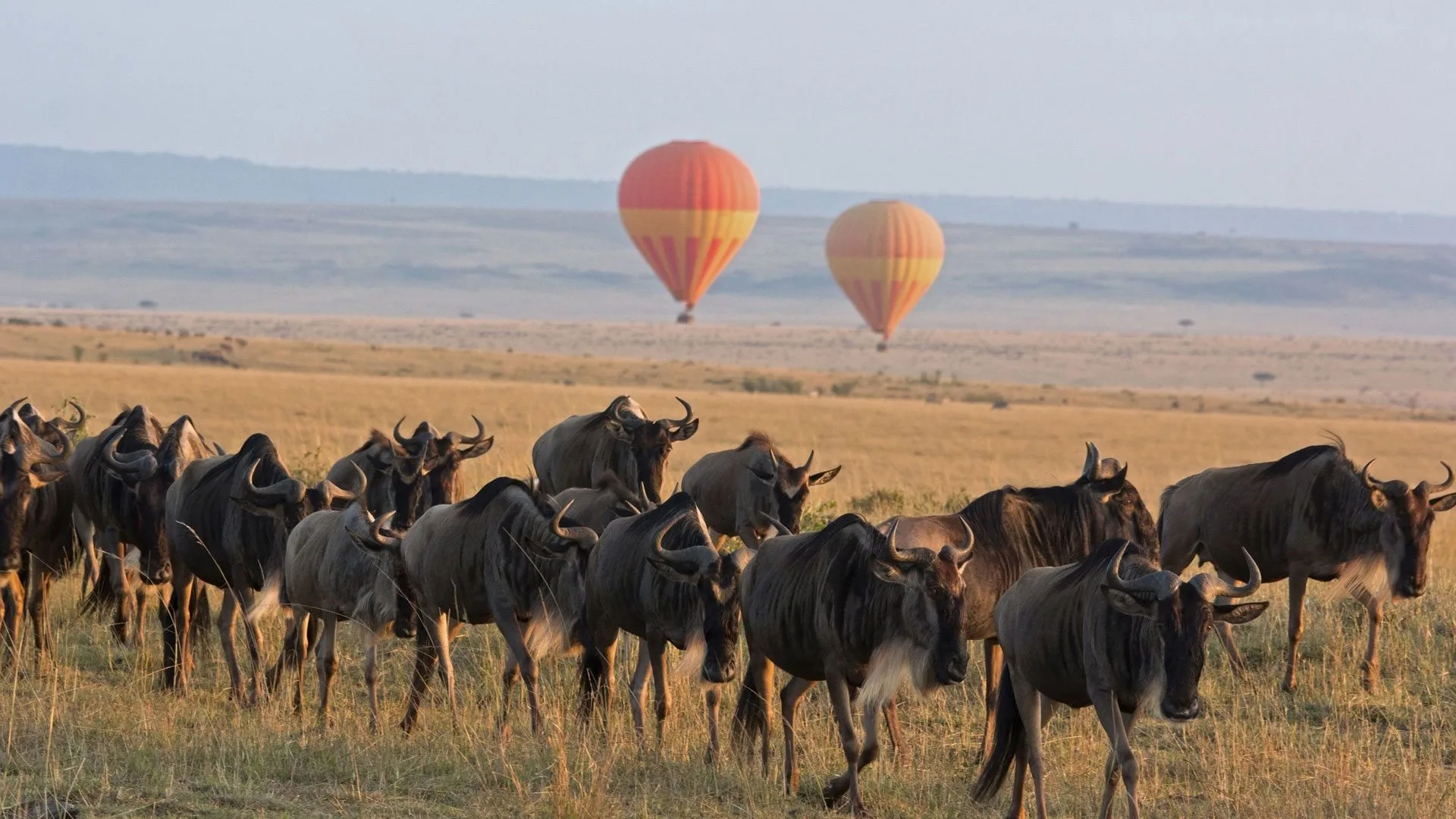
- Optional Masai Mara hot-air balloon safari
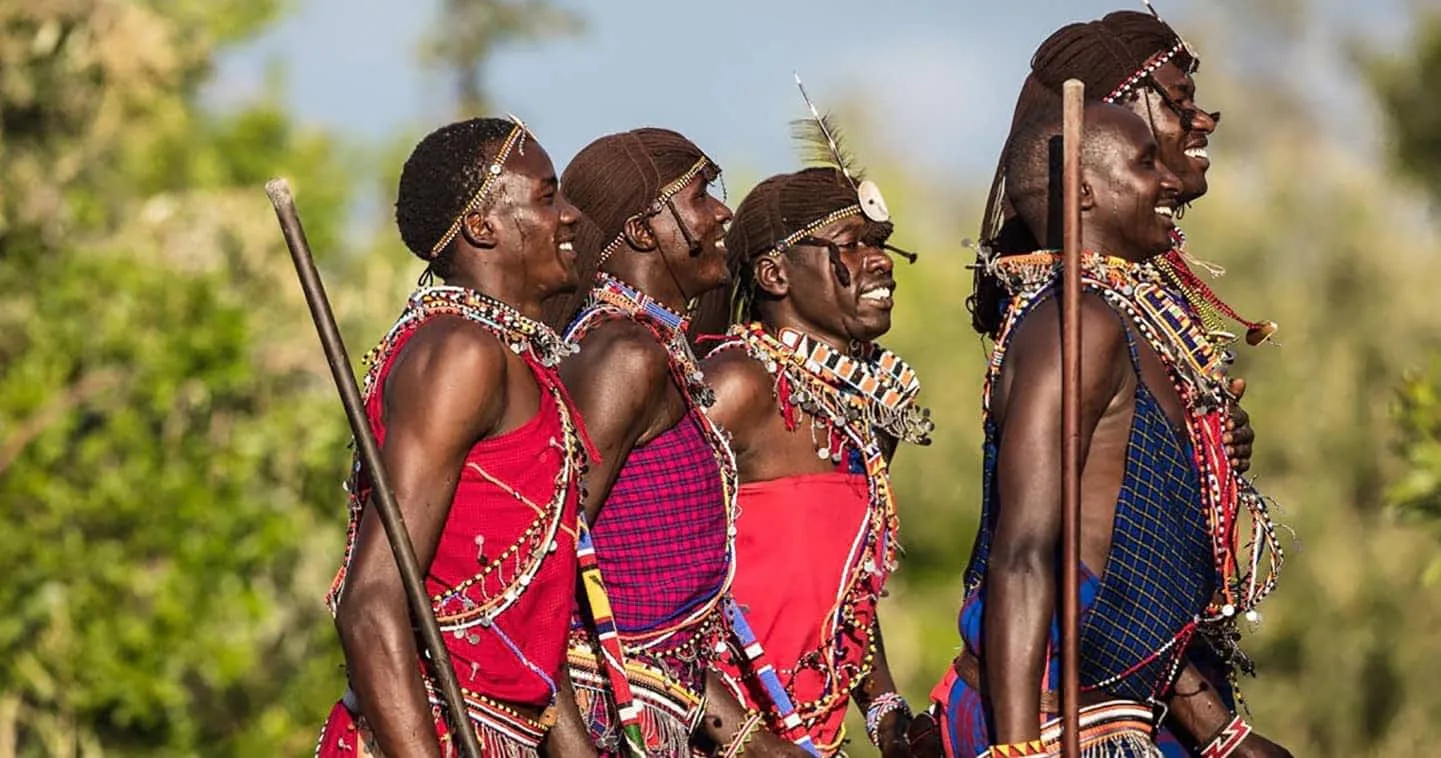
- Optional Maasai cultural experience
- Private 4x4 safari transport
- Sunrise and sunset wildlife photography
- Excellent birding
- Flexible safari pacing
Itinerary
- Day 1: Arrival in Nairobi, welcome to Kenya
- Day 2: Nairobi – Amboseli
- Day 3: Amboseli National Park Safari
- Day 4: Second Full Day in Amboseli, elephants, Wetlands and Kilimanjaro
- Day 5: Amboseli, nairobi or Safari Connection Day
- Day 6: Nairobi, masai Mara
- Day 7: Masai Mara Safari – Lions, Leopards and Cheetahs
- Day 8: Second Full, day Masai Mara Safari, big Five and Great Migration
- Day 9: Morning game drive / optional Maasai village – return to Nairobi and Departure
02 Itinerary
9 Days Masai Mara & Amboseli Safari: Detailed Itinerary
-

Day 1: Arrival in Nairobi – Welcome to Kenya - Main destination
- Masai Mara National Reserve
- Drive time
- Road transfer as outlined in the itinerary
- Meals
- Lunch, Dinner
Your 9 Days Masai Mara & Amboseli Safari begins when you arrive in Nairobi, Kenya's capital and principal international gateway. A representative of Safari Trips to Kenya will meet you at Jomo Kenyatta International Airport and transfer you to your selected Nairobi hotel.
The first night in Nairobi provides an important buffer between your international flight and the beginning of the safari. Instead of arriving after a long overnight flight and immediately undertaking a several-hour road transfer, you can settle into your hotel, rest and prepare for the journey ahead. Depending on your arrival time, optional Nairobi activities can be arranged. These may include visits to selected wildlife conservation attractions, museums, markets or restaurants, although travelers arriving late in the day may prefer simply to relax.
Your safari guide may also provide a short briefing covering the route, expected driving times, game-drive arrangements, weather conditions and practical safari information.
Optional Nairobi Activities
If flight schedules permit, possible activities may include:
- Nairobi National Park
- Giraffe-focused conservation experiences
- Elephant conservation attractions
- Karen Blixen-related historical sites
- Local craft markets
- Nairobi restaurants
- City sightseeing
These activities are optional and should be arranged according to your arrival schedule.
- Destination: Nairobi
- Main experience: Arrival, airport transfer and safari briefing
- Accommodation: Nairobi hotel
- Meals: Depending on arrival and hotel plan
Where you stay
-
Essential (Budget)
-
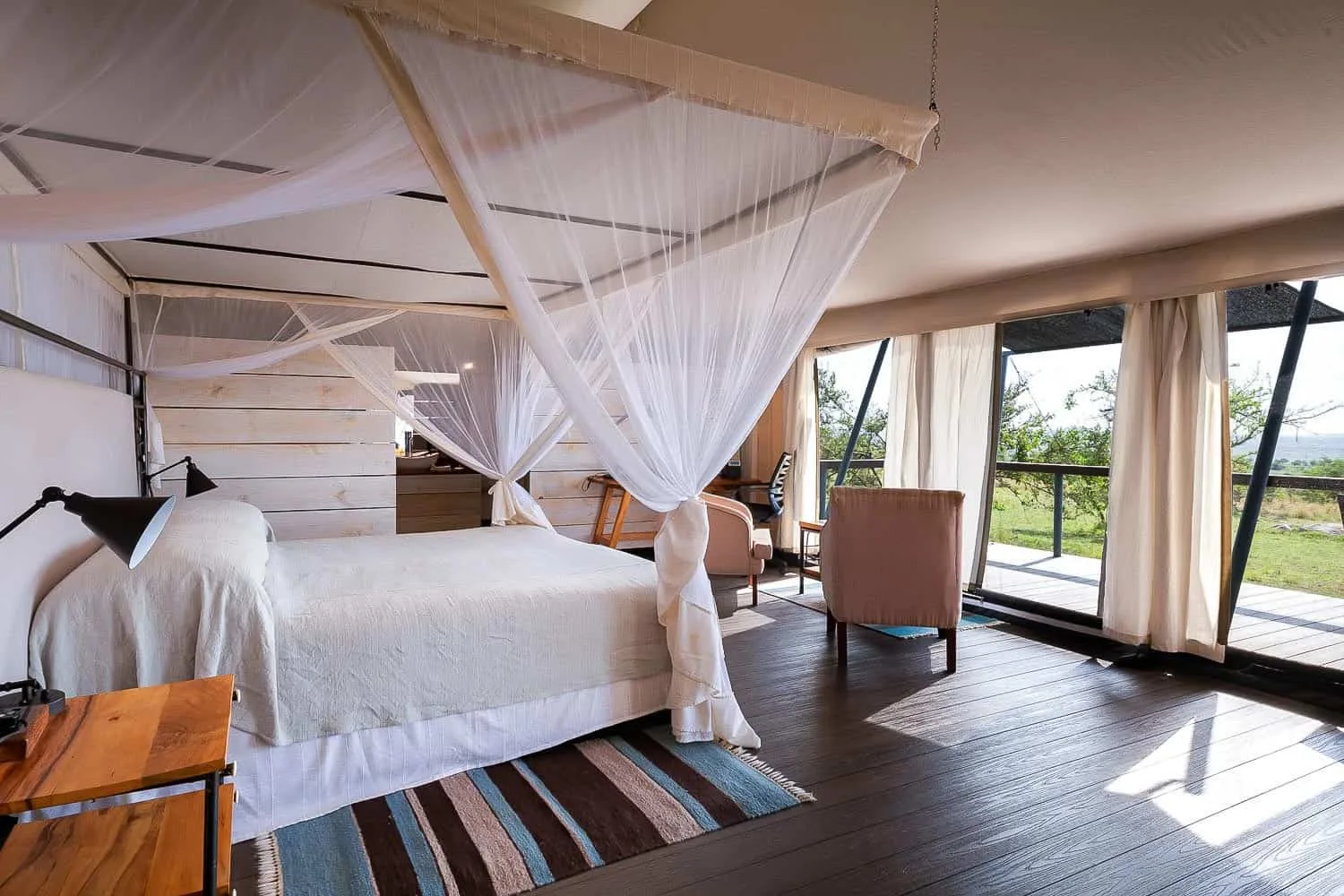
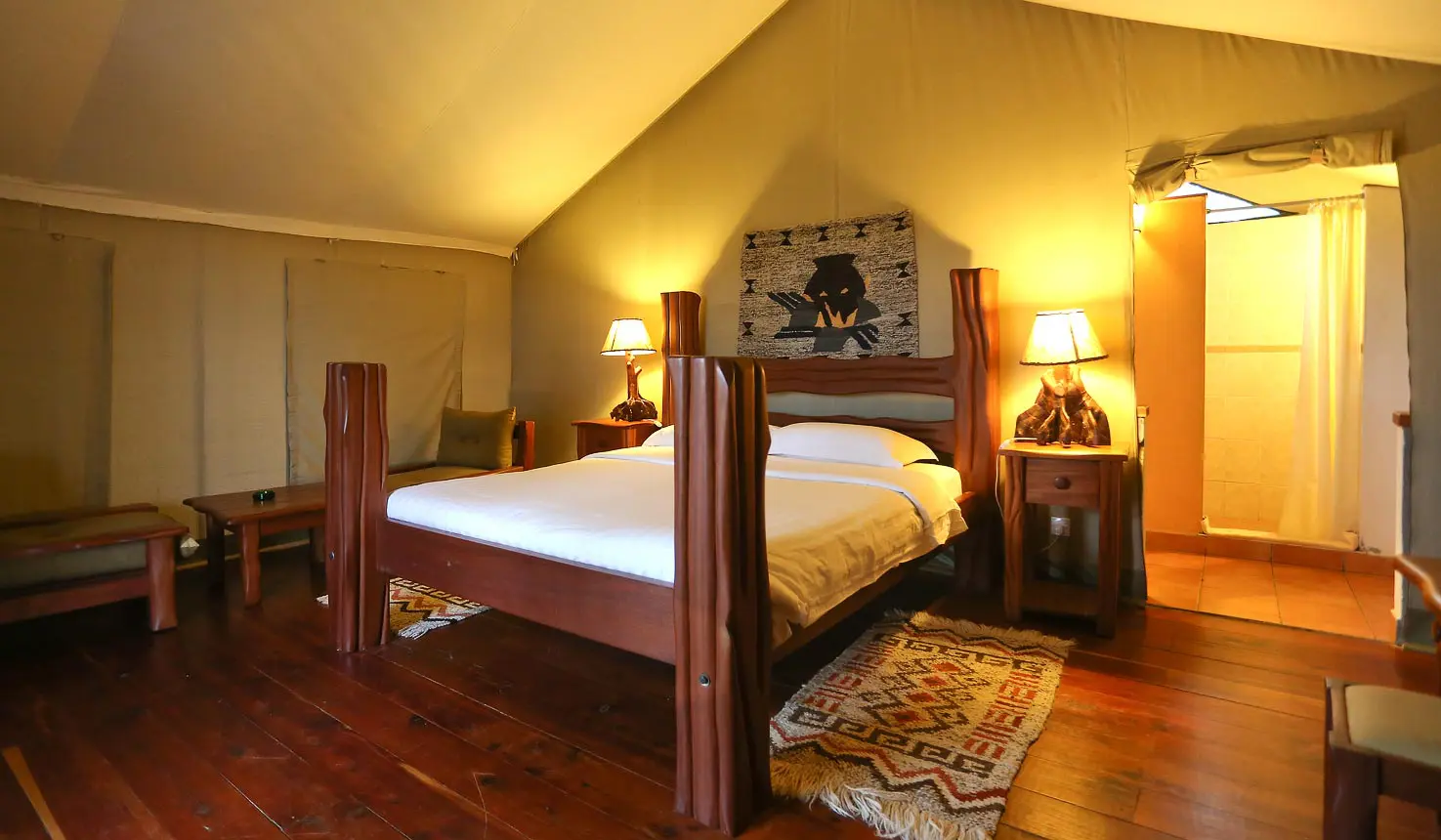
Comfort (Mid-range)
-
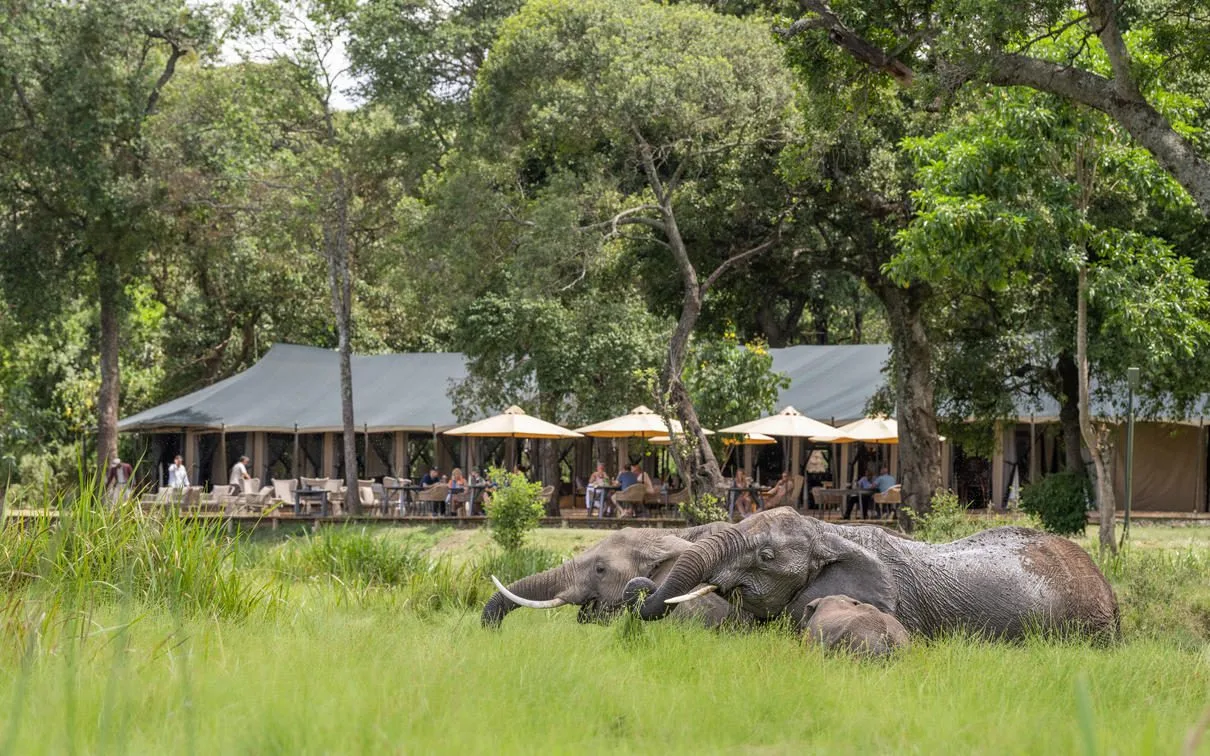
Premium (Luxury)
-
Signature (High-end)
-
Day 2: Nairobi – Transfer to Amboseli National Park - Main destination
- Masai Mara National Reserve
- Meals
- Breakfast, Lunch, Dinner
After breakfast, meet your safari driver-guide and depart Nairobi for Amboseli National Park. The drive takes you southeast toward the Kenya–Tanzania border. Urban surroundings gradually give way to increasingly rural landscapes. Depending on traffic, road conditions and stops, the journey generally occupies a substantial part of the morning.
As you approach the Amboseli ecosystem, the landscape becomes more open and arid. Acacia woodland, expansive plains, distant hills and traditional pastoral areas characterize the region. On clear days, the massive profile of Mount Kilimanjaro begins to dominate the southern horizon, though views are never guaranteed. Although the mountain itself lies across the border in Tanzania, Amboseli provides some of the best-known views of Kilimanjaro. You arrive at your safari lodge or tented camp in time for lunch or an early afternoon break, depending on the selected departure schedule.
Later, set out for your first game drive. The transformation from highway travel to wilderness is immediate. Zebras, wildebeest, gazelles, giraffes and elephants may appear across the plains, and Amboseli's relatively open habitats often allow excellent long-distance viewing. Your guide will explore wildlife-rich areas before continuing toward the wetlands where many animals congregate.
Elephants are a central focus. You may see mothers with calves, adolescent elephants interacting with one another or enormous bulls moving slowly across the plains. Lions, buffaloes, spotted hyenas, jackals and various antelopes may also be encountered. The late afternoon is particularly beautiful when low sunlight begins to illuminate the dusty plains, and if Kilimanjaro is visible, this can be an excellent time for photographs. Return to your lodge or camp after the game drive for dinner and overnight.
- Destination: Amboseli National Park
- Main experience: Transfer and afternoon game drive
- Accommodation: Budget, mid-range or luxury lodge/camp
- Meals: Breakfast, lunch and dinner
Where you stay
-
Day 3: Full-Day Amboseli National Park Safari - Main destination
- Masai Mara National Reserve
- Meals
- Breakfast, Lunch, Dinner
Wake early for your first complete day in Amboseli National Park. Morning game drives are among the most rewarding periods of the safari because temperatures are cool and many animals remain active after the night. Kilimanjaro is also often clearest during the early morning before clouds gather around the mountain, although views are never guaranteed. After an early breakfast, drive into the park and begin exploring different habitats.
Amboseli is much more diverse than its dry plains might initially suggest. The park contains:
- Open grassland
- Acacia woodland
- Marshes
- Seasonal lakebeds
- Palm areas
- Springs
- Dusty semi-arid plains
The marshes are particularly important. Underground water from the Kilimanjaro region feeds permanent wetland areas, creating productive habitats even when much of the surrounding landscape is dry. Elephants frequently feed near these wetlands, and large herds may enter the marshes while buffaloes, hippos and water-associated birds occupy the same habitat. The contrast between lush green marshes and dry plains creates one of Amboseli's defining visual characteristics.
Elephant Viewing
Amboseli is one of Africa's most celebrated elephant-viewing destinations. Some elephants in the ecosystem have been monitored for generations, and long-term research has contributed significantly to scientific knowledge about elephant family structures, communication, reproduction and behavior.
A typical morning may involve observing an entire herd moving toward water. Older females frequently lead family groups while calves remain close to mothers and other adult females. You may see younger elephants playing, dust bathing or interacting with one another. Large adult bulls are also impressive and can sometimes be encountered walking alone across the open landscape.
Predator Viewing
Lions occur throughout the Amboseli ecosystem. They may be found resting beneath bushes, lying in open grassland or monitoring herds of potential prey. Spotted hyenas are another important predator, and jackals, servals and other smaller carnivores can also occasionally be encountered. Cheetahs occur in the wider ecosystem but sightings are considerably less predictable.
Plains Game
Amboseli supports substantial populations of herbivores. Common sightings may include: Zebra, Wildebeest, Giraffe, Grant's gazelle, Thomson's gazelle, Impala, Waterbuck, Warthog, Eland, Buffalo.
The exact distribution of animals changes according to rainfall, grazing conditions and water availability.
Birdlife
Amboseli is also highly productive for birding. Wetlands attract numerous water-associated species, while raptors and savannah birds occupy the plains and woodland. Even travelers who do not identify themselves as birders often become interested in the park's brightly colored and unusually large bird species.
Your game drive can continue through much of the day. Depending on lodge location and preference, you may either return for lunch or carry a picnic and remain within the park. Late afternoon provides another strong wildlife-viewing period. Return to the lodge around sunset.
- Destination: Amboseli National Park
- Main experience: Full-day wildlife safari
- Wildlife focus: Elephants, lions, buffaloes and plains game
- Accommodation: Same lodge/camp
- Meals: Breakfast, lunch and dinner
Where you stay
-
Day 4: Second Full Day in Amboseli – Elephants, Wetlands and Kilimanjaro - Main destination
- Masai Mara National Reserve
- Meals
- Breakfast, Lunch, Dinner
A second full day dramatically improves the Amboseli experience. Travelers sometimes visit Amboseli for only one night, meaning they may have only an evening game drive and a short morning drive. That can be rewarding, but it depends heavily on weather and wildlife movements. By allocating more time, you have several opportunities to see Kilimanjaro clearly and to encounter different elephant families.
Today can be arranged with either a traditional morning and afternoon game-drive schedule or a longer full-day outing. Your guide can respond to the wildlife activity observed the previous day. For example, if lions were located in one region of the park, you may return early to see whether they remain nearby, and if elephant concentrations were especially strong around a particular marsh, time can be spent observing those herds. The additional day also makes the itinerary more relaxed for photographers. Rather than photographing every animal immediately and moving on, you can remain at a productive sighting and wait for behavior, positioning or light to improve.
Kilimanjaro Photography
Kilimanjaro dominates Amboseli photography. When visibility is excellent, your guide may position the safari vehicle at a suitable distance from wildlife to create images that show both animals and the mountain. Elephants are the classic subjects, although giraffes, zebras and other animals can also create memorable environmental photographs.
Cloud cover changes rapidly. The mountain may be completely hidden at midday and then appear dramatically during late afternoon. Having two full days significantly improves the probability of favorable conditions, though clear views are never guaranteed.
Observation Hill
Depending on itinerary design and park access, you may visit viewpoints that provide elevated perspectives over the surrounding wetlands and plains. These stops help travelers understand how dramatically the landscape changes within a relatively small area. From higher ground, you can sometimes see elephant herds, buffaloes and other animals moving between habitats.
Relaxed Lodge Time
The nine-day itinerary also creates enough flexibility for a short midday rest. Many safari travelers discover that the early mornings, long drives and intense concentration involved in wildlife viewing can become tiring. Returning to the lodge for lunch and a few hours of relaxation before the afternoon game drive can make the entire safari more enjoyable.
In the late afternoon, return to the park for another safari. Golden light spreads across the plains and temperatures begin to drop. Animals that rested through the hottest part of the day often become increasingly active. After sunset, return to your lodge for dinner.
- Destination: Amboseli National Park
- Main experience: Second full-day safari
- Special focus: Elephants, Kilimanjaro and photography
- Accommodation: Same lodge/camp
- Meals: Breakfast, lunch and dinner
Where you stay
-
Day 5: Amboseli – Nairobi or Safari Connection Day - Main destination
- Masai Mara National Reserve
- Meals
- Breakfast, Lunch, Dinner
After breakfast, enjoy a final morning in the Amboseli region. Depending on the selected route, lodge location and transfer schedule, you may undertake a short early game drive before leaving the park. This final outing provides one more opportunity to see Kilimanjaro and Amboseli's elephants, though neither is guaranteed. You then begin the journey back toward Nairobi.
Although Amboseli and the Masai Mara are both in southern Kenya, driving directly between them can require a very long transfer depending on road routing. For this reason, some nine-day itineraries include a Nairobi overnight or use domestic flights to create a more comfortable connection. The exact arrangement should be selected according to your priorities.
Option 1: Return to Nairobi by Road
The most economical approach is to travel back to Nairobi in your private safari vehicle. You can stay overnight before continuing to the Masai Mara the following morning. This approach keeps costs lower and creates a comfortable break between the two main safari destinations.
Option 2: Fly Between Safari Areas
Travelers prioritizing comfort can use domestic flights where suitable schedules are available. This significantly reduces travel time. Fly-in options are particularly attractive for luxury itineraries or travelers who prefer to minimize long road journeys.
Option 3: Customized Combination
A combined road-and-air itinerary can be designed. For example, you might travel from Nairobi to Amboseli by road to experience the landscape and later use flights for the Masai Mara sector. Your accommodation and transfer arrangement will be confirmed in your final itinerary.
- Destination: Nairobi or connecting safari location
- Main experience: Amboseli departure and transfer
- Accommodation: Nairobi hotel or corresponding itinerary property
- Meals: Breakfast and other meals according to confirmed arrangement
Where you stay
-
Day 6: Nairobi – Masai Mara National Reserve - Main destination
- Masai Mara National Reserve
- Meals
- Breakfast, Lunch, Dinner
After breakfast, continue to the Masai Mara National Reserve, one of the world's most celebrated wildlife areas. Travel can be arranged by road or air.
Road Transfer to Masai Mara
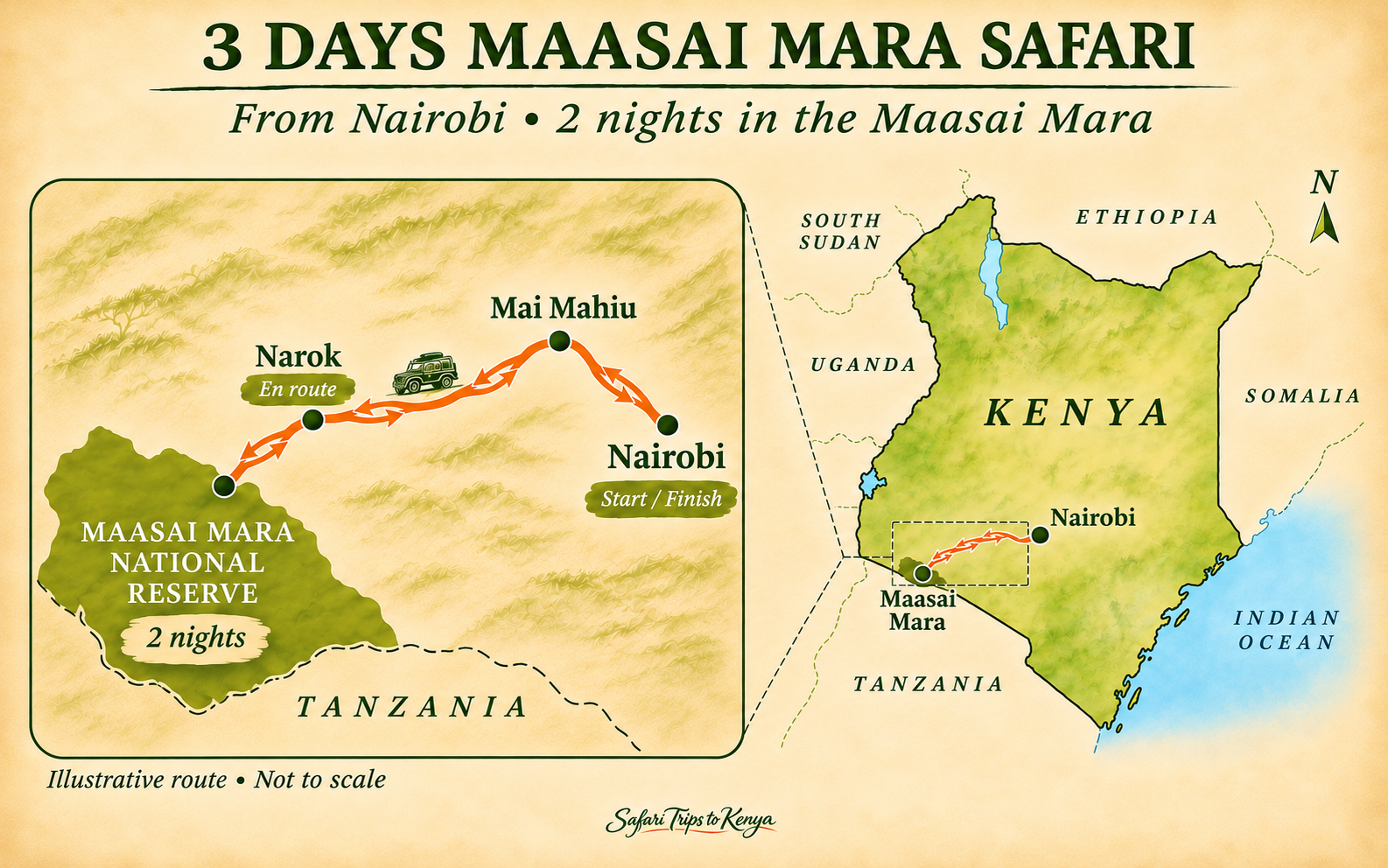
A road safari takes you through sections of the Great Rift Valley and rural Kenya. The landscape changes as you progress toward Narok and eventually enter the wider Mara ecosystem. The drive takes several hours, but it provides an interesting overland perspective on Kenya's geography. Stops can be made for refreshments and scenic views depending on the route.
Fly-In Transfer to Masai Mara
Alternatively, you can fly from Nairobi's Wilson Airport to one of several airstrips serving the Masai Mara. Flight times are relatively short compared with the road journey. Upon landing, a safari vehicle from your camp or lodge normally meets you at the airstrip. In many cases, wildlife viewing begins immediately because airstrips are located within wildlife areas.
First Masai Mara Game Drive
After arriving and settling into your accommodation, set out for your first Masai Mara game drive. The difference from Amboseli is immediately noticeable. The Mara consists primarily of rolling savannah and extensive grassland cut by seasonal streams and river systems. Wildlife densities can be extraordinary. You may encounter substantial herds of: Wildebeest, Zebra, Buffalo, Impala, Topi, Thomson's gazelle, Grant's gazelle, Eland.
Giraffes and elephants are also common. Predators are among the main highlights. Lions occur in good numbers and are frequently encountered in family groups, cheetahs often use the open plains, and leopards favor areas with riverine vegetation and trees, although no sighting is guaranteed. Your guide will search carefully for predator activity while also interpreting animal behavior. Late afternoon provides excellent photography conditions. Return to the lodge or tented camp after the evening game drive.
- Destination: Masai Mara National Reserve
- Main experience: Transfer and first Mara safari
- Accommodation: Budget, mid-range or luxury lodge/camp
- Meals: Breakfast, lunch and dinner
Where you stay
-
Day 7: Full-Day Masai Mara Safari – Lions, Leopards and Cheetahs - Main destination
- Masai Mara National Reserve
- Meals
- Breakfast, Lunch, Dinner
Today is devoted entirely to exploring the Masai Mara. Early morning is a particularly exciting period. Predators may still be active after hunting overnight, and temperatures are cool enough for substantial animal movement. Your guide may leave camp around sunrise or even earlier depending on park rules and lodge arrangements. The morning search typically focuses on areas where predators were reported previously as well as habitats where prey concentrations suggest possible hunting activity.
Lion Encounters
The Masai Mara is one of Africa's premier lion habitats. Large prides can sometimes be seen resting together, while adult males patrol territories or remain near females. Lion behavior varies throughout the day. Morning encounters might involve animals walking across open ground, feeding from a nighttime kill or interacting socially before settling into shade. Young cubs can provide especially engaging sightings. They may play, climb over adults, practice stalking or explore their surroundings under the protection of the pride.
Leopard Searches
Leopards are far more elusive. These solitary cats frequently occupy woodland, riverine vegetation and areas containing suitable trees. Your guide searches for tracks, alarm calls and other subtle signs, and baboons, monkeys, antelopes and birds often react strongly when a leopard is nearby. A leopard may be seen resting on a branch, moving through tall grass or feeding on prey stored in a tree. Because leopard sightings are unpredictable and never guaranteed, spending several days in the Mara is a major advantage.
Cheetahs
Cheetahs prefer open habitats where they can use their extraordinary speed. Unlike lions and leopards, cheetahs frequently hunt during daylight. They often spend time scanning the plains from elevated positions before attempting to approach gazelles or other prey. If a cheetah begins hunting, your guide maintains an appropriate distance while positioning the vehicle where you can observe without interfering with natural behavior.
Picnic Lunch and Extended Safari
For travelers who want to maximize wildlife viewing, a picnic lunch can be carried into the reserve. This eliminates the need to return to camp at midday and allows exploration of more distant areas. Alternatively, you can return to the lodge for lunch and rest before taking another afternoon game drive. Both approaches have advantages. Photography enthusiasts often prefer remaining in the reserve, whereas families and travelers who value comfort may appreciate the midday break. You return to camp during the evening.
- Destination: Masai Mara National Reserve
- Main experience: Full-day predator and wildlife safari
- Wildlife focus: Lions, leopards, cheetahs, elephants and plains game
- Accommodation: Same lodge/camp
- Meals: Breakfast, lunch and dinner
Where you stay
-
Day 8: Second Full-Day Masai Mara Safari – Big Five and Great Migration - Main destination
- Masai Mara National Reserve
- Meals
- Breakfast, Lunch, Dinner
Your second full day in the Masai Mara provides another opportunity to explore different sectors of the reserve. This is important because wildlife concentrations can shift significantly from one region to another. Your guide may concentrate on areas that were not covered extensively the previous day. The objective is not simply to repeat the same route. Instead, the safari evolves based on sightings, weather, seasonal conditions and your personal interests. If there is a particular animal you have not yet seen well, today's drives can focus on improving that sighting.
Big Five Viewing
The Masai Mara contains four of the Big Five in relatively visible numbers: lion, leopard, elephant and buffalo. Black rhinos occur but are much more difficult to encounter than the other species. Travelers specifically seeking rhinos often combine the Mara with other Kenyan conservation areas, but sightings within the Mara remain possible.
Elephants are frequently seen in family groups, buffaloes may occur as enormous herds, lions can appear virtually anywhere on the plains, and leopards are most strongly associated with riverine habitat. None of these sightings is guaranteed.
Great Migration Season
During appropriate periods, the Mara becomes part of one of the greatest wildlife movements on Earth. Large herds of wildebeest and zebra enter the greater Mara ecosystem after moving north from Tanzania's Serengeti. The timing varies from year to year because the migration follows rainfall and fresh grazing rather than a fixed calendar. When herds are present, wildlife viewing can be extraordinary. Thousands of animals may spread across open grasslands, and predator activity often increases because prey becomes abundant.
River Crossings
Some travelers visit specifically hoping to witness wildebeest crossing rivers. These events are dramatic but highly unpredictable. Animals may gather along a riverbank for hours or even days before crossing, they may approach the water and then turn away, or another herd may cross unexpectedly at a completely different location. No responsible safari operator can guarantee a crossing. Spending multiple days in the ecosystem provides the best practical chance if crossing activity is occurring during your visit.
Optional Hot-Air Balloon Safari
You may choose to begin this day with an optional hot-air balloon safari. The experience normally begins before dawn. After a safety briefing and balloon inflation, you rise above the Masai Mara as the sun appears across the eastern horizon. From the air, the landscape takes on a completely different character. River systems, animal trails, forests and plains become visible on a broad scale, and wildlife may appear below as small moving groups.
The flight typically lasts around one hour depending on wind conditions, and the flight itself is never guaranteed. A breakfast experience traditionally follows landing. Balloon safaris are normally charged separately and should be reserved well in advance, especially during peak travel months.
Optional Maasai Cultural Visit
A cultural visit may also be arranged. The Maasai have lived across southern Kenya and northern Tanzania for generations and remain deeply connected with the wider Mara landscape. A thoughtfully arranged visit can provide insight into pastoral traditions, cattle culture, family structures, architecture, community development and changing relationships with conservation and tourism.
After your final major afternoon game drive, return to your lodge or camp. The last evening in the Mara is often one of the most memorable moments of the journey.
- Destination: Masai Mara National Reserve
- Main experience: Second full-day wildlife safari
- Optional activity: Hot-air balloon safari or cultural experience
- Accommodation: Same lodge/camp
- Meals: Breakfast, lunch and dinner
Where you stay
-
Day 9: Masai Mara – Return to Nairobi and Departure - Main destination
- Masai Mara National Reserve
- Drive time
- Return transfer as outlined in the itinerary
- Meals
- Breakfast, Lunch
Wake for your final morning in the Masai Mara. Depending on the departure schedule, you may have time for a short sunrise game drive. Early morning can provide beautiful final sightings as wildlife becomes active in the cool temperatures. Return to camp for breakfast and check out. You then begin the journey back to Nairobi.
Road Return
If traveling by road, your driver-guide takes you through the Mara region toward Nairobi. The trip generally occupies much of the day. Upon reaching Nairobi, you can be transferred directly to Jomo Kenyatta International Airport for an evening flight or to a city hotel.
Flight Return
If traveling by air, transfer to the nearest airstrip for a scheduled flight to Nairobi's Wilson Airport. A road transfer can then connect you to your international airport or Nairobi hotel. Your 9 Days Masai Mara & Amboseli Safari ends after an extensive exploration of two of Kenya's greatest wildlife destinations.
Amboseli National Park – Why It Is Special
Amboseli holds a distinctive place among Kenya's national parks. Its relatively small size means visitors can access several wildlife-rich habitats without extremely long drives. The landscape is dominated visually by Mount Kilimanjaro, but elephants are the true stars of the park. Large elephant populations are supported by wetland systems that remain productive even during dry periods, and this reliable water attracts wildlife and creates excellent viewing opportunities.
Amboseli is particularly rewarding for travelers who enjoy observing animal behavior rather than simply accumulating a long species list. Elephants are often encountered at close range from approved safari tracks, providing opportunities to watch family interactions over extended periods.
Masai Mara National Reserve – Why It Is Special
The Masai Mara is one of Africa's most famous wildlife destinations because of its combination of high wildlife density, expansive scenery and exceptional predator populations. Its open landscapes make wildlife relatively easy to observe compared with heavily wooded reserves. Lions are among the most frequently encountered predators, cheetahs benefit from the broad plains, leopards occupy wooded areas and river systems, and hyenas are abundant and play a major ecological role.
Large herbivores provide the foundation of the ecosystem. Zebras, wildebeest, buffaloes, antelopes, giraffes and elephants are widespread. The Mara is also internationally known as the northern section of the Serengeti-Mara ecosystem through which the Great Migration moves.
Amboseli vs Masai Mara – What Is the Difference?
Travelers frequently ask which destination is better. The answer depends on what you want to see.
Feature Amboseli Masai Mara Elephants Exceptional Excellent Lions Good Exceptional Leopards Possible Excellent potential Cheetahs Possible Excellent Buffaloes Excellent Excellent Rhinos Rare/unpredictable Rare Kilimanjaro views Exceptional None Great Migration No Yes, seasonally Wetlands Excellent Limited Open savannah Excellent Exceptional Predator diversity Good Exceptional Landscape photography Exceptional Exceptional The purpose of this itinerary is therefore not to choose between them. It combines both.
Wildlife You Can See
The two destinations collectively support an extraordinary range of mammals. Potential sightings include:
Predators
- Lion
- Leopard
- Cheetah
- Spotted hyena
- Black-backed jackal
- Bat-eared fox
- Serval
- Small cats
Large Herbivores
- African elephant
- African buffalo
- Giraffe
- Zebra
- Wildebeest
- Eland
- Waterbuck
- Topi
Antelopes and Gazelles
- Impala
- Grant's gazelle
- Thomson's gazelle
- Hartebeest
- Reedbuck
- Dik-dik
Other Mammals
- Warthog
- Baboon
- Vervet monkey
- Hippo
- Mongoose
- Hare
- Hyrax in appropriate habitats
Not every species is guaranteed. Season, rainfall and animal movements influence daily sightings.
Big Five on the Masai Mara and Amboseli Safari
The safari provides excellent opportunities for four of the traditional Big Five, though no sighting is guaranteed.
Lion
The Masai Mara provides exceptional lion viewing, and Amboseli also supports resident lion populations.
Leopard
The Masai Mara provides the strongest leopard opportunities on this itinerary.
Elephant
Amboseli is among the continent's great elephant destinations, and elephants are also widespread in the Mara.
Buffalo
Both destinations support buffalo populations, often in substantial herds.
Rhinoceros
Rhinos are the most difficult Big Five species on this specific itinerary. Black rhinos occur in the Masai Mara ecosystem but are relatively uncommon and should not be considered guaranteed. Travelers for whom completing the Big Five is an absolute priority can extend the safari to include a rhino-focused destination such as Ol Pejeta Conservancy or Lake Nakuru.
Birdwatching
The safari is equally rewarding for birdlife. Kenya has extraordinary avian diversity, and both Amboseli and the Masai Mara provide excellent opportunities. In Amboseli, wetlands support storks, herons, egrets, ducks and numerous other waterbirds, while raptors patrol the open plains. The Mara supports secretary birds, vultures, eagles, bustards, hornbills, rollers and many grassland species.
Birdwatching can be integrated into ordinary game drives without requiring a specialized itinerary. Dedicated birders can request additional time for identification and photography.
Where you stay
03 Rates
Safari rates 2027-2029
Indicative per person. Season, group size and lodge style change the total — your quotation confirms current rates.
-
Essential (Budget)
Essential (Budget)
Budget camps and lodges suit travelers who prioritize wildlife while keeping costs lower.
Great value camps
-
Comfort (Mid-range)
Comfort (Mid-range)
Mid-range tented camps and lodges balance comfort and price with private rooms or tents and en-suite facilities.
Quoted for your dates
-
Premium (Luxury)
Premium (Luxury)
Luxury camps and lodges focus on location, service and more intimate wildlife experiences.
Premium camps and lodges
-
Signature (High-end)
Signature (High-end)
Signature camps and lodges are the most exclusive stays — small, highly private properties with exceptional guiding and setting.
Exclusive signature stays
04 Activities
Safari activities
Game viewing is the core of this itinerary. Optional extras are quoted separately and depend on season, permits and availability. Individual species and river crossings are never guaranteed.
-
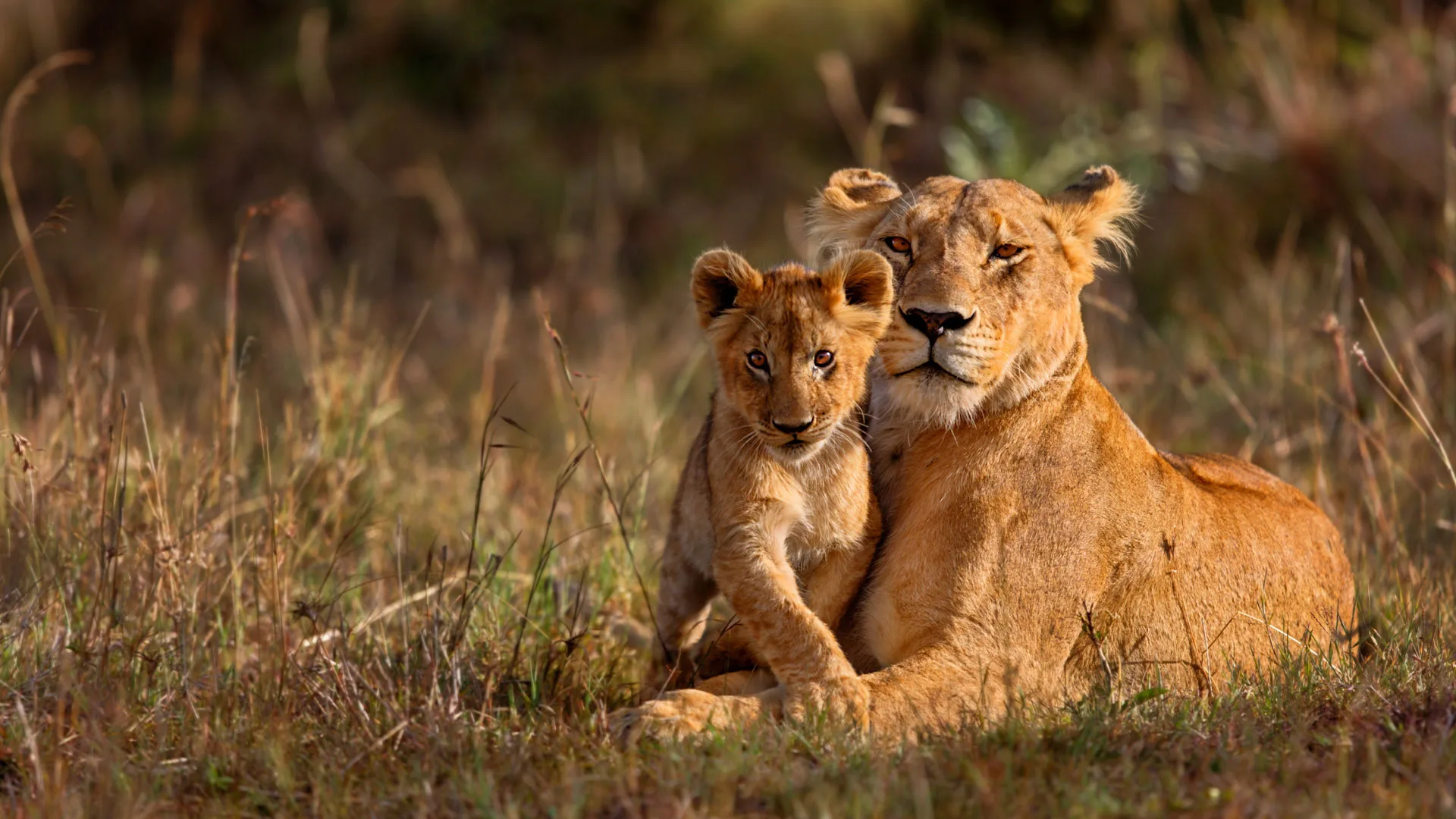
Included
Several game drives in Amboseli National Park
Included in a typical day on this safari. Exact timing follows the confirmed itinerary.
View activity -
Optional
Masai Mara hot-air balloon safari
Available at extra cost when conditions, permits and your dates allow. Not guaranteed.
View activity -
Optional
Maasai cultural experience
Available at extra cost when conditions, permits and your dates allow. Not guaranteed.
View activity -

Included
Sunrise and sunset wildlife photography
Included in a typical day on this safari. Exact timing follows the confirmed itinerary.
View activity
Additional information
Plan This Safari
Best Time for a Masai Mara and Amboseli Safari
The safari can operate throughout the year. Each season creates different conditions.
January to March
These months are often relatively dry and can provide excellent wildlife viewing. Amboseli can become increasingly dry, causing animals to concentrate around permanent water. The Masai Mara remains productive.
April and May
These are generally associated with Kenya's longer rainy season. Vegetation becomes lush and green. Some roads can become muddy after heavy rain, but visitor numbers are generally lower and landscapes can be beautiful.
June
June often represents a transition toward the drier period. Wildlife viewing becomes progressively easier as vegetation begins to thin.
July to October
This is one of the most popular safari periods. Weather tends to be relatively dry, and the Masai Mara may host enormous numbers of migrating wildebeest and zebras. August and September are particularly popular. Accommodation should be booked early.
November
Short rains may occur. The landscape becomes increasingly green. Wildlife remains present, and photography can be excellent.
December
December is popular for holiday travel. Conditions vary depending on rainfall, but both parks remain highly productive.
Best Time for Mount Kilimanjaro Views
Kilimanjaro can be visible throughout the year, but weather strongly influences visibility. The mountain is often clearest early in the morning, and clouds can build later in the day. Dry periods frequently provide better visibility, although no month guarantees completely clear views. Spending several nights in Amboseli is therefore valuable. Even if the mountain is hidden during your first afternoon, it may be completely visible the following morning.
Best Time for the Great Migration
The Great Migration does not follow an exact timetable. Herd movements depend on rainfall, water and grazing. The Masai Mara commonly receives significant numbers of migrating wildebeest and zebra during the broader July-to-October period, but exact arrival and departure dates vary. Travelers should therefore avoid planning around one specific predicted crossing date. The safari should instead focus on spending sufficient time within the ecosystem during a season when migration activity is historically likely.
Road Safari vs Fly-In Safari
Both approaches work well.
Private Road Safari
A road safari is the traditional format. Advantages include:
- Lower overall transportation cost
- Continuous services of the same driver-guide
- Flexibility during transfers
- Scenic overland travel
- Ability to stop along the route
- More space for luggage than some small aircraft allow
The disadvantage is transfer time. Kenya is a large country, and road journeys between parks can be lengthy.
Fly-In Safari
A fly-in safari uses domestic aircraft to connect Nairobi and major safari areas. Advantages include:
- Less transfer time
- More time for game drives
- Greater comfort
- Spectacular aerial views
- Excellent suitability for luxury travel
The main disadvantage is higher cost. Small aircraft also impose luggage restrictions.
Combined Safari
Many travelers find that a hybrid itinerary provides the best balance. Some sections can be driven while longer transfers are flown.
Safari Vehicle
Private road safaris generally use customized safari vehicles designed specifically for wildlife viewing. Common features include:
- Pop-up roof
- Individual window access
- Elevated seating
- Cooler or storage compartment
- Charging capability on some vehicles
- Radio communication
- First-aid equipment
- Additional luggage space
- Long-range fuel capacity where necessary
Vehicle specifications vary. Private use provides considerably more flexibility than shared transport.
Private Safari Advantages
A private safari means the vehicle is reserved for your traveling party. This provides several benefits.
- You can decide how long to remain at sightings. If you are watching a leopard, for example, you are not required to leave because another traveler wants to return to the lodge.
- Photographers can wait for better positioning.
- Families can modify morning departure times.
- Birdwatchers can stop for smaller species.
- Couples can maintain a more relaxed pace.
Private travel also allows the guide to learn your interests and tailor each game drive accordingly.
Accommodation Options
The safari can be arranged at several comfort levels.
Budget Accommodation
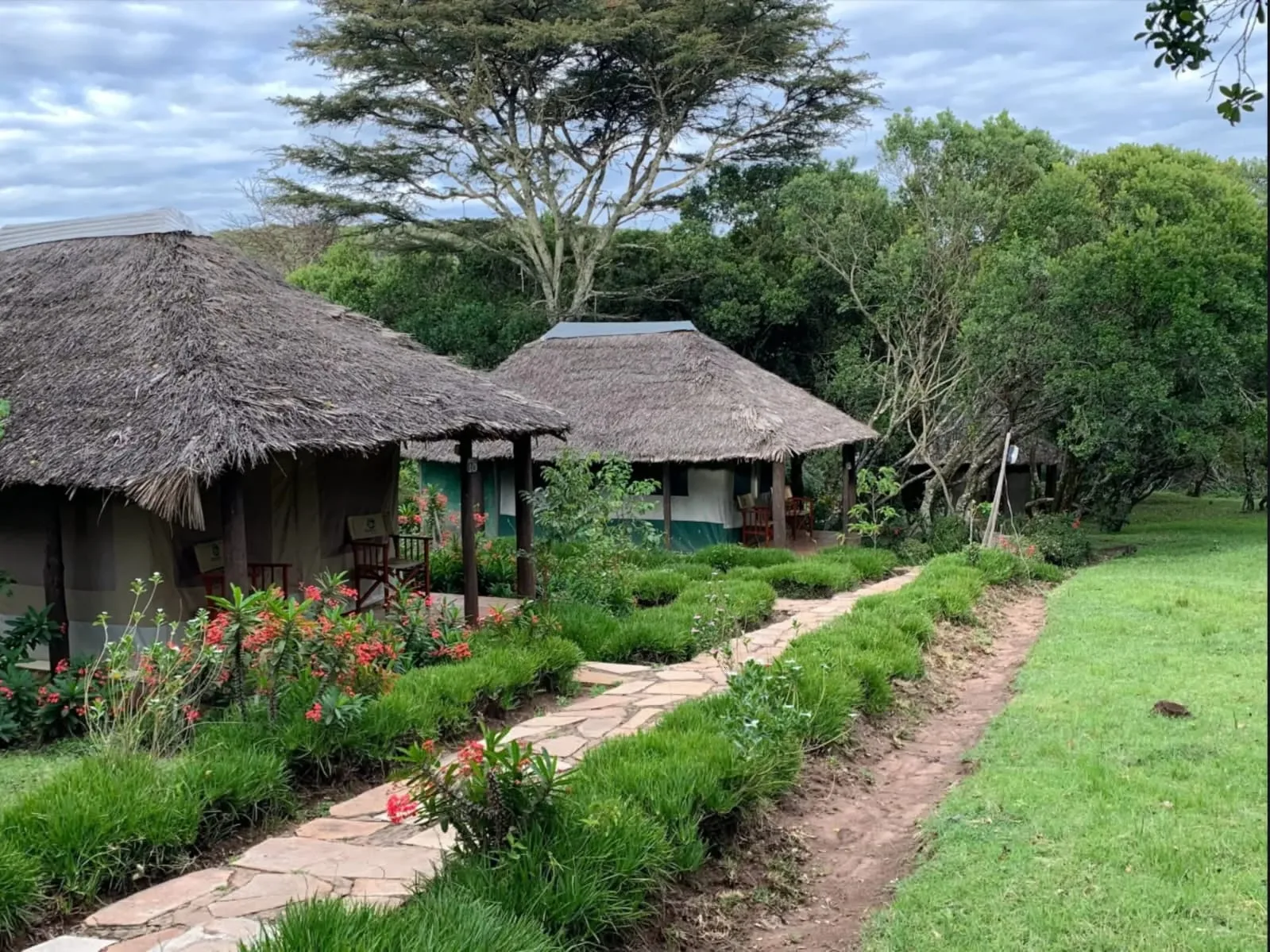
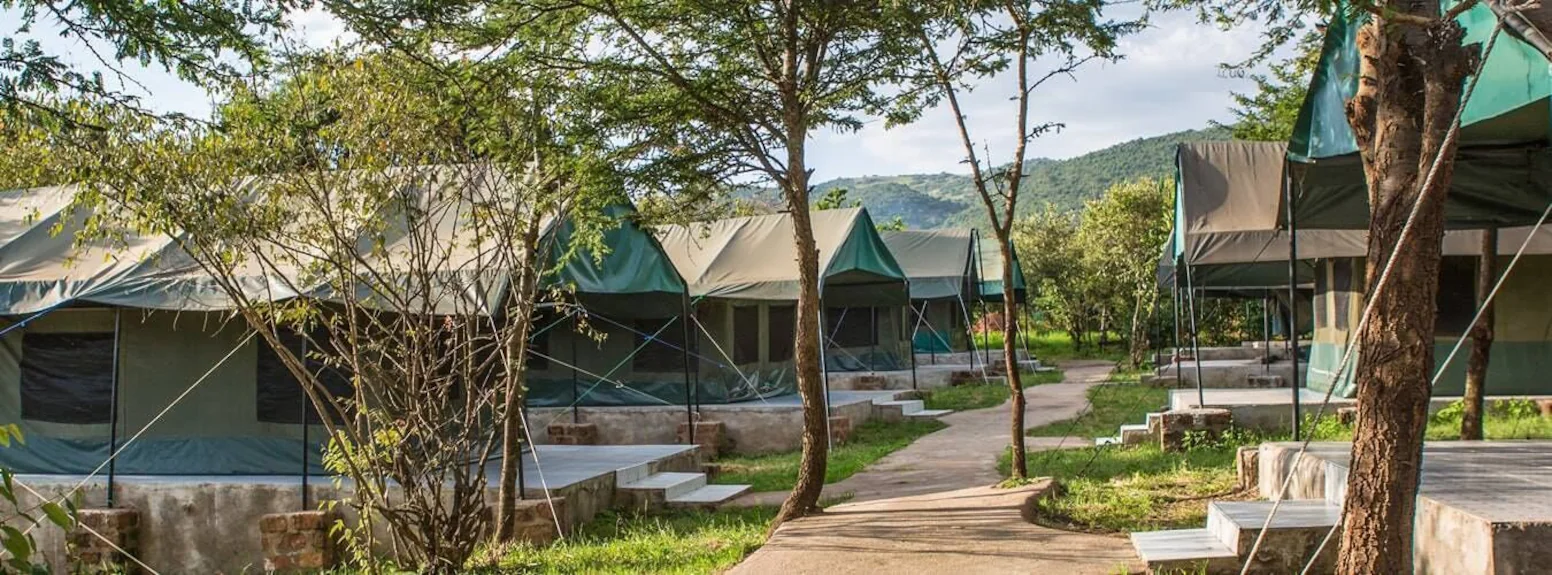
Budget options focus on value. Properties may be simple lodges, camps or tented accommodations located inside or outside protected areas. Rooms generally provide essential comforts but fewer luxury amenities. This category works well for travelers who prioritize wildlife experiences over accommodation.
Mid-Range Accommodation
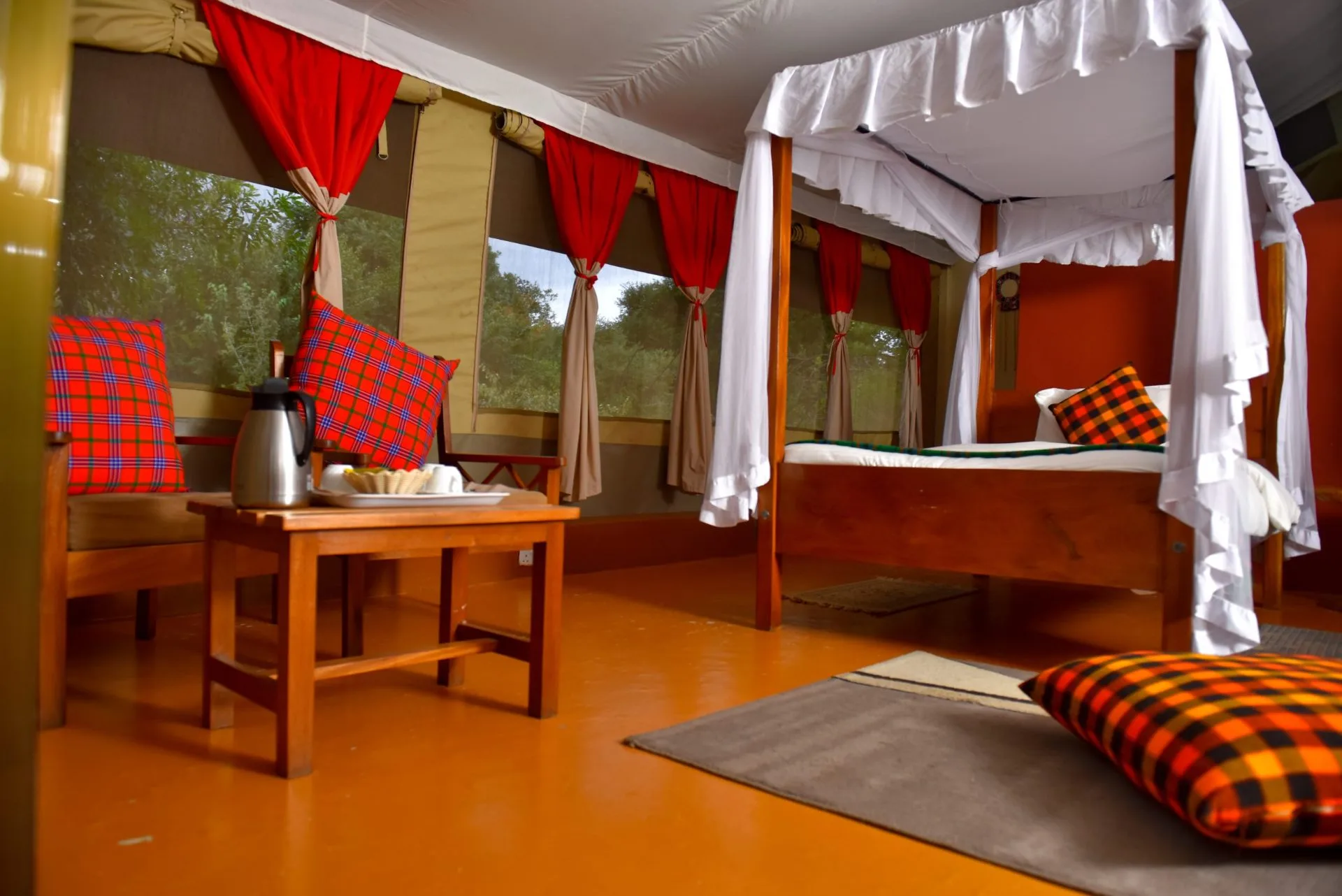
Mid-range camps and lodges generally provide:
- Private en-suite bathrooms
- Comfortable beds
- Good meals
- Safari-style common areas
- Reliable service
- Attractive locations
- Swimming pools at some properties
Mid-range is one of the most popular choices.
Luxury Accommodation
Luxury camps typically provide:
- Spacious permanent tents or suites
- Premium locations
- High-quality cuisine
- Personalized service
- Smaller property sizes
- More private atmosphere
- Enhanced viewing areas
- Optional premium experiences
Some luxury properties operate in private conservancies adjoining the Masai Mara. These can provide additional safari experiences depending on conservancy rules.
Sample Accommodation Structure
Accommodation should be selected based on availability, budget and final route. A representative structure can be:
| Destination | Budget | Mid-Range | Luxury |
|---|---|---|---|
| Nairobi | Comfortable city hotel | Quality boutique/business hotel | Premium city hotel |
| Amboseli | Budget safari camp | Mid-range lodge/tented camp | Luxury safari camp |
| Nairobi Connection | Budget hotel | Mid-range hotel | Luxury hotel |
| Masai Mara | Budget safari camp | Mid-range tented camp | Luxury Mara camp |
Specific properties should be confirmed when requesting a quotation because availability can change considerably by season.
9 Days Masai Mara & Amboseli Safari for Couples
The itinerary is particularly attractive to couples. Long game drives are balanced by relaxing evenings at safari lodges and tented camps. Private safaris create a more intimate experience because you are not sharing a vehicle with unrelated travelers. Couples can also upgrade selected nights rather than booking the highest accommodation category throughout. For example, travelers might use a good mid-range lodge in Amboseli and upgrade to an intimate tented camp in the Masai Mara.
Honeymoon Safari
Amboseli and the Masai Mara create an excellent honeymoon combination. Amboseli provides dramatic landscapes and quieter moments around elephant herds. The Masai Mara adds adventure and extraordinary predator viewing. Luxury honeymoon itineraries can include:
- Romantic tented suites
- Private dinners
- Bush breakfasts
- Sundowners
- Balloon safari
- Premium airport transfers
- Fly-in connections
- Private safari vehicle
- Special room arrangements
Accommodation should be selected carefully for privacy and atmosphere rather than simply choosing the most expensive property.
Family Safari
Families can travel comfortably on this itinerary. A private vehicle is strongly recommended because it allows the schedule to be adapted around children. Younger travelers may struggle with extremely long game drives. The guide can therefore break the day into shorter morning and afternoon excursions. Family accommodation options may include:
- Family tents
- Interconnected rooms
- Multiple-bedroom cottages
- Shared family suites
Parents should provide children's ages when requesting prices because park fees and accommodation rates can vary significantly by age.
Photography Safari
This itinerary offers two complementary photographic environments.
Amboseli Photography
Amboseli is particularly strong for:
- Elephants
- Kilimanjaro
- Dusty landscapes
- Wetland wildlife
- Wide-angle environmental photography
- Silhouettes
- Sunrise and sunset
Masai Mara Photography
The Mara is particularly strong for: Lions, Leopards, Cheetahs, Predator-prey behavior, Great Migration herds, Birds of prey, Elephant families, Savannah landscapes.
Photographers should request a private vehicle. For serious photography, limiting the vehicle to fewer passengers makes it easier to move between windows and handle long lenses.
What Is Included in the Safari?
The exact package depends on your selected quotation, but common inclusions may consist of:
- Nairobi airport transfers
- Private safari transport
- Professional English-speaking safari driver-guide
- Accommodation for eight nights
- Meals according to itinerary
- National park and reserve fees listed in the quotation
- Scheduled game drives
- Drinking water during safari drives
- Transportation between included destinations
- Applicable government taxes
- Emergency support during the safari
Always check the final quotation carefully because inclusions can vary according to accommodation category and transport arrangement.
What Is Usually Excluded?
Potential exclusions may include:
- International flights
- Kenya visa or eTA fees where applicable
- Personal travel insurance
- Hot-air balloon safari
- Optional cultural activities
- Premium alcoholic beverages
- Laundry
- Personal shopping
- Gratuities
- Medical expenses
- Optional Nairobi activities
- Additional hotel nights outside the itinerary
- Activities not specified as included
Safari Meals
Safari lodges and camps generally provide full-board arrangements during the wildlife portion of the itinerary. This normally means:
- Breakfast – served before or after the morning game drive.
- Lunch – taken at the lodge or provided as a picnic during full-day game drives.
- Dinner – served at the lodge or camp after the afternoon safari.
Most properties can accommodate common dietary requirements when notified in advance. Vegetarian, vegan, gluten-free and other special meals should be requested during booking rather than after arrival.
What to Pack
Recommended items include:
- Lightweight safari clothing
- Neutral-colored shirts and trousers
- Warm fleece or jacket
- Comfortable closed shoes
- Sun hat
- Sunglasses
- Sunscreen
- Insect repellent
- Binoculars
- Camera equipment
- Spare batteries
- Charging cables
- Power bank
- Personal medication
- Small backpack
- Reusable water bottle
- Passport and travel documents
- Travel insurance details
Layers are particularly important. Early morning game drives can feel cold even when afternoon temperatures are warm.
Health and Practical Considerations
Travelers should consult an appropriate medical professional regarding recommended vaccinations, malaria precautions and personal medical requirements before traveling.
- Carry sufficient quantities of prescription medication. Do not assume specialized medicines will be readily available near safari destinations.
- Travel insurance should cover medical emergencies and safari activities.
- If your itinerary includes domestic flights, check luggage limitations before packing. Soft-sided bags are generally easier to accommodate in small safari aircraft than hard-shell suitcases.
Safari Etiquette
Respectful wildlife viewing helps protect animals and improves everyone's safari experience. Travelers should:
- Follow guide instructions
- Remain inside the vehicle unless told otherwise
- Avoid shouting around wildlife
- Never feed animals
- Do not pressure guides to approach animals too closely
- Avoid blocking animal movement
- Respect other safari vehicles
- Reduce noise during predator sightings
- Dispose of waste responsibly
The objective is to observe natural behavior without interfering with it.
Masai Mara Conservancies
Some itineraries use camps in private or community conservancies bordering the main Masai Mara National Reserve. These areas can provide a different safari experience. Depending on conservancy rules, activities may include:
- Day game drives
- Night game drives
- Guided walks
- Sundowners
- Bush meals
- Lower vehicle densities at sightings
Conservancy-based accommodation can be particularly attractive for luxury travelers and repeat safari visitors. However, reserve access arrangements vary by property. The exact structure should therefore be checked before booking.
Can This Safari Include a Beach Extension?
Yes. A Masai Mara and Amboseli safari combines very well with the Kenya coast. After returning from the Mara, travelers can fly toward destinations such as:
- Diani Beach
- Mombasa
- Watamu
- Malindi
- Lamu
A beach extension allows you to relax after several early mornings and long game drives. This is especially popular with honeymooners and families.
Can This Safari Be Combined with Tanzania?
Yes. Amboseli's proximity to the Tanzania border makes it conceptually easy to combine Kenya and northern Tanzania, although actual border routing should be planned carefully. Possible Tanzania extensions include:
- Serengeti National Park
- Ngorongoro Crater
- Tarangire National Park
- Lake Manyara
- Arusha
- Zanzibar
A Kenya–Tanzania safari is ideal for travelers with approximately two weeks or more.
Can This Safari Be Combined with Gorilla Trekking?
Yes. Travelers can continue from Kenya to either Uganda or Rwanda for gorilla trekking. Possible extensions include:
- Bwindi Impenetrable National Park
- Mgahinga Gorilla National Park
- Volcanoes National Park
Flights connect Nairobi with major regional gateways, making a safari-and-gorilla combination practical. A longer East Africa itinerary can therefore combine Kenya's savannah wildlife with mountain gorilla trekking.
Why Spend Multiple Days in Each Park?
Wildlife viewing improves dramatically when you stop treating safari destinations as quick sightseeing stops. Animals do not follow a visitor timetable. A lion pride may be inactive during one game drive and hunting the next morning. Kilimanjaro may be completely hidden by cloud one afternoon and brilliantly clear the following morning. A leopard might remain invisible for two days and suddenly appear beside a river on the third.
By staying longer, you increase both the probability and quality of wildlife encounters. You also become more familiar with the landscape. Instead of every road appearing identical, you begin to recognize marshes, river crossings, woodland areas and predator territories. This creates a deeper safari experience.
Why Book the 9 Days Masai Mara & Amboseli Safari?
Few Kenya safari combinations offer such a dramatic contrast in landscapes and wildlife experiences. In Amboseli, elephants move across dusty plains, with Kilimanjaro rising above the horizon when the mountain is clear. Wetlands attract buffaloes, birds and other wildlife. Long-term elephant populations allow extraordinary observations of family behavior.
In the Masai Mara, vast grasslands support lions, leopards, cheetahs, hyenas and enormous concentrations of herbivores. During migration periods, wildebeest and zebras may spread across the ecosystem in extraordinary numbers. A nine-day itinerary gives you enough time to experience these places as functioning ecosystems rather than simply as destinations on a checklist. You have repeated opportunities for sunrise drives, predator encounters, elephant photography and relaxed observation. The journey can be tailored around your budget, travel style and dates, making it suitable for everyone from first-time safari travelers to experienced African wildlife enthusiasts.
Plan Your 9 Days Masai Mara & Amboseli Safari
The 9 Days Masai Mara & Amboseli Safari is one of the strongest classic Kenya safari combinations for travelers seeking exceptional wildlife, iconic scenery and enough time to enjoy both destinations properly. Whether you want a comfortable mid-range private road safari, an intimate honeymoon journey, a family wildlife adventure or a luxury fly-in experience, the itinerary can be customized around your preferences. Your final safari can be adjusted according to:
- Travel dates
- Number of travelers
- Children's ages
- Accommodation level
- Road or air transport
- Photography interests
- Great Migration priorities
- Preferred pace
- Optional activities
- Beach extensions
- Tanzania extensions
- Gorilla trekking extensions
Request a customized 9 Days Masai Mara & Amboseli Safari quotation to create a Kenya journey built around the wildlife experiences, accommodation style and travel pace that suit you best.
Planning Questions
Frequently Asked Questions
Is 9 days enough for Masai Mara and Amboseli?
Yes. Nine days gives you enough time to spend several nights in both destinations while also allowing for Nairobi connections and road or air transfers.
Which is better, Masai Mara or Amboseli?
Neither is universally better. The Masai Mara is generally stronger for predators and overall wildlife density, while Amboseli is especially famous for elephants and Kilimanjaro scenery. Combining both provides a much more varied safari.
Can I see lions in Amboseli?
Yes. Amboseli has resident lions, although the Masai Mara generally provides more consistent lion sightings.
Where are elephants best seen?
Amboseli is one of Kenya's premier elephant destinations.
Can we see leopards?
Leopards occur in the Masai Mara and may be encountered during game drives, but sightings can never be guaranteed.
Can we see cheetahs?
Yes. The open plains of the Masai Mara provide excellent cheetah habitat.
Can we see rhinos?
Rhinos are possible but comparatively difficult on this particular route. Travelers prioritizing rhinos can add Ol Pejeta or Lake Nakuru.
Is the Great Migration included?
If you travel when migrating herds are present in the Masai Mara, you can experience migration activity during normal game drives. The migration itself is natural and cannot be guaranteed on exact dates.
Are river crossings guaranteed?
No. River crossings are unpredictable and should never be guaranteed by a safari operator.
Can we add a hot-air balloon safari?
Yes. A balloon safari in the Masai Mara can usually be arranged at additional cost.
Is this safari private?
It can be arranged as a fully private safari.
Can the itinerary be changed?
Yes. Accommodation, transportation method, number of nights and optional activities can be customized.
Can we fly instead of driving?
Yes. Domestic flights can replace selected road transfers.
Is the itinerary suitable for children?
Yes. Family versions can be arranged with child-friendly accommodation and adjusted game-drive schedules.
Can we stay inside the parks?
Yes. Accommodation can be selected inside protected areas or in nearby conservancies and gateway locations depending on budget and preference.
Is this a good honeymoon safari?
Yes. Amboseli and Masai Mara make an excellent honeymoon combination, especially when using intimate tented camps and fly-in transfers.
What wildlife is most common?
Elephants, giraffes, zebras, wildebeest, buffaloes, gazelles and numerous antelopes are frequently encountered. Lions are commonly seen in the Masai Mara.
Do I need a professional camera?
No. Smartphones and compact cameras can capture excellent safari memories, although binoculars are strongly recommended.
Are game drives shared?
On a private road safari, game drives are generally private to your party. Fly-in lodge packages may sometimes use shared vehicles unless a private vehicle supplement is arranged.
05 Request Quote
Request Quote
Tell us your dates, group size, and preferred lodge style — we will send a tailored quote for this safari.
Want to extend your safari?
Add Amboseli, Diani Beach, Tanzania and Zanzibar, or gorilla trekking in Uganda or Rwanda — we tailor the journey to your dates.