
4 DAYS / 3 NIGHTS
4 Days Amboseli Safari
Plan a 4 Days Amboseli Safari with expert guides, game drives and carefully chosen camps. Request a quote.
- Wildlife SafariPrivate Journey
- Private Safari4x4 Vehicle
- Expert GuideEnglish Speaking
- All MealsBreakfast, Lunch, Dinner
- 24/7 SupportWe're here to help
01 Overview
Safari Overview
- Duration4 days / 3 nights
- DestinationAmboseli
- Starts / endsNairobi
- Safari stylePrivate 4×4 safari
- AccommodationEssential · Comfort · Premium · Signature
- Best forWildlife viewing, photography
4 Days Amboseli Safari – Extended Elephant and Kilimanjaro Safari from Nairobi
A 4 Days Amboseli Safari is an excellent Kenya safari itinerary for travelers who want more than a quick introduction to Amboseli National Park. With three nights in the Amboseli ecosystem, the safari gives you significantly more time to explore different habitats, observe elephant families, search for predators, enjoy birdwatching and improve your chances of seeing Mount Kilimanjaro clearly during the early morning or late afternoon, although views can never be guaranteed.
Amboseli is one of Kenya’s most iconic safari destinations. It is particularly famous for its elephants, which move across open plains, wetlands and woodland beneath the enormous presence of Mount Kilimanjaro. The combination of large elephant herds and Africa’s highest mountain has made Amboseli one of the most photographed wildlife destinations on the continent.
Yet the ecosystem offers much more than elephants. During a 4-day Amboseli safari from Nairobi, you may also encounter lions, cheetahs, African buffaloes, spotted hyenas, Masai giraffes, plains zebras, wildebeests, impalas, Grant’s gazelles, Thomson’s gazelles, hippos, warthogs, jackals, baboons, vervet monkeys and a remarkable variety of birds.
The additional day creates a more relaxed safari than the standard two- or three-day Amboseli itinerary. Instead of using most of the middle day to try to see everything, you can divide your wildlife priorities across several game drives. That means more time for:
- Elephant behavior.
- Predator searches.
- Kilimanjaro photography.
- Wetland exploration.
- Birdwatching.
- Scenic viewpoints.
- Family-friendly pacing.
- Lodge relaxation.
- Cultural experiences where desired.
- Photography during both morning and evening light.
This itinerary is suitable for first-time safari travelers, couples, honeymooners, families, photographers, birdwatchers, older travelers and anyone who wants a deeper Amboseli experience without committing to a long multi-park safari. The safari can be arranged using budget, mid-range, luxury or high-end accommodation, and can be operated as a private road safari with a dedicated professional driver-guide and customized 4x4 safari vehicle.
Why Choose a 4 Days Amboseli Safari?
Four days provides one of the best balances between safari time and trip length. A two-day safari offers only a brief introduction. A three-day itinerary is much better, but still requires efficient use of the single full safari day. A 4 Days Amboseli Safari adds another full day, giving you more flexibility to slow down and experience the ecosystem properly. You gain:
- More elephant-viewing time.
- Better chances of seeing lions and cheetahs.
- More opportunities for Kilimanjaro views.
- More early morning game drives.
- More sunset photography.
- More wetland exploration.
- Time for optional cultural experiences.
- Better birdwatching.
- More lodge relaxation.
- More time to revisit productive wildlife areas.
- Less pressure to rush from sighting to sighting.
The extra night can be particularly valuable because Kilimanjaro visibility is unpredictable. Cloud may completely obscure the mountain on one morning and reveal it dramatically the next. Three nights give you several opportunities instead of relying on a single day, but a clear view can never be promised.
Why Amboseli Is One of Kenya’s Most Iconic Safari Destinations
Amboseli offers a highly recognizable African safari landscape. The park is characterized by remarkable contrasts. One section may be dry, pale and dusty, while another may contain lush green marshland filled with elephants and birds. The horizon may be dominated by Mount Kilimanjaro when clouds allow. The landscape may include:
- Open plains.
- Seasonal lake beds.
- Permanent and semi-permanent marshes.
- Acacia woodland.
- Springs.
- Bushland.
- Distant hills.
- Volcanic influences.
These contrasting habitats support an impressive concentration of wildlife.
Itinerary
- Day 1:Nairobi – Amboseli, evening game drive
- Day 2:Amboseli Wildlife Safari
- Day 3:Second Full Day in Amboseli
- Day 4:Morning game drive / optional Maasai village – return to Nairobi
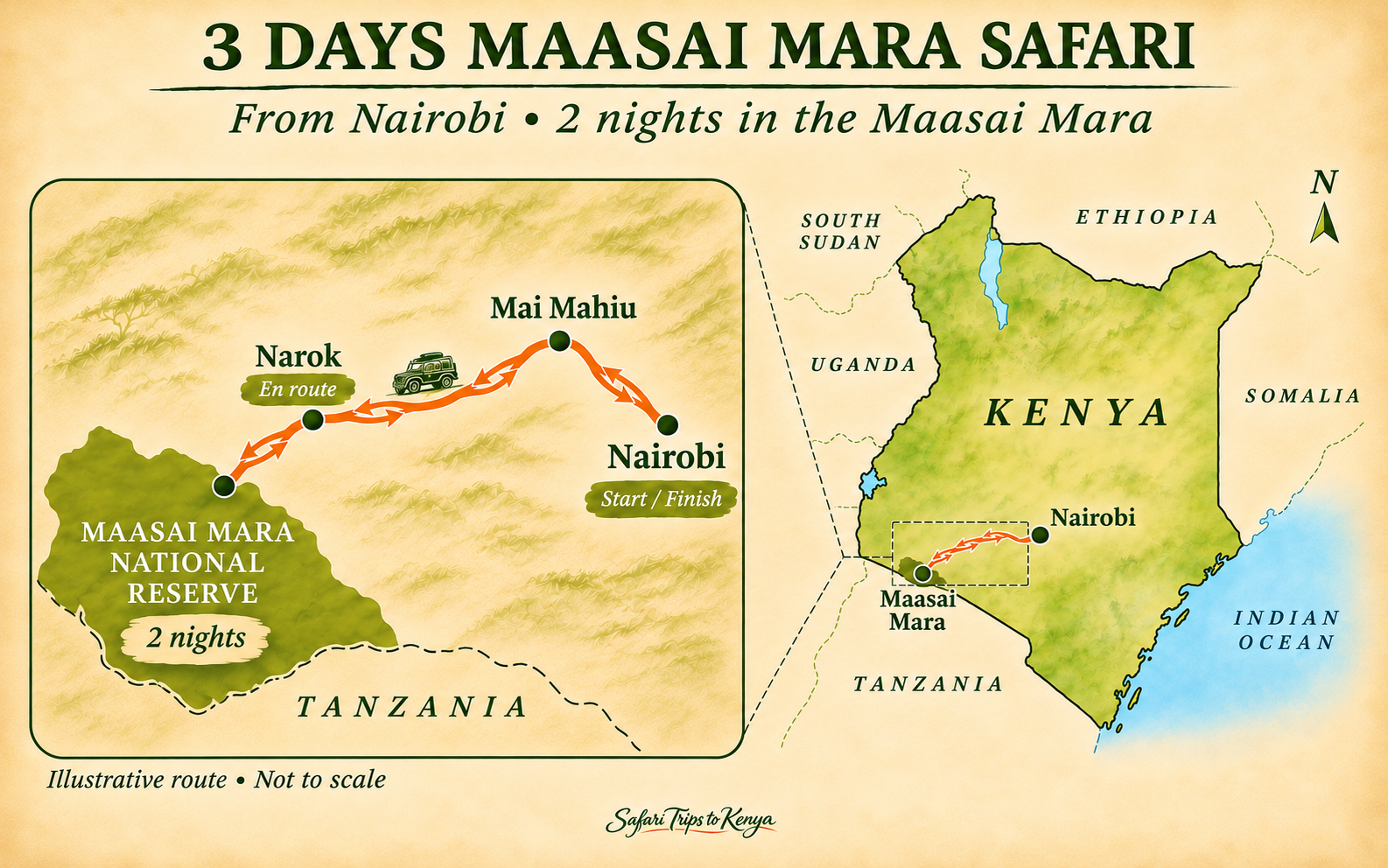
02 Itinerary
4 Days Amboseli Safari: Detailed Itinerary

Day 1: Nairobi – Drive to Amboseli National Park – Afternoon Game Drive - Main destination
- Amboseli National Park
- Drive time
- Road transfer as outlined in the itinerary
- Meals
- Lunch, Dinner
Your 4 Days Amboseli Safari begins in Nairobi. Your professional driver-guide collects you from your hotel, residence, Jomo Kenyatta International Airport or another agreed pickup point. An early morning departure is recommended, as it allows sufficient time for the journey to Amboseli while preserving the afternoon for wildlife viewing.
After leaving Nairobi, travel south toward the Amboseli ecosystem. The dense urban environment gradually gives way to:
- Smaller settlements.
- Rural landscapes.
- Open plains.
- Semi-arid country.
- Pastoral lands.
Depending on traffic, road conditions and timing, your guide may arrange brief stops for:
- Refreshments.
- Washroom facilities.
- Stretching.
- Scenic photography.
The road journey gives you an opportunity to observe changing Kenyan landscapes before reaching the wildlife area.
First Views of Mount Kilimanjaro
As you approach Amboseli, Mount Kilimanjaro may become visible if weather conditions are favorable. The mountain lies across the border in Tanzania but dominates the entire southern horizon. At 5,895 meters above sea level, it is Africa’s highest mountain, and its broad volcanic form is so large that first-time visitors often underestimate its scale until they see animals and trees positioned below it.
However, clouds frequently hide the summit, and views can never be guaranteed. Do not worry if the mountain is not visible on the first day, because the advantage of a four-day itinerary is that you will have multiple viewing opportunities.
Arrival in Amboseli
Reach your selected lodge or tented camp around midday or early afternoon depending on:
- Departure time.
- Traffic.
- Road conditions.
- Lodge location.
Check in and enjoy lunch, then rest briefly before beginning your first game drive.
Afternoon Game Drive
Later in the afternoon, enter Amboseli National Park or the relevant wildlife area depending on your accommodation. The open landscape often makes wildlife relatively easy to see. Your first game drive may reveal: Zebras, Wildebeests, Elephants, Gazelles, Giraffes, Buffaloes, Warthogs, Birds.
The relatively compact nature of Amboseli makes the first afternoon highly productive, although no sighting is guaranteed.
First Elephant Encounters
Elephants are likely to become the defining feature of your safari, and family groups may appear almost anywhere. You may see them:
- Crossing roads.
- Feeding.
- Drinking.
- Entering wetlands.
- Dust bathing.
- Moving in long lines.
- Protecting calves.
The open plains make it possible to observe entire family groups rather than only a few individuals.
Elephant Calves
Young elephants are especially engaging. You may observe calves:
- Staying close to mothers.
- Walking beneath adults.
- Playing with other young elephants.
- Learning to use their trunks.
- Copying adult feeding behavior.
Calves are protected by several members of the herd, and if the animals show signs of discomfort, your guide gives them additional space.
African Buffaloes
Buffaloes can be encountered in both open grassland and wetland areas. Large herds may gather where grazing is productive, and you may also see solitary older bulls. Buffaloes are powerful and should always be treated with respect, but from the safari vehicle they can be observed safely.
Lions
Lions occur throughout the ecosystem. Your guide may search:
- Open grassland.
- Bushes.
- Marsh edges.
- Areas where prey is concentrated.
- Shade during warmer hours.
The first afternoon may reveal:
- A pride resting.
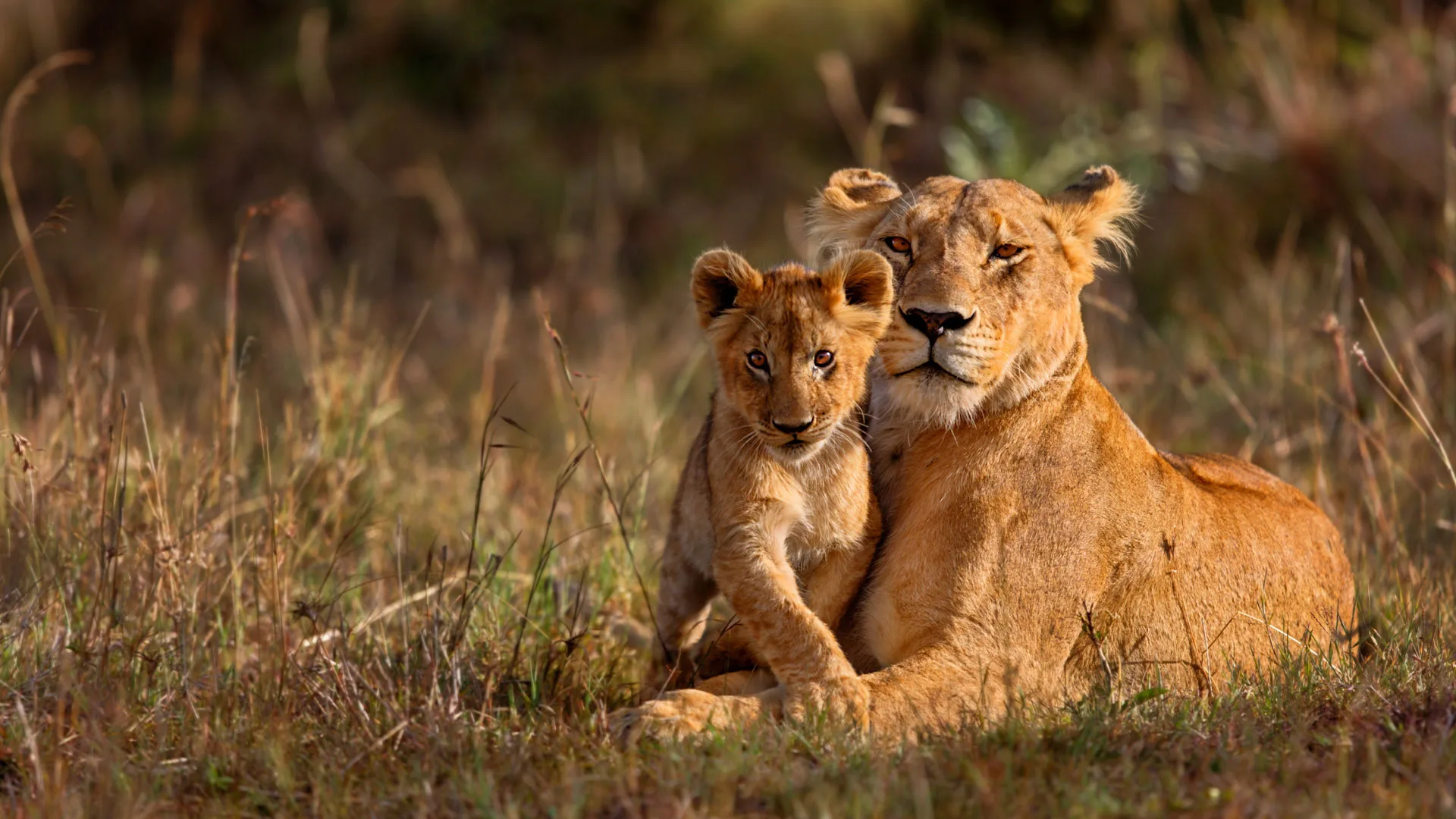
- Females with cubs.
- Males.
- Lions feeding.
- Lions watching herbivores.
Cheetahs
Cheetahs use open terrain where they can see prey and accelerate quickly. They may be observed:
- Resting.
- Walking.
- Scanning from a low mound.
- Watching gazelles.
- Traveling with cubs.
Cheetahs can disappear easily into grass, so your guide scans carefully.
Giraffes
Masai giraffes move between woodland and open plains. They may be seen:
- Browsing acacia trees.
- Walking across open areas.
- Drinking.
- Interacting.
When Kilimanjaro is visible, giraffes make excellent foreground subjects.
Sunset in Amboseli
Late afternoon is one of the most beautiful times in the park. The low sun can create:
- Golden elephant photography.
- Long shadows.
- Dusty silhouettes.
- Kilimanjaro compositions.
- Dramatic skies.
Return to your lodge or camp according to park regulations. Enjoy dinner and your first overnight stay.
- Accommodation: Budget, mid-range, luxury or high-end lodge/tented camp
- Meals: Lunch and Dinner depending on confirmed package
- Main Activities: Nairobi transfer and afternoon game drive
- Approximate Road Time: Around 4–5+ hours depending on Nairobi traffic, stops and lodge location
Where you stay
- Essential (Budget)
- Comfort (Mid-range)
- Premium (Luxury)
- Signature (High-end)
Day 2: Full-Day Amboseli Wildlife Safari - Main destination
- Amboseli National Park
- Meals
- Breakfast, Lunch, Dinner
Wake early for your first complete day in the ecosystem. Day 2 can be structured as:
- Extended morning and afternoon game drives.
- A full-day safari with picnic lunch.
- Morning game drive, lodge break and afternoon safari.
Most travelers prefer split drives because midday temperatures can become warm and wildlife activity often slows. However, photographers and birders may choose a longer full-day excursion.
Early Morning Safari
Depart before or around sunrise. The first hours of daylight are particularly valuable because:
- Temperatures are cool.
- Predators may still be active.
- Elephants move between feeding and water areas.
- Birds are active.
- Kilimanjaro visibility may be better.
Sunrise and Kilimanjaro
If the sky is clear, Day 2 can produce your first truly spectacular Kilimanjaro experience, as the mountain may dominate the horizon in early light. Views are never guaranteed, and photographers should be ready because cloud can build rapidly. Your guide may look for natural wildlife compositions including: Elephants, Giraffes, Zebras, Wildebeests, Acacia trees.
These images require patience. The guide should never chase or disturb wildlife simply to create a mountain-background photograph.
Morning Elephant Movements
Elephants often move toward wetlands as the day begins. You may encounter:
- Large family groups.
- Mothers with calves.
- Juveniles.
- Mature bulls.
Spend time observing rather than rushing away. Longer elephant sightings may reveal:
- Trunk touching.
- Vocalizations.
- Dust bathing.
- Play behavior.
- Family coordination.
- Protective behavior.
Amboseli’s Marshes
One of the ecological highlights of the park is the presence of productive wetlands within a generally dry landscape. Water associated with the wider Kilimanjaro catchment supports springs and marshes, and during dry periods these marshes become particularly important. These areas attract: Elephants, Buffaloes, Hippos, Zebras, Wildebeests, Waterbirds, Antelopes.
Elephants Feeding in Wetlands
Elephants may enter marshes deeply to feed. At times, only their upper bodies remain visible, and calves may disappear almost entirely behind tall vegetation. This creates one of the most characteristic Amboseli scenes, and wetland conditions also support abundant birdlife.
Hippos
Hippos may be seen in suitable wetland and water environments. During daylight hours, they usually remain in water or mud. They may:
- Rest.
- Surface.
- Interact.
- Yawn.
- Move short distances.
Hippos are extremely powerful animals, so all observations should remain from appropriate viewing locations.
Lion Search
The cooler morning hours provide another opportunity to search for predators, although sightings are never guaranteed. Lions may be:
- Returning from nighttime movement.
- Feeding.
- Walking.
- Resting.
- Calling.
Fresh tracks can help your guide identify likely areas.
Spotted Hyenas
Hyenas are important predators and scavengers, and highly intelligent social predators rather than simply scavengers. They may be encountered:
- Walking across plains.
- Near kills.
- Resting.
- Moving toward denning areas.
- Interacting with lions.
Cheetah Search
Open terrain is especially suitable for cheetahs, and a cheetah may hunt during the cooler hours. The sequence may involve:
- Watching prey.
- Stalking.
- Sudden acceleration.
- Chase.
If hunting behavior begins, the guide should remain at a respectful distance.
Observation Hill
Depending on current park access and your route, you may visit Observation Hill. The elevated viewpoint provides a broad perspective over the Amboseli basin. From the top, you may see:
- Marshes.
- Plains.
- Wildlife.
- Hills.
- Kilimanjaro when visible.
- Safari tracks.
This is one of the few locations where visitors may be allowed to leave the vehicle in a designated area. Always follow guide instructions.
Landscape Photography from Observation Hill
Observation Hill is particularly useful for wide-angle photography. Possible compositions include:
- Wetlands.
- Elephant herds.
- Sky.
- Mountains.
- Marsh patterns.
The view helps you understand how the ecosystem’s different habitats connect.
Birdwatching
Amboseli is exceptionally good for birdwatching. Potential species or groups include: African fish eagles, Grey crowned cranes, Pelicans, Herons, Egrets, Storks, Kingfishers, Secretary birds, Ostriches, Hornbills, Rollers, Bee-eaters, Bustards, Vultures, Eagles, Weavers.
Birdwatchers should request slower game drives and more frequent stops.
Lunch Options
Depending on your safari style, lunch may be a picnic in the park or a relaxed meal at the lodge.
Picnic Lunch
A picnic lunch is useful if you want to remain in the park. Advantages include:
- Maximum wildlife time.
- Less driving back to lodge.
- Ability to explore distant areas.
Lodge Lunch
A lodge lunch is useful for:
- Relaxation.
- Swimming.
- Recharging equipment.
- Rest.
- Escaping midday heat.
Both options work well.
Afternoon Game Drive
Return to the park later in the afternoon if you spent midday at the lodge. Your guide can focus on areas not explored earlier. Possible priorities include: Elephants, Lions, Cheetahs, Buffaloes, Birds, Kilimanjaro photography.
Sunset Elephant Photography
Amboseli is especially famous for late-afternoon elephant scenes. A herd crossing dry ground may raise dust, and the low sun turns the dust golden. If Kilimanjaro appears, the scene becomes one of the classic photographs of East Africa. Return to your lodge for dinner.
- Accommodation: Same or equivalent lodge/tented camp
- Meals: Breakfast, Lunch and Dinner
- Main Activities: Full-day Amboseli wildlife safari
Where you stay
Day 3: Second Full Day in Amboseli - Main destination
- Amboseli National Park
- Meals
- Breakfast, Lunch, Dinner
Day 3 is the principal advantage of choosing a four-day itinerary. You have another complete day without major road transfers, which dramatically improves the safari. Instead of trying to cover everything in one day, you can now focus on whatever remains most important.
Why the Second Full Day Matters
Wildlife moves constantly. A pride of lions hidden on Day 2 may be beside the road on Day 3, a cheetah may shift territory overnight, elephants may gather in a completely different wetland, and Kilimanjaro may be hidden one morning and perfectly clear the next. Another full day gives you:
- Better flexibility.
- More behavior-based observations.
- Better photography.
- Less rushing.
- More relaxed lodge time.
Early Morning Kilimanjaro Attempt
Wake early again. If the mountain was hidden on Day 2, Day 3 provides another important chance, though a clear view is never guaranteed. If it was already visible, you now have the opportunity to improve your photography. Your guide may concentrate on areas where: Elephants cross open ground, Giraffes move through sparse woodland, Zebras gather, Wildebeests graze.
Elephant-Focused Morning
Travelers particularly interested in elephants may spend much of the morning following herd movements and observing several different family groups. This allows comparison between:
- Herd sizes.
- Calf ages.
- Feeding habits.
- Social behavior.
Individual elephants may appear visibly different in:
- Tusk size.
- Ear shape.
- Body condition.
- Age.
Long-term elephant research in the Amboseli ecosystem has contributed greatly to scientific understanding of elephant society.
Elephant Matriarchs
Family groups are generally led by experienced females. The matriarch’s knowledge may help the herd remember:
- Water sources.
- Feeding areas.
- Travel routes.
- Threats.
- Seasonal changes.
Older females can therefore be critical to family survival, and watching a herd closely can reveal how other elephants respond to the matriarch’s movements.
Elephant Bulls
Mature males often spend much of their time separately from family groups. You may see large bulls:
- Walking alone.
- Feeding.
- Approaching water.
- Associating temporarily with other males.
Large bulls can be extremely impressive, and your guide gives them sufficient room and monitors body language carefully.
Predator-Focused Safari
If you have already enjoyed extensive elephant sightings, Day 3 can focus more on predators. Possible targets include: Lions, Cheetahs, Hyenas, Jackals.
Patience becomes especially important because predators may remain inactive for hours. A long stay can eventually reveal:
- Movement.
- Hunting attempts.
- Social interaction.
- Territorial behavior.
Lion Pride Observation
A longer safari allows you to return to the same pride across several days, and you may begin recognizing individual animals. Day 1 might show them sleeping, Day 2 might reveal cubs and Day 3 may produce movement or hunting behavior. This continuity makes the safari more meaningful.
Cheetah Families
Female cheetahs with cubs can provide exceptional viewing. Cubs learn through:
- Play.
- Following.
- Stalking practice.
- Watching their mother.
They remain vulnerable to larger predators, and your guide avoids interfering with family behavior.
Hyena Social Behavior
Hyenas live within complex clan structures. You may observe:
- Greetings.
- Play.
- Feeding.
- Competition.
- Vocalizations.
Spending time with hyenas can reveal a surprisingly sophisticated social system.
Buffalo Herds
Amboseli can support impressive buffalo concentrations. Look for:
- Large mixed herds.
- Bulls.
- Calves.
- Oxpeckers.
- Cattle egrets.
Buffaloes and lions may interact, especially where large prides are present.
Giraffe Behavior
Giraffes may be observed:
- Browsing.
- Walking.
- Drinking.
- Interacting.
- Necking.
Male giraffes may use their necks and heads during dominance contests, and these interactions can be subtle or surprisingly forceful.
Zebras and Wildebeests
Large mixed grazing groups provide constant activity. You may observe:
- Feeding.
- Foals.
- Movement toward water.
- Alarm behavior.
- Social interaction.
These herbivores provide an essential prey base for predators.
Warthogs
Warthogs can be seen throughout suitable areas. Typical behavior includes:
- Grazing while kneeling.
- Running with tails upright.
- Family groups.
- Entering burrows.
Their behavior makes them popular with families and photographers.
Baboons and Vervet Monkeys
Primates may be encountered in woodland and around suitable habitats. Baboons are highly social, and you may observe:
- Grooming.
- Mothers carrying infants.
- Feeding.
- Group movement.
Never feed primates, as feeding causes dangerous habituation.
Birding-Focused Afternoon
Day 3 also provides enough time to concentrate more heavily on birds. Instead of passing quickly between mammals, slow down around:
- Wetlands.
- Acacia woodland.
- Open plains.
Bird photography can add remarkable diversity to your safari gallery.
Optional Maasai Cultural Experience
Day 3 is also a practical time for an optional cultural visit. A responsible Maasai community experience may include discussion of:
- Livestock keeping.
- Homestead design.
- Beadwork.
- Clothing.
- Pastoral traditions.
- Community structure.
- Human-wildlife coexistence.
- Conservation.
The visit should be respectful and community-led.
Human-Wildlife Coexistence Around Amboseli
Wildlife frequently moves beyond the formal boundaries of Amboseli National Park. This makes surrounding community land important for:
- Wildlife corridors.
- Seasonal movement.
- Feeding.
- Dispersal.
Pastoral communities therefore play an essential role in the wider conservation landscape, and learning about these relationships adds depth to the safari.
Midday Lodge Relaxation
Because you now have an additional full day, there is no need to remain constantly in the vehicle. You may return to your lodge for:
- Lunch.
- Swimming.
- Rest.
- Reading.
- Photography from lodge grounds.
- Reviewing photos.
- Charging equipment.
This improves overall comfort.
Final Full Afternoon Game Drive
Later, return for your final full afternoon safari. Your guide may ask what you most want to see again. Perhaps you want: One more elephant herd, Another lion search, A cheetah, Kilimanjaro, Wetland birds, Giraffe silhouettes.
The flexibility of Day 3 allows the safari to become increasingly personalized.
Sunset on Day 3
Your final full sunset can be one of the emotional highlights of the trip. After three days in the ecosystem, the landscape feels familiar, and you may begin recognizing:
- Roads.
- Marshes.
- Elephant groups.
- Wildlife territories.
Watching the sun set across Amboseli after several days of exploration creates a much deeper experience than a rushed overnight trip. Return to your lodge for dinner.
- Accommodation: Same or equivalent lodge/tented camp
- Meals: Breakfast, Lunch and Dinner
- Main Activities: Second full day of wildlife viewing, photography and optional cultural experience
Where you stay
Day 4: Morning Game Drive – Return to Nairobi - Main destination
- Amboseli National Park
- Drive time
- Return transfer as outlined in the itinerary
- Meals
- Breakfast, Lunch
Wake early for your final morning. Depending on your accommodation and park arrangements, enjoy a final game drive before breakfast or conduct wildlife viewing while gradually departing the park. This is your final opportunity for: Kilimanjaro photography, Elephants, Lions, Cheetahs, Giraffes, Buffaloes, Birds.
Final Kilimanjaro Opportunity
If the mountain remained hidden for much of the safari, this final morning offers one more chance, though a view is never guaranteed. Morning conditions can change quickly, and a clear summit can appear unexpectedly after several cloudy days. If the mountain is visible, your guide may look for a suitable wildlife foreground without disturbing animals or leaving permitted tracks.
Final Elephant Experience
A final elephant encounter is a fitting conclusion. You may see a family:
- Walking toward water.
- Feeding.
- Crossing the plain.
- Dust bathing.
By now, you may appreciate more of the herd’s social behavior than you did on Day 1.
Breakfast and Check-Out
Return to your lodge for breakfast if required, then check out and begin the journey back to Nairobi. The route takes you through southern Kenya toward the capital, and stops can be made for:
- Lunch.
- Refreshments.
- Washroom facilities.
- Stretching.
Arrival in Nairobi is generally expected in the afternoon or early evening. Your guide transfers you to your:
- Hotel.
- Residence.
- Airport.
- Other agreed destination.
This marks the end of your 4 Days Amboseli Safari.
- Meals: Breakfast and lunch depending on package
- Main Activities: Morning wildlife viewing and return transfer to Nairobi
- Approximate Road Time: Around 4–5+ hours depending on traffic, stops and lodge location
Where you stay
03 Rates
Safari rates 2027-2029
Indicative per person. Season, group size and lodge style change the total — your quotation confirms current rates.
- Essential (Budget)
Essential (Budget)
Budget camps and lodges suit travelers who prioritize wildlife while keeping costs lower.
Great value camps
- Comfort (Mid-range)
Comfort (Mid-range)
Mid-range tented camps and lodges balance comfort and price with private rooms or tents and en-suite facilities.
Quoted for your dates
- Premium (Luxury)
Premium (Luxury)
Luxury camps and lodges focus on location, service and more intimate wildlife experiences.
Premium camps and lodges
- Signature (High-end)
Signature (High-end)
Signature camps and lodges are the most exclusive stays — small, highly private properties with exceptional guiding and setting.
Exclusive signature stays
04 Activities
Safari activities
Game viewing is the core of this itinerary. Optional extras are quoted separately and depend on season, permits and availability. Individual species and river crossings are never guaranteed.
Included
Afternoon game drive on arrival
Included in a typical day on this safari. Exact timing follows the confirmed itinerary.
View activity
Included
Sunrise photography
Included in a typical day on this safari. Exact timing follows the confirmed itinerary.
View activity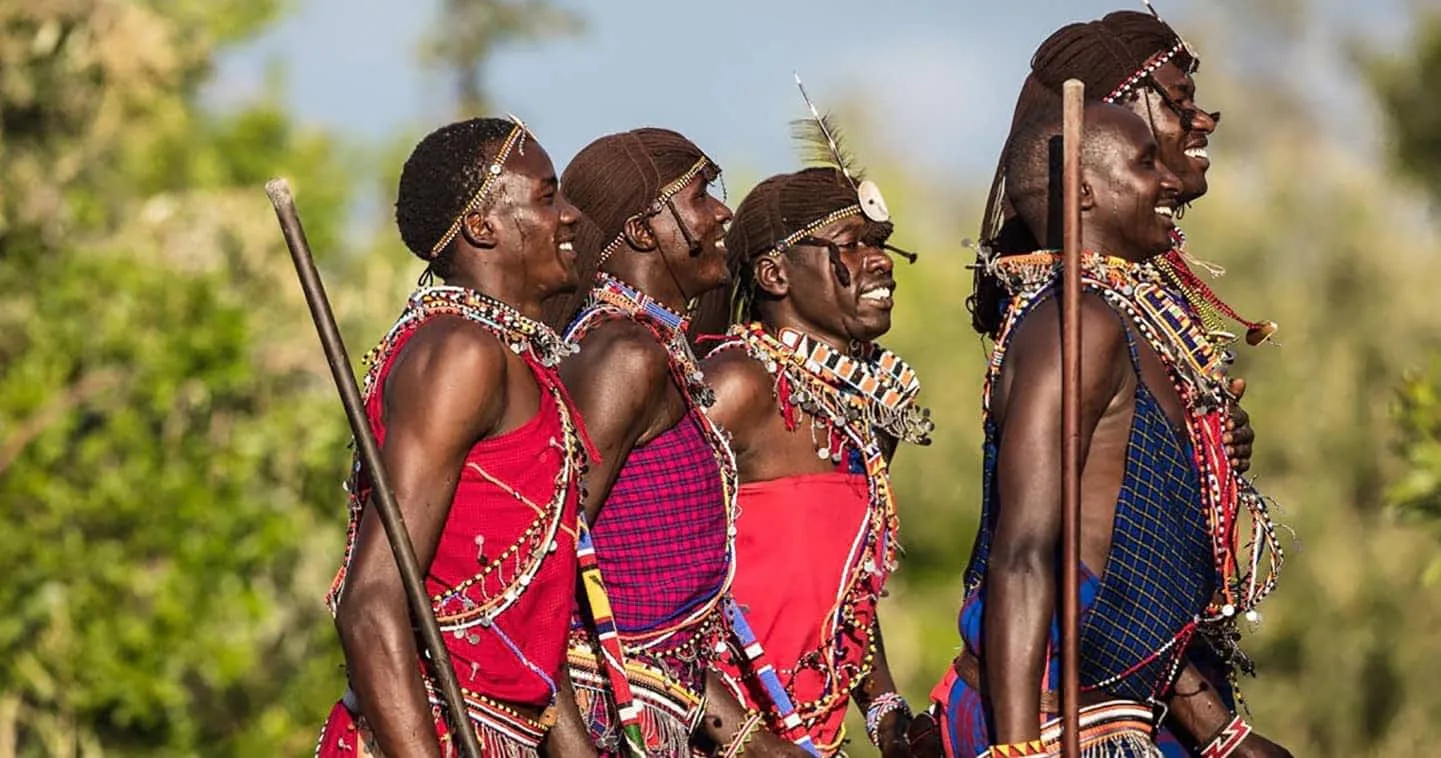
Optional
Maasai cultural experience.
Available at extra cost when conditions, permits and your dates allow. Not guaranteed.
View activity
Additional information
Plan This Safari
Wildlife You May See on a 4 Days Amboseli Safari
Possible wildlife includes the following, although individual sightings are never guaranteed:
Signature Species
- African elephants.
Big Five Species Present
- African elephant.
- African buffalo.
- Lion.
- Leopard may occur but is much more elusive.
Predators
- Lions.
- Cheetahs.
- Spotted hyenas.
- Jackals.
- Smaller carnivores.
Large Herbivores
- Buffaloes.
- Masai giraffes.
- Plains zebras.
- Wildebeests.
- Hippos.
Antelopes
- Impalas.
- Grant’s gazelles.
- Thomson’s gazelles.
- Other species according to habitat.
Primates and Smaller Mammals
- Olive baboons.
- Vervet monkeys.
- Warthogs.
- Mongooses.
- Smaller mammals.
Can You See the Big Five in Amboseli?
Amboseli is excellent for: Elephant, Buffalo, Lion.
Leopards are present but elusive. Rhinos are not generally a regular feature of the standard Amboseli safari experience. For travelers whose main goal is completing the Big Five, consider combining Amboseli with:
- Ol Pejeta Conservancy.
- Lake Nakuru National Park.
- Masai Mara.
Why Amboseli Is One of Africa’s Best Elephant Destinations
Amboseli provides several advantages for elephant viewing, although no particular sighting can be guaranteed. These include:
- Open habitat.
- Large family groups.
- Long-term elephant research.
- Important wetlands.
- High visibility.
- Scenic mountain backdrop.
The ability to observe elephants across large open areas makes their social behavior easier to appreciate.
Best Time for a 4 Days Amboseli Safari
Amboseli is a year-round safari destination, and each season offers different advantages.
Dry Season
Drier periods often provide:
- Strong wildlife concentration near water.
- Open visibility.
- Dust photography.
- Excellent elephant viewing.
- Easier road conditions.
The surrounding plains may become extremely dry, making the green wetlands especially dramatic.
Green Season
Rain produces:
- Fresh vegetation.
- Green plains.
- Excellent bird activity.
- Dramatic clouds.
- Attractive landscapes.
- Fewer visitors during some periods.
Road conditions can become muddy after heavy rain, so a proper 4x4 safari vehicle is particularly useful.
Is There a Best Time for Kilimanjaro Views?
No season can guarantee visibility. The most important factor is often time of day. Early morning generally provides strong opportunities because clouds may not yet have fully developed, and late afternoon can also produce clear periods. Four days gives you multiple chances.
Birdwatching in Amboseli
Amboseli is excellent for birding because wet and dry habitats occur close together. Possible species include: Grey crowned cranes, African fish eagles, Pelicans, Herons, Egrets, Storks, Secretary birds, Ostriches, Bustards, Hornbills, Bee-eaters, Rollers, Raptors, Weavers.
A four-day safari provides enough time to devote part of the itinerary specifically to birds.
Amboseli Safari for Photographers
Four days is particularly attractive for photographers. The extra time allows you to:
- Wait for better light.
- Return to elephant areas.
- Attempt multiple Kilimanjaro compositions.
- Spend longer with predators.
- Photograph birds.
- Explore different landscapes.
A private vehicle is strongly recommended.
Photography Equipment
Useful equipment may include:
- Telephoto lens.
- Medium zoom.
- Wide-angle lens.
- Spare batteries.
- Multiple memory cards.
- Bean bag.
- Lens cleaning equipment.
- Dust protection.
- Rain cover during wet periods.
- Backup storage.
Private 4 Days Amboseli Safari
A private safari gives you a dedicated 4x4 vehicle and professional driver-guide. This allows:
- Flexible departures.
- More photography space.
- Longer elephant observations.
- Personalized pacing.
- Family-friendly schedules.
- Birdwatching focus.
- Predator focus.
Private safaris make especially good use of the extra day.
4 Days Amboseli Safari for Couples
Couples can enjoy a slower, more comfortable safari with:
- Private vehicle.
- Comfortable lodge.
- Sunset game drives.
- Kilimanjaro views.
- Optional cultural experience.
- Beach extension.
The additional night provides time to enjoy the lodge as well as the park.
4 Days Amboseli Honeymoon Safari
For honeymooners, the itinerary can be upgraded with:
- Luxury camp.
- Private vehicle.
- Premium room.
- Romantic dining where available.
- Sundowner where offered.
- Beach extension.
- Masai Mara extension.
Amboseli combines particularly well with Diani Beach or another coastal destination.
4 Days Amboseli Family Safari
Families benefit from the slower pace. Instead of forcing children through extremely long game-drive days, parents can schedule:
- Morning safari.
- Pool time.
- Lunch.
- Rest.
- Afternoon safari.
A private vehicle is particularly valuable. Provide exact children’s ages when requesting pricing.
Safari for Older Travelers
The four-day format can be easier for older travelers because game drives can be spread out, with less pressure to remain in the vehicle throughout the entire day. Travelers can enjoy:
- Shorter drives.
- Lodge breaks.
- More relaxed pacing.
Mobility requirements should be considered when selecting accommodation.
Solo Travelers
Solo travelers can book the safari privately. The cost per person is generally higher because vehicle and guide expenses are not shared. Scheduled group options may be available depending on date and product.
Accommodation on the 4 Days Amboseli Safari
Accommodation can be arranged according to budget and desired comfort.
Budget Amboseli Accommodation
Budget properties usually provide:
- Simple rooms or tents.
- Essential bathroom facilities.
- Restaurant.
- Basic lounge.
- Practical location.
They are suitable for travelers who prioritize wildlife over lodge luxury.
Mid-Range Amboseli Accommodation
Mid-range properties may include:
- Comfortable en-suite room or tent.
- Restaurant.
- Bar.
- Lounge.
- Swimming pool.
- Charging facilities.
- Attractive grounds.
This category provides a strong balance between price and comfort.
Luxury Amboseli Accommodation
Luxury camps or lodges may provide:
- Spacious suites or tents.
- Private verandas.
- Premium furnishings.
- High-quality dining.
- Personalized service.
- Excellent locations.
- Pools.
- Mountain or wildlife views.
High-End Amboseli Safari
High-end arrangements may include:
- Private vehicle.
- Exclusive camp.
- Premium suite.
- Personalized meals.
- Conservancy activities.
- Small guest numbers.
- Exceptional guiding.
This works particularly well for honeymooners and luxury travelers.
Staying Inside the Park vs Outside
Accommodation can be located inside, immediately outside or in the wider Amboseli ecosystem.
Inside or Close to the Park
Advantages may include:
- Fast access to wildlife areas.
- Classic park experience.
- Reduced transfer time.
Wider Ecosystem or Conservancy
Potential advantages may include:
- Lower vehicle density.
- Community experiences.
- Additional activities.
- Exclusive atmosphere.
The correct choice depends on your safari priorities.
Road Safari vs Fly-In Safari
This page describes the road itinerary, but travelers can also choose a fly-in safari.
Road Safari Advantages
- Lower transport cost.
- Private vehicle throughout.
- More luggage flexibility.
- Overland experience.
- Easy combination with Tsavo.
Fly-In Safari Advantages
- Faster.
- Less road fatigue.
- More wildlife time.
- Premium feel.
The best option depends on budget and travel style.
4 Days Amboseli Safari Cost
Pricing depends on several factors:
- Travel season: accommodation rates can change significantly.
- Accommodation level: budget, mid-range and luxury options differ substantially.
- Group size: vehicle costs are shared among travelers.
- Park fees: applicable park-entry charges form an important part of the final price.
- Optional activities: cultural visits or other experiences may increase cost.
- Route: returning to Nairobi may cost differently from continuing toward Tsavo or the coast.
For accurate pricing, send your specific dates and traveler details.
What Is Typically Included?
Depending on your quotation, inclusions may include:
- Nairobi pickup.
- Private 4x4 safari vehicle.
- Professional driver-guide.
- Three nights’ accommodation.
- Meals specified in the itinerary.
- Amboseli park fees where included.
- Scheduled game drives.
- Drinking water in the safari vehicle.
- Return transfer to Nairobi or agreed destination.
- Applicable safari logistics listed in your package.
What Is Usually Excluded?
Unless specifically stated:
- International flights.
- Domestic flights.
- Kenya travel authorization or visa-related costs where applicable.
- Travel insurance.
- Alcoholic beverages.
- Premium drinks.
- Tips and gratuities.
- Cultural visit fees.
- Optional activities.
- Laundry.
- Personal shopping.
- Medical costs.
- Additional Nairobi accommodation.
- Services not listed in the final itinerary.
What to Pack for a 4 Days Amboseli Safari
Recommended items include:
- Lightweight safari clothing.
- Long trousers.
- Long-sleeved shirt.
- Warm fleece or jacket.
- Comfortable shoes.
- Hat.
- Sunglasses.
- Sunscreen.
- Insect repellent.
- Camera.
- Binoculars.
- Spare batteries.
- Memory cards.
- Power bank.
- Personal medication.
- Small backpack.
- Reusable water bottle where appropriate.
- Travel documents.
Why Binoculars Matter
Binoculars improve:
- Birdwatching.
- Distant predator viewing.
- Mountain observation.
- Scanning open plains.
They are especially useful in Amboseli because the landscape can be extremely open.
Safety During an Amboseli Safari
Always follow your guide’s instructions. Important principles include:
- Stay inside the vehicle except in authorized areas.
- Never approach elephants on foot.
- Keep appropriate distance.
- Never feed wildlife.
- Supervise children.
- Follow lodge escort rules after dark.
- Keep noise low.
- Do not block animals.
- Respect park regulations.
Responsible Elephant Viewing
Responsible elephant observation includes:
- Allowing herds to choose their path.
- Giving mothers with calves extra space.
- Avoiding sudden vehicle movements.
- Keeping noise low.
- Never surrounding elephants.
- Never blocking a crossing route.
This produces safer and more natural behavior.
4 Days Amboseli vs 3 Days Amboseli Safari
The difference is the additional full safari day.
3 Days Amboseli
Typically provides:
- Day 1 afternoon game drive.
- Day 2 full safari day.
- Day 3 morning game viewing.
4 Days Amboseli
Typically provides:
- Day 1 afternoon game drive.
- Day 2 full safari day.
- Day 3 second full safari day.
- Day 4 morning game viewing.
The additional day is especially useful for:
- Elephant observation.
- Kilimanjaro photography.
- Predator searches.
- Birding.
- Family-friendly pacing.
4 Days Amboseli vs 4 Days Masai Mara Safari
Choose Amboseli for:
- Elephants.
- Kilimanjaro.
- Wetlands.
- Mountain photography.
- Relaxed wildlife viewing.
Choose Masai Mara for:
- Lions.
- Leopards.
- Cheetahs.
- Great Migration.
- Extensive savannah.
Travelers with enough time should consider combining both.
4 Days Amboseli vs 4 Days Samburu Safari
Choose Amboseli for:
- Elephants.
- Kilimanjaro.
- Wetlands.
- Southern Kenya landscapes.
Choose Samburu for: Grevy’s zebra, Reticulated giraffe, Gerenuk, Beisa oryx, Northern Kenya scenery.
Both offer very different but complementary wildlife experiences.
Combining Amboseli with Tsavo
A longer route can follow Nairobi → Amboseli → Tsavo West → Tsavo East → Kenya Coast. This provides exceptional diversity. Amboseli contributes:
- Kilimanjaro.
- Elephants.
- Wetlands.
Tsavo contributes:
- Red elephants.
- Volcanic scenery.
- Huge wilderness.
- Easy coast access.
Combining Amboseli with Masai Mara
This is one of Kenya’s most iconic combinations. Amboseli adds:
- Elephants.
- Mountain scenery.
Masai Mara adds:
- Big Cats.
- Classic savannah.
- Great Migration possibilities (timing never guaranteed).
The two landscapes look completely different.
Combining Amboseli with the Kenya Coast
A safari-and-beach itinerary may continue to:
- Diani Beach.
- Mombasa.
- Watamu.
- Other approved coastal destinations.
After several days of game drives, the Indian Ocean provides a relaxing contrast.
Combining Amboseli with Tanzania
Because Amboseli lies near the Tanzania border, it can form part of a cross-border safari. A longer itinerary may connect Kenya with:
- Arusha.
- Tarangire.
- Ngorongoro.
- Serengeti.
Border, vehicle and guide logistics must be planned carefully.
Who Should Book This Safari?
The 4 Days Amboseli Safari is particularly suitable for:
- Elephant enthusiasts.
- Wildlife photographers.
- Birdwatchers.
- Couples.
- Honeymooners.
- Families.
- Older travelers.
- First-time Kenya safari visitors.
- Repeat safari travelers.
- Small private groups.
- Travelers interested in Kilimanjaro.
- Visitors wanting a slower safari pace.
Why Four Days Offers Excellent Safari Value
The fourth day changes the experience from a short visit into a more complete safari. You can:
- Revisit favorite wildlife areas.
- Spend longer with elephants.
- Search repeatedly for predators.
- Wait for better Kilimanjaro conditions.
- Include birdwatching.
- Take lodge breaks.
- Add a cultural experience.
For travelers who can spare one extra day, the difference in safari quality is substantial.
Why Amboseli Is Ideal for Slow Wildlife Observation
The relatively compact park and open terrain make Amboseli ideal for spending long periods with individual animals. Instead of constantly driving, you can simply stop, watch an elephant herd feeding, and wait for calves to play. Observe buffaloes around the marsh, follow giraffes across open plains, and listen to birds. This slower approach often produces more memorable experiences than trying to see the maximum possible number of species.
Book Your 4 Days Amboseli Safari
Experience Kenya’s legendary elephant country in greater depth on a 4 Days Amboseli Safari from Nairobi. Travel from Nairobi into the dramatic plains of southern Kenya. Elephant families may be seen moving across those plains, with Mount Kilimanjaro behind them when the weather is clear. Game drives also explore green wetlands surrounded by dry savannah. You can search for lions and cheetahs, and photograph buffaloes, giraffes, zebras and wildebeests when they are present.
Listen to the calls of wetland birds, climb Observation Hill where accessible for wide views across the ecosystem, and spend two full safari days without major road transfers. Wake on several mornings with another opportunity to see Africa’s highest mountain emerge from the clouds. This itinerary gives you the time to experience Amboseli rather than simply pass through it.
Choose Your 4 Days Amboseli Safari Style
We can customize the itinerary as a:
- Budget 4 Days Amboseli Safari
- Mid-Range 4 Days Amboseli Safari
- Luxury 4 Days Amboseli Safari
- Private Amboseli Safari
- Amboseli Honeymoon Safari
- Family Amboseli Safari
- Photography Amboseli Safari
- Birdwatching Amboseli Safari
- Elephant-Focused Amboseli Safari
- Amboseli Safari and Beach Holiday
Request a 4 Days Amboseli Safari Quote
To prepare a personalized quotation, send us:
- Preferred travel dates.
- Number of adults.
- Number and ages of children.
- Preferred accommodation category.
- Nairobi pickup details.
- Whether elephant photography is a priority.
- Whether birdwatching is important.
- Whether you want a Maasai cultural experience.
- Whether you prefer road or fly-in travel.
- Other destinations you want to combine with Amboseli.
We can then prepare a customized 4 Days Amboseli Safari based on your wildlife interests, travel style and budget.
Individual species, river crossings and mountain views can never be guaranteed.
Planning Questions
Frequently Asked Questions
Is four days too long for Amboseli?
No. Four days is excellent for travelers who want a relaxed safari, photography, birding or more time with elephants.
Is four days better than three days?
Yes, if you have the time. You gain another complete wildlife-viewing day and additional Kilimanjaro opportunities.
How long is the drive from Nairobi?
Commonly around four to five hours or longer depending on traffic, stops and lodge location.
Can we see elephants every day?
Amboseli provides excellent elephant opportunities, but no particular sighting can be guaranteed.
Will we see Kilimanjaro?
Possibly. Visibility depends on weather. Four days improves your chances because you have multiple mornings and evenings.
Are there lions?
Yes. Lions occur throughout the ecosystem.
Can we see cheetahs?
Yes. Cheetahs may be found in suitable open areas.
Are leopards present?
Yes, but they are elusive and less commonly encountered.
Are buffaloes common?
Yes. Buffaloes are regularly seen around productive areas and wetlands.
Are there hippos?
Yes. Hippos occur in suitable wetland habitats.
Can we see the Big Five?
Amboseli is strong for elephant, buffalo and lion, but it is not generally the best destination for completing all five.
Is Amboseli good for birding?
Yes. It is one of Kenya’s excellent birding parks.
Can children join?
Yes. A four-day private safari is particularly suitable for families because the pace can be adjusted.
Is the safari private?
It can be arranged as a fully private safari.
Can we fly instead of driving?
Yes. A fly-in version can be arranged.
Can we combine Amboseli with Tsavo?
Yes. This is one of the most logical combinations in southern Kenya.
Can we combine Amboseli with Masai Mara?
Yes. This creates an excellent first-time Kenya safari.
Can we continue to Diani Beach?
Yes. Amboseli can be combined with Tsavo and the Kenya coast or connected by suitable flight arrangements.
Is this safari good for honeymooners?
Yes. Luxury accommodation and a beach extension can be added.
Is Wi-Fi available?
Many established lodges provide Wi-Fi, but reliability can vary.
Is electricity available?
Most established safari properties provide electricity or charging facilities.
Can dietary requirements be accommodated?
Most lodges can cater for common dietary requirements if informed in advance.
05 Request Quote
Request Quote
Tell us your dates, group size, and preferred lodge style — we will send a tailored quote for this safari.
Want to extend your safari?
Add Amboseli, Diani Beach, Tanzania and Zanzibar, or gorilla trekking in Uganda or Rwanda — we tailor the journey to your dates.