
14 DAYS / 13 NIGHTS
14 Days Kenya Migration Safari
Experience a 14 Days Kenya Migration Safari with Masai Mara migration viewing, big cats, elephants, rhinos, Rift Valley scenery and classic Kenya wildlife.
- Wildlife Safari Private Journey
- Private Safari 4x4 Vehicle
- Expert Guide English Speaking
- All Meals Breakfast, Lunch, Dinner
- 24/7 Support We're here to help
01 Overview
Safari Overview
- Duration 14 days / 13 nights
- Destination Wildebeest Migration
- Starts / ends Nairobi
- Safari style Private safari
- Accommodation Essential · Comfort · Premium · Signature
- Best for Wildlife viewing, photography
14 Days Kenya Migration Safari
A 14 Days Kenya Migration Safari is designed for travelers who want to build an extended Kenya journey around the extraordinary movement of wildebeest and zebras through the wider Mara–Serengeti ecosystem while still experiencing the broader wildlife, landscapes and conservation areas that make Kenya one of Africa's great safari destinations. The Great Migration is one of the world's most famous wildlife events, but it should not be treated as a single spectacle that happens at one fixed place on one predictable date. It is a continuous natural cycle.
Wildebeest, zebras and other herbivores move through the greater Serengeti–Mara ecosystem in response to rainfall, fresh grazing and water availability. During part of the annual cycle, large concentrations of animals may enter Kenya's Masai Mara. At other times, the main herds remain farther south in Tanzania. For this reason, a successful Kenya migration safari requires realistic expectations, careful timing and enough time in the Masai Mara to respond to natural herd movements.
This fourteen-day itinerary is particularly strong because it does not depend on one short two-night Mara visit. Instead, the wider journey can combine Amboseli National Park, central Kenya or the Great Rift Valley, selected rhino areas and several strategically planned nights in the Masai Mara. The safari therefore remains outstanding even when the migration behaves unpredictably.
You can search for elephants beneath Mount Kilimanjaro, see rhinoceroses in conservation areas, watch lions and cheetahs in predator-rich grasslands, observe hippos and birds around Rift Valley lakes and then dedicate the final major section of the journey to the movement of wildebeest and zebras across the Mara ecosystem. For travelers visiting Kenya primarily because they dream of witnessing the migration, this itinerary creates both focus and flexibility.
14 Days Kenya Migration Safari at a Glance
A migration-focused route may follow this structure:
- Day 1: Arrival in Nairobi
- Day 2: Nairobi to Amboseli National Park
- Day 3: Full-Day Amboseli Wildlife Safari
- Day 4: Amboseli to Central Kenya / Great Rift Valley
- Day 5: Rhino and Rift Valley Wildlife Experience
- Day 6: Great Rift Valley to Masai Mara
- Day 7: Full-Day Masai Mara Migration Safari
- Day 8: Full-Day Masai Mara Migration Safari
- Day 9: Full-Day Masai Mara Big-Cat and Migration Safari
- Day 10: Masai Mara – River and Herd Movement Exploration
- Day 11: Masai Mara – Flexible Migration Tracking Day
- Day 12: Masai Mara – Final Full Wildlife Safari
- Day 13: Masai Mara to Nairobi
- Day 14: Nairobi – Departure
The exact itinerary can be adjusted significantly depending on expected seasonal herd distribution, accommodation availability, whether you prefer to stay inside the national reserve or in adjoining conservancies, and whether your priority is general migration viewing or specifically spending more time near potential river-crossing areas.
What Is the Great Migration?
The Great Migration is the continuous movement of enormous numbers of wildebeest, zebras and other grazing animals through the wider Serengeti–Mara ecosystem. Rather than simply migrating north and south once each year, the herds follow a broad cyclical pattern shaped by rainfall and grass growth. Wildebeest dominate the movement numerically, but zebras and other herbivores travel with or around the herds.
Predators respond to this abundance. Lions, cheetahs, leopards and spotted hyenas take advantage of increased prey concentrations, crocodiles become especially prominent when animals cross major rivers, and vultures and other scavengers also play important ecological roles. The migration is therefore not only about wildebeest. It is an enormous ecosystem process involving predators, scavengers, rivers, rainfall, grass, reproduction and survival.
When Does the Great Migration Reach Kenya?
The Masai Mara often receives large migration herds during the broader dry-season period, commonly associated with the months from approximately July into October. However, this should never be interpreted as a rigid timetable. There are years when herd movement begins earlier, and other years experience delayed movement. Rainfall can cause animals to change direction rapidly. Some herds remain in the northern Serengeti while others move into the Mara, and the migration can also become dispersed across a large area.
For this reason, travelers should think in terms of migration season probabilities, not guaranteed dates. A safari operator can recommend travel periods based on historical patterns, but nature remains in control.
Why Spend Several Days in the Masai Mara?
A common mistake is booking only two nights in the Masai Mara and expecting to witness a dramatic river crossing. This creates unnecessary pressure and unrealistic expectations, because river crossings cannot be scheduled. Wildebeest may gather near the Mara River for hours and then move away. They may remain on one bank for several days. A crossing may happen suddenly after a long period of inactivity, or another crossing may occur kilometers away.
Spending several full days in the Mara gives your guide much more flexibility. You can respond to information about herd movement, explore different sections of the ecosystem, and still have time to appreciate resident wildlife rather than treating every drive as a search for one crossing event.
Itinerary
- Day 1: Arrival in Nairobi, welcome to Kenya
- Day 2: Nairobi to Amboseli
- Day 3: Amboseli Safari – Elephants and Kilimanjaro
- Day 4: Amboseli to Central Kenya / Great Rift Valley
- Day 5: Central Kenya or Lake Nakuru Wildlife Safari
- Day 6: Great Rift Valley to Masai Mara
- Day 7: Masai Mara Migration Safari
- Day 8: Migration and Predator Safari
- Day 9: Masai Mara, river Systems and Migration Movement
- Day 10: Masai Mara, full, day Herd Tracking
- Day 11: Flexible Migration Tracking Day
- Day 12: Final Full Day in the Masai Mara
- Day 13: Masai Mara to Nairobi
- Day 14: Nairobi, departure
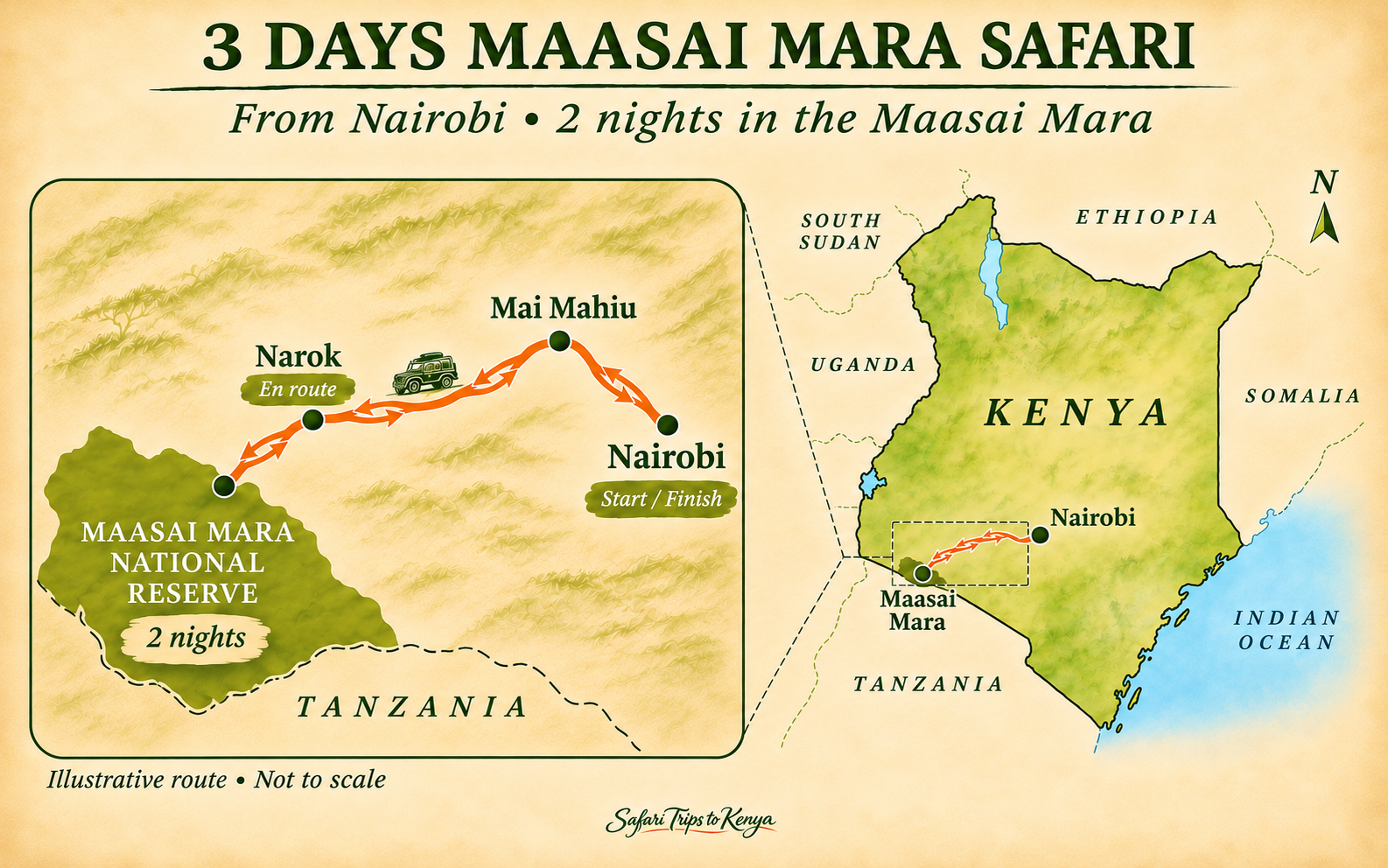
02 Itinerary
14 Days Kenya Migration Safari: Detailed Itinerary
-

Day 1: Arrival in Nairobi – Welcome to Kenya - Main destination
- Masai Mara National Reserve
- Drive time
- Road transfer as outlined in the itinerary
- Meals
- Lunch, Dinner
Your 14 Days Kenya Migration Safari begins at Jomo Kenyatta International Airport. After completing immigration procedures and collecting your luggage, you will meet your Safari Trips to Kenya representative and transfer privately to your selected Nairobi hotel.
The first day is intentionally relaxed, because long-haul travel can be tiring and the safari ahead includes multiple early mornings. Check into your hotel, freshen up and rest. Depending on arrival time, you can enjoy dinner at the hotel or arrange an optional Nairobi activity.
Your safari representative can brief you about the journey, with particular attention to migration expectations. Your guide can explain:
- Current or recent herd movement information
- Expected Masai Mara conditions
- Road-transfer schedules
- Park entry arrangements
- Accommodation locations
- Wildlife-viewing etiquette
- River-crossing realities
- Photography considerations
This helps establish realistic expectations from the beginning.
- Destination: Nairobi
- Main Experience: Arrival, transfer and safari briefing
- Accommodation: Nairobi hotel
- Meals: According to arrival time
Amboseli National Park
Where you stay
-
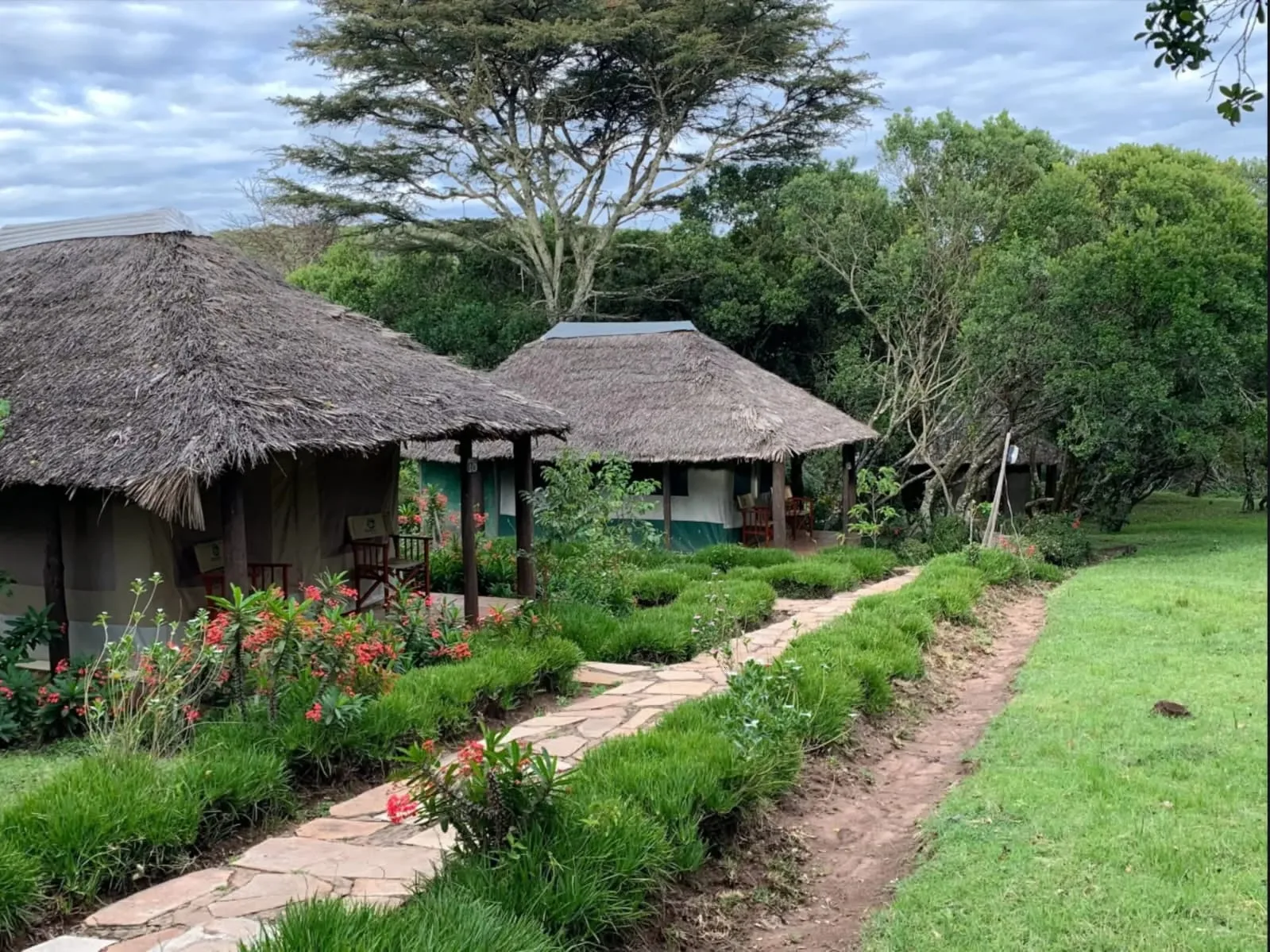
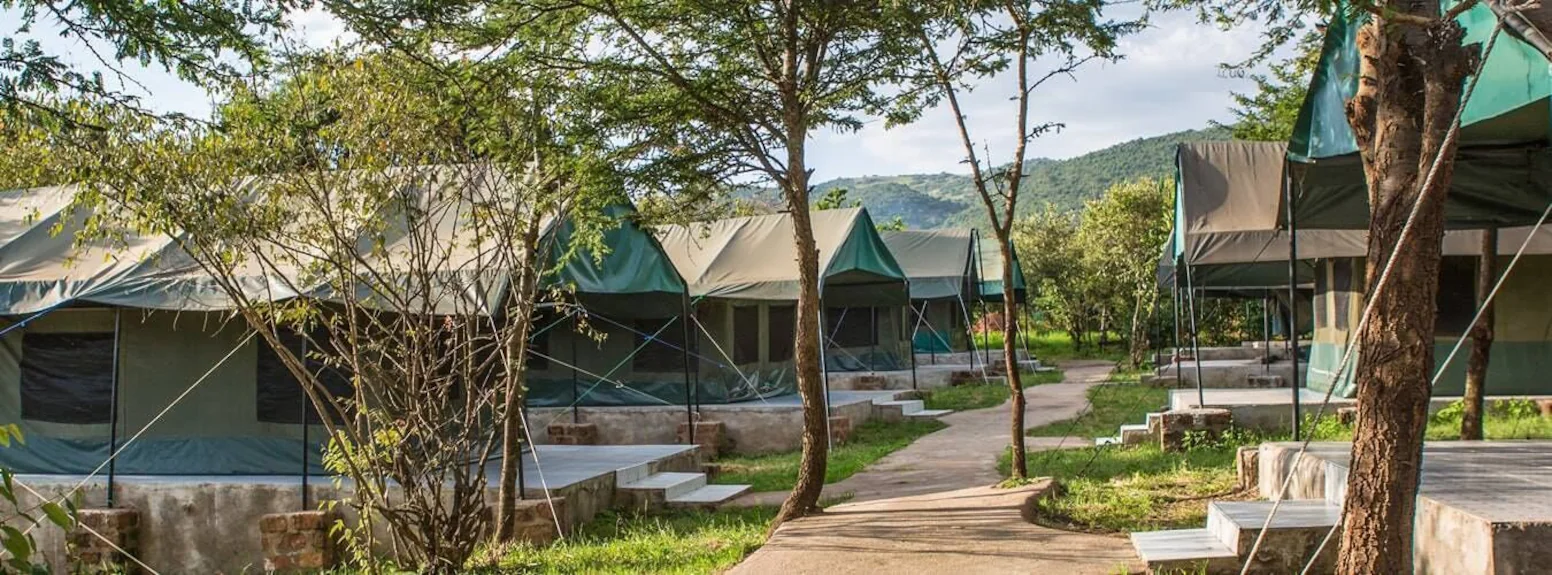
Essential (Budget)
-
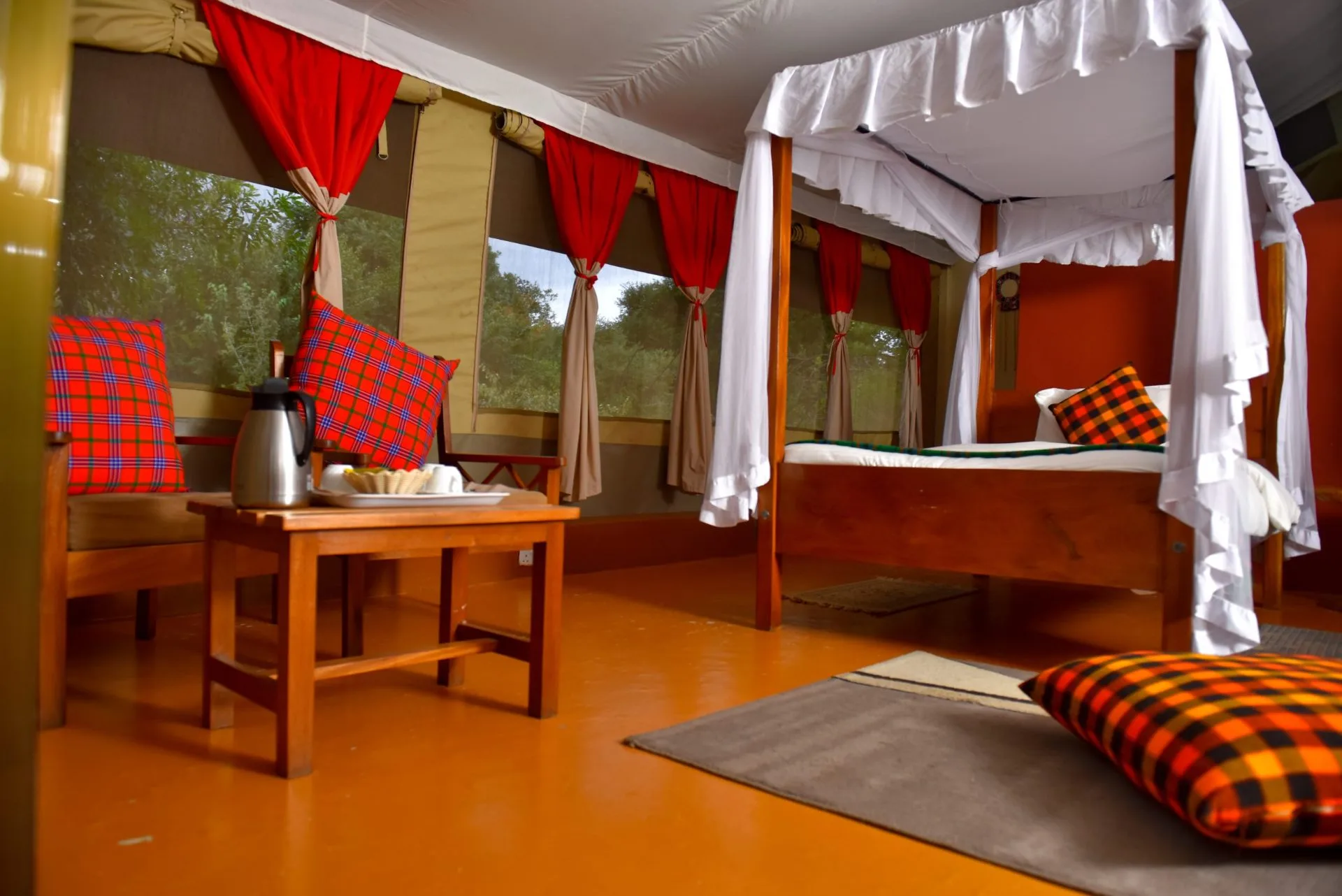
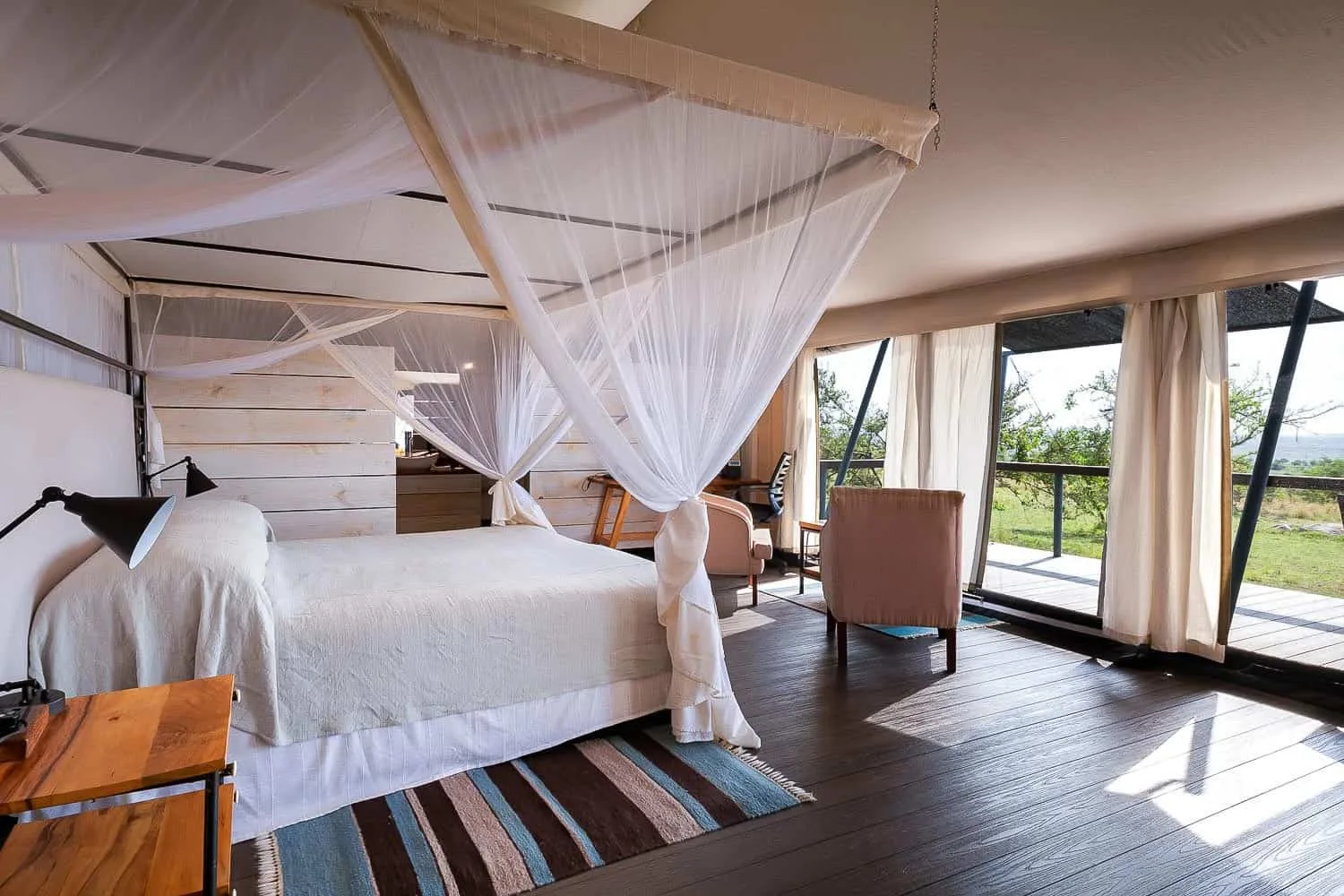
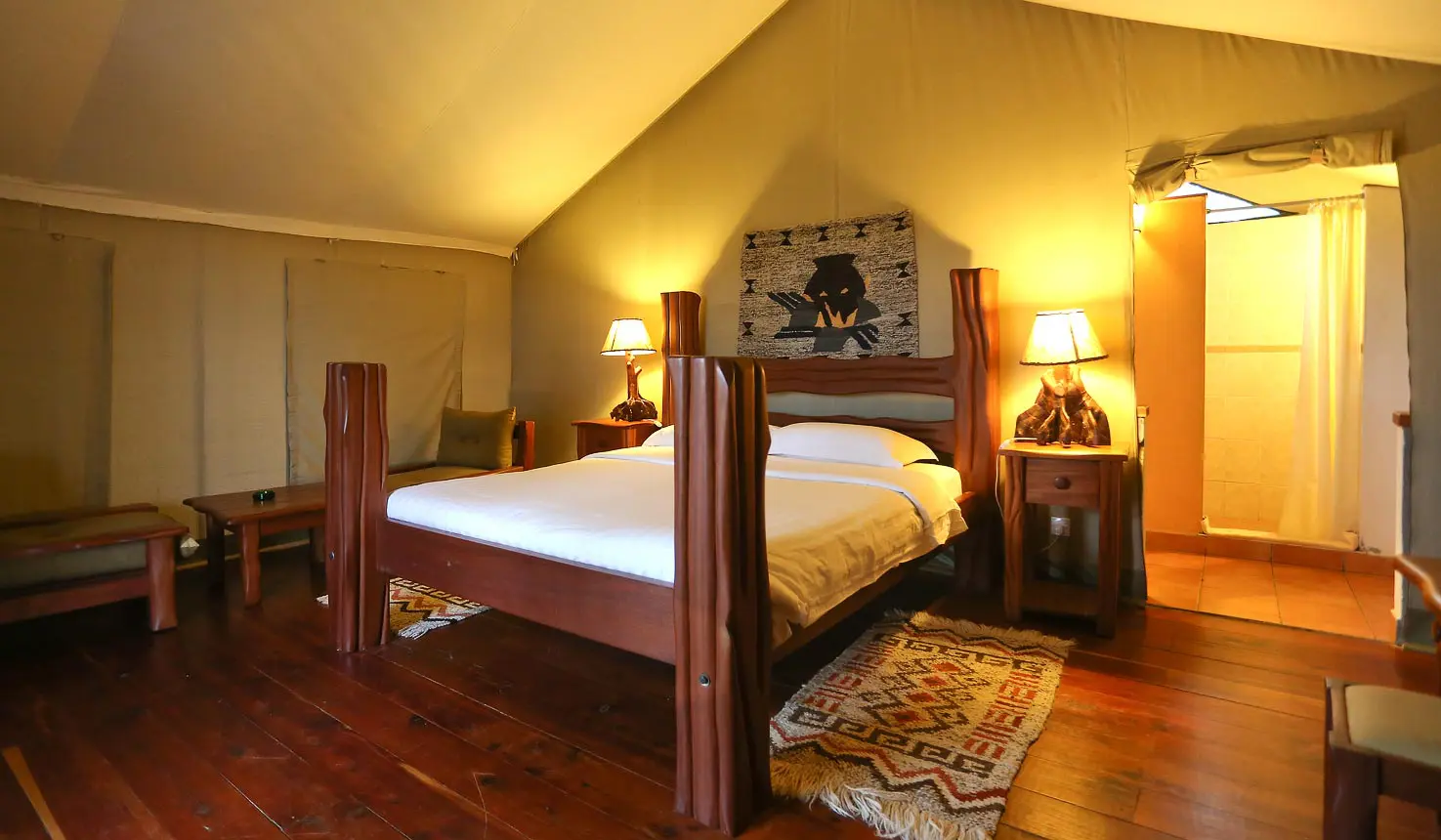
Comfort (Mid-range)
-
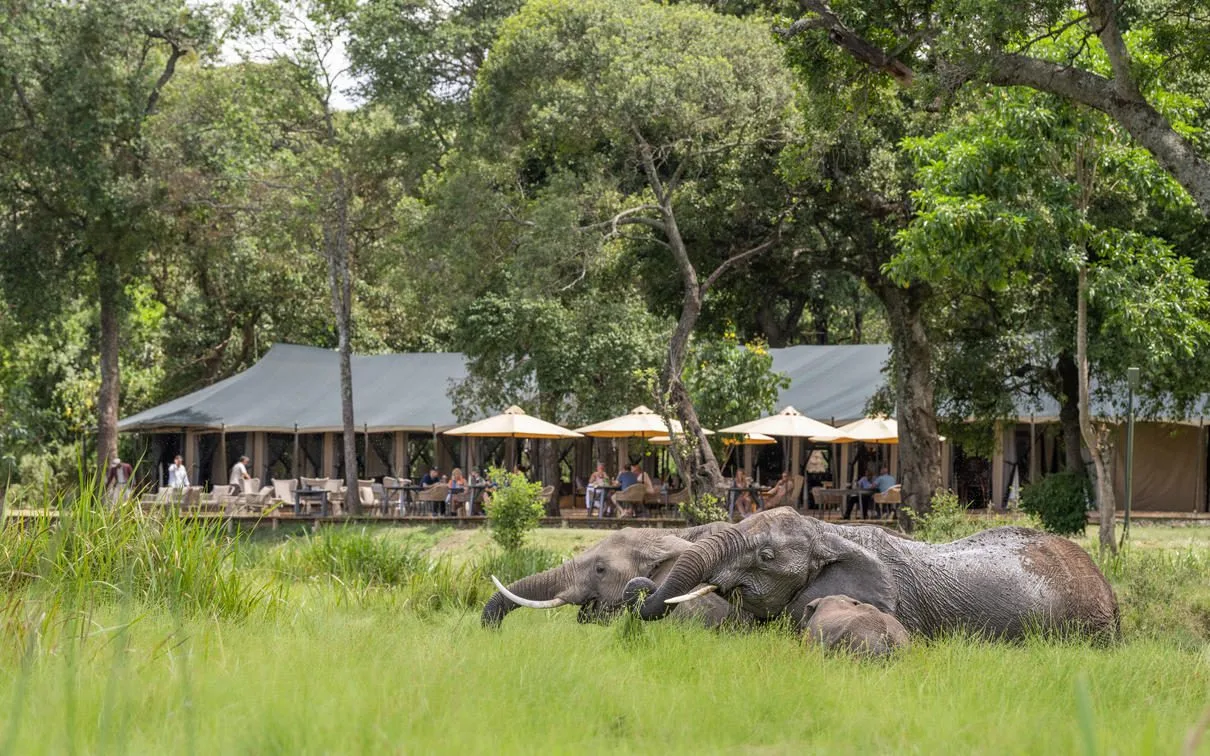
Premium (Luxury)
-
Signature (High-end)
-
Day 2: Nairobi to Amboseli National Park - Main destination
- Masai Mara National Reserve
- Meals
- Breakfast, Lunch, Dinner
After breakfast, depart Nairobi and drive south toward Amboseli National Park. This first major safari destination provides an important contrast with the Masai Mara, as Amboseli is famous for elephants and the dramatic backdrop of Mount Kilimanjaro.
Arrive at your lodge or tented camp and settle in. Depending on travel time, enjoy lunch before beginning an afternoon game drive. Elephants are the stars of Amboseli, with large family groups moving through the plains and wetlands. You may see calves surrounded by adult females, bulls feeding independently or herds crossing open landscapes. If visibility is good, Kilimanjaro may rise beyond the plains, though views are never guaranteed. Other wildlife can include: Lions, Buffaloes, Plains zebras, Wildebeest, Masai giraffes, Gazelles, Impalas, Warthogs, Hippos, Spotted hyenas, Jackals.
The presence of wildebeest here also helps explain an important point: not every wildebeest in Kenya is part of the famous Mara migration, as resident populations occur in other ecosystems. Return to your accommodation for dinner.
Where you stay
-
Day 3: Full-Day Amboseli Safari – Elephants and Kilimanjaro - Main destination
- Masai Mara National Reserve
- Meals
- Breakfast, Lunch, Dinner
Wake early, as morning is often the best time to see Kilimanjaro before clouds gather around the summit, although views are never guaranteed. Begin your game drive while wildlife remains active and explore Amboseli's open plains, woodland and wetland habitats.
The marshes are especially important. Water linked to the Kilimanjaro ecosystem emerges within Amboseli and supports wildlife even during dry periods. Elephants frequently feed in wetland vegetation, and buffaloes and hippos may also gather nearby. Birdlife can be exceptional. Depending on the season, you may encounter: Pelicans, Herons, Egrets, Storks, Kingfishers, Secretary birds, Bustards, Raptors, Ostriches.
Visit Observation Hill where appropriate for panoramic views. The day can be arranged as separate morning and afternoon drives or as a longer excursion depending on your preference. Return to your lodge in the evening.
Why Include Amboseli on a Migration Safari?
A migration-focused itinerary should still show you more than one ecosystem. Amboseli adds:
- Exceptional elephant viewing
- Kilimanjaro scenery
- Wetland habitats
- Large herbivore populations
- Birdlife
- A strong contrast with the Mara
This means the safari remains varied and rewarding rather than spending all fourteen days in one region.
Where you stay
-
Day 4: Amboseli to Central Kenya / Great Rift Valley - Main destination
- Masai Mara National Reserve
- Meals
- Breakfast, Lunch, Dinner
After breakfast, leave Amboseli. Depending on routing, you may travel through Nairobi and continue toward central Kenya or the Great Rift Valley. Today is primarily a transfer day, and the landscapes change considerably as you move away from the semi-arid southern plains. Urban and agricultural zones lead into the highlands and eventually toward the Rift Valley.
A strategically selected overnight stop prevents the journey from becoming unnecessarily exhausting. The afternoon can remain relaxed, which is a good opportunity to recharge before the migration-focused section intensifies.
Rhino and Rift Valley Experience
Where you stay
-
Day 5: Central Kenya or Lake Nakuru Wildlife Safari - Main destination
- Masai Mara National Reserve
- Meals
- Breakfast, Lunch, Dinner
Today adds an important conservation and wildlife dimension. Depending on the final routing, the safari may include Lake Nakuru National Park or another central Kenya rhino area. Lake Nakuru is particularly valuable because it provides opportunities to search for both black and white rhinoceroses, and the park's compact size allows several habitats to be explored efficiently. Wildlife may include: White rhinos, Black rhinos, Buffaloes, Giraffes, Zebras, Baboons, Warthogs, Waterbucks, Hippos, Leopards, Numerous birds.
The lake itself supports important birdlife, although flamingo concentrations vary according to water conditions, so large numbers cannot be guaranteed. The day helps broaden the safari from migration-focused wildlife to conservation-focused wildlife. Spend the night in the Rift Valley region.
Why Add Rhino Country Before the Mara?
The Masai Mara contains extraordinary biodiversity, but rhinoceros sightings there are not as straightforward as in dedicated rhino areas. Including a strong rhino destination means the overall itinerary has a much better chance of producing a rounded Kenya safari experience. You can then enter the Mara without feeling that every remaining wildlife objective depends on one place.
Masai Mara – Heart of the Kenya Migration Safari
Where you stay
-
Day 6: Great Rift Valley to Masai Mara - Main destination
- Masai Mara National Reserve
- Meals
- Breakfast, Lunch, Dinner
After breakfast, begin the journey toward the Masai Mara National Reserve. For travelers booking this safari specifically for the migration, anticipation is usually high. As you move southwest, rolling grasslands increasingly dominate the landscape before you enter the greater Mara ecosystem.
Check into your selected lodge or tented camp. Accommodation location matters greatly on a migration safari, since a camp positioned close to areas where herds are expected may reduce daily driving time. However, migration movement is never fixed, so no location is perfect throughout the entire season.
After lunch and rest, begin your first game drive. Even before encountering the main migration herds, resident wildlife can be exceptional. Possible sightings include: Lions, Leopards, Cheetahs, Elephants, Buffaloes, Giraffes, Wildebeest, Zebras, Topis, Impalas, Gazelles, Spotted hyenas, Jackals.
Return to camp toward sunset.
Where you stay
-
Day 7: Full-Day Masai Mara Migration Safari - Main destination
- Masai Mara National Reserve
- Meals
- Breakfast, Lunch, Dinner
Wake before sunrise, as today begins the dedicated migration section. Your guide will use recent information about herd locations to determine the day's route. Depending on current conditions, the main herds may be:
- Spread across open plains
- Concentrated around grazing areas
- Moving toward river systems
- Resting near water
- Crossing between different sectors of the ecosystem
Do not expect every migration day to involve constant movement, as large herds often spend considerable time feeding. The sheer scale can still be extraordinary, with hundreds or thousands of wildebeest filling the landscape, zebras frequently mixing among them and young animals staying close to mothers. Predators observe from nearby cover and vultures circle overhead, so the ecosystem becomes intensely dynamic.
Enjoy a picnic lunch in an appropriate designated location if undertaking a full-day drive, continue searching through the afternoon and return to camp after an extensive day.
Understanding Migration Herd Behavior
Wildebeest movement may appear chaotic, but several environmental factors influence it:
- Rainfall: Fresh rainfall stimulates grass growth, and wildebeest respond rapidly to changing grazing conditions.
- Water: Large herds require access to water, so rivers and seasonal water sources influence movement.
- Grazing quality: Wildebeest often seek nutritious short grass.
- Herd momentum: Once large numbers begin moving, other animals may follow.
- Predator pressure: Predators influence local behavior but do not drive the overall continental-scale movement.
Understanding these factors makes migration viewing far more interesting than simply waiting for river crossings.
Where you stay
-
Day 8: Full-Day Migration and Predator Safari - Main destination
- Masai Mara National Reserve
- Meals
- Breakfast, Lunch, Dinner
Begin early again. Your guide may revisit productive herd areas or travel toward another section depending on overnight movement. This is one of the major advantages of a long itinerary, because you do not need to repeat exactly the same game drive.
The morning may focus on the interaction between migration herds and predators. Lions take advantage of abundant prey, spotted hyenas can be particularly active, cheetahs may target smaller or younger animals in open areas and leopards use riverine and wooded zones. Predator sightings are not guaranteed simply because migration herds are present, but prey abundance can create fascinating ecological interactions.
Lions During the Migration
The Masai Mara supports substantial resident lion populations throughout the year. When large wildebeest and zebra concentrations arrive, prey availability can increase dramatically, and lion prides may remain near herd movement corridors or water sources. Watching lions during migration season can reveal:
- Hunting strategy
- Territorial behavior
- Pride dynamics
- Feeding competition
- Cub interactions
- Conflict with hyenas
A migration safari should therefore devote substantial time to predator behavior rather than treating wildebeest as the only attraction.
Cheetahs During the Migration
Cheetahs favor open terrain where visibility is good. They are capable of extraordinary short-distance speed but cannot sustain high-speed chases for long. During migration season, young or vulnerable herbivores can create opportunities, and cheetah sightings often reward patience. The most interesting behavior may occur before a chase begins. Watch how a cheetah:
- Scans the plains
- Uses termite mounds
- Moves slowly toward prey
- Selects an individual
- Waits for an opportunity
Leopards During the Migration
Leopards remain more elusive. They do not depend on the migration in the same way as some predators and are adaptable hunters with a broad prey range. Search riverine woodland, drainage lines and tree-covered areas. A leopard encounter can become one of the safari's most rewarding sightings precisely because it is less predictable.
Where you stay
-
Day 9: Masai Mara – River Systems and Migration Movement - Main destination
- Masai Mara National Reserve
- Meals
- Breakfast, Lunch, Dinner
Today can focus more heavily on river systems if migration conditions make this worthwhile. The Mara River and associated waterways play a major role in the mythology and reality of the Great Migration. Television documentaries often show dramatic images of wildebeest entering steep riverbanks while crocodiles wait below. These scenes are genuine—but they represent brief moments within a much larger annual cycle.
Your guide may investigate areas where herds have been gathering, and you may spend time waiting. Patience is essential, because a crossing cannot be forced and animals decide when and where to enter the river. Sometimes they approach and retreat repeatedly, sometimes they remain near the bank for hours, and sometimes a crossing begins suddenly.
Mara River Crossings: What to Expect
A genuine river crossing can be intense. Hundreds or thousands of animals may enter the water, and the sounds, dust and movement can be overwhelming. Wildebeest crowd toward the river, some jump from steep banks and zebras may cross among them. Crocodiles can attack animals in the water, and individuals may become separated or injured.
This is not a staged tourist performance. It is a natural survival event, so travelers should understand that crossings can include difficult scenes. They are also unpredictable, and your guide cannot guarantee that one will occur.
Ethical River-Crossing Viewing
Vehicle pressure around crossing points can become substantial during peak periods, and responsible guides should prioritize wildlife welfare. Vehicles should not:
- Block herd access to the river
- Force animals toward a crossing
- Drive through moving herds unnecessarily
- Position dangerously close to steep banks
- Harass animals for photographs
- Ignore reserve regulations
The migration is extraordinary precisely because it remains wild. Responsible tourism helps preserve that.
Where you stay
-
Day 10: Masai Mara – Full-Day Herd Tracking - Main destination
- Masai Mara National Reserve
- Meals
- Breakfast, Lunch, Dinner
Spend another full day following migration conditions. By now, your guide will have developed a strong understanding of the areas producing the best sightings during your stay, and the herds may have moved substantially since Day 7. This is normal.
Morning drives can begin before sunrise. Look for movement across open grassland: herds traveling in long lines can produce spectacular landscape photographs, and dust rising behind thousands of animals can create dramatic scenes. At other times, animals may spread widely while feeding. Both experiences are part of migration. Enjoy a picnic lunch if remaining in the field and continue during the afternoon.
Zebras in the Great Migration
Wildebeest receive most of the attention, but zebras are an important part of the migration story. Their feeding habits complement those of wildebeest, as zebras can process taller and coarser grasses while wildebeest often benefit from shorter vegetation. The species may therefore use the landscape differently while traveling through the same broader ecosystem.
Zebra families traveling with young foals also face significant predator pressure. Watching zebras among huge wildebeest herds provides a richer understanding of how multiple species share the migration landscape.
Other Antelopes During the Migration
The Mara contains numerous resident herbivores beyond wildebeest and zebras. These include: Thomson's gazelles, Grant's gazelles, Topis, Impalas, Elands, Waterbucks, Coke's hartebeest in some areas.
These species remain important prey for predators throughout the year. The migration therefore adds to an already productive ecosystem rather than creating wildlife from nothing.
Where you stay
-
Day 11: Flexible Migration Tracking Day - Main destination
- Masai Mara National Reserve
- Meals
- Breakfast, Lunch, Dinner
Today is intentionally flexible. By this point in the safari, you may have already enjoyed excellent migration activity, or natural conditions may mean the most productive herd areas have changed. A flexible day allows your guide to respond. Possible approaches include:
- Returning to river areas
- Exploring open plains
- Searching for big cats
- Focusing on elephant herds
- Visiting quieter sections of the ecosystem
- Concentrating on photography
- Tracking newly reported herd movement
This flexibility is one of the greatest strengths of spending several nights in the Mara. A two-night visitor has little room to adapt, while a traveler with multiple full days can.
Full-Day Game Drive or Morning and Afternoon Drives?
Both approaches can work.
Full-Day Drive
Advantages include:
- Ability to travel farther
- More flexibility following herds
- Less time lost returning to camp
- Better for river-crossing searches
The disadvantage is spending many consecutive hours in the vehicle.
Morning and Afternoon Drives
Advantages include:
- Midday rest
- More relaxed pacing
- Time to enjoy camp
- Easier for families
The disadvantage is reduced flexibility if herd activity is far from your lodge. Your guide can recommend the best approach according to current migration conditions.
Where you stay
-
Day 12: Final Full Day in the Masai Mara - Main destination
- Masai Mara National Reserve
- Meals
- Breakfast, Lunch, Dinner
This is your final complete wildlife day. By now, you may have experienced several different sides of the migration. Perhaps you watched vast herds spread across the plains, perhaps you saw lions feeding, perhaps a dramatic river crossing occurred, or perhaps the main herds remained distant while resident wildlife produced exceptional encounters. Every migration safari is different.
Use today to fill gaps in the experience. If leopard remains missing, search suitable habitat. If elephants have been particularly rewarding, spend more time observing them. If migration herds are gathering near the river, return. If photography is your priority, focus on light and behavior rather than species count. Enjoy one final sunset in the Mara, then return to camp for dinner and reflect on the extraordinary scale of the ecosystem.
What if We Do Not See a River Crossing?
This is one of the most important questions for anyone booking a migration safari. A river crossing should never determine whether the entire safari was successful. You may still witness:
- Thousands of wildebeest
- Huge zebra herds
- Lions hunting
- Cheetah activity
- Hyenas around kills
- Elephants crossing plains
- Leopard sightings
- Massive herd movement
- Dust-filled migration landscapes
- Calves following mothers
- Crocodiles and hippos around rivers
None of these is guaranteed, but the migration is a complete ecological event and a crossing is only one part.
Why No Operator Can Guarantee a Crossing
Wildebeest do not follow tourism timetables. A crossing depends on:
- Herd position
- Water availability
- River conditions
- Grazing
- Rainfall
- Herd momentum
- Disturbance
- Natural hesitation
Even experienced guides can only interpret behavior and respond. They cannot command the animals to cross, so any safari advertised with a guaranteed crossing should be treated cautiously.
Where you stay
-
Day 13: Masai Mara to Nairobi - Main destination
- Masai Mara National Reserve
- Meals
- Breakfast, Lunch, Dinner
Wake early for one final game drive if your schedule allows. The last morning often feels different, as there is no longer pressure to find migration herds. You can simply enjoy the landscape, watch sunrise over the plains and spend time with whatever animals appear.
Return for breakfast. Afterward, leave the Masai Mara. You can return to Nairobi by road or domestic flight.
Road Option
A private vehicle takes you back through the Rift Valley and onward to Nairobi. This is usually the more economical option.
Fly-In Option
A scheduled flight reduces travel time and can be particularly valuable after several intensive safari days. On arrival in Nairobi, transfer to your hotel and spend the final evening relaxing.
Where you stay
-
Day 14: Nairobi – Departure - Main destination
- Masai Mara National Reserve
- Drive time
- Return transfer as outlined in the itinerary
- Meals
- Breakfast, Lunch
Enjoy breakfast at your hotel. Depending on your international flight schedule, spend the morning at leisure or undertake an optional Nairobi activity. At the appropriate time, transfer to Jomo Kenyatta International Airport.
Your 14 Days Kenya Migration Safari concludes. You leave with an understanding that the Great Migration is far more complex than a single dramatic river crossing. It is a constantly changing relationship between rain, grass, rivers, predators and millions of individual survival decisions.
Best Months for a Kenya Migration Safari
- July: Migration herds may begin entering the wider Mara ecosystem depending on rainfall patterns. Conditions are generally dry, and this is an increasingly popular period.
- August: One of the classic migration months associated with large herds in the Mara. It is also extremely popular, so accommodation can sell out far in advance.
- September: September can provide excellent migration opportunities, and large herds may remain within the Mara ecosystem. Predator viewing can be particularly rewarding.
- October: Migration activity can continue, although herd distribution becomes increasingly dependent on rainfall. Some animals may begin moving south again.
Can the Migration Be Seen in June?
Sometimes parts of the wider migration can be farther north than expected, but June is generally better treated as a transitional period. Travelers specifically prioritizing Kenya migration viewing should plan around stronger historical probability windows while accepting annual variation.
Can the Migration Be Seen in November?
Large-scale herd locations often shift southward by this stage, although natural conditions vary. The Masai Mara remains an outstanding wildlife destination in November because resident predators and herbivores remain.
Where you stay
03 Rates
Safari rates 2027-2029
Indicative per person. Season, group size and lodge style change the total — your quotation confirms current rates.
-
Essential (Budget)
Essential (Budget)
Budget camps and lodges suit travelers who prioritize wildlife while keeping costs lower.
Great value camps
-
Comfort (Mid-range)
Comfort (Mid-range)
Mid-range tented camps and lodges balance comfort and price with private rooms or tents and en-suite facilities.
Quoted for your dates
-
Premium (Luxury)
Premium (Luxury)
Luxury camps and lodges focus on location, service and more intimate wildlife experiences.
Premium camps and lodges
-
Signature (High-end)
Signature (High-end)
Signature camps and lodges are the most exclusive stays — small, highly private properties with exceptional guiding and setting.
Exclusive signature stays
04 Activities
Safari activities
Game viewing is the core of this itinerary. Optional extras are quoted separately and depend on season, permits and availability. Individual species and river crossings are never guaranteed.
-
Included
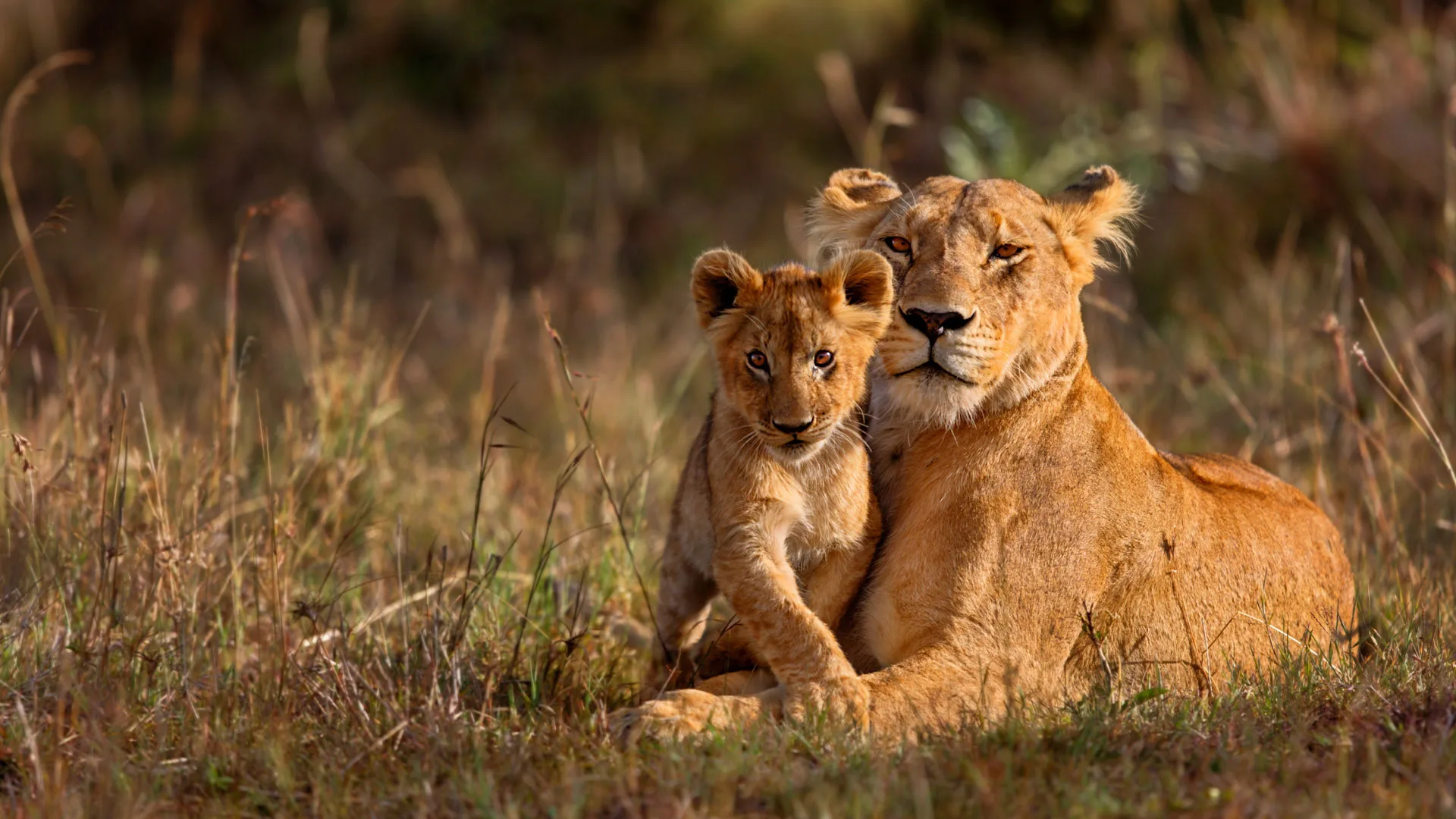
Game drives
Scheduled wildlife drives in a 4x4 safari vehicle with a professional driver-guide.
View activity -

Included
Wildlife photography
Time in the field for landscape and wildlife photography. Sightings are never guaranteed.
View activity -
Optional
Optional extras
Balloon flights, cultural visits and other extras can be added when available and are quoted separately.
Additional information
Plan This Safari
Is the Masai Mara Empty Outside Migration Season?
Absolutely not. This is a major misconception. The Masai Mara has substantial resident wildlife throughout the year. Resident species include: Lions, Leopards, Cheetahs, Elephants, Buffaloes, Giraffes, Hippos, Hyenas, Gazelles, Antelopes, Numerous birds.
The migration dramatically increases herbivore numbers during certain periods, but the Mara is not dependent on the migration for good wildlife viewing.
Migration Safari Accommodation
Accommodation location is especially important, and the best choice depends on your exact dates and migration priorities.
Inside the Masai Mara National Reserve
Staying inside the reserve provides direct access to wildlife areas. This can reduce gate-entry delays.
Private Conservancies
Conservancies adjoining the Mara can offer lower vehicle density and additional activities. However, migration herd position may sometimes require longer drives toward specific areas.
Camps Near River Systems
These can be attractive during periods when river-crossing activity is expected. However, no camp can guarantee that herds will cross nearby during your stay.
Mobile Camps and Seasonal Camps
Some migration-focused camps position themselves seasonally or operate with strong emphasis on specific wildlife periods. These can be particularly attractive to experienced safari travelers. However, camp selection should still consider:
- Guiding quality
- Vehicle density
- Location
- Comfort
- Transfer logistics
- Current seasonal expectations
- Your budget
Private Migration Safari
A private vehicle is particularly valuable during migration season. You control how long to remain at a sighting. If a herd appears close to a river, you can wait. If a crossing area becomes overcrowded, you can explore elsewhere. If photography matters, your guide can position for light, and if your interests extend beyond migration, the day can shift toward predators or other wildlife.
Shared Migration Safari
Shared departures can reduce cost. However, they involve compromise because different travelers may have different priorities. One guest may want to wait six hours near the river while another may prefer searching for lions. Private operation eliminates that conflict.
Migration Safari for Photographers
The Great Migration is extraordinary for photography. Potential subjects include:
- Large herd landscapes
- Wildebeest movement
- Zebra patterns
- Dust
- Predator-prey behavior
- River crossings (never guaranteed)
- Crocodiles
- Lions
- Cheetahs
- Hyenas
- Sunrise and sunset
- Storm skies
Photographers should consider a private vehicle. A beanbag can help stabilize long lenses, and sufficient memory cards are essential because migration days can produce extremely high image volumes.
Camera Lens Recommendations
Exact equipment depends on your photography style, but safari photographers frequently benefit from:
- Long telephoto lens for wildlife
- Mid-range zoom
- Wide-angle lens for landscapes
- Spare camera body if available
- Extra batteries
- Multiple memory cards
- Dust protection
Avoid changing lenses unnecessarily in dusty conditions.
Migration Safari for Families
Families can enjoy the migration enormously, and children are often fascinated by the scale of wildebeest herds. However, parents should understand that migration scenes can sometimes be intense. Natural events may include:
- Predation
- Crocodile attacks
- Injured animals
- Drowning
- Competition
Parents can discuss preferences with their guide. A private vehicle also allows families to shorten long waiting periods near river crossings.
Migration Safari for Honeymooners
A migration safari can be incorporated into a honeymoon. Couples can stay in intimate camps and combine intensive wildlife viewing with:
- Sundowners
- Private dining
- Balloon safari
- Bush breakfast
- Premium suites
Adding several beach nights afterward can create an excellent safari-and-beach honeymoon.
Luxury Migration Safari
A luxury version can include:
- Fly-in transfers
- Premium tented camps
- Private conservancies
- Private vehicles
- Specialist guides
- Balloon safari
- Bush dining
- Luxury Nairobi accommodation
Luxury should improve access, comfort and privacy rather than alter expectations about wildlife. Even the most expensive camp cannot guarantee a crossing.
Budget Migration Safari
A budget migration safari is also possible. Travelers can reduce costs by using:
- Road transfers
- Affordable tented camps
- Camps outside the reserve
- Shared fixed vehicle costs
- Fewer premium optional activities
Migration wildlife is not restricted to luxury travelers. The main difference lies in accommodation, vehicle arrangements and daily logistics.
Great Migration and the Big Five
A migration safari also provides strong opportunities to search for the Big Five, although sightings are never guaranteed. The route can include:
- Elephants: Amboseli and Masai Mara
- Lions: Masai Mara
- Leopards: Masai Mara
- Buffaloes: Amboseli, Rift Valley and Masai Mara
- Rhinos: Lake Nakuru or another central Kenya conservation area
This makes the itinerary much broader than a wildebeest-only safari.
Great Migration and Birdwatching
Migration season also provides interesting birdlife, as raptors and scavengers respond to wildlife activity. Potential sightings can include: Vultures, Eagles, Secretary birds, Storks, Bustards, Rollers, Bee-eaters, Larks, Ground hornbills.
Birdwatchers should inform their guide because the itinerary can incorporate more frequent identification stops.
Optional Hot-Air Balloon Safari
A Masai Mara balloon safari is especially popular during migration season. The aerial perspective can reveal enormous herd patterns that are difficult to appreciate from ground level. Wake before dawn, transfer to the launch site and, after a safety briefing, ascend as sunrise begins. From above, you may see:
- Herd concentrations
- Rivers
- Grasslands
- Wildlife trails
- Elephants
- Giraffes
- Other animals
Ballooning does not guarantee aerial views of a crossing, and flights depend on weather and operational conditions. The route depends partly on wind direction, so the experience should be appreciated for the landscape perspective.
How Much Does a 14 Days Kenya Migration Safari Cost?
Pricing varies substantially. Major factors include:
- Travel dates
- Migration-season accommodation premiums
- Number of travelers
- Camp location
- Private or shared vehicle
- Domestic flights
- Park fees
- Conservancy fees
- Balloon safari
- Accommodation category
- Room configuration
Peak migration periods are among the most expensive safari seasons in Kenya. Popular camps may also require longer advance booking and stricter payment conditions. A customized quotation is therefore essential.
How Early Should You Book?
Migration-season safaris should ideally be planned well in advance. This is especially important for:
- August travel
- September travel
- Small camps
- Family rooms
- Luxury camps
- River-area accommodation
- Honeymoon suites
- Balloon flights
Last-minute booking may leave only expensive or poorly located options.
What Is Typically Included?
A package may include:
- Airport transfers
- Nairobi accommodation
- Safari vehicle
- Professional driver-guide
- Fuel
- Safari accommodation
- Meals according to itinerary
- Scheduled game drives
- Park fees specified in the quotation
- Conservancy fees where applicable
- Drinking water during safari
- Applicable government taxes
- Operational support
Always refer to the confirmed quotation for final inclusions.
Common Exclusions
Unless specifically included:
- International flights
- Kenya entry authorization or visa-related costs where applicable
- Travel insurance
- Balloon safari
- Optional cultural visits
- Premium alcoholic beverages
- Tips
- Laundry
- Personal expenses
- Medical expenses
- Services not stated in the itinerary
What to Pack for Migration Season
Migration season often falls during Kenya's drier months, but early mornings can be cold. Bring:
- Neutral safari clothing
- Warm fleece
- Light jacket
- Comfortable trousers
- Comfortable shoes
- Hat
- Sunglasses
- Sunscreen
- Insect repellent
- Binoculars
- Camera
- Spare batteries
- Plenty of memory storage
- Reusable water bottle
- Personal medication
Layering is important. Morning game drives can feel surprisingly cold before temperatures rise.
Dust During Migration Season
Dry-season roads can be dusty. Travelers should protect:
- Cameras
- Lenses
- Phones
- Contact lenses
- Sensitive electronics
A light scarf can also be useful. Keep equipment inside closed bags when not in use.
Migration Safari and Travel Insurance
Comprehensive travel insurance is strongly recommended. Migration-season camps can have strict cancellation terms because demand is high. Insurance should therefore address:
- Trip cancellation
- Medical emergencies
- Evacuation
- Delays
- Lost luggage
- Missed connections
Read your policy carefully before travel.
Responsible Migration Tourism
The popularity of river crossings creates particular conservation challenges. Responsible travelers should support guides who prioritize wildlife welfare over aggressive positioning. Avoid encouraging:
- Off-road driving where prohibited
- Blocking herd movement
- Crowding crossing points
- Harassing predators
- Excessive noise
- Dangerous driving
Photography is never more important than wildlife welfare.
Kenya Migration Safari Versus Tanzania Migration Safari
The same broad migration ecosystem extends across Kenya and Tanzania. Kenya's Masai Mara offers exceptional viewing when herds are in the northern section. Tanzania's Serengeti covers a much larger area and can be important during other stages of the annual cycle. The best country depends heavily on travel dates. Travelers whose dates are flexible can choose according to expected herd location, while those with fixed dates should build the safari around the most appropriate section of the ecosystem rather than insisting on one country simply because of a famous name.
Can Kenya and Tanzania Be Combined?
Yes. A combined itinerary can follow the migration more broadly. However, fourteen days already allows a substantial Kenya safari. Adding Tanzania within the same fourteen days may require removing other Kenyan destinations or accepting more transfer time. Travelers wanting a comprehensive cross-border migration safari may benefit from extending beyond two weeks.
Internal Linking Opportunities
Use contextual links to the approved SafariTripsToKenya.com pages covering:
- Kenya Safari Packages
- Kenya Great Migration Safaris
- Masai Mara National Reserve
- Great Migration
- Mara River Crossings
- Best Time for the Great Migration in Kenya
- Amboseli National Park
- Lake Nakuru National Park
- Kenya Big Five Safaris
- Kenya Wildlife
- Lions in Kenya
- Cheetahs in Kenya
- Leopards in Kenya
- Wildebeest in Kenya
- Zebras in Kenya
- Kenya Safari Cost
- Best Time to Visit Kenya
- Luxury Kenya Safaris
- Budget Kenya Safaris
- Private Kenya Safaris
- Kenya Family Safaris
- Kenya Honeymoon Safaris
- Kenya Travel Guide
Use only the exact URLs already mapped in the approved SafariTripsToKenya.com sitemap. Do not alter, shorten, optimize or invent URLs.
Why Choose a 14 Days Kenya Migration Safari?
The migration is often described in terms of numbers: millions of animals, thousands of wildebeest, huge herds and massive crossings. But the real experience is found in smaller moments within that enormous movement, such as a wildebeest calf staying close to its mother, a zebra scanning the grass after hearing a predator, a lion pride watching distant herds, dust rising from animals moving across the plains, or hundreds of wildebeest suddenly changing direction. There can be silence while a herd stands near a riverbank and appears to decide whether to cross. A cheetah may use a termite mound to scan the landscape, hyenas may call before dawn, and vultures may descend into the distance. The scale is spectacular, but the behavior makes the migration meaningful. Fourteen days gives you time to experience both. You can explore Kenya beyond the Mara, see elephants beneath Kilimanjaro, search for rhinos in the Rift Valley and then spend several days allowing the migration to reveal itself without forcing nature into a narrow schedule. That is a far more rewarding approach than racing into the Masai Mara for one afternoon and expecting a documentary scene on command.
Plan Your 14 Days Kenya Migration Safari
Migration itineraries should be customized more carefully than ordinary safari packages because accommodation location and exact travel dates matter greatly. When requesting your safari proposal, provide:
- Exact or approximate travel dates
- Number of travelers
- Number and ages of children
- Preferred accommodation level
- Approximate budget
- Whether migration is your main priority
- Whether river crossings are particularly important to you
- Photography interests
- Private or shared safari preference
- Road or fly-in preference
- Interest in ballooning
- Desired number of Masai Mara nights
- Interest in a Diani Beach extension
- International flight details if available
Safari Trips to Kenya can then build the 14 Days Kenya Migration Safari around realistic seasonal expectations while preserving enough flexibility to respond to actual wildlife movement. Request your personalized 14 Days Kenya Migration Safari itinerary and quotation.
Recommended Structured Data
Implement relevant structured data including:
- `WebPage`
- `TouristTrip`
- `BreadcrumbList`
- `FAQPage`
Structured data should accurately reflect visible content. Do not fabricate the following unless these are supported by genuine current site data:
- Migration guarantees
- River-crossing guarantees
- Fixed departure availability
- Review ratings
- Prices
- Wildlife sightings
SEO Content Notes
- Primary Search Intent: Travelers actively researching or preparing to book a Great Migration safari in Kenya.
- Primary Conversion Goal: Customized migration safari inquiry.
- Secondary Search Intent: Travelers researching migration timing, river crossings, Masai Mara safari duration and the best way to combine migration viewing with other Kenya destinations.
- Core Value Proposition: A fourteen-day Kenya journey with multiple full days dedicated to the Masai Mara, giving travelers substantially greater flexibility to follow migration activity while still experiencing elephants, rhinos, big cats and Rift Valley landscapes.
- Key Differentiators: Several full Mara days, realistic migration expectations, strong predator viewing, complementary Kenya destinations and flexible private guiding.
- Cannibalization Control: Keep this page specifically focused on the mapped 14 Days Kenya Migration Safari package. Detailed evergreen information about migration months, river crossings, migration maps, Masai Mara accommodation, individual wildlife species and park guides should primarily live on their dedicated mapped pages.
- Internal Linking Strategy: Use descriptive contextual anchors to connect the package with the broader Great Migration content cluster, individual wildlife pages, Masai Mara guides and safari-planning pages.
- Conversion Strategy: Ask for exact travel dates early in the inquiry because migration timing and camp location are particularly date-sensitive.
- URL Protection: Preserve `/safari-packages/14-days-kenya-migration-safari/` exactly as mapped. Never rename, shorten, optimize or otherwise modify the URL.
Planning Questions
Frequently Asked Questions
What is the best month for a Kenya migration safari?
August and September are traditionally strong months for migration viewing in the Masai Mara, but exact herd positions vary according to rainfall and grazing.
Are river crossings guaranteed?
No. River crossings are completely natural and cannot be scheduled or guaranteed.
How many days should I spend in the Masai Mara?
For travelers specifically focused on migration viewing, several full days are strongly recommended. This itinerary deliberately allocates substantial time to the Mara.
Is July good for migration?
July can be excellent, especially as herds move north, but exact timing varies annually.
Is October good for migration?
October can still produce strong migration activity, although herd movement becomes increasingly dependent on rainfall.
Can I see the Big Five?
Yes, the itinerary provides strong opportunities to search for the Big Five, especially when a rhino area is included before the Mara.
Can I see migration outside river-crossing areas?
Absolutely. Huge herds on open plains are a major part of the migration experience.
Is a balloon safari worthwhile during migration season?
It can provide an exceptional aerial perspective, although herd location and balloon flight path cannot be guaranteed.
Can children join?
Yes. A private vehicle is recommended, especially because waiting near river-crossing areas can be long.
Can the itinerary be private?
Yes, and private operation is particularly valuable for migration-focused travelers.
Can I book a luxury version?
Yes. Premium camps, fly-in transfers and private conservancies can be incorporated.
Can I book a budget version?
Yes. Road transfers and affordable camps can reduce the total price.
Is Masai Mara crowded during migration season?
Some popular wildlife and crossing areas can become busy. Camp location, guide strategy and conservancy stays can help manage the experience.
Can I combine the safari with Diani Beach?
Yes. Several beach nights can be added after the safari.
Can I combine Kenya migration with Tanzania?
Yes. A cross-border migration itinerary can include the Serengeti, although additional time is recommended.
05 Request Quote
Request Quote
Tell us your dates, group size, and preferred lodge style — we will send a tailored quote for this safari.
Want to extend your safari?
Add Amboseli, Diani Beach, Tanzania and Zanzibar, or gorilla trekking in Uganda or Rwanda — we tailor the journey to your dates.