

Amboseli Travel Guide
Amboseli National Park is one of Kenya’s most recognisable wildlife destinations. Its open plains, permanent wetlands and large elephant herds create a safari experience quite different from the wooded landscapes of Tsavo or the rolling grasslands of the Masai Mara. On clear mornings, Mount Kilimanjaro rises beyond the southern horizon, providing one of East Africa’s most distinctive wildlife photography settings.
This Amboseli travel guide explains how to plan a rewarding visit, from choosing the best travel season to deciding how many nights to stay. It also covers wildlife, accommodation, road access, game drives, photography, park regulations and the practical decisions that influence the cost of a safari. Amboseli is particularly appealing to travellers who want to spend time observing elephants rather than rushing between different destinations. The park is relatively compact, but its wildlife moves between open plains, marshes, woodland and the surrounding ecosystem. A knowledgeable guide can help visitors understand these movements and make better use of their time.
At Safari Trips to Kenya, we recommend treating Amboseli as a destination worth exploring rather than simply a place to photograph Kilimanjaro. Its wetland ecology, conservation history and relationship with surrounding Maasai communities make it an important part of Kenya’s wider safari landscape.

Where Is Amboseli National Park?
Amboseli lies in Kajiado County, southern Kenya, close to the international border with Tanzania. It occupies part of a larger ecosystem influenced by Mount Kilimanjaro, whose summit is across the border in Tanzania. The national park covers approximately 392 square kilometres, although the wider wildlife landscape extends across a much larger area of community land, ranches and conservancies.
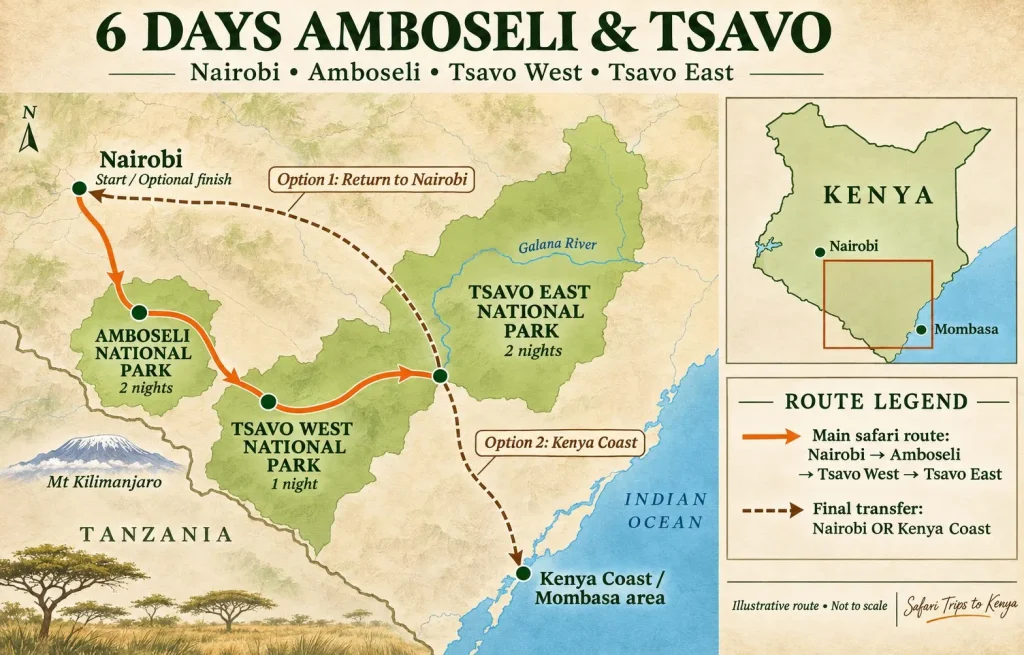
The park’s most distinctive feature is the contrast between its relatively dry plains and permanent wetland habitats. Water originating from the Kilimanjaro mountain system reaches parts of the Amboseli basin through underground channels, helping sustain marshes even during dry periods. This dependable water supply is a major reason elephants, buffaloes and other animals can remain in the area when surrounding grasslands become dry. Amboseli’s location also makes it accessible from Nairobi and suitable for combination itineraries with Tsavo West National Park, Tsavo East National Park and other southern Kenya destinations.
Why Visit Amboseli National Park?
Exceptional Elephant Viewing
The strongest reason to visit Amboseli is the opportunity to observe African elephants in open habitats. The park is internationally associated with long-running elephant research and the study of individual animals, family relationships and social behaviour. Visitors may encounter breeding herds with calves, large adult bulls and elephants moving through the wetlands to feed.
Because the landscape is often open, guides can sometimes observe animal behaviour from a suitable distance without vegetation blocking the view. A good elephant sighting is not necessarily the closest one. Watching a family interact naturally, cross a plain or feed in the marshes can be more interesting than attempting to approach an animal too closely.
Views of Mount Kilimanjaro
Mount Kilimanjaro is Africa’s highest mountain, and its snow-capped summit is one of the defining visual features of the Amboseli landscape. Although the mountain stands in Tanzania, some of its best-known wildlife photographs are taken from the Kenyan side. Visibility is highly variable, and clouds can cover the summit for much of the day, even when the weather around the park is otherwise pleasant.
Early morning frequently offers better photographic opportunities, but travellers should allow more than one morning if mountain views are an important part of their plans.
Diverse Wildlife Habitats
Amboseli is not simply an empty plain with elephants. Its landscape includes seasonal lakebeds, grasslands, acacia woodland, saline soils and marshes, and each habitat attracts different wildlife and bird species. The wetlands are particularly important during dry periods, while open plains offer opportunities to search for grazing animals and predators. This habitat variety gives guides several different areas to explore during a two- or three-day safari.
Wildlife in Amboseli National Park
Elephants
Elephants are Amboseli’s signature species. Their movements between wetland feeding grounds and surrounding habitats provide some of the park’s most memorable encounters. Guests may observe feeding, dust bathing, social interaction and family groups travelling across the plains. Elephants should always be given space, and vehicles must not block their paths or separate calves from adults.
Lions and Other Predators
Lions in Amboseli are present but are not guaranteed sightings. They may be found resting in vegetation, moving through grassland or following prey species across the landscape. Spotted hyenas are another important predator and scavenger within the ecosystem. Cheetahs can occur in suitable open habitats, although sightings are less predictable than those of elephants or common plains herbivores. Leopards are generally difficult to find, and Amboseli should not be selected primarily for leopard viewing.
Buffaloes, Zebras and Wildebeest
African buffaloes are regularly associated with the park’s wetlands and grazing areas. Plains zebras and wildebeest use open grassland habitats, sometimes appearing in mixed groups with other herbivores, and their distribution changes with rainfall, grass conditions and access to water.
Giraffes and Antelopes
Masai giraffes occur in the wider Amboseli ecosystem, particularly where suitable browsing vegetation is available. Other herbivores include impalas, gazelles and several antelope species. Travellers should remember that the abundance of individual species varies by season and location.
Birdlife
Amboseli is an excellent destination for birdwatching because its wetlands support species that are less common in the surrounding dry grasslands. Visitors may encounter pelicans, herons, egrets, storks, kingfishers and various birds of prey. Flamingos may occur in suitable seasonal conditions, but their presence and numbers change. Birdwatching is particularly rewarding when guides take time to explore wetland edges rather than concentrating exclusively on large mammals.
Main Attractions in Amboseli
Observation Hill
Observation Hill, also known as Nomatior, is one of the park’s notable viewpoints. From the designated viewing area, visitors can appreciate the relationship between the open plains, wetlands and surrounding landscape. It is an excellent place to understand Amboseli’s geography and observe the distribution of water and vegetation. Visitors must follow park rules concerning where they may leave their vehicles.
The Amboseli Swamps
The permanent wetlands are essential to the park’s ecology. Elephants frequently feed on aquatic vegetation, while buffaloes, waterbirds and other species use the marshy areas. The contrast between green wetlands and dry surrounding ground is particularly striking during the extended dry season.
Seasonal Lake Amboseli
Lake Amboseli is largely a seasonal lakebed whose appearance changes with rainfall. At times it may contain water, while during drier periods sections become broad open expanses of pale soil. The lakebed contributes to the park’s distinctive scenery, but travellers should not expect a permanent large lake suitable for boating.
Mount Kilimanjaro Viewpoints
Different sections of Amboseli provide opportunities to photograph the mountain behind wildlife and open plains. The ideal location depends on light, cloud cover, road access and the position of animals. A guide familiar with the landscape can help identify suitable photographic angles without disturbing wildlife.
Best Time to Visit Amboseli
The best time to visit Amboseli National Park depends on whether your priority is wildlife concentration, photography, green scenery or avoiding the busiest periods.
January and February
These months are often relatively dry and can provide excellent conditions for game drives. Daytime temperatures are generally warm, while mornings can feel noticeably cooler, and the landscape may be dry in places, making wildlife easier to observe against shorter vegetation.
March to May
The long rains generally occur during this period, although their timing and intensity vary. Rain can transform parts of the landscape into green grassland and create attractive photographic conditions, but unpaved roads may become muddy, and heavy showers can interrupt activities. Visitors should use suitable vehicles and allow flexibility in daily schedules.
June to October
This is an important dry-season period for Amboseli. As vegetation dries, animals often depend more heavily on reliable water sources, and the wetlands can become particularly rewarding wildlife-viewing areas. July and August are popular travel months, so accommodation demand can be high.
November and December
The short rains may begin during November and continue into December. Vegetation can recover quickly after rainfall, changing the appearance of the plains. This is an interesting season for birdwatchers and photographers, although cloud cover may affect Kilimanjaro views. Christmas and New Year are popular holiday periods, and advance accommodation booking is advisable.
How Many Days Do You Need in Amboseli?
One-Day Amboseli Safari
A one-day visit is possible from some nearby locations, but travelling from Nairobi and returning on the same day creates a long schedule. Much of the day may be spent on the road rather than observing wildlife, and for most visitors, an overnight stay offers better value.
Two-Day Amboseli Safari
A 2 Days Amboseli Safari can work well for travellers with limited time. The first day generally includes travel from Nairobi and an afternoon wildlife drive, depending on arrival time. The second day provides an early wildlife activity before departure. This is a practical short safari, but it offers limited flexibility if weather conditions are poor.
Three-Day Amboseli Safari
A 3 Days Amboseli Safari is an excellent choice for first-time visitors. With two nights in the area, travellers can enjoy several game drives and explore different habitats. There is also more opportunity to photograph Kilimanjaro under changing weather conditions.
Four Days or Longer
A longer stay suits photographers, families and travellers interested in slower-paced wildlife observation. It can also allow time for selected conservancy activities outside the national park.
Suggested Three-Day Amboseli Safari Itinerary
The following is a proposed itinerary rather than a confirmed departure. Accommodation and activities can be adjusted according to travel dates and budget.
Day 1: Nairobi to Amboseli National Park
Depart Nairobi in the morning and travel south towards the Amboseli ecosystem. The journey commonly takes around four to six hours, depending on traffic, the chosen route and accommodation location. The drive passes through changing landscapes as the urban environment gives way to agricultural areas, smaller settlements and increasingly open country. Your guide can explain the route and arrange suitable comfort stops.
After arriving at your selected accommodation, check in and have lunch if included in the package. An afternoon game drive may be possible depending on arrival time and park access arrangements. Spend the evening at your lodge or tented camp, with dinner and overnight accommodation according to the confirmed meal plan.
Day 2: Full-Day Amboseli Wildlife Safari
Begin early to take advantage of cooler temperatures and favourable morning light. If the mountain is visible, this can be an excellent time to photograph Kilimanjaro. Explore the open plains and wetland habitats in search of elephants, buffaloes, zebras, wildebeest and other wildlife. Your guide may concentrate on the marshes during dry conditions or explore different areas depending on recent animal movements.
Lunch arrangements depend on the selected safari programme. Some guests return to the lodge, while others enjoy a packed lunch at an authorised location. Continue wildlife viewing during the afternoon before returning to your accommodation for dinner.
Day 3: Morning Game Drive and Return to Nairobi
An early wildlife drive may be included before breakfast or departure, depending on the itinerary and park entry arrangements. The morning provides another opportunity to observe elephants and photograph the landscape. After checking out, begin the return journey to Nairobi. Arrival time depends on road conditions, stops and the location of your accommodation. Travellers connecting to international flights should allow a generous time buffer.
Amboseli Safari Accommodation
Accommodation in Amboseli ranges from simple safari camps to exclusive conservation properties. At Safari Trips to Kenya, we organise accommodation preferences into four broad categories.
Essential Accommodation
Essential properties focus on affordability and practical comfort. They suit travellers who prefer to spend more of their budget on wildlife activities and transport. Facilities vary, so guests should check bathroom arrangements, meals and the distance to the park.
Comfort Accommodation
Comfort lodges and tented camps generally offer established dining facilities, private bathrooms and comfortable rooms. This category is particularly suitable for couples, families and small safari groups.
Premium Accommodation
Premium properties place greater emphasis on location, room quality, dining and guest facilities. They can be a good choice for travellers who want a comfortable safari without necessarily booking the most exclusive camp.
Signature Accommodation
Signature properties offer high-end accommodation, distinctive settings and enhanced service. Some are located in private conservancies, where guests may have access to activities not normally available within the national park. Examples of accommodation considered around Amboseli include Kibo Safari Camp, Amboseli Serena Safari Lodge, Elewana Tortilis Camp and Porini Amboseli Camp. These properties differ considerably in location, accommodation style and included activities.
How to Get to Amboseli National Park
From Nairobi by Road
The most common approach is by road from Nairobi. Routes may pass through Emali and Kimana or travel towards Namanga and Meshanani Gate. Journey times vary, but approximately four to six hours is a useful planning allowance for many Nairobi departures, and road conditions can change after rainfall, especially on unpaved sections.
By Air
Flights using airstrips serving the Amboseli region can be arranged subject to schedules and availability. Flying is useful for travellers who prefer to minimise road transfers, although guests still require transport between the airstrip and their accommodation.
From Tsavo West National Park
Amboseli can be combined with Tsavo West National Park in a southern Kenya itinerary. The journey allows visitors to experience contrasting habitats, including Amboseli’s open wetlands and Tsavo West’s volcanic landscapes. Driving times depend on the selected route, park entrances and road conditions.
Amboseli Safari Costs and Budget Planning
The cost of an Amboseli safari depends on accommodation standard, travel season, transport, park fees and the number of travellers. Private safaris generally involve a dedicated vehicle and guide, and these costs are shared among the participants, making the per-person price lower for larger groups travelling together. Accommodation is another major variable: a modest camp outside the national park may cost less than an exclusive conservancy property, but additional travel time and park access expenses must be considered.
When comparing quotations, check whether the following are included:
- Accommodation for the stated number of nights.
- The specified meal plan.
- Safari transport and a professional guide.
- Amboseli National Park entrance fees.
- Game drives and other scheduled activities.
- Drinking water during game drives.
- Airport or hotel transfers where required.
Personal expenses, gratuities, optional cultural activities and premium beverages are commonly excluded unless specifically stated. Park entrance fees can change, so quotations should use the applicable rates for the intended travel dates and visitor category.
Private Safari or Group Safari?
A private Amboseli safari provides greater control over departure times, photography stops and the daily schedule. It is especially suitable for families, couples and wildlife photographers who want to spend longer observing particular animals. A Kenya group safari can offer lower per-person transport costs and the opportunity to travel with other safari enthusiasts, although group departures follow a shared itinerary, and the accommodation and activities may be less flexible. The choice depends on your budget, preferred pace and expectations.
Responsible Wildlife Viewing in Amboseli
Amboseli’s wildlife is an important conservation resource, and responsible visitor behaviour helps protect the animals and their habitat. Kenya Wildlife Service guidance prohibits off-road driving and feeding animals within the national park, and visitors should follow these rules alongside practical etiquette on every game drive:
- Vehicles should remain on authorised roads, observe speed limits and maintain appropriate distances from wildlife.
- Visitors should not pressure guides to approach elephants closely or interrupt their movements for photographs.
- Avoid blocking animal crossings, especially when herds include calves.
Conservation also extends beyond the park boundary. The surrounding community lands provide important wildlife dispersal areas, and responsible tourism can support conservation-linked livelihoods.
What to Pack for an Amboseli Safari
Pack for warm afternoons, cooler mornings and dusty conditions. Useful items include:
- Lightweight clothing, a warm layer, comfortable shoes, sunscreen, sunglasses, a hat and insect repellent.
- Binoculars for birds and smaller mammals, even when elephants are relatively close.
- Spare batteries, memory cards and dust protection if you are photographing wildlife.
- A reusable water bottle, following park restrictions on single-use plastics.

Frequently Asked Questions About Amboseli
Is Amboseli worth visiting?
Yes, particularly for travellers interested in elephants, open landscapes, wetland wildlife and photography. It also combines well with other southern Kenya safari destinations.
Can you see the Big Five in Amboseli?
Amboseli supports elephants, buffaloes, lions and elusive leopards, but rhinoceroses are not a regular viewing attraction. Travellers specifically seeking a Big Five itinerary should consider combining Amboseli with another suitable destination.
Can you see Kilimanjaro every day?
No. Cloud cover frequently obscures the mountain, and visibility changes throughout the day. Staying two or more nights improves the opportunity to encounter clear conditions but does not guarantee a view.
Is Amboseli suitable for children?
Yes. Many families enjoy the park because elephants and other large mammals can often be observed from safari vehicles. Families should choose suitable accommodation and plan manageable game-drive durations.
Is Amboseli good for photography?
Amboseli is an excellent photographic destination because of its open habitats, elephant populations and mountain backdrop. Good results still depend on weather, animal behaviour, light and responsible positioning.
Are walking safaris allowed?
Ordinary walking safaris are not permitted throughout the national park. Certain surrounding conservancies may offer guided walks under their own operating rules.
Can Amboseli be combined with the Masai Mara?
Yes. A longer Kenya safari package can include both destinations, although the substantial distance between them must be considered. Flights or intermediate stops may help create a more comfortable itinerary.
Plan Your Amboseli Safari with Safari Trips to Kenya
Amboseli rewards travellers who allow enough time to appreciate its wildlife and landscapes. The elephants are the principal attraction, but the wetlands, birdlife, mountain views and surrounding conservation areas add considerable depth to the experience.
Safari Trips to Kenya can arrange private Amboseli safaris, suitable group departures and customised itineraries combining Amboseli with other Kenyan national parks. We can help select accommodation from Essential, Comfort, Premium and Signature categories, plan realistic travel routes and explain the activities included in your quotation. Contact our team with your preferred travel dates, number of travellers and accommodation budget to begin planning your Amboseli National Park safari.